 en
 Español

92L Extra-Large EU Industrial Storage Bin for Workshop and Warehouse Logistics
Content
- 1 Why Large-Format Industrial Storage Bins Matter
- 2 Product Overview and Main Specifications
- 3 Virgin Polypropylene for Repeated Industrial Use
- 4 Large Capacity Without an Unmanageable Footprint
- 5 Stackability and Better Use of Vertical Space
- 6 Advantages Over Ordinary Cardboard Cartons
- 7 Advantages Over Smaller Plastic Bins
- 8 Applications in Workshops and Manufacturing Facilities
- 9 Use in Electronics and Parts Logistics
- 10 Manufacturing Strengths and Process Control
- 11 Quality Control from Raw Material to Finished Product
- 12 Customization and Color Management
- 13 Warehouse Layout and Storage Planning
- 14 Ergonomics and Labor Efficiency
- 15 Transport Protection and Internal Organization
- 16 Sustainability and Reusable Packaging Value
- 17 Comparing the EU4833 with Competing Storage Solutions
- 18 Procurement Guidance for Industrial Buyers
- 19 Why Choose an Integrated Logistics Equipment Supplier
- 20 Implementation Plan for a New Tote System
- 21 Frequently Asked Questions
- 21.1 What is the capacity of the EU4833 storage bin?
- 21.2 What are the external dimensions?
- 21.3 What are the internal dimensions?
- 21.4 What material is used to manufacture the tote?
- 21.5 Is the EU4833 suitable for long components?
- 21.6 Can the containers be stacked?
- 21.7 Can the tote be used for heavy parts?
- 21.8 Is the bin suitable for electronic components?
- 21.9 Can the color be customized?
- 21.10 How does this tote compare with cardboard cartons?
- 21.11 Can the tote be used outdoors?
- 21.12 Is the container compatible with warehouse racks?
- 21.13 How should the tote be cleaned?
- 21.14 Does the supplier offer other logistics products?
- 21.15 What should be confirmed before placing a bulk order?
- 22 Conclusion
- 23 References
- 24 Product: 92L Extra Large EU Industrial Storage Bin for Workshop
Efficient storage is one of the foundations of a productive warehouse, workshop, distribution center, and manufacturing facility. When components, tools, electronic parts, packaging items, or long-format inventory are stored in unsuitable containers, businesses often experience wasted floor space, slow picking, product damage, and unnecessary handling costs. A properly designed industrial storage bin can solve several of these problems at the same time by combining high capacity, standardized dimensions, stacking stability, durability, and easy handling.
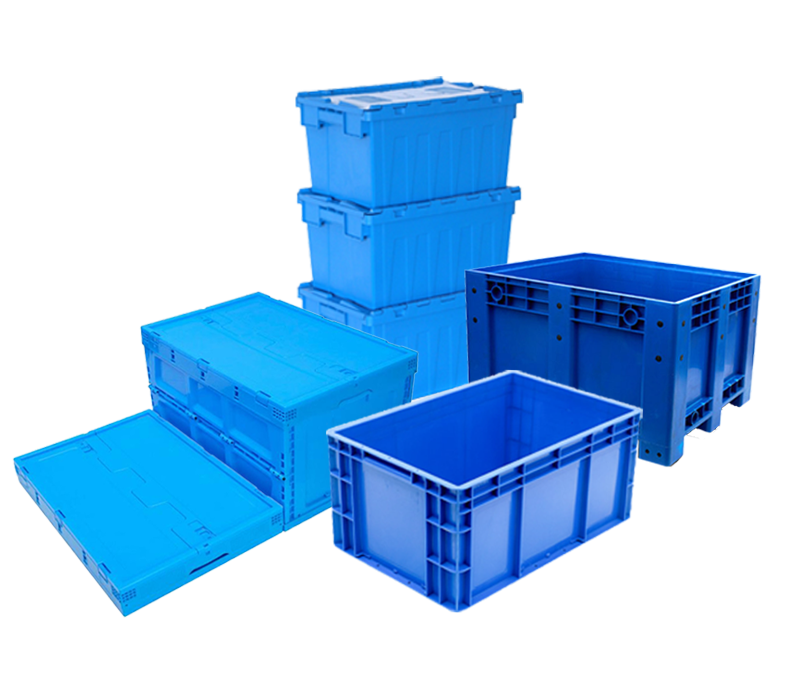
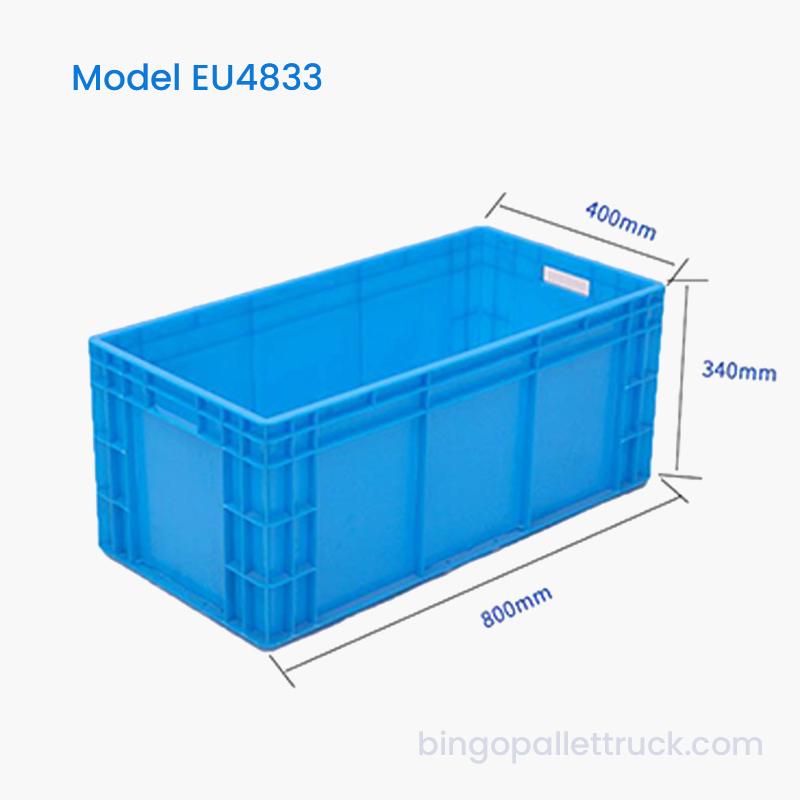
The EU4833 extra-large plastic storage bin is designed for exactly this type of demanding environment. With an external size of 800 × 400 × 340 mm, an internal size of 765 × 365 × 330 mm, and a nominal capacity of 92 liters, it provides a practical storage solution for operations that need more usable volume than ordinary small tote boxes can offer. Its extended length is particularly useful for long components and larger batches of parts, while its standardized footprint supports organized storage, transport, and warehouse planning.
Manufactured from virgin polypropylene, the bin is intended for repeated use in industrial settings. Its stackable structure helps businesses use vertical space, stabilize stored products, and reduce dependence on disposable packaging. It can support component management in production areas, order preparation in distribution centers, and consolidated storage in workshops. The result is a reusable logistics container that is designed to improve workflow rather than simply hold goods.
Why Large-Format Industrial Storage Bins Matter
Many storage problems are caused not by insufficient warehouse space alone, but by poor use of the space that is already available. Small cartons and mixed packaging often create irregular stacks, unoccupied gaps, unstable piles, and difficult-to-access inventory. Workers may need to open several boxes to locate one item, while products may become mixed during movement between storage, production, and dispatch areas.
A large-format industrial tote provides a more consistent alternative. By placing compatible products into a single standardized container, a business can reduce the number of individual packages that must be handled. The 92-liter capacity of the EU4833 allows a larger quantity of components to be grouped together without requiring an oversized or difficult-to-control container.
The 800 mm external length is another important advantage. Many general-purpose storage boxes are short and deep, which may be appropriate for small parts but unsuitable for elongated components, profiles, assemblies, electrical products, or production materials that need additional horizontal room. The EU4833 design gives these products a dedicated storage format while maintaining a manageable 400 mm width.
Standardization also improves visual management. When containers have consistent dimensions, workers can identify stock locations more easily, align bins on shelving, and plan the layout of workstations with greater accuracy. This can support lean manufacturing, first-in-first-out inventory practices, cycle counting, and faster order picking.
Product Overview and Main Specifications
The EU4833 is an EU-standard industrial plastic tote intended for storage, handling, and logistics applications. It is suitable for workshops, parts warehouses, production facilities, electronics distribution, maintenance departments, and other environments where reusable containers are preferred over disposable cartons.
| Item | Specification |
| Model | EU4833 |
| Product Type | Extra-large EU plastic tote box |
| Material | Polypropylene, PP |
| External Dimensions | 800 × 400 × 340 mm |
| Internal Dimensions | 765 × 365 × 330 mm |
| Nominal Capacity | 92 liters |
| Product Weight | 3.7 kg |
| Design Function | Stackable storage and logistics handling |
| Recommended Environments | Warehouses, workshops, manufacturing, distribution, and parts logistics |
The difference between external and internal dimensions is important when planning storage. External dimensions determine the space required on a rack, pallet, floor location, or transport vehicle. Internal dimensions determine the actual usable area available for goods. With an internal length of 765 mm, the bin can accommodate long products while preserving protective space around the load.
The 3.7 kg empty weight offers a practical balance between structural durability and manual handling. A container that is too light may flex excessively or become unstable, while an unnecessarily heavy container increases labor requirements. The EU4833 is designed to remain manageable when empty or partially loaded, while its large volume helps reduce the number of containers required for a given quantity of goods.
92L Extra Large EU Industrial Storage Bin for Workshop
Virgin Polypropylene for Repeated Industrial Use
Material selection is one of the most important factors in the performance of a reusable storage bin. The EU4833 is specified as being manufactured from 100% virgin polypropylene. Virgin PP is a widely used engineering thermoplastic that offers a useful combination of toughness, low weight, chemical resistance, and processability.
For industrial storage, the value of polypropylene is not limited to its basic strength. Reusable containers are repeatedly lifted, placed, stacked, moved, and emptied. They may encounter dust, oils, common industrial contaminants, and temperature changes. A suitable material must therefore tolerate regular handling without quickly losing its shape or becoming difficult to clean.
Polypropylene also offers a favorable strength-to-weight ratio. Compared with many rigid alternatives, it can provide a durable container without imposing excessive empty weight. This supports faster loading, unloading, picking, and repositioning. In a busy warehouse, the time spent moving empty containers can be significant, so weight efficiency can contribute to lower labor intensity.
The use of virgin material also supports consistency. Recycled plastics can be valuable in appropriate applications, but material properties may vary depending on the source and composition of the recycled stream. For industrial buyers who require predictable appearance, rigidity, and performance from batch to batch, virgin PP can provide a more controlled production base.
Where food-contact or hygiene-related applications are being considered, the customer should confirm the exact compliance documentation and intended use with the supplier before ordering. The supplied product information describes the material as virgin, food-grade PP, but product suitability for a particular regulatory market should always be verified through the relevant technical and compliance documents.
Large Capacity Without an Unmanageable Footprint
A 92-liter capacity makes the EU4833 substantially more useful than compact component bins when larger quantities or longer products must be stored together. It can hold grouped production parts, maintenance supplies, packaging components, electrical products, or other inventory that would otherwise require multiple smaller containers.
Consolidating inventory into a larger tote can reduce handling steps. Instead of transferring several small boxes from receiving to shelving and then from shelving to production, workers may move one appropriately loaded tote. This can simplify internal logistics and make material flow more visible.
At the same time, the external width of 400 mm is relatively controlled for a bin of this capacity. The design is long rather than excessively wide, making it suitable for shelving layouts where depth and aisle access must be managed carefully. Its format can be especially useful for rack positions, workbenches, conveyor-adjacent storage, and floor-level staging zones.
Businesses should always evaluate the actual density and weight of the goods placed inside the container. A 92-liter volume does not mean that every load should be filled to the top, and the permissible stacking load depends on the product design, the load distribution, the storage environment, and the specific application. Heavy components should be positioned evenly, and the supplier should be consulted when a project requires detailed load ratings or high-level stacking.
Stackability and Better Use of Vertical Space
One of the main advantages of a reusable industrial tote is its ability to stack securely. The EU4833 is designed for stackable storage and is described as suitable for stacking up to 10 or more layers under appropriate conditions. This feature allows warehouses to use vertical space instead of spreading inventory across additional floor area.
Vertical storage can produce several operational benefits. It may increase the number of units stored within a defined footprint, reduce the need for temporary floor piles, and create clearer separation between product categories. A stable stack also helps prevent containers from shifting during ordinary movement and storage.
Stackability is most effective when the containers are loaded consistently. Unevenly distributed goods, protruding products, or overfilled bins can reduce stability and create safety risks. Workers should keep the contents below the effective stacking area, avoid placing incompatible shapes in the same stack, and follow the supplier’s recommendations for maximum height and load.
For transportation, stackable containers can help reduce empty space between units. This can improve vehicle utilization and simplify loading patterns. Compared with irregular cardboard cartons or mixed packaging, standardized totes create more predictable logistics units. Better organization may help reduce the amount of time required to secure, count, and unload a shipment.
Stacking should not be viewed only as a space-saving function. It also contributes to product protection. When each container is aligned correctly, the lower units are less likely to experience side pressure caused by unstable piles. Stored products are less likely to fall from a disorganized stack, and workers can identify complete units more easily.
Advantages Over Ordinary Cardboard Cartons
Cardboard cartons remain useful for one-way shipping, but they have limitations in demanding warehouse environments. Moisture, abrasion, repeated handling, compression, and contamination can reduce their service life. A carton that is suitable for a single outbound shipment may not be suitable for repeated internal movement.
The EU4833 is designed as a reusable container. Its polypropylene construction can support repeated cycles of storage and handling, reducing dependence on single-use cartons for internal logistics. Once empty, it can be returned to a collection point, production area, or storage zone for reuse.
Reusable plastic totes can also improve workplace organization. Their rigid walls retain a consistent shape, unlike cartons that may become crushed or deformed. This makes stacking easier and helps shelves maintain a more regular appearance. The rigid structure can also provide a more reliable barrier around stored products during routine movement.
Another advantage is cleaning potential. Depending on the application and the approved cleaning method, a plastic tote can generally be wiped or washed more easily than a porous carton. This can be useful in maintenance areas, manufacturing zones, and parts storage locations where dust or industrial residue may accumulate.
There are cases where cardboard remains the better choice, particularly for direct-to-consumer shipping, extremely lightweight goods, or applications where return logistics are not available. However, for closed-loop material movement and repeated warehouse use, the reusable format of the EU4833 can offer a more durable and organized alternative.
Advantages Over Smaller Plastic Bins
Small bins are excellent for screws, fasteners, tools, and other compact items. However, using too many small containers can create its own operational problems. Workers must move more units, labels may be harder to manage, and long or bulky products may need to be divided between several bins.
The EU4833 addresses these limitations with a larger internal footprint. Its 765 mm internal length gives businesses more freedom to store extended components without bending, forcing, or splitting them unnecessarily. It is also suitable for consolidating related parts that are consumed together in a production or repair process.
Large bins can reduce the number of individual picking actions. If a production line requires a group of components, one tote may contain the required quantity, allowing the material handler to transport a complete replenishment unit. This can simplify kanban systems, kitting operations, and line-side delivery.
However, the best warehouse does not use one container size for every product. Small bins remain valuable for tiny parts, while the EU4833 is most effective when its capacity and long format match the product dimensions and replenishment volume. A mixed container strategy usually delivers better results than replacing every bin with a single large model.
Applications in Workshops and Manufacturing Facilities
Workshops often contain a broad range of materials, including replacement parts, tools, electrical components, maintenance supplies, consumables, and work-in-progress assemblies. These items may move frequently between storage cabinets, repair benches, machinery, and dispatch areas.
The EU4833 can function as a mobile storage unit for grouped materials. A maintenance team may dedicate individual totes to a machine type, project, repair order, or department. Clear labeling can identify the contents, responsible team, replenishment status, and destination.
In manufacturing, the tote can support line-side inventory. Operators can receive components in a standardized format and place the container in a defined replenishment location. Because the bin has a substantial capacity, it can reduce the frequency of small deliveries from the central warehouse to the production line.
The long format may also be useful for profiles, housings, assemblies, molded parts, electrical units, and other products that are difficult to store in square containers. The internal dimensions provide space for protective inserts or separators when the contents require additional organization.
For work-in-progress storage, the tote can help separate production stages. A container may be assigned to incoming materials, semi-finished goods, inspection items, approved products, or items awaiting rework. This supports visual control and reduces the risk of mixing products with different status codes.
Use in Electronics and Parts Logistics
Electronics distribution and parts logistics require careful organization because many products may have similar appearances but different specifications. Misidentification can result in returns, production delays, or incorrect assembly. A clearly assigned industrial tote can provide a controlled storage location for each part family or stock-keeping unit.
The EU4833’s large internal length is suitable for electronic housings, cable assemblies, components packed in protective bags, and larger batches of small parts. Dividers, foam, corrugated inserts, or modular inner trays may be used when products need separation. The container itself provides the outer structure, while the internal packing method can be adapted to the product.
Businesses handling sensitive electronic products should evaluate electrostatic discharge requirements separately. Standard polypropylene should not automatically be treated as ESD-safe. If the intended application involves static-sensitive components, the buyer should request an appropriate antistatic or conductive material solution and confirm the relevant test data before placing an order.
The tote can also support returnable packaging systems. Suppliers may deliver parts in reusable containers, and the receiving company can return the empty units through the same logistics network. This creates a closed-loop packaging process that can reduce disposable packaging waste and improve consistency between trading partners.
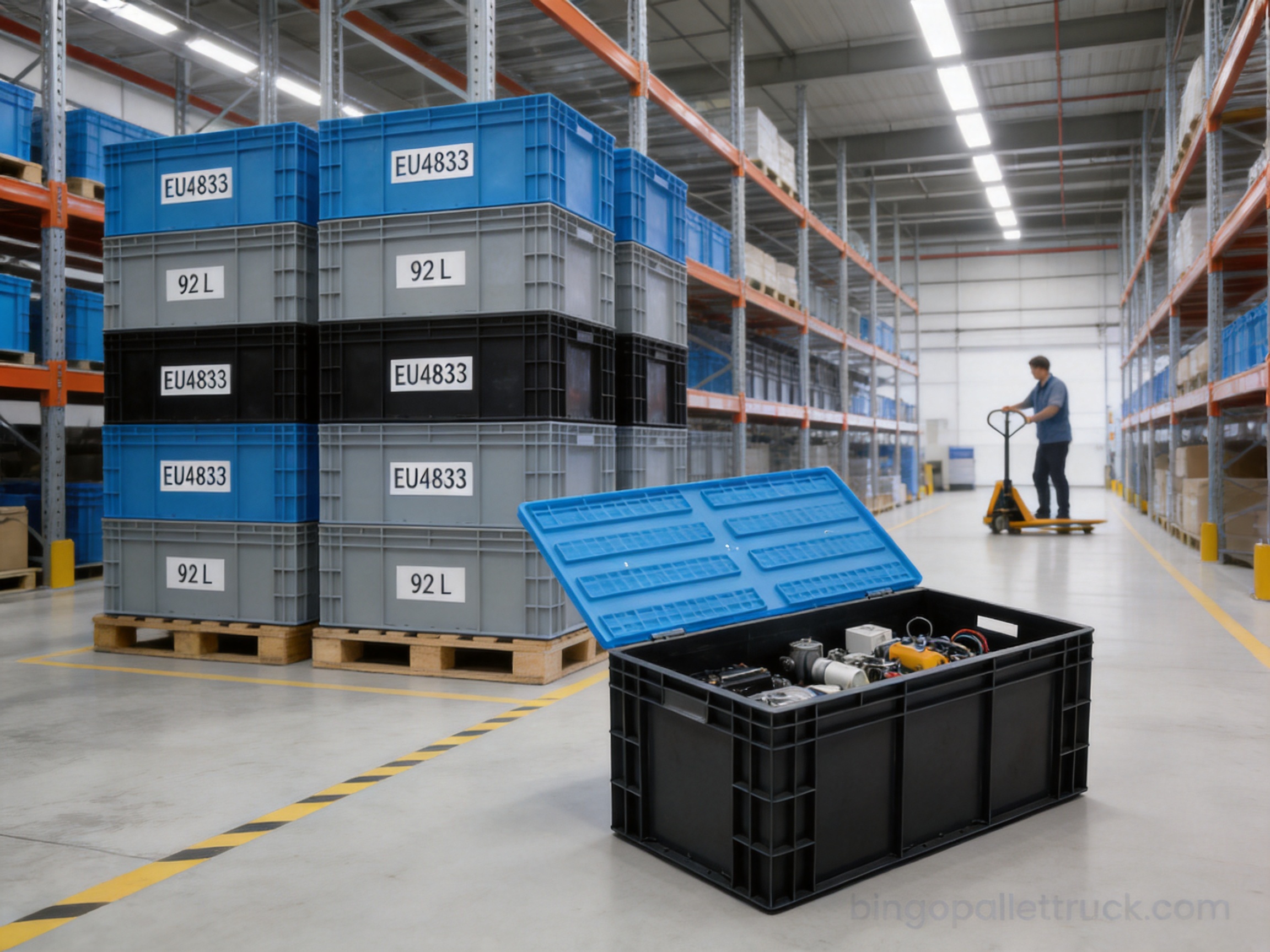
Manufacturing Strengths and Process Control
The performance of an industrial bin depends not only on its design but also on the consistency of the manufacturing process. Dimensions, wall thickness, material quality, surface finish, stacking geometry, and batch stability all affect how the product performs in real warehouse conditions.
The manufacturer of the EU4833 emphasizes standardized production procedures and quality control at every stage. This includes control of raw material sourcing, production monitoring, inspection, and final product verification. A structured process is important because a small dimensional variation can affect the alignment of stacked containers or their fit on a rack.
Virgin polypropylene must be properly selected and prepared before molding. Material verification helps ensure that the correct resin is used and that production conditions are consistent. Controlled processing can reduce defects such as warping, incomplete filling, sink marks, excessive flash, or inconsistent rigidity.
During molding, the temperature, pressure, cooling cycle, and mold condition must be managed carefully. These factors influence the final dimensions and mechanical behavior of the tote. A stable production process helps ensure that the external footprint remains within the expected range and that the container can be handled consistently across different batches.
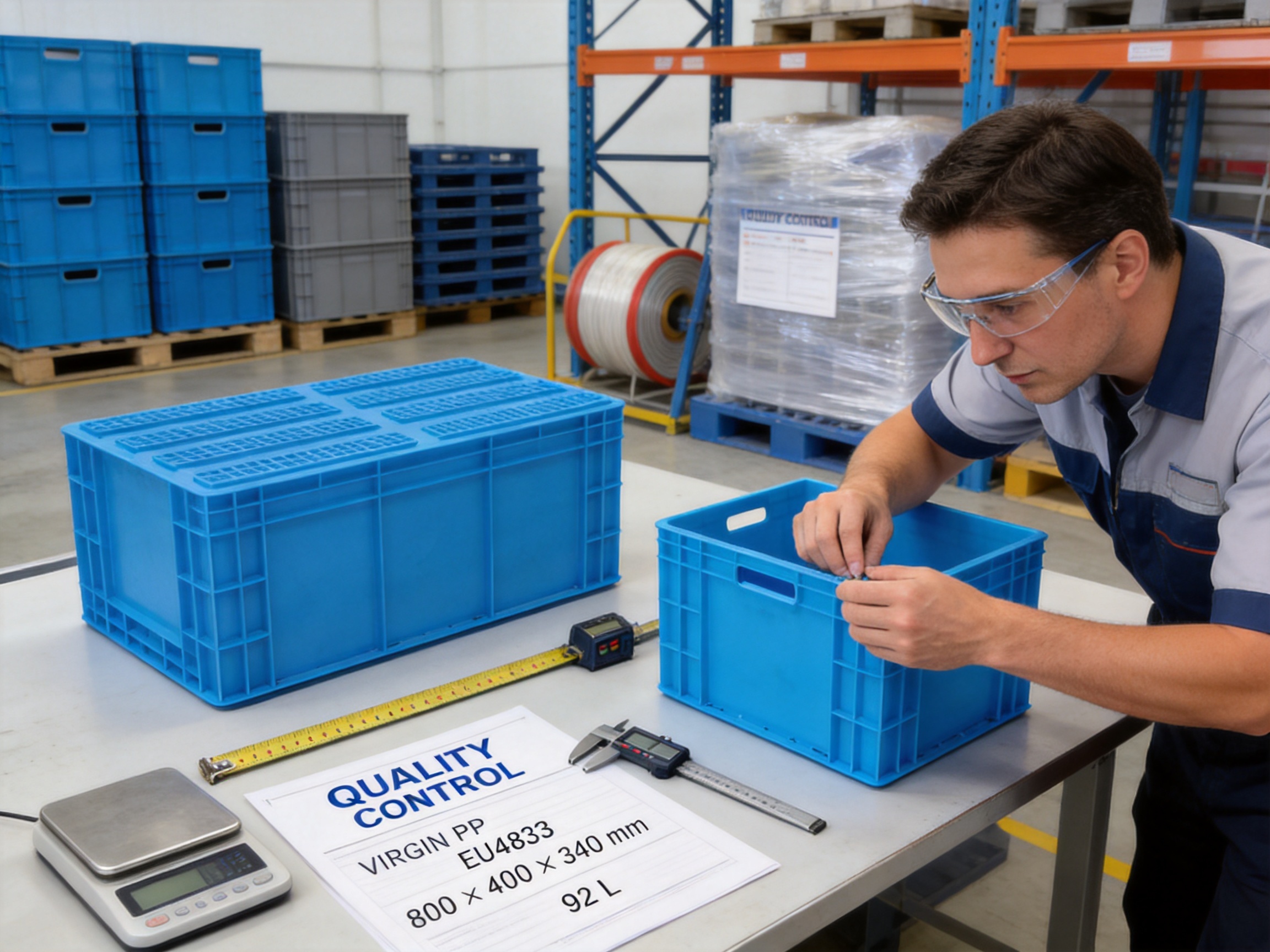
Inspection should not be limited to appearance. A professional quality system may include dimensional checks, weight checks, visual inspection, stacking evaluation, and verification of material or color requirements. For customers purchasing large quantities, batch records and inspection documentation can support traceability and incoming quality control.
The supplier also states that its production follows streamlined and standardized processes. Standardization can improve repeatability and make it easier to support customers who need multiple shipments over time. For warehouse projects, consistency is particularly important because containers purchased at different stages may need to stack together and occupy the same storage locations.
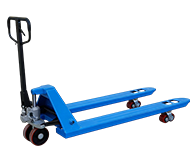
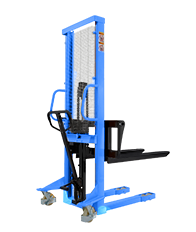
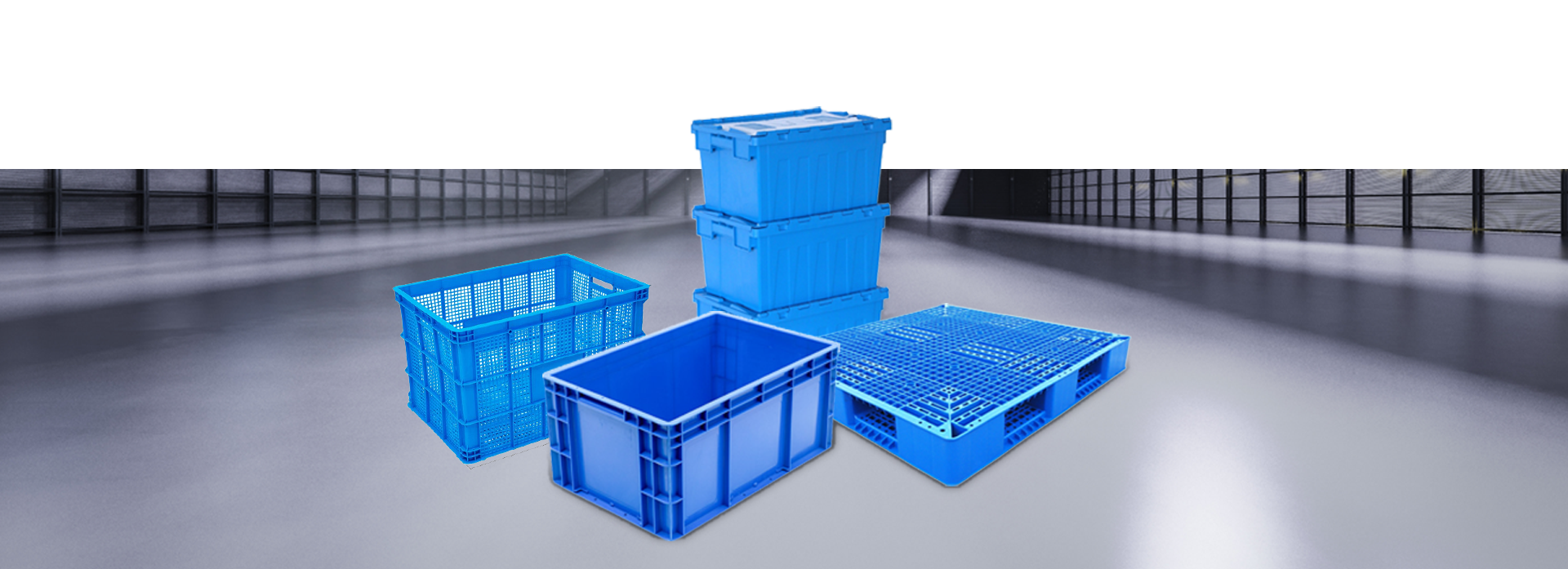
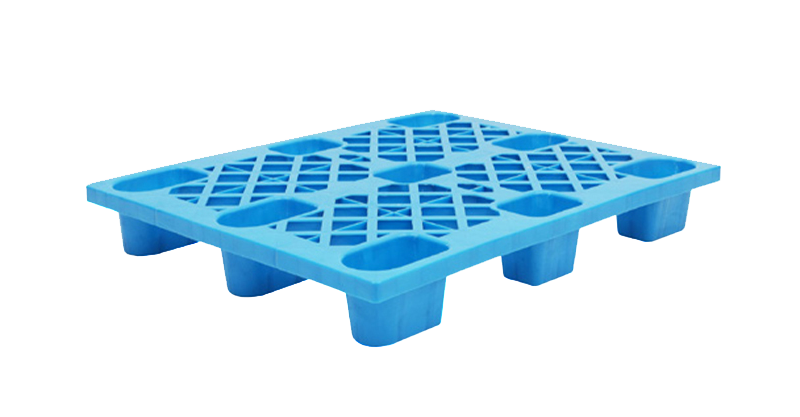
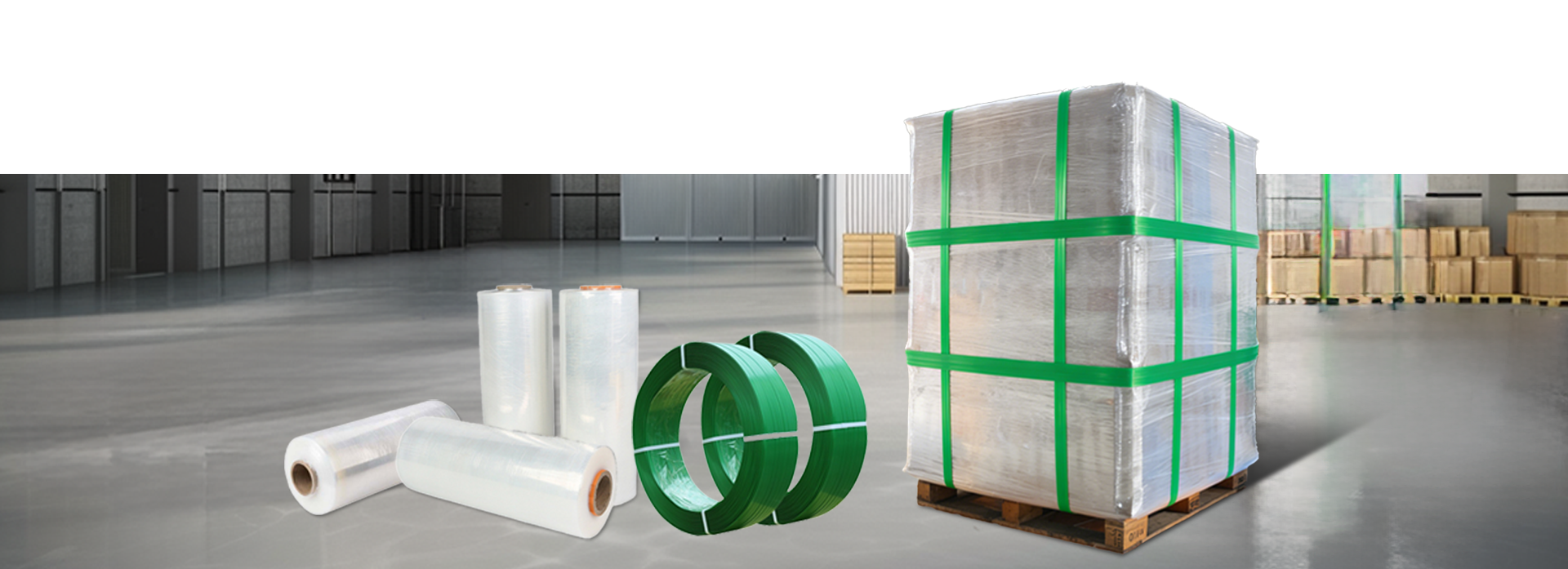
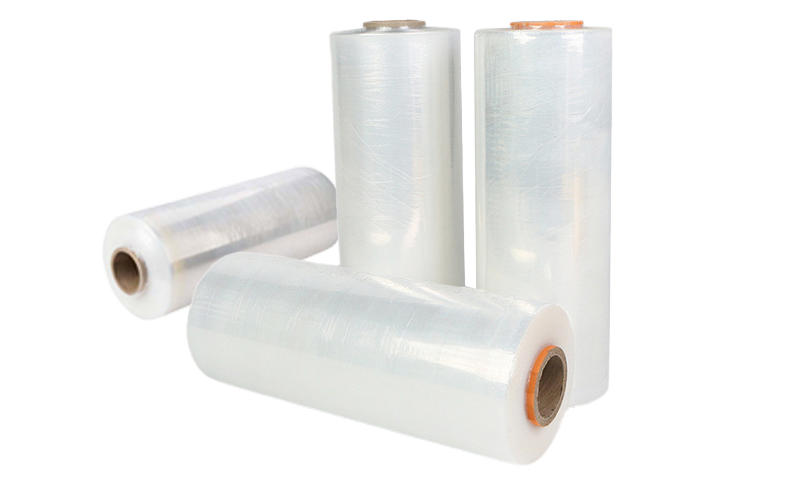
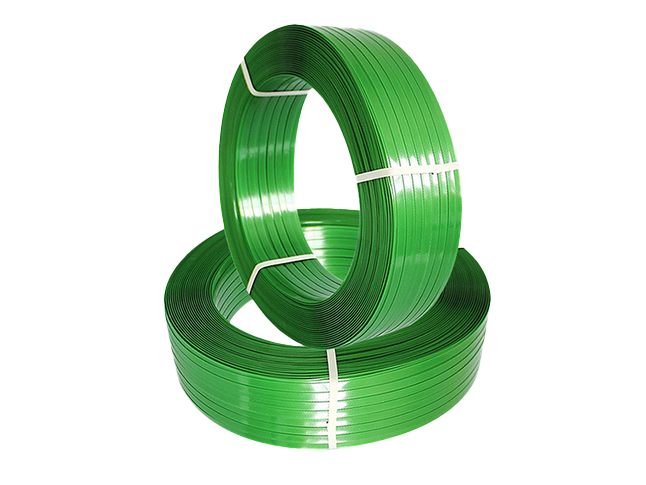
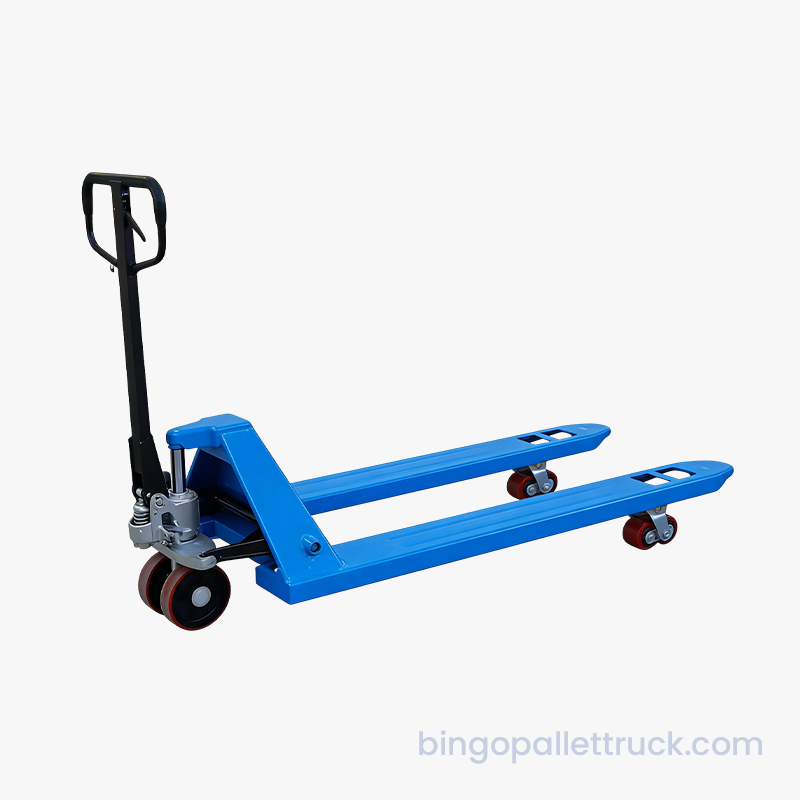
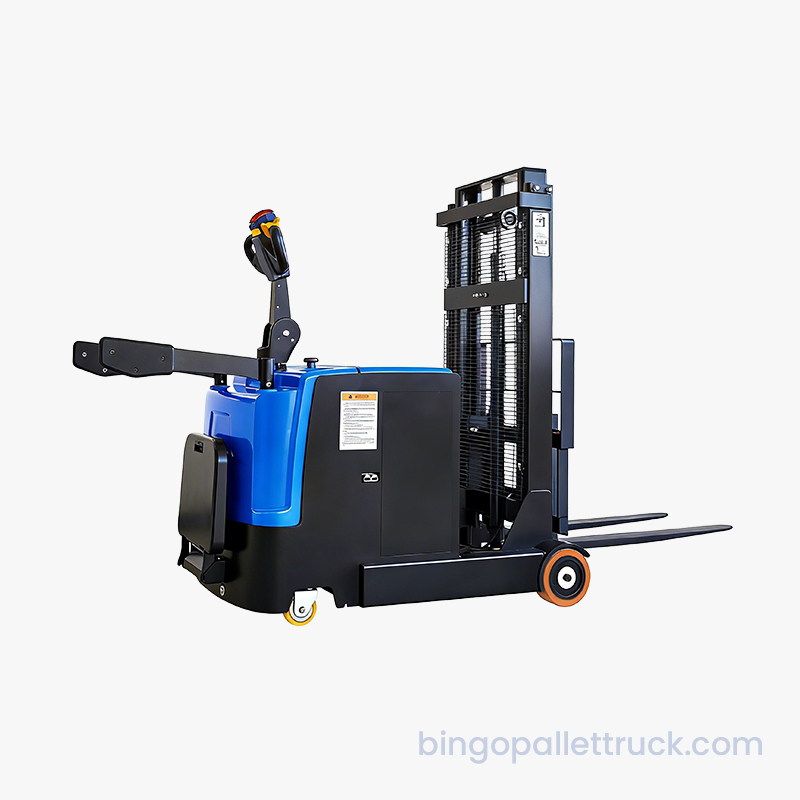
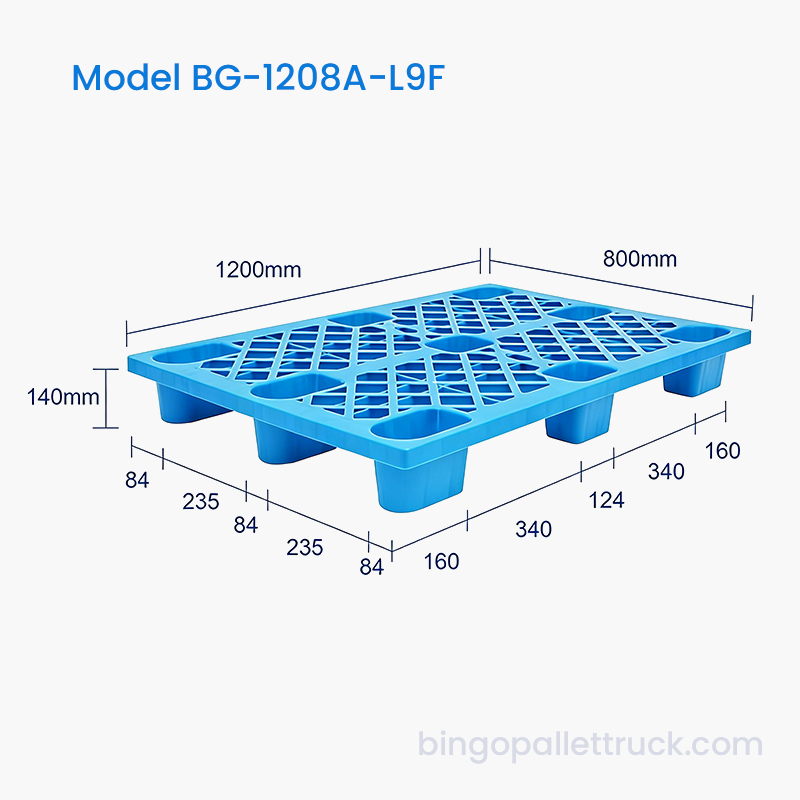
The company’s wider product range is another manufacturing and supply advantage. In addition to plastic totes, its product portfolio includes plastic pallets, crates, bulk containers, manual and electric pallet trucks, stackers, stretch wrap, packing strapping, and warehouse racking. A supplier with products across several logistics categories may be able to coordinate more complete storage and material-handling solutions.
Quality Control from Raw Material to Finished Product
Quality control begins with the definition of the product specification. For the EU4833, this includes the model number, material, dimensions, capacity, weight, and intended use. Clear specifications allow buyers and production teams to work from the same reference point.
Raw material control is essential for plastic products. The use of virgin PP should be supported by appropriate purchasing controls and supplier documentation. Material identity, grade, color, and any application-related requirements should be confirmed before production.
Process control follows raw material inspection. Operators and quality personnel can monitor molding conditions, production output, and visible defects. Regular checks help detect problems before a large quantity of nonconforming units is produced.
Finished-product inspection may involve measuring length, width, height, and weight. These checks help confirm that the tote corresponds to the stated specification. Visual inspection can identify cracks, deformation, sharp edges, surface defects, or molding irregularities that could interfere with handling.
Packaging and dispatch control are also important. Industrial containers should be protected from unnecessary damage during transportation and counted accurately before shipment. The manufacturer’s in-stock and ready-to-ship capability can help customers shorten procurement lead times when standard specifications are available.
For customized orders, additional checks may be required. These could include special colors, logos, labels, inserts, packaging arrangements, or material modifications. Buyers should provide a complete technical brief and request approval samples when the application is critical.
Customization and Color Management
Industrial storage systems often use color as a visual management tool. Different colors may identify departments, product status, customer orders, material types, or levels of inspection. The product information indicates that multiple colors and full specifications are available, with customization supported.
Color coding can make warehouse operations more intuitive. For example, one color may be assigned to approved inventory, another to products awaiting inspection, and another to maintenance materials. In a workshop, colors may identify different machine groups or production zones.
Customization may also include customer-specific identification. Logos, printed marks, labels, barcodes, and color combinations can help connect a tote to a company’s inventory management system. Before implementing custom markings, the customer should confirm durability, readability, minimum order quantity, and artwork requirements.
Not every application needs customization. Standard colors can reduce lead time and simplify replenishment. A buyer should compare the operational value of customization with its effect on cost, production scheduling, and minimum purchase quantities.
Warehouse Layout and Storage Planning
Before purchasing a large quantity of EU4833 totes, warehouse planners should map the intended storage area. The external dimensions of 800 × 400 × 340 mm should be compared with rack beam spacing, shelf depth, aisle width, pallet positions, workbench dimensions, and conveyor interfaces.
Clearance is important. The nominal external size should not be treated as the only space requirement. Operators need room to grasp, pull, place, and inspect the bin. If totes are used on shelves, the shelf should provide suitable support across the base without creating excessive overhang.
Vertical clearance should account for the total height of the stack, the safe access method, and any overhead obstructions. Although the product information indicates stacking of 10 or more layers under suitable conditions, the actual warehouse limit should be determined according to the load, floor condition, handling method, and workplace safety rules.
Floor storage can be effective for high-volume items that are replenished frequently. Rack storage is generally more suitable for products that require greater organization or when floor space is limited. The tote can also be positioned near production lines as a line-side replenishment container.
Labels should be placed where workers can read them without removing the container from the stack. A consistent label location can speed up identification and reduce errors. If the tote is used in a barcode or RFID system, the placement and durability of the identification method should be tested in the actual operating environment.
Ergonomics and Labor Efficiency
Storage containers affect the physical effort required from workers. A suitable bin should be easy to move when empty, stable when loaded, and appropriate for the lifting methods used in the facility. The 3.7 kg empty weight supports practical manual handling, but the total loaded weight must be evaluated carefully.
Since the container can hold up to 92 liters, a fully loaded unit may become too heavy for safe manual lifting depending on the density of the goods. Heavy components should be divided into smaller quantities, moved with suitable equipment, or stored at an appropriate height. Capacity should be treated as a volume reference rather than an instruction to maximize weight.
Standardized totes can reduce awkward transfers because workers know where to place and retrieve them. Consistent dimensions also make it easier to design shelving and workstations at suitable heights. These improvements may support faster picking while reducing unnecessary reaching, bending, and searching.
When the containers are used with pallet trucks, carts, conveyors, or other handling equipment, the base and load arrangement should be assessed. The tote is primarily a storage and logistics container, so any automated or mechanized application should be validated before full-scale deployment.
Transport Protection and Internal Organization
A plastic tote can provide a stable outer shell for goods moving through a warehouse or between facilities. Its rigid walls help maintain a defined shape during transport, while stackability helps create more secure load units.
Internal organization depends on the goods. Loose parts may require bags, dividers, bins, or trays. Fragile components may need foam, corrugated separators, or molded inserts. Products with sensitive surfaces may need protective film or sleeves to prevent abrasion.
Using the correct internal packaging is particularly important because a large empty space can allow products to move during transport. The tote protects the outside of the load, but it does not eliminate the need for proper cushioning or separation. A well-designed packing method should prevent impact, rubbing, and uncontrolled movement.
The EU4833 can also support batch control. A tote may represent one production lot, purchase order, customer order, or inspection group. This makes it easier to maintain traceability and prevent mixing between batches.
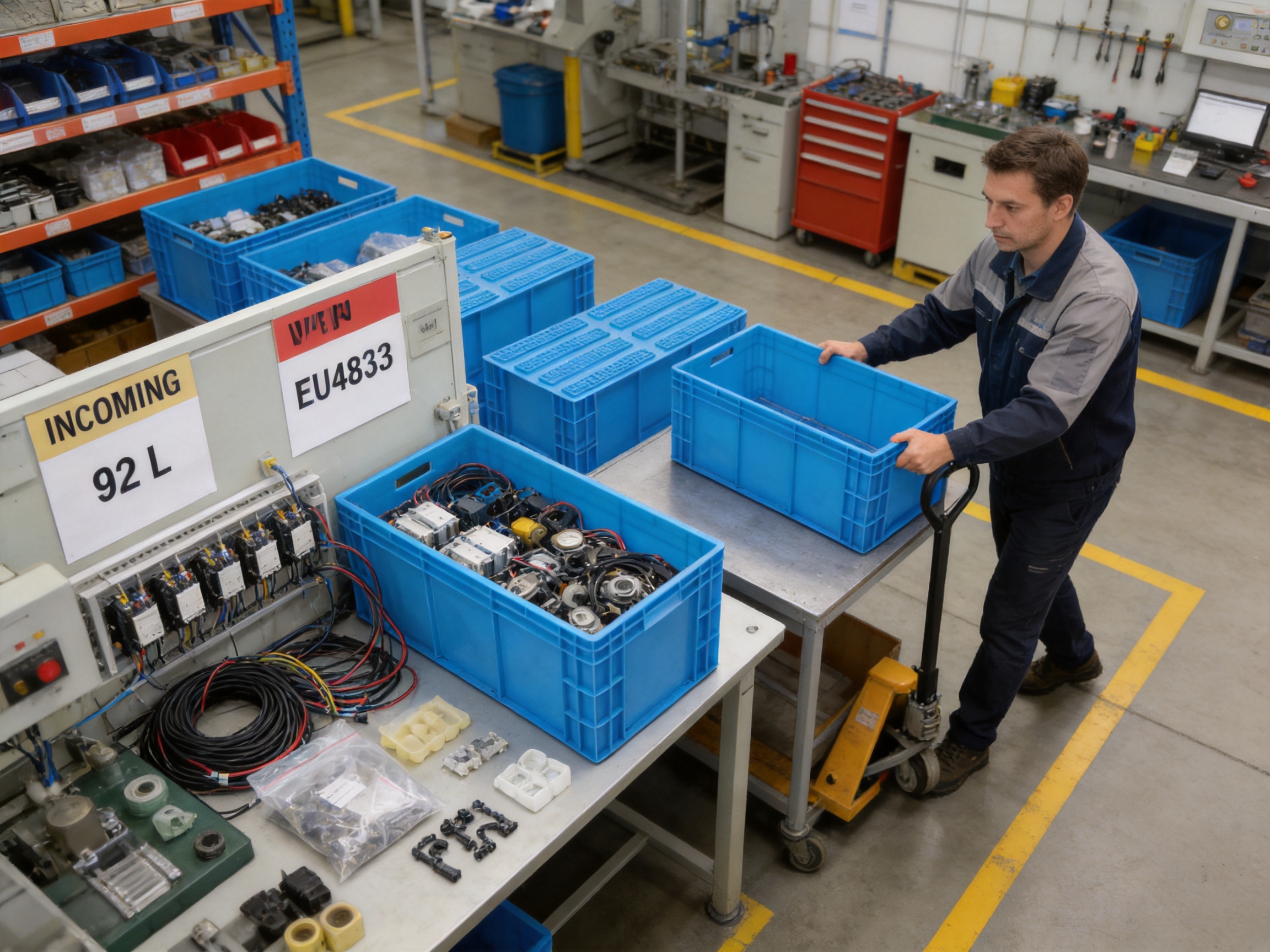
Sustainability and Reusable Packaging Value
Reusable plastic containers can contribute to more efficient packaging systems when they are used repeatedly and managed properly. A durable tote may replace many disposable cartons over its service life, reducing the amount of single-use packaging required for internal movement.
The environmental value of reuse depends on actual usage. A container that is purchased but rarely reused does not provide the same benefit as one that circulates frequently through a well-organized returnable packaging system. Businesses should therefore define collection points, cleaning procedures, inspection routines, and replacement policies.
Polypropylene is also a material that can be considered in end-of-life planning. When a tote is no longer suitable for service, the business should follow local recycling and waste-management requirements. Separating damaged plastic products from general waste may allow them to enter an appropriate recycling stream, subject to local facilities and material identification.
Reusable packaging can also reduce operational waste. Standardized totes may improve inventory control, decrease product damage, and reduce the number of replacement cartons required. These benefits can be as important as the reduction in packaging material itself.
Comparing the EU4833 with Competing Storage Solutions
Industrial buyers typically compare several alternatives before selecting a tote. These may include cardboard cartons, metal containers, wooden cases, small plastic bins, and other large-format plastic boxes.
| Comparison Factor | EU4833 Plastic Tote | Cardboard Carton | Small Plastic Bin | Metal Container |
| Reusability | Designed for repeated use | Often limited by wear and moisture | Generally reusable | Generally reusable |
| Long-Format Storage | Strong suitability due to 765 mm internal length | Depends on carton design | Usually limited | May be suitable but less flexible |
| Empty Weight | Moderate at 3.7 kg | Very light | Low to moderate | Usually heavier |
| Stacking Consistency | Standardized rigid structure | Can deform with use | Depends on model | Usually rigid |
| Cleaning Potential | Generally easier to clean than cardboard | Limited | Generally good | Good, but may require corrosion control |
| Capacity | 92 liters | Varies widely | Often lower | Varies widely |
| Handling Efficiency | Good for consolidated loads | Good for one-way shipment | Good for small parts | May require mechanical handling |
The EU4833’s strongest competitive position is the combination of capacity, length, manageable empty weight, and stackable plastic construction. Some containers may offer greater impact resistance, while others may be lighter or less expensive for one-way use. The correct comparison should therefore consider the total operating cost rather than purchase price alone.
Total cost may include packaging replacement, labor, product damage, storage space, cleaning, return transport, and disposal. A reusable tote can produce value when it remains in circulation, protects products, and reduces repeated handling.
Procurement Guidance for Industrial Buyers
Buyers should begin by identifying the products that will be stored. Measure their length, width, height, weight, fragility, surface sensitivity, and required quantity per storage unit. Compare those measurements with the EU4833 internal dimensions rather than relying only on nominal capacity.
Next, review the handling process. Determine whether the tote will be lifted manually, moved on carts, placed on pallets, used on shelving, or transferred through a conveyor system. The container should be tested in the actual workflow before a large order is finalized.
Storage conditions should also be documented. Consider indoor or outdoor use, temperature range, exposure to oils or chemicals, cleaning requirements, sunlight, humidity, and the expected stacking height. These factors may influence material selection, color, inspection intervals, and service life.
For larger projects, request product samples, technical drawings, material information, and quality documentation. Confirm the external and internal dimensions, unit weight, color, packaging method, and availability. If the application requires food contact, antistatic performance, chemical resistance, or specific regulatory compliance, request the relevant evidence in writing.
It is also useful to plan replenishment. The manufacturer indicates that standard products may be in stock and ready to ship, which can help reduce lead time. However, buyers should confirm current inventory, production schedules, shipping conditions, and the availability of replacement units before launching a standardized warehouse program.
Why Choose an Integrated Logistics Equipment Supplier
A warehouse project rarely involves storage bins alone. Businesses may also require pallet trucks, stackers, pallets, racking, stretch wrap, strapping, and other material-handling products. Working with a supplier that covers several equipment categories can simplify communication and improve coordination.
Yancheng Bingo Machinery Equipment Co., Ltd. presents itself as a supplier of warehousing and logistics equipment with a product range covering handling equipment, storage containers, packaging materials, and warehouse racks. This broader portfolio allows customers to discuss storage and handling requirements as part of one integrated project.
An integrated supplier may help customers coordinate container dimensions with rack layouts, pallet sizes, handling equipment, and packaging methods. It may also simplify procurement, documentation, spare-unit planning, and after-sales communication.
The company describes its business as serving manufacturing, e-commerce logistics, warehousing and distribution, and supermarket retail. These sectors have different storage needs, but all require dependable movement of materials and clear organization of inventory.
Its stated focus on quality inspection, standardized processes, and supply-chain coordination is especially relevant for customers purchasing industrial containers in volume. The ability to provide consistent products over repeated orders can be more valuable than a low initial price from an unverified source.
Implementation Plan for a New Tote System
A successful introduction should begin with a pilot area. Select one workshop, storage zone, or product family and use the EU4833 for a defined period. Measure picking time, replenishment frequency, damage rates, storage density, and worker feedback.
During the pilot, establish loading rules. Define the maximum recommended fill level, the acceptable weight range, the permitted stack height, and the required internal separators. Make these rules visible to all relevant employees.
Create a labeling standard. Every tote should have a consistent location for its product code, description, batch information, and status. If color coding is used, document the meaning of each color so that new workers can understand the system.
Set up inspection procedures. Check for cracks, deformation, contamination, damaged labels, and unsafe stacking conditions. Remove damaged containers from circulation and determine whether they can be repaired, recycled, or replaced.
Finally, review the results against the original business objectives. A tote system should be expanded only when it demonstrates measurable improvements in organization, handling, space usage, protection, or total operating cost.
Frequently Asked Questions
What is the capacity of the EU4833 storage bin?
The nominal capacity is 92 liters. The actual usable capacity depends on the shape, size, and packing method of the goods placed inside the container.
What are the external dimensions?
The external dimensions are 800 × 400 × 340 mm, measured as length × width × height.
What are the internal dimensions?
The internal dimensions are 765 × 365 × 330 mm. These measurements should be used when checking whether a particular product will fit inside the tote.
What material is used to manufacture the tote?
The product specification identifies polypropylene, or PP, as the material. It is described as virgin, food-grade PP. Customers requiring food-contact use or other regulated applications should confirm the applicable compliance documents before purchase.
Is the EU4833 suitable for long components?
Yes. Its extended internal length of 765 mm makes it more suitable for long components than many compact plastic bins. The goods should still be measured carefully, including any protective packaging or required clearance.
Can the containers be stacked?
Yes. The EU4833 is designed for stackable storage and is described as capable of stacking up to 10 or more layers under suitable conditions. The actual safe stacking height depends on load weight, distribution, floor condition, and the storage environment.
Can the tote be used for heavy parts?
It can be used for industrial parts, but the total loaded weight must be controlled. The 92-liter capacity refers to volume, not a universal maximum load. Heavy products should be distributed evenly, and the supplier should be consulted for application-specific load requirements.
Is the bin suitable for electronic components?
It can be used for electronics distribution and component storage, particularly when internal packaging or separators are added. However, standard PP should not be assumed to provide electrostatic protection. Static-sensitive applications require confirmation of an antistatic or conductive solution.
Can the color be customized?
The product information indicates that multiple colors and customization are available. Buyers should confirm color options, minimum order quantities, labeling or logo requirements, and lead times with the supplier.
How does this tote compare with cardboard cartons?
The plastic tote is designed for repeated use, consistent stacking, and easier cleaning. Cardboard may be more economical for one-way shipments, but it can be more vulnerable to moisture, compression, and repeated handling.
Can the tote be used outdoors?
The product is primarily presented for warehouse, workshop, manufacturing, and logistics use. Outdoor use should be evaluated separately, especially regarding sunlight, temperature, rain, contamination, and long-term weather exposure.
Is the container compatible with warehouse racks?
Its standardized external dimensions may make it suitable for selected shelving and rack layouts, but compatibility must be checked against the rack’s shelf depth, load rating, support arrangement, and access clearance.
How should the tote be cleaned?
Cleaning procedures should match the material, contents, and workplace requirements. Use a method approved by the supplier or the customer’s quality department, especially when the container is used for regulated products or food-related applications.
Does the supplier offer other logistics products?
Yes. The supplier’s stated product range includes plastic pallets, crates, bulk containers, manual and electric pallet trucks, stackers, stretch wrap, packing strapping, and warehouse racking.
What should be confirmed before placing a bulk order?
Buyers should confirm material, dimensions, weight, capacity, color, stacking requirements, load expectations, packaging, stock status, delivery schedule, quality documentation, and any customization or regulatory requirements.
Conclusion
The EU4833 92-liter industrial storage bin is designed for organizations that need more than a basic plastic box. Its long 800 mm format, 765 mm internal length, 92-liter capacity, manageable 3.7 kg empty weight, and stackable polypropylene construction make it suitable for a wide range of warehouse and workshop applications.
Its main advantages over smaller bins are greater capacity, improved long-product storage, and fewer handling units. Compared with ordinary cardboard cartons, it offers a reusable, rigid, and more consistent format for internal logistics. Compared with heavy metal containers, it provides a lighter solution that can be handled more easily in many routine warehouse operations.
The product’s value also depends on the manufacturing system behind it. Virgin material selection, standardized molding, dimensional control, inspection procedures, and supply-chain coordination all contribute to reliable performance. The manufacturer’s wider portfolio of storage, handling, packaging, and racking products further supports integrated logistics projects.
For the best results, businesses should match the tote to the actual product dimensions, load weights, storage layout, handling method, and compliance requirements. When implemented with clear labeling, consistent stacking rules, suitable internal protection, and regular inspection, the EU4833 can become an effective part of a modern reusable packaging and warehouse organization system.
References
1. Product specification sheet for EU4833 extra-large EU plastic tote box.
2. Product information supplied for the 92-liter industrial storage bin, including dimensions, material, weight, capacity, and stacking characteristics.
3. General principles of reusable transport packaging and returnable logistics container management.
4. General warehouse layout and material-handling planning practices for standardized storage containers.
5. General polypropylene material characteristics and industrial plastic processing principles.
6. General quality-control practices for injection-molded industrial containers.
7. General guidance for warehouse ergonomics, load distribution, labeling, and safe stacking.
Product: 92L Extra Large EU Industrial Storage Bin for Workshop


Copyright @ Yancheng Bingo Machinery Equipment Co., Ltd. All rights reserved Warehouse Logistics Equipment Manufacturer Pallet Truck Supplier
