 en
en  Español


67L Collapsible Fruit and Vegetable Crate for Efficient Fresh Produce Logistics
Fresh produce logistics requires storage equipment that can protect products, support efficient handling, reduce operating costs, and adapt to constantly changing supply-chain conditions. Fruits and vegetables are often moved through several stages before reaching consumers, including harvesting, preliminary sorting, packing, warehousing, transportation, distribution, and retail display. At every stage, the choice of container affects product quality, labor efficiency, storage density, vehicle utilization, and total logistics expenditure.
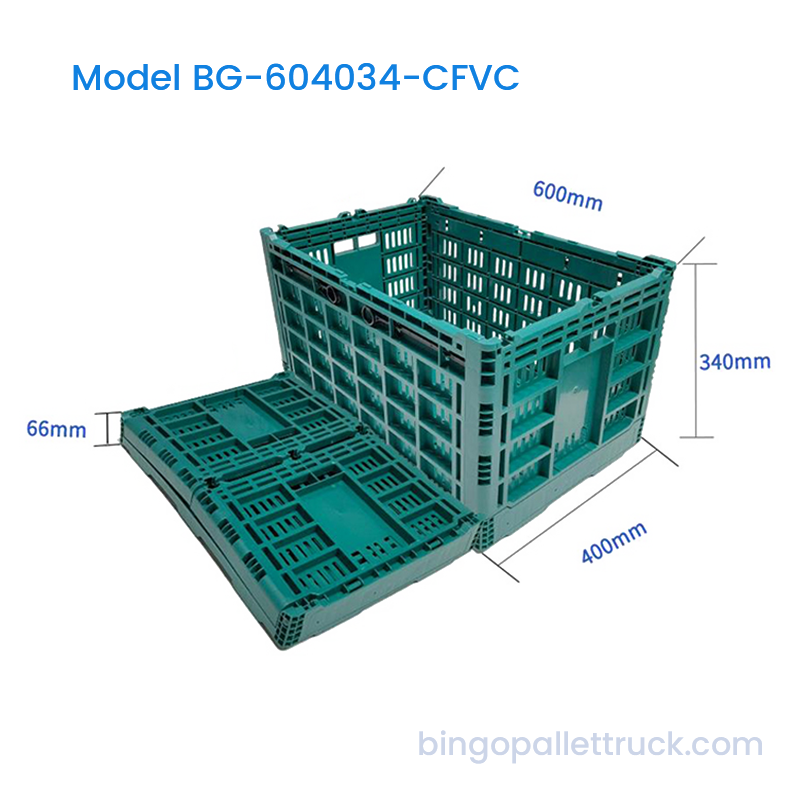
The 67L Collapsible Fruit and Vegetable Crate, model BG-604034-CFVC, is designed to address these operational requirements in one reusable container. Measuring 600×400×340mm externally, the crate provides a large working capacity of 67 liters while remaining compatible with common warehouse and distribution workflows. Its collapsible construction allows the height to be reduced from 340mm during use to only 66mm when folded. This 80.6% folding ratio helps businesses save valuable storage space and reduce the volume occupied by empty return shipments.
Manufactured from food-safe polypropylene, the crate combines low weight with structural strength, ventilation, stackability, and repairable modular components. It weighs approximately 3kg, making it practical for repeated manual handling while offering a load-bearing performance suitable for demanding logistics environments. Farms, produce wholesalers, supermarkets, cold-chain distributors, e-commerce fulfillment centers, and warehouse operators can use the crate as a durable alternative to disposable cartons, non-folding plastic boxes, or containers that cannot be repaired economically.
This article examines the crate’s construction, operating advantages, manufacturing strengths, logistics value, and practical applications. It also explains how its folding design, ventilation base, ergonomic handles, label holder, all-plastic pin shaft connection, and replaceable components contribute to a more efficient and sustainable material-handling system.
67L Collapsible Fruit and Vegetable Crate for Logistics and Supermarkets
Content
- 1 Product Overview
- 2 Why Collapsible Design Matters in Produce Logistics
- 3 Large 67L Capacity in a Manageable Format
- 4 Food-Safe Polypropylene Construction
- 5 Structural Strength and Load Performance
- 6 Ventilated Base for Fresh Produce Protection
- 7 Ergonomic Handles for Safer Handling
- 8 Label Holder for Inventory Visibility
- 9 Modular Repairability and Lower Replacement Costs
- 10 Opening and Folding Operation
- 11 Comparison with Conventional Rigid Crates
- 12 Comparison with Cardboard and Disposable Packaging
- 13 Manufacturing Process and Quality Control
- 14 Production Equipment and Process Standardization
- 15 Advantages for Farms and Packing Stations
- 16 Advantages for Supermarkets and Retail Distribution
- 17 Advantages for Distribution Centers and E-Commerce Logistics
- 18 Cost Efficiency and Total Ownership Value
- 19 Cleaning, Inspection, and Operating Recommendations
- 20 How the Product Compares with Competing Solutions
- 21 Supplier Capability and One-Stop Logistics Support
- 22 Implementation in a Reusable Container System
- 23 Frequently Asked Questions
- 23.1 What is the capacity of the crate?
- 23.2 What material is used to manufacture the crate?
- 23.3 How much space does the crate save when folded?
- 23.4 Is the crate suitable for fresh fruits and vegetables?
- 23.5 How much does one crate weigh?
- 23.6 Can the crate support heavy loads?
- 23.7 What is the purpose of the ventilated base?
- 23.8 Does the crate have a labeling feature?
- 23.9 What happens if part of the crate is damaged?
- 23.10 How does the all-plastic pin shaft design differ from a buckle design?
- 23.11 Is the crate stackable?
- 23.12 Who can benefit from this product?
- 23.13 How should the crate be cleaned?
- 23.14 Can the crate replace cardboard packaging in every application?
- 23.15 What information should be confirmed before ordering?
- 24 Conclusion
- 25 References
- 26 Product: 67L Collapsible Fruit and Vegetable Crate for Logistics and Supermarkets
Product Overview
The BG-604034-CFVC is a collapsible plastic crate developed for fresh produce storage and transportation. Its external dimensions are 600×400×340mm, while the internal dimensions are 565×365×325mm. The difference between the external and internal dimensions provides room for the crate walls, base, frame, handles, and folding mechanisms while preserving a generous internal area for fruits, vegetables, and other goods.
With a stated capacity of 67L, the crate can accommodate substantial volumes of produce without becoming excessively difficult to carry. Its rectangular footprint is suitable for organized warehouse layouts, palletized distribution, vehicle loading, and supermarket backroom operations. The dimensions also support consistent stacking and space planning, which is important when hundreds or thousands of containers are used across a supply chain.
The crate is produced from PP, or polypropylene. This material is widely used in reusable logistics products because it offers a useful balance of toughness, light weight, chemical resistance, cleanability, and processability. For food-related logistics, the use of food-safe PP is especially important because containers may come into contact with unpackaged produce during harvesting, sorting, and distribution.
The container has a working height of 340mm when opened. When it is no longer needed, the side panels fold inward and the overall height is reduced to 66mm. This creates a substantial difference between the volume required for active use and the volume required for storage or return transport. The crate can therefore provide large-capacity storage when needed without permanently occupying the same amount of space when empty.
| Product Attribute | Specification | Operational Benefit |
| Model | BG-604034-CFVC | Clear product identification for purchasing and inventory planning |
| Material | Food-safe PP | Lightweight, durable, reusable, and suitable for produce logistics |
| External dimensions | 600×400×340mm | Efficient use of warehouse and vehicle space |
| Internal dimensions | 565×365×325mm | Practical usable area for fruits and vegetables |
| Capacity | 67L | Large working volume for collection, storage, and distribution |
| Product weight | Approximately 3kg | Improved manual handling compared with heavier rigid containers |
| Folded height | 66mm | Reduced storage and empty-return volume |
| Fold ratio | 80.6% | Significant space savings during idle periods and reverse logistics |
Why Collapsible Design Matters in Produce Logistics
Fresh produce supply chains frequently experience an imbalance between loaded and empty container movements. A full crate moves from a farm or packing station to a distribution center or store, but the empty crate must later return to the point of origin or be stored for another cycle. If the container remains rigid, the empty return trip requires almost the same three-dimensional volume as the loaded trip. This can increase transportation frequency, reduce the number of empty containers that fit into a vehicle, and consume valuable warehouse space.
The collapsible design addresses this problem directly. Once produce has been unloaded, operators can fold the crate to a height of 66mm. Multiple folded crates can then be grouped together in a much smaller space than an equivalent quantity of open crates. This can improve reverse-logistics efficiency and help businesses reduce the number of vehicle movements required to collect or redistribute empty containers.
An 80.6% folding ratio is particularly valuable for businesses that operate through seasonal peaks. During harvest periods, large numbers of crates may be needed at the same time. Outside the peak season, the same crates can be folded and stored more compactly. This allows a company to maintain a larger reusable-container fleet without requiring warehouse expansion solely for idle packaging equipment.
Collapsibility can also support better use of supermarket and distribution-center backrooms. Retail facilities often have limited space for empty containers after goods have been transferred to shelves or display areas. Open crates can create clutter and interfere with staff movement. Folded crates occupy a significantly smaller vertical profile, making it easier to organize them in designated storage zones and maintain safer working aisles.
Compared with disposable cardboard cartons, a reusable folding crate can provide a longer service life and more consistent handling performance. Cardboard may become weakened by humidity, condensation, or repeated movement. A polypropylene crate can be washed, reused, folded, stacked, and integrated into a returnable logistics system. These characteristics are especially relevant for produce businesses seeking to reduce packaging waste and improve container control.
Large 67L Capacity in a Manageable Format
Capacity is a central factor when selecting a produce crate. A container that is too small increases handling time because workers must divide one shipment into numerous units. A container that is too large may become difficult to lift, overload the contents, or create excessive compression on delicate products. The 67L capacity of the BG-604034-CFVC provides a practical middle ground for many fruit and vegetable applications.
The internal dimensions of 565×365×325mm offer a useful rectangular storage space while allowing the container to remain compatible with established handling routines. Produce can be placed directly into the crate, packed in smaller bags or trays, or separated with suitable internal materials according to product requirements. The open structure and ventilated base can also support airflow around the contents.
The capacity is suitable for many types of produce, including leafy vegetables, root vegetables, fruits, packaged agricultural products, and other goods requiring reusable transportation containers. The exact loading quantity will depend on product density, fragility, moisture content, packaging method, and the customer’s handling procedures. Operators should always select a loading pattern that prevents excessive compression and allows safe lifting.
The 600×400mm footprint is also practical for standardized warehouse planning. Containers with consistent footprints are easier to arrange in rows, stack in stable formations, place on pallets, and load into delivery vehicles. Uniform dimensions reduce wasted gaps and improve the predictability of storage calculations. For large distribution operations, even small improvements in space utilization can produce meaningful savings over time.
Food-Safe Polypropylene Construction
The crate is manufactured using food-safe PP material. Polypropylene is a thermoplastic polymer commonly selected for reusable storage containers because it can be molded into strong, accurately shaped components while maintaining relatively low weight. Its surface can be cleaned more easily than porous packaging materials, helping operators maintain organized hygiene procedures.
In produce logistics, containers are exposed to dust, soil, water, condensation, plant residue, and frequent handling. The material must therefore tolerate repeated use in environments where cleaning and inspection are routine. The PP construction supports this type of reusable cycle, provided that users follow appropriate cleaning, drying, and sanitation procedures for the specific produce application.
The 3kg product weight contributes to easier manual handling. A lighter empty crate is easier for workers to move, fold, stack, and return. Reduced container weight may also contribute to lower vehicle tare weight when large quantities of empty containers are transported. At the same time, the crate is designed as a structural logistics product rather than a disposable box, with a reinforced frame and connection system intended for repeated operational use.
Material selection also affects manufacturing consistency. Polypropylene can be processed through controlled molding operations to produce repeatable dimensions, smooth surfaces, ventilation openings, handles, label holders, and folding components. Consistent molding is important because crates must open and close reliably, stack predictably, and interact properly with other containers in the same fleet.
For businesses comparing reusable crates, the relevant evaluation should include more than initial purchase price. Service life, ease of cleaning, repairability, empty-return volume, labor requirements, and replacement rates all affect the total cost of ownership. The BG-604034-CFVC is designed to deliver value across these operational factors rather than focusing only on the price of a single unit.
Structural Strength and Load Performance
A produce crate must resist the forces created by stacking, lifting, vehicle movement, loading, unloading, and repeated folding. The crate’s frame and side panels are designed to provide a stable enclosure around the stored goods. Its structure is intended to support high-load applications, and load-bearing tests indicate that foldable crates can support more than 120kg under high-strength stress conditions.
Actual safe working capacity depends on factors such as load distribution, stacking height, temperature, handling equipment, crate condition, and the duration of the load. Users should establish operating limits appropriate to their own environment and avoid exceeding recommended specifications. Nevertheless, the reported test performance demonstrates that the folding mechanism is not intended merely for light-duty storage. It is engineered for demanding commercial logistics use.
The upper frame helps maintain the shape of the open container and contributes to stack stability. The base supports the load and includes oval ventilation holes. The side panels form the containment walls, while the pin shafts and latches connect the moving sections. Each component performs a specific structural or operational function, and the modular arrangement allows damaged parts to be addressed without necessarily discarding the entire crate.
Compared with low-cost folding boxes that may rely on thin hinges or fragile clips, the crate uses all-plastic pin shaft connections. These connections are designed to provide stronger assembly performance than traditional buckle-style designs. The pin shafts support repeated opening and folding while keeping the side panels connected to the base and frame.
Durability is not only a matter of material thickness. It also depends on how stress is distributed through the design. Rounded edges, reinforced connection zones, a stable upper frame, and accurately fitted components can help reduce concentrated stress. The crate’s manufacturing process is therefore important because consistent dimensions and proper assembly directly influence the reliability of the finished product.
Ventilated Base for Fresh Produce Protection
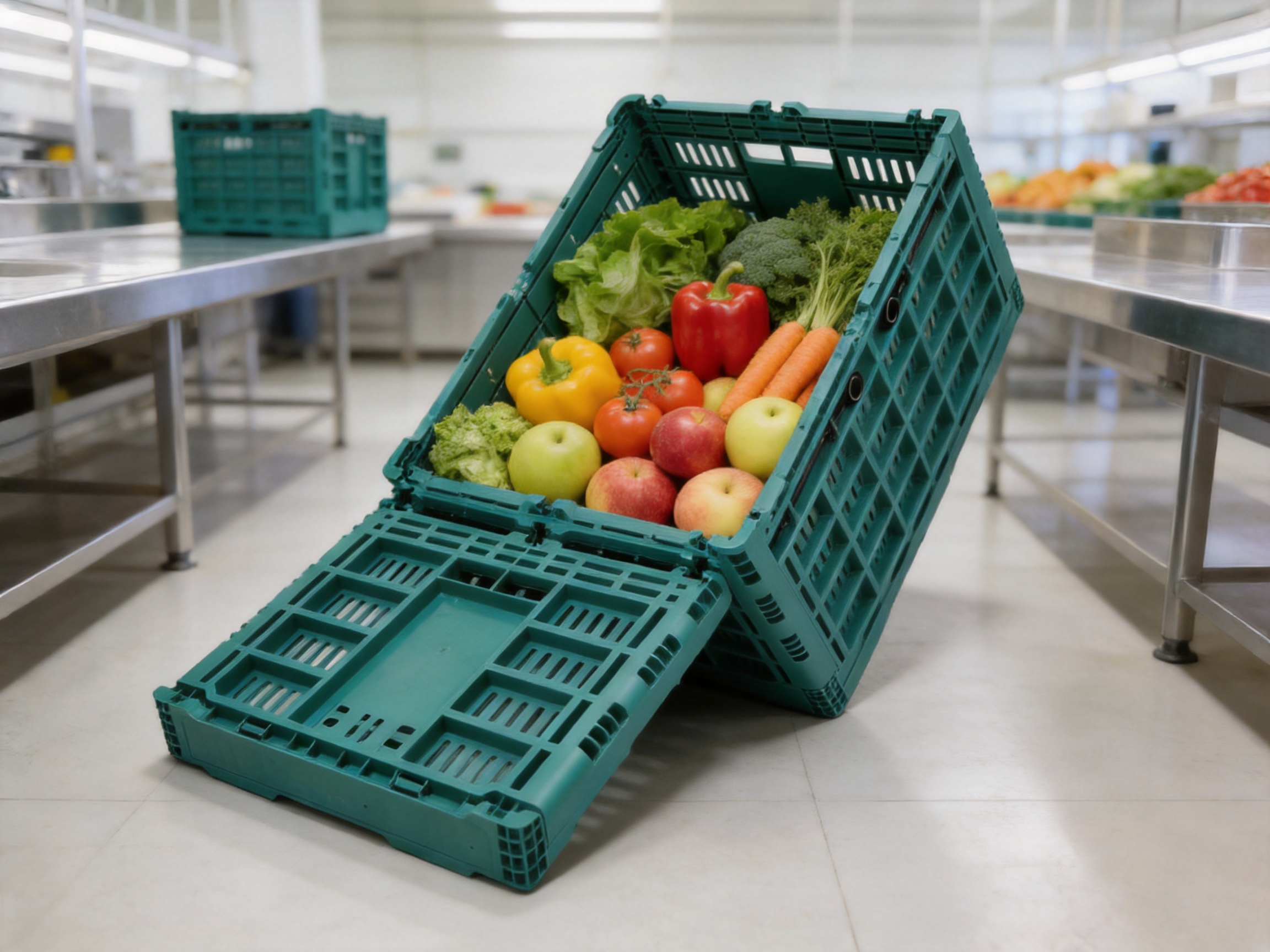
Fresh fruits and vegetables continue to respire after harvesting. Heat, moisture, and gases can accumulate if produce is packed in an environment with insufficient ventilation. The crate’s smooth ventilated base uses oval openings to promote air circulation around the contents. This can help reduce heat accumulation and improve airflow during storage and transportation.
Ventilation is particularly relevant during refrigerated transport, temporary storage, and distribution-center handling. Air must be able to move around crates so that temperature control equipment can work more effectively. A ventilated container can also help moisture escape instead of allowing condensation to remain trapped against produce for extended periods.
The shape and arrangement of ventilation holes must balance airflow with structural strength. Openings that are too large may weaken the base or allow small items to fall through. Openings that are too small may not provide sufficient circulation. The oval ventilation design is intended to provide airflow while maintaining a smooth, practical surface for handling and cleaning.
Ventilation alone cannot prevent all produce damage. Product quality also depends on harvesting methods, temperature management, loading patterns, humidity control, stacking height, and transportation conditions. However, a well-designed ventilated crate provides a better foundation for these procedures than a closed container with limited airflow.
Ergonomic Handles for Safer Handling
Handling efficiency is influenced by the way workers interact with a container. The crate includes thickened handles with smooth, burr-free surfaces. These handles are designed to provide a more comfortable grip during lifting, carrying, shelf replenishment, vehicle loading, and crate return operations.
A comfortable handle can reduce the irritation and hand fatigue associated with repeated lifting. This is important in farms, packing houses, distribution centers, and supermarkets where workers may move dozens or hundreds of crates during a shift. The handle design also helps users maintain a more secure grip when the crate is full or when gloves are being worn.
Handle placement should support balanced lifting. When the weight is distributed evenly across the container, two workers or a single operator can move the crate with better control. Operators should still use appropriate lifting techniques and mechanical assistance when loads are heavy, awkward, or moved over long distances.
The smooth finish of the handles also supports cleaning and inspection. Burrs, sharp edges, or rough surfaces can collect dirt and create discomfort. A well-finished handle contributes to both operator comfort and the overall perception of product quality.
Label Holder for Inventory Visibility
Traceability and identification are increasingly important in modern logistics. The crate includes an integrated label holder on the short side. This feature provides a designated location for product names, batch information, destination codes, handling instructions, or internal inventory labels.
A clear label holder can reduce the time required to identify the contents of a container. Workers do not need to search for loose labels or rely entirely on visual recognition of the produce. In warehouses and retail backrooms, labels can support faster sorting, stock rotation, order preparation, and delivery verification.
The label position on the short side is useful when crates are arranged in rows or stacked with their long sides facing outward. Operators can adapt the labeling method to their existing warehouse management process. Depending on the application, the holder may be used with printed cards, reusable identification sheets, barcodes, or other approved labeling materials.
Effective labeling can also support the first-in, first-out principle for products with limited shelf life. When arrival dates or batch information are visible, staff can make more informed decisions about which containers should be processed first. This can help improve inventory rotation and reduce unnecessary product loss.
Modular Repairability and Lower Replacement Costs
One of the product’s important advantages is its modular construction. The crate includes separate components such as long side panels, short side panels, the base, label card holder, pin shafts, latches, and upper frame. If a particular section is damaged, the relevant part can be replaced instead of discarding the complete container.
This repair approach can reduce long-term operating costs. In a conventional one-piece container, a damaged wall, hinge, or connection may make the entire unit unusable. A modular crate allows businesses to retain the undamaged components and restore the container by replacing the affected part. This can be especially valuable for large fleets where minor damage is inevitable over repeated logistics cycles.
Replaceable components also help simplify maintenance planning. Companies can keep selected spare parts available and repair crates during scheduled inspections. Instead of removing every damaged container from service permanently, staff can evaluate the condition of individual parts and determine whether replacement is practical.
Modularity may extend the useful life of the crate fleet and support more responsible resource use. Fewer complete containers need to be discarded when damage is localized. It also allows the product to adapt to maintenance requirements over time, which is an advantage over low-cost products designed without repair considerations.
Users should ensure that replacement parts are correctly matched to the specific crate model and installed according to the appropriate procedure. Damaged structural components should not be used if they could compromise safe stacking or lifting. Regular inspection remains important, even when replacement parts are available.
Opening and Folding Operation
The crate is designed for straightforward operation. To open it, the user places the folded crate on a stable surface, releases or positions the locking components as required, and raises the side panels into their working position. The upper frame and latches help secure the open configuration. Once assembled, the crate can be loaded with produce and moved through the logistics process.
To fold the crate, the user first removes the contents and ensures that no objects are obstructing the side panels. The locking points are released according to the operating sequence, after which the long and short panels are folded inward. The crate reaches a folded height of approximately 66mm when properly collapsed.
A simple operating sequence is important in high-volume environments. Workers may need to open hundreds of crates at the start of a harvest or fold large quantities after a delivery. If the process is intuitive, training requirements can be reduced and the risk of incorrect handling can be minimized.
Operators should avoid forcing the panels or using tools that could damage the pin shafts, latches, or frame. Crates should be opened and folded on level surfaces whenever possible. Any unit that does not lock securely in the open position should be removed from service for inspection.
Comparison with Conventional Rigid Crates
Rigid plastic crates can be durable and useful, but they maintain their full height whether loaded or empty. This creates a disadvantage when they are returned, stored, or moved between facilities without products. The collapsible BG-604034-CFVC retains the working capacity of a rigid crate while adding the ability to reduce its idle volume.
For warehouse operators, this means that empty containers can occupy less floor and vertical space. For transport providers, it means that more folded crates may fit into a vehicle during reverse logistics. For supermarkets, it means that empty containers can be organized more easily in backroom areas.
The comparison is not limited to physical volume. A collapsible crate can also improve labor productivity because workers do not need to manually dismantle or dispose of packaging after each delivery. The same crate can return to a farm, packing station, or distribution center for another cycle.
Rigid crates may still be preferred in applications where containers remain permanently open, are used for fixed storage, or are subjected to specialized automated handling. However, for supply chains with frequent empty returns and changing storage demands, collapsibility offers a clear operational advantage.
Comparison with Cardboard and Disposable Packaging
Cardboard cartons are widely used in produce distribution because they are economical, printable, and easy to source. However, their performance can decline when exposed to moisture, condensation, soil, or repeated handling. Once damaged, they are usually discarded rather than repaired. Their one-way or limited-use design can also create recurring packaging costs.
A reusable PP crate offers a different cost structure. The initial purchase price may be higher than that of a single disposable carton, but the crate is intended for repeated cycles. When used in a controlled returnable system, it can reduce the need for continuous replacement packaging. The folding design further improves the economics by reducing empty-return and storage volume.
Reusable crates can also provide more consistent dimensions and stacking behavior. Cardboard boxes may deform under load or moisture, making stacks less stable. A rigid plastic frame maintains its shape more reliably during normal use. The ventilated base can also be more suitable for produce requiring airflow.
Businesses should evaluate sanitation, tracking, return logistics, and cleaning procedures when moving from disposable to reusable packaging. The strongest benefit is achieved when the crate fleet is properly managed, regularly inspected, and integrated into a planned circulation system.
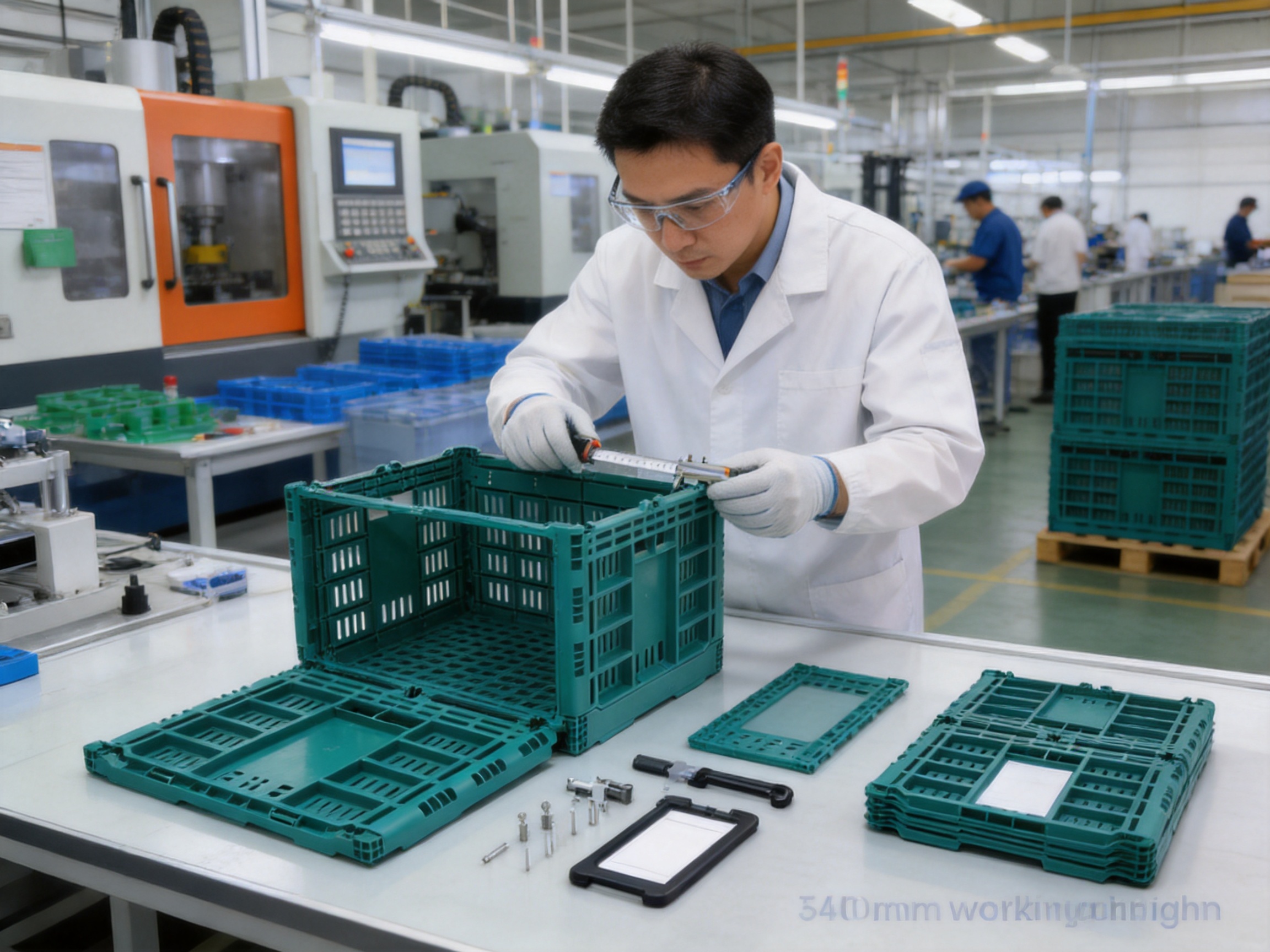
Manufacturing Process and Quality Control
The performance of a collapsible crate depends heavily on manufacturing precision. The product must have correctly formed panels, accurate connection points, smooth handles, reliable latches, a stable base, and consistent overall dimensions. Small deviations can affect folding action, stacking stability, or component interchangeability.
The manufacturer uses high-density virgin PP material in production and applies quality control from raw material sourcing through the production process. The use of virgin material supports consistent physical properties and appearance. Material control begins with confirming that incoming raw materials match the required specification for the product application.
During molding, process parameters must be managed carefully. Temperature, pressure, cooling time, mold condition, and cycle consistency can affect wall thickness, surface finish, dimensional accuracy, and component strength. A controlled process helps ensure that the finished panels and structural elements perform consistently from one production batch to another.
After molding, components may be checked for flash, deformation, incomplete filling, sharp edges, surface defects, and dimensional variation. Smooth finishing is particularly important for handles and areas that workers touch frequently. Ventilation openings should be clear and correctly formed, while connection points must allow the pin shafts and latches to function properly.
Assembly is another important stage. The base, panels, upper frame, pin shafts, and latches must be fitted in the correct sequence. The finished crate should open smoothly, fold correctly, and lock securely in the operating position. Quality inspections at this stage can identify assembly errors before the product is packed and shipped.
Functional testing may include folding and opening checks, dimensional inspection, visual examination, stacking assessment, and load-bearing tests. The reported performance of more than 120kg under high-strength stress testing demonstrates the importance of evaluating structural capability rather than relying solely on visual inspection.
Strict process management also supports customer confidence in large orders. When a company purchases a substantial quantity of crates, it needs products that are consistent enough to stack together, circulate through the same handling system, and accept compatible replacement parts. Standardized production processes help achieve this consistency.
Production Equipment and Process Standardization
Advanced manufacturing is not limited to a single machine or production step. It involves the coordinated management of material preparation, molding, trimming, assembly, inspection, packaging, and shipment. Suitable equipment allows the manufacturer to produce components with repeatable dimensions and stable quality.
Standardized production procedures reduce variation between operators and batches. Each stage can be assigned defined inspection points and work instructions. This approach helps ensure that raw materials are checked before use, molded components are inspected before assembly, and completed crates are evaluated before delivery.
Process standardization is especially important for a modular crate. Replacement parts must fit the original product correctly. If the dimensions of pin shafts, panels, or latches vary significantly, repair operations may become difficult. Controlled manufacturing helps preserve compatibility across the product range.
Production planning also affects delivery reliability. The manufacturer maintains stock and ready-to-ship capability for selected products, allowing customers to respond more quickly to seasonal demand, new distribution contracts, or urgent replacement requirements. Availability is valuable for logistics operators because a shortage of containers can interrupt harvesting and delivery schedules.
By combining standardized production, material control, inspection procedures, and organized inventory management, the manufacturer can provide a dependable supply of reusable crates for farms, retailers, wholesalers, and distribution centers.
Advantages for Farms and Packing Stations
Farms and packing stations often need containers that can move directly from harvesting areas to sorting, washing, grading, and packing operations. The crate’s 67L capacity makes it suitable for collecting and organizing produce before shipment. Its handles support movement between workstations, while its ventilated base can help maintain airflow around the contents.
At the end of a harvest shift, empty crates can be folded and grouped for storage. This is helpful for farms with limited storage buildings or operations that expand rapidly during seasonal peaks. Instead of dedicating large areas to stacks of open crates, operators can store folded units in a more compact arrangement.
The label holder can help separate different varieties, fields, harvest dates, grades, or destinations. Clear identification at the packing station may reduce sorting errors and improve communication between production and logistics teams.
Because the crate is reusable, farms can establish a circulation system in which containers travel from the farm to customers and return for the next harvest cycle. A planned return system can reduce dependence on disposable cartons and make packaging availability more predictable.
Advantages for Supermarkets and Retail Distribution
Supermarkets receive produce in a fast-moving environment where unloading, sorting, shelf replenishment, and empty-container management must happen efficiently. The crate’s standard footprint and large capacity support organized delivery handling. Staff can transfer produce from receiving areas to storage rooms or sales-floor displays without changing containers immediately.
When the crate is empty, it can be folded to reduce clutter in the backroom. This is particularly useful in stores with narrow aisles or limited receiving space. Folded crates can be arranged in designated zones until they are collected by the supplier or reused for another internal task.
The label holder can make it easier for employees to identify product types and destinations. This supports faster receiving checks and can help staff maintain better stock rotation. The smooth handles also improve convenience during repeated movement between delivery docks, cold rooms, preparation areas, and displays.
For supermarket groups operating multiple locations, standardized reusable crates can simplify purchasing, training, storage planning, and supplier coordination. A consistent container format is easier to include in logistics procedures than a mixture of differently shaped disposable packages.
Advantages for Distribution Centers and E-Commerce Logistics
Distribution centers handle large volumes of goods under time pressure. Containers must be easy to identify, stack, move, inspect, and return. The BG-604034-CFVC supports these needs through its standardized dimensions, label holder, ergonomic handles, and collapsible construction.
In a distribution center, open crates can be used for order consolidation, temporary storage, cross-docking, or route preparation. The 600×400mm footprint can help planners establish repeatable storage locations and loading patterns. Consistent container dimensions also make it easier to estimate capacity within racks, staging areas, and vehicles.
After orders are dispatched, folded empty crates can be collected in reverse-logistics zones. Their reduced height can help prevent empty containers from consuming the same space as loaded ones. This can improve the efficiency of return movements and reduce congestion around receiving areas.
For e-commerce grocery operations, reusable crates can support picking and delivery workflows. Workers can place products into a strong, ventilated container, add identification information, and move the crate through dispatch without relying on a fragile disposable carton. The suitability of the crate for a particular automated system should be verified in advance, especially where conveyors, robotic equipment, or strict dimensional tolerances are involved.
Cost Efficiency and Total Ownership Value
The economic value of a logistics crate should be assessed over its complete operating life. Initial purchase cost is only one factor. Businesses should also consider labor, storage, transportation, product protection, replacement frequency, maintenance, and disposal.
The 80.6% folding ratio can reduce the cost of storing idle crates and transporting empty ones. If a company operates a large fleet, the space saved during reverse logistics may improve truck utilization and reduce unnecessary trips. Warehouse space can also be used for revenue-generating inventory instead of empty packaging.
The 3kg weight can reduce manual handling effort compared with heavier containers. Although the loaded crate may still require two-person handling or mechanical assistance depending on the product weight, a lightweight container ensures that more of the lifting effort is allocated to the goods rather than to the packaging itself.
Repairable components can reduce replacement expenditure. A damaged latch, panel, pin shaft, or other modular part may be replaced without purchasing an entirely new crate. This approach is more economical when damage is limited and the majority of the container remains serviceable.
Reusable construction can also reduce the recurring cost of disposable packaging. The actual savings will depend on the number of cycles achieved, loss rates, cleaning costs, return discipline, and the type of packaging being replaced. A container-control system with clear ownership, labels, and scheduled returns can help businesses obtain the greatest value.
Cleaning, Inspection, and Operating Recommendations
Reusable food-related crates should be included in a documented cleaning and inspection program. After each use, operators should remove soil, leaves, damaged produce, and other residues. The crate should be washed using procedures appropriate for the material and the business’s hygiene requirements, then allowed to dry before storage.
The ventilated base and smooth surfaces can assist cleaning, but users should still inspect the corners, openings, handles, latches, and connection points. Dirt or residue should not be allowed to accumulate around moving parts. If a crate has deep cracks, severe deformation, broken structural components, or a locking failure, it should be removed from service.
When stacking open crates, operators should ensure that the crates are correctly aligned and that the load is distributed evenly. Excessive overloading may damage the side panels or create unsafe stacks. When folding crates, workers should follow the prescribed sequence and keep hands clear of pinch points.
Crates should be stored in a dry, organized area when not in use. Folded units should be stacked securely so that they cannot slide or fall. Exposure to extreme heat, direct sunlight, aggressive chemicals, or unsuitable cleaning agents should be avoided unless the manufacturer has confirmed compatibility.
These recommendations do not replace site-specific safety procedures. Each business should evaluate its own products, temperatures, cleaning chemicals, stacking methods, transport conditions, and worker-training requirements.
How the Product Compares with Competing Solutions
The product competes with several categories of logistics packaging, including fixed-wall plastic crates, lightweight foldable boxes, wooden containers, cardboard cartons, and disposable plastic packaging. Its main advantage is the combination of large capacity, substantial folding performance, modular repairability, ventilation, and ergonomic handling.
Some foldable boxes prioritize low purchase price but use simpler hinges, weaker connection systems, or non-replaceable components. A crate with all-plastic pin shaft connections and modular parts can provide a more maintainable solution for long-term commercial use.
Some fixed-wall crates provide good durability but remain bulky when empty. The collapsible design of this model is better suited to operations in which return transport and idle storage represent significant costs.
Some disposable packages are convenient for one-way distribution but generate recurring waste and provide less consistent performance in humid conditions. The reusable PP crate offers a longer-term logistics asset that can circulate through multiple stages of the supply chain.
The product is also differentiated by its attention to practical user details. The label holder supports identification, the smooth handles improve handling comfort, and the ventilated base supports airflow. These features may appear simple individually, but together they address the daily problems faced by workers and logistics managers.
Supplier Capability and One-Stop Logistics Support
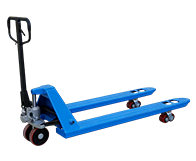
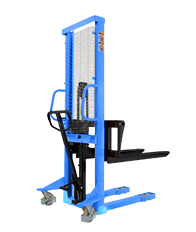
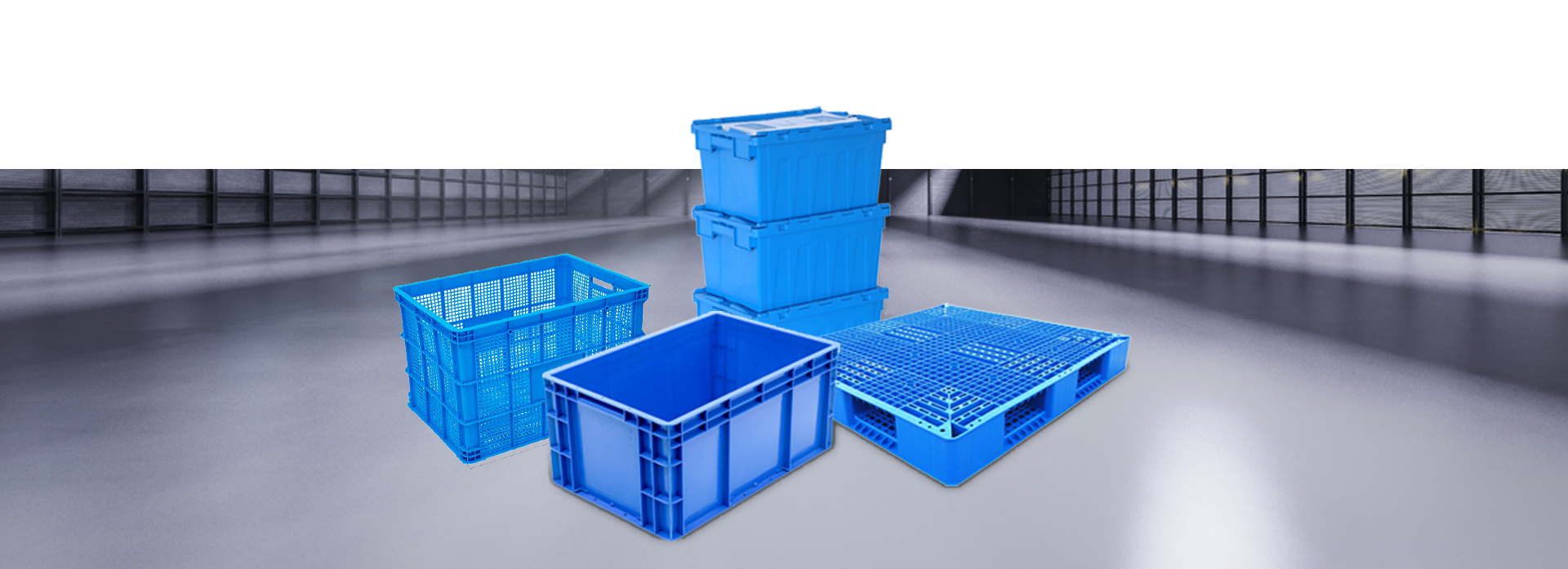
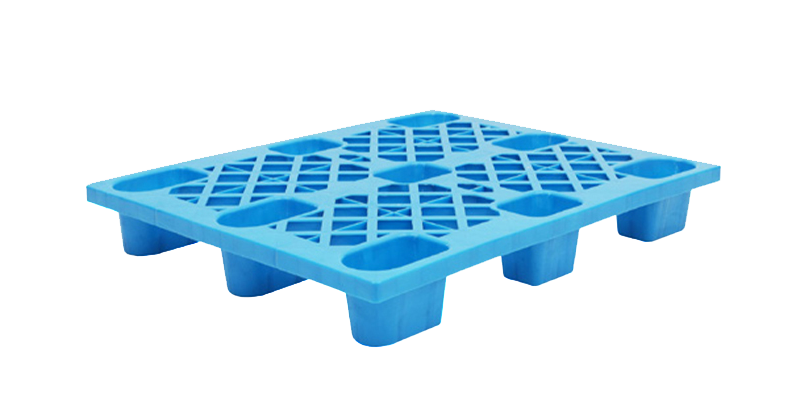
Yancheng Bingo Machinery Equipment Co., Ltd. specializes in warehousing and logistics equipment, including handling equipment, storage containers, packaging materials, and warehouse racking. Its product range covers manual and electric pallet trucks, stackers, plastic pallets, totes, crates, bulk containers, stretch wrap, packing strapping, and light-, medium-, and heavy-duty racks.
This broad product portfolio allows customers to coordinate multiple categories of warehouse equipment through one supplier. A business purchasing collapsible produce crates may also require pallets, pallet trucks, shelving, packaging materials, or other storage products. A supplier with knowledge of these related systems can help customers develop a more integrated material-handling arrangement.
The company describes its approach as providing one-stop storage and material-handling solutions for industries such as manufacturing, e-commerce logistics, warehousing and distribution, agriculture-related operations, and supermarket retail. Its supply-chain focus and quality-control procedures are intended to support customers operating across different markets and logistics environments.
A supplier’s strength should be assessed through more than product variety. Manufacturing consistency, communication, technical support, spare-part availability, quality inspection, production capacity, and delivery coordination are all important factors. The modular design of the BG-604034-CFVC creates a particular need for compatible replacement parts and reliable after-sales support.
For international buyers, clear specifications are also essential. The model number, external and internal dimensions, material, capacity, folded height, weight, and fold ratio provide a practical basis for comparing quotations and planning warehouse operations. Customers should confirm color, labeling, packaging, minimum order quantity, shipping arrangements, and application requirements before placing an order.
Implementation in a Reusable Container System
Purchasing reusable crates is only the first step. Businesses obtain the greatest benefit when the containers are integrated into a controlled operating system. This system can include container numbering, department ownership, return schedules, cleaning records, repair procedures, and inventory checks.
Each crate may be assigned to a farm, packing station, distribution center, store, route, or product category. The integrated label holder can support visible identification, while additional internal tracking methods may be used where required. Tracking helps reduce losses and ensures that the container fleet remains available when needed.
Businesses should determine where crates will be opened, folded, inspected, and stored. Workers should be trained to use the latches and pin shaft connections correctly and to identify damage that requires maintenance. A simple standard operating procedure can improve consistency across locations.
It is also useful to establish a replacement-parts inventory. Since the crate is modular, maintaining commonly required components can shorten repair time. Damaged units should be separated from serviceable units until they have been inspected and repaired.
Performance should be measured through indicators such as container cycle count, damage rate, loss rate, average storage volume, empty-return efficiency, cleaning time, and packaging cost per shipment. These measurements allow businesses to determine whether the reusable crate system is producing the expected operational improvements.
Frequently Asked Questions
What is the capacity of the crate?
The crate has a stated working capacity of 67 liters. Its external dimensions are 600×400×340mm, and its internal dimensions are 565×365×325mm.
What material is used to manufacture the crate?
The crate is made from food-safe polypropylene, commonly referred to as PP. This material is selected for its combination of low weight, durability, cleanability, and suitability for reusable logistics applications.
How much space does the crate save when folded?
The open height is 340mm, while the folded height is approximately 66mm. The stated fold ratio is 80.6%, allowing empty crates to be stored and transported in a substantially smaller volume.
Is the crate suitable for fresh fruits and vegetables?
Yes. The crate is designed for fresh produce logistics. Its ventilated base supports airflow, while the food-safe PP construction, large capacity, and reusable design support harvesting, storage, distribution, and retail handling.
How much does one crate weigh?
The product weight is approximately 3kg. The relatively light empty weight makes the crate easier to carry, fold, stack, and return.
Can the crate support heavy loads?
Load-bearing tests indicate that foldable crates can support more than 120kg under high-strength stress conditions. The actual safe working load depends on the loading method, stacking arrangement, temperature, crate condition, and operating environment. Users should establish safe limits for their specific application.
What is the purpose of the ventilated base?
The oval openings in the base promote air circulation around the produce. Improved airflow can help manage heat and moisture during storage and transport, although overall produce quality also depends on temperature control, loading practices, and handling procedures.
Does the crate have a labeling feature?
Yes. An integrated label holder is located on the short side of the crate. It can be used for product identification, batch information, destinations, inventory codes, or handling instructions.
What happens if part of the crate is damaged?
The crate uses a modular design with components such as side panels, a base, pin shafts, latches, and an upper frame. If a replaceable component is damaged, it may be possible to replace that part rather than discard the complete crate. Replacement should be performed with compatible parts and appropriate procedures.
How does the all-plastic pin shaft design differ from a buckle design?
The all-plastic pin shaft connection is designed to provide strong assembly performance and support repeated opening and folding. It also supports modular repair when a connection or related component needs replacement.
Is the crate stackable?
The crate is designed as a stackable logistics container when opened and correctly aligned. Users should follow suitable stacking practices, distribute loads evenly, and avoid exceeding the safe operating limits of the container.
Who can benefit from this product?
Potential users include farms, produce packing stations, wholesalers, supermarkets, distribution centers, cold-chain operators, e-commerce grocery businesses, warehouse operators, and companies seeking reusable packaging for fresh goods.
How should the crate be cleaned?
The crate should be cleaned according to the user’s hygiene procedures and the requirements of the application. Residue should be removed after use, and the crate should be washed, rinsed where appropriate, dried, and inspected before reuse. Cleaning chemicals and temperatures should be verified for compatibility.
Can the crate replace cardboard packaging in every application?
Not necessarily. The suitability of reusable PP crates depends on product type, distribution route, hygiene procedures, return logistics, and customer requirements. The crate is particularly advantageous where containers circulate repeatedly and empty-return volume is important.
What information should be confirmed before ordering?
Buyers should confirm the model, dimensions, material, capacity, color options, labeling requirements, quantity, packaging, delivery schedule, replacement-part availability, and any specific handling or hygiene requirements.
Conclusion
The 67L Collapsible Fruit and Vegetable Crate is a practical reusable logistics solution for businesses that need high capacity without permanent storage bulk. Its 600×400×340mm open dimensions provide a substantial working volume, while the 66mm folded height and 80.6% fold ratio significantly reduce the space required for empty storage and return transportation.
The product combines food-safe PP construction, a 3kg lightweight format, a ventilated base, smooth ergonomic handles, an integrated label holder, strong pin shaft connections, and modular replaceable components. These features help address the main challenges of fresh produce logistics: product protection, worker handling, airflow, inventory visibility, container durability, and operating cost control.
Compared with rigid crates, the folding system improves space efficiency. Compared with disposable cartons, the reusable PP structure can support repeated logistics cycles. Compared with non-repairable folding boxes, the modular design can reduce the cost associated with localized damage. Together, these advantages make the crate suitable for farms, supermarkets, distribution hubs, warehouse operators, and integrated supply chains.
The product is supported by a manufacturer with a wider portfolio of handling equipment, storage containers, packaging materials, and warehouse racks. Its emphasis on virgin PP material, standardized processes, equipment-supported production, and inspections at multiple stages contributes to product consistency and supply reliability.
For companies seeking to improve reusable packaging programs, the BG-604034-CFVC offers a balanced combination of capacity, durability, collapsibility, maintainability, and handling convenience. When supported by proper cleaning, inspection, tracking, and return procedures, it can become an effective component of a more efficient and cost-conscious fresh produce logistics system.
References
Polypropylene Material Properties and Reusable Packaging Applications. Technical materials reference for logistics container design.
Fresh Produce Handling and Cold-Chain Logistics Principles. General reference for ventilation, temperature management, and produce transportation.
Reusable Transport Packaging and Reverse Logistics Management. Industry reference for container circulation, return transport, and total ownership cost.
Warehouse Storage and Material-Handling Planning Guidelines. General reference for container dimensions, stacking, labeling, and workplace efficiency.
Product Specification Sheet: Model BG-604034-CFVC, 67L Collapsible Fruit and Vegetable Crate.
Product: 67L Collapsible Fruit and Vegetable Crate for Logistics and Supermarkets

Copyright @ Yancheng Bingo Machinery Equipment Co., Ltd. All rights reserved Warehouse Logistics Equipment Manufacturer Pallet Truck Supplier
