 en
en  Español
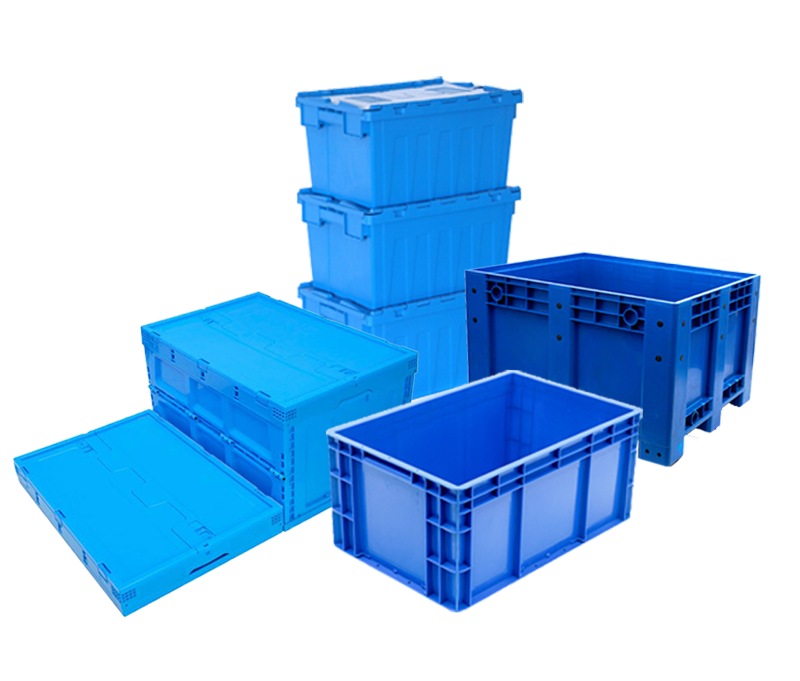

37L Stackable Plastic Tote Box for Fasteners and Screws: A Practical Guide to Industrial Storage
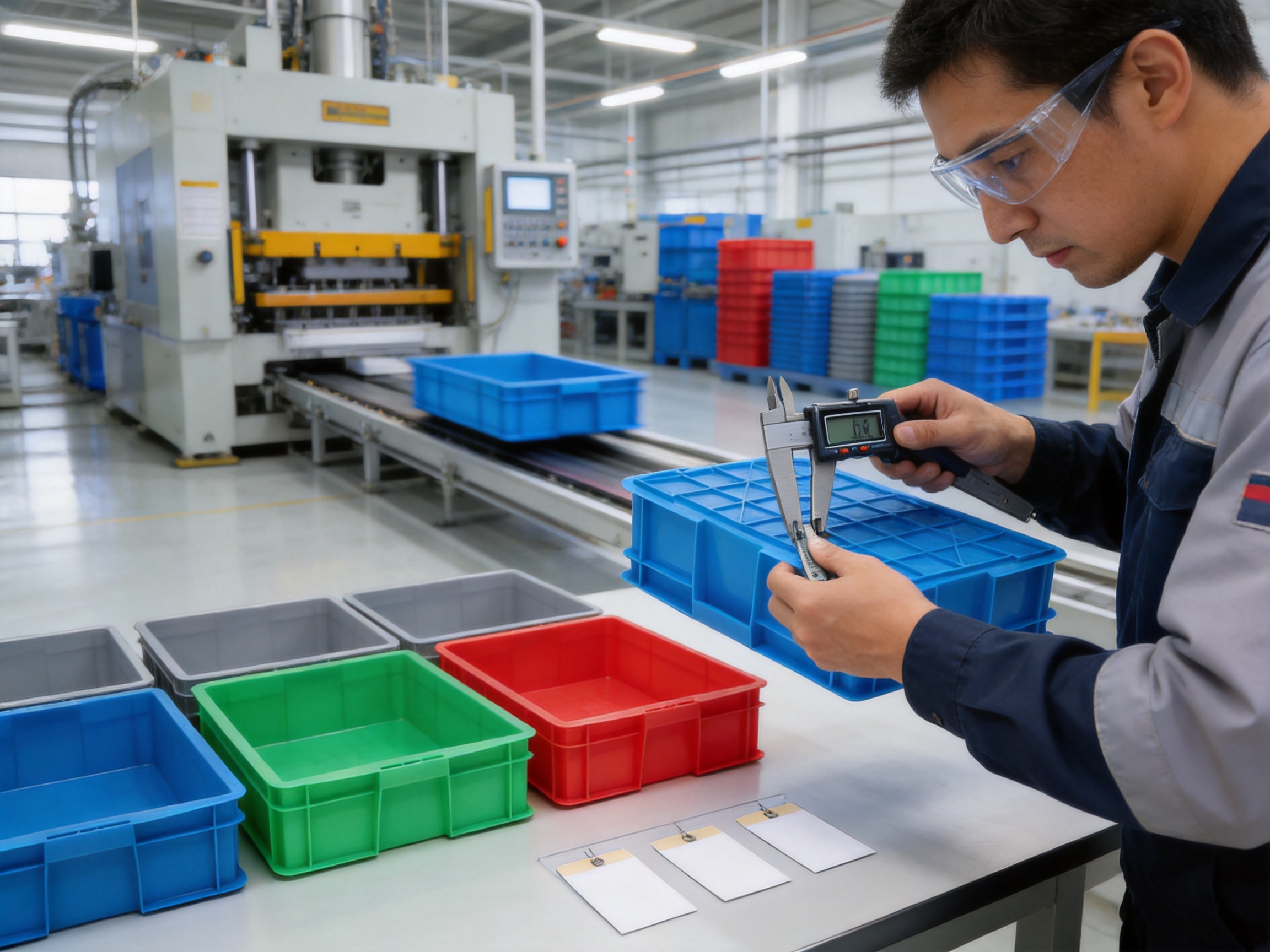
Efficient storage is essential wherever fasteners, screws, fittings, components, and other small industrial items must be protected, organized, and moved regularly. A suitable tote box can reduce handling time, improve inventory visibility, simplify workplace cleaning, and make better use of warehouse space. The 37L Stackable Plastic Tote Box for Fasteners and Screws, model BG-694515-ST, is designed for these requirements. It combines a durable HDPE body, a low-profile rectangular format, reinforced stacking capability, and a useful 37-liter capacity in one reusable storage solution.
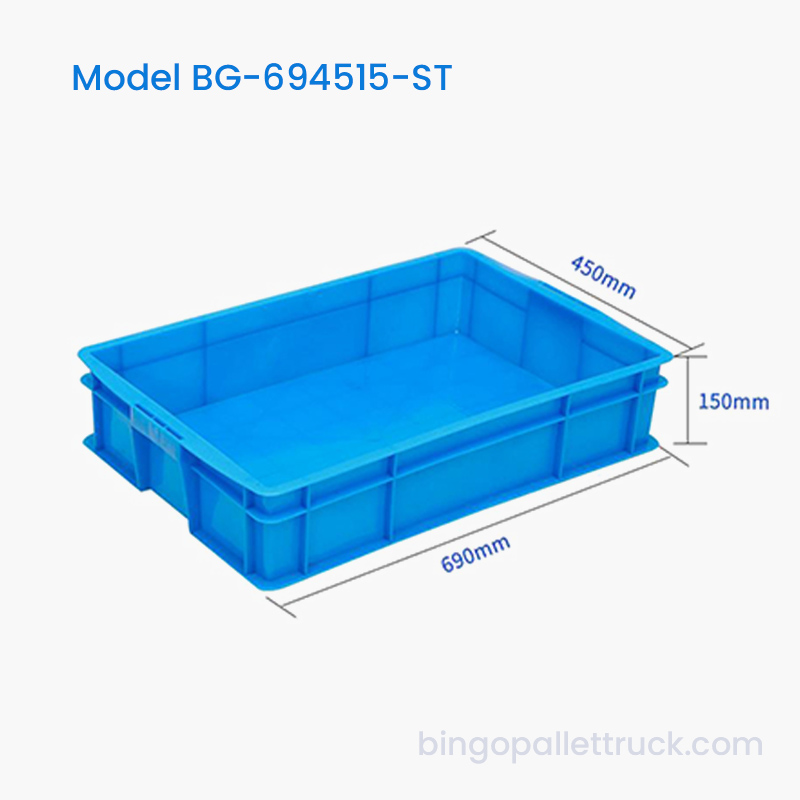
With external dimensions of 690×450×150mm and internal dimensions of 640×420×140mm, the tote provides a broad footprint while maintaining a relatively shallow height. This configuration is especially useful for fasteners and screws because users can see and reach the contents without having to search through a deep container. The tote is suitable for warehouse shelving, assembly areas, distribution centers, maintenance departments, retail back rooms, and production lines.
Beyond its physical design, the product benefits from a structured manufacturing and quality-control approach. The production system uses standardized procedures, controlled material sourcing, and inspections at multiple stages. Custom colors and specifications can also be supported, making the tote practical for businesses that use color coding, private-label programs, or standardized internal storage systems.
Content
- 1 Why Storage Totes Matter in Modern Warehousing
- 2 Product Overview
- 3 HDPE Construction for Repeated Industrial Use
- 4 Low-Profile Design for Fasteners and Screws
- 5 Stackability and Space Efficiency
- 6 Advantages Over Cardboard and Disposable Packaging
- 7 Advantages Over Metal Bins
- 8 Advantages Over Lightweight Consumer Storage Boxes
- 9 Applications in Fastener and Component Storage
- 10 Manufacturing Process and Quality Assurance
- 11 Customization and Supply Flexibility
- 12 Warehouse Layout Strategies Using the Tote
- 13 Ergonomics and Worker Efficiency
- 14 Cleaning, Maintenance, and Service Life
- 15 Transport and Internal Logistics
- 16 Comparative Performance Summary
- 17 How the Product Supports Total Cost Reduction
- 18 Integration with a Broader Logistics Product Range
- 19 Supplier Manufacturing Strengths
- 20 Purchasing Considerations
- 21 Implementation Recommendations
- 22 Frequently Asked Questions
- 22.1 What is the capacity of the tote?
- 22.2 What material is used for the product?
- 22.3 What are the external dimensions?
- 22.4 What are the internal dimensions?
- 22.5 How much does one tote weigh?
- 22.6 Can the tote be stacked?
- 22.7 Is the tote suitable for screws and fasteners?
- 22.8 Can the product be used outdoors?
- 22.9 Can the tote be cleaned?
- 22.10 Are different colors available?
- 22.11 Can the dimensions be customized?
- 22.12 Is the tote available from stock?
- 22.13 What industries can use this tote?
- 22.14 Can the tote replace a pallet?
- 22.15 How should the tote be labeled?
- 22.16 What should buyers confirm before placing an order?
- 23 Conclusion
- 24 References
- 25 Product: 37L Stackable Plastic Tote Box for Fasteners and Screws
Why Storage Totes Matter in Modern Warehousing
Small parts are often among the most difficult warehouse items to manage. Screws, nuts, bolts, washers, rivets, clips, electrical terminals, and machine components may be inexpensive individually, but losing, mixing, or misidentifying them can cause significant operational delays. A poorly designed storage method can also increase picking errors and create unnecessary labor costs.
Cardboard cartons may be affordable for one-time shipping, but they can collapse after exposure to moisture, oil, dust, or repeated handling. Metal bins can be strong, but they may be heavier, more expensive, and vulnerable to corrosion or sharp edges. Lightweight plastic organizers may be convenient, yet some lack the structural strength needed for repeated stacking or industrial transport.
A reusable industrial tote addresses these limitations by providing a stable container that can be handled repeatedly. The 37L stackable tote is particularly well suited to operations that need a balance between capacity and accessibility. Its 150mm external height allows users to distribute small products across a broad surface rather than placing them in a deep, difficult-to-reach container.
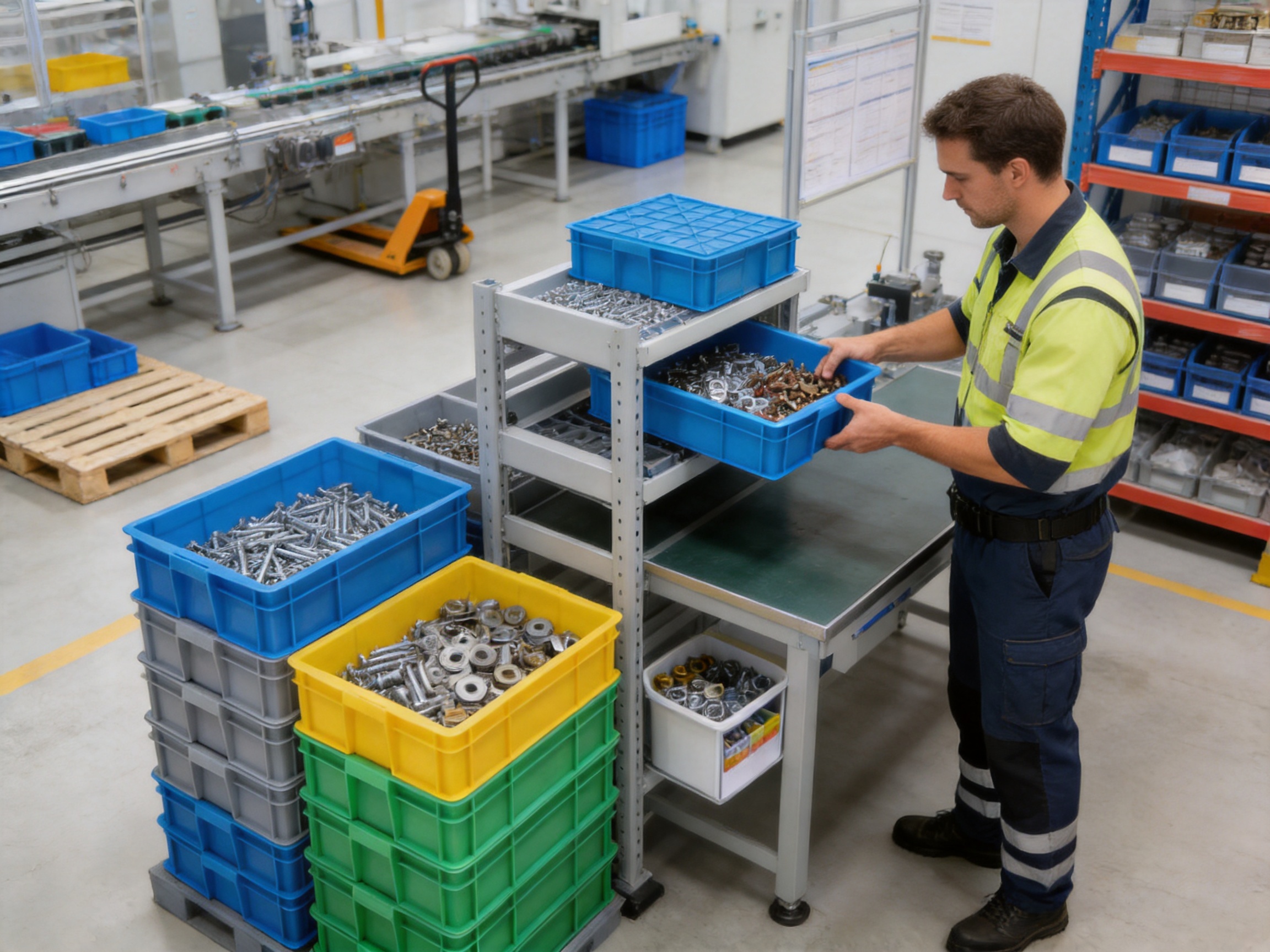
For fasteners and screws, this design can support several practical workflows. Operators can place different part numbers in separate totes, assign colors to product families, or use labels on the outer walls. Production teams can stage the required components next to assembly stations, while warehouse personnel can consolidate replenishment stock in organized stacks.
Product Overview
The BG-694515-ST is a 37L stackable plastic tote box produced for industrial storage, handling, and transportation. It is made from HDPE and features a rectangular body with reinforced construction for stable stacking. The dimensions provide a large usable floor area, while the low-profile height helps users access stored materials quickly.
| Product Item | 37L Stackable Plastic Tote Box |
| Model | BG-694515-ST |
| Product Category | Stackable Plastic Tote Box |
| Material | HDPE |
| External Dimensions | 690×450×150mm |
| Internal Dimensions | 640×420×140mm |
| Capacity | 37L |
| Product Weight | 1.85kg |
| Recommended Applications | Fasteners, screws, components, inventory storage, transport, and workplace organization |
| Stacking Capability | Designed for stable stacking of 10 or more layers, subject to load and operating conditions |
The difference between the external and internal dimensions reflects the wall thickness, reinforcing structure, and design features that provide rigidity. The 1.85kg product weight is light enough for routine manual handling while still supporting a durable industrial format.
HDPE Construction for Repeated Industrial Use
High-density polyethylene, commonly called HDPE, is widely used in industrial containers because it offers a useful combination of toughness, low weight, chemical resistance, and moisture resistance. These characteristics are important in warehouse and production environments where containers may be exposed to dust, water, oils, cleaning agents, and repeated impact.
Compared with ordinary disposable packaging, an HDPE tote can be reused many times. Its rigid walls help preserve the shape of the container when it is loaded, moved, or stacked. The material also does not absorb water in the same way as paper-based packaging, making the tote easier to wipe down and maintain.
For fasteners and screws, material durability is especially valuable. Metal components can be heavy in aggregate, and their sharp edges may damage weak packaging. A sturdy plastic body offers a protective barrier between the stored parts and the surrounding environment. It also reduces the likelihood that the container will tear or collapse during picking and transport.
HDPE is also suitable for businesses that require regular cleaning. The smooth plastic surface can be cleared of dust, metal filings, packaging residue, and general workplace contamination. Cleaning procedures should always be selected according to the actual contaminants and operating environment, but the washable nature of the material provides an advantage over many fiber-based alternatives.
Low-Profile Design for Fasteners and Screws
The 150mm external height is one of the product’s most useful design features. Many small components do not require a deep container. In a deep tote, screws and fasteners can form several layers, making it harder for workers to identify the correct part or remove items from the bottom. A low-profile tote keeps contents distributed across a wider surface, improving visibility and access.
The internal dimensions of 640×420×140mm provide sufficient space for a wide selection of small and medium-sized parts. The tote can be used for packaged or loose components, depending on the user’s inventory system. Dividers, smaller inserts, bags, or labeled subcontainers can be added when greater organization is required.
This format is also convenient for point-of-use storage. A shallow tote can fit beneath workbenches, on shelving levels, beside assembly cells, or on pallet surfaces. Operators can slide or lift it into position without needing to reach deeply into the container.
The broad base contributes to stability. When a tote is placed on a shelf, pallet, trolley, or work surface, the large footprint helps distribute the load. This is useful when stored items vary in density, since metal fasteners can create concentrated weight in one area if they are not evenly arranged.
37L Stackable Plastic Tote Box for Fasteners and Screws
Stackability and Space Efficiency
Warehouse space is expensive, and inefficient storage can create congestion, longer travel distances, and higher handling costs. The stackable design of the BG-694515-ST allows businesses to use vertical space instead of relying only on floor area. When containers are filled and properly aligned, multiple layers can be arranged in a compact footprint.
The product information indicates that the totes can be stacked up to 10 or more layers, depending on the application. The actual safe stacking height should be determined by the load inside each tote, the condition of the floor or rack, the method of handling, and the operating environment. Even when a business chooses a lower stack height for convenience, the ability to stack remains valuable.
Stacking also supports organized inventory zones. For example, one stack may be assigned to metric screws, another to imperial screws, and another to nuts or washers. Color coding and durable labels can further distinguish product families. This reduces the time employees spend locating parts and lowers the risk of mixing similar-looking components.
When the totes are empty, stacking can help reduce the space required for return logistics, cleaning, or temporary storage. Empty containers can be placed together rather than spread across the warehouse. This is particularly useful for distribution operations that circulate reusable packaging between suppliers, production lines, and customers.
Advantages of Stable Stacking
Stable stacking provides more than space savings. It can improve housekeeping by keeping containers off the floor, reduce the risk of damaged packaging, and create clearer aisle layouts. A standardized tote footprint can also support consistent shelf planning and pallet utilization.
In production areas, stacked containers can serve as a controlled buffer between processes. Components may be prepared in one area, moved to an assembly line, and returned to a storage zone without changing packaging. This reduces repacking and supports a more repeatable material flow.
Users should stack totes on level surfaces and avoid exceeding the capacity recommended for the operating conditions. Heavy items should be distributed evenly, and damaged containers should be removed from service. These basic practices help preserve the benefits of the stackable structure.
Advantages Over Cardboard and Disposable Packaging
Cardboard boxes remain useful for many shipping applications, but they are less suitable for repeated industrial handling. Moisture, abrasion, compression, and frequent opening can weaken cardboard. Fasteners may also puncture or tear thin packaging, particularly when the box is moved several times.
The reusable HDPE tote provides a more durable alternative. It retains its form during normal handling, can be cleaned, and is less sensitive to occasional contact with moisture. Because it is reusable, the tote may reduce the need to purchase replacement cartons for internal movements.
The shallow shape also makes the tote more efficient for component picking than a conventional deep carton. Instead of opening a box and searching through layers of packaging, workers can often identify the contents more quickly. This can be important in environments where many part numbers are handled every day.
Reusable totes can also support waste-reduction programs. Although the environmental benefits depend on the number of reuse cycles, handling practices, cleaning methods, and end-of-life recycling arrangements, a durable container generally has a longer service life than single-use packaging.
Advantages Over Metal Bins
Metal bins can provide excellent strength, but they are often heavier than plastic totes of comparable size. A heavier empty container increases handling effort and may raise transportation costs. Metal edges may also become sharp if the bin is dented or damaged.
The 1.85kg weight of this plastic tote supports easier manual movement. Employees can reposition empty or partially loaded totes without the same physical burden associated with many steel containers. The lighter format is helpful when containers are moved frequently between shelving, pallets, workstations, and vehicles.
HDPE also avoids many corrosion concerns associated with uncoated steel. This does not make the tote suitable for every chemical or temperature condition, but it offers a practical advantage in ordinary warehouse environments where exposure to humidity or cleaning water is possible.
Advantages Over Lightweight Consumer Storage Boxes
Consumer storage boxes are often designed for occasional household use rather than continuous warehouse operations. They may lack reinforced stacking features, standardized industrial dimensions, or the wall strength needed for dense metal components.
The BG-694515-ST is designed around commercial and industrial handling requirements. Its reinforced structure, broad footprint, and stackable body make it more suitable for organized inventory systems. The product also comes from a supplier focused on warehouse logistics equipment, storage containers, packaging materials, and racking solutions, allowing customers to source related products through one supply channel.
Another advantage is the potential for specification and color customization. Businesses may request multiple colors or use different colors to identify product categories, work areas, customers, or stock status. Such visual management is difficult to implement consistently when relying on mixed consumer containers.
Applications in Fastener and Component Storage
Hardware Distribution Centers
Hardware distributors handle large numbers of similar products that differ by length, diameter, thread, material, coating, or standard. The tote can provide a dedicated location for each product code. Labels on the outer wall can identify the part number, description, quantity, and replenishment level.
Because the tote is shallow, pickers can quickly inspect the contents before removing the container from its stack. This can support faster order fulfillment and reduce errors caused by selecting a visually similar item.
Manufacturing Plants
Manufacturers can use the tote to stage screws, bolts, washers, and fittings beside assembly lines. Production personnel can prepare kits in advance and move them to the appropriate workstation. Empty totes can then be returned to the warehouse or cleaning area for the next cycle.
The durable construction is beneficial in factories where containers may be moved by hand, pallet truck, cart, or other material-handling equipment. The tote is not a substitute for a load-rated pallet or a protective transport cage, but it can function effectively as an internal component container when used within appropriate handling procedures.
Maintenance Departments
Maintenance teams often need quick access to replacement screws, clips, bearings, fittings, and electrical hardware. A set of color-coded totes can organize components by equipment type, maintenance discipline, or frequency of use. The low-profile design makes frequently used items accessible without requiring extensive searching.
E-Commerce Fulfillment
E-commerce operations often maintain many small stock-keeping units in limited space. Stackable totes can organize products by order zone or product category. They can also be used for returns processing, replenishment staging, and temporary order consolidation.
Retail Back Rooms
Retailers can use the tote for replacement hardware, display fixtures, packaged accessories, and store maintenance supplies. Its clean appearance and standardized dimensions help create a more orderly back-room environment than a collection of irregular cartons.
Automotive and Machinery Parts
Automotive and machinery operations commonly handle heavy quantities of nuts, bolts, washers, clips, and small replacement parts. The tote’s rigid body and broad base make it suitable for organizing these items, provided the total load remains appropriate for the container and the chosen stacking method.
Manufacturing Process and Quality Assurance
Product quality is influenced not only by the design but also by the consistency of the manufacturing process. A reliable tote requires controlled material selection, suitable molding conditions, accurate tooling, careful trimming, dimensional inspection, and final quality checks.
Material Sourcing and Preparation
The manufacturing system emphasizes controlled raw-material sourcing. The product specification identifies HDPE as the material for this model. The company’s general production information also refers to the use of virgin polymer material and strict control of raw materials. Material selection should always be matched to the specific model and confirmed against the customer’s technical requirements, especially when different product lines use different polymer grades.
Consistent material preparation helps reduce variation in wall strength, color, surface quality, and dimensional stability. For industrial totes, this consistency is important because uneven walls or inconsistent shrinkage can affect stacking performance and fit on shelves or pallets.
Tooling and Forming
The forming stage creates the body, base, corners, rim, and stacking features. Tooling accuracy influences the uniformity of the finished tote. Correct processing conditions help ensure that the material fills the mold properly and that the container maintains its intended geometry after cooling.
Reinforced areas are particularly important around the upper rim, corners, and base. These locations may experience repeated contact during lifting, stacking, and placement. A controlled forming process helps produce a container that performs consistently across repeated production batches.
Dimensional Control
Dimensional inspections can verify the external length, width, and height as well as the internal usable area. These measurements matter when totes are placed in racking, shelving, transport vehicles, pallets, or automated storage systems.
Consistent dimensions also make replacement and expansion easier. A warehouse can add more totes without redesigning the storage layout if each production batch follows the same specification. Dimensional control is therefore both a quality issue and an operational planning advantage.
Visual and Structural Inspection
Quality personnel can inspect the tote for molding defects, excessive flash, cracks, warping, uneven surfaces, discoloration, and other conditions that may affect performance. Structural checks help confirm that the body and stacking areas are suitable for the intended use.
Strict inspection at different production stages provides an additional safeguard against inconsistent products reaching customers. The stated quality approach includes checks from raw-material sourcing through production and final qualification. This stage-by-stage approach is stronger than relying only on a final visual inspection.
Standardized Production Procedures
Standardized processes help reduce variation between orders. They can cover material preparation, machine settings, mold operation, cooling, trimming, inspection, packing, and shipment preparation. Clear procedures also support staff training and make it easier to identify the source of a problem if a quality issue is detected.
For international customers, standardized production is particularly important. Buyers may be ordering repeat quantities for several warehouses or operating sites. Consistent products help maintain the same storage layout, labeling system, and handling procedures across locations.
Customization and Supply Flexibility
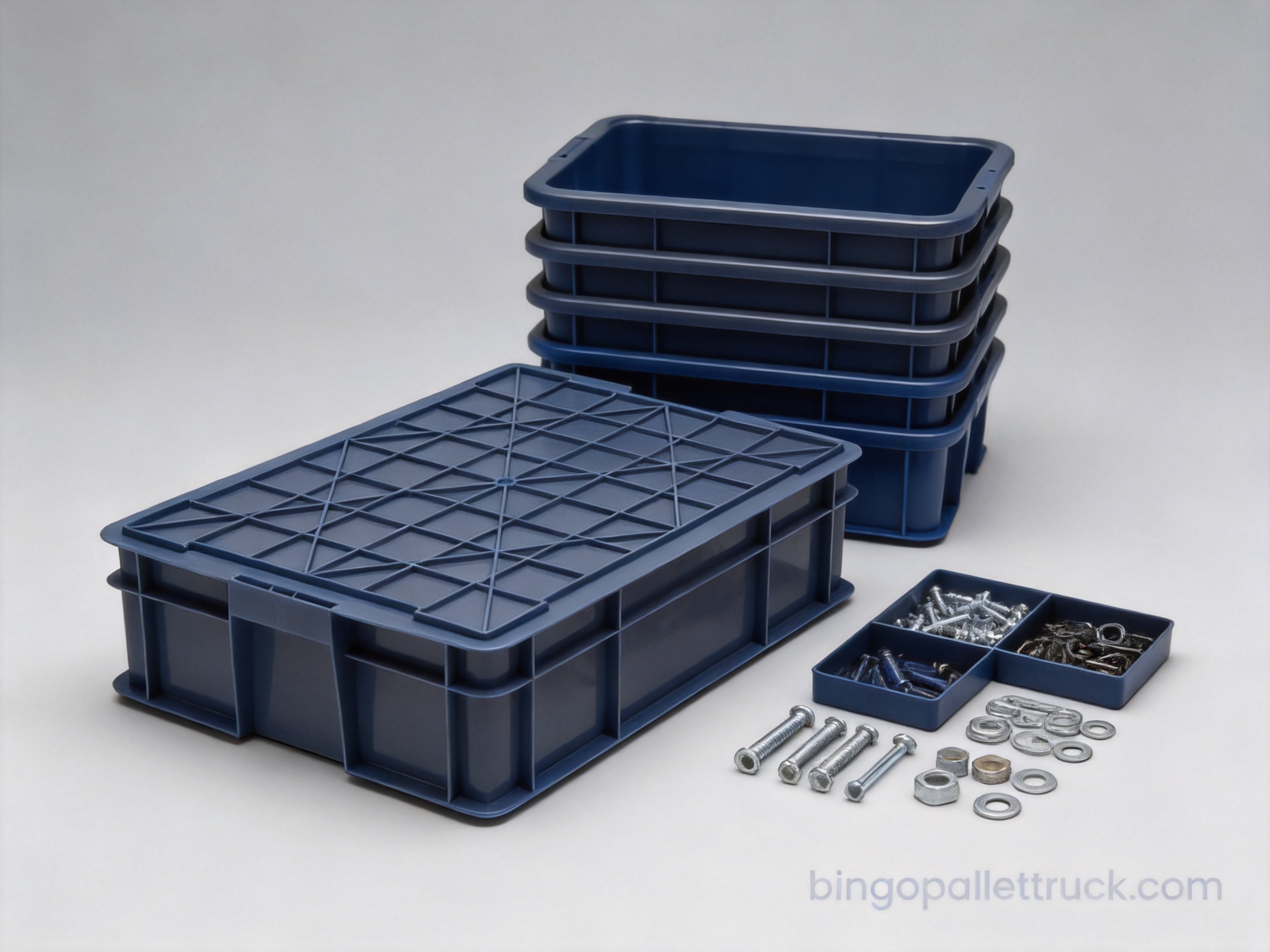
Different businesses may require different colors, labels, dimensions, or packaging arrangements. The product information indicates that multiple colors and full specifications are available and that customization is supported. Color selection can be used for visual inventory management, while customized specifications may support special shelving, transport, or production requirements.
Color coding can be applied in several ways. A company may assign blue totes to raw materials, red totes to quality-hold items, green totes to approved stock, and yellow totes to replenishment materials. Alternatively, colors can identify departments, customer orders, product families, or warehouse zones.
Customization should be evaluated together with minimum order quantities, tooling requirements, lead times, printing options, and material specifications. Buyers should provide clear drawings or dimensional requirements when a standard model does not meet the application.
Availability from stock can be a significant advantage for urgent projects. The supplier indicates that the product is in stock and ready to ship, which may help customers respond quickly to warehouse expansion, seasonal demand, or replacement needs. Stock status should nevertheless be reconfirmed before ordering, particularly for large quantities or customized versions.
Warehouse Layout Strategies Using the Tote
Fixed-Location Storage
In a fixed-location system, each tote or tote position is assigned to a specific product. This approach is easy to understand and can be effective when inventory levels and product ranges are stable. The tote’s standardized footprint supports consistent shelf and rack planning.
Zone-Based Storage
Zone-based storage groups related products in defined areas. One zone may contain fasteners, another electrical parts, and another maintenance supplies. Totes can be organized by color and label to reinforce the zone structure.
First-In, First-Out Handling
For products where batch control or age matters, totes can support first-in, first-out procedures. Labels may include receipt dates, batch numbers, or inspection status. The container itself does not create a FIFO system, but its stable and visible format can make the system easier to operate.
Point-of-Use Replenishment
Two-bin or kanban-style systems can use stackable totes as replenishment units. One tote remains at the workstation while another is prepared or held in reserve. When the active tote is empty or reaches a defined minimum level, the reserve tote can be moved into position and a replenishment signal can be issued.
Ergonomics and Worker Efficiency
Storage equipment affects how often employees bend, reach, lift, and search. A low-profile tote can reduce excessive reaching into deep containers. Its 1.85kg empty weight also makes repositioning more manageable than with many heavier alternatives.
Workers should still be trained to use safe lifting methods and avoid overfilling. Metal fasteners can become heavy quickly, even when the container itself is relatively light. The recommended working load should be established by the user according to the stored material, handling method, stacking height, and workplace safety requirements.
Good labeling is equally important. A tote that is physically durable but poorly identified may still create picking errors. Labels should be placed where they remain visible when totes are stacked or positioned on shelves. Product codes, descriptions, dimensions, and barcode information can be used according to the warehouse management system.
Cleaning, Maintenance, and Service Life
Routine maintenance helps preserve the tote’s useful life. Users should inspect the body, rim, corners, and base for cracks, distortion, excessive wear, or chemical damage. Any tote that no longer stacks securely should be removed from active service.
Cleaning requirements vary by application. In a general warehouse, wiping or washing may be sufficient. In environments with oils, metal filings, dust, or food-related materials, a documented cleaning process may be appropriate. Cleaning agents should be compatible with HDPE and tested before large-scale use.
Totes should be dried before stacking if moisture could affect stored products. Fasteners may be vulnerable to corrosion if they are stored wet or exposed to contaminants. The container can help protect the parts, but correct storage conditions remain the responsibility of the user.
Proper handling also extends service life. Totes should not be dragged over rough surfaces when lifting is practical, thrown from vehicles, or used as steps. Forklift operators should avoid striking the containers with forks. When transported on pallets, the totes should be arranged securely to prevent shifting.
Transport and Internal Logistics
The tote can support movement between receiving, storage, production, picking, packing, and shipping areas. Its rectangular form is convenient for arranging multiple units on pallets or transport carts. Stable stacking can reduce the number of individual handling events required for larger quantities of components.
For internal logistics, a business may establish standard tote quantities for each process. For example, a production cell might receive one tote for each assembly shift, while the warehouse maintains reserve totes for replenishment. Standard quantities make consumption easier to forecast and simplify communication between departments.
When shipping the tote empty, nested or stacked arrangements may help reduce transport volume, depending on the specific design and packaging method. When shipping filled totes, users should consider total weight, load distribution, securing methods, and the strength of the transport equipment.
Comparative Performance Summary
| Feature | 37L Stackable HDPE Tote | Disposable Cardboard Box | Typical Metal Bin | Lightweight Household Box |
| Reuse Potential | Designed for repeated use | Usually limited | High | Variable |
| Moisture Resistance | Good in ordinary conditions | Limited | Depends on coating | Usually moderate |
| Empty Weight | 1.85kg | Very low | Often high | Low |
| Stacking Suitability | Reinforced stackable format | Can collapse when overloaded | Generally strong | Often limited |
| Cleaning | Easy to wipe or wash when compatible | Difficult | Possible, but corrosion may require attention | Usually easy |
| Industrial Organization | Strong suitability | Basic suitability | Strong suitability | Limited to moderate suitability |
| Accessibility for Small Parts | Good due to low profile | Moderate | Varies by design | Varies by design |
This comparison is general and does not replace application testing. The best storage solution depends on load, environment, frequency of handling, required cleanliness, transport conditions, and budget. The main advantage of the 37L tote is its balanced combination of industrial durability, low-profile accessibility, manageable weight, and space-efficient stacking.
How the Product Supports Total Cost Reduction
Purchase price is only one part of the cost of storage equipment. Businesses should also consider replacement frequency, labor time, damage to inventory, space utilization, cleaning, and transport. A durable reusable tote may create savings over its service life even when its initial cost is higher than disposable packaging.
Improved organization can reduce the time required to locate components. Better visibility can reduce picking errors. Stable stacking can allow a warehouse to store more inventory within the same footprint. Washable construction can reduce the need to discard packaging after exposure to dust or moisture.
There may also be indirect benefits. Standardized containers can simplify employee training, improve workplace appearance, support cycle counting, and make inventory audits more efficient. If the same tote is used across multiple facilities, procurement and replacement procedures may become easier to manage.
Integration with a Broader Logistics Product Range
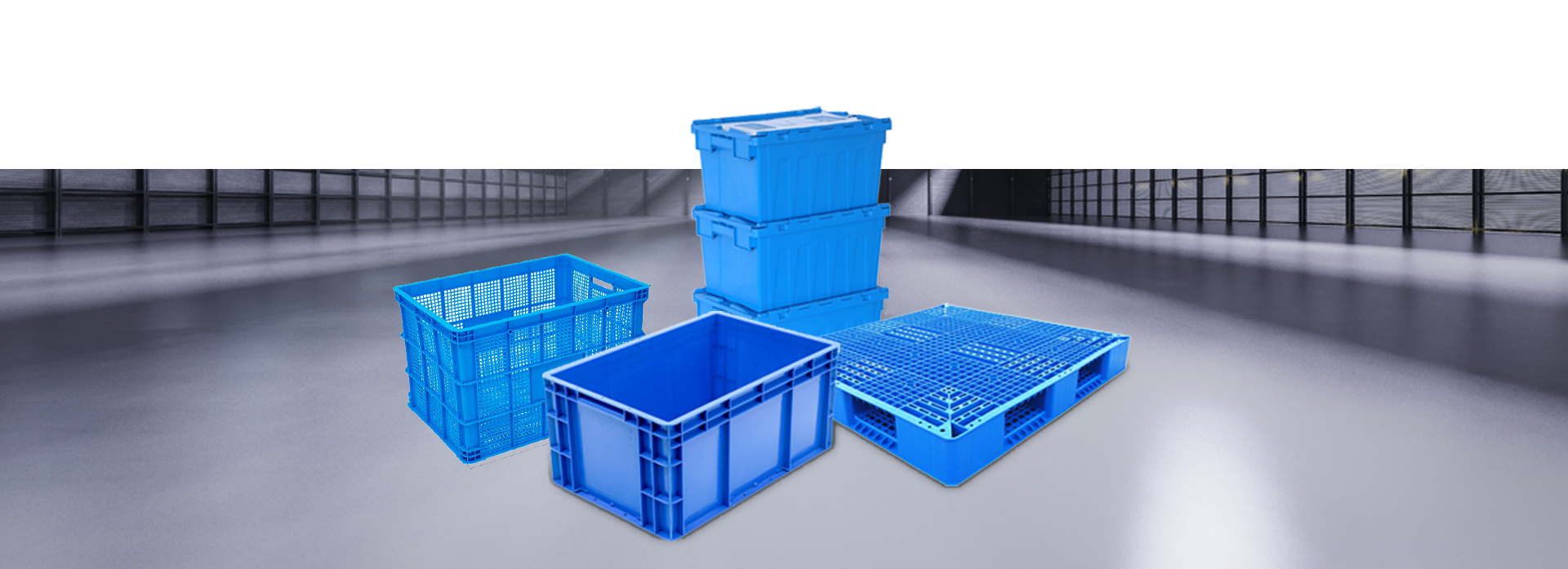
The supplier’s wider product portfolio covers handling equipment, storage containers, packaging materials, and warehouse racks. This broader range can be valuable for businesses seeking coordinated warehouse solutions rather than isolated products.
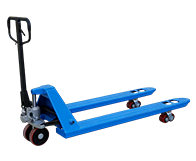
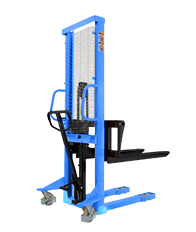
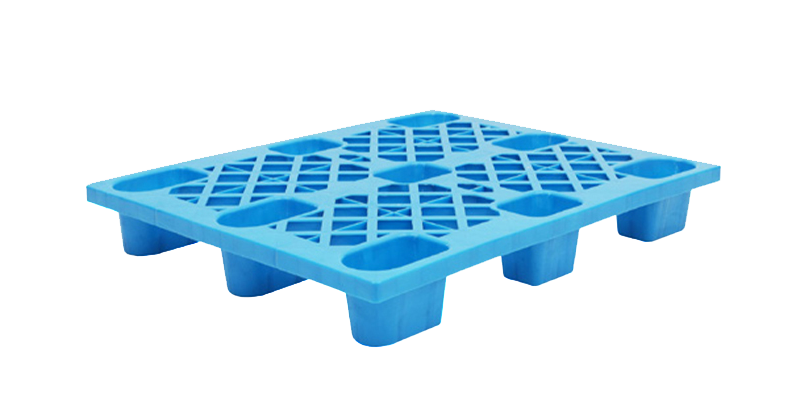
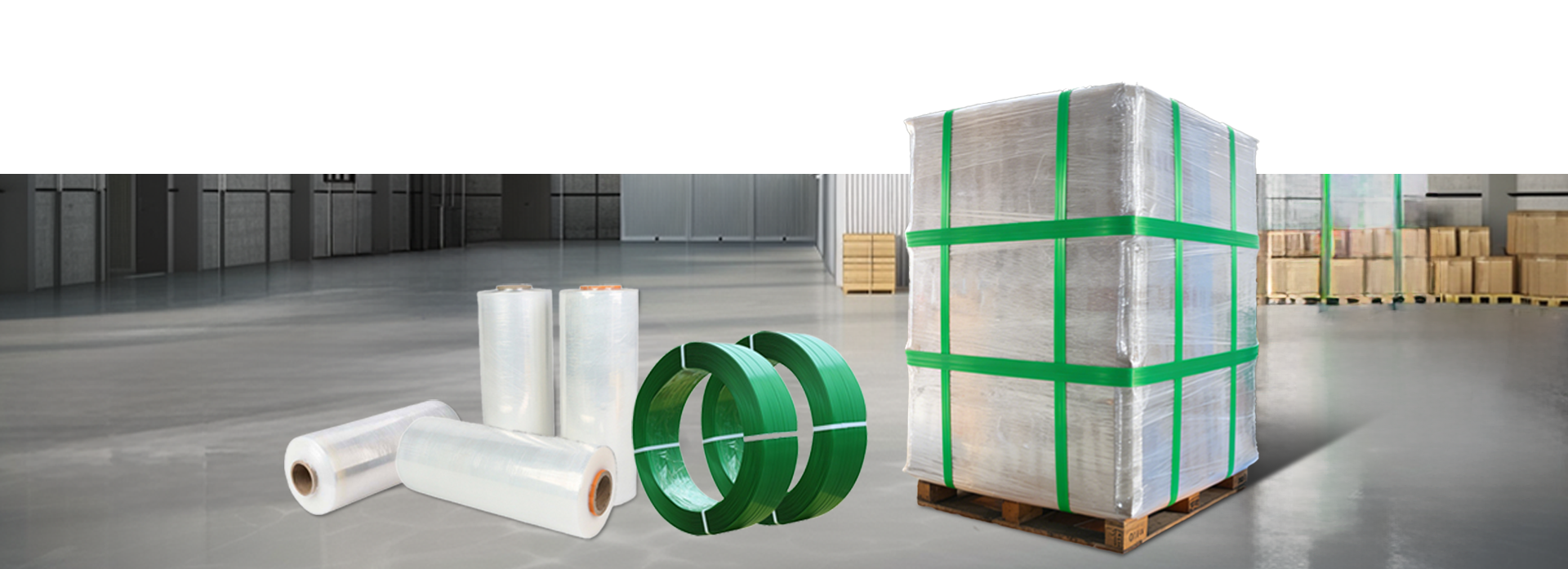
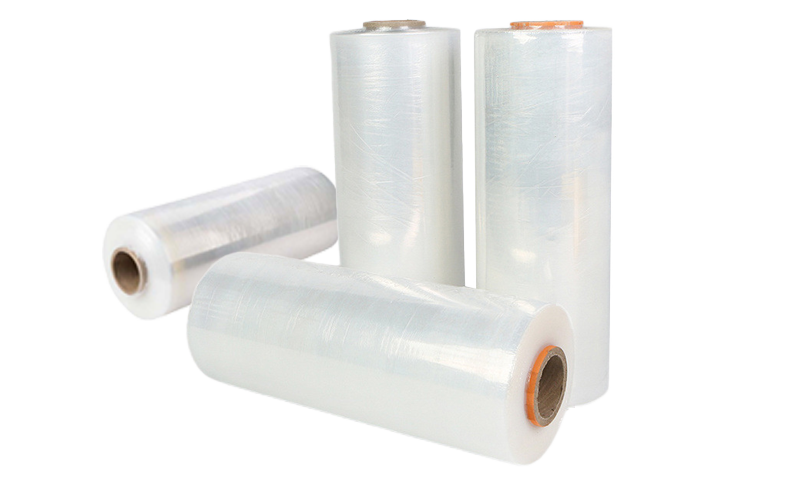
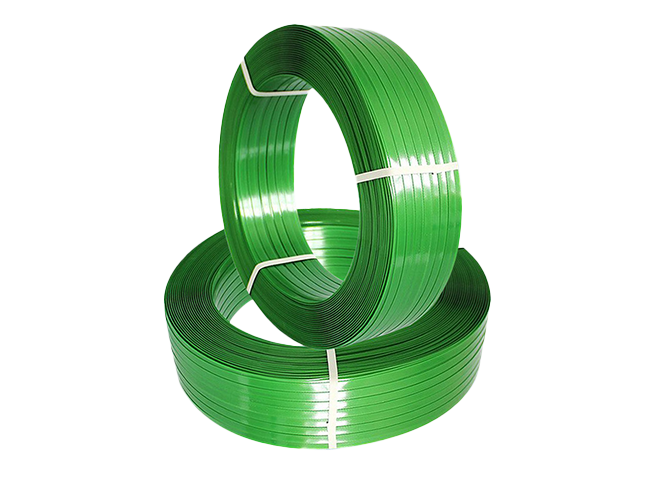
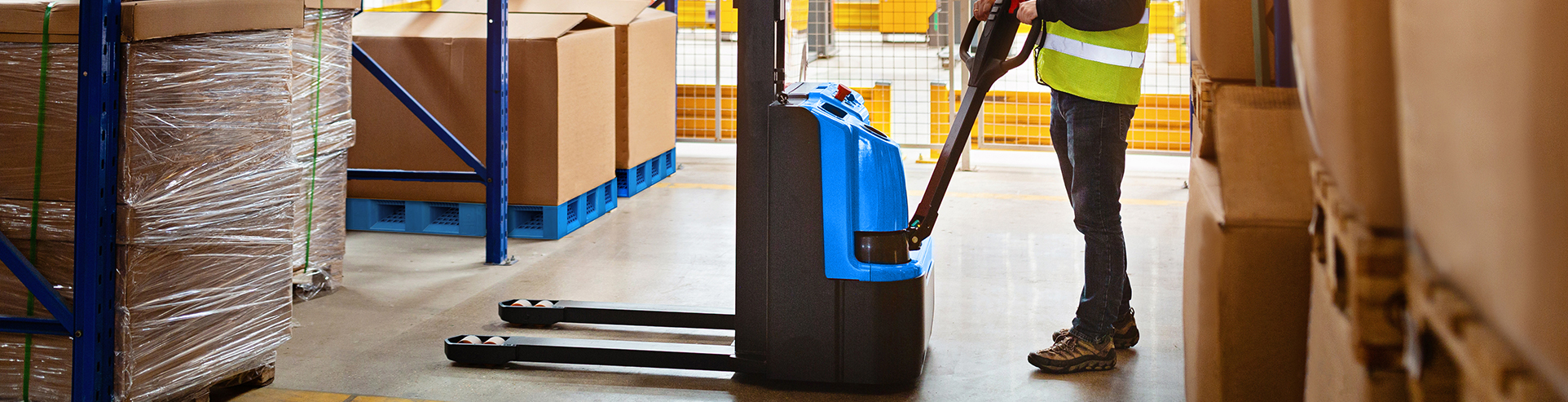
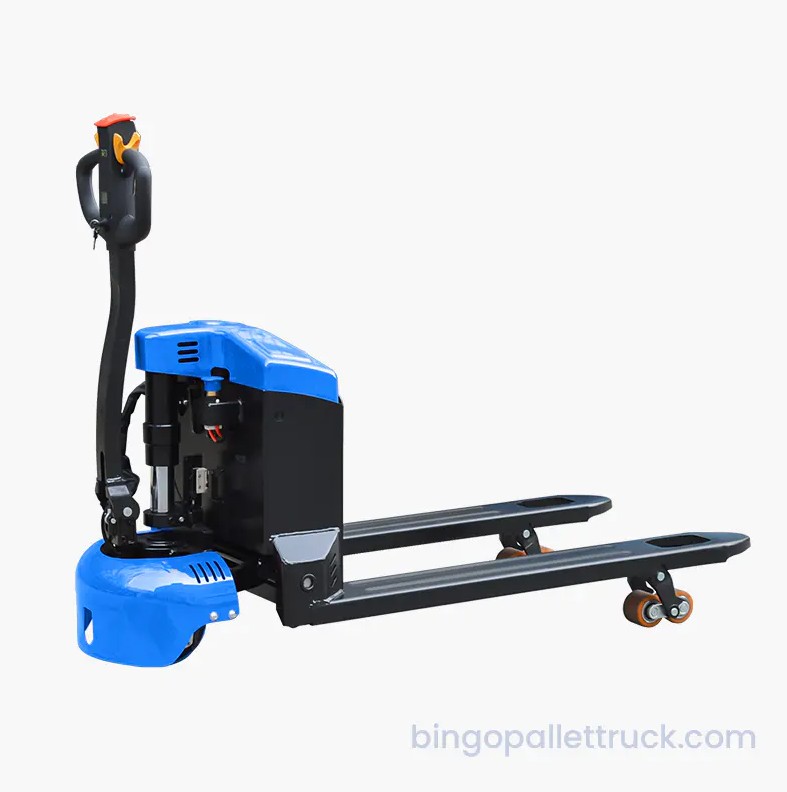
For example, the tote may be used on or near plastic pallets, alongside pallet trucks and stackers, within light-duty or heavy-duty racking, and with stretch wrap or packing strapping during transport preparation. A coordinated approach can improve compatibility between storage, handling, and packaging systems.
Working with one equipment provider may also simplify technical communication. Customers can discuss tote dimensions, pallet sizes, rack clearances, load movement, and packaging requirements within one broader logistics plan. The supplier’s focus on one-stop storage and material-handling solutions supports this type of project planning.
Supplier Manufacturing Strengths
The manufacturer is an enterprise specializing in warehousing and logistics equipment, including manual and electric pallet trucks, stackers, plastic pallets, totes, crates, bulk containers, stretch wrap, packing strapping, and warehouse racking. This product breadth indicates experience across several connected areas of material storage and handling.
Its stated strengths include a mature supply chain, standardized production processes, inspection at different manufacturing stages, customization support, stock availability, and international supply capability. These strengths can be important to importers, distributors, warehouse operators, and industrial buyers that need consistent supply rather than a one-time purchase.
A mature supply chain can help coordinate raw materials, production scheduling, packaging, and shipping. Strict quality inspection can help reduce variation between batches. Customization capability can support different customer requirements, while stock products can address urgent demand more quickly.
The company is based in Yancheng, Jiangsu, China, and serves global customers seeking storage and material-handling solutions. International buyers should confirm export packaging, shipping terms, product certifications where applicable, labeling requirements, and technical documentation before placing an order.
Purchasing Considerations
Before purchasing the tote, buyers should evaluate the type and weight of the stored items. A 37L volume does not automatically indicate the maximum safe working load. Steel screws, bolts, and other dense components can reach a substantial weight before the container appears full. The supplier should be consulted for load-related data relevant to the planned application.
Buyers should also confirm whether the standard external dimensions fit existing shelves, racks, pallets, carts, or automated equipment. The 690×450mm footprint may be advantageous for some layouts but unsuitable for others. Clearance should be checked for both the tote and the operator’s hands when the container is placed on a shelf.
Other questions may include color availability, minimum order quantity, packaging method, delivery schedule, sample availability, customization options, and repeat-order consistency. For large projects, testing a sample under actual conditions is recommended.
Implementation Recommendations
Start by grouping stored products according to size, usage frequency, and replenishment method. Fast-moving items should be positioned where they are easiest to reach, while reserve stock can be placed in higher or less accessible positions.
Assign a clear identification system. Labels should include the product code and a plain-language description. If the warehouse uses barcodes or QR codes, the label format should be compatible with existing scanners and software.
Define a maximum fill level and a standard stacking height. Do not assume that every product or load can be stacked to the same height. Dense items may require shorter stacks, while lightweight items may allow more layers under suitable conditions.
Train employees to inspect totes before use and to report cracked, warped, or unstable units. Establish a designated area for damaged containers so they are not accidentally returned to active inventory.
Finally, review the system after implementation. Measure picking time, search time, replenishment frequency, damaged parts, and space utilization. These measurements can help determine whether additional totes, dividers, labels, or rack adjustments are needed.
Frequently Asked Questions
What is the capacity of the tote?
The nominal capacity is 37 liters. The usable capacity may vary depending on the shape of the stored products, the use of internal dividers or bags, and the maximum fill level selected by the user.
What material is used for the product?
The product specification identifies HDPE, or high-density polyethylene, as the material. HDPE is commonly used for reusable industrial containers because of its durability, moisture resistance, and ease of cleaning.
What are the external dimensions?
The external dimensions are 690×450×150mm, listed in length, width, and height order.
What are the internal dimensions?
The internal dimensions are 640×420×140mm. The difference between the external and internal measurements accounts for the container walls and structural features.
How much does one tote weigh?
The listed product weight is 1.85kg. The total handling weight will be higher when fasteners, screws, or other materials are placed inside.
Can the tote be stacked?
Yes. It is designed as a stackable tote with reinforced construction. Product information indicates stacking up to 10 or more layers under suitable conditions. Users should determine the safe stacking height based on load, surface, and handling procedures.
Is the tote suitable for screws and fasteners?
Yes. Its broad, shallow internal format is well suited to screws, bolts, nuts, washers, fittings, and similar small parts. Labels, dividers, or smaller inserts can be used to improve organization.
Can the product be used outdoors?
It may be suitable for temporary outdoor use in appropriate conditions, but the application should be reviewed carefully. Direct sunlight, extreme temperatures, rain, wind, contamination, and uneven ground can affect stored goods and stacking safety. The supplier should be consulted for long-term outdoor use.
Can the tote be cleaned?
Yes. The plastic surface can generally be wiped or washed using a cleaning method compatible with HDPE. The user should test cleaning agents and ensure that the tote is dry before storing corrosion-sensitive metal parts.
Are different colors available?
The product information indicates support for multiple colors. Color availability, minimum quantities, and customization conditions should be confirmed for each order.
Can the dimensions be customized?
Customization is supported in principle, but the feasibility, tooling requirements, minimum order quantity, and lead time depend on the requested specification. Buyers should provide detailed drawings or dimensional requirements.
Is the tote available from stock?
The product information states that it is in stock and ready to ship. Stock status should be reconfirmed before ordering because inventory can change, especially for large quantities or customized products.
What industries can use this tote?
Potential applications include manufacturing, hardware distribution, e-commerce fulfillment, warehousing, logistics, machinery production, automotive maintenance, supermarket retail, and general industrial storage.
Can the tote replace a pallet?
No. The tote is a storage and handling container, not a substitute for a load-rated pallet. It can be placed on pallets or moved with suitable carts and handling equipment, but the complete load system must be assessed for safety.
How should the tote be labeled?
Labels may include the product code, description, size, quantity, batch information, or barcode. They should be positioned where they remain visible during storage and stacking.
What should buyers confirm before placing an order?
Buyers should confirm material, dimensions, capacity, load requirements, color, quantity, packaging, delivery schedule, customization options, payment terms, and any documentation or compliance requirements relevant to the destination market.
Conclusion
The 37L Stackable Plastic Tote Box for Fasteners and Screws is a practical solution for businesses that need durable, accessible, and space-efficient component storage. Its HDPE construction supports repeated handling, cleaning, and use in demanding warehouse environments. The 690×450×150mm external format provides a broad storage area without excessive depth, making small parts easier to see, identify, and retrieve.
Its reinforced stackable structure helps businesses use vertical space and create more consistent storage layouts. Compared with disposable cardboard, it offers greater reusability and resistance to ordinary warehouse conditions. Compared with many metal bins, its 1.85kg empty weight can simplify manual handling. Compared with non-industrial household boxes, its standardized form and stacking-oriented design are better aligned with commercial logistics requirements.
The product is supported by a manufacturing approach that emphasizes controlled materials, standardized processes, inspection at multiple stages, customization, and supply flexibility. These capabilities make it suitable not only for individual storage needs but also for broader warehouse standardization projects.
For companies managing fasteners, screws, hardware, and other small components, the tote can contribute to better inventory control, improved picking efficiency, reduced packaging waste, and more effective use of available space. When combined with appropriate labeling, load management, cleaning, and stacking procedures, it becomes a reliable part of an organized material-handling system.
References
1. Product specification sheet for model BG-694515-ST, including dimensions, material, weight, and capacity.
2. General principles of warehouse storage, inventory identification, and material-handling organization.
3. Industrial guidance on reusable plastic containers and returnable packaging systems.
4. General technical information concerning high-density polyethylene properties and applications.
5. Workplace guidance for manual handling, container inspection, stacking, and warehouse housekeeping.
6. Manufacturer information concerning warehousing equipment, storage containers, packaging materials, warehouse racks, production control, and quality inspection.
Product: 37L Stackable Plastic Tote Box for Fasteners and Screws


Copyright @ Yancheng Bingo Machinery Equipment Co., Ltd. All rights reserved Warehouse Logistics Equipment Manufacturer Pallet Truck Supplier
