 en
en  Español

20-Compartment Dividable Plastic Tote Box for Fasteners, Screws, and Small-Parts Logistics
Content
- 1 Introduction
- 2 Product Overview
- 3 Organized Storage for Small Components
- 4 Advantages Compared with Conventional Storage Options
- 5 Structural Design and Load Stability
- 6 Material Benefits of Polypropylene
- 7 Precision Manufacturing Process
- 8 Quality Control and Standardized Production
- 9 Applications Across Different Industries
- 10 Space Efficiency and Supply Chain Optimization
- 11 Cleaning, Maintenance, and Service Life
- 12 Integration with Warehouse and Handling Systems
- 13 Customization and Procurement Advantages
- 14 Recommended Use and Selection Considerations
- 15 Why This Tote Is a Strong Industrial Choice
- 16 Frequently Asked Questions
- 16.1 What is the BG-543506-DT used for?
- 16.2 How many compartments does the tote have?
- 16.3 What material is used to manufacture the tote?
- 16.4 What are the external dimensions?
- 16.5 What are the internal dimensions?
- 16.6 What is the size of each internal compartment?
- 16.7 How much does the tote weigh?
- 16.8 Can the tote be cleaned?
- 16.9 Is the tote suitable for stacking?
- 16.10 Can the tote be used in automated operations?
- 16.11 Can different colors or customized specifications be requested?
- 16.12 What industries can use this tote?
- 16.13 What should buyers confirm before purchasing?
- 17 Conclusion
- 18 References
- 19 Product: 20-Compartment Dividable Plastic Tote Box for Fasteners and Screws
Introduction
Efficient storage and movement of small components are essential in modern manufacturing, maintenance, distribution, assembly, and warehouse operations. Fasteners, screws, nuts, bolts, washers, fittings, electrical components, and other small items are easily misplaced when they are stored in open cartons, mixed bins, or poorly organized containers. A suitable tote must do more than hold parts. It must support identification, separation, stacking, cleaning, internal transport, and integration with broader material-handling processes.
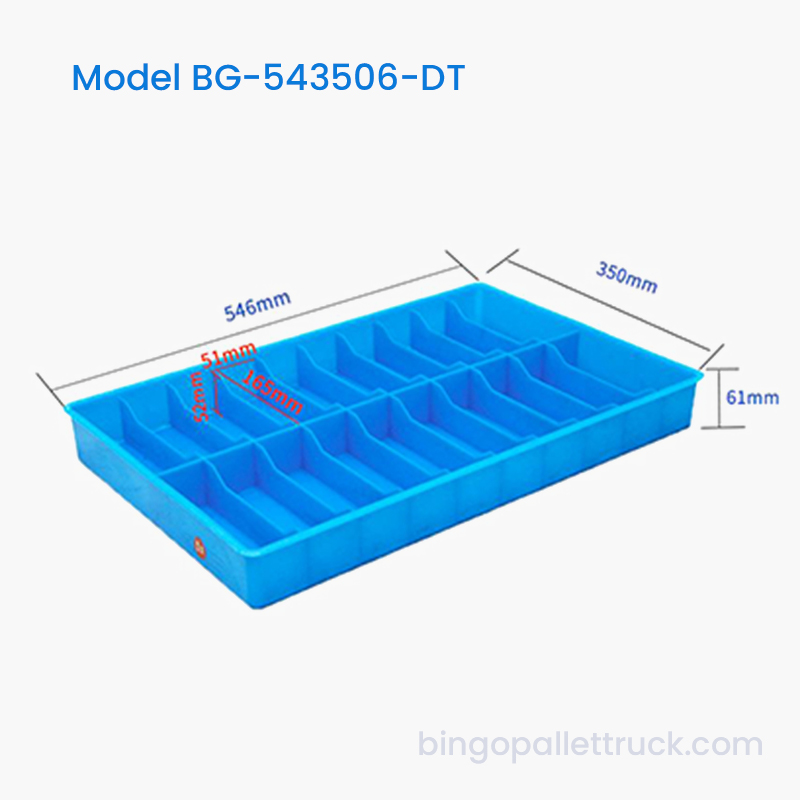
The 20-Compartment Dividable Plastic Tote Box, model BG-543506-DT, is designed to address these requirements in a compact and durable format. Precision-molded from polypropylene, this tote provides twenty organized compartments for small parts while maintaining a stable external footprint for storage and transportation. Its external dimensions are 546 × 350 × 61 millimeters, while the internal dimensions are 520 × 330 × 52 millimeters. With a net weight of approximately 0.85 kilograms, the tote balances structural strength with practical handling.
Unlike ordinary open bins or single-compartment containers, this dividable plastic tote helps users create a standardized storage system for many types of small products. The integrated compartment structure reduces mixing, supports visual inventory control, and makes the container suitable for picking stations, production lines, maintenance areas, warehouse shelves, automated handling environments, and returnable packaging programs.
Manufactured by Yancheng Bingo Machinery Equipment Co., Ltd., the tote forms part of a wider portfolio covering handling equipment, storage containers, packaging materials, and warehouse racking. The company’s experience across these related product categories enables it to understand how a storage tote must work within a complete logistics process rather than as an isolated container.
20-Compartment Dividable Plastic Tote Box for Fasteners and Screws
Product Overview
The BG-543506-DT is a low-profile, 20-compartment plastic tote intended for the organized storage and movement of small components. Its internal compartment size is approximately 165 × 51 × 52 millimeters, providing a practical space for fasteners, screws, clips, connectors, hardware items, and similar products.
The tote is manufactured from PP, or polypropylene, according to the product specification. Polypropylene is widely used for reusable industrial containers because it offers a useful combination of low weight, rigidity, impact resistance, moisture resistance, and chemical durability. The material also supports smooth molded surfaces that are easier to wipe, wash, and sanitize than porous packaging materials.
| Item | Specification |
| Model | BG-543506-DT |
| Product Type | 20-compartment dividable plastic tote |
| Primary Material | PP polypropylene |
| External Dimensions | 546 × 350 × 61 mm |
| Internal Dimensions | 520 × 330 × 52 mm |
| Net Weight | 0.85 kg |
| Internal Compartment Size | 165 × 51 × 52 mm |
| Surface Character | Smooth and non-porous |
| Typical Application | Fasteners, screws, hardware, fittings, and other small parts |
The container’s low height is particularly valuable for point-of-use storage. Operators can see and reach the contents without having to search through deep layers of parts. At the same time, the tote uses a footprint suitable for organized shelf layouts, workbenches, picking stations, and transport platforms.
The twenty-compartment design is intended to create a repeatable storage pattern. A warehouse can assign specific compartments to different part numbers, sizes, grades, or production orders. In a maintenance department, each section can hold a different fastener type. In an assembly area, the tote can hold the components required for a defined work sequence. This improves organization and reduces the risk of selecting an incorrect item.
Organized Storage for Small Components
Small components present a special storage challenge. They often have similar shapes, similar packaging, and small labeling surfaces. When different items are placed together, workers may need to spend additional time sorting them before use. Mixing also increases the possibility of incorrect picking, damaged threads, missing quantities, and production delays.
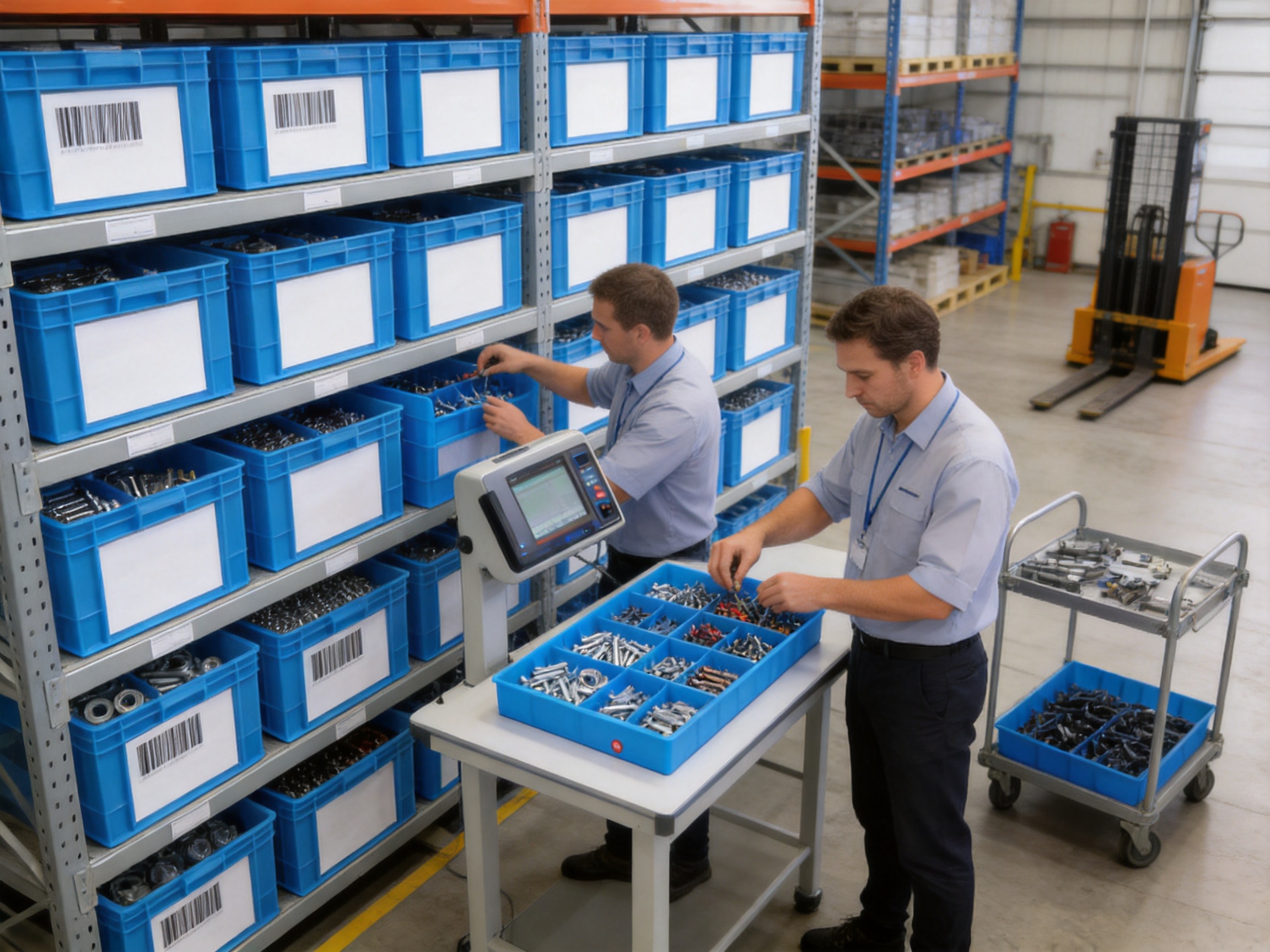
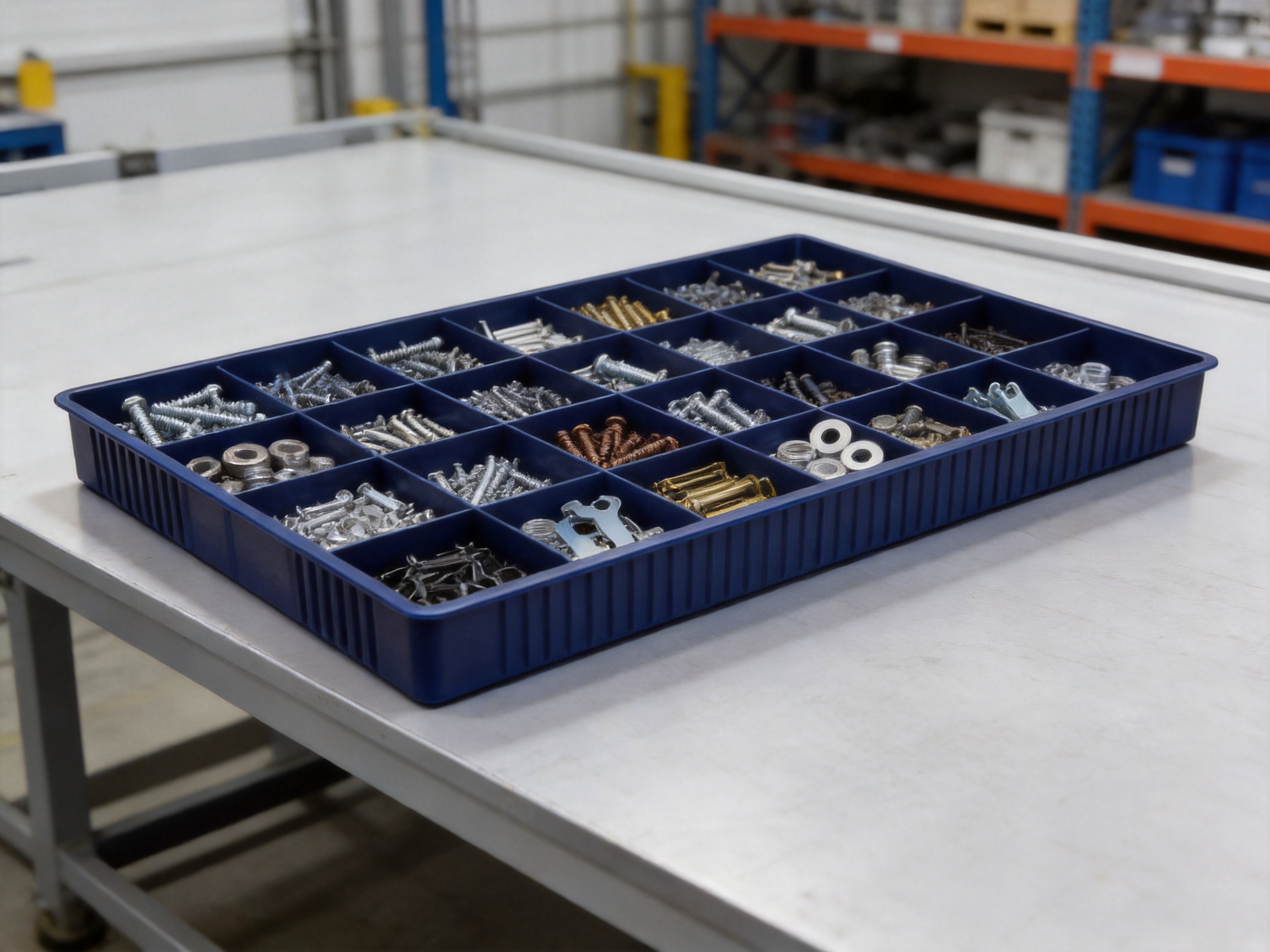
The BG-543506-DT addresses this problem by separating the internal storage area into twenty defined compartments. Each compartment provides a dedicated location that can be labeled, counted, replenished, and inspected. The division between sections remains useful even when a tote is moved from a warehouse shelf to a production station or from a service vehicle to a maintenance area.
Compartmentalization supports several inventory methods. A company may assign one compartment to one stock-keeping unit, or it may organize the tote by diameter, length, material, customer order, or assembly stage. For high-volume operations, multiple identical totes can be arranged in a standard sequence so that workers know exactly where each item should be located.
The internal height of 52 millimeters gives the tote enough space for many common small components without creating an unnecessarily deep container. A shallow compartment can reduce the amount of searching required because parts remain within a visible and reachable layer. This is especially helpful for fast-moving parts used repeatedly throughout a shift.
In contrast, a conventional single-compartment bin may require additional divider boxes, plastic bags, cardboard cartons, or loose internal trays. These extra materials increase handling complexity and may shift during transportation. The molded compartment layout of this tote offers a more stable and repeatable alternative.
Advantages Compared with Conventional Storage Options
Compared with Cardboard Boxes
Cardboard boxes are inexpensive and widely available, but they are less suitable for repeated industrial use. Moisture can weaken cardboard, corners can collapse under load, and dust or oil can become embedded in the fibers. Cardboard also tends to lose its shape after repeated opening, closing, stacking, and movement.
The polypropylene construction of the BG-543506-DT provides a more durable solution for returnable logistics. Its smooth surface is easier to clean, and the molded body retains a consistent shape during normal handling. For operations that repeatedly circulate containers between suppliers, warehouses, production lines, and customers, a reusable tote can reduce dependence on disposable packaging.
Compared with Open Single-Compartment Bins
Open bins are convenient for larger items, but they are not ideal for mixed small parts. Screws, washers, clips, and fittings can become mixed together, particularly when a bin is moved or tilted. Workers may then need to sort the contents manually.
The twenty-compartment structure eliminates much of this mixing risk. Each item has a defined location, and the divisions remain part of the molded container rather than being loose accessories. This improves orderliness and supports faster visual checks.
Compared with Loose Divider Systems
Some storage boxes use removable dividers that can be repositioned according to changing requirements. Although adjustable dividers may offer flexibility, they can become loose, misplaced, or displaced when the box is handled roughly. Gaps may also appear between the divider and the container wall, allowing small parts to migrate between sections.
The integrated partitions of the BG-543506-DT provide consistent separation and reduce the number of loose components that must be managed. This is beneficial in busy warehouses and production areas where containers are frequently moved between locations.
Compared with Metal Trays
Metal trays can provide high strength, but they may be heavier and more vulnerable to corrosion, surface damage, and noise during handling. Metal edges can also be less comfortable for frequent manual use if the design is not carefully finished.
A polypropylene tote offers a lower-weight alternative with resistance to moisture and many common handling conditions. At approximately 0.85 kilograms, the BG-543506-DT can be moved by hand without creating unnecessary empty-container weight.
Compared with Low-Quality Plastic Bins
Not all plastic storage boxes provide the same level of performance. Thin walls, weak corners, poor molding accuracy, and inconsistent material quality can lead to deformation or premature failure. Low-quality bins may also have rough surfaces that trap dust and make cleaning more difficult.
The BG-543506-DT is described as precision-molded with a reinforced ribbed base, side walls, and integrated partitions. These structural features are intended to improve load stability and preserve the shape of the tote during stacking and transport. The manufacturing approach is therefore an important advantage over generic containers made without the same focus on industrial stability.
Structural Design and Load Stability
A storage tote must remain stable while empty, partially loaded, and fully loaded. The design of the bottom and side walls has a direct effect on how the container responds to lifting, stacking, vibration, and repeated placement on shelves or pallets.
The BG-543506-DT incorporates a reinforced ribbed base. Ribs can increase stiffness without requiring a solid mass of additional material. This helps the base resist flexing and supports more consistent contact with the surface below. A stable base is especially important when the tote is placed on a conveyor, rack shelf, workbench, trolley, or pallet.
Reinforced side walls help maintain the external shape of the tote. This can be valuable when containers are positioned closely together in a storage system. Consistent dimensions improve alignment and reduce the likelihood of neighboring totes interfering with one another.
The integrated partitions contribute to internal stability as well. Instead of leaving one large open area that can permit parts to shift freely, the partitions divide the load into smaller zones. This reduces the movement of contents during transportation and supports better weight distribution across the tote.
The container’s overall dimensions also make it suitable for standardized logistics planning. At 546 millimeters long and 350 millimeters wide, it can be incorporated into shelf, cart, pallet, and workstation layouts that rely on repeatable footprints. Standardized dimensions help companies calculate storage density, define picking locations, and plan transport quantities more effectively.
Stackability is another important consideration in warehouse operations. The supplied product information identifies the company’s storage containers as stackable and capable of being stacked through multiple layers, with references to more than ten layers for suitable products and conditions. Actual stacking limits should always be confirmed for the specific tote, load, shelf, and operating environment. Nevertheless, the reinforced construction and stable geometry support the broader objective of vertical space utilization.
Material Benefits of Polypropylene
Polypropylene is commonly selected for reusable material-handling containers because it combines practical durability with relatively low weight. For the BG-543506-DT, the PP construction supports frequent movement while avoiding the excessive mass associated with some metal alternatives.
One benefit of PP is its resistance to moisture. In normal warehouse and workshop environments, the material does not absorb water in the same way as paper-based packaging. This helps the tote maintain its shape and usability in areas where occasional splashes, condensation, or damp conditions may occur.
The smooth, non-porous surface also supports routine cleaning. Dust, light residues, and ordinary workplace contaminants can generally be removed more easily from a smooth molded surface than from rough wood, fabric, or cardboard. This characteristic is useful in manufacturing, repair, distribution, and other environments where containers must be returned to service repeatedly.
PP can also provide resistance to many common chemicals, although users should verify compatibility with specific oils, solvents, acids, cleaning agents, and process chemicals before use. The tote is best treated as an industrial storage container rather than as a universal chemical vessel.
Material consistency is central to product reliability. The supplied company information emphasizes the use of virgin polymer material and inspections throughout production. Using controlled raw materials can help reduce variation in color, strength, dimensional accuracy, and surface quality. Quality results ultimately depend on the full production process, including material preparation, mold condition, molding parameters, cooling, finishing, and final inspection.
Precision Manufacturing Process
Material Selection and Preparation
The manufacturing process begins with the selection of polypropylene suitable for molded industrial containers. Raw material quality influences the strength, appearance, rigidity, and service life of the finished tote. The company information emphasizes quality control from raw-material sourcing through production, which is important for maintaining consistent output across repeated orders.
Before molding, the material must be prepared in accordance with the production process. Controlled handling helps limit contamination and supports stable processing conditions. For customers purchasing multiple batches, process discipline is especially important because consistent raw material and manufacturing control help minimize differences between production runs.
Mold Design
A multi-compartment tote requires a more complex mold than a simple open box. The mold must define the outer walls, internal partitions, ribbed base, corners, rim, and other structural details with suitable accuracy. Each compartment must be formed consistently so that the finished tote provides reliable usable space.
Precision mold design also helps control the relationship between external and internal dimensions. This is important when the tote must fit into racks, shelves, conveyors, carts, or automated workstations. Even small dimensional inconsistencies can affect smooth insertion, removal, stacking, or alignment in a standardized logistics system.
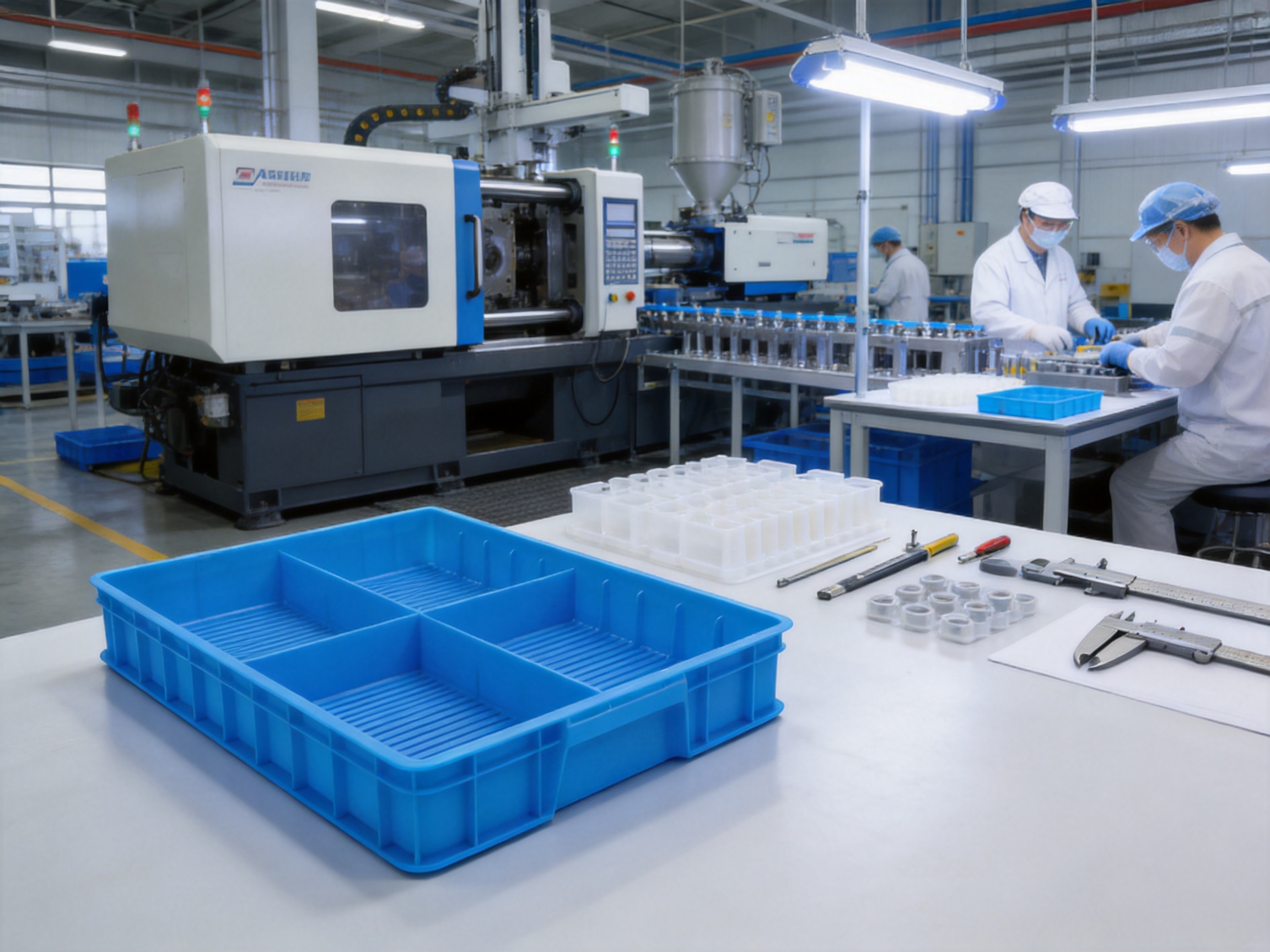
Injection Molding
Industrial plastic totes of this type are typically produced through an injection-molding process. In this process, prepared polymer is heated and injected into a shaped mold under controlled pressure. The material fills the mold cavity, including the narrow areas that form the integrated partitions and reinforcing ribs.
Process parameters such as temperature, pressure, filling speed, holding pressure, and cooling time must be managed carefully. If the material does not fill the cavity correctly, the tote may show incomplete sections, weak points, warping, or visible defects. If cooling is uneven, dimensional stability may be affected.
For the BG-543506-DT, a controlled molding process is particularly important because the product combines a shallow body with multiple internal divisions. The mold must produce a rigid structure without creating unnecessary weight. The result should be a container that is light enough for practical handling while sufficiently stable for repeated industrial use.
Cooling and Demolding
After the polymer fills the mold, it must cool sufficiently before demolding. Controlled cooling allows the material to solidify while retaining the intended dimensions and geometry. Careful demolding helps protect the rim, corners, partitions, and base ribs from deformation.
Inconsistent cooling or rough demolding can affect the way totes stack or sit on a flat surface. Therefore, these stages form an important part of the company’s broader standardized manufacturing approach.
Finishing and Inspection
Once removed from the mold, each tote can be checked for visible defects, dimensional accuracy, structural integrity, and surface quality. Inspection may include verifying the external size, internal compartment dimensions, overall weight, partition condition, base stability, and cleanliness.
Strict quality control at every stage is one of the company’s stated manufacturing strengths. A structured inspection system can help identify problems before products are packed and shipped. This supports more predictable performance for distributors, resellers, warehouse operators, and end users.
Quality Control and Standardized Production
Quality control is not limited to the final inspection. It begins with supplier management and continues through molding, handling, storage, packing, and shipment. For a reusable industrial tote, quality consistency matters because customers often build entire storage systems around a standard size and design.
The company describes a production system based on standardized processes and strict standards. Standardization can reduce variation between operators, shifts, and production batches. It may include defined work instructions, controlled equipment settings, inspection checkpoints, and documented acceptance criteria.
Raw material inspection helps ensure that the polymer entering production is suitable for the intended application. Process inspection helps identify molding issues while production is underway. Final inspection confirms whether finished totes meet the required appearance and dimensional expectations.
This layered approach offers advantages over purely visual inspection at the end of production. If a problem is discovered early, corrective action can be taken before a large quantity of nonconforming products is produced. For international customers, consistent quality also simplifies incoming inspection and reduces the risk of incompatibility with existing storage infrastructure.
The company’s experience with multiple logistics product categories further supports a system-oriented view of quality. A tote may be used alongside plastic pallets, crates, pallet trucks, stackers, stretch wrap, strapping, or warehouse racks. Understanding these connected products helps the manufacturer consider how containers perform in real material-flow environments.
Applications Across Different Industries
Manufacturing and Assembly
Assembly lines require parts to be available in the correct sequence and quantity. The 20-compartment tote can be used to organize screws, washers, nuts, clips, connectors, and other components near the workstation. Operators can identify the required part quickly and replenish each section according to production demand.
For kitting operations, one tote may hold the small components required for a defined product or work order. This can reduce the need for separate disposable bags and help maintain the relationship between components and the product being assembled.
Automotive and Mechanical Maintenance
Maintenance departments often handle many similar fasteners and replacement parts. A compartmentalized tote can separate items by size, thread, application, or equipment type. The reusable plastic structure is suitable for workshops, service areas, tool rooms, and mobile maintenance carts.
Because the tote is relatively lightweight, technicians can carry it between storage and work areas without adding substantial container weight. The smooth surface can also be wiped after use in dusty or oily environments, subject to the compatibility of the cleaning products used.
Electrical and Electronics Work
Electrical assemblies use numerous small components, including terminals, clips, cable accessories, fasteners, and connectors. Keeping these parts separated can improve picking accuracy and reduce the risk of mixing components with similar appearances.
Users should evaluate their specific electrostatic-control requirements before placing sensitive electronic components in a standard polypropylene tote. Where electrostatic discharge protection is necessary, a suitable ESD-compatible container or additional protective packaging may be required.
E-Commerce Fulfillment
E-commerce warehouses must pick many small items rapidly and accurately. A twenty-compartment tote can support organized order-picking stations, returns processing, replenishment zones, and value-added packaging areas.
The consistent footprint allows multiple totes to be arranged in repeatable shelf or bench layouts. Staff can use labels, barcodes, or location codes to identify each compartment. This can contribute to shorter search times and more consistent picking routines.
Warehouse Distribution
In distribution centers, small parts often move through receiving, storage, picking, consolidation, and shipping. A durable returnable tote can serve as an intermediate container between these stages. Its molded divisions help preserve item separation during internal transportation.
The tote can also support cycle counting. Each compartment can be assigned a defined item and quantity standard, making it easier for staff to identify shortages or overages during routine checks.
Retail and Supermarket Backrooms
Retail operations may use the tote for hardware, shelf-repair supplies, labeling accessories, display components, or small replacement items. Its low profile makes it practical for shelves and service counters where vertical clearance is limited.
Space Efficiency and Supply Chain Optimization
Storage costs are affected not only by the price of a container but also by the amount of space it occupies throughout its life cycle. A well-designed tote can reduce wasted volume, improve shelf density, and simplify transport planning.
The BG-543506-DT has a compact footprint and low profile. This allows users to store organized parts in a relatively small vertical space. More containers may fit within the same rack bay or workstation area compared with deep, irregular, or oversized boxes.
Standardization also improves planning. When every tote has the same external dimensions, warehouse managers can calculate how many units fit on a shelf, cart, pallet, or vehicle. This makes it easier to establish fixed storage locations and develop visual management systems.
The reusable nature of a polypropylene tote can reduce dependence on single-use packaging. Although the total environmental and financial benefit depends on return rates, cleaning practices, service life, and operating conditions, a durable container can support a repeatable circulation system between sites or process steps.
Empty transport volume is another consideration. The supplied product information highlights space-saving design as a way to minimize empty transport volume and storage costs. Users should confirm whether a particular application permits nesting or stacking of empty totes, since the exact efficiency depends on the tote configuration and handling method.
Cleaning, Maintenance, and Service Life
Regular cleaning helps preserve the tote’s appearance and supports accurate identification of stored parts. The smooth, non-porous PP surface can generally be wiped or washed using cleaning methods appropriate for polypropylene. Users should avoid aggressive chemicals or temperatures outside the material’s recommended range.
Before cleaning, all components should be removed from the compartments. This allows staff to inspect the base, partitions, corners, and walls for cracks, deformation, or embedded debris. After washing, the tote should be dried before sensitive metal parts are returned to storage.
Routine inspection is particularly important in high-throughput environments. A tote should be removed from service if it has sharp cracks, severely damaged partitions, unstable dimensions, or other defects that could compromise product separation or handling safety.
Proper loading also contributes to service life. Users should avoid forcing oversized components into compartments or placing concentrated loads that exceed the container’s intended capacity. Although the reinforced design improves stability, no plastic tote should be treated as a substitute for a certified heavy-load container unless the relevant load ratings have been confirmed.
When stored correctly, polypropylene containers can provide repeated service over an extended period. Their service life depends on loading, impact, temperature, ultraviolet exposure, chemical contact, cleaning, stacking conditions, and handling frequency.
Integration with Warehouse and Handling Systems
The tote is most effective when integrated into a clearly defined material-flow system. It can be placed on warehouse racks, shelves, workstations, picking carts, pallet platforms, or designated staging areas. Its standardized shape supports orderly placement and helps prevent storage locations from becoming disorganized.
For manual picking, the tote can be positioned with labels facing the operator. For batch picking, multiple totes can be arranged by order, route, or production stage. In line-side replenishment, a kanban or two-bin system can use compartmentalized totes to signal when stock must be replenished.
In automated operations, the tote’s dimensions, weight, rigidity, and surface condition should be evaluated against the requirements of conveyors, robotic grippers, scanners, lifts, and storage equipment. Automation compatibility depends on the complete system, including clearances, tolerances, sensor locations, load limits, and transfer speeds.
The company’s broader capabilities in material handling and warehouse equipment can be valuable for customers seeking a coordinated solution. Instead of sourcing storage containers, pallet trucks, stackers, packaging materials, and racking from unrelated suppliers, buyers may use a single industrial partner to discuss connected requirements.
Customization and Procurement Advantages
The supplied information indicates that multiple colors, full specifications, customization support, and stock availability are offered across the company’s storage-container range. Color coding can help companies distinguish departments, material categories, production orders, or return flows.
Customization may include color selection, labeling, printing, packaging configuration, or other specification adjustments, subject to technical review and order quantity. Buyers should provide detailed requirements, including part dimensions, target load, storage equipment, operating temperature, cleaning method, and expected circulation frequency.
Availability from stock can support faster delivery for standard requirements. This is useful when a warehouse is expanding, a production line is being launched, or a customer needs replacement containers quickly. For customized products, lead time will depend on tooling, material, color, printing, inspection, and production scheduling.
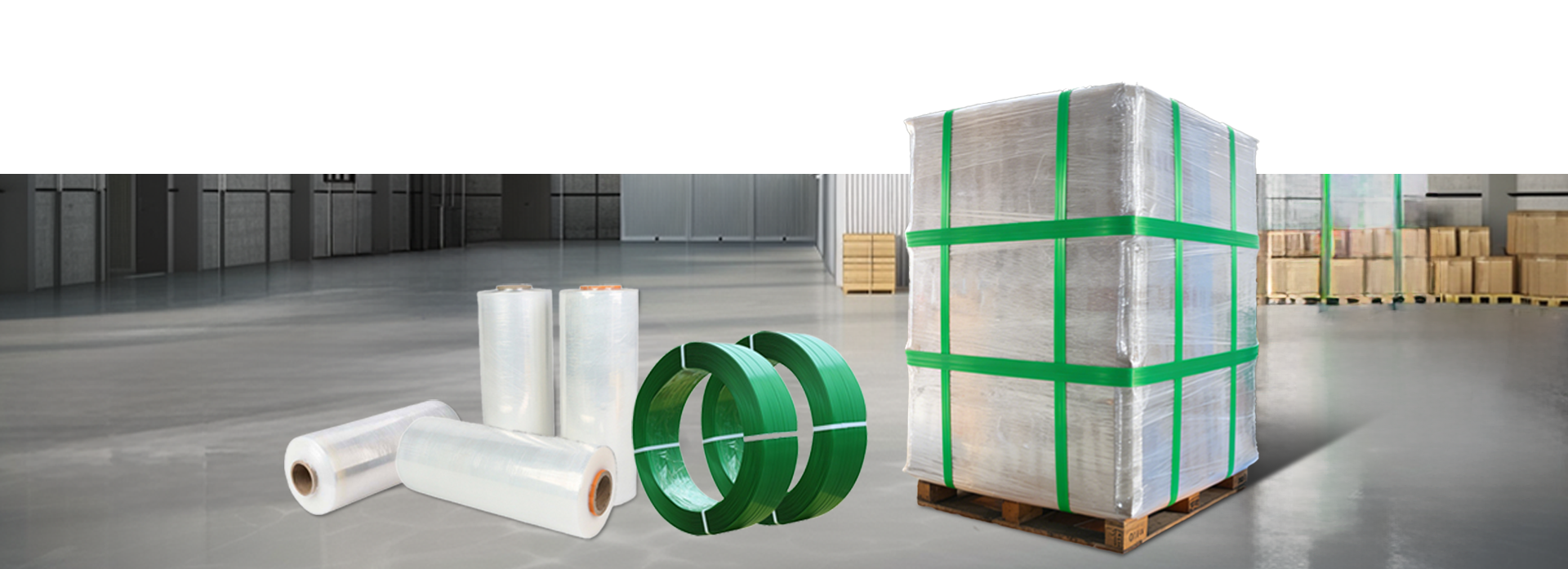
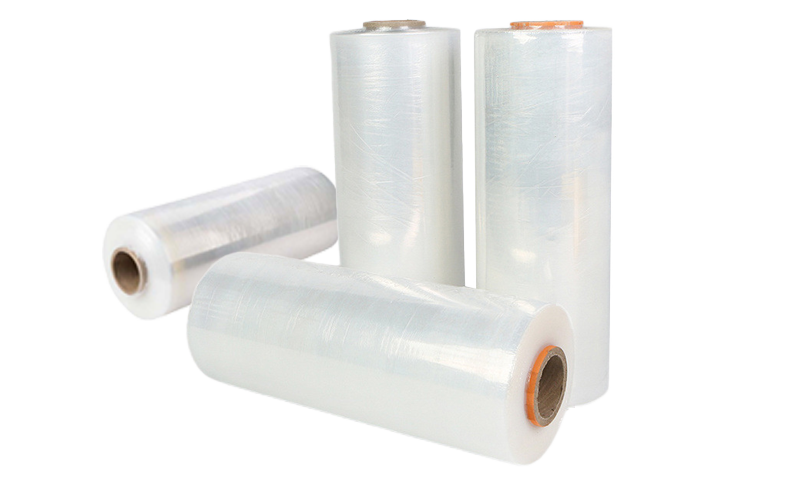
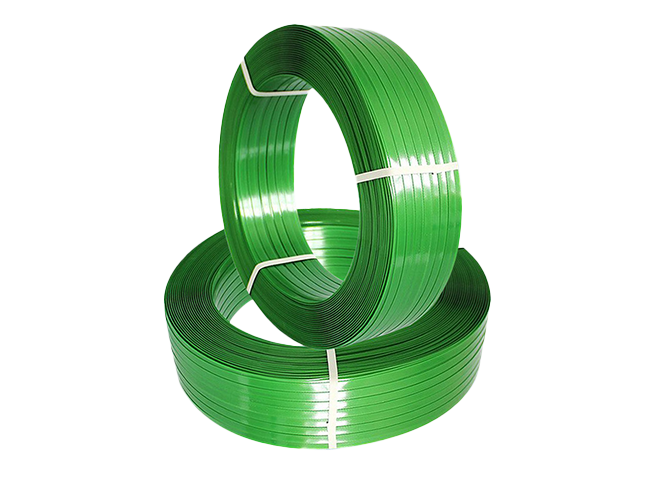
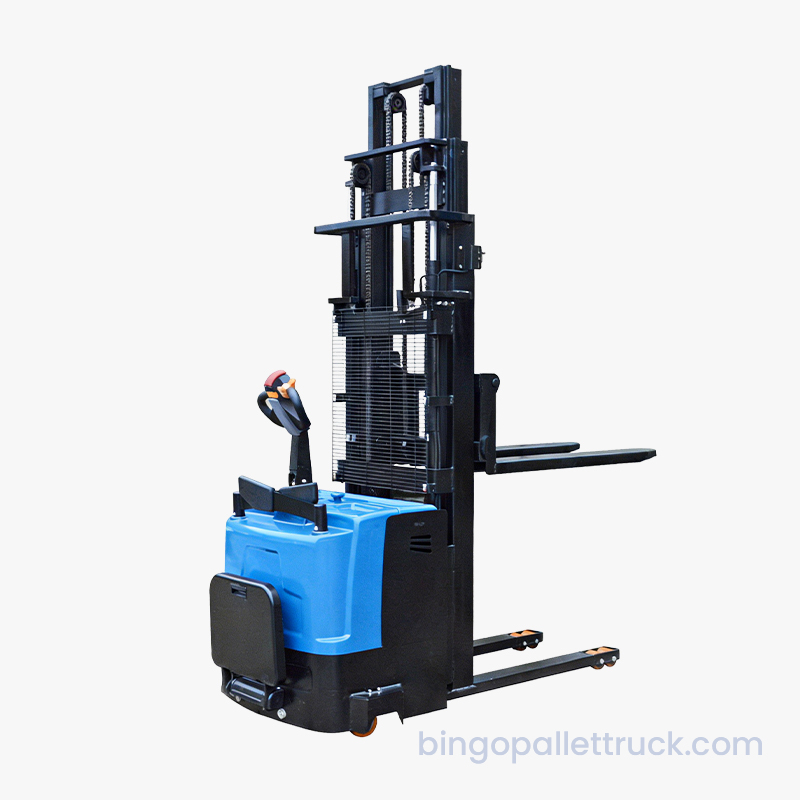
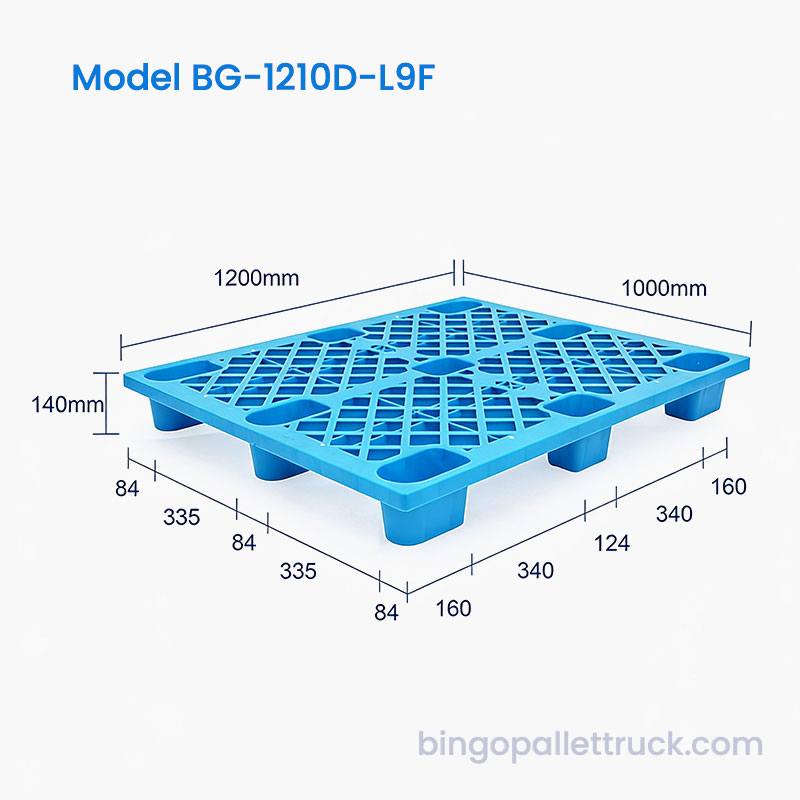
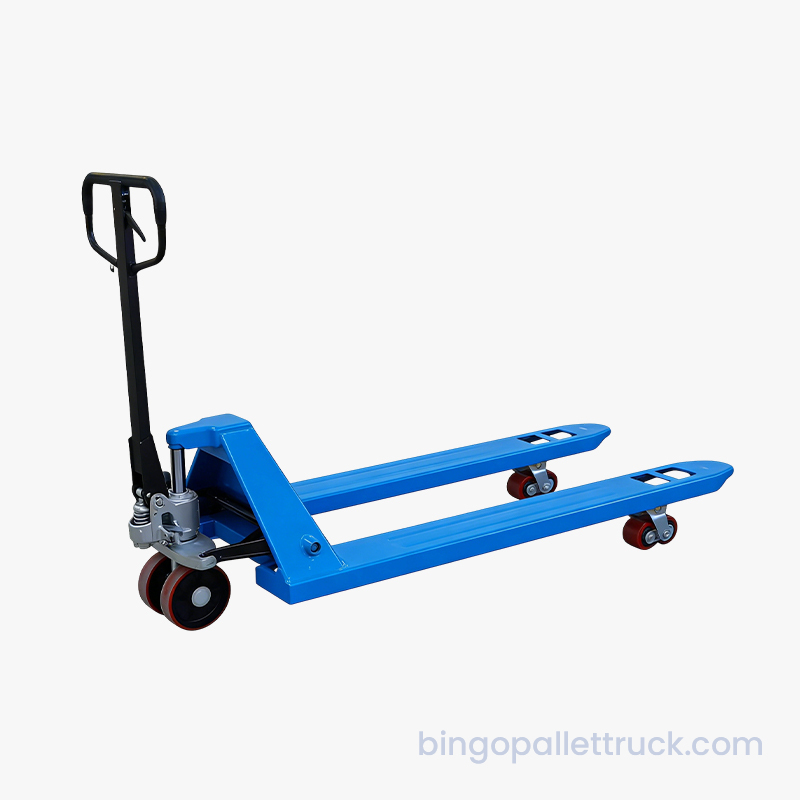
As a manufacturer and supplier of warehouse logistics equipment, Yancheng Bingo Machinery Equipment Co., Ltd. presents a one-stop approach to storage and material handling. Its product categories include manual and electric pallet trucks, stackers, plastic pallets, plastic totes, crates, bulk containers, stretch wrap, packing strapping, and warehouse racks.
This broader product coverage can simplify communication. Customers can discuss container dimensions alongside rack layouts, pallet compatibility, handling methods, packaging requirements, and warehouse workflow. A supplier that understands these relationships may be better positioned to recommend practical combinations rather than isolated products.
Recommended Use and Selection Considerations
Before ordering, customers should confirm the size and shape of the parts to be stored. The internal compartment dimensions are approximately 165 × 51 × 52 millimeters, but usable space may vary depending on part geometry and the required clearance for easy removal.
It is also important to evaluate how the tote will be handled. If it will remain on a shelf, the main requirements may be dimensional stability, visibility, and compartment organization. If it will travel through a distribution system, the buyer should also assess vibration, stacking, impacts, temperature, and cleaning frequency.
For heavy metal components, users should determine the total load per compartment and per tote. The reinforced base and walls improve stability, but the suitable capacity depends on the specific loading pattern and operating conditions.
Labels should be selected to adhere effectively to polypropylene surfaces. Barcode or QR-code identification can support digital inventory systems, provided the label material and adhesive are suitable for the cleaning and handling environment.
Customers should also verify the required color, order quantity, packaging method, delivery schedule, and any customization needs. A complete technical discussion before production can help reduce the risk of receiving a container that does not fit an existing rack, conveyor, shelf, or automated system.
Why This Tote Is a Strong Industrial Choice
The BG-543506-DT combines several features that are valuable in professional storage operations: twenty fixed compartments, a reinforced ribbed base, stable side walls, compact dimensions, low weight, smooth surfaces, and reusable PP construction.
Its main advantage is not simply the number of compartments. The product creates a repeatable method for managing small parts. By assigning each item a defined location, companies can improve visual control, reduce mixing, simplify replenishment, and support more reliable picking.
Compared with disposable packaging, it offers a reusable structure. Compared with open bins, it provides separation. Compared with loose-divider boxes, it offers integrated partitions. Compared with heavy metal trays, it provides lower empty-container weight and moisture resistance. Compared with low-quality plastic boxes, its reinforced molded structure and controlled production process are intended to provide greater stability.
The product is also supported by a company with a broad logistics-equipment portfolio, established quality-control procedures, standardized manufacturing processes, customization capabilities, and international supply experience. These strengths can be important for buyers that require more than a one-time container purchase.
Frequently Asked Questions
What is the BG-543506-DT used for?
The BG-543506-DT is used to store, separate, organize, and transport small components such as fasteners, screws, nuts, bolts, washers, clips, fittings, and similar parts.
How many compartments does the tote have?
The tote has twenty integrated compartments.
What material is used to manufacture the tote?
The product specification identifies polypropylene, or PP, as the primary material. The company information also emphasizes controlled use of virgin polymer material in production.
What are the external dimensions?
The external dimensions are 546 × 350 × 61 millimeters.
What are the internal dimensions?
The internal dimensions are 520 × 330 × 52 millimeters.
What is the size of each internal compartment?
The stated internal compartment size is approximately 165 × 51 × 52 millimeters.
How much does the tote weigh?
The net weight is approximately 0.85 kilograms.
Can the tote be cleaned?
Yes. Its smooth, non-porous surface is designed to support convenient cleaning. Users should select cleaning agents and temperatures that are compatible with polypropylene and the stored products.
Is the tote suitable for stacking?
The tote is designed for stable storage and transportation, and the company’s storage-container range includes stackable products. The exact allowable stacking height and load should be confirmed for the specific application, shelf, environment, and operating conditions.
Can the tote be used in automated operations?
It may be suitable for automated operations because of its standardized dimensions and rigid molded structure. However, compatibility must be checked against the particular conveyor, robot, scanner, rack, or automated storage system.
Can different colors or customized specifications be requested?
The supplied information indicates that multiple colors, full specifications, and customization support are available. Specific customization options, minimum quantities, and lead times should be confirmed before ordering.
What industries can use this tote?
Potential applications include manufacturing, mechanical assembly, automotive maintenance, electrical work, electronics support, e-commerce fulfillment, warehouse distribution, retail backrooms, and general industrial storage.
What should buyers confirm before purchasing?
Buyers should confirm part dimensions, compartment requirements, total load, storage equipment compatibility, stacking conditions, cleaning methods, color, labeling needs, order quantity, delivery schedule, and any customization requirements.
Conclusion
The 20-Compartment Dividable Plastic Tote Box, model BG-543506-DT, provides a practical solution for organizing small parts in demanding storage and material-handling environments. Its twenty integrated compartments support clear separation, while its reinforced ribbed base and side walls help improve stability during storage, stacking, and transport.
With external dimensions of 546 × 350 × 61 millimeters, internal dimensions of 520 × 330 × 52 millimeters, a compartment size of approximately 165 × 51 × 52 millimeters, and a net weight of 0.85 kilograms, the tote is compact enough for efficient workstation and warehouse use while remaining suitable for repeated handling.
The PP construction, smooth surface, low weight, reusable design, and standardized form give it advantages over cardboard boxes, open bins, loose-divider systems, metal trays, and low-quality plastic containers. Its value is further strengthened by the manufacturer’s focus on controlled raw materials, precision molding, standardized processes, and inspection at different stages of production.
For companies seeking to improve small-parts organization, reduce mixing, standardize storage locations, and optimize internal logistics, the BG-543506-DT offers a dependable foundation. When combined with suitable labeling, rack planning, replenishment procedures, and handling equipment, it can contribute to a cleaner, faster, and more controlled supply chain.
References
1. Product specification sheet for model BG-543506-DT, including material, dimensions, compartment size, and weight information.
2. Manufacturer-provided information regarding molded plastic storage containers, stackability, customization, stock availability, and quality-control procedures.
3. General industrial guidance on reusable plastic totes, compartmentalized storage, warehouse organization, and returnable packaging systems.
4. General material-handling principles for small-parts storage, picking accuracy, inventory control, and warehouse space utilization.
5. General technical references concerning polypropylene properties, injection molding, cleaning practices, and reusable industrial container design.
Product: 20-Compartment Dividable Plastic Tote Box for Fasteners and Screws


Copyright @ Yancheng Bingo Machinery Equipment Co., Ltd. All rights reserved Warehouse Logistics Equipment Manufacturer Pallet Truck Supplier
