 en
 Español
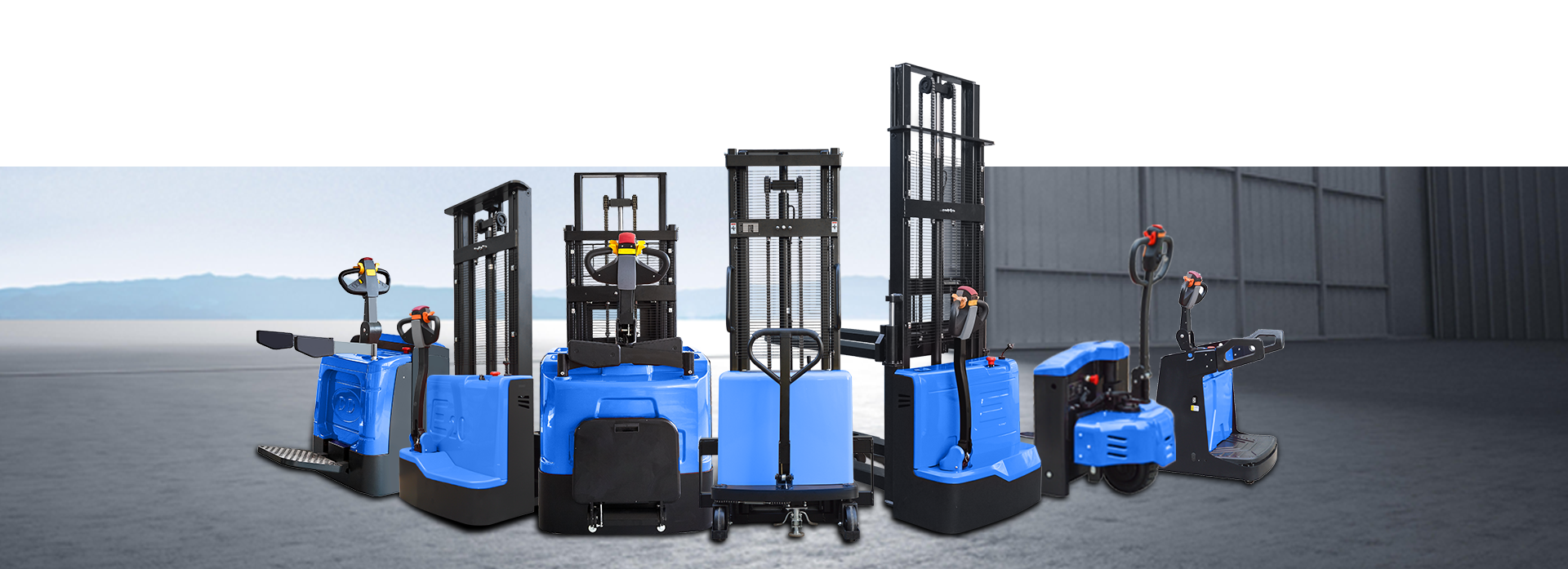
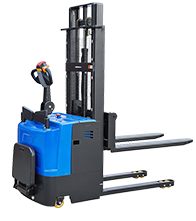

3000kg Heavy-Duty Three-Stage Electric Stand-On Stacker for High-Performance Warehouse Operations
Content
- 1 Designed for Heavy-Duty Warehouse Handling
- 2 Three-Stage Mast for Flexible Storage Heights
- 3 Electronic Power Steering for Reduced Operator Effort
- 4 Compact Operation in Confined Areas
- 5 Stability and Load Protection
- 6 Hydraulic Explosion-Proof Protection
- 7 Operator Protection and Emergency Reverse Travel
- 8 Electric Drive System and Battery Configuration
- 9 Performance in Daily Warehouse Work
- 10 Technical Specification Overview
- 11 Advantages Compared with Conventional Alternatives
- 12 Manufacturing and Quality Strengths
- 13 Application Areas
- 14 Ergonomics and Operator Productivity
- 15 Maintenance and Service Planning
- 16 Warehouse Integration and Fleet Planning
- 17 Safe Operating Practices
- 18 Why the CDD30ES Represents a Strong Industrial Choice
- 19 Purchasing Considerations
- 20 Frequently Asked Questions
- 20.1 What is the rated capacity of the electric stand-on stacker?
- 20.2 What lift heights are available?
- 20.3 Is the machine suitable for narrow warehouse aisles?
- 20.4 What type of steering does the stacker use?
- 20.5 What battery is supplied as standard?
- 20.6 Can the equipment be used in confined areas?
- 20.7 What safety features are included?
- 20.8 What is the maximum travel speed?
- 20.9 What are the motor ratings?
- 20.10 What industries can use this stacker?
- 20.11 How should the machine be maintained?
- 20.12 Can the stacker replace every forklift?
- 21 Conclusion
- 22 References
- 23 Product: 3000kg Heavy Duty EPS Three Mast Electric Stand-on Stacker for Warehouse Racking
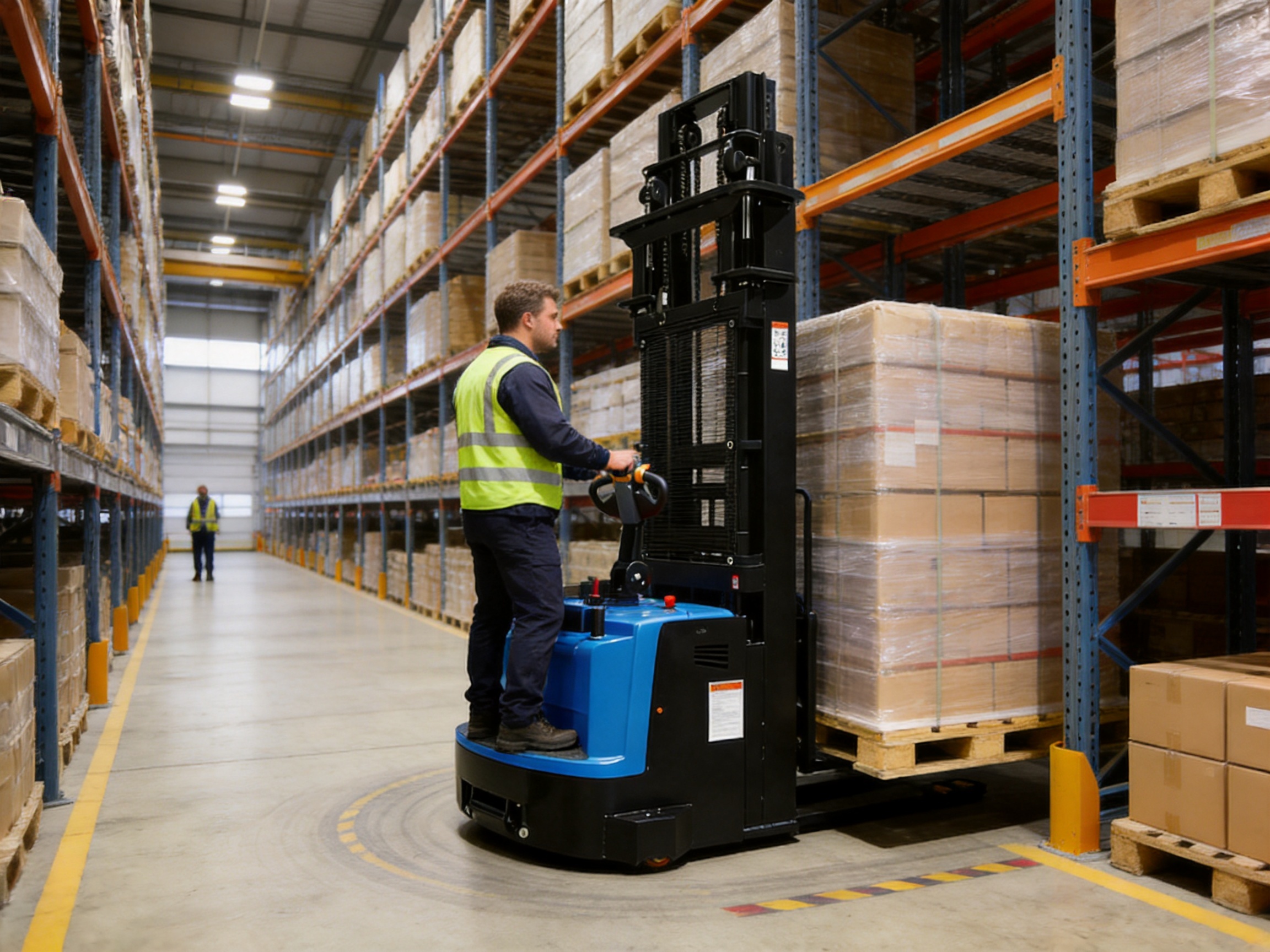
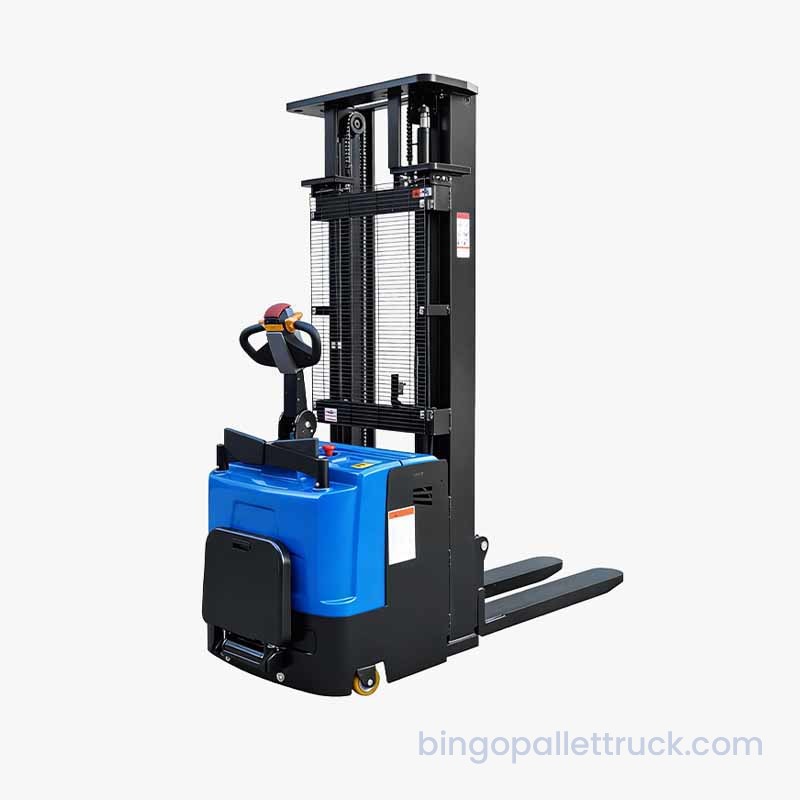
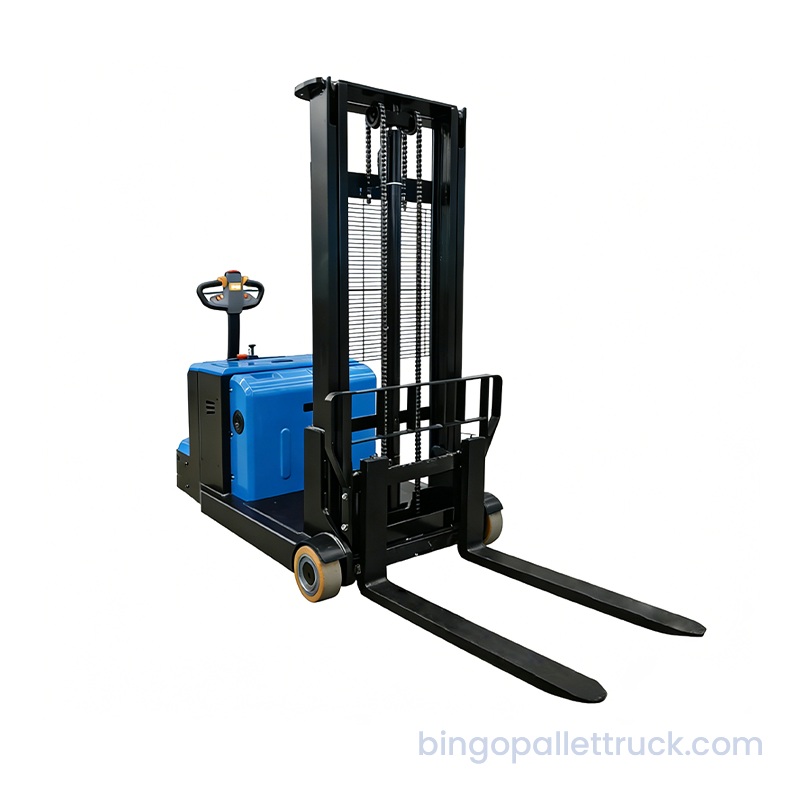
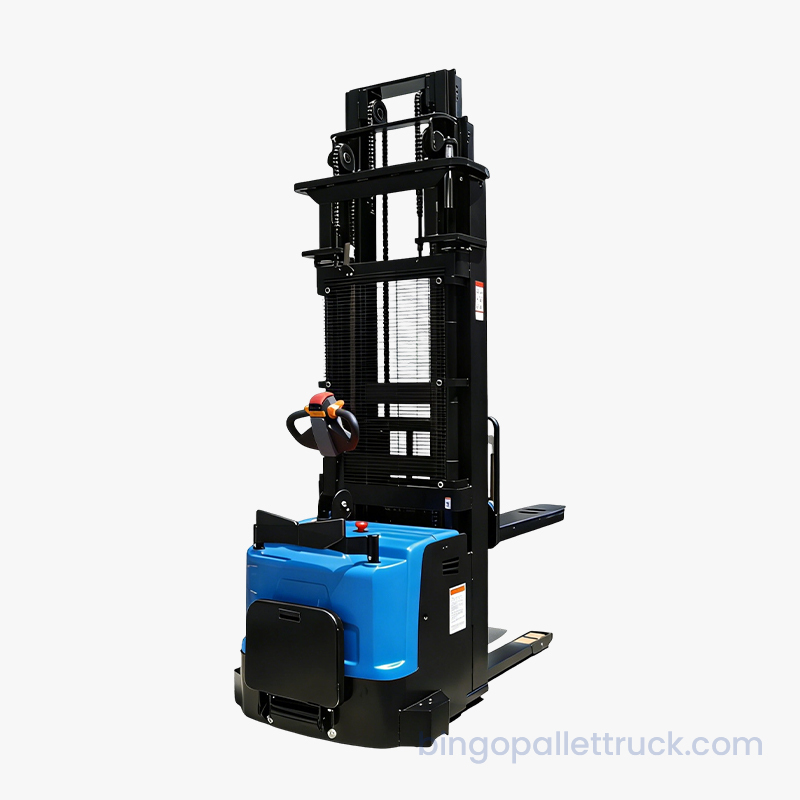
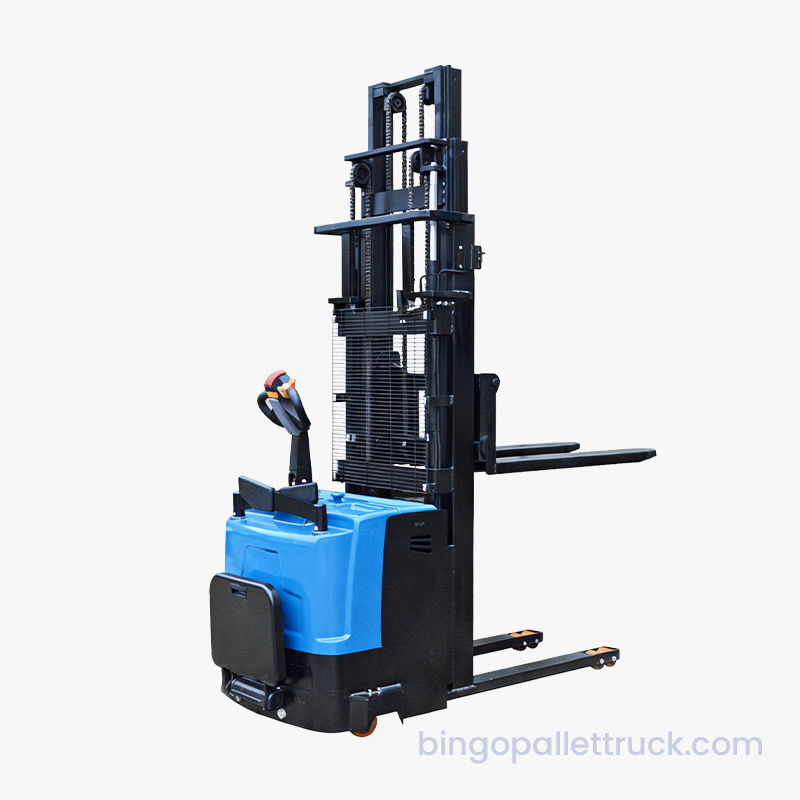
Modern warehouses require handling equipment that can combine high load capacity, precise control, safe lifting, and dependable operation in demanding storage environments. The 3000kg Heavy-Duty EPS Three-Mast Electric Stand-On Stacker is designed to meet these requirements with a powerful electric drive system, a three-stage mast, electronic power steering, and a comprehensive range of safety features. Developed for warehouse racking, pallet movement, production facilities, distribution centers, and logistics operations, the CDD30ES provides a practical alternative to larger, less maneuverable forklift trucks while delivering the lifting capability expected from professional industrial equipment.
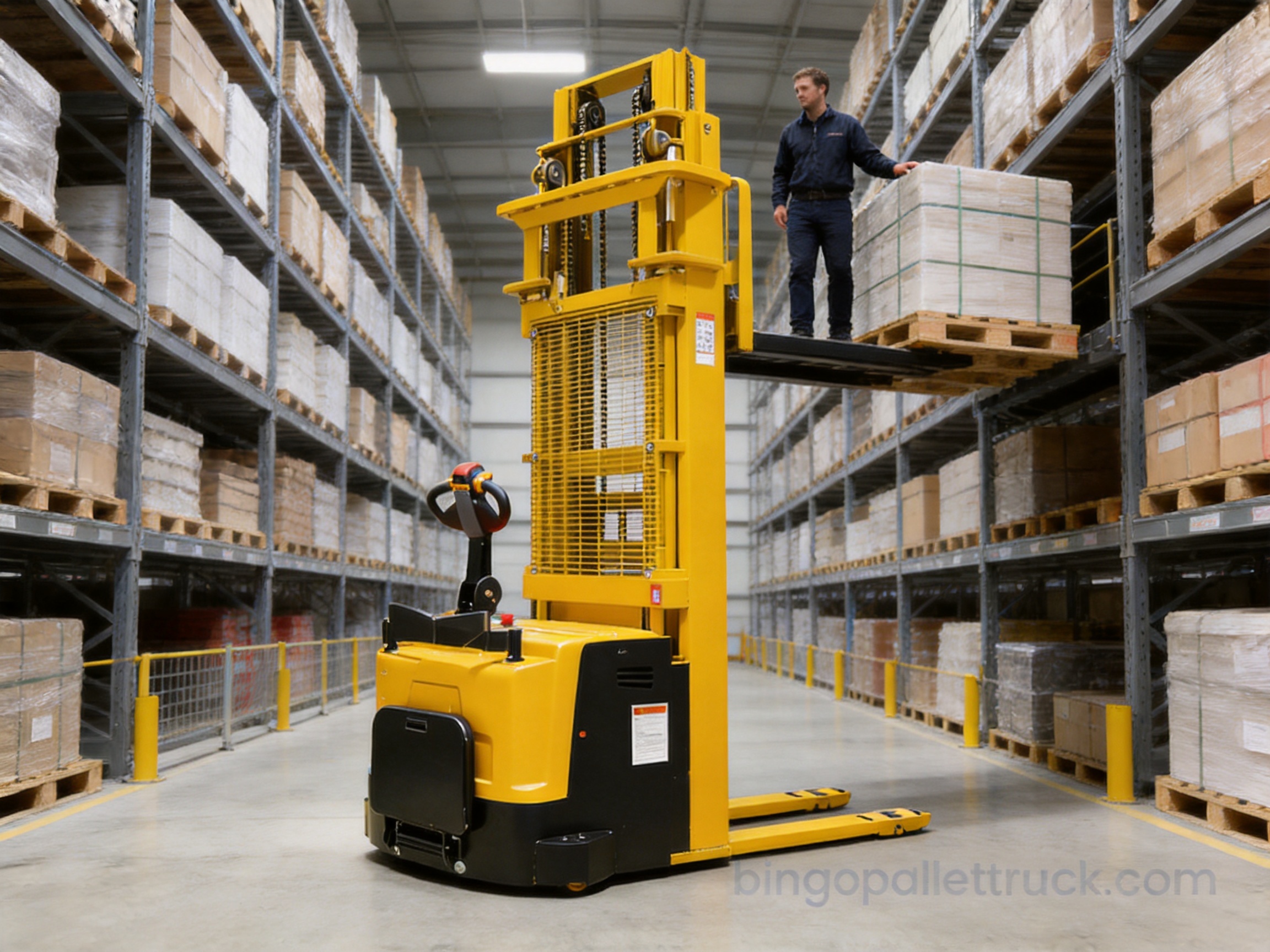
With a rated capacity of 3000kg, the stacker is engineered for applications that require more than the typical light-duty walkie stacker can provide. Its stand-on operating position gives the operator a direct view of the load and the surrounding working area, while the compact chassis supports efficient movement through carefully planned warehouse aisles. The three-stage mast offers lift heights from 4000mm to 5500mm, making the machine suitable for multi-level pallet racking and high-density storage systems.
The equipment also incorporates EPS electronic power steering, automatic speed reduction while turning, a fixed mast wire mesh guard, an explosion-proof hydraulic design, dual lifting chains, electromagnetic braking, and emergency reverse travel protection. Together, these systems create a balanced solution for businesses seeking operational productivity without compromising workplace safety.
This article examines the design, operating advantages, technical specifications, manufacturing strengths, application value, maintenance requirements, and purchasing considerations associated with this heavy-duty electric stand-on stacker.
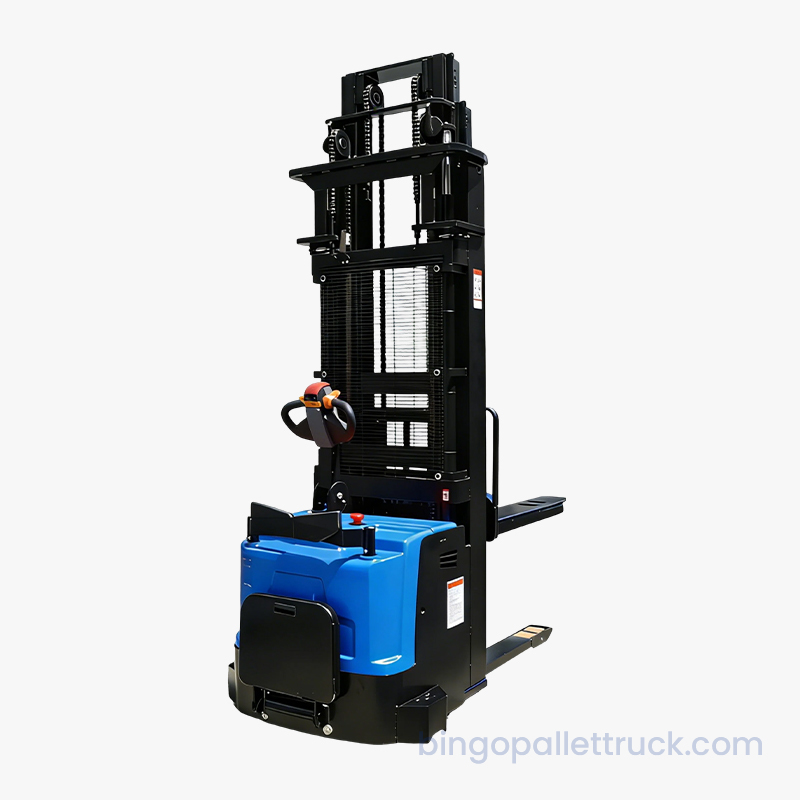
3000kg Heavy Duty EPS Three Mast Electric Stand-on Stacker for Warehouse Racking
Designed for Heavy-Duty Warehouse Handling
The central strength of the CDD30ES is its 3000kg rated load capacity. Many compact electric stackers are intended for lighter pallet loads, often serving small warehouses, retail back rooms, or low-level storage operations. By contrast, this model is designed for heavier industrial workloads where pallets may contain machinery components, raw materials, packaged goods, construction products, or dense inventory.
A 3000kg capacity allows warehouse operators to move full pallets with fewer transfers and less dependence on larger counterbalance forklifts. This can simplify internal transport routes, reduce equipment congestion, and improve the use of floor space. The stand-on format also enables efficient operator entry and exit during repeated loading and unloading tasks.
The stacker is particularly suitable for facilities that need to combine horizontal pallet transport with vertical racking operations. It can collect pallets from receiving areas, transport them to storage locations, lift them to suitable rack levels, and retrieve them during order preparation. This multifunctional capability can reduce the number of separate machines required across a warehouse.
The 500mm load center distance is an important design reference. It indicates the rated load condition used for evaluating capacity and stability. Operators should always confirm that the actual pallet load, load center, packaging arrangement, and lifting height remain within the approved capacity chart for the equipment. Heavy loads positioned too far forward can affect stability, even when their total weight is below the nominal rating.
Three-Stage Mast for Flexible Storage Heights
The three-stage mast is designed for warehouses that use vertical space as part of their storage strategy. Available lift heights include 4000mm, 4500mm, 5000mm, and 5500mm. This range allows the machine to be configured according to rack height, building clearance, pallet dimensions, and the needs of the end user.
Vertical storage can increase warehouse capacity without requiring additional floor area. However, high-level pallet placement requires accurate mast control, stable lifting components, and sufficient visibility. The CDD30ES addresses these requirements through its multi-stage mast structure, dual-chain lifting arrangement, and fixed wire mesh mast guard.
The mast has a lowered height ranging from 1980mm to 2475mm, depending on the selected lift configuration. This makes it possible to match the stacker to different building entrances, mezzanine areas, loading doors, and low-clearance passages. When fully extended, the mast reaches heights from 4590mm to 6085mm, corresponding to the selected lifting specification.
Before selecting a mast option, users should evaluate the lowest overhead obstruction in the operating area. This includes door frames, sprinkler systems, lighting, roof beams, ventilation ducts, and other suspended structures. The lowered mast height and extended mast height should both be compared with the actual building layout.
The three-stage arrangement also supports progressive lifting with a compact overall design. Instead of relying on a single very tall mast section, the structure distributes extension through multiple stages. This helps provide a practical balance between lifting height, visibility, and maneuverability within a warehouse environment.
Electronic Power Steering for Reduced Operator Effort
Long operating shifts can place significant physical demands on warehouse operators. Repeated steering adjustments, pallet alignment, and close-range maneuvering can contribute to fatigue when a machine requires excessive manual force. The CDD30ES uses EPS electronic power steering to reduce steering effort and improve operating comfort.
Electronic steering allows the operator to guide the equipment with controlled, low-effort input. This is especially valuable in high-frequency applications where the stacker repeatedly enters and exits rack aisles, approaches pallets, or performs precise positioning at loading stations.
The steering system also supports better control in confined spaces. When the available maneuvering area is limited, smooth steering response can help the operator make small directional corrections without unnecessary movement. This can reduce the risk of contact with racks, pallets, walls, and other equipment.
Compared with purely mechanical steering systems, electronic steering can provide a more consistent operating feel. It also allows the machine control system to coordinate steering behavior with speed management and safety functions. The result is a more integrated driving experience for professional warehouse operations.
Compact Operation in Confined Areas
Warehouse space is expensive, and many facilities are designed around narrow aisles and high-density racking. The CDD30ES has an overall width of 1050mm and a turning radius of 2240mm. Its specified aisle width is 2676mm for 1000mm by 1200mm pallets positioned crossways and 2609mm for 800mm by 1200mm pallets positioned lengthways.
These dimensions allow the machine to work in structured storage environments where aisle planning is essential. The actual operating aisle must always be checked against site conditions, pallet overhang, rack protection, floor quality, operator visibility, and required clearance. Nevertheless, the stacker’s compact profile provides a significant space-efficiency advantage compared with many larger conventional forklift trucks.
When the operator platform is folded, the equipment can operate at low speed in confined spaces. This feature is useful in areas where there is insufficient room for a fully extended stand-on operating position. It provides additional flexibility when the machine needs to work near walls, loading areas, narrow passageways, or congested staging zones.
The low-speed operating mode is not intended to replace proper site planning or safe operating procedures. Instead, it provides an additional control option for situations that require close-range maneuvering. Operators should remain aware of pedestrian traffic, floor conditions, rack geometry, and load visibility at all times.
Automatic speed reduction during turning further improves stability. As the machine enters a turn, the control system reduces travel speed to help limit lateral forces and maintain a more predictable path. This function is particularly beneficial when operating in tight spaces, where sharp turns and nearby structures leave little room for error.
Stability and Load Protection
Stability is a fundamental requirement for any high-capacity stacking machine. The risk of load movement or tipping can increase when a heavy pallet is lifted, when the machine turns with a raised load, or when the floor is uneven. The CDD30ES incorporates several design features intended to support stability throughout normal working operations.
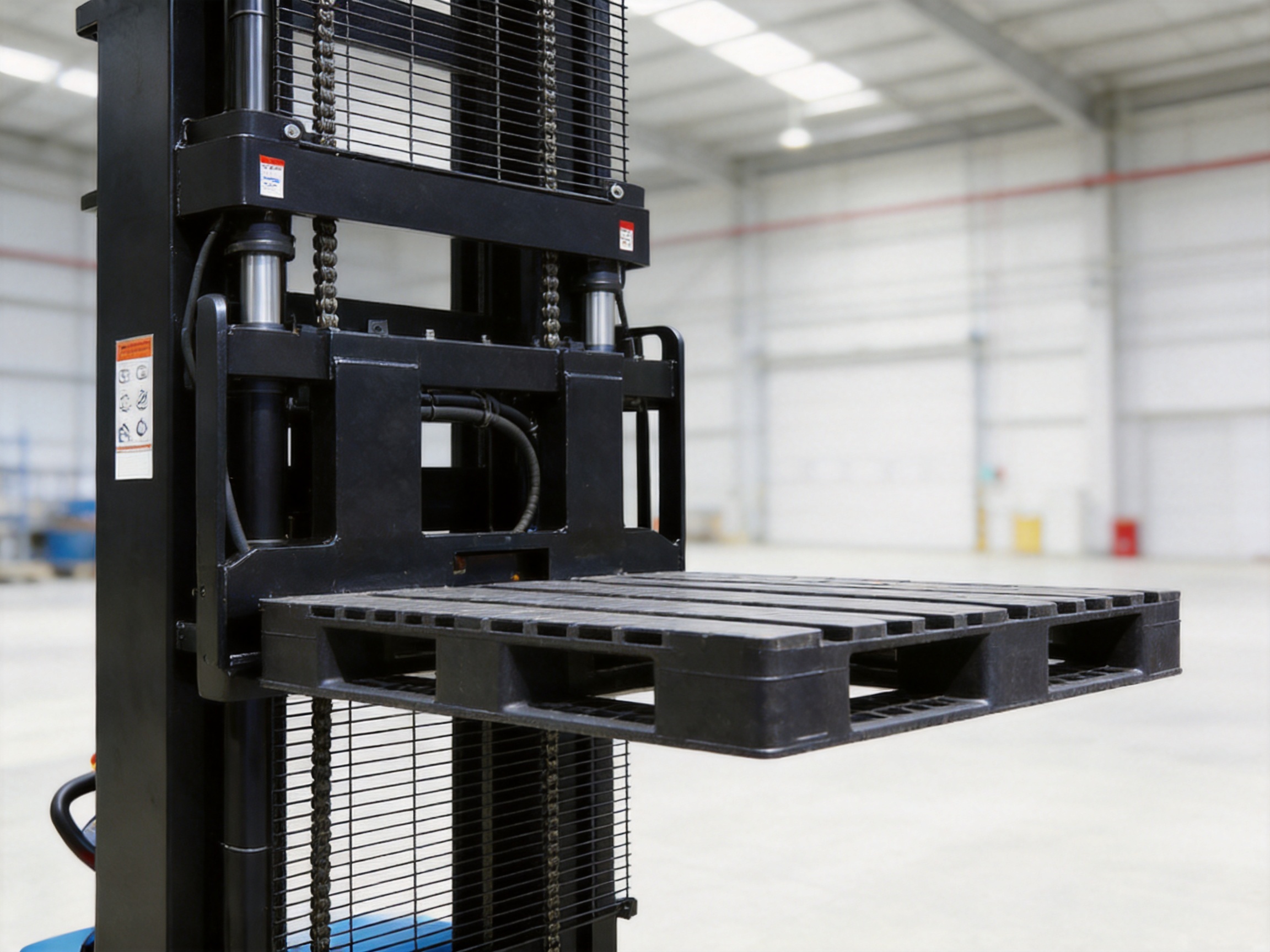
The dual-chain structure helps distribute lifting forces and supports stable mast movement. Using two lifting chains can provide a balanced lifting arrangement when properly adjusted and maintained. The system is designed to optimize lifting stability under different working conditions, including repeated pallet placement and retrieval.
The equipment is also designed to prevent load loss or tipping during lifting operations at 2.5m. This performance characteristic should be understood within the specified operating conditions and capacity requirements. Safe operation still depends on correct load positioning, appropriate speed, level flooring, proper mast alignment, and adherence to the equipment’s capacity chart.
The 1510mm wheelbase contributes to the machine’s handling balance. A suitable wheelbase helps distribute the equipment and load forces while supporting controlled movement. The front overhang is specified at 795mm, and the load center distance is 500mm. These dimensions provide important reference points for warehouse planning and capacity evaluation.
Operators should never lift damaged, unstable, or poorly wrapped loads without taking corrective action. Pallets must be suitable for the load, and the forks should be fully inserted whenever possible. Loads should be centered between the forks, with heavier items positioned low and close to the load backrest or carriage area where applicable.
Hydraulic Explosion-Proof Protection
The hydraulic system includes an explosion-proof design intended to restrict rapid mast descent if an oil pipe is damaged or bursts. This is an important safety feature because uncontrolled lowering can create a serious hazard for operators, pedestrians, goods, and racking.
The protective design helps moderate the speed of mast movement under abnormal hydraulic conditions. It should not be considered a substitute for regular inspection. Hydraulic hoses, fittings, cylinders, seals, and connections must be checked according to the maintenance schedule and immediately examined if there are signs of leakage, abrasion, deformation, or unusual movement.
Hydraulic oil contamination can affect valve performance and component life. For this reason, service personnel should use the recommended oil, maintain clean filling practices, and prevent dirt or moisture from entering the hydraulic reservoir. Any repair involving pressurized hydraulic components should be performed by trained technicians using suitable procedures and tools.
By combining a protective hydraulic system with a fixed mast guard and dual-chain lifting design, the stacker offers multiple layers of protection around the lifting process. These features are especially important in high-frequency industrial applications where the mast is raised and lowered repeatedly throughout the working day.
Operator Protection and Emergency Reverse Travel
The stand-on operator position provides a practical balance between visibility and productivity. The operator can quickly enter or leave the platform during repetitive transport tasks, while maintaining a direct position for steering and load handling. The fixed mast wire mesh guard separates the operator from the load and helps provide protection from falling or shifting materials.
A mast guard is particularly valuable when the stacker is used with palletized goods that may not be perfectly uniform. Packaging, cartons, bags, or components can shift during transportation. The guard creates a protective barrier between the operator and the lifting area while still allowing visibility through the mesh structure.
The emergency reverse travel function provides an additional method of avoiding potential injury. If the operator becomes trapped or needs to move away from an obstruction quickly, the emergency reverse control can help initiate travel in the opposite direction. Operators must be trained in its location and proper use before operating the machine in production.
Emergency controls are most effective when combined with organized traffic management. Warehouses should establish clear pedestrian routes, equipment lanes, speed limits, warning systems, and right-of-way rules. Operators should also use the horn, maintain a clear view, and reduce speed near intersections, dock edges, doors, and blind corners.
Electric Drive System and Battery Configuration
The CDD30ES is powered by an electric drive motor rated at 3kW for the S2 60-minute duty cycle. The lifting motor is also rated at 3kW under the S3 15% duty cycle. This electric configuration provides a practical power balance for warehouse transport and stacking operations.
Electric power is well suited to indoor logistics environments because it produces no direct exhaust emissions during operation. It can support cleaner working areas, lower noise compared with combustion equipment, and easier operation near packaged products or temperature-controlled goods. The specified sound pressure level at the driver’s ear is 69dB(A), supporting a comparatively controlled workplace sound environment.
The standard battery specification is a 24V, 280Ah lead-acid battery with a listed weight of 240kg. Lead-acid batteries remain widely used in industrial handling equipment because of their established service network, familiar charging practices, and generally straightforward maintenance requirements.
An optional 150Ah or 200Ah lithium battery is also available. Lithium battery technology can be advantageous for operations requiring opportunity charging, reduced routine battery maintenance, or a compact energy solution. The most suitable battery type depends on shift length, charging infrastructure, duty cycle, ambient temperature, budget, and fleet management strategy.
Battery selection should be completed with consideration for the full operating pattern. A single-shift warehouse may find a conventional lead-acid battery sufficient, while multi-shift facilities may benefit from lithium technology or a planned battery exchange program. Charging areas should be ventilated and managed according to the selected battery technology and applicable workplace regulations.
Performance in Daily Warehouse Work
The equipment has a travel speed of 5.0km/h when laden and 5.5km/h when unladen. These speeds are designed for controlled warehouse movement rather than high-speed outdoor transport. The slight reduction under load reflects the need to maintain appropriate control when carrying heavy pallets.
The lifting speed is specified at 52mm/s when laden and 85mm/s when unladen. The lowering speed is 80mm/s when laden and 67mm/s when unladen. These values provide a controlled balance between productivity and load handling precision.
In practical use, productivity depends on more than maximum speed. Travel distance, rack layout, pallet quality, operator skill, loading procedures, battery condition, and traffic congestion all influence the number of pallet movements completed per hour. A machine with predictable handling and reliable controls can often support better real-world productivity than a faster machine that is difficult to position accurately.
The maximum gradeability is listed as 5% when laden and 7% when unladen. Ramps should be evaluated carefully before use, and operators should follow the correct direction of travel for loads on inclines. Wet, oily, damaged, or uneven surfaces can significantly affect traction and braking performance.
The service brake is electromagnetic. Electromagnetic braking provides controlled stopping performance and can work together with the equipment’s travel control system. The parking and braking functions should be checked regularly, particularly in high-cycle operations or facilities with ramps and frequent stopping points.
Technical Specification Overview
The following table summarizes the main specifications of the heavy-duty electric stand-on stacker. Exact performance may vary with configuration, battery option, load condition, operating environment, and applicable testing standards.
| Item | Specification | Value |
|---|---|---|
| Model | Equipment model | CDD30ES |
| Operator type | Operating position | Stand-on |
| Rated load capacity | Q | 3000kg |
| Mast type | Configuration | Three-stage |
| Available lift heights | h3 | 4000mm, 4500mm, 5000mm, 5500mm |
| Load center distance | c | 500mm |
| Wheelbase | y | 1510mm |
| Overall length | L1 | 2340mm |
| Overall width | b1/b2 | 1050mm |
| Turning radius | Wa | 2240mm |
| Fork dimensions | s/e/l | 65/180/1150mm |
| Fork spread | b5 | 685mm |
| Travel speed, laden/unladen | Performance | 5.0/5.5km/h |
| Lifting speed, laden/unladen | Performance | 52/85mm/s |
| Maximum gradeability, laden/unladen | Performance | 5%/7% |
| Drive motor | S2 60-minute rating | 3kW |
| Lift motor | S3 15% rating | 3kW |
| Standard battery | Type and rating | Lead-acid, 24V/280Ah |
| Optional battery | Type and capacity | Lithium, 150Ah or 200Ah |
| Service brake | Brake type | Electromagnetic |
| Steering | Control design | Electronic power steering |
| Controller | Controller model | LVM24S35 |
| Sound pressure level | At the driver’s ear | 69dB(A) |
Advantages Compared with Conventional Alternatives
Compared with Walkie Stackers
Walkie stackers are often compact and economical, but they are generally intended for lower capacities and shorter operating distances. The 3000kg rating of the CDD30ES provides a substantial capacity advantage for industrial pallet loads. The stand-on platform also reduces the need for the operator to walk behind the machine during every movement.
For facilities handling heavy pallets throughout a shift, the stand-on design can reduce walking time and improve movement efficiency. The three-stage mast additionally allows higher racking applications than many entry-level walkie stackers.
Compared with Counterbalance Forklifts
Counterbalance forklifts are powerful and versatile, but they may require more floor space and wider aisles. The CDD30ES offers a narrower overall width and a compact turning radius suited to indoor warehouse layouts. Its electric design can also be preferable where exhaust emissions, indoor noise, or fuel storage are concerns.
The stand-on format can provide quicker operator access and reduced machine length in certain applications. However, users should select the equipment according to the load, terrain, attachment requirements, and outdoor operating conditions. A counterbalance forklift may remain the better choice for rough surfaces, long outdoor travel, or specialized attachments.
Compared with Reach Trucks
Reach trucks are optimized for high-level pallet storage and may provide excellent aisle performance. However, the CDD30ES can be attractive for operations that need both strong load capacity and straightforward pallet movement. Its 3000kg rating, three-stage mast, and robust stand-on configuration make it suitable for applications where the load is heavy and the equipment must also perform transport duties.
The final decision should consider rack height, aisle width, required reach distance, load center, floor conditions, and operator training. The CDD30ES is particularly valuable where a business wants a heavy-duty stacker with a compact operating profile rather than a dedicated high-reach vehicle.
Manufacturing and Quality Strengths
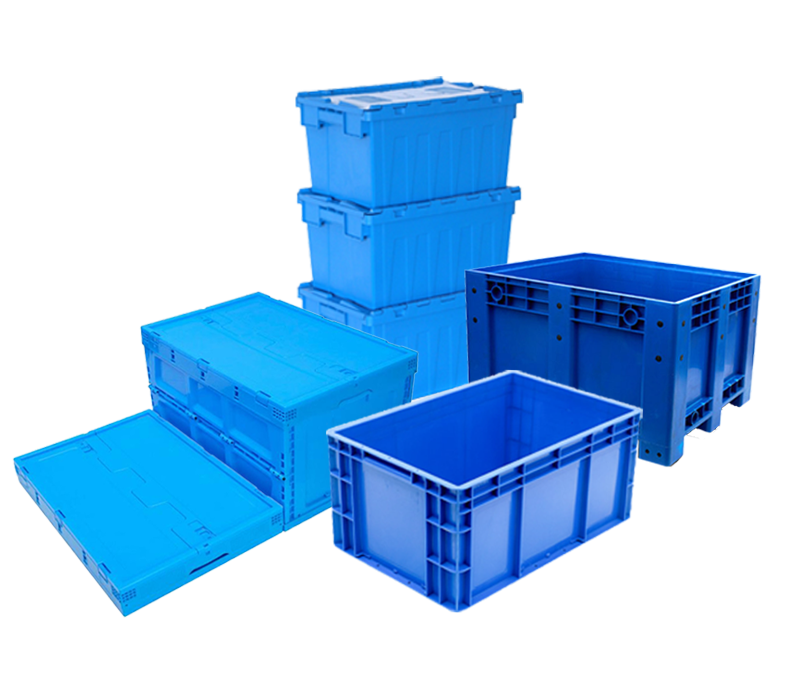
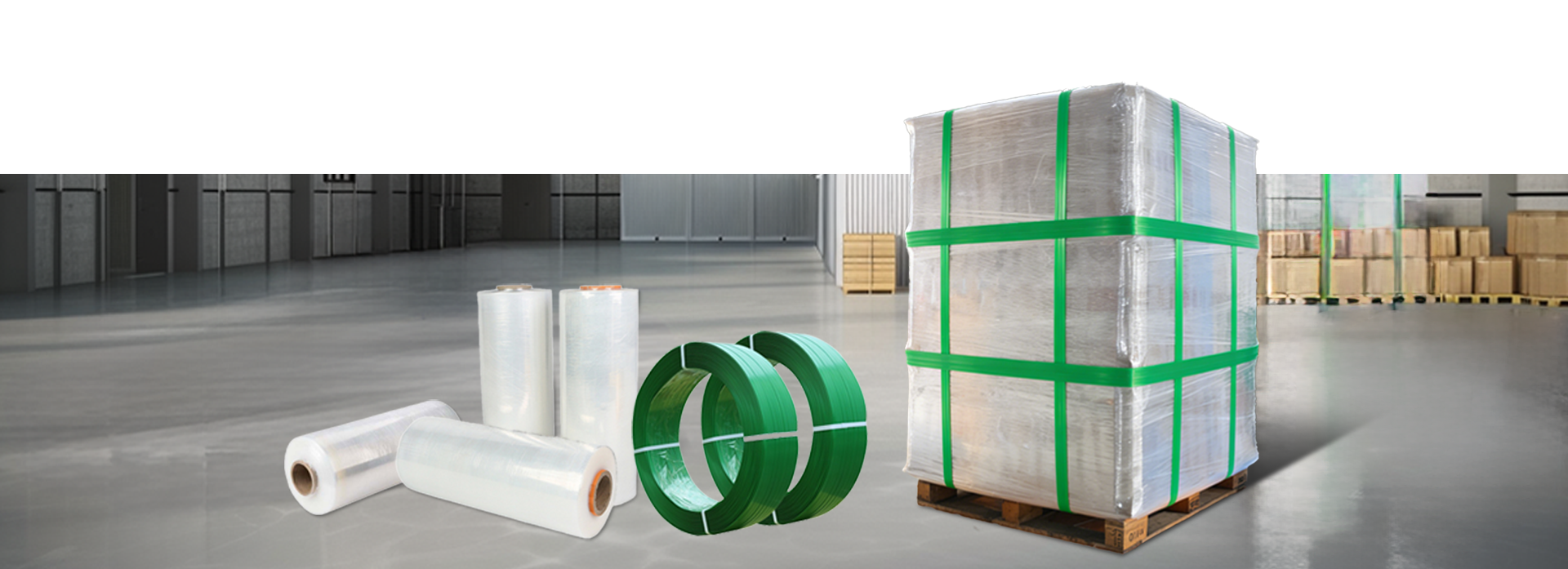
The manufacturer operates across the warehousing and logistics equipment sector, with product lines covering handling equipment, storage containers, packaging materials, and warehouse racking. This broad product structure provides a systems-oriented understanding of warehouse requirements. Rather than viewing the stacker as an isolated machine, the business can consider how equipment interacts with pallets, racks, containers, packaging methods, and material flow.
A complete supply chain covering multiple warehouse product categories can support more coordinated project planning. For example, a customer developing a new storage facility may require pallet trucks, stackers, plastic pallets, totes, stretch wrap, strapping, and racking. A supplier with experience across these areas can help align product dimensions and operating practices.
The company emphasizes a mature supply chain and strict quality inspection processes. For industrial handling equipment, quality control should address structural welds, mast alignment, fork dimensions, chain tension, hydraulic performance, steering response, braking, electrical insulation, battery connection, and controller operation.
Advanced manufacturing is not limited to the final assembly stage. It includes accurate component sourcing, controlled fabrication, repeatable assembly procedures, inspection checkpoints, functional testing, and documentation. When these processes are applied consistently, they help reduce variation between machines and improve serviceability throughout the equipment life cycle.
The CDD30ES reflects a design approach that integrates mechanical, hydraulic, electrical, and ergonomic systems. The mast, forks, chassis, drive motor, lift motor, controller, battery, steering system, and safety controls must operate as a coordinated unit. A reliable machine depends on the compatibility of these subsystems, not simply on the rating of an individual component.
Quality inspection is especially important for high-capacity lifting equipment. Small deviations in mast alignment, chain adjustment, fork geometry, or hydraulic control can influence load handling. A disciplined production process helps ensure that the finished machine meets intended performance requirements before delivery to the customer.
Application Areas
Manufacturing Plants
Manufacturing facilities often need to move raw materials, semi-finished products, molds, components, and finished goods. The stacker can support line-side replenishment, pallet staging, warehouse storage, and dispatch preparation. Its electric drive is suitable for indoor production areas where clean operation and controlled noise are important.
E-Commerce Fulfillment
E-commerce warehouses typically handle high order volumes and frequent pallet movement. The machine can be used in reserve storage areas, inbound receiving zones, replenishment lanes, and outbound staging locations. The stand-on configuration supports repeated travel while the electronic steering system assists with close-quarters maneuvering.
Third-Party Logistics
Third-party logistics providers must often handle different product types, pallet dimensions, and storage configurations for multiple customers. The adjustable lift-height options and heavy-duty capacity can provide flexibility across varied contracts. Proper operator training and load assessment remain essential when changing between product categories.
Distribution Centers
Distribution centers depend on predictable pallet flow between receiving, storage, picking, consolidation, and shipping areas. The stacker can contribute to these processes by combining horizontal transport with vertical storage. Its compact size can also support efficient use of staging space.
Retail and Wholesale Storage
Wholesale facilities and large retail distribution operations frequently manage dense palletized inventory. The equipment can assist with rack replenishment and stock rotation, especially where indoor traffic must be carefully controlled. The low-speed function with the platform folded may be useful in more restricted service areas, subject to site rules.
Ergonomics and Operator Productivity
Operator comfort affects both productivity and safety. An operator who is fatigued may be more likely to make steering errors, misjudge clearances, or handle loads too quickly. The CDD30ES addresses ergonomic demands through electronic power steering, a stand-on working position, controlled travel speeds, and accessible emergency functions.
Electronic steering reduces the physical force needed to guide the machine. This is valuable during long shifts and repeated rack approaches. A responsive steering system also allows the operator to make small corrections instead of using large, abrupt movements.
The stand-on format makes it easier to step on and off during tasks that involve frequent stops. This can be advantageous in receiving and order preparation areas where the operator may need to inspect pallets, scan goods, adjust packaging, or coordinate with other personnel.
Ergonomics also includes visibility. The operator should have a clear view of the forks, load, aisle, and surrounding traffic. Loads that block forward visibility should be transported in reverse when appropriate, with the operator looking in the direction of travel and following site procedures.
Maintenance and Service Planning
Preventive maintenance is essential for preserving lifting performance and protecting personnel. A maintenance program should be based on operating hours, duty cycle, environmental conditions, manufacturer recommendations, and applicable regulations.
Daily inspections should include the forks, mast, chains, hydraulic hoses, wheels, steering controls, emergency reverse function, brake operation, warning devices, battery condition, and visible fasteners. Any unusual noise, vibration, leakage, slow lifting, uneven chain movement, or steering irregularity should be investigated before continued use.
The polyurethane wheels should be inspected for cuts, chunking, uneven wear, embedded debris, and loss of profile. The specified front wheel size is 254mm by 100mm, while the rear wheel size is 85mm by 85mm. The balance wheel is specified at 115mm by 55mm. Correct wheel condition is essential for traction, stability, and smooth travel.
Chains should be inspected for elongation, corrosion, damaged links, incorrect tension, and lubrication requirements. Because the lifting system uses dual chains, both chains must remain correctly adjusted so that the carriage rises evenly. Uneven chain tension can increase stress on mast components and affect load stability.
Hydraulic components should be examined for leaks and damage. Operators should never use their hands to search for pressurized hydraulic leaks. Trained service personnel should follow safe inspection procedures and depressurize the system before repairs.
Battery maintenance depends on the selected technology. Lead-acid batteries require appropriate charging, electrolyte management where applicable, terminal inspection, and ventilation. Lithium batteries require the correct charger, temperature management, battery monitoring, and protection from unauthorized modification.
Maintenance records should document inspections, repairs, component replacements, battery service, and safety checks. Clear records help identify recurring problems, plan scheduled downtime, and demonstrate that the equipment is being managed responsibly.
Warehouse Integration and Fleet Planning
A stacker should be selected as part of a complete material-flow plan. Before purchasing, managers should map the movement of goods from receiving to storage, picking, consolidation, and dispatch. The required capacity, lift height, aisle width, battery endurance, and operating speed can then be evaluated against actual workflows.
Rack compatibility is a critical consideration. The rack beam height, pallet dimensions, clearances, aisle width, floor flatness, and rack protection system should be checked. The selected fork dimensions and fork spread must be compatible with the pallets used at the facility.
Floor conditions also influence performance. The CDD30ES has a ground clearance of 28mm at the center of the wheelbase, which is appropriate for many smooth indoor floors but should be evaluated against expansion joints, thresholds, ramps, debris, and damaged surfaces. Uneven floors can affect both stability and operator comfort.
Fleet managers should also consider charging locations, battery rotation, spare parts availability, operator training, service response, and equipment utilization. A machine that matches the application but lacks a practical service plan may produce unnecessary downtime.
For multi-machine fleets, standardized controls and similar operating procedures can simplify training. Where different equipment types are used, operators should be trained separately on each model’s controls, capacity limits, emergency systems, and operating restrictions.
Safe Operating Practices
Only trained and authorized personnel should operate the stacker. Training should cover pre-use inspection, load capacity, load center, steering, braking, mast operation, battery charging, pedestrian awareness, emergency reverse travel, and site-specific traffic rules.
Operators should keep the forks low while traveling and raise the load only when positioned at the intended storage location. Travel speed should be reduced near corners, doorways, intersections, pedestrians, dock edges, and areas with limited visibility.
Loads should be stable, centered, and correctly supported by the forks. Damaged pallets should not be used for high-level storage unless they have been assessed and approved. Operators should never allow people to stand beneath raised forks or loads.
The machine should not be used on slopes, surfaces, or environments beyond its intended specification. The stated gradeability values are reference figures and do not authorize operation on every ramp or surface. Site risk assessments should address wet floors, ice, oil, loose materials, edge protection, and drainage.
When the stacker is parked, the forks should be lowered, the controls placed in the correct neutral or secured position, and the equipment parked in an approved location. Charging should take place only in the designated charging area using compatible equipment.
Why the CDD30ES Represents a Strong Industrial Choice
The CDD30ES combines several capabilities that are not always found together in compact warehouse equipment. Its 3000kg capacity supports heavy pallet work, while its three-stage mast enables high-level storage. Electronic power steering contributes to operator comfort, and the compact dimensions support operation in structured warehouse aisles.
Its safety package is another major advantage. The fixed wire mesh mast guard, emergency reverse travel function, automatic turning speed reduction, electromagnetic braking, hydraulic anti-rapid-drop design, and dual-chain lifting system address different stages of the handling process.
The battery options provide additional flexibility. Lead-acid technology supports familiar industrial charging practices, while optional lithium battery configurations can support users seeking reduced maintenance and opportunity charging capability.
From a supplier perspective, the equipment benefits from a business structure that includes handling equipment, storage containers, packaging materials, and warehouse racks. This broad capability can help customers source complementary products for a complete logistics project rather than purchasing isolated items from unrelated vendors.
The combination of product breadth, supply-chain coordination, quality inspection, and application-focused design makes the stacker a suitable candidate for businesses looking to improve warehouse productivity while maintaining control over equipment investment and operating safety.
Purchasing Considerations
Before confirming an order, buyers should provide accurate information about their application. Important details include the maximum pallet weight, load dimensions, load center, rack height, lowest overhead clearance, aisle width, floor type, daily operating hours, number of shifts, battery charging arrangement, and indoor or outdoor operating conditions.
The selected mast height should reflect both the required rack height and the building’s overhead clearance. The highest storage position should not be determined solely by the nominal lift height. Pallet height, rack beam clearance, load stability, and mast extension must all be included in the calculation.
Battery selection should be based on the actual duty cycle. A lead-acid battery may be suitable for a standard single-shift application, while lithium technology may be more suitable for intensive multi-shift operations. Buyers should also evaluate charger compatibility, charging time, operator access, ventilation, and total ownership cost.
Service support should be discussed before delivery. Buyers should understand the recommended maintenance schedule, warranty conditions, spare parts process, technician availability, battery support, and training arrangements. These factors can have a significant effect on long-term equipment value.
Customers should also request the applicable capacity information, operating instructions, inspection requirements, and safety documentation. Proper documentation allows operators and supervisors to use the machine according to its intended design.
Frequently Asked Questions
What is the rated capacity of the electric stand-on stacker?
The rated load capacity is 3000kg under the specified rated conditions, including the listed 500mm load center distance. Actual safe capacity depends on lift height, load center, pallet condition, load stability, and the approved capacity chart.
What lift heights are available?
The three-stage mast is available with lift heights of 4000mm, 4500mm, 5000mm, and 5500mm. The correct option should be selected according to the rack height and building clearance.
Is the machine suitable for narrow warehouse aisles?
It is designed for compact warehouse operation, with an overall width of 1050mm and a turning radius of 2240mm. The specified aisle widths are 2676mm for 1000mm by 1200mm pallets positioned crossways and 2609mm for 800mm by 1200mm pallets positioned lengthways. The actual site must still be measured carefully.
What type of steering does the stacker use?
The stacker uses electronic power steering. This reduces steering effort and supports precise maneuvering during long shifts and close-range pallet handling.
What battery is supplied as standard?
The standard battery is a 24V, 280Ah lead-acid battery with a listed weight of 240kg. Optional lithium batteries with capacities of 150Ah or 200Ah are available for suitable applications.
Can the equipment be used in confined areas?
Yes, the equipment can operate at low speed in confined areas when the platform is folded. Operators must follow site procedures and maintain safe clearance from pedestrians, racks, walls, and other obstacles.
What safety features are included?
Key safety features include a fixed mast wire mesh guard, emergency reverse travel, automatic speed reduction during turning, electromagnetic braking, a hydraulic explosion-proof design to restrict rapid lowering, and a dual-chain lifting structure.
What is the maximum travel speed?
The specified travel speed is 5.0km/h when laden and 5.5km/h when unladen. Actual safe speed should be adjusted to the floor, traffic, load, visibility, and warehouse rules.
What are the motor ratings?
The drive motor is rated at 3kW under the S2 60-minute rating, and the lift motor is rated at 3kW under the S3 15% duty rating.
What industries can use this stacker?
Typical applications include manufacturing, e-commerce fulfillment, third-party logistics, distribution centers, wholesale storage, retail distribution, and general warehouse operations involving palletized goods.
How should the machine be maintained?
Maintenance should include daily inspections of forks, mast, chains, hydraulic systems, wheels, steering, brakes, emergency controls, battery connections, and warning devices. Scheduled servicing should be completed by qualified personnel according to operating hours and manufacturer recommendations.
Can the stacker replace every forklift?
No. It is designed for specific warehouse and pallet-handling applications. Outdoor rough-terrain work, specialized attachments, very long travel distances, or unusual load types may require a different machine. Application assessment should be completed before selection.
Conclusion
The 3000kg Heavy-Duty EPS Three-Mast Electric Stand-On Stacker is engineered for warehouses that need substantial load capacity, flexible vertical storage, compact maneuverability, and dependable electric operation. Its combination of a 3000kg rating, lift heights up to 5500mm, electronic power steering, dual-chain lifting, hydraulic anti-rapid-drop protection, emergency reverse travel, and automatic turning speed reduction gives it a strong position in demanding warehouse applications.
Compared with lighter walkie stackers, it offers higher capacity and a more productive stand-on format. Compared with larger counterbalance forklifts, it can provide a more compact solution for indoor rack-based work. Compared with specialized high-reach machines, it offers a practical balance between vertical storage and heavy pallet transport.
The equipment’s value is also supported by the manufacturer’s broad logistics product portfolio, integrated supply-chain capabilities, and emphasis on quality inspection. By combining handling equipment with storage containers, packaging materials, and warehouse racking, the supplier can support more complete material-flow projects.
For businesses seeking to increase storage density, improve pallet movement, reduce operator effort, and build safer warehouse processes, the CDD30ES provides a robust and adaptable platform. Correct configuration, professional training, preventive maintenance, and responsible operating practices will allow the equipment to deliver its intended performance over the long term.
References
1. Product technical specification sheet for the CDD30ES 3000kg electric stand-on stacker.
2. Manufacturer-provided information on electronic power steering, mast protection, hydraulic safety, emergency reverse travel, and automatic turning speed reduction.
3. Manufacturer-provided wheel, performance, dimensions, motor, battery, and operator noise specifications.
4. General principles of industrial truck capacity assessment, load-center management, warehouse aisle planning, and pallet-handling safety.
5. General preventive-maintenance practices for electric warehouse handling equipment, hydraulic lifting systems, industrial batteries, chains, brakes, and polyurethane wheels.
Product: 3000kg Heavy Duty EPS Three Mast Electric Stand-on Stacker for Warehouse Racking


Copyright @ Yancheng Bingo Machinery Equipment Co., Ltd. All rights reserved Warehouse Logistics Equipment Manufacturer Pallet Truck Supplier
