 en
 Español

10-Compartment Dividable Plastic Tote Box for Efficient Parts Storage and Handling
Content
- 1 Introduction
- 2 Product Overview
- 3 Why Compartmentalization Matters
- 4 Durable Polypropylene Construction
- 5 Structural Stability for Stacking and Transport
- 6 Advantages Over Conventional Storage Methods
- 7 Support for Warehouse Efficiency
- 8 Space-Saving Design and Transport Benefits
- 9 Applications Across Multiple Industries
- 10 Manufacturing Process and Quality Control
- 11 Customization and Procurement Flexibility
- 12 Cleaning, Handling, and Maintenance
- 13 Integration with Automated and Smart Logistics
- 14 Sustainability and Lifecycle Value
- 15 How to Select the Right Configuration
- 16 Recommended Implementation Method
- 17 Supplier Strengths and Service Capabilities
- 18 Comparison Summary
- 19 Frequently Asked Questions
- 19.1 What material is the BG-593814F-DT made from?
- 19.2 How many compartments does the tote have?
- 19.3 What are the dimensions of the tote?
- 19.4 What types of parts can be stored in it?
- 19.5 Is the tote suitable for stacking?
- 19.6 Can the tote be cleaned?
- 19.7 Can different colors be supplied?
- 19.8 Can the tote be used in automated warehouses?
- 19.9 How does the tote improve fastener management?
- 19.10 Is the tote better than disposable packaging?
- 19.11 What should buyers confirm before placing an order?
- 20 Conclusion
- 21 References
- 22 Product: 10-Compartment Dividable Plastic Tote Box for Fasteners and Screws
Introduction
Efficient storage begins with choosing the right container. In manufacturing plants, maintenance workshops, distribution centers, assembly lines, and e-commerce warehouses, small components must remain organized, protected, accessible, and easy to transport. Fasteners, screws, nuts, bolts, washers, clips, electrical fittings, and other compact parts can quickly become difficult to manage when they are stored in unstructured cartons, open bins, or oversized containers.
The 10-compartment dividable plastic tote box, model BG-593814F-DT, is designed to solve these problems through a combination of practical compartmentalization, durable polypropylene construction, stable dimensions, and efficient handling characteristics. With ten integrated storage sections, the tote helps users separate different parts within one standardized container. This reduces sorting time, supports cleaner workstations, and makes inventory handling more systematic.
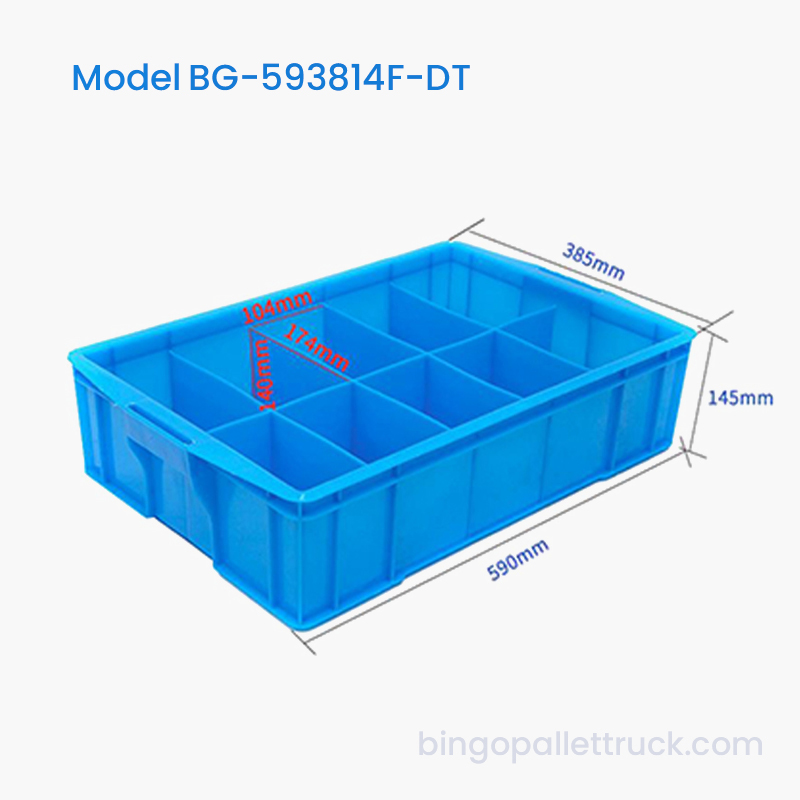
Measuring 590×385×145mm externally and 530×350×140mm internally, the tote provides a useful balance between capacity and portability. Its 1.7kg net weight allows it to be handled manually while its reinforced ribbed base, strengthened side walls, and integrated partitions support load stability during stacking and transport. The smooth, non-porous surface also simplifies cleaning and helps the container serve demanding industrial environments.
Unlike ordinary open cartons or low-strength household organizers, this dividable plastic tote is developed for repeated use in professional logistics and material-handling applications. It is suitable for companies that want to replace disposable packaging, improve picking accuracy, and reduce the space and labor associated with small-parts management.
Product Overview
The BG-593814F-DT is a reusable plastic tote with ten separate compartments. It is precision-molded from polypropylene, commonly identified as PP, a material valued for its strength-to-weight ratio, chemical resistance, moisture resistance, and suitability for repeated industrial use. The product is designed to store and move small components while keeping them separated and easy to identify.
Each internal compartment measures approximately 174×104×140mm. This format is suitable for organizing fasteners and similarly sized parts. Users can assign one compartment to each size, model, material, production order, or customer requirement. In a maintenance environment, for example, one tote may hold different screw types, washers, nuts, and fittings needed for a repair program. In an assembly facility, the compartments can be assigned to the components required at a particular workstation.
The tote has a low-profile height of 145mm externally. This makes it easier to place beneath workbenches, inside storage systems, on pallet layers, or within picking areas where vertical clearance is limited. At the same time, the internal height of 140mm helps make use of the available volume without creating an unnecessarily tall container.
| Item | Specification |
| Product type | 10-compartment dividable plastic tote box |
| Model | BG-593814F-DT |
| Primary material | Polypropylene (PP) |
| External dimensions | 590×385×145mm |
| Internal dimensions | 530×350×140mm |
| Net weight | 1.7kg |
| Number of compartments | 10 |
| Internal compartment size | Approximately 174×104×140mm |
| Surface characteristics | Smooth and non-porous |
| Structural features | Reinforced ribbed base, strengthened side walls, integrated partitions |
| Typical applications | Fasteners, screws, nuts, bolts, washers, fittings, maintenance parts, and assembly components |
Why Compartmentalization Matters
Small components are often high-value despite their low individual cost. A missing screw, incorrectly selected washer, or mixed batch of fasteners can cause production delays, rework, equipment downtime, or quality problems. Compartmentalization reduces these risks by creating a physical separation between different parts.
With ten sections in one tote, operators can keep related items together without allowing them to become mixed. This is more efficient than using ten separate loose containers, which may require more shelf space and create additional handling steps. A single compartmentalized tote can be moved from storage to a production line, maintenance area, or packing station as one organized unit.
The design also supports visual management. When each section has a defined purpose, employees can identify missing or misplaced items more quickly. Labels, color coding, printed markings, or barcode systems can be applied according to the user's internal management process. This can improve stock counting, replenishment, kitting, and order preparation.
For lean manufacturing operations, the tote supports the principles of workplace organization and standardized work. Components can be arranged according to the sequence in which they are used. This minimizes unnecessary reaching, walking, searching, and sorting. A better-organized workstation can improve productivity while also reducing the risk of assembly errors.
Durable Polypropylene Construction
The product is specified as being manufactured from PP. Polypropylene is widely used in industrial containers because it combines durability with relatively low weight. Compared with many disposable packaging materials, molded PP can withstand repeated handling and can be reused across numerous delivery, storage, and picking cycles.
PP also provides useful resistance to moisture and many common industrial substances. Its non-porous surface does not readily absorb liquid, dust, or oils in the same way that cardboard or untreated wood can. This is particularly valuable in workshops, machine rooms, warehouses, and production areas where containers may come into contact with lubricants, dust, condensation, or cleaning agents.
The material supports a smooth molded finish. A smooth finish reduces areas where dirt can accumulate and makes wiping or washing more convenient. In sectors where cleanliness is important, this characteristic helps operators maintain a more controlled storage environment. Cleaning procedures should always be matched to the specific chemicals, temperatures, and sanitation requirements of the application.
The use of virgin material and controlled production processes further supports consistent product quality. According to the supplied manufacturing information, the company applies strict quality control from raw-material sourcing through production. This approach is important because container performance depends not only on the nominal polymer type but also on material consistency, molding control, wall thickness, dimensional accuracy, and inspection standards.
Structural Stability for Stacking and Transport
A storage container must do more than hold parts. It must remain stable when placed on a shelf, stacked with other containers, or moved through a warehouse. The BG-593814F-DT addresses these requirements through a reinforced ribbed base, strengthened side walls, and integrated partitions.
The ribbed base increases structural rigidity while helping distribute loads across the bottom of the tote. A reinforced base is especially valuable when a container is filled with metal fasteners, which can create concentrated weight. By improving resistance to flexing, the ribbed structure helps the tote maintain its shape during handling and storage.
Strengthened side walls help limit deformation when totes are placed beside one another or stacked. Rigid side walls also help protect the compartments from collapsing inward, which could reduce usable capacity or allow stored components to shift between sections.
Integrated partitions provide a permanent internal organization system. Unlike removable cardboard dividers or loose plastic inserts, molded partitions are less likely to shift during transport. They remain part of the tote structure and support more dependable separation of stored items.
The supplied product information also identifies the container as stackable, with general company information indicating that suitable products can be stacked up to ten or more layers depending on the product and operating conditions. Actual stacking performance depends on load weight, surface conditions, temperature, stacking height, and whether the containers are filled evenly. Users should validate the permitted stack height for their specific application rather than assuming that every load can be stacked to the maximum stated level.
Stable stacking can reduce the amount of floor and shelf space required. It can also help create more orderly storage zones, improve aisle access, and simplify inventory inspection. When standardized containers are used throughout a facility, storage planning becomes more predictable.
10-Compartment Dividable Plastic Tote Box for Fasteners and Screws
Advantages Over Conventional Storage Methods
Compared with cardboard boxes
Cardboard boxes are inexpensive and widely available, but they are generally intended for limited-use transport or temporary storage. They can absorb moisture, tear during handling, collapse under compression, and become contaminated by dust or oil. They may also require additional internal bags or dividers to keep small components separated.
The reusable PP tote provides a stronger alternative for repeated industrial handling. Its molded walls and permanent compartments offer better dimensional stability than folded cardboard. Its smooth surface can be cleaned, while cardboard normally must be discarded when it becomes wet or heavily soiled.
Although the initial purchase price of a reusable tote may be higher than that of a single carton, the total cost can become more favorable when the tote is used repeatedly. Reduced replacement frequency, less repacking, improved picking efficiency, and lower product loss can all contribute to lifecycle savings.
Compared with loose open bins
Open bins are useful for quick access, but a large bin containing mixed components can create sorting problems. Operators may spend time searching for the correct item, and similar parts can become mixed. The ten-compartment format keeps different components separated within one portable unit.
Using multiple loose bins also creates a larger footprint. Each bin must be positioned, labeled, moved, and stored individually. The integrated design of the BG-593814F-DT allows several related component groups to be managed as one container.
Compared with household organizers
Household organizers may provide compartments, but they are not always designed for industrial loads, repeated transport, or warehouse stacking. Their hinges, covers, handles, and thin walls may be vulnerable to rough handling or excessive weight. The industrial tote format emphasizes structural stability, standardized dimensions, and practical compatibility with logistics operations.
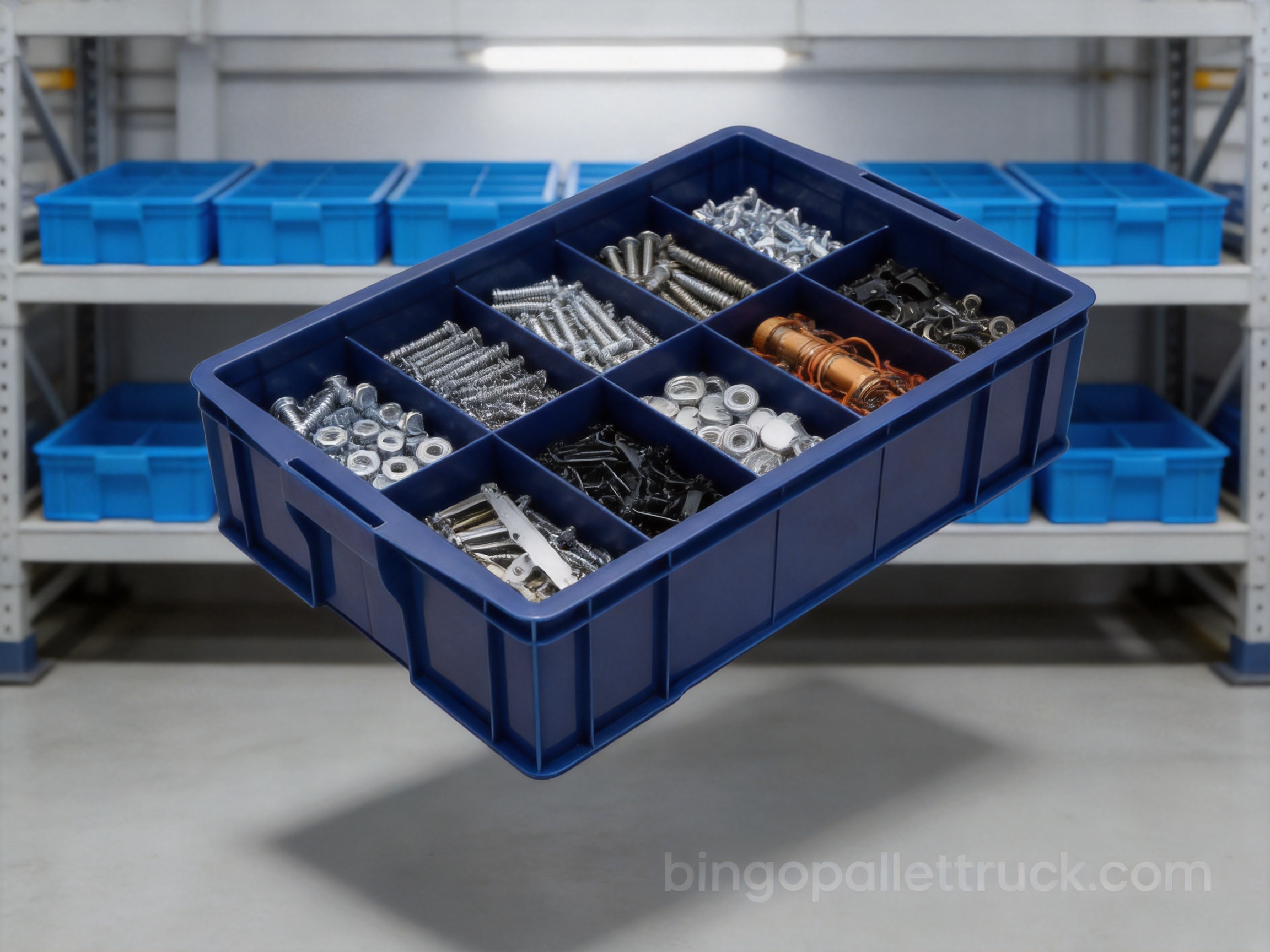
Compared with single-compartment totes
A single-compartment tote may provide greater open volume, but it does not offer built-in separation. Users must add bags, trays, dividers, or smaller containers to organize parts. The 10-compartment tote provides the organization system as part of the molded product, helping reduce the need for additional accessories.
Support for Warehouse Efficiency
Warehouse productivity depends on how quickly and accurately workers can receive, store, pick, replenish, and dispatch products. Small-part containers play an important role because fasteners and fittings are often stored in large varieties with relatively low unit volumes.
The BG-593814F-DT can support standardized picking procedures. Each compartment may be assigned a stock-keeping unit, a production order, or a component family. Once the layout is standardized, workers can recognize the correct position more quickly. This can reduce searching time and make training easier for new employees.
For kitting operations, one tote can hold the parts required for a specific assembly, repair task, or work order. The tote can move with the kit from inventory to preparation, assembly, inspection, and dispatch. This reduces the possibility of components being left behind in separate locations.
In e-commerce and distribution environments, compartmentalization can help organize small hardware items before order fulfillment. Totes can be placed in picking zones, transported on carts, or used as temporary containers during order consolidation. Their reusable construction can support reverse logistics and repeated internal circulation.
In maintenance departments, the product can be assigned to a machine, a production line, or a maintenance category. The sections may contain replacement fasteners, electrical connectors, seals, clips, and other frequently used items. This makes it easier for technicians to prepare for scheduled maintenance without carrying numerous loose packages.
Space-Saving Design and Transport Benefits
Storage costs are influenced by floor area, shelf capacity, handling time, and the amount of empty space transported through the supply chain. The tote's standardized rectangular shape makes it easier to plan shelf layouts and use available storage volume efficiently.
Its relatively compact height allows it to fit into areas where taller boxes may not be practical. It can be positioned under benches, on shelving, inside modular storage systems, or within designated picking locations. The rectangular footprint also allows users to arrange multiple totes in rows with less unused space than irregularly shaped containers.
When empty containers are returned or stored, space-saving designs can reduce the volume required for reverse transport and temporary storage. The exact nesting or stacking behavior depends on the product geometry and should be confirmed with the supplier before planning a large returnable-packaging system. Even without relying on nesting, stackable storage can help reduce unused vertical space.
Lower empty transport volume can improve logistics efficiency. Trucks, containers, and warehouse areas can accommodate more usable packaging units when containers are designed for orderly stacking. This may reduce the frequency of packaging movements and improve the utilization of vehicles and storage locations.
Applications Across Multiple Industries
Manufacturing and assembly
Assembly lines require components to be available in the correct sequence and quantity. The ten compartments can separate fasteners by diameter, length, thread type, material, or assembly stage. The tote can be placed near an operator's workstation to reduce walking and support consistent replenishment.
Automotive and machinery maintenance
Automotive and machinery service areas typically manage many similar-looking components. A compartmentalized tote can help technicians distinguish between different nuts, bolts, clips, and washers. It can also be used to keep removed parts separate during disassembly or to organize replacement items for a planned repair.
Electrical and electronic equipment
Electrical installations often involve terminals, cable glands, connectors, clips, screws, and other small accessories. The tote's separate sections make it easier to prevent mixing and to prepare installation kits. Users should assess electrostatic or cleanroom requirements separately if the application involves sensitive electronic components.
Hardware distribution
Hardware wholesalers and distributors can use the tote for internal picking, repacking, sample preparation, and customer-specific order consolidation. Its reusable format can reduce dependence on disposable inner cartons for repeated handling cycles.
Construction and installation services
Installation teams can organize the small components required for a project or work area. A tote that contains the correct fasteners and fittings can save time compared with carrying multiple unorganized packages. The container's durable surface is also practical for active job-site environments, subject to appropriate protection from extreme abuse and contamination.
Retail and supermarket backrooms
Retail operations can use the tote for shelf-replenishment hardware, signage components, display fittings, replacement parts, and store-maintenance supplies. Standardized totes can make backroom storage easier to inspect and keep small items away from loose cartons.
Warehouse and e-commerce fulfillment
Fulfillment centers can assign compartments to product variants, order groups, or small accessories. The tote can assist with batching, sorting, and order consolidation. Its reusable design is particularly suitable for internal circulation between receiving, storage, picking, packing, and returns areas.
Manufacturing Process and Quality Control
Product performance begins with manufacturing discipline. A plastic tote may appear simple, but reliable performance depends on the control of numerous details. These include raw-material selection, material drying or preparation where applicable, mold condition, injection parameters, cooling, trimming, dimensional verification, and final inspection.
Material sourcing
The company states that it uses high-density virgin material and applies strict quality control from raw-material sourcing through production. For this specific product, the stated primary material is PP. Consistent raw material helps support predictable molding behavior and stable mechanical performance. Material traceability and supplier evaluation are important parts of a professional manufacturing system.
It is important for buyers to confirm the exact material specification in the purchase documentation. The general information supplied with the product mentions HDPE for some product descriptions, while the BG-593814F-DT specification identifies PP. This distinction should be clarified before ordering if material selection is critical to the application. Different polymers can have different stiffness, impact, temperature, chemical, and processing characteristics.
Precision molding
Precision molding allows the tote body and its internal partitions to be produced as a consistent integrated structure. Controlled molding supports repeatable dimensions, smooth surfaces, and uniform wall formation. Dimensional consistency is valuable when totes are used with shelving, conveyors, carts, pallets, or automated handling systems.
The mold must also form the ribbed base and reinforced wall features accurately. These details are not merely decorative. They contribute to rigidity, load distribution, and resistance to deformation. A well-maintained mold can help reduce flash, uneven edges, distortion, and inconsistent compartment dimensions.
Process standardization
The manufacturer describes its production as streamlined and standardized. Standardized processes help reduce variation between production batches. They also make it easier to identify deviations, maintain inspection records, train production personnel, and improve repeatability for large orders.
Process control may include monitoring injection temperature, pressure, cycle time, cooling conditions, and machine performance. The precise parameters depend on the material, mold design, equipment, and product requirements. Consistent control is especially important for products that must stack or fit into standardized storage systems.
Inspection at every stage
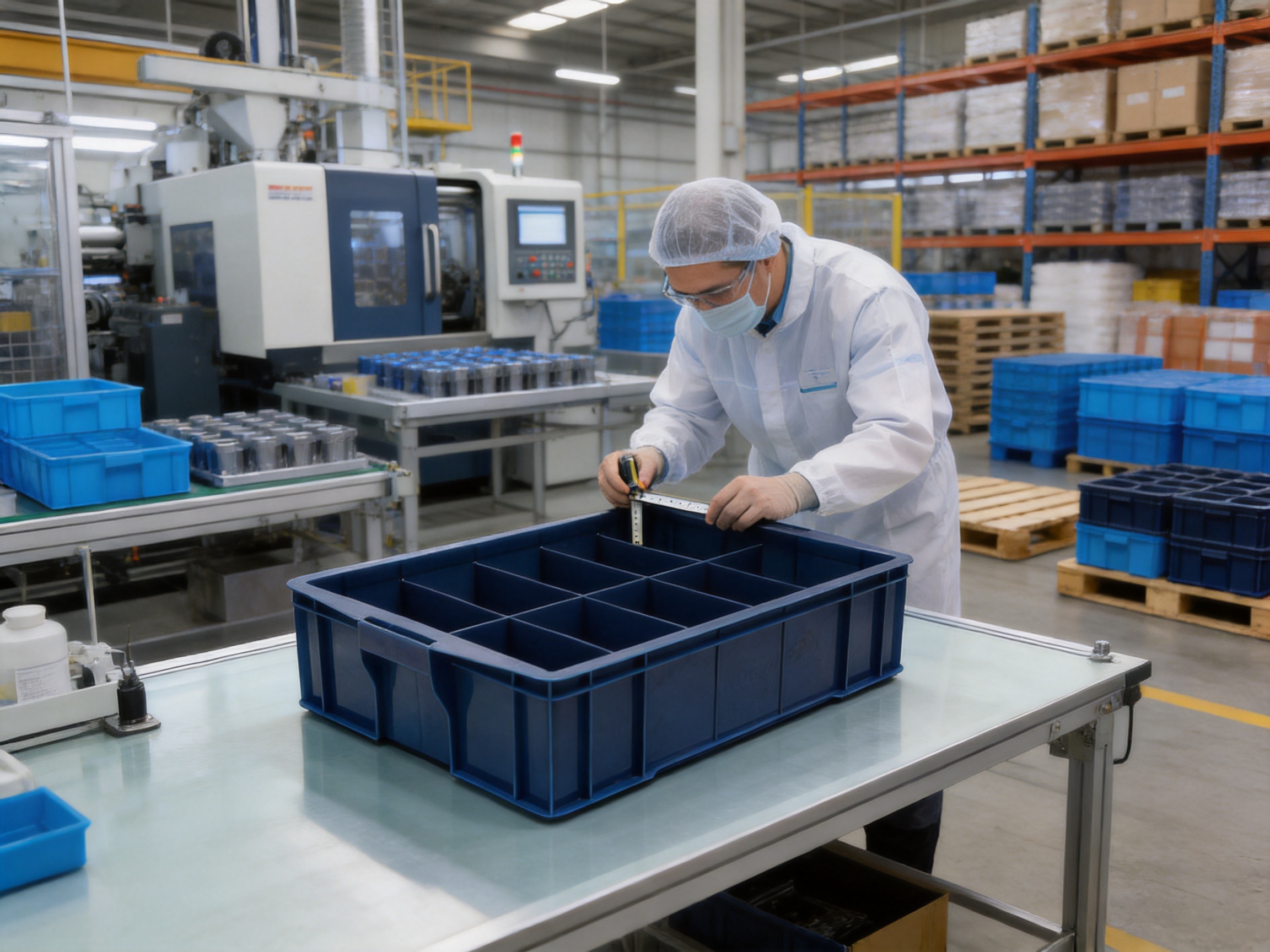
Inspection should not be limited to the finished product. Incoming raw materials, molded parts, and packed products each require appropriate checks. Potential checks for a tote of this type may include external dimensions, internal dimensions, compartment dimensions, weight, surface finish, partition integrity, base flatness, wall condition, and visual defects.
Quality control can also include functional checks such as stacking trials, load assessment, handling tests, and cleaning evaluations when required by the customer. Buyers with specialized applications may request additional testing or documentation, including material certificates, inspection reports, packaging specifications, and sample approvals.
Equipment and production capability
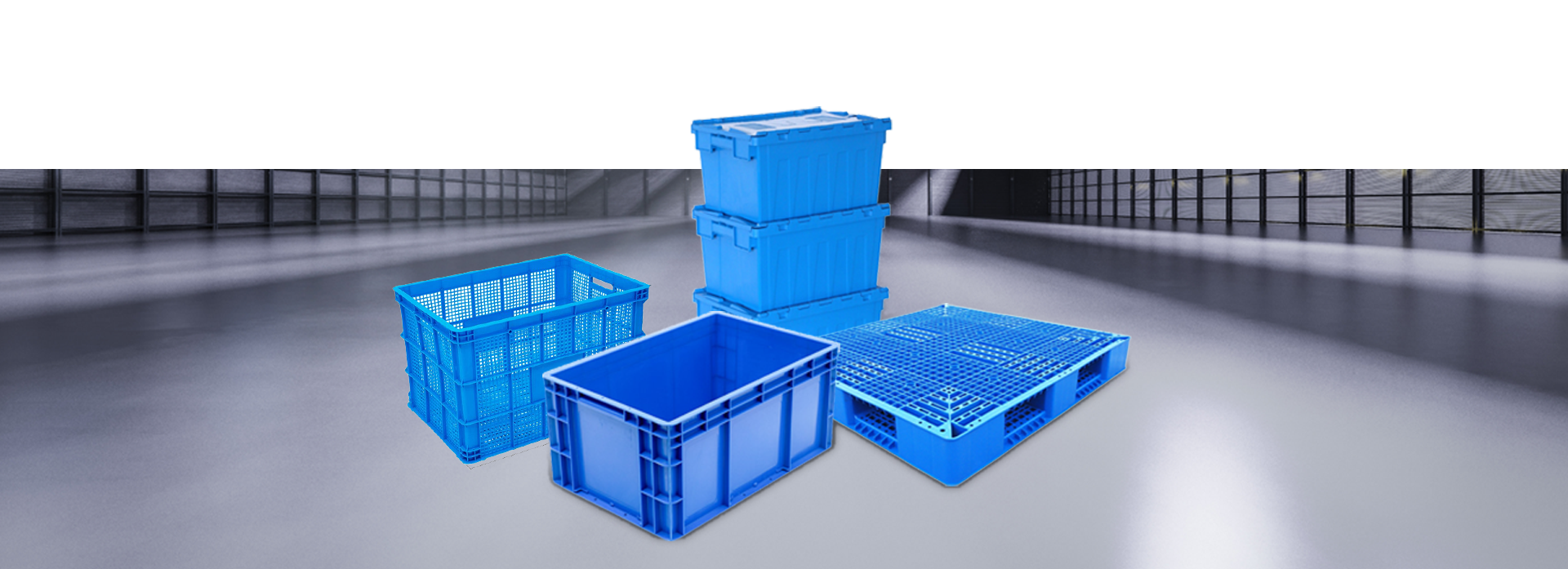
The company presents itself as a manufacturer and supplier of warehouse logistics equipment, storage containers, packaging materials, and warehouse racks. This broader product capability can be beneficial to customers seeking coordinated solutions rather than isolated products. A supplier familiar with pallet trucks, plastic pallets, totes, crates, bulk containers, stretch wrap, strapping, and racking may better understand how containers function within a complete logistics system.
Manufacturing capability should always be evaluated through product samples, technical documentation, communication quality, production capacity, and inspection arrangements. The stated availability of in-stock products and fast delivery may be useful for customers with urgent replenishment needs, while customized colors and specifications can support identification and operational standardization.
Customization and Procurement Flexibility
Warehouse operations are rarely identical. A customer may require particular colors for department identification, custom labels for stock management, special packaging for export, or different dimensions for compatibility with existing shelving. The supplied information states that multiple colors, full specifications, and customization are supported.
Color coding can divide containers by product family, production area, hazard category, ownership, or workflow stage. For example, blue totes may be assigned to incoming inspection, green totes to approved inventory, and yellow totes to maintenance kits. A clear internal color policy can reduce handling errors and improve visual control.
Customization should be assessed carefully because changes to material, dimensions, wall thickness, partitions, labels, or packaging may affect load performance and compatibility. A professional procurement process should define the required application, expected load, operating temperature, cleaning method, stacking arrangement, and handling equipment before final approval.
For large projects, buyers may request pre-production samples. Sample evaluation can confirm that the tote fits shelves, carts, conveyors, racks, workstations, and other equipment already in use. It can also verify that the compartment size is suitable for the intended fasteners or components.
Cleaning, Handling, and Maintenance
The smooth, non-porous surface of the tote makes routine cleaning relatively straightforward. Loose debris can be removed by brushing, vacuuming, or rinsing, depending on the operating environment. Wiping with an appropriate detergent can help remove dust, oil, and common workshop residues.
Cleaning procedures should be established according to the stored materials and the contamination risks of the workplace. Users should verify chemical compatibility before applying strong solvents, concentrated cleaners, or high-temperature sanitation processes. Abrasive tools should be avoided if they may scratch the surface or weaken labels.
Regular inspection can extend service life. Operators should look for cracks, severe deformation, damaged partitions, sharp edges, excessive wear, or chemical attack. A tote that has suffered significant structural damage should be removed from stacking or load-bearing applications.
Fasteners are dense, so users should avoid overloading compartments beyond the container's validated capacity. Loads should be distributed evenly across the tote rather than concentrated in one section. When stacking, the surface should be level and stable, and the stack height should be appropriate for the load and work environment.
Proper labeling also supports maintenance. Labels should be placed where they remain visible during storage and handling. If barcode or RFID identification is required, the chosen label or tag should be tested for durability, readability, and compatibility with cleaning procedures.
Integration with Automated and Smart Logistics
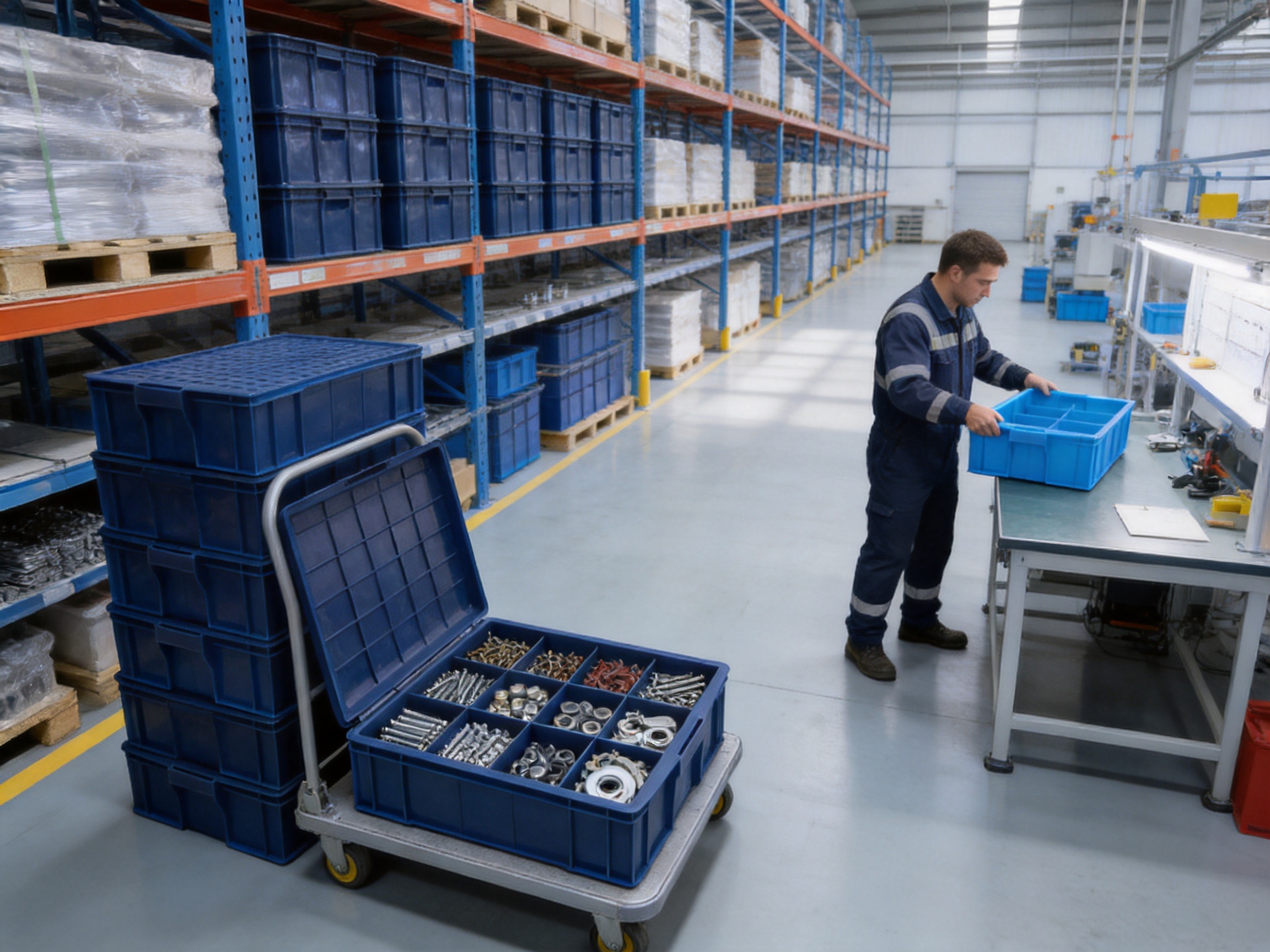
Modern warehouses increasingly use barcode scanning, warehouse management systems, conveyor lines, automated storage and retrieval systems, and guided vehicles. A standardized tote can support these systems when its dimensions, rigidity, and identification method match the requirements of the equipment.
The BG-593814F-DT's rectangular format and standardized dimensions may help it fit into planned storage and handling workflows. Before integration, users should confirm conveyor clearance, shelf depth, robotic gripper access, scanner visibility, maximum load, and acceptable dimensional tolerances.
Compartmentalization can also support digital inventory accuracy. Each section can be mapped to a stock location or component code. Scanning the tote and its contents at receiving, picking, replenishment, or dispatch points can create a clearer record of material movement.
Automation does not remove the need for physical organization. In fact, automated systems generally perform best when containers are consistent and contents are clearly controlled. A durable tote with defined compartments can provide a reliable physical foundation for digital processes.
Sustainability and Lifecycle Value
Reusable packaging can contribute to waste reduction by replacing repeated use of disposable cartons, bags, and temporary dividers. The environmental benefit depends on how many cycles the tote completes, how efficiently it is transported, how it is cleaned, and whether it can be recycled at the end of its service life.
Durability is therefore a sustainability feature. A container that survives many internal and external handling cycles spreads its material and manufacturing impact across a longer period of use. Longer service life can also reduce the frequency of procurement, disposal, and packaging preparation.
The tote's smooth surface and rigid structure can support repair-free service for a long period when it is used within its intended conditions. To maximize lifecycle value, companies should establish return procedures, inspection standards, cleaning practices, and replacement criteria.
At the end of its usable life, material identification can assist recycling decisions. Because polymer suitability depends on local recycling infrastructure and contamination conditions, users should follow applicable regional waste-management requirements. Mixed materials such as labels, metal parts, or attached accessories may need to be removed before recycling.
How to Select the Right Configuration
Although the ten-compartment configuration is suitable for many small-parts applications, buyers should begin with a detailed review of actual storage needs. The first consideration is the size and shape of the components. Fasteners should fit comfortably within each section without protruding so far that lids, covers, or stacked containers are obstructed.
The second consideration is quantity. Users should determine the maximum quantity of each part that must be stored in one tote. Dense metal components can create a high load even when the visual volume appears small. The expected weight should be compared with the supplier's validated load rating.
The third consideration is workflow. If components are used in a fixed sequence, compartment positions should follow that sequence. If items are picked according to frequency, high-use components should be placed in the most accessible positions. A practical layout can reduce unnecessary movement and improve replenishment speed.
The fourth consideration is the storage environment. Buyers should review temperature, humidity, chemical exposure, ultraviolet exposure, cleaning procedures, and outdoor use. PP offers useful general resistance, but no material is suitable for every chemical or temperature condition.
The fifth consideration is compatibility with existing equipment. Verify shelf dimensions, cart capacity, pallet patterns, rack clearances, conveyor specifications, and manual handling requirements. A technically strong tote can still create operational problems if it does not fit the facility's infrastructure.
Recommended Implementation Method
Companies introducing the tote into an established operation can begin with a pilot program. Select one workstation, maintenance zone, or picking area where small-part organization is currently inefficient. Record the existing number of containers, storage area, picking time, error rate, replenishment frequency, and packaging consumption.
Next, assign the ten compartments according to a clear organizational rule. The rule may be based on part number, component type, size, production sequence, or frequency of use. Apply consistent labels and create a simple location map for employees.
After several operating cycles, compare the new arrangement with the previous method. Useful measurements may include time spent searching for parts, number of mixed-component incidents, picking accuracy, time required for replenishment, floor-space usage, and number of disposable packages consumed.
If the pilot produces positive results, expand the system gradually. Standardize color assignments, labels, inspection routines, cleaning methods, and stacking practices. This structured approach helps ensure that the container becomes part of a reliable process rather than simply another storage item.
Supplier Strengths and Service Capabilities
Yancheng Bingo Machinery Equipment Co., Ltd. operates as a supplier of warehousing and logistics equipment. Its product scope covers material handling equipment, storage containers, packaging materials, and warehouse racking. This portfolio gives customers access to products that can be coordinated across storage, movement, protection, and facility organization.
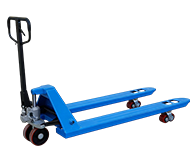
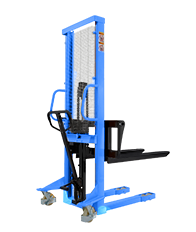
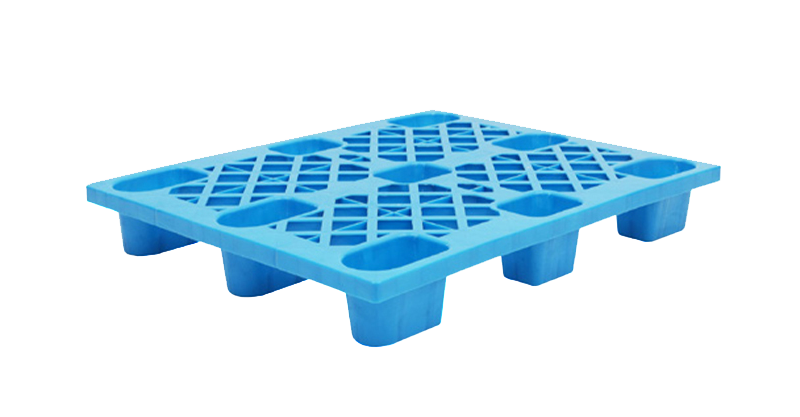
The company offers manual and electric pallet trucks, stackers, plastic pallets, totes, crates, bulk containers, stretch wrap, packing strapping, and warehouse racks. For customers planning a new warehouse or upgrading an existing operation, a broader supplier range can simplify communication and procurement.
The company's stated strengths include standardized production, strict quality control, virgin-material use, multiple color options, customization support, and in-stock availability for selected products. These capabilities are relevant to buyers who need consistent supply, repeatable specifications, and practical delivery arrangements.
The company also emphasizes one-stop storage and material-handling solutions. This approach recognizes that a tote does not operate independently. It must work with shelving, pallets, carts, pallet trucks, racks, packing materials, and warehouse procedures. Coordinated equipment selection can help reduce compatibility problems and support a more unified logistics design.
For international buyers, supplier evaluation should include product specifications, sample approval, packaging standards, export documentation, lead times, after-sales communication, replacement policies, and inspection requirements. Clear technical communication is especially important when the products will be used in automated or highly standardized environments.
Comparison Summary
| Evaluation factor | 10-compartment PP tote | Cardboard carton | Single open bin |
| Component separation | Built-in ten-section organization | Usually requires inserts or bags | Usually no separation |
| Reusability | Designed for repeated handling | Often limited by moisture and wear | Depends on construction |
| Cleaning | Smooth non-porous surface supports cleaning | Generally difficult once contaminated | Depends on material and design |
| Stacking stability | Supported by reinforced structure | Can collapse under load | Varies by design |
| Small-part picking | Fast visual identification by compartment | May require searching or unpacking | Parts may become mixed |
| Transport efficiency | Standardized, stackable format | May deform during repeated movement | Varies by shape and strength |
| Lifecycle value | Potentially favorable over repeated cycles | Higher replacement frequency in demanding use | Depends on durability and organization needs |
Frequently Asked Questions
What material is the BG-593814F-DT made from?
The product specification identifies polypropylene, or PP, as the primary material. PP is commonly used for durable reusable containers because it offers a useful balance of strength, light weight, moisture resistance, and cleanability. Buyers with strict material requirements should confirm the specification on the final quotation and purchase documentation.
How many compartments does the tote have?
The tote has ten integrated compartments. Each compartment is designed to keep a separate group of parts organized within the same container.
What are the dimensions of the tote?
The external dimensions are 590×385×145mm. The internal dimensions are 530×350×140mm. The approximate internal size of each compartment is 174×104×140mm.
What types of parts can be stored in it?
The tote is suitable for screws, nuts, bolts, washers, clips, fittings, electrical accessories, maintenance components, and other small industrial parts. The appropriate contents depend on the size, weight, shape, and operating requirements of the components.
Is the tote suitable for stacking?
It is designed with a reinforced ribbed base, strengthened side walls, and integrated partitions to support stable storage and transport. The appropriate stack height depends on the load, environmental conditions, and facility procedures. Users should obtain a validated load and stacking recommendation for their exact application.
Can the tote be cleaned?
Yes. Its smooth, non-porous surface is intended to make cleaning easier than cleaning absorbent packaging materials. The cleaning chemical, water temperature, pressure, and sanitation procedure should be checked for compatibility with PP and any applied labels.
Can different colors be supplied?
The supplied company information states that multiple colors are available and that customization is supported. Color availability, minimum order quantities, and production lead times should be confirmed before ordering.
Can the tote be used in automated warehouses?
It may be suitable for automated operations when its dimensions, rigidity, weight, and identification method match the equipment requirements. Users should validate conveyor, rack, scanner, robotic, and load-handling compatibility before implementing automation.
How does the tote improve fastener management?
It separates different fasteners into ten defined locations. This reduces mixing, improves visual identification, supports labeling, and allows several related component groups to be transported as one organized unit.
Is the tote better than disposable packaging?
For repeated handling, the reusable PP tote can offer advantages in durability, cleaning, organization, and lifecycle value. The overall benefit depends on the number of reuse cycles, handling conditions, cleaning practices, and the cost of the disposable packaging it replaces.
What should buyers confirm before placing an order?
Buyers should confirm the material, dimensions, compartment layout, color, quantity, load requirements, stacking conditions, packaging, delivery schedule, customization options, inspection documentation, and compatibility with existing warehouse equipment.
Conclusion
The 10-compartment dividable plastic tote box is a practical solution for companies that need better control over fasteners, screws, maintenance parts, and other small components. Its integrated compartment design reduces mixing and searching, while its PP construction, reinforced ribbed base, strengthened walls, and molded partitions support repeated use in demanding storage and handling environments.
With external dimensions of 590×385×145mm, internal dimensions of 530×350×140mm, and a net weight of 1.7kg, the tote offers a useful balance between capacity, portability, and storage efficiency. Its smooth, non-porous surface supports easier cleaning, and its standardized shape can help improve shelf organization, stacking, transport, and warehouse workflow.
Compared with cardboard cartons, loose bins, and ordinary household organizers, the tote provides a more structured and durable approach to professional small-parts management. It can support manufacturing, maintenance, distribution, retail, e-commerce, and automated logistics operations.
Its value is strengthened by the manufacturer's focus on material control, standardized processes, inspection at multiple production stages, customization support, and a broader portfolio of warehouse logistics equipment. Customers can therefore evaluate the tote not only as an individual container but also as part of a complete storage and material-handling system.
For the best results, users should match the tote to their component sizes, load requirements, cleaning procedures, storage equipment, and workflow. When properly selected and implemented, the BG-593814F-DT can help create a cleaner, more accurate, more space-efficient, and more productive method for managing small industrial parts.
References
1. Product specification sheet for model BG-593814F-DT, including dimensions, material, weight, and compartment information.
2. General principles of reusable plastic packaging and industrial container lifecycle management.
3. Warehouse organization and lean manufacturing practices for small-parts storage.
4. Polypropylene material characteristics for molded industrial containers.
5. Quality-control principles for injection-molded logistics products.
6. Internal product and company information supplied for Yancheng Bingo Machinery Equipment Co., Ltd.
Product: 10-Compartment Dividable Plastic Tote Box for Fasteners and Screws


Copyright @ Yancheng Bingo Machinery Equipment Co., Ltd. All rights reserved Warehouse Logistics Equipment Manufacturer Pallet Truck Supplier
