 en
 Español

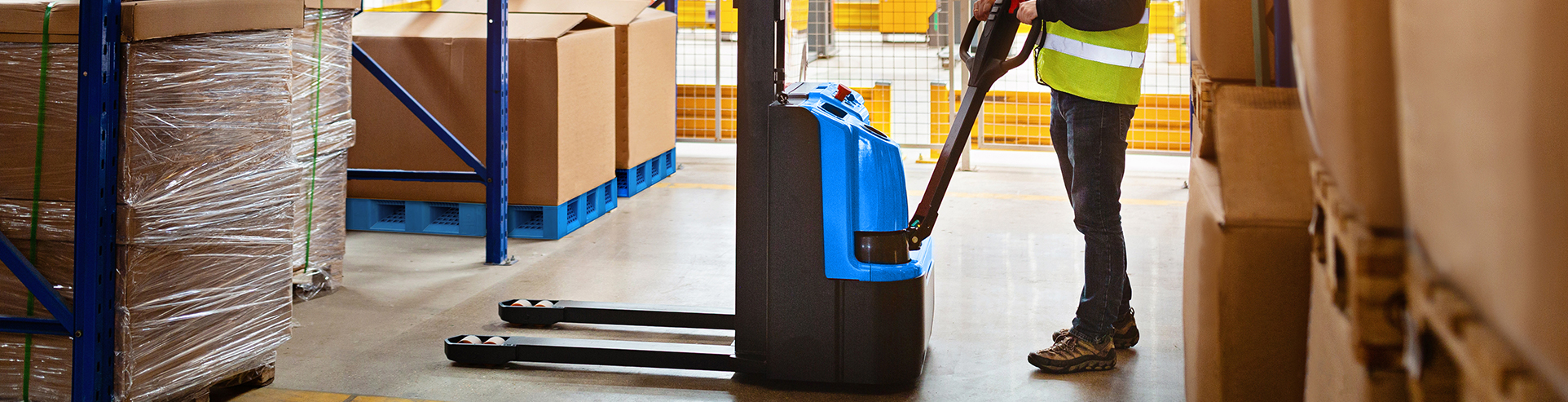
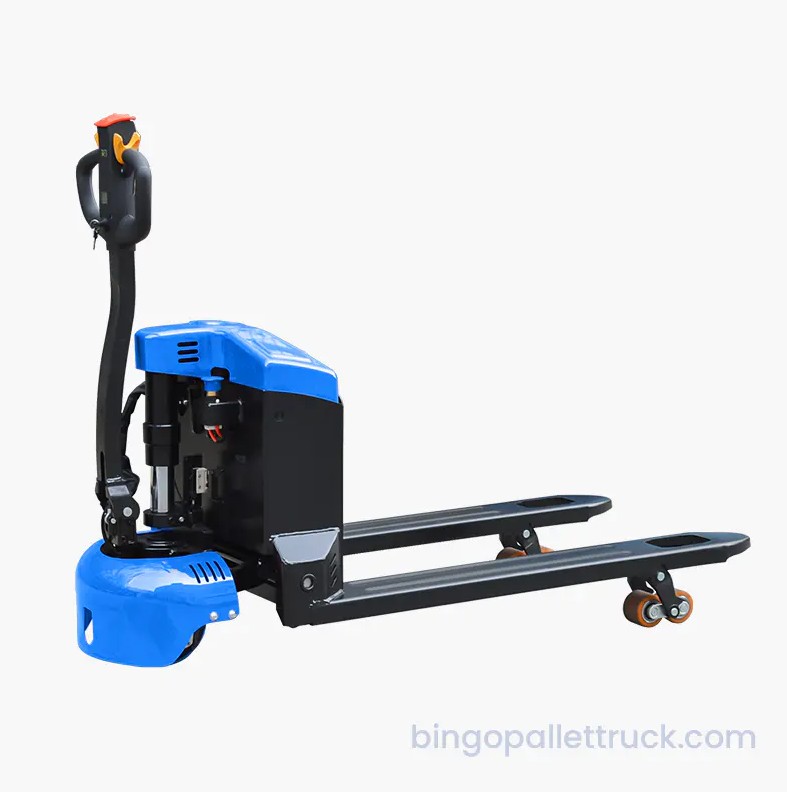
41L Stackable Plastic Tote Box for Efficient Warehouse Parts Sorting and Picking
Content
- 1 Introduction: A Practical Storage Solution for Modern Logistics
- 2 Product Overview
- 3 HDPE Construction for Repeated Industrial Use
- 4 Space-Saving Stackable Design
- 5 Advantages for Parts Sorting and Picking
- 6 Improving Picking Accuracy and Labor Efficiency
- 7 Comparison with Common Storage Alternatives
- 8 Product Benefits at a Glance
- 9 Manufacturing and Quality Control Strengths
- 10 Customization and Project Flexibility
- 11 Applications Across Multiple Industries
- 12 Warehouse Layout and Implementation Guidance
- 13 Care, Inspection, and Service Life
- 14 Supply Reliability and One-Stop Procurement
- 15 Environmental and Lifecycle Considerations
- 16 Why This Tote Is a Strong Competitive Choice
- 17 Q&A
- 17.1 What is the capacity of the tote box?
- 17.2 What material is used to manufacture the product?
- 17.3 Can the tote boxes be stacked?
- 17.4 Is the tote suitable for heavy metal parts?
- 17.5 Can the tote be cleaned?
- 17.6 Can different colors be supplied?
- 17.7 Can the totes be customized?
- 17.8 What industries can use this product?
- 17.9 Can the tote be used on warehouse racks?
- 17.10 What is the product model?
- 17.11 How heavy is an empty tote?
- 17.12 Why choose a reusable tote instead of cardboard cartons?
- 17.13 How should the maximum stack height be established?
- 18 Conclusion
- 19 References
- 20 Product: 41L Stackable Plastic Tote Box for Parts Sorting and Picking
Introduction: A Practical Storage Solution for Modern Logistics
Efficient storage is a central requirement for every warehouse, distribution center, manufacturing plant, repair facility, and fulfillment operation. As product variety increases and order cycles become shorter, businesses need storage containers that are durable, easy to identify, simple to handle, and economical to use. The 41L Stackable Plastic Tote Box for Parts Sorting and Picking is designed to address these requirements with a combination of high-density polyethylene construction, practical dimensions, reliable stacking performance, and easy maintenance.
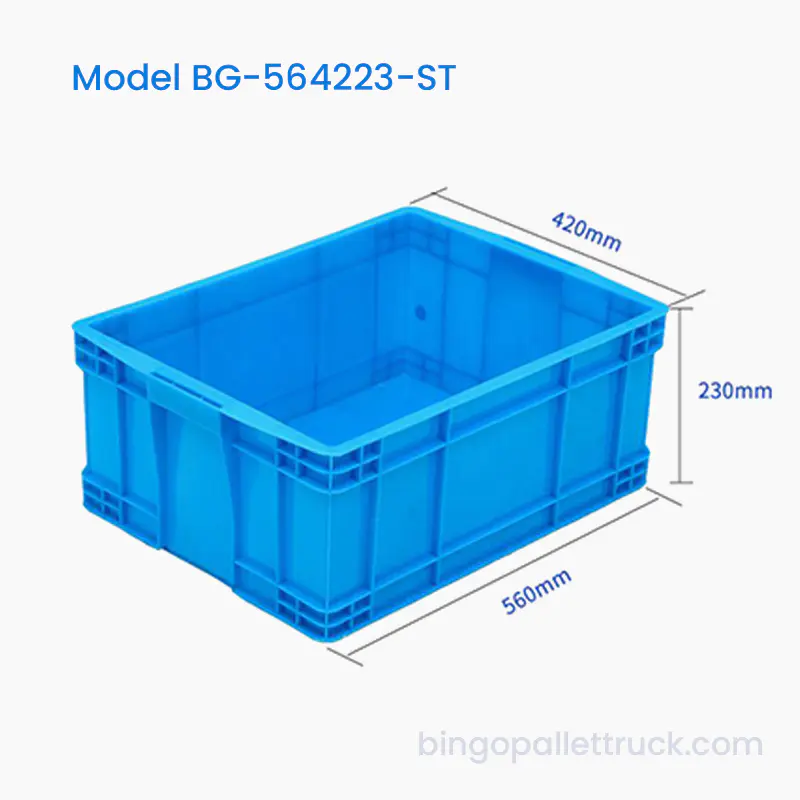
Manufactured under model BG-564223-ST, this plastic tote box provides an external size of 560×420×230mm, internal dimensions of 500×380×220mm, and a nominal capacity of 41 liters. Its format offers a useful balance between storage volume and manual handling. It is large enough for small bulk items, components, tools, packaged goods, and warehouse inventory, while remaining compact enough for shelving, picking stations, transport carts, and organized floor storage.
Unlike disposable cartons or low-strength household storage bins, this tote is developed for repeated use in demanding commercial environments. Its reinforced structure supports stable stacking, and its HDPE material provides a strong foundation for long service life. The box can be cleaned and sanitized, reused across multiple workflows, and integrated into standardized warehouse processes.
The product is supplied by Yancheng Bingo Machinery Equipment Co., Ltd., a China-based supplier focused on warehousing, logistics, storage, packaging, and material-handling solutions. The company’s product portfolio includes handling equipment, plastic storage containers, packaging materials, and warehouse racking systems. This broad product coverage allows customers to source complementary equipment for complete storage and logistics projects rather than purchasing isolated products from multiple suppliers.
Product Overview
The BG-564223-ST is a stackable plastic tote box created for parts sorting, order picking, inventory organization, and internal material movement. It is suitable for facilities where goods must be stored in a clean, accessible, and repeatable format. The tote can be placed on warehouse shelving, used at workstations, carried between production areas, or arranged on pallets and transport trolleys.
Its 41-liter capacity is appropriate for many common warehouse tasks. It can hold mechanical parts, electrical components, fasteners, packaged accessories, maintenance supplies, small tools, retail stock, and other goods that require separation from neighboring items. By assigning individual product families or stock-keeping units to separate totes, warehouse personnel can reduce mixing, simplify counting, and improve picking accuracy.
The external dimensions of 560×420×230mm make the container compatible with many standard warehouse layouts. Its rectangular footprint makes efficient use of shelf and pallet space, while its moderate height supports convenient access to the contents. The internal dimensions of 500×380×220mm provide a useful working volume while allowing for the wall thickness and reinforcement needed to achieve structural stability.
With a listed weight of 1.62kg, the tote is substantial enough for industrial reuse without becoming unnecessarily difficult to move when empty. Actual filled weight will depend on the density and quantity of the stored material. Businesses should evaluate the combined weight of the tote and its contents before defining stacking heights, shelf loads, conveyor applications, or manual handling procedures.
| Specification | Details |
|---|---|
| Product Type | Stackable plastic tote box |
| Model | BG-564223-ST |
| Material | HDPE |
| External Dimensions | 560×420×230mm |
| Internal Dimensions | 500×380×220mm |
| Capacity | 41L |
| Product Weight | 1.62kg |
| Primary Uses | Parts sorting, picking, storage, transport, and inventory organization |
| Stacking Information | Designed for stacking; up to 10 or more layers depending on operating conditions |
HDPE Construction for Repeated Industrial Use
Material selection has a direct impact on the useful life of a storage container. The BG-564223-ST is specified as being made from high-density polyethylene, commonly known as HDPE. HDPE is widely used in industrial containers because it combines impact resistance, toughness, relatively low weight, and resistance to moisture. These characteristics make it well suited to warehouses where containers may be placed on shelves, transferred between locations, loaded onto pallets, or handled repeatedly throughout the day.
Compared with many disposable paperboard solutions, an HDPE tote is less vulnerable to moisture, splashes, abrasion, and repeated handling. A cardboard carton can lose strength when exposed to humidity or when its corners are crushed. A reusable plastic tote retains its basic shape through many handling cycles and can be returned to service after cleaning. This reduces the need to continually purchase and discard single-use packaging.
HDPE also supports easy cleaning. Dust, oil residue, packaging particles, and general warehouse contamination can be removed more readily from a smooth plastic surface than from porous corrugated board. Where hygiene or cleanliness is important, the tote can be incorporated into scheduled cleaning and sanitation routines. The exact cleaning method should be selected according to the stored goods, operating temperature, detergents, and any applicable site procedures.
The material’s toughness is particularly valuable in picking and replenishment operations. Containers are often moved quickly, placed on work surfaces, or set down on floors and pallets. A robust polymer construction helps the tote withstand normal operational contact better than fragile storage alternatives. Nevertheless, no plastic container should be dragged over abrasive surfaces, overloaded beyond its intended application, or exposed to incompatible chemicals without prior verification.
Space-Saving Stackable Design
The most important functional benefit of the product is its ability to support vertical storage. A stackable tote allows a warehouse to use available floor space more efficiently by building stable layers rather than spreading containers across a large horizontal area. This is valuable in facilities where rent, floor area, and expansion costs are significant.
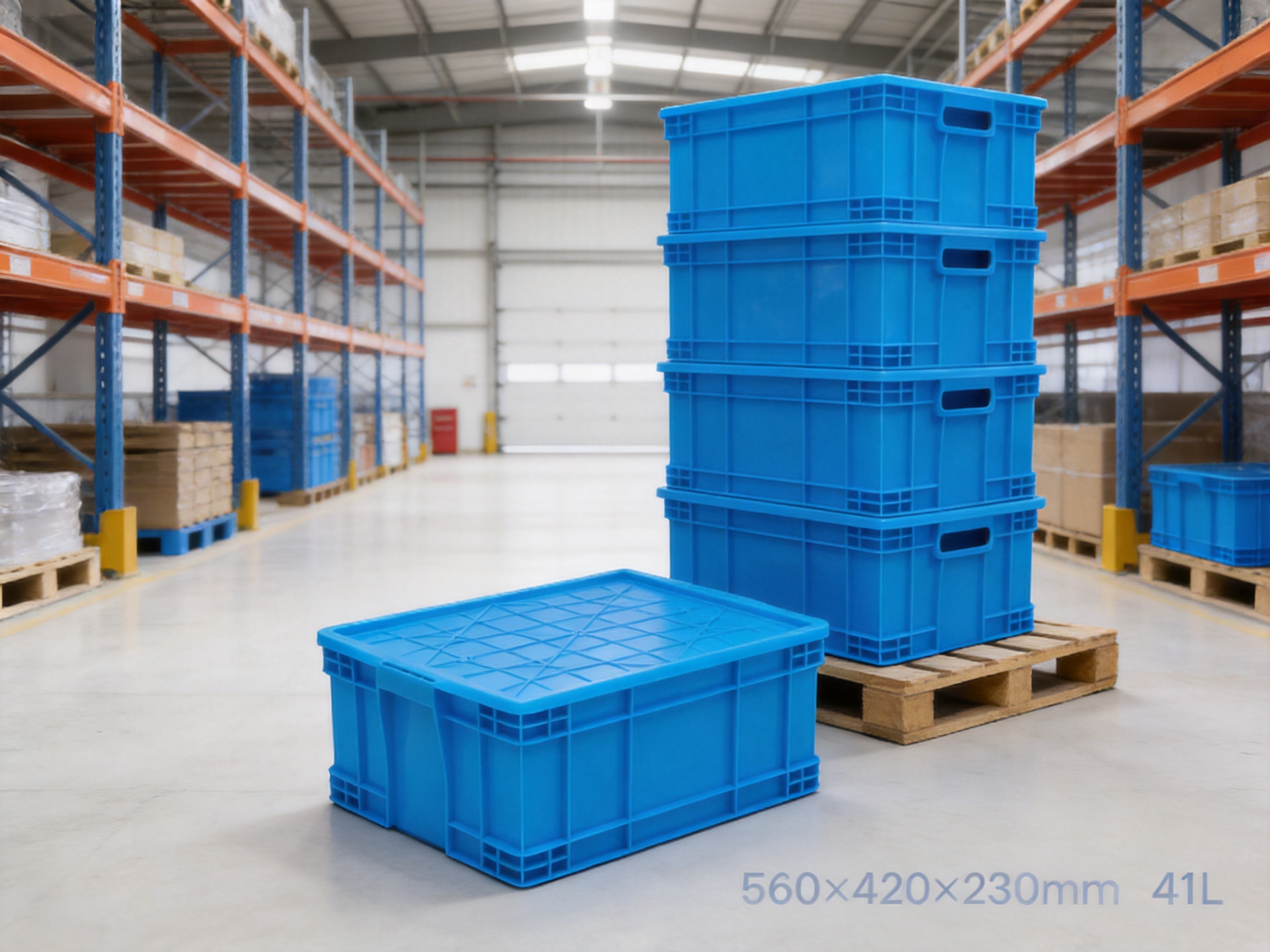
The reinforced structure is intended to support safe and organized stacking during storage and internal transportation. The product information indicates that the containers can be stacked to 10 or more layers, subject to operating conditions. Actual stacking performance depends on the filled weight, distribution of the load, floor flatness, temperature, handling method, and the condition of each tote. Operators should perform site-specific validation before establishing a formal maximum stack height.
Vertical stacking can improve both capacity and visual organization. When each tote is assigned to a product group, aisle, production order, or picking route, the stack itself becomes part of the storage system. Clear labeling can be applied to the front or side of each box, allowing employees to locate stock without opening every container. Stacking also helps keep inventory off the floor, reducing exposure to dirt, standing water, and accidental contact with vehicles.
The rectangular shape supports efficient use of pallet surfaces and shelving bays. Irregular containers create unused gaps that reduce storage density. By contrast, standardized tote dimensions allow planners to calculate how many units fit on a pallet, rack level, workbench, or transport cart. This predictability is useful when designing warehouse layouts and estimating future capacity.
When empty, stackable totes can be consolidated to reduce the space required for return transport or temporary storage. This feature can be especially useful in manufacturing loops where containers travel between a supplier, production line, quality inspection area, and finished-goods warehouse. Empty containers can be grouped in a dedicated return area rather than occupying the same space as filled stock.
41L Stackable Plastic Tote Box for Parts Sorting and Picking
Advantages for Parts Sorting and Picking
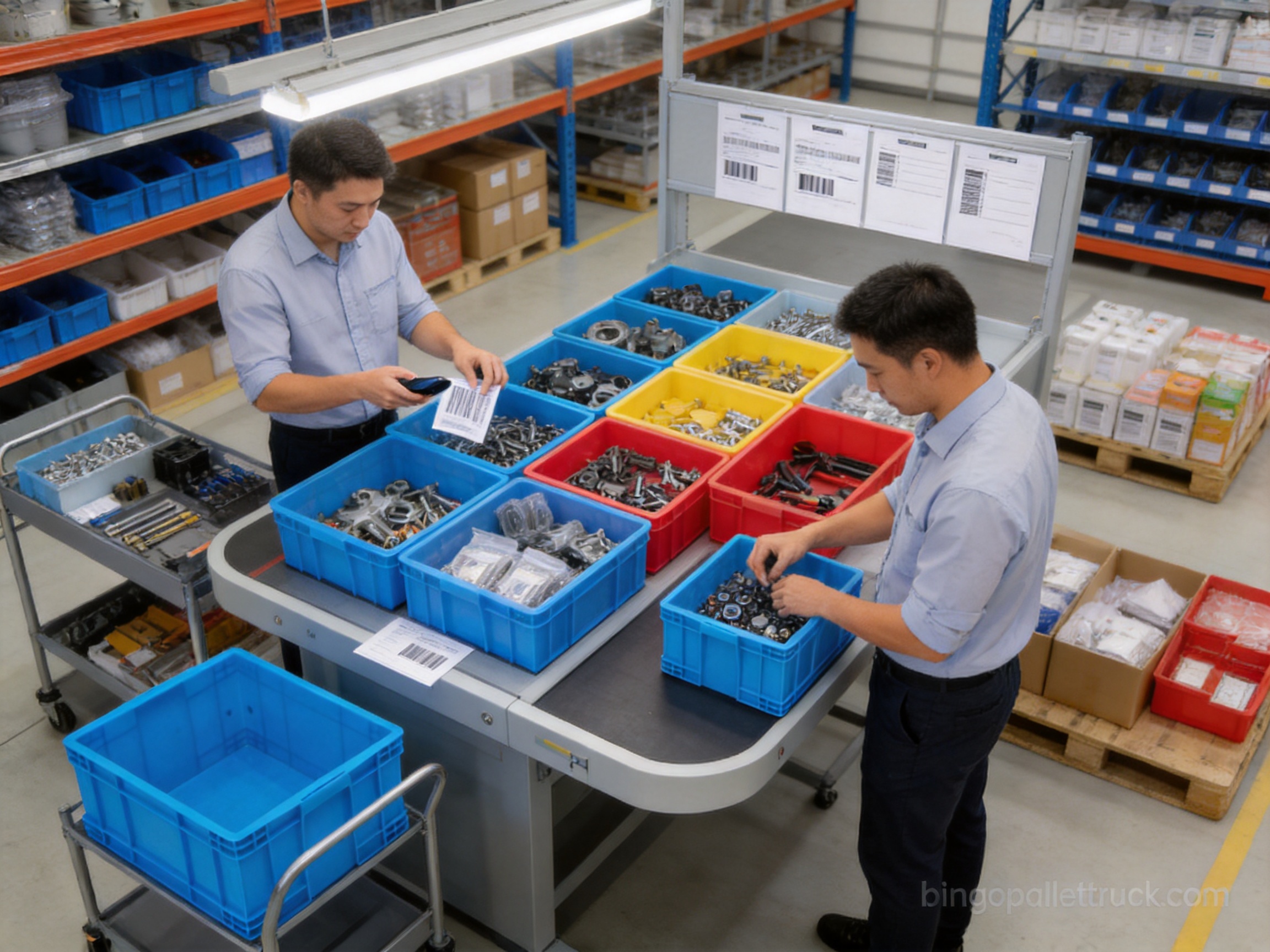
Parts sorting requires more than simply placing products into a box. The storage container must help employees identify, access, count, and return items efficiently. The BG-564223-ST provides a practical volume for organizing parts by model, size, material, customer order, or production stage.
In a manufacturing environment, one tote may hold fasteners for a particular assembly, another may contain machined components awaiting inspection, and a third may be dedicated to approved finished parts. Separating materials in this way reduces the possibility of cross-mixing. It also makes it easier for supervisors to perform cycle counts and for operators to confirm whether a work order has received the correct components.
For e-commerce and distribution operations, the tote can serve as a picking container for small and medium-sized products. Orders can be grouped by route, customer, priority, or dispatch date. At a picking station, several totes can be arranged within reach of the operator. Their moderate height provides access to contents without requiring excessive bending or deep searching.
At a maintenance workshop, the tote can store replacement parts, repair kits, lubricating accessories, hand tools, and consumables. A dedicated container for each machine or maintenance team can improve preparedness and reduce the time spent searching for supplies. Because the box is reusable, it can be returned to the maintenance area after a task is completed and prepared for the next work order.
In retail backrooms and supermarket distribution operations, the tote can hold replenishment stock and promotional materials. In agricultural, food-processing, or other controlled environments, suitability should be confirmed based on the exact material grade, cleaning regime, and regulatory requirements. The supplied product information emphasizes storage and logistics use, so customers should obtain application-specific confirmation for direct food contact, hazardous substances, extreme temperatures, or specialized cleanroom conditions.
Improving Picking Accuracy and Labor Efficiency
Warehouse productivity depends heavily on the time required to locate and handle inventory. A disorganized storage method causes unnecessary walking, repeated checking, product damage, and picking errors. Standardized plastic totes provide a foundation for a more disciplined process.
Each tote can be assigned a fixed location within the warehouse management system. A location code can be placed on a label, barcode, QR code, or printed identification card. When the item is replenished or picked, workers can scan the tote or location and confirm the transaction. Although the container itself does not replace warehouse software, its standardized format supports the physical organization required by digital inventory systems.
The 41L format is large enough to reduce excessive fragmentation while remaining manageable for many manual tasks. If a container is too small, employees must handle too many units and spend more time consolidating stock. If it is too large, different parts may become mixed or difficult to access. A medium-capacity tote offers a useful compromise for many small-item workflows.
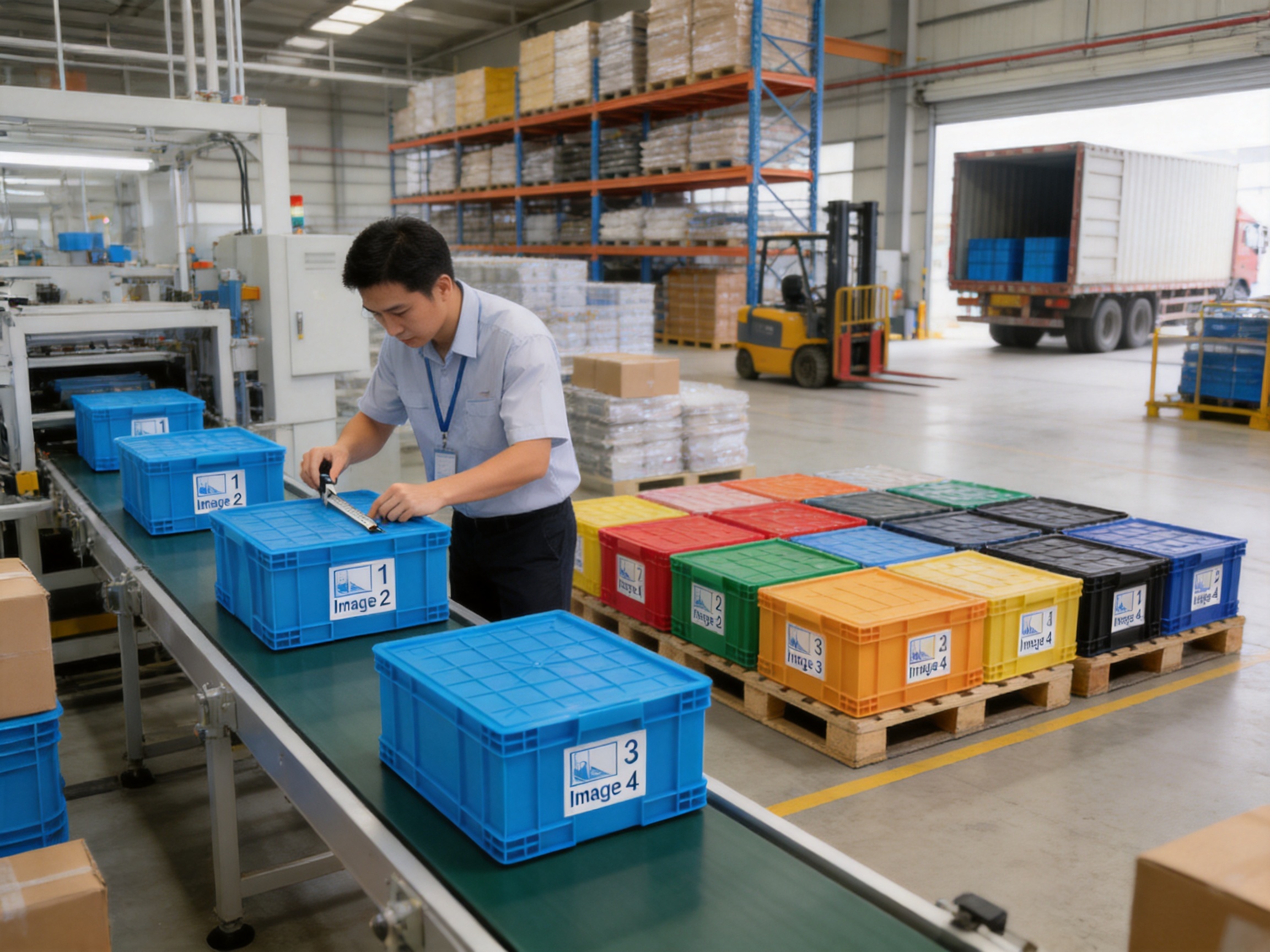
Color options can further support visual management. The product information indicates that multiple colors are available and that customization is supported. A company may use different colors for raw materials, work-in-progress, quality-hold products, finished goods, returns, or priority orders. Color coding should be combined with written labels because lighting conditions, color similarity, and employee perception can otherwise create ambiguity.
Consistent containers also make employee training easier. New workers learn one common handling method rather than adapting to multiple box sizes and shapes. Supervisors can establish standard operating procedures for stacking, labeling, inspection, cleaning, and return handling. This reduces process variation and supports safer, more predictable operations.
Comparison with Common Storage Alternatives
Compared with Corrugated Cartons
Corrugated cartons remain useful for shipping and short-term packaging, but they are not always suitable for continuous internal storage. Paperboard can absorb moisture, lose rigidity, tear at the corners, and deform after repeated use. Its surface can also become difficult to clean. The HDPE tote is better suited to repeated handling, routine cleaning, and long-term warehouse organization.
Although the initial purchase price of a reusable tote may be higher than that of a single carton, the total cost can be lower when the tote is used repeatedly. Businesses can evaluate this through a simple total-cost calculation that includes purchase frequency, disposal costs, labor for rebuilding cartons, product damage, cleaning, and return logistics. The longer the tote remains in service, the greater the potential value of its reusable design.
Compared with Thin-Wall Consumer Storage Bins
Household storage boxes are generally designed for light domestic use. They may not have the reinforced structure, dimensional consistency, or stacking geometry needed for industrial workflows. A commercial tote is designed around repeated handling and operational standardization. The BG-564223-ST’s reinforced design and specified capacity make it more appropriate for warehouse applications than many low-cost consumer bins.
Compared with Open Wire Baskets
Wire baskets provide visibility and ventilation, but they may allow small components to fall through openings or become exposed to dust. The solid-wall construction of a plastic tote offers better containment for loose parts and packaged goods. The choice depends on the product. Items requiring airflow or complete visual visibility may benefit from an open design, while small components and general inventory are often better protected in a solid container.
Compared with Wooden Crates
Wooden crates can be strong, but they are usually heavier, less resistant to moisture, more difficult to sanitize, and less convenient for standardized manual picking. Wood can also produce splinters and may require additional treatment for international shipping. A reusable HDPE tote offers a smoother, lighter, and easier-to-clean alternative for many internal logistics applications.
Compared with Metal Containers
Metal containers can provide high strength and heat resistance, but they are typically heavier and may be more expensive to move manually. Metal surfaces can dent, corrode, or create sharp edges if damaged. The plastic tote provides a lower-weight option for ordinary warehouse and manufacturing storage, while specialized high-temperature or heavy-load applications may still require metal containers.
Product Benefits at a Glance
| Operational Requirement | How the Tote Helps |
|---|---|
| Space utilization | Stackable construction supports vertical storage and reduces floor-space consumption. |
| Parts organization | Dedicated containers help separate components by product, order, status, or location. |
| Repeated handling | HDPE construction is designed for durable, reusable industrial service. |
| Cleaning | Plastic surfaces are easier to clean than porous paperboard packaging. |
| Transport | Standardized rectangular dimensions support pallets, shelving, carts, and internal movement. |
| Inventory visibility | Labels, color coding, and location identifiers can be applied to each unit. |
| Procurement efficiency | Stock availability and customization support faster project deployment. |
| Lifecycle value | Reusable design can reduce repeated purchases and packaging waste. |
Manufacturing and Quality Control Strengths
The product’s performance depends not only on its design but also on the consistency of its manufacturing process. A tote that varies significantly in dimensions, wall strength, or stacking geometry can create problems in warehouse layouts and automated handling systems. For this reason, process control is an important part of product value.
The supplier describes a manufacturing system based on standardized procedures and inspections at every stage. This includes control of incoming raw materials, production operations, dimensional consistency, appearance, and final product qualification. Such a process helps reduce variation between batches and supports dependable use across larger projects.
The company’s information emphasizes strong load-bearing performance and the use of virgin polymer material in its production controls. The product specification identifies HDPE as the material for this model. For customers with specific resin, recycled-content, color, or regulatory requirements, the material declaration and production configuration should be confirmed before order placement. Clear material communication is especially important in applications involving chemical exposure, temperature variation, food contact, or export documentation.
Standardized processes are valuable because plastic containers are often purchased in large quantities. A warehouse may require hundreds or thousands of identical units. If one batch does not match another, labels may not align, stacks may become unstable, and shelf planning may be affected. Consistent molding, trimming, inspection, and packaging help customers maintain a uniform storage system.
Quality inspection also contributes to safer stacking. The base, rim, corners, and load-bearing areas must maintain their intended shape so that the weight of an upper container is properly transferred. Visual defects, deformation, cracks, sharp edges, or incomplete molding should be identified before products leave the factory. The supplier’s stated inspection approach is designed to support this type of reliability.
Manufacturing capability is further strengthened by the supplier’s broader equipment and supply-chain experience. Because the company handles warehouse equipment, plastic containers, packaging materials, and racking products, it understands how individual products fit into a complete logistics environment. This perspective can help customers select compatible storage containers, pallet systems, racks, handling equipment, and packaging supplies.
Customization and Project Flexibility
Different industries require different storage systems. A general warehouse may need standard colors and labels, while a manufacturer may require color-coded containers for production stages. A distributor may need large quantities available quickly, and an international buyer may require packaging, markings, and documentation suited to export transportation.
The product information indicates that multiple colors, full specifications, and customization are supported. Potential customization discussions may include color selection, labeling, printing, packaging configuration, quantity planning, and project-specific documentation. The precise options, minimum order quantities, lead times, and tooling requirements should be confirmed with the supplier.
Customization is most valuable when it improves a process rather than simply changing appearance. For example, color coding can separate quality status, while printed identification can reduce relabeling work. A consistent corporate color may make assets easier to recognize across multiple locations. Special packaging may reduce damage during long-distance transport.
Customers should provide a clear application brief before requesting customization. Important information includes the stored product, average and maximum load, stacking height, operating temperature, cleaning chemicals, transport method, expected service life, and preferred identification system. The more complete the brief, the more accurately the supplier can recommend an appropriate configuration.
Applications Across Multiple Industries
Manufacturing and Assembly
Production lines require parts to arrive in the right quantity and sequence. The tote can be used for line-side replenishment, component kitting, work-in-progress storage, and finished-part transfer. Its stackable design helps keep materials organized near production stations without occupying excessive floor area.
E-Commerce Fulfillment
Online orders often contain many small products with different dimensions and picking frequencies. The tote can be used for batch picking, order consolidation, returns processing, and dispatch preparation. Color coding and location labels can support fast identification during high-volume periods.
Third-Party Logistics
Third-party logistics providers manage products for multiple customers and need flexible, reusable storage assets. A standardized 41L tote can be assigned to different accounts or product categories while maintaining a common warehouse handling procedure. Its reusable design is useful for repetitive inbound, storage, picking, and outbound cycles.
Automotive and Mechanical Parts
Fasteners, clips, seals, bearings, fittings, and replacement components are often difficult to manage in loose piles or mixed cartons. Dedicated plastic totes help prevent cross-contamination and simplify replenishment. For heavy metal parts, the actual filled weight and impact conditions should be checked before defining the appropriate load limits.
Maintenance and Repair Operations
Maintenance departments can use the tote for spare parts, tool kits, inspection items, and equipment-specific supplies. A labeled box for each machine or scheduled task can reduce preparation time and improve accountability for returned components.
Retail and Distribution Centers
Retail distribution facilities can use the container for store replenishment, stockroom organization, promotion materials, and returns. Its standard dimensions support efficient use of rack levels, pallets, and picking carts.
Warehouse Layout and Implementation Guidance
Before introducing the tote at scale, businesses should map the intended workflow. The best container arrangement depends on whether the primary activity is static storage, manual picking, replenishment, transport, or production-line feeding. A tote used at a picking station may require a different arrangement from one stored on a high rack.
Storage locations should be selected according to product velocity. Frequently picked items can be placed between waist and shoulder height where practical, while slower-moving inventory may be stored higher or farther from the main work area. Totes should be positioned so workers do not need to reach across unstable stacks or lift excessive loads from awkward heights.
Stacked containers should be placed on stable, level surfaces. The lowest tote should not be exposed to water, oil, uneven flooring, or other conditions that could reduce stability. If stacks are positioned near vehicle routes, businesses should consider protective barriers, aisle widths, and traffic controls. The container’s stacking capability does not remove the need for safe warehouse planning.
Racking compatibility should be confirmed before installation. The tote dimensions are provided for planning, but rack beams, shelf depths, clearances, load ratings, and access methods vary between facilities. A sample unit can be used to verify fit, label visibility, picking reach, and clearance before a large purchase.
For transport, totes should be arranged to prevent excessive movement. Pallet patterns should distribute weight evenly, and loads should not extend beyond the pallet unless the handling procedure specifically allows it. Where goods are sensitive to impact, internal dividers, cushioning, or smaller inner packages may be appropriate.
Care, Inspection, and Service Life
Reusable containers provide the greatest value when they are maintained through a simple inspection and cleaning program. Employees should periodically check the tote for cracks, severe deformation, broken edges, chemical damage, or other conditions that may affect safe use. Damaged units should be removed from stacking service and assessed before being returned to operation.
Cleaning frequency depends on the environment. A general warehouse may require occasional dust removal, while a manufacturing or food-related setting may require more frequent sanitation. Users should select cleaning agents compatible with HDPE and avoid procedures that could deform the container. High-temperature washing, aggressive solvents, or prolonged chemical exposure should be validated before routine use.
Overloading should be avoided. The stated 41L capacity describes volume, not a universal permissible mass. Dense items such as metal parts can reach a high weight before the container is full. The safe working load should be established with the supplier or through an internal test that reflects actual conditions.
Stacking should also be managed according to the heaviest container position. In many applications, the lower layers carry the greatest load. Operators should avoid placing heavily loaded totes on visibly damaged units or creating unstable mixed stacks. If the containers are used during transport, vibration, sudden braking, and uneven floors should be included in the safety assessment.
Proper care can extend the useful life of the tote and improve the return on investment. A durable plastic container is not maintenance-free, but its maintenance requirements are generally straightforward. Clear operating rules help prevent misuse and make it easier to identify when a unit should be replaced.
Supply Reliability and One-Stop Procurement
Availability is a major factor in warehouse projects. A storage system is difficult to implement if containers arrive in irregular quantities or if replacement units are unavailable. The supplier indicates that selected products are held in stock for fast delivery, which can support urgent warehouse expansion, seasonal demand, and replacement requirements.
Stock availability should be confirmed for the required color, specification, quantity, and destination. For large projects, buyers should discuss production scheduling, packaging, shipment consolidation, and spare-unit planning. It is often useful to purchase a small reserve so that damaged or misplaced containers can be replaced without disrupting the visual and dimensional consistency of the system.
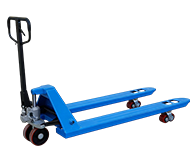
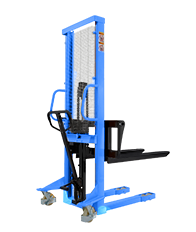
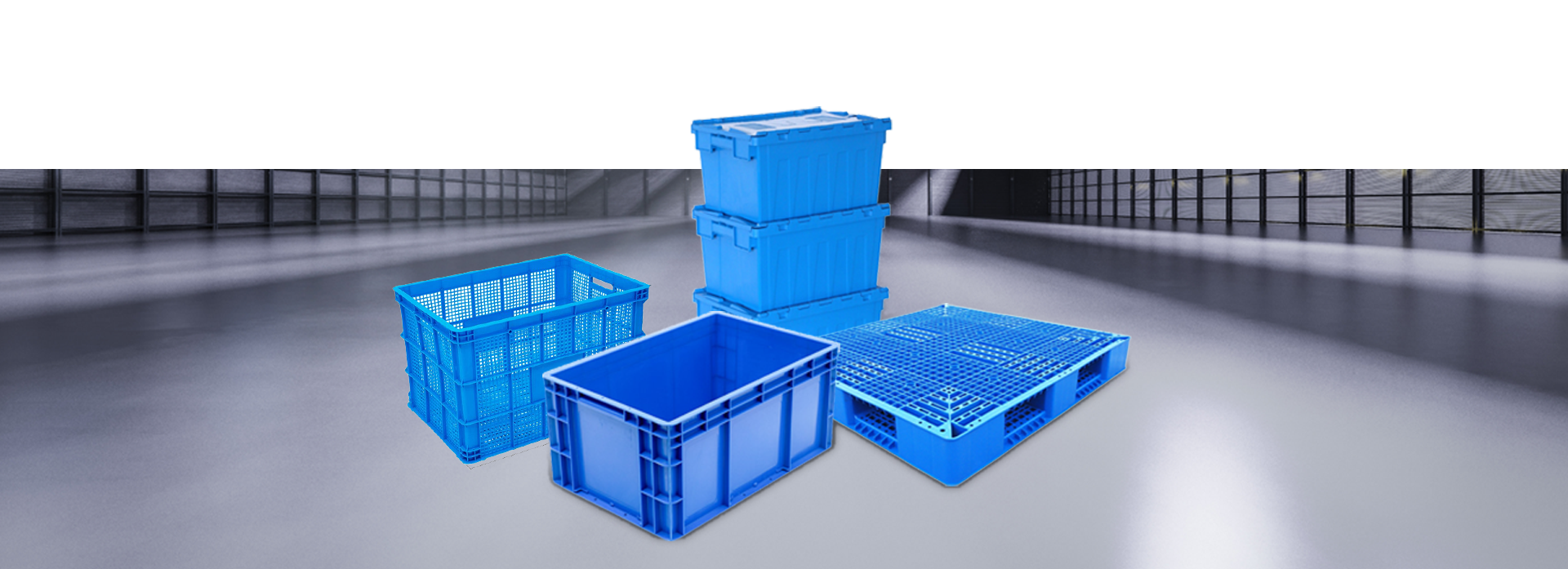
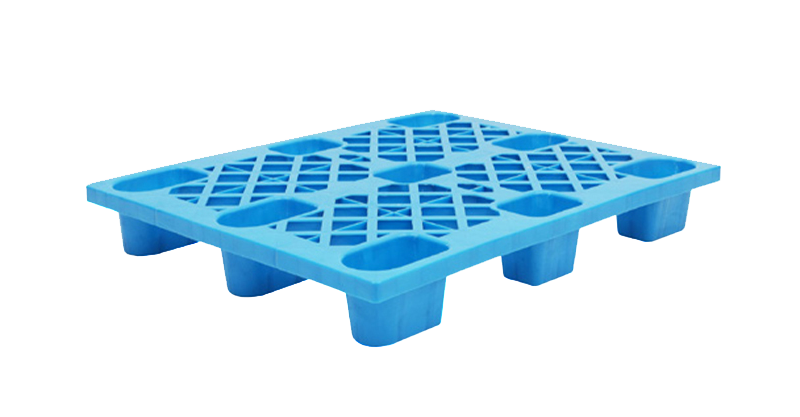
The company’s wider product range is another procurement advantage. Customers may source plastic pallets, crates, bulk containers, pallet trucks, stackers, stretch wrap, packing strapping, and warehouse racks through the same supplier. This can simplify communication and allow products to be planned as a coordinated logistics solution.
A one-stop supplier can also help align dimensions across different product categories. For example, tote dimensions may be coordinated with pallet footprints, rack bays, picking carts, and handling equipment. While compatibility must still be verified for every project, a supplier with experience across these categories can provide more integrated recommendations than a vendor offering only one type of container.
Environmental and Lifecycle Considerations
Reusable packaging can support waste reduction when it replaces a large number of single-use cartons, plastic bags, or damaged disposable containers. The environmental benefit depends on how many cycles the tote completes, how far it travels, how it is cleaned, and whether it is eventually recycled through an appropriate channel.
The durable HDPE structure is intended for repeated use. Organizations can improve lifecycle performance by assigning ownership, tracking tote circulation, preventing unnecessary loss, and repairing or removing damaged units responsibly. Labels and color systems can make it easier to return containers to the correct operating area.
At the end of service, users should follow local recycling and waste-management requirements. Material identification can assist with sorting, but local facilities may have different acceptance rules. Customers seeking recycled content, specific recyclability documentation, or environmental certifications should request the relevant information before purchase.
Why This Tote Is a Strong Competitive Choice
The BG-564223-ST competes effectively by combining several practical benefits in one standardized product. Its 41L capacity provides useful storage volume without creating an oversized or difficult-to-handle container. Its HDPE construction supports durability and cleaning. Its stackable design improves space utilization. Its rectangular dimensions support warehouse planning, and its potential color and customization options allow it to fit structured inventory systems.
Many competing storage solutions emphasize only one characteristic, such as low initial price, maximum capacity, or visual appearance. A low-cost box may fail under repeated industrial handling. A very large container may be difficult to move. A disposable carton may require frequent replacement. This tote is positioned as a balanced solution for businesses that need long-term reuse, repeatable dimensions, and practical manual handling.
The supplier’s quality-control approach adds value beyond the physical product. Standardized manufacturing, inspections throughout production, and attention to raw-material control are important when customers deploy large numbers of identical units. The company’s experience across storage and material handling also supports broader project planning.
Its availability and customization support are additional advantages for commercial buyers. Products that are in stock can shorten implementation time, while multiple colors and project-specific options can improve organization. Customers should confirm the exact commercial terms, technical limits, and delivery schedule, but the overall product concept is well suited to modern warehouse requirements.
Q&A
What is the capacity of the tote box?
The nominal capacity is 41 liters. The internal dimensions are 500×380×220mm, while the external dimensions are 560×420×230mm.
What material is used to manufacture the product?
The product specification identifies HDPE, or high-density polyethylene, as the material. Customers with special resin, recycled-content, chemical-resistance, or regulatory requirements should confirm the applicable material documentation with the supplier.
Can the tote boxes be stacked?
Yes. The tote is designed for stacking, and the supplied information indicates that it can be stacked to 10 or more layers depending on operating conditions. The actual safe stack height should be determined according to filled weight, floor conditions, handling methods, and site procedures.
Is the tote suitable for heavy metal parts?
It may be suitable for many parts-storage applications, but the total filled weight must be assessed. Volume capacity is not the same as weight capacity. Dense metal components can create high loads even when the tote is only partly full, so buyers should confirm the appropriate working load before use.
Can the tote be cleaned?
Yes. Its plastic construction makes it easier to clean than many paperboard containers. Cleaning chemicals, water temperature, pressure, and sanitation procedures should be checked for compatibility with the material and the stored products.
Can different colors be supplied?
The supplier indicates that multiple colors are available. Color selection can be used for product classification, quality status, work areas, or inventory control. Exact color options and order requirements should be confirmed before purchase.
Can the totes be customized?
Customization is supported according to the supplied product information. Possible options may include color, labels, markings, packaging, and other project-related requirements. The available options, minimum quantities, and lead times should be discussed with the supplier.
What industries can use this product?
The tote is suitable for warehouses, manufacturing plants, e-commerce fulfillment centers, logistics providers, maintenance departments, distribution centers, retail backrooms, and parts-management operations. Application suitability should be reviewed for unusual temperatures, hazardous materials, direct food contact, or specialized hygienic environments.
Can the tote be used on warehouse racks?
It can be considered for shelving and rack-based storage, but compatibility must be verified using the rack dimensions, shelf depth, load rating, clearance, and access method. A sample-unit test is recommended before a large installation.
What is the product model?
The product model is BG-564223-ST.
How heavy is an empty tote?
The listed product weight is 1.62kg.
Why choose a reusable tote instead of cardboard cartons?
A reusable plastic tote generally provides better resistance to moisture, repeated handling, deformation, and routine cleaning. It can reduce recurring packaging purchases and support standardized warehouse organization when used over multiple cycles.
How should the maximum stack height be established?
Users should consider the total load, the condition of each tote, the levelness of the floor, the operating temperature, transport movement, and the consequences of a stack failure. The supplier’s stated stacking information should be treated as a planning reference, with final limits validated for the actual application.
Conclusion
The 41L Stackable Plastic Tote Box is a practical and adaptable solution for businesses seeking more organized, durable, and space-efficient storage. Its 560×420×230mm external dimensions, 500×380×220mm internal dimensions, 41-liter capacity, and 1.62kg empty weight provide a useful format for parts sorting, picking, transport, and inventory control.
Its HDPE construction supports repeated industrial use, while the reinforced stackable design helps businesses use vertical space more effectively. Compared with disposable cartons, lightweight household bins, wooden crates, and other less specialized alternatives, it offers a strong combination of durability, cleanability, dimensional consistency, and lifecycle value.
The product is further supported by standardized manufacturing procedures, raw-material control, inspections throughout production, stock availability, color options, and customization support. The supplier’s broader capabilities in material handling, storage containers, packaging materials, and warehouse racking allow customers to plan more complete logistics solutions.
For the best results, buyers should evaluate load requirements, stack height, cleaning conditions, rack compatibility, labeling, and transport methods before deployment. When correctly specified and maintained, the BG-564223-ST can become a dependable component of a modern warehouse system, helping organizations improve space utilization, reduce handling inefficiencies, and maintain more accurate control over parts and inventory.
References
1. Product specification sheet for model BG-564223-ST, including dimensions, material, capacity, and weight.
2. Supplier information regarding stackability, color options, customization, inventory availability, and production quality control.
3. General principles of warehouse storage layout, manual material handling, inventory identification, and reusable packaging management.
4. General material-handling guidance for evaluating container load limits, stacking conditions, rack compatibility, and workplace safety.
5. General industrial packaging practices concerning reusable containers, cleaning procedures, lifecycle management, and warehouse process standardization.
Product: 41L Stackable Plastic Tote Box for Parts Sorting and Picking


Copyright @ Yancheng Bingo Machinery Equipment Co., Ltd. All rights reserved Warehouse Logistics Equipment Manufacturer Pallet Truck Supplier
