 en
 Español

Counterbalanced Electric Stand-On Stackers: A Practical Guide to Safer, More Efficient Warehouse Handling
Content
- 1 1. Understanding the Counterbalanced Stand-On Stacker
- 2 2. Product Models and Main Specifications
- 3 3. Counterbalanced Design and Access Advantages
- 4 4. Operator Ergonomics and Daily Productivity
- 5 5. Load Protection and Mast Safety
- 6 6. Mast Configurations and Warehouse Planning
- 7 7. Applications Across Different Industries
- 8 8. Manufacturing and Quality-Control Strengths
- 9 9. Why the Product Can Offer Competitive Value
- 10 10. Battery, Charging, and Electrical Considerations
- 11 11. Maintenance and Service Requirements
- 12 12. Operator Training and Warehouse Safety
- 13 13. Purchasing Checklist for International Buyers
- 14 14. Frequently Asked Questions
- 14.1 What is the rated capacity of the equipment?
- 14.2 Is this equipment suitable for indoor warehouses?
- 14.3 What lift heights are available?
- 14.4 What is the benefit of a counterbalanced design?
- 14.5 How does the stand-on platform improve productivity?
- 14.6 Does the equipment have operator protection?
- 14.7 What happens if a hydraulic pipe ruptures?
- 14.8 Is the hydraulic system certified for hazardous areas?
- 14.9 Which model should a buyer choose?
- 14.10 What information is needed for a technical quotation?
- 14.11 How does the manufacturer support complete warehouse projects?
- 15 15. Conclusion
- 16 References
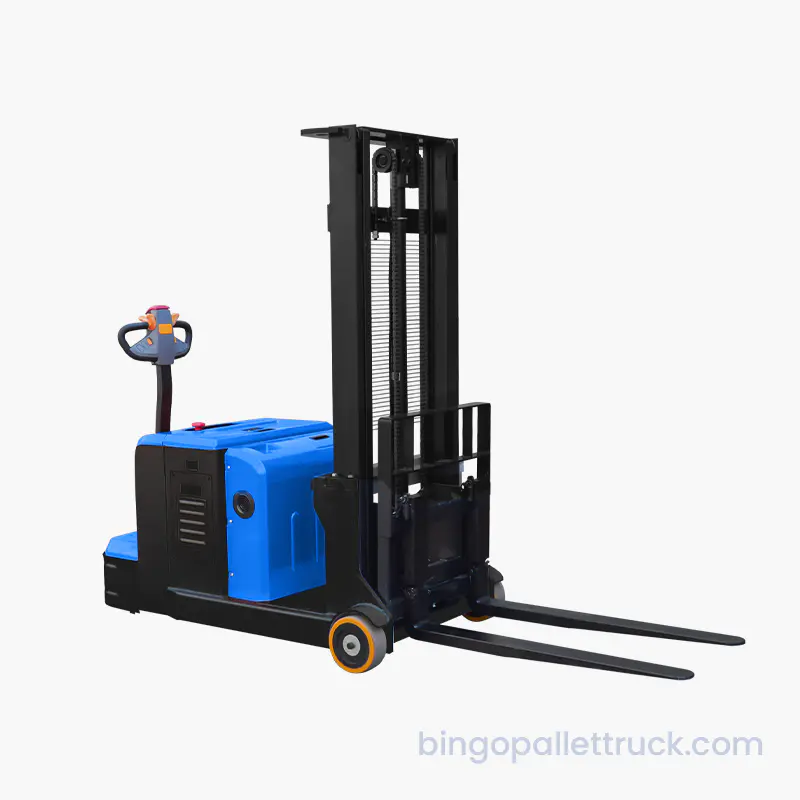
- 17 Product: 1500kg/2000kg Counterbalanced Electric Stand-on Stacker
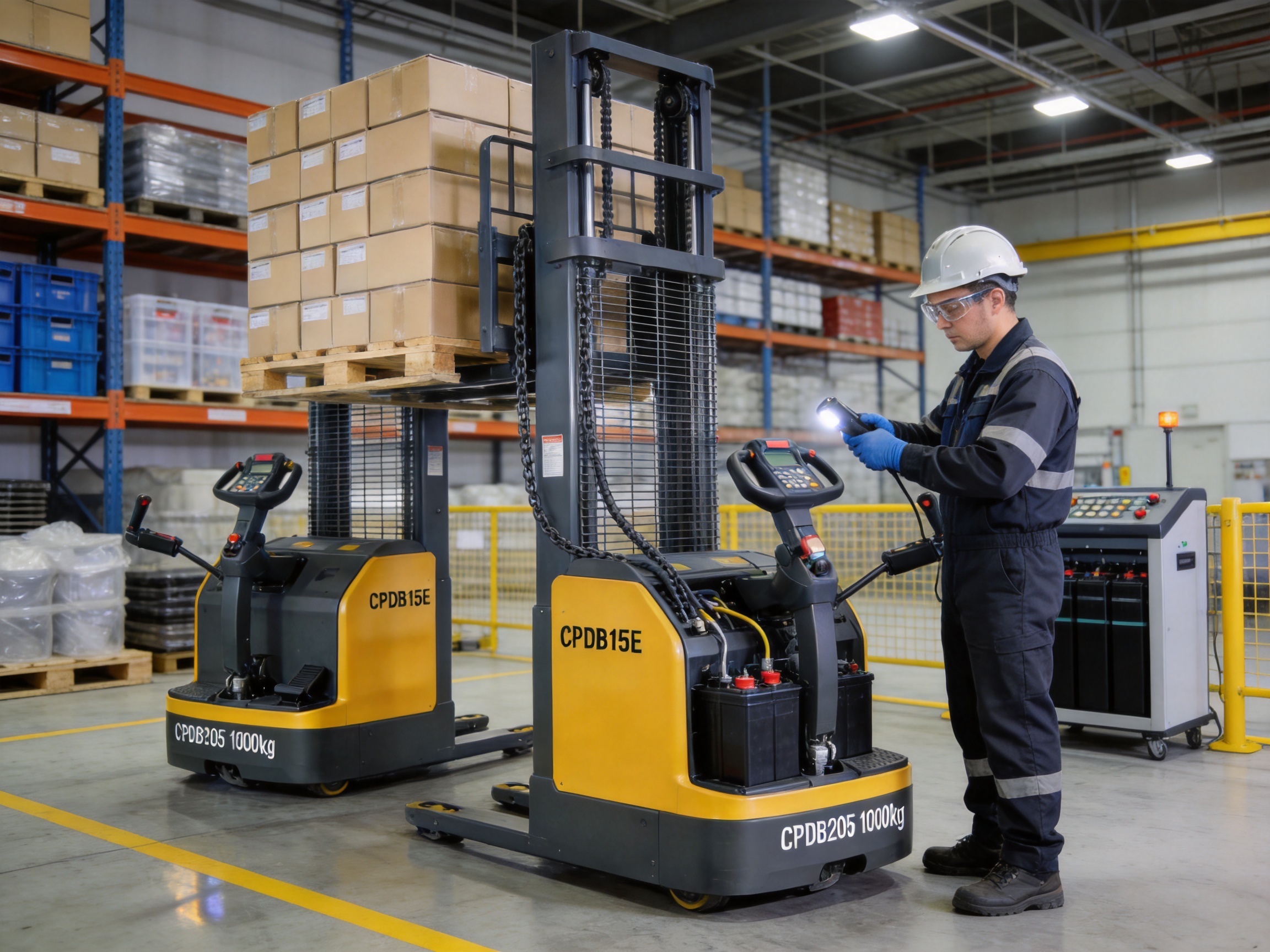
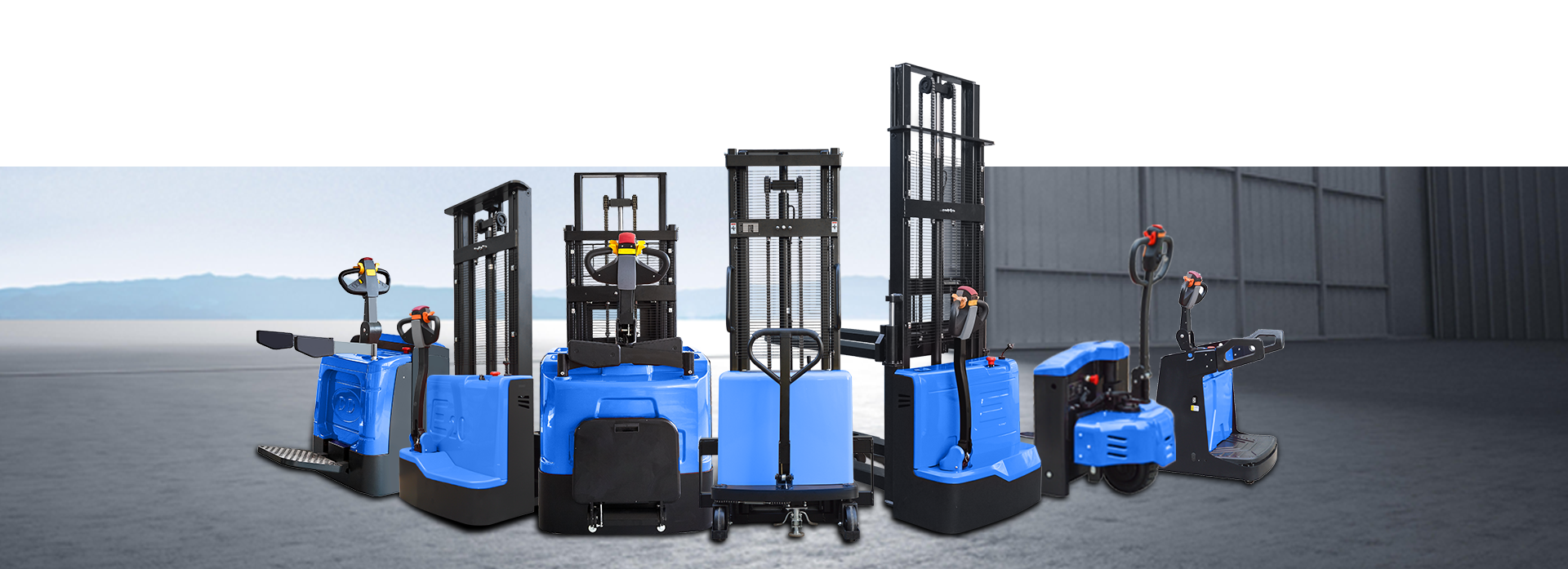
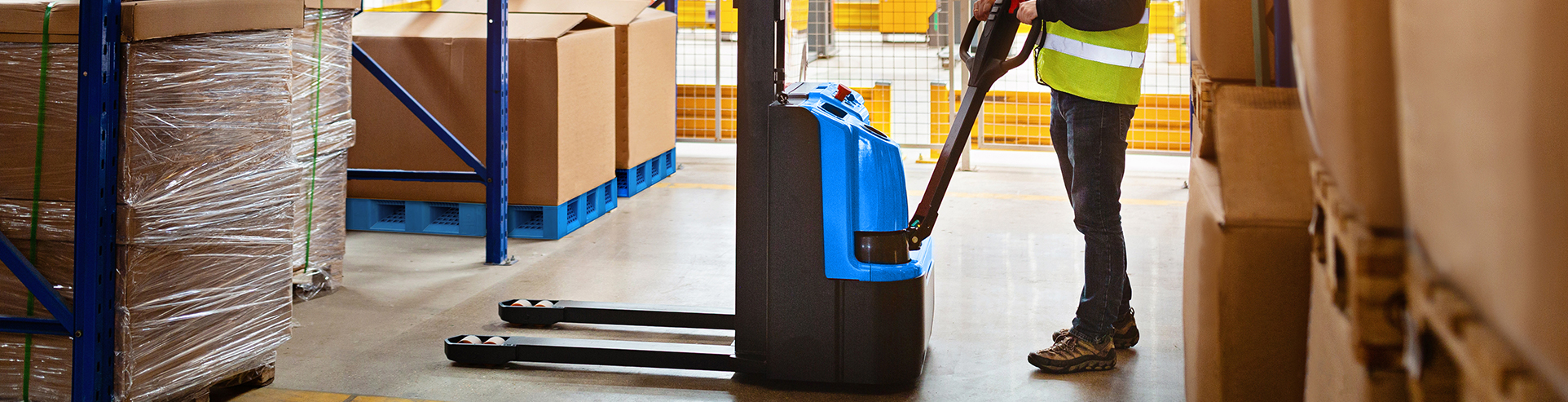
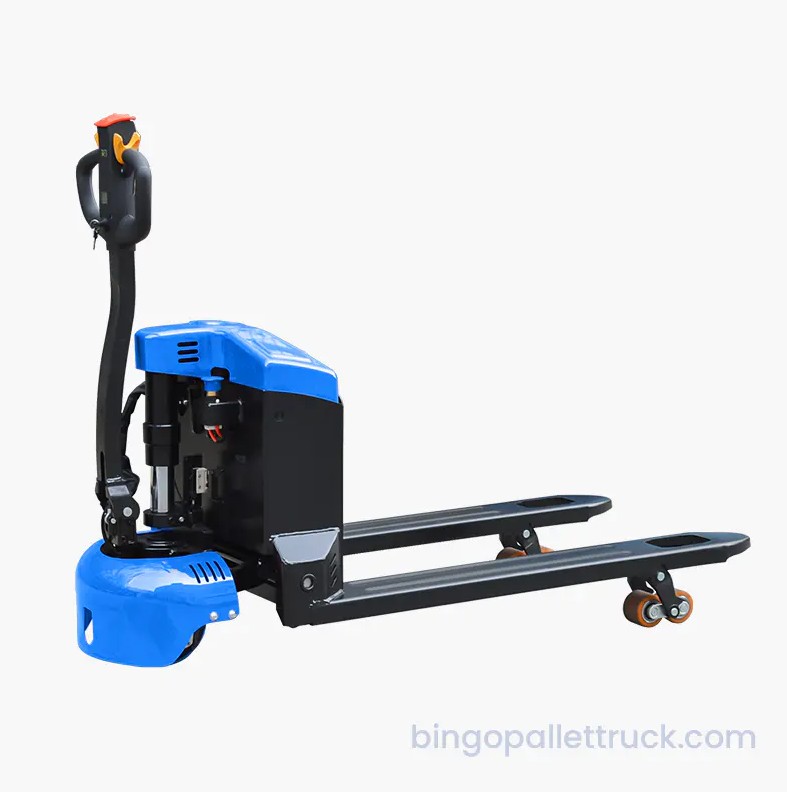
Modern warehouses require material-handling equipment that can move heavy loads accurately, safely, and economically. As storage facilities become denser and order cycles become shorter, businesses are looking for equipment that combines the maneuverability of a walkie stacker with the productivity and stability of a counterbalanced forklift. The 1500 kg/2000 kg Counterbalanced Electric Stand-on Stacker is designed for this operating gap.
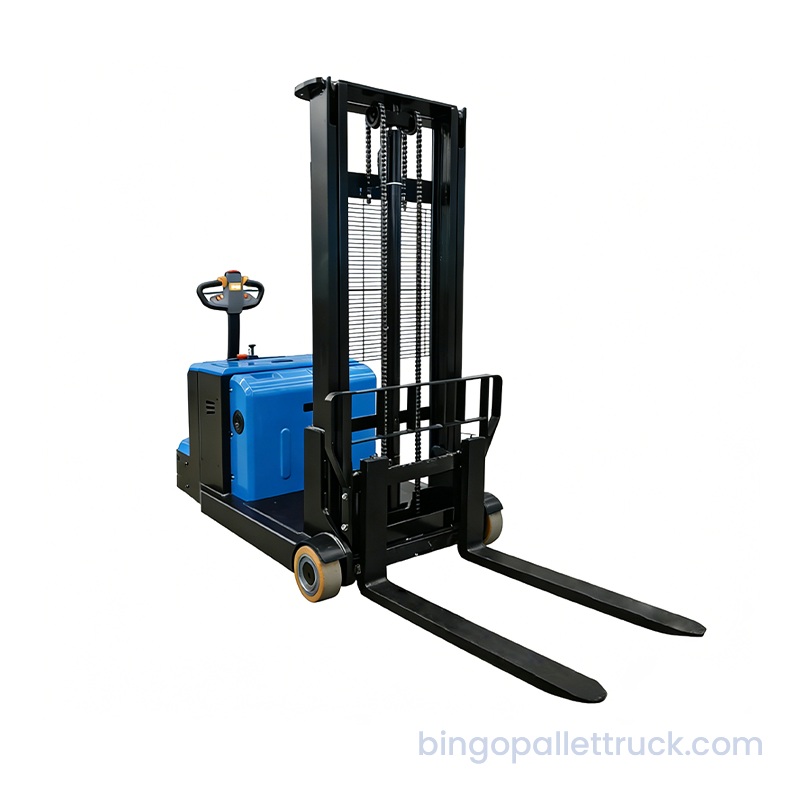
Available in CPDB15E and CPDB20E versions, this electric stand-on stacker provides rated load capacities of 1500 kg and 2000 kg. It is intended for applications that involve pallet movement, short-distance transportation, stacking, loading, unloading, and warehouse replenishment. Its counterbalanced design allows the machine to handle loads without requiring front outriggers, making it useful in areas where pallet entry, aisle access, and operational flexibility are important.
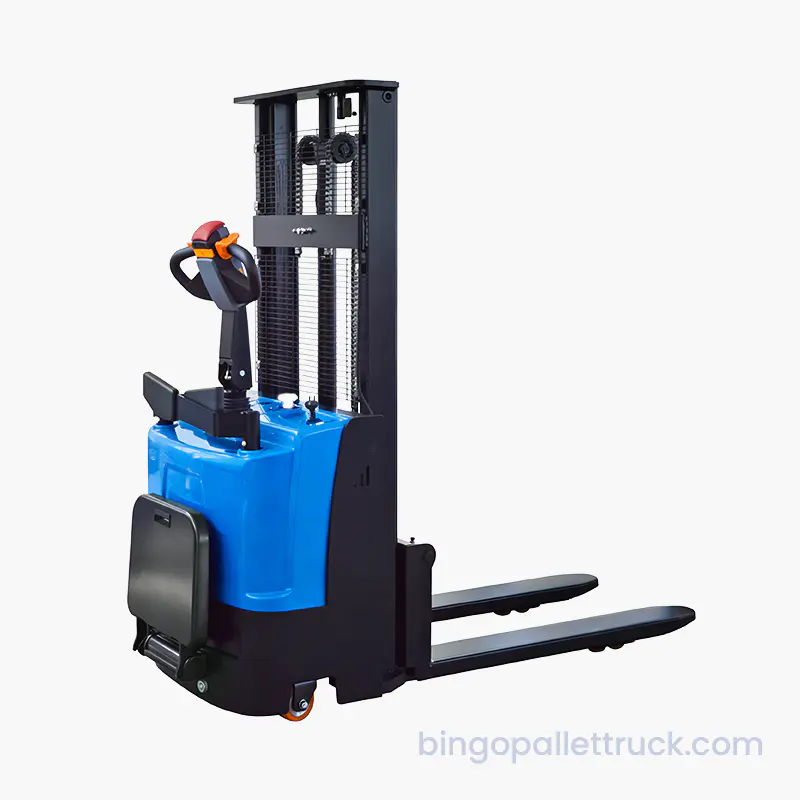
The stand-on operator platform supports efficient travel during repeated warehouse movements. Instead of requiring the operator to walk behind the machine throughout an entire shift, the platform allows the operator to ride during travel and step off quickly when performing local positioning or pallet-related tasks. This arrangement can reduce unnecessary walking and support higher productivity in medium- and high-frequency handling environments.
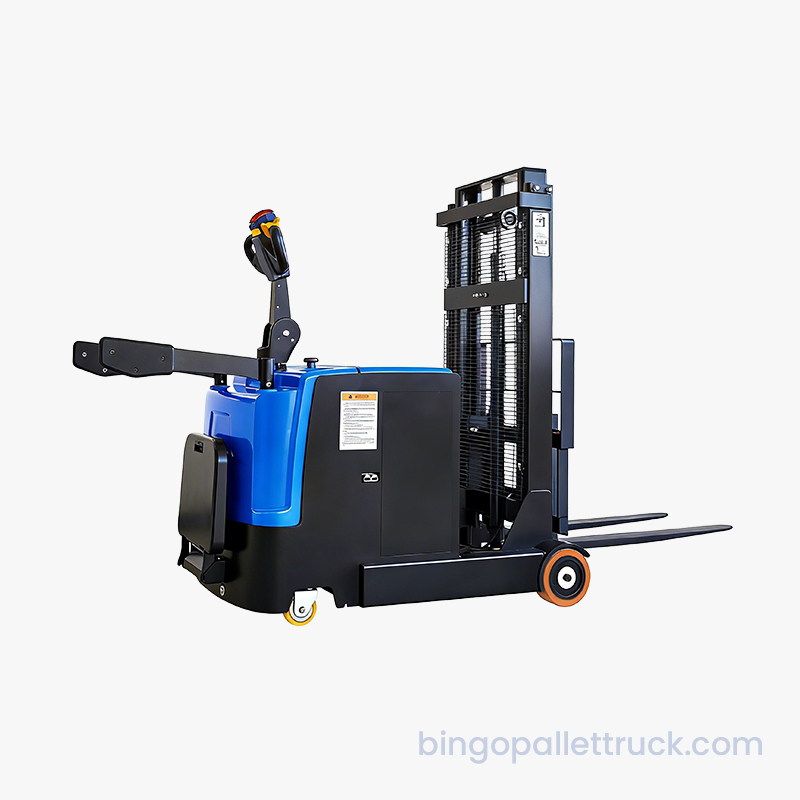
The equipment also incorporates several features aimed at safety and operator comfort. An ergonomic handle with electronic steering supports one-handed operation. A fixed mast wire mesh guard separates the operator from the load during lifting. The hydraulic system is designed to limit sudden mast descent in the event of a pipe rupture, while shock-absorbing pedals and anti-collision arms help reduce fatigue during extended use. A low center of gravity contributes to stable handling under heavy-load conditions.
This article examines the design, performance, safety systems, application value, configuration options, manufacturing strengths, maintenance requirements, and purchasing considerations associated with this class of electric stand-on stacker.
1. Understanding the Counterbalanced Stand-On Stacker
A counterbalanced electric stand-on stacker is a powered lifting vehicle that uses a rear counterweight or counterbalanced body structure to offset the load carried at the front. Unlike a conventional pedestrian stacker with stabilizing straddle legs or front support arms, a counterbalanced stacker can approach pallets more directly. This design can be particularly helpful when pallets are stored in racks, placed close together, or positioned in areas where front legs would interfere with access.
The stand-on operating format provides a practical compromise between pedestrian and seated equipment. A pedestrian stacker is compact and often highly maneuverable, but the operator must walk with the machine. A seated forklift offers excellent travel comfort, but it generally occupies more space and may require wider aisles. A stand-on stacker places the operator on a compact platform, allowing efficient travel while maintaining a relatively small footprint.
For many facilities, this format is appropriate for horizontal transport distances that are too long for comfortable manual walking but too short or too space-sensitive for a larger counterbalanced forklift. It can also support frequent put-away and retrieval cycles where the operator repeatedly travels between staging areas and storage locations.
Core operating principle
The front mast carries the forks and lifting mechanism. The rear section contains the drive, battery, control components, and counterbalancing mass. When the forks enter a pallet and raise the load, the rear structure helps maintain the vehicle’s longitudinal balance. The low-center-of-gravity body design further supports stability during travel and handling.
Counterbalance does not eliminate the need for correct operating practices. Capacity depends on load center distance, lift height, mast configuration, floor condition, travel speed, and load shape. The listed rated capacity is specified at a 500 mm load center. Loads with a longer center distance can create greater overturning moments and may require a reduced safe capacity according to the manufacturer’s load chart.
Operators should always keep the load centered on the forks, avoid lifting damaged or unstable pallets, and follow the rated capacity plate and operating instructions supplied with the individual machine.
2. Product Models and Main Specifications
The product range includes two principal models. The CPDB15E is rated for 1500 kg, while the CPDB20E is rated for 2000 kg. Both models use a stand-on operator format and share key dimensional values, including a 500 mm load center distance, 122 mm front overhang, and 1581 mm wheelbase according to the supplied specification information.
The lift-height options include a one-stage mast with a 1600 mm lift height and two-stage mast configurations with lift heights of 2000 mm, 2500 mm, 3000 mm, and 3500 mm. These options allow users to select a configuration suitable for floor stacking, low-level rack access, or medium-height warehouse storage.
| Specification | CPDB15E | CPDB20E |
|---|---|---|
| Operator type | Stand-on | Stand-on |
| Rated load capacity | 1500 kg | 2000 kg |
| Mast options | One-stage and two-stage | One-stage and two-stage |
| One-stage lift height | 1600 mm | 1600 mm |
| Two-stage lift heights | 2000, 2500, 3000, or 3500 mm | 2000, 2500, 3000, or 3500 mm |
| Load center distance | 500 mm | 500 mm |
| Front overhang | 122 mm | 122 mm |
| Wheelbase | 1581 mm | 1581 mm |
| Controller | LVM24S20 | LVM24S20 |
The supplied service-weight data varies by model and mast or lift configuration. For the CPDB15E, the listed service weights range from approximately 1590 kg to 1960 kg. For the CPDB20E, the listed service weights range from approximately 1650 kg to 2220 kg. Actual operating weight should be confirmed against the final configuration, battery specification, mast type, and optional equipment before transport planning or floor-load assessment.
Why model selection matters
The CPDB15E may be suitable for warehouses handling standard pallets, packaged goods, cartons, consumer products, and moderate-density loads. Its lower rated capacity can provide an economical solution when most loads fall below 1500 kg.
The CPDB20E is intended for heavier handling requirements. It can provide additional capacity for manufacturing components, bulk packaged materials, industrial supplies, heavier palletized goods, and applications in which load weights vary substantially. Selecting the higher-capacity model can also provide a useful operating margin, provided the load center, mast height, and floor conditions remain within the approved limits.
Capacity should not be the only selection criterion. The user should also consider lift height, pallet dimensions, aisle width, travel distance, charging arrangements, floor quality, operating temperature, and the expected number of handling cycles per shift.
3. Counterbalanced Design and Access Advantages
One of the most important differences between this equipment and many conventional stackers is the counterbalanced configuration. Traditional straddle stackers may use legs that extend around or alongside the pallet. Those legs can provide stability, but they may limit access to closed pallets, pallet blocks, floor-level storage positions, or locations near walls and other equipment.
A counterbalanced machine moves the balancing structure behind the drive axle rather than relying primarily on front support legs. This can produce a more open front-end layout. Operators can approach pallets from the front without positioning straddle legs around the pallet. In suitable warehouse layouts, this can simplify pallet entry and improve compatibility with common pallet-handling patterns.
The access advantage is especially relevant in mixed-use warehouses. Such facilities may handle pallets in staging lanes, production areas, shipping zones, storage aisles, and vehicle-loading areas. Equipment that can move between these areas without changing operating methods can reduce handling complexity.
Comparison with walkie stackers
Walkie stackers are often valued for their compact dimensions and comparatively low purchase cost. However, the operator must walk behind or alongside the machine, which can be demanding when travel distances are long or handling cycles are frequent. A stand-on design allows the operator to ride during travel, potentially increasing movement efficiency and reducing walking fatigue.
The counterbalanced configuration may also provide greater freedom when handling pallets that cannot be easily accommodated by straddle legs. Nevertheless, a conventional walkie stacker may remain preferable for very narrow areas, light-duty storage, or occasional use. The correct comparison depends on the application rather than on a single specification.
Comparison with seated forklifts
A seated forklift is normally better suited to outdoor work, long travel distances, rough surfaces, very intensive loading operations, and heavier capacities beyond the range of a compact stacker. However, it generally has a larger turning radius, a higher acquisition and operating cost, and greater space requirements.
The electric stand-on stacker can be advantageous in indoor warehouses that need quiet, low-emission operation and efficient use of floor space. Its compact operating format can be easier to integrate into areas where a full-size forklift would be excessive.
Comparison with pedestrian electric stackers
Pedestrian electric stackers provide excellent visibility and simple operation for short movements. The stand-on model adds a riding platform and counterbalanced body structure, making it more suitable for repeated transport cycles and pallet access patterns that require greater operational speed. It can therefore bridge the gap between a pedestrian stacker and a compact forklift.
In competitive comparisons, the most meaningful advantages are not limited to rated capacity. They include the combination of 1500 kg or 2000 kg capacity, counterbalanced access, stand-on productivity, multiple lift-height options, electronic steering, mast protection, hydraulic descent control, and a low-center-of-gravity structure.
4. Operator Ergonomics and Daily Productivity
Warehouse productivity depends heavily on operator interaction. Even a technically capable machine may underperform if controls are difficult to use, visibility is poor, or the operator experiences excessive fatigue. The product’s ergonomic handle and electronic steering system are intended to make routine control more natural.
One-handed operation can be useful when the operator needs to adjust travel direction, control movement, and maintain awareness of the load at the same time. Electronic steering also allows the control interface to be designed around responsive handling rather than relying only on mechanical steering effort.
The stand-on platform is another productivity feature. During longer internal movements, the operator can ride rather than walk. When the machine reaches the target location, the operator can leave the platform and perform final positioning or inspection. This flexible movement pattern is valuable in facilities where each handling cycle includes both travel and close-range pallet work.
Shock-absorbing pedal design
Repeated travel over warehouse floors can transmit vibration through the operator’s feet and legs. The shock-absorbing pedal design is intended to moderate this effect. While it cannot compensate for severely damaged flooring, it can contribute to a more comfortable working position during normal operation.
Operator comfort has a direct relationship with safety. Fatigue may reduce reaction time, encourage hurried maneuvering, and make it more difficult to maintain proper attention during repeated tasks. Features that reduce physical strain can support more consistent operating behavior over a full shift.
Anti-collision arms
Anti-collision arms provide an additional protective element around the operator platform. In a busy warehouse, the equipment may work near racks, pallets, dock edges, production equipment, and other vehicles. These arms can help create a physical separation zone and reduce the potential impact of minor contact during maneuvering.
They should not be treated as a replacement for safe speed control, visual awareness, pedestrian separation, or site traffic management. Their value is greatest when combined with disciplined operating procedures and clear warehouse routes.
5. Load Protection and Mast Safety
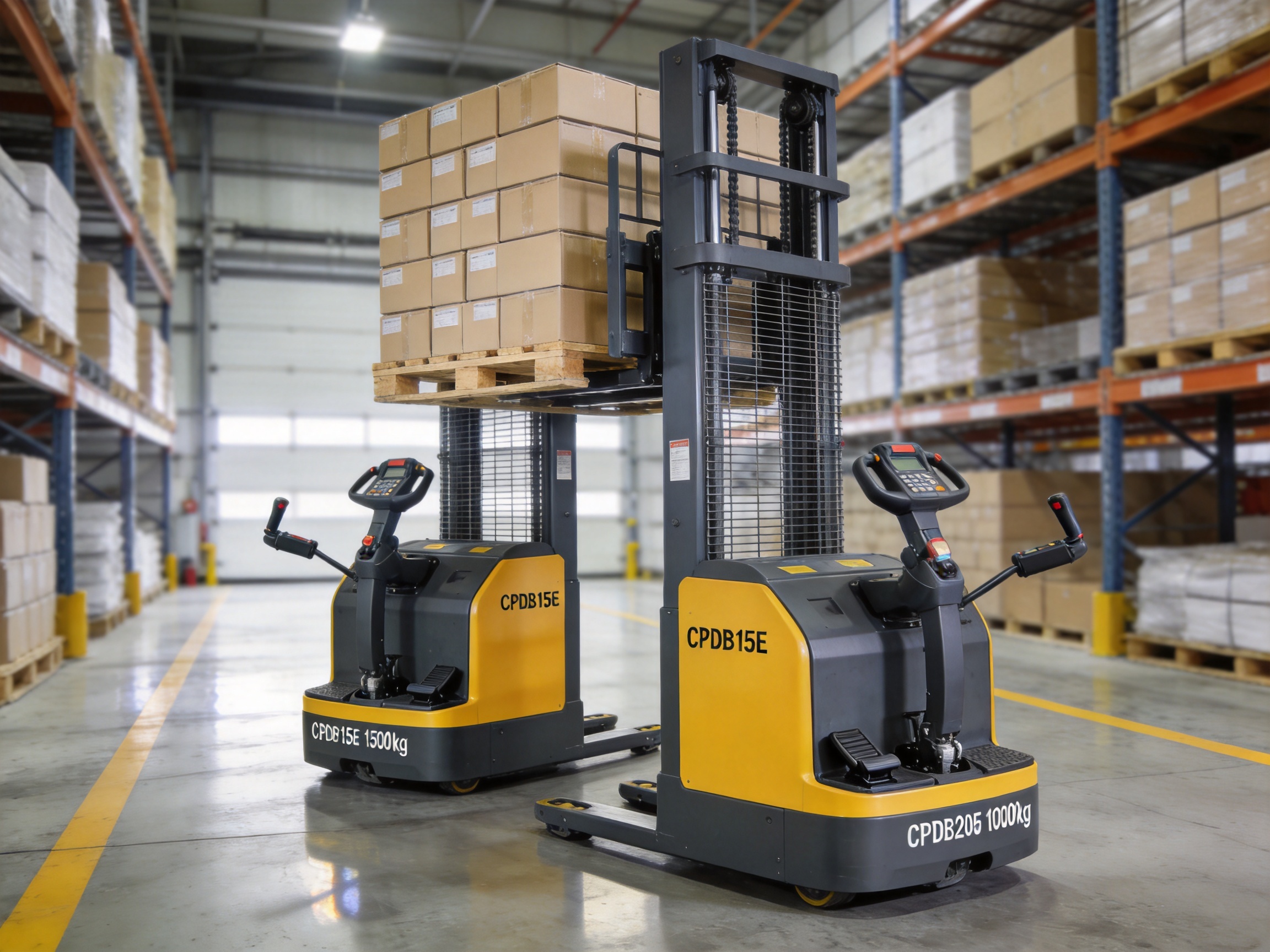
Lifting operations create risks because the load is elevated above the floor and may affect vehicle stability, visibility, and overhead clearance. The product includes a fixed mast wire mesh guard designed to separate the operator from the load during lifting.
The guard helps prevent loose items from moving directly into the operator area. It can also provide a visual boundary between the lifting zone and the operator position. This is particularly useful when handling cartons, bags, containers, or palletized goods that may not be perfectly uniform.
Operators must still inspect every load before lifting. The guard is not designed to contain improperly stacked materials, unsecured loads, or products that extend beyond the approved dimensions. Loads should be stable, evenly distributed, and suitable for the pallet and fork length.
Hydraulic descent protection
The hydraulic system incorporates an explosion-proof hydraulic design intended to restrict abrupt mast descent even if a lifting pipe ruptures under load. In this context, the term describes a hydraulic safety design that helps limit uncontrolled lowering; it does not mean that the machine is automatically certified for hazardous explosive atmospheres.
Users operating in environments with flammable gases, vapors, dust, or other hazardous materials must confirm the equipment’s certification and suitability before use. Standard warehouse equipment should not be placed in a classified hazardous area unless it has the required approval.
Controlled descent is important because a sudden drop can damage the load, the pallet, the racking, and the machine itself. More importantly, uncontrolled movement can create a severe risk to nearby workers. A descent-control feature provides an additional layer of protection, but regular hydraulic inspection remains essential.
Low-center-of-gravity stability
The low-center-of-gravity body structure supports consistent and stable operation when the equipment is carrying heavy loads. Stability is influenced by the relationship between the machine’s center of gravity, the load center, the mast position, the lift height, the floor surface, and the direction of travel.
A low center of gravity can help the vehicle maintain a more stable stance during normal movement. However, operators should lower loads during travel, avoid abrupt steering, slow down near corners, and never travel with a raised load unless the operating instructions specifically allow it.
Stability also depends on battery installation, tire or wheel condition, floor levelness, and the correct use of the mast. Any modification that changes the machine’s weight distribution should be reviewed by qualified technical personnel.
6. Mast Configurations and Warehouse Planning
The one-stage mast option provides a 1600 mm lift height. This configuration can be appropriate for low-level pallet stacking, floor-to-floor transfers, vehicle loading support, and applications where overhead clearance is limited.
The two-stage mast options provide lift heights of 2000 mm, 2500 mm, 3000 mm, and 3500 mm. These heights allow the equipment to serve a broader range of storage systems. A 2000 mm or 2500 mm lift may suit low and medium rack levels, while 3000 mm and 3500 mm configurations may support higher storage positions, subject to the rack design and required residual capacity.
Lift height should always be selected together with aisle width and overhead clearance. A taller mast may require additional clearance at doorways, sprinkler systems, beams, lighting fixtures, and low ceilings. The stored load must also remain below the rack beam and maintain the clearance specified by the storage-system designer.
Rack compatibility
Before ordering, users should measure the rack bay width, beam height, pallet dimensions, aisle width, and available turning space. The stacker must be able to approach the pallet squarely without excessive repositioning. The floor should be level, clean, and capable of supporting the combined machine and load weight.
The equipment’s 1581 mm wheelbase and 122 mm front overhang are useful reference dimensions for layout planning. These dimensions should be considered alongside the actual overall length, fork dimensions, turning radius, mast height, and any optional attachments. The published wheelbase alone is not sufficient to determine the required aisle width.
Load center considerations
The stated 500 mm load center distance is a key rating condition. If the load extends farther forward, the effective load center increases. For example, a long or irregular pallet may create a greater overturning moment even when its total weight is below the nominal rated capacity.
Users should keep heavy items close to the mast, distribute weight evenly across the forks, and avoid carrying loads that are too narrow, too wide, or too unstable for the fork arrangement. If unusual loads are expected, the supplier should review the application before purchase.
7. Applications Across Different Industries
The 1500 kg and 2000 kg capacity range is suitable for a broad group of indoor handling tasks. The equipment can be used in manufacturing plants, distribution centers, e-commerce warehouses, retail backrooms, spare-parts stores, packaging operations, and general logistics facilities.
Manufacturing and production
Manufacturing facilities often move raw materials, work-in-process goods, finished products, components, and packaging supplies. A stand-on counterbalanced stacker can transfer pallets between receiving, production, intermediate storage, and dispatch areas.
Its electric drive format can be beneficial indoors, where low noise and the absence of direct exhaust emissions are important. The counterbalanced front access can also help when pallets are positioned near production lines or staging areas without enough room for straddle legs.
E-commerce fulfillment
E-commerce operations typically involve rapid product movement and frequent replenishment. The operator platform can reduce walking during travel between storage zones and picking or packing areas. The 2000 mm to 3500 mm lift options can support the use of vertical space, provided the storage system is designed for the selected equipment.
Because fulfillment facilities often contain pedestrians, traffic controls are essential. Marked routes, speed limits, warning signals, pedestrian crossings, and operator training should be part of the complete handling system.
Wholesale and distribution
Distribution warehouses may receive mixed pallet sizes and varying load weights. The two available capacity classes give purchasing teams flexibility. The CPDB15E can support regular loads up to its rating, while the CPDB20E provides a larger capacity margin for heavier goods and denser pallet configurations.
In this environment, the machine can support unloading, cross-docking, staging, order consolidation, and rack replenishment. A proper battery-charging plan is needed to ensure that equipment availability matches the work schedule.
Retail and supermarket logistics
Retail backrooms and supermarket distribution areas may require compact equipment that can work around shelving, pallets, cages, and people. The stand-on layout can help with repeated short-distance movement, while the counterbalanced design can simplify access to standard pallets.
Operators should pay special attention to floor transitions, narrow passages, customer-access areas, and the need for reduced travel speed. The equipment should only be used in areas with sufficient clearance and appropriate separation from shoppers or untrained personnel.
8. Manufacturing and Quality-Control Strengths
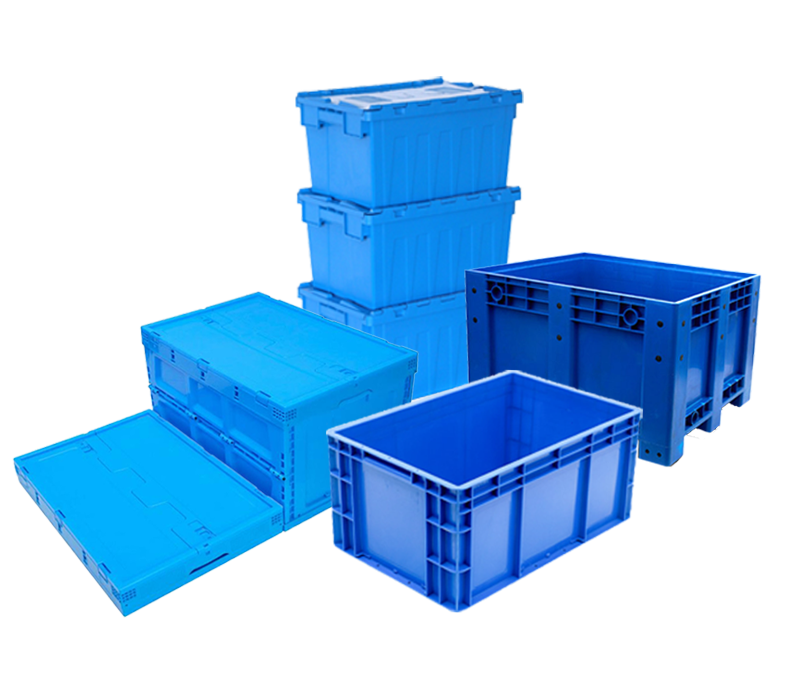
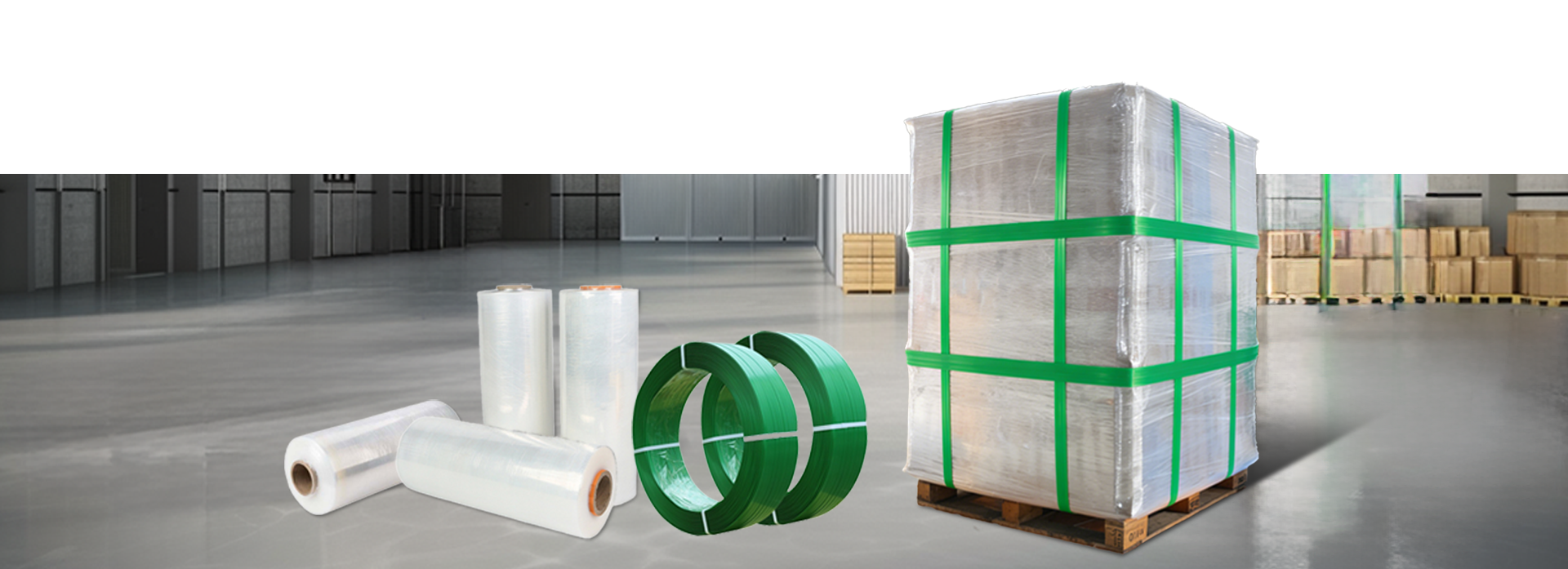
The manufacturer is described as a specialized enterprise covering the production, sales, and service of warehousing and logistics equipment. Its product scope includes manual and electric pallet trucks and stackers, plastic pallets, plastic totes, crates, bulk containers, stretch wrap, packing strapping, and warehouse racking.
This broad product portfolio provides an important systems-level advantage. A customer may require more than one machine or a single piece of equipment. Material handling is connected to pallet selection, storage containers, packaging materials, and racking. A supplier familiar with these connected categories can help coordinate equipment choices across the warehouse rather than treating the stacker as an isolated purchase.
The company’s stated supply-chain structure covers four core systems: handling equipment, storage containers, packaging materials, and warehouse racks. This integrated approach can simplify sourcing and improve communication between equipment requirements and storage design.
Supply-chain coordination
A mature supply chain can support more consistent access to components, replacement parts, and related warehouse products. It can also help a manufacturer coordinate product specifications across different equipment categories. For buyers, this may reduce the administrative burden associated with managing several unrelated suppliers.
Supply-chain strength should be evaluated through practical evidence, including production capacity, component traceability, quality records, spare-parts availability, lead-time performance, and after-sales response. Buyers should request the documentation appropriate to their project before final approval.
Inspection and process control
The company states that it uses strict quality inspection processes and aims to ensure that products comply with international standards. For a powered stacker, quality control should cover structural welds, mast alignment, fork dimensions, hydraulic performance, steering response, braking behavior, electrical connections, controller operation, battery installation, safety guards, and load-handling tests.
Inspection should occur at multiple stages rather than only at final assembly. Incoming components should be checked against specifications. Structural parts should be verified before painting or coating. Hydraulic and electrical systems should be tested after installation. Final machines should undergo functional checks under controlled conditions.
Although the specific internal production process may vary by configuration, a professional manufacturing program generally includes engineering review, component sourcing, frame fabrication, surface treatment, mast assembly, hydraulic installation, electrical integration, software or controller checks, final inspection, and packaging for shipment.
Engineering integration
The CPDB15E and CPDB20E combine mechanical, hydraulic, electrical, and ergonomic systems. Effective manufacturing requires these systems to work together. The mast must align with the frame, the hydraulic circuit must deliver controlled lifting and lowering, the controller must coordinate travel and steering functions, and the operator interface must provide predictable responses.
The use of a specified controller, identified as LVM24S20 in the supplied information, supports component standardization. Standardized control architecture can help with production consistency, diagnostic procedures, training, and spare-parts planning. The final controller configuration should be confirmed with the supplier because electrical specifications may depend on battery voltage, drive motor, and market requirements.
9. Why the Product Can Offer Competitive Value
Competitive value is created by the combination of performance, safety, serviceability, operating cost, and purchase price. A machine with a low initial price may become expensive if it causes downtime, requires frequent repairs, or cannot access the intended storage locations. Conversely, a machine with a higher initial investment may be more economical if it supports greater productivity and reliability.
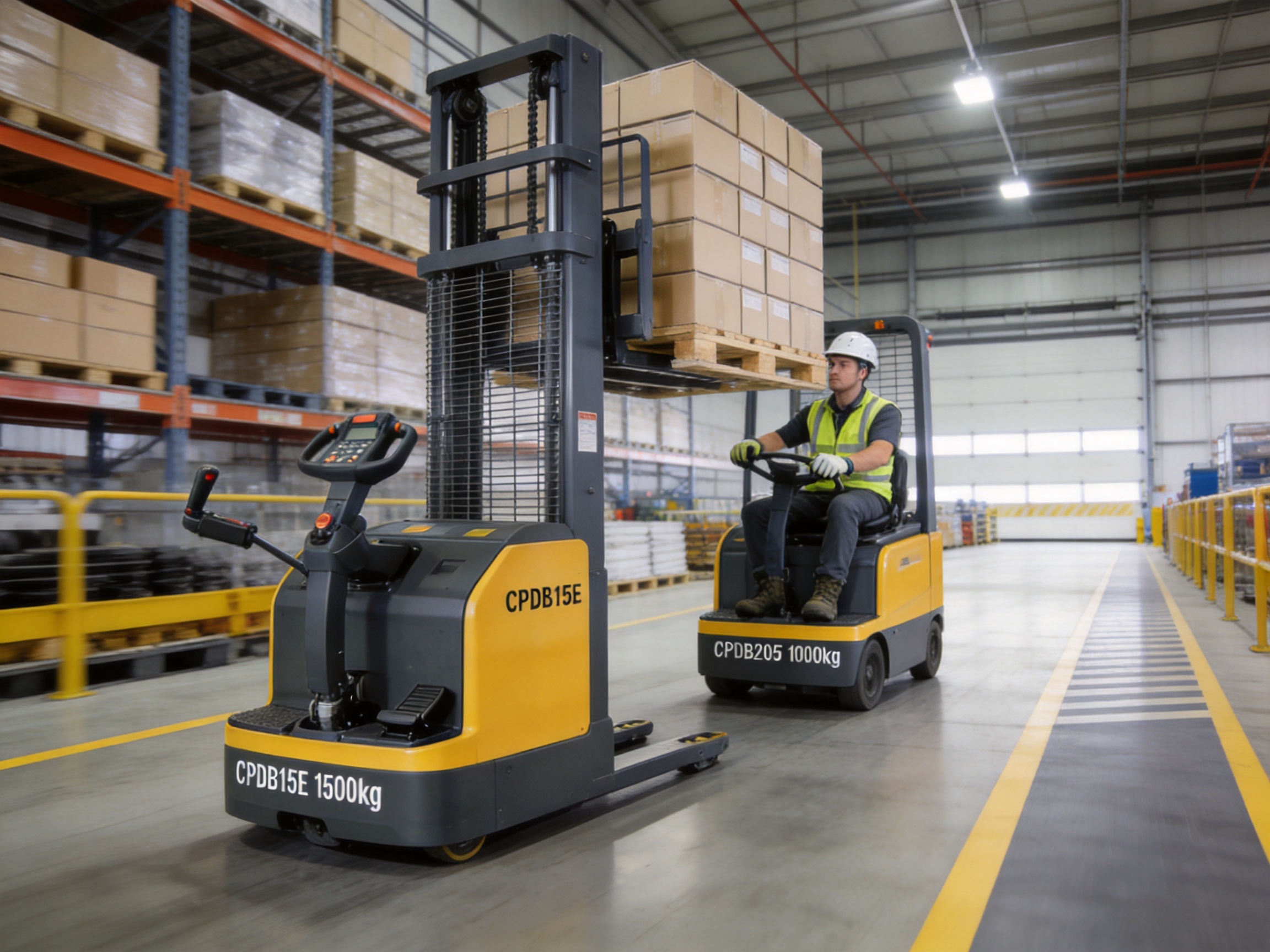
This product family offers several features that can distinguish it from basic stackers:
Two capacity classes covering 1500 kg and 2000 kg.
Counterbalanced access without relying on conventional front straddle legs.
Stand-on operation for more efficient travel during repeated cycles.
One-stage and two-stage mast choices.
Lift heights from 1600 mm to 3500 mm.
Electronic steering designed for one-handed operation.
Fixed wire mesh mast protection between operator and load.
Hydraulic descent protection for added control in the event of pipe rupture.
Shock-absorbing pedal and anti-collision arm features.
Low-center-of-gravity structure for stable handling.
These features create a balanced specification for warehouses that require more capability than a pedestrian stacker but do not need a large seated forklift. The product is especially competitive when indoor space, operator fatigue, pallet access, and vertical storage are all important considerations.
Productivity value
Productivity should be evaluated by complete handling cycles rather than maximum travel speed alone. A machine that allows quick pallet entry, stable lifting, efficient travel, and easy positioning can reduce the time required for each cycle. The stand-on format may reduce walking, while electronic steering may simplify repeated directional changes.
Improved productivity can also result from reducing equipment changes. If one counterbalanced stand-on stacker can handle staging, transport, and stacking tasks, the warehouse may need fewer specialized vehicles for routine work. This can simplify training and fleet management.
Safety value
Safety features can reduce exposure to common warehouse hazards when combined with proper training. Mast guarding, controlled descent, anti-collision protection, and stable body design address different parts of the handling process. No individual feature eliminates risk, but a layered safety approach is stronger than reliance on operator attention alone.
Total cost of ownership
Electric operation can support lower local emissions and reduced noise compared with internal-combustion equipment. Maintenance costs may also be more predictable when the machine is used indoors on suitable floors and receives regular inspections.
Total cost of ownership should include acquisition, battery and charger costs, electricity, tires or wheels, hydraulic maintenance, scheduled inspections, operator training, spare parts, downtime, and eventual replacement value. Buyers should compare these factors over the expected service life rather than focusing only on the purchase quotation.
10. Battery, Charging, and Electrical Considerations
The supplied information identifies the controller but does not specify battery chemistry, voltage, capacity, charger type, charging time, or operating duration. These details must be confirmed before purchase because they directly affect productivity and installation planning.
Users should determine whether the equipment will operate on lead-acid batteries, lithium batteries, or another approved battery arrangement. Lead-acid systems may require designated charging areas, ventilation, water checks, and battery-changing procedures. Lithium systems may offer different charging patterns and maintenance requirements but require compatible chargers and battery-management systems.
The charging location should be protected from traffic, water exposure, unauthorized access, and sources of ignition. Electrical connections should be inspected regularly, and charging equipment should be used only as specified by the manufacturer.
Shift planning
For one-shift operations, a standard charging arrangement may be sufficient. For two- or three-shift facilities, buyers should analyze duty cycles, break opportunities, opportunity-charging suitability, spare batteries, and charging infrastructure.
Actual battery runtime depends on load weight, travel distance, lift frequency, floor conditions, operator behavior, ambient temperature, and battery age. A supplier should provide operating data for the selected configuration rather than relying on a generic estimate.
11. Maintenance and Service Requirements
Preventive maintenance is essential for preserving lifting performance and operator safety. A maintenance program should reflect the operating environment, daily usage, load severity, and manufacturer instructions.
Daily checks
Before use, the operator should inspect the forks, mast, chains or lifting components, hydraulic hoses, visible leaks, wheels, platform, anti-collision arms, mast guard, emergency controls, steering, braking, horn, warning devices, and battery condition. Any unusual noise, vibration, leakage, or control response should be reported immediately.
Hydraulic inspection
Hydraulic oil levels and hose condition should be checked according to the service schedule. Hoses should be examined for abrasion, cracking, swelling, or damage. The controlled-descent function should not be bypassed or modified. If a leak is discovered, the machine should be removed from service until repaired by qualified personnel.
Mast and fork inspection
Mast channels, rollers, chains, welds, and mounting points should be inspected for wear or deformation. Forks should be checked for bending, cracks, excessive wear, and equal alignment. Forks must not be used to lift loads that exceed their rated capacity or that are unsuitable for their dimensions.
Electrical and controller checks
Electrical connectors, cables, fuses, battery terminals, and control components should be kept clean and secure. Moisture, impact, loose connections, and unauthorized modifications can lead to intermittent faults or unsafe operation. Controller diagnostics should be performed according to the equipment manual.
Wheel and floor interaction
Wheels should be inspected for flat spots, cuts, excessive wear, and embedded debris. Smooth, level floors support safer travel and reduce component stress. Damaged floors, loading ramps, thresholds, and uneven surfaces should be repaired or clearly marked.
12. Operator Training and Warehouse Safety
Only trained and authorized personnel should operate the stacker. Training should cover equipment controls, load capacity, load center, mast operation, travel behavior, pedestrian awareness, charging procedures, emergency response, and daily inspection requirements.
Operators should keep the forks low during travel, maintain clear visibility, use approved travel routes, slow down at intersections, and sound the warning device where required. Loads should not obstruct the operator’s view. If visibility is blocked, the operator should travel in the approved direction or use a spotter where appropriate.
Pedestrians should be separated from powered equipment through physical barriers, marked walkways, warning signs, and traffic procedures. The stand-on format does not remove the risk associated with reversing, turning, or approaching blind corners.
Racking should be inspected regularly for impact damage. A stacker should never be used to push racks, move unstable pallets, or lift people unless the equipment is specifically approved and equipped for that purpose. Improvised platforms and unauthorized attachments are unsafe.
13. Purchasing Checklist for International Buyers
International buyers should confirm the full technical configuration before issuing a purchase order. The following questions can help prevent misunderstandings:
Which model is required: CPDB15E or CPDB20E?
What is the required lift height and mast type?
What are the actual pallet dimensions and load center?
What is the narrowest aisle and doorway clearance?
What floor conditions and ramps will the machine encounter?
What battery type, voltage, capacity, and charger are included?
What is the net and gross shipping weight?
What documentation is supplied for operation, maintenance, and parts?
What inspection and testing records are available?
What spare parts are recommended for the first year?
What warranty terms and service response arrangements apply?
What regional electrical and safety requirements must be met?
Buyers should also request product drawings, load charts, fork dimensions, overall dimensions, turning data, battery details, and packaging information. The final machine should be approved only after the selected configuration has been matched to the warehouse layout and operating conditions.
14. Frequently Asked Questions
What is the rated capacity of the equipment?
The product family includes the CPDB15E with a rated capacity of 1500 kg and the CPDB20E with a rated capacity of 2000 kg. These ratings apply under specified conditions, including the listed 500 mm load center. The actual allowable capacity may change with lift height, load shape, attachments, and other operating factors.
Is this equipment suitable for indoor warehouses?
Yes. The electric stand-on format is well suited to indoor warehousing, manufacturing, distribution, retail, and e-commerce applications. Final suitability depends on floor quality, aisle dimensions, ventilation, charging arrangements, temperature, and local safety requirements.
What lift heights are available?
The listed options include a one-stage mast with a 1600 mm lift height and two-stage mast configurations with lift heights of 2000 mm, 2500 mm, 3000 mm, and 3500 mm. The exact configuration should be confirmed in the quotation and technical drawing.
What is the benefit of a counterbalanced design?
A counterbalanced design can provide more direct pallet access because it does not depend on conventional front straddle legs for stability. This can be useful near walls, in staging areas, and with pallet arrangements where front support legs would be inconvenient.
How does the stand-on platform improve productivity?
The platform allows the operator to ride during travel rather than walking behind the machine throughout the entire handling cycle. This can reduce walking effort and improve efficiency when the equipment moves repeatedly between storage, production, staging, and dispatch areas.
Does the equipment have operator protection?
It includes a fixed mast wire mesh guard intended to separate the operator from the load during lifting. It also includes anti-collision arms and a shock-absorbing pedal design. These features should be used together with training, traffic control, load inspection, and safe operating procedures.
What happens if a hydraulic pipe ruptures?
The hydraulic safety design is intended to restrict abrupt mast descent in the event of a pipe rupture under load. This does not remove the need for regular hose inspections, correct maintenance, and immediate removal from service if a hydraulic fault is found.
Is the hydraulic system certified for hazardous areas?
The description of an explosion-proof hydraulic design refers to controlled hydraulic descent and should not be interpreted as general certification for explosive atmospheres. Buyers operating in hazardous areas must verify the complete equipment certification and suitability with the supplier and relevant authorities.
Which model should a buyer choose?
The CPDB15E may be appropriate when normal loads are within 1500 kg and the application prioritizes economical capacity. The CPDB20E may be preferable for heavier pallets, greater variation in load weight, or applications requiring a larger capacity margin. Lift height, load center, aisle space, and duty cycle should also be considered.
What information is needed for a technical quotation?
Provide the supplier with required capacity, load center, pallet dimensions, lift height, mast preference, aisle width, floor conditions, operating hours, battery expectations, local electrical requirements, and delivery destination. Photos or drawings of the warehouse can help confirm suitability.
How does the manufacturer support complete warehouse projects?
The manufacturer supplies handling equipment as well as storage containers, packaging materials, and warehouse racking. This product range can support coordinated sourcing for material storage and movement. Specific engineering, installation, documentation, and after-sales services should be confirmed for each project.
15. Conclusion
The 1500 kg/2000 kg Counterbalanced Electric Stand-on Stacker is designed for warehouses that require a combination of pallet access, vertical lifting, operator efficiency, and compact indoor operation. The CPDB15E and CPDB20E models cover two practical capacity levels, while the one-stage and two-stage mast options support lift heights from 1600 mm to 3500 mm.
Its counterbalanced structure can offer access advantages over straddle-style stackers. The stand-on platform can reduce walking during repeated travel. Electronic steering, an ergonomic handle, a mast wire mesh guard, hydraulic descent protection, shock-absorbing pedals, anti-collision arms, and a low-center-of-gravity body structure contribute to a balanced equipment concept.
The manufacturer’s broader product portfolio is another strength. By combining handling equipment with storage containers, packaging materials, and warehouse racking, the company can participate in integrated warehouse-solution projects rather than supplying only a single vehicle. Its stated focus on supply-chain coordination and quality inspection provides a foundation for international cooperation, although buyers should always verify the specific documentation, certifications, service arrangements, and final technical configuration required for their market.
When correctly matched to the load, rack, aisle, floor, battery, and work cycle, this electric stand-on stacker can become a valuable part of a modern material-handling fleet. The most successful results will come from combining suitable equipment with professional layout planning, operator training, preventive maintenance, and disciplined warehouse safety management.
References
1. Product technical specification sheet for CPDB15E and CPDB20E counterbalanced electric stand-on stackers.
2. Manufacturer-provided information concerning ergonomic design, mast guarding, hydraulic descent control, anti-collision protection, and low-center-of-gravity construction.
3. General principles of industrial truck capacity, load center management, pallet handling, and warehouse traffic safety.
4. General guidance for powered industrial truck operator training, inspection, maintenance, and safe workplace procedures.
5. General warehouse planning principles covering rack compatibility, aisle dimensions, floor conditions, battery charging, and material-flow organization.
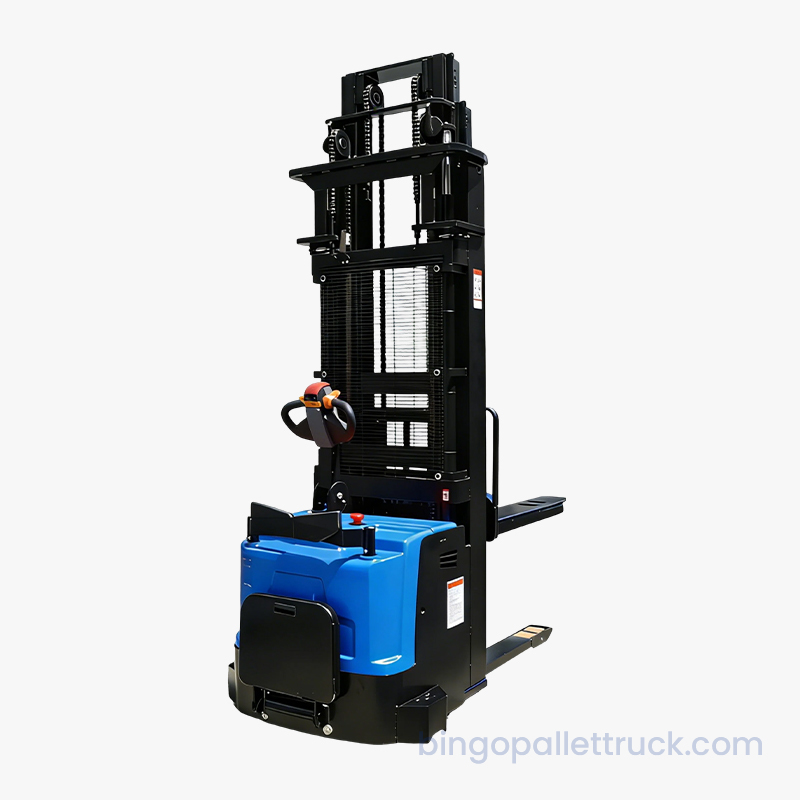
Product: 1500kg/2000kg Counterbalanced Electric Stand-on Stacker


Copyright @ Yancheng Bingo Machinery Equipment Co., Ltd. All rights reserved Warehouse Logistics Equipment Manufacturer Pallet Truck Supplier
