 en
 Español


6-Compartment Dividable Plastic Tote for Organized Workshop and Warehouse Storage
Content
- 1 Why Compartmentalized Storage Matters in Modern Operations
- 2 Product Overview
- 3 Six Compartments for Faster Identification and Picking
- 4 Durable Polypropylene Construction
- 5 Impact Resistance for Repeated Handling
- 6 Stackable Design and Better Use of Vertical Space
- 7 Advantages Compared with Ordinary Storage Boxes
- 8 Applications in Manufacturing
- 9 Applications in Warehousing and Distribution
- 10 Applications in Workshops and Maintenance Departments
- 11 Advanced Manufacturing and Quality-Control Strengths
- 12 A Broader Manufacturing and Supply-Chain Capability
- 13 Color Coding and Customization Potential
- 14 Space Efficiency and Cost Reduction
- 15 Ergonomic Benefits for Workers
- 16 Implementation in a Warehouse or Workshop
- 17 Cleaning and Maintenance Considerations
- 18 Ordering and Specification Review
- 19 Frequently Asked Questions
- 19.1 What is the BG-362514-DT tote designed for?
- 19.2 How many compartments does the tote have?
- 19.3 What material is used to manufacture the tote?
- 19.4 What are the external dimensions?
- 19.5 What are the internal dimensions?
- 19.6 Can the totes be stacked?
- 19.7 Is the tote resistant to moisture?
- 19.8 Can the tote replace cardboard boxes?
- 19.9 Can different colors be supplied?
- 19.10 Can one tote be used for a complete maintenance kit?
- 19.11 Is the tote suitable for automated systems?
- 19.12 How should the tote be cleaned?
- 19.13 How can the tote improve picking accuracy?
- 19.14 Who can provide further product information?
- 20 Conclusion
- 21 References
- 22 Product: 6-Compartment Dividable Plastic Tote for Workshop Parts
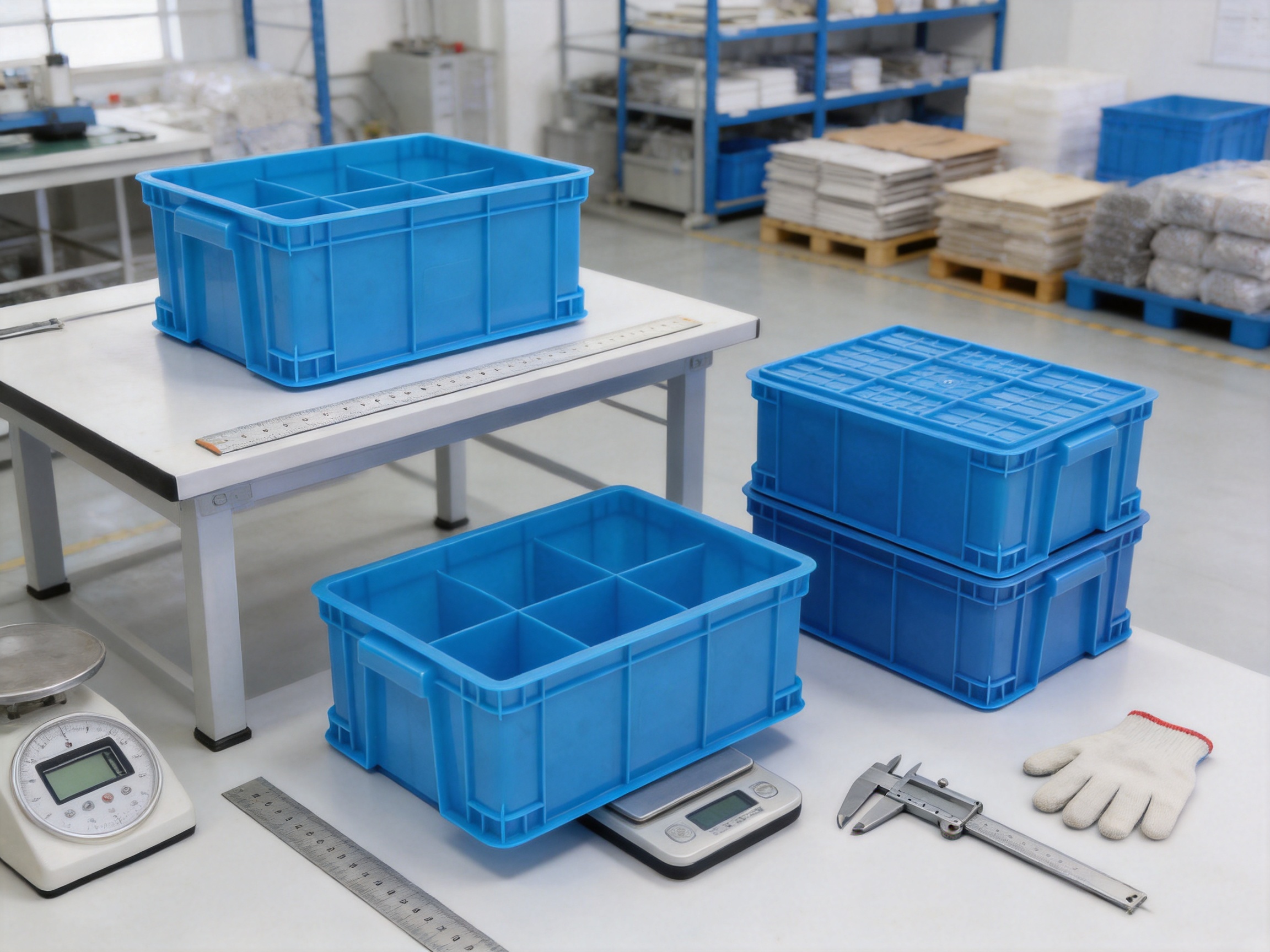
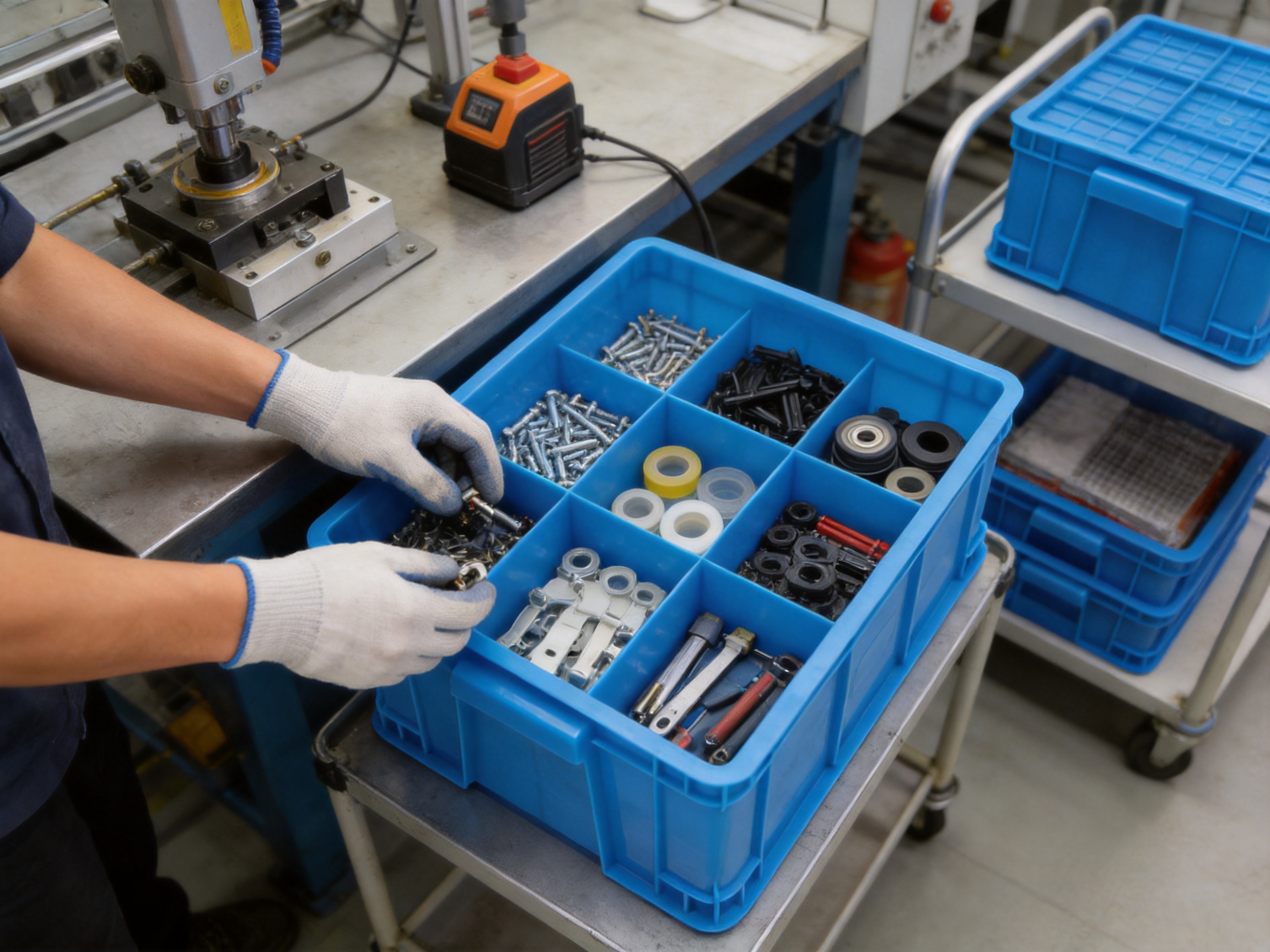
Efficient storage is essential wherever small parts, tools, components, fasteners, and production materials must be identified, protected, and retrieved quickly. In workshops, manufacturing facilities, maintenance departments, distribution centers, and assembly areas, poorly organized components can create unnecessary labor, increase picking errors, consume valuable floor space, and slow down production. The BG-362514-DT 6-compartment dividable plastic tote addresses these challenges with a durable, stackable, and clearly separated storage format designed for demanding operational environments.
Unlike ordinary open bins or single-compartment containers, this dividable plastic tote provides six individual storage areas within one compact container. The arrangement supports efficient classification of parts while maintaining the handling convenience of a standard tote. Small items can be separated by model, size, material, production order, or application without requiring six separate containers. This helps users reduce container movement, simplify inventory management, and make better use of warehouse shelving and workbench space.
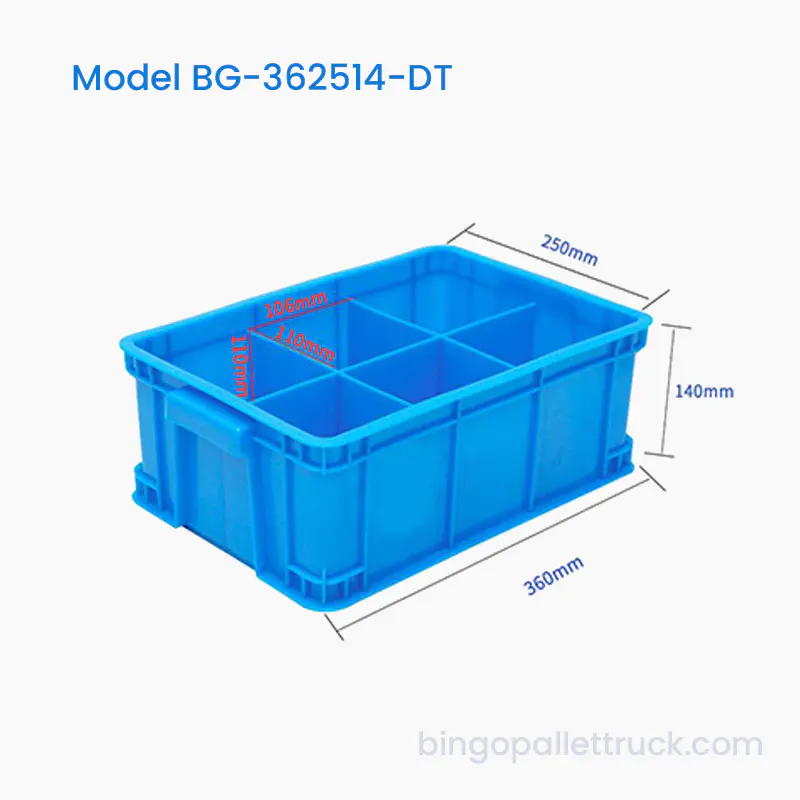
Manufactured from high-quality polypropylene, the tote is designed to withstand frequent handling, impact, moisture, chemical exposure, and changing working temperatures. Its external dimensions of 360 × 250 × 140 millimeters provide a practical balance between storage capacity and compactness. The internal dimensions of 320 × 220 × 130 millimeters allow the usable space to accommodate a broad range of workshop parts, while the internal compartment size of approximately 110 × 106 × 110 millimeters provides a standardized area for sorting smaller components.
The product is supplied by Yancheng Bingo Machinery Equipment Co., Ltd., a manufacturer and supplier focused on warehousing, logistics, material handling, storage containers, packaging materials, and warehouse racking. Through a broader product portfolio and integrated supply-chain capabilities, the company supports customers seeking coordinated solutions for storage and material movement rather than isolated products.
Why Compartmentalized Storage Matters in Modern Operations
Modern warehouses and production facilities handle a greater variety of components than ever before. A single workstation may require screws, washers, clips, electrical components, machine fittings, labels, hand tools, and replacement parts at the same time. When these items are stored together in one open container, workers spend more time searching and are more likely to select the wrong item.
A six-compartment tote creates a simple visual management system. Each section can be assigned to a specific component or task. Parts remain separated during transportation from the warehouse to the production line, and the container can be returned to a storage location without requiring the contents to be repacked. This approach improves organization without adding complicated software, special equipment, or labor-intensive handling procedures.
Compartmentalized storage is particularly useful for kitting operations. A kit may contain several different components that must be delivered together for assembly or maintenance. Instead of placing those components in multiple bags or loose boxes, an operator can use one tote to hold the complete kit while retaining separation between individual parts. This reduces the risk of mixing components and makes the kit easier to inspect before use.
The same principle applies to maintenance departments. Spare parts can be allocated by machine, service order, or maintenance stage. A technician can move the tote directly to the work area and quickly identify the required part. Once the task is complete, unused components can be returned to their designated compartments, reducing the chance of loss or misplacement.
Product Overview
The BG-362514-DT is a six-compartment dividable plastic tote intended for workshop parts, warehouse components, manufacturing supplies, and general material organization. Its rigid construction supports repeated use, while the stackable design helps maximize vertical storage capacity.
| Item | Specification |
| Model | BG-362514-DT |
| Product Type | 6-compartment dividable plastic tote |
| Primary Material | Polypropylene (PP) |
| External Dimensions | 360 × 250 × 140 mm |
| Internal Dimensions | 320 × 220 × 130 mm |
| Weight | 0.82 kg |
| Internal Compartment Size | Approximately 110 × 106 × 110 mm |
| Storage Configuration | Six separated compartments |
| Design Features | Stackable, impact-resistant, moisture-resistant, chemical-resistant |
| Typical Applications | Workshops, manufacturing, warehousing, logistics, maintenance, parts management |
The dimensions make the tote suitable for shelves, workstations, picking carts, assembly lines, and parts cabinets. Its footprint is large enough to hold useful quantities of small components while remaining compact enough for convenient manual handling. The 0.82-kilogram product weight also allows workers to move the tote without the unnecessary bulk associated with larger industrial containers.
Six Compartments for Faster Identification and Picking
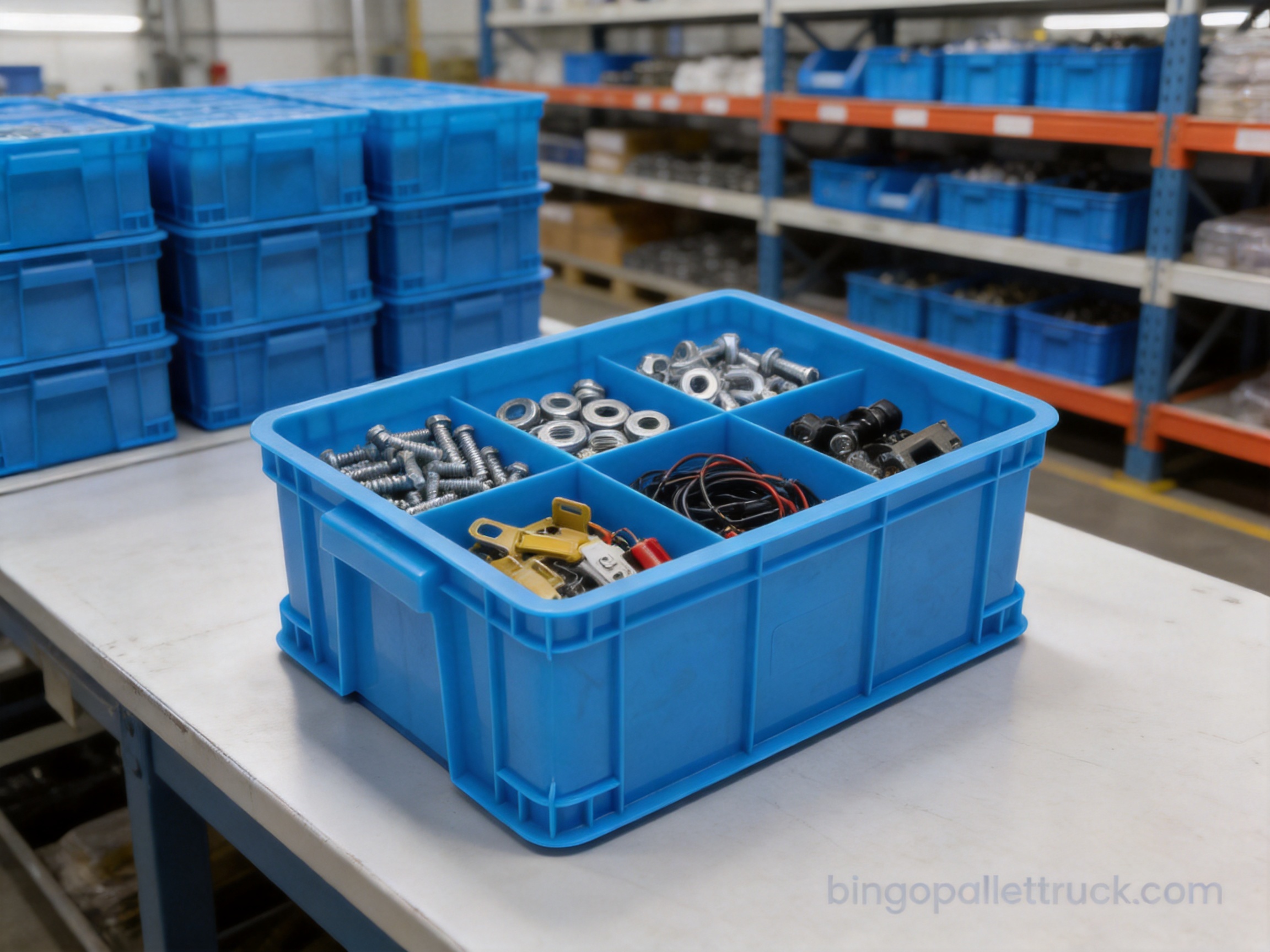
The primary advantage of the BG-362514-DT is its internal division into six dedicated storage areas. This design allows users to establish a repeatable organization method for frequently used parts. A warehouse operator may use one compartment for bolts, another for nuts, another for washers, and the remaining sections for associated accessories. A production operator may organize components according to assembly sequence.
Because the compartments are integrated into one tote, users do not need to manage several loose containers. This can reduce handling steps and simplify transfers between storage, picking, transportation, and production areas. One labeled tote can represent one work order, one product family, one maintenance task, or one replenishment unit.
Separated storage also improves visual control. When compartments are assigned consistently, a quick visual inspection can show whether parts are present, misplaced, or running low. This is useful in lean manufacturing, 5S workplace organization, kanban replenishment, and standardized work environments.
Typical Compartment Organization Methods
There is no single required way to use the six sections. The tote can be adapted to different workflows:
Component-based organization assigns one part number or component type to each section. This is useful for assembly kits and repair sets.
Size-based organization separates identical parts by dimension, length, diameter, or capacity. This reduces the possibility of selecting an incorrect size.
Process-based organization allocates compartments according to production sequence. Operators can move from the first section to the final section in the required order.
Order-based organization uses one tote for a customer order, service ticket, or internal production batch. Each section can hold a different line item.
Shift-based organization separates materials for different production shifts or workstations. This supports controlled replenishment and accountability.
Tool-based organization stores hand tools and accessories needed for a particular machine, work cell, or maintenance procedure.
These arrangements can be changed as operational requirements evolve. The tote does not lock the user into a single storage method, making it suitable for both stable production lines and changing workshop environments.
Durable Polypropylene Construction
The tote is manufactured from polypropylene, a material widely used in industrial storage applications because of its balance of toughness, weight, chemical resistance, and processability. For a reusable workshop tote, the material must withstand more than occasional storage. It must tolerate repeated lifting, stacking, loading, unloading, and movement across operational areas.
Polypropylene construction gives the tote a rigid structure that helps maintain its shape during normal use. A rigid container is easier to stack and less likely to collapse around its contents than a flexible bag or thin disposable carton. This is important when parts must remain protected during internal transport or when containers are stored several layers high.
The material also provides resistance to moisture, making the tote appropriate for environments where condensation, cleaning activities, or occasional contact with damp materials may occur. It can also offer resistance to many commonly encountered industrial chemicals. Users should evaluate compatibility with specific chemicals before placing aggressive solvents or corrosive substances inside the tote, but the material is generally well suited to ordinary warehouse and workshop conditions.
Temperature fluctuations are another consideration in industrial environments. Storage areas may be exposed to seasonal changes, unconditioned warehouse conditions, or temperature differences between receiving docks and production rooms. The polypropylene construction is designed for practical use in these changing environments while maintaining the tote’s structural function.
Impact Resistance for Repeated Handling
Industrial containers are frequently exposed to impacts that would quickly damage household storage products. They may be placed on shelves, moved on carts, loaded into vehicles, or handled by multiple employees during a normal working day. A container designed for professional use must therefore tolerate routine contact with surrounding equipment and surfaces.
The BG-362514-DT is designed with impact resistance in mind. This helps protect the tote from cracking or becoming unusable during ordinary handling. It also protects the stored components by providing a more reliable enclosure than thin cardboard cartons or lightweight disposable packaging.
Impact resistance contributes to long service life. When a tote remains usable for many handling cycles, the cost of storage can be distributed over a longer period. This can make reusable plastic totes more economical than repeatedly purchasing disposable boxes, particularly in high-frequency internal logistics operations.
Durability also supports workplace consistency. If storage containers frequently break, workers may transfer parts into whatever substitute packaging is available. That creates inconsistent labeling, unstable stacking, and unpredictable storage locations. A robust standardized tote helps maintain a uniform system throughout the facility.
Stackable Design and Better Use of Vertical Space
Floor space is one of the most expensive and limited resources in a warehouse or workshop. The stackable structure of the tote allows users to store containers vertically, helping increase capacity without expanding the storage footprint. According to the supplied product information, the containers can be stacked to more than ten layers under suitable conditions.
Actual stacking performance depends on load distribution, floor condition, container orientation, and the stability of the stored contents. Nevertheless, a stackable format gives facilities more flexibility than non-stackable cartons, open trays, or irregularly shaped containers. Totes can be placed in organized columns on shelving, pallets, staging areas, or designated floor locations.
Vertical stacking can also improve inventory visibility. When similar totes are aligned and labeled, operators can quickly identify product families, work orders, or replenishment levels. The facility gains a more orderly appearance, while unused horizontal space is reduced.
For smaller workshops, stackability is equally valuable. A work area may not have room for large storage cabinets, but several compact totes can be placed on a shelf or under a workbench. This allows users to keep frequently used parts close to the point of use without creating clutter.
Advantages Compared with Ordinary Storage Boxes
Ordinary single-compartment boxes are useful for general storage, but they are less efficient when several small components must be managed together. The six-compartment configuration provides a clear advantage by combining separation with portability.
Compared with cardboard boxes, the plastic tote offers better resistance to moisture and repeated handling. Cardboard may absorb water, lose strength, deform under pressure, and require replacement after limited use. A reusable plastic tote is better suited to returnable internal logistics and long-term component management.
Compared with flexible bags, the tote provides a more stable shape and better stackability. Bags may be inexpensive, but they often collapse, mix contents, and occupy irregular amounts of space. A rigid tote creates predictable storage dimensions and supports more efficient shelf planning.
Compared with multiple small loose bins, the six-compartment tote can reduce the number of individual units that must be carried. One tote can hold six related groups of items, improving transfer efficiency. This is particularly useful when components need to move together from a central warehouse to a production cell.
Compared with large undivided bins, the tote reduces sorting time. Workers do not need to search through a mixed mass of parts. Each compartment serves as a visual and physical boundary, improving picking accuracy and reducing the possibility of cross-contamination between different components.
| Storage Option | Key Limitation | Advantage of the Six-Compartment Tote |
| Cardboard box | Less resistant to moisture and repeated handling | Reusable rigid PP construction for demanding environments |
| Flexible bag | Limited stackability and poor internal separation | Stable shape with six dedicated compartments |
| Single large bin | Parts may become mixed and difficult to identify | Separated storage reduces sorting and picking time |
| Several loose small bins | More units to carry, label, and manage | One tote consolidates six related storage areas |
| Disposable packaging | Frequent replacement creates ongoing waste and cost | Durable reusable design supports repeated cycles |
Applications in Manufacturing
Manufacturing environments require a dependable method for keeping components near the point of assembly. The tote can be used beside workstations, on material carts, inside line-side supermarkets, or in small-parts storage areas.
For assembly operations, each compartment can contain a different part required for a finished product. The operator can work through the compartments according to an established assembly sequence. This reduces the need to reach into a large mixed bin and helps keep the workstation organized.
In machining operations, the tote can hold cutting accessories, fixtures, fasteners, measuring tools, and finished subcomponents. The impact-resistant plastic body is suited to regular movement between tool rooms, machine cells, and inspection areas.
In electronics and electrical assembly, compartments can be used for connectors, terminals, clips, housings, and other small items. Components remain separated during staging and transport, helping reduce mix-ups between similar-looking parts.
For quality-control areas, the tote can hold samples, inspection accessories, rejected components, and approved items in separate sections. Labels or identification cards can be added according to the customer’s quality-management procedures.
Applications in Warehousing and Distribution
In warehouses, the tote supports order picking, replenishment, returns processing, and inventory classification. Its standardized external dimensions make it easier to plan shelf locations and storage zones.
A picker can use one tote for several related order lines, with each compartment assigned to a separate item. This arrangement is useful for small e-commerce orders, maintenance kits, spare-part shipments, and component bundles. The tote can move from picking to checking and then to packing without requiring the contents to be mixed.
For replenishment, the tote can serve as a returnable container between bulk storage and forward-picking locations. When one compartment is emptied, the container can be returned for refill or placed in a designated replenishment area. This creates a clear cycle for material movement.
In returns departments, each compartment can be assigned to a return status, product category, or inspection stage. This can help prevent accepted, pending, damaged, and rejected items from being combined.
The tote is also suitable for warehouse training and standardization. New employees can learn a consistent system in which each item has a defined location. This reduces dependence on individual memory and supports repeatable processes across shifts.
Applications in Workshops and Maintenance Departments
Workshops often deal with a broad variety of small parts that are needed at unpredictable times. The six-compartment tote is useful for maintenance kits, repair assignments, mobile tool storage, and machine-specific components.
A maintenance team may dedicate one tote to each machine or production line. The compartments can hold replacement fasteners, seals, fittings, clips, electrical accessories, and tools. When planned maintenance begins, the complete tote can be moved to the equipment, reducing trips to the storeroom.
For field service and mobile repair work, the tote can help organize parts before technicians leave the workshop. The compact size allows it to fit into service carts, vehicles, cabinets, or tool storage systems. Contents remain separated even when the tote is moved between locations.
In educational or technical training workshops, the tote can support practical exercises. Each compartment can contain a different group of materials, allowing instructors to prepare standardized kits for students or trainees.
Advanced Manufacturing and Quality-Control Strengths
The performance of a reusable industrial tote depends not only on its design but also on the consistency of its manufacturing process. Yancheng Bingo Machinery Equipment Co., Ltd. describes a production system based on controlled material sourcing, standardized procedures, and inspection at multiple stages.
The supplied information identifies the use of virgin polymer material and emphasizes strict quality control from raw-material sourcing through production. Using controlled raw materials helps manufacturers maintain more consistent physical properties, appearance, and dimensional performance from batch to batch.
Material control is important for products that must fit into standardized shelving, stack in aligned columns, or work with other storage equipment. Variations in dimensions, wall structure, or molded features can affect stacking stability and handling efficiency. Consistent production helps reduce these problems.
Standardized manufacturing processes also help ensure that each tote meets defined requirements for shape, compartment configuration, surface quality, and overall integrity. Process discipline is especially important for molded plastic products because cooling, forming, trimming, and handling can influence final dimensions.
Material Inspection
Quality begins before production starts. Raw materials must be selected and managed according to the product’s intended application. Material inspection and supplier control help ensure that the polymer used in manufacturing meets internal requirements for strength, durability, and processing stability.
A controlled material program can also help reduce variation between production batches. When a customer orders repeated quantities over time, consistency is essential for maintaining compatible storage systems across a facility.
Process Control
During production, standardized operating procedures help control equipment settings, molding conditions, handling methods, and inspection points. Clearly defined procedures reduce reliance on individual operator judgment and support repeatable results.
Process control is particularly valuable for a tote with six internal compartments. The dividers must be positioned accurately enough to provide useful separation without compromising the internal storage volume. The outer body must also maintain its shape so the finished tote can be stacked and handled reliably.
Finished-Product Inspection
Finished-product inspection may include checks of dimensions, weight, appearance, compartment structure, and general usability. Visual checks can identify defects such as deformation, incomplete forming, surface damage, or irregular edges. Dimensional checks help verify compatibility with storage systems and customer requirements.
Inspection at multiple stages provides an additional layer of protection compared with relying only on a final visual check. Early detection of process variation can reduce waste and help maintain product consistency.
A Broader Manufacturing and Supply-Chain Capability
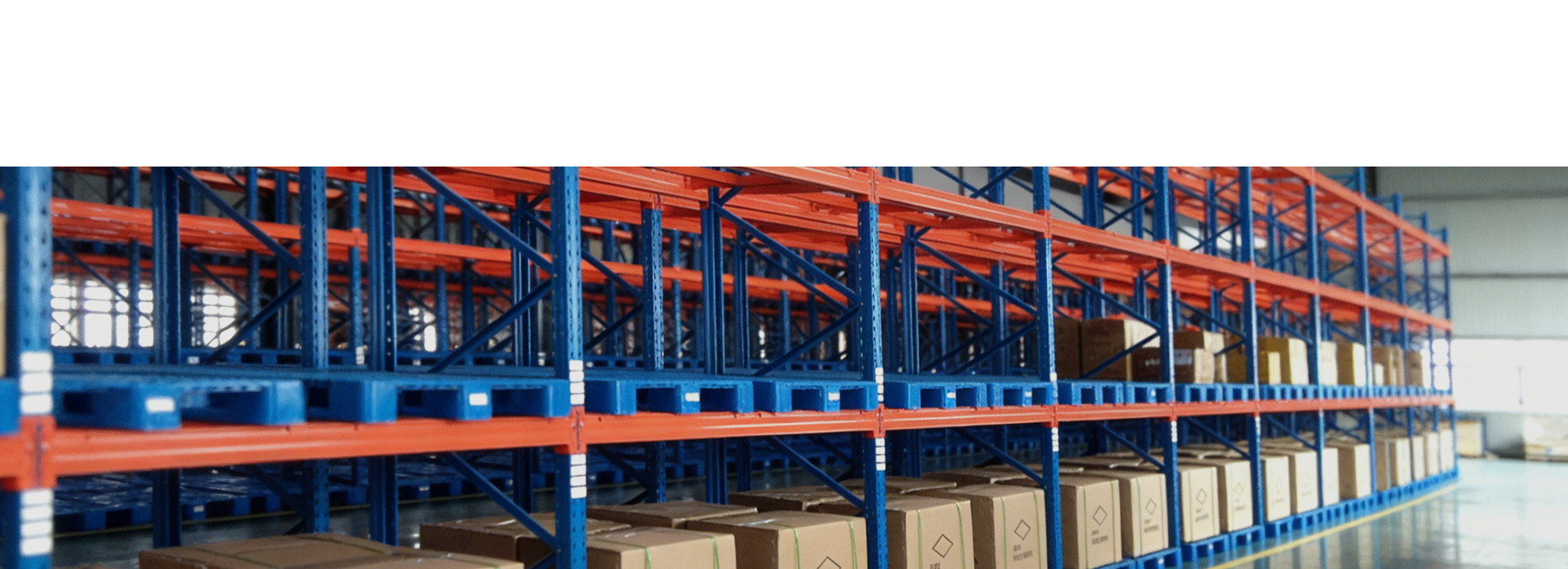
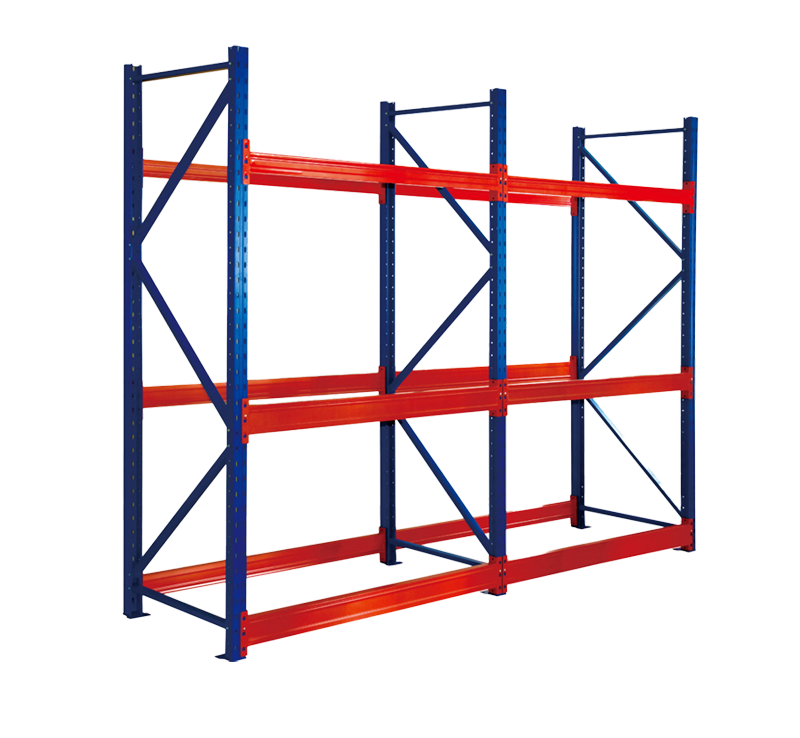
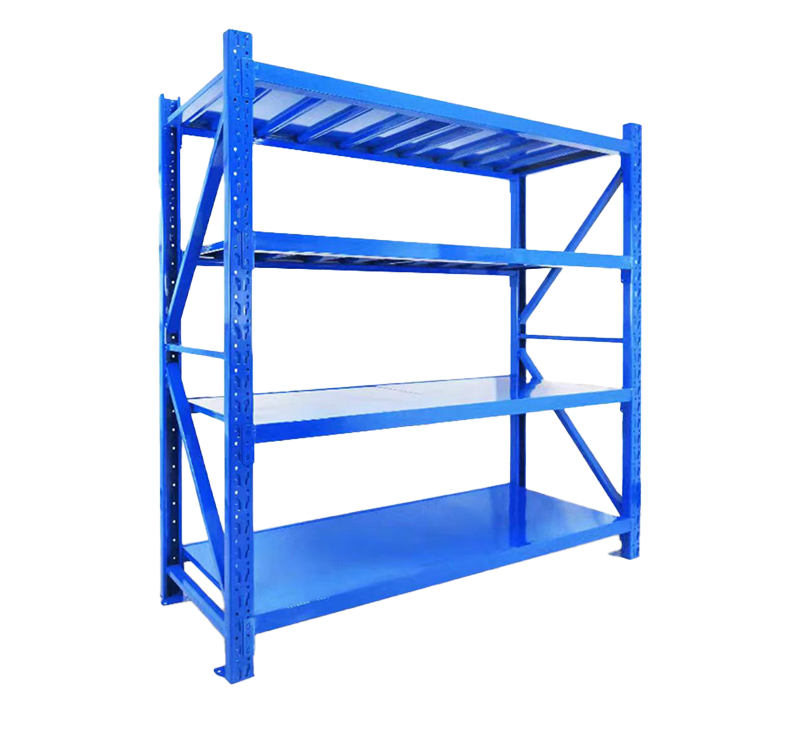
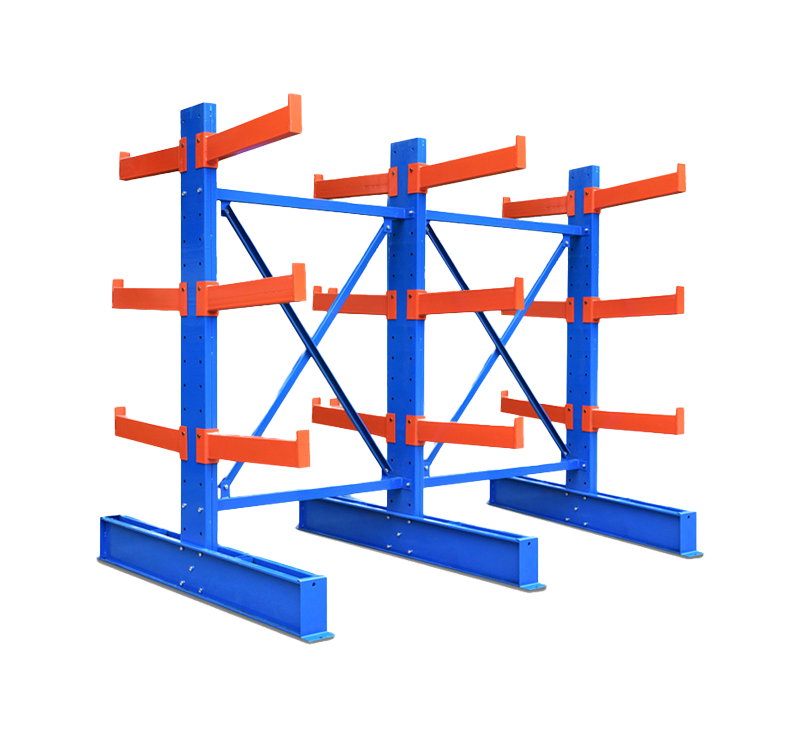
The company behind the tote operates across several related product categories, including handling equipment, storage containers, packaging materials, and warehouse racking. This broader capability is valuable for customers developing complete warehouse or factory-storage systems.
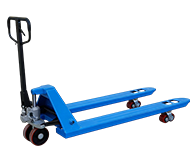
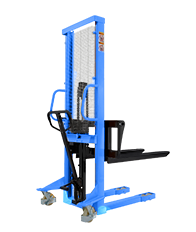
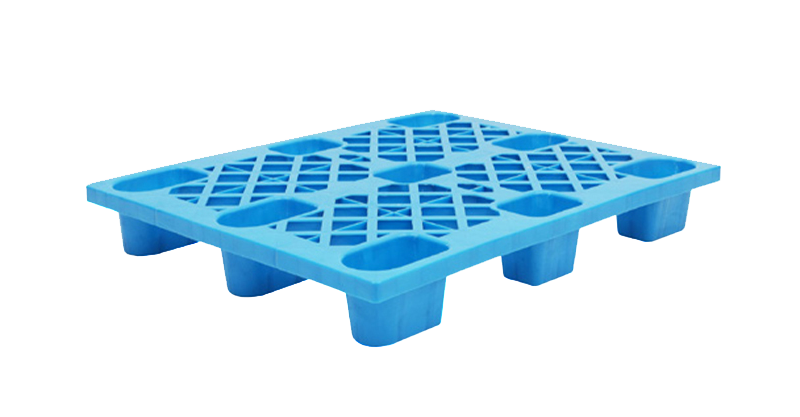
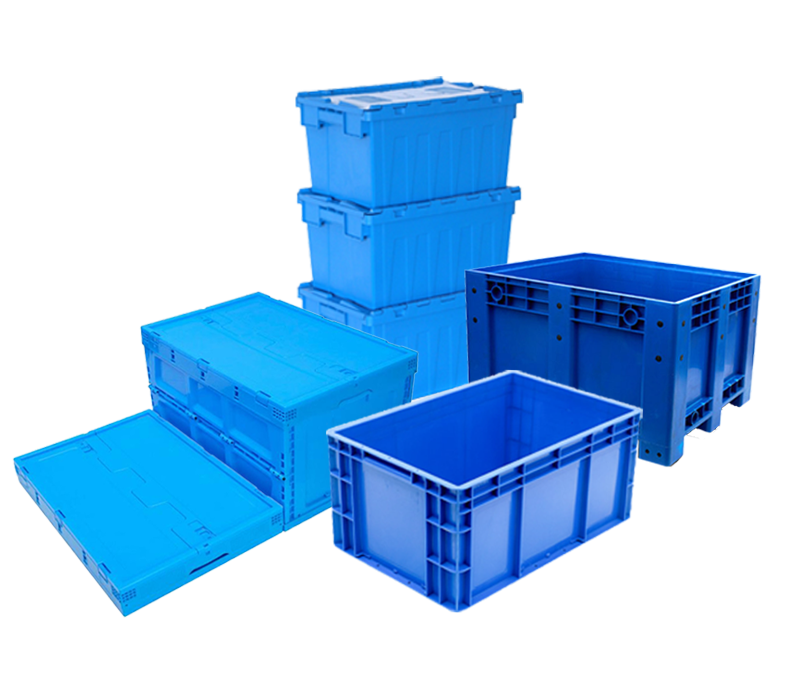
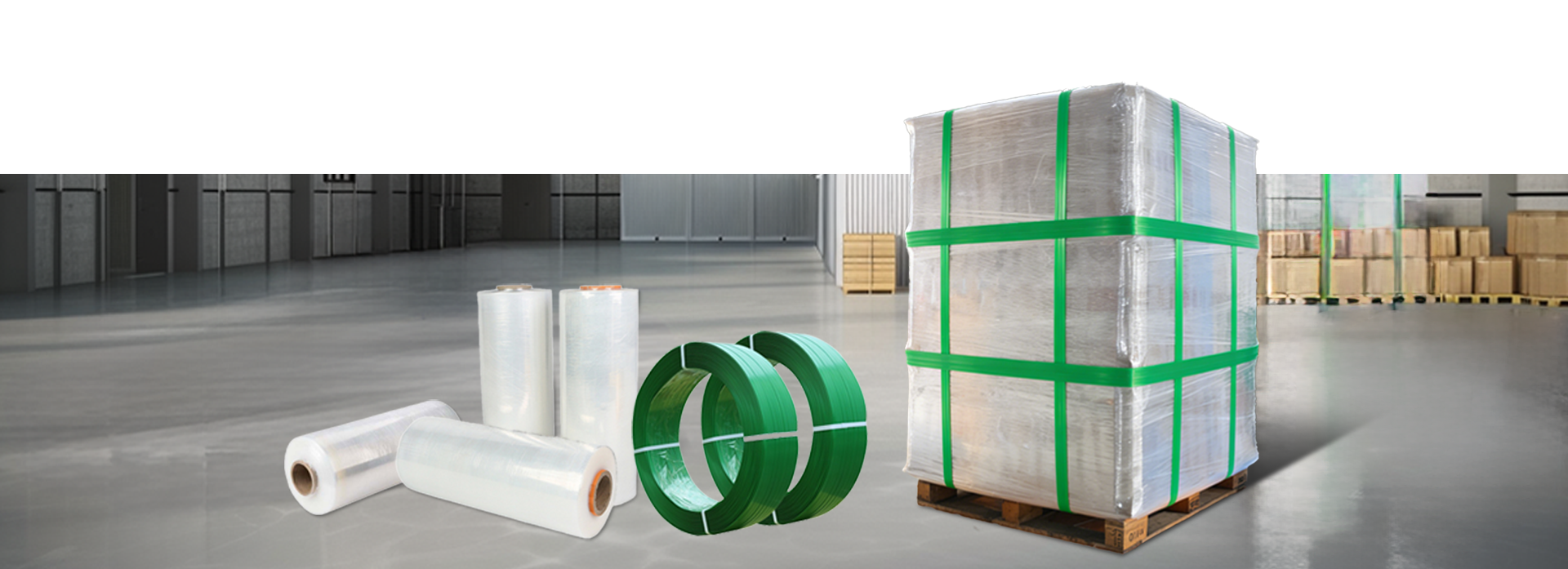
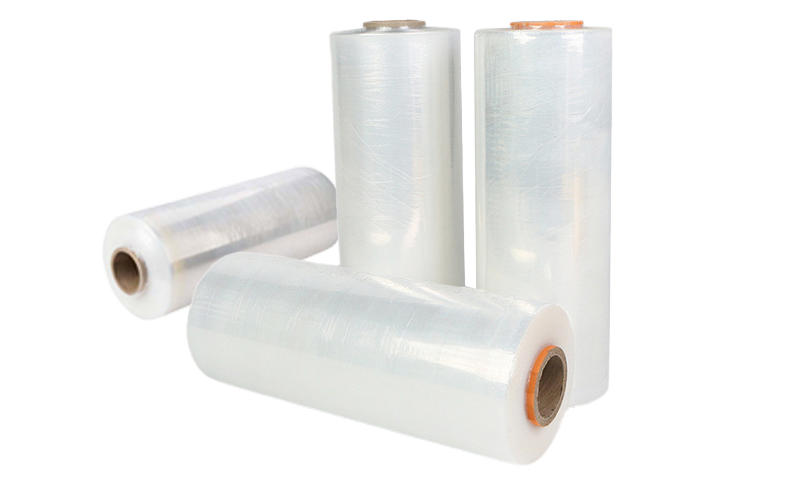
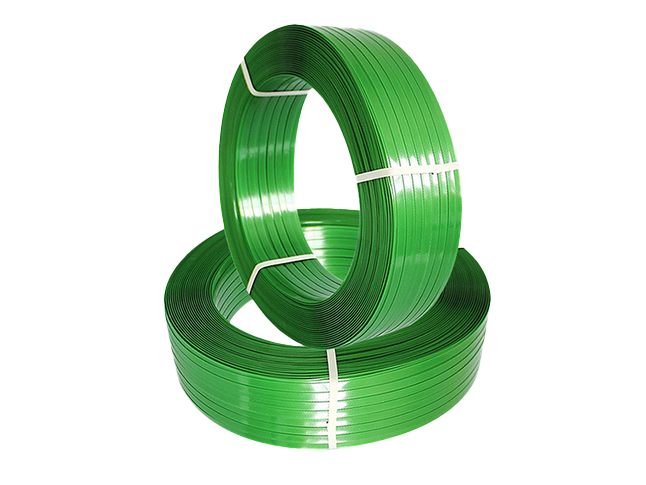
A customer may require plastic totes together with pallet trucks, stackers, plastic pallets, stretch film, packing strapping, and racking. Working with a supplier familiar with these connected product groups can simplify sourcing and improve coordination. Storage containers must work within a larger material-flow system, and decisions about shelving, transport, packaging, and handling equipment are often interdependent.
The company’s stated focus on one-stop warehousing and logistics solutions allows it to support different operating scenarios, including manufacturing, e-commerce logistics, distribution, retail, and general warehousing. This experience can help customers select suitable container quantities, storage methods, handling equipment, and replenishment processes.
For international buyers, a broad product portfolio may also simplify communication and purchasing administration. Instead of coordinating many unrelated vendors, customers can explore compatible products through one supply relationship. Product customization and multiple color options are also identified in the supplied information, allowing organizations to use color coding for departments, inventory status, product families, or safety procedures.
Color Coding and Customization Potential
Color coding is a simple but effective method for improving warehouse communication. Different colors can represent different production lines, storage zones, inventory statuses, or customer orders. For example, one color may be assigned to maintenance parts, another to quality-control materials, and another to production components.
Color coding is most effective when supported by clear operating rules. The tote’s physical color should be combined with labels, location codes, barcodes, or other identification methods where necessary. Even so, visual differentiation can make routine work faster and reduce the chance of placing a container in the wrong area.
The supplied company information indicates that multiple colors and customization support are available. Exact customization options should be confirmed for each order, including minimum quantities, color availability, printing, labeling, packaging, and delivery requirements.
Customization may be useful for businesses implementing a standardized parts-management program across multiple facilities. A consistent tote color and identification format can help employees follow the same procedures at every site.
6-Compartment Dividable Plastic Tote for Workshop Parts
Space Efficiency and Cost Reduction
A well-organized storage system can reduce costs in several ways. The six-compartment tote helps lower labor costs by making parts easier to locate and pick. It can reduce space costs by allowing vertical stacking and by consolidating multiple small containers into one unit. It can also reduce replacement costs through repeated reuse.
When workers spend less time searching for components, the facility gains productive capacity without necessarily adding labor. Faster picking can improve order throughput, support smoother production, and reduce delays caused by missing or misplaced parts.
Better organization may also reduce inventory errors. When parts are stored in defined compartments and locations, incorrect counting and accidental mixing become less likely. Improved accuracy can prevent unnecessary reordering, emergency purchases, and production interruptions.
Reusable totes may also support sustainability goals by reducing dependence on disposable cardboard, plastic bags, and single-use packaging. The environmental benefit depends on service life, cleaning practices, transport distances, and end-of-life management, but repeated use is generally an important factor in reducing packaging turnover.
Ergonomic Benefits for Workers
Storage equipment affects the physical workload of employees. A compact tote that contains several related components can reduce repeated trips and unnecessary reaching. Its moderate size and weight make it practical for manual movement between shelves, carts, and workstations.
Clear internal separation can also reduce the need to sort parts by hand. Searching through a deep, mixed container often requires repeated bending, lifting, and handling. Divided storage allows workers to reach directly into a known compartment.
Ergonomic performance depends on how the tote is loaded and positioned. Heavier parts should be stored at appropriate heights, and stacked containers should be handled according to site safety procedures. The product is a storage aid, not a substitute for proper manual-handling training or safe stacking practices.
Implementation in a Warehouse or Workshop
Successful use begins with a clear storage plan. Before ordering totes, the user should identify the parts to be stored, the quantity required, the desired compartment assignments, and the locations where the containers will be used.
Next, users should establish a labeling method. Labels may include part numbers, descriptions, quantities, reorder points, work-order references, or barcode information. Consistent labeling makes the compartments useful to every employee rather than only to the person who arranged them.
The next step is to define storage locations. Totes can be assigned to shelves, cabinets, workstations, carts, or floor zones. Each location should be identified so that an empty or misplaced tote can be returned easily.
Facilities should also establish replenishment rules. A compartment may be refilled when its inventory reaches a minimum level, when a kanban signal is received, or according to a scheduled cycle count. Clear rules prevent the tote from becoming only a temporary container without a defined inventory function.
Finally, employees should receive simple instructions covering loading, stacking, cleaning, labeling, and return procedures. A standardized routine helps preserve the advantages of the product over time.
Cleaning and Maintenance Considerations
Reusable plastic totes should be inspected and cleaned according to the materials they carry. Dust, oil, metal shavings, packaging residue, and other contaminants should be removed before the tote is assigned to a different product group.
Polypropylene is suitable for many ordinary cleaning methods, but the cleaning agent should be compatible with both the tote and the stored components. Excessive heat, strong solvents, or abrasive tools may affect the surface or structure. Users should follow their internal safety procedures and confirm chemical compatibility when necessary.
Regular inspection can identify cracks, deformation, sharp edges, damaged dividers, or other conditions that may affect safe use. Damaged containers should be removed from service or evaluated according to the facility’s maintenance policy.
Clean, well-maintained totes also improve visual management. A consistent appearance makes labels easier to read and helps the storage area look organized and controlled.
Ordering and Specification Review
Before placing an order, buyers should confirm the required model, quantity, colors, delivery schedule, packaging method, and destination. The BG-362514-DT model is specified with external dimensions of 360 × 250 × 140 millimeters, internal dimensions of 320 × 220 × 130 millimeters, a weight of 0.82 kilograms, and six internal compartments.
Buyers should compare the internal compartment size with the actual parts to be stored. The listed internal compartment dimension is approximately 110 × 106 × 110 millimeters, but the shape and orientation of the component should also be considered. Parts with irregular profiles, handles, protrusions, or packaging may require additional clearance.
Customers should also determine whether the tote will be used in shelving, cabinets, conveyors, carts, pallets, or automated storage systems. The external size should be checked against all related equipment before purchase.
For larger projects, a sample evaluation may be useful. A trial can confirm compartment suitability, stacking behavior, labeling methods, cleaning requirements, and worker acceptance before full deployment.
Frequently Asked Questions
What is the BG-362514-DT tote designed for?
The BG-362514-DT is designed for organizing small parts, tools, components, fasteners, and workshop materials. It is suitable for manufacturing, warehousing, maintenance, logistics, assembly, and other environments where separated storage is needed.
How many compartments does the tote have?
The tote has six internal compartments. These sections can be used for different part numbers, sizes, work orders, production stages, or tool groups.
What material is used to manufacture the tote?
The product specification identifies polypropylene, or PP, as the primary material. The supplied manufacturing information also emphasizes controlled use of virgin polymer material and strict quality inspection procedures.
What are the external dimensions?
The external dimensions are 360 × 250 × 140 millimeters. These dimensions are suitable for shelves, workstations, carts, cabinets, and compact warehouse storage areas.
What are the internal dimensions?
The listed internal dimensions are 320 × 220 × 130 millimeters. The approximate internal compartment size is 110 × 106 × 110 millimeters.
Can the totes be stacked?
Yes. The tote has a stackable design. The supplied information states that it can be stacked to more than ten layers under appropriate conditions. Users should consider load weight, floor stability, container alignment, and workplace safety procedures when determining the permitted stacking height.
Is the tote resistant to moisture?
The polypropylene construction is designed to resist moisture and is suitable for many ordinary warehouse and workshop environments. Specific chemical or liquid applications should be evaluated before use.
Can the tote replace cardboard boxes?
For repeated internal storage and handling, the reusable plastic tote can provide advantages over cardboard, including better durability, improved stackability, and stronger resistance to moisture. Cardboard may still be appropriate for certain shipping or disposable packaging applications.
Can different colors be supplied?
The supplied company information indicates that multiple colors and customization support are available. Buyers should confirm available colors, minimum order quantities, labeling options, and production requirements for each project.
Can one tote be used for a complete maintenance kit?
Yes. The six compartments can be assigned to different spare parts, fasteners, tools, or accessories required for a particular repair or maintenance task. This allows the complete kit to be moved to the work area as one organized unit.
Is the tote suitable for automated systems?
The tote may be suitable for selected manual or semi-automated storage systems, but compatibility must be confirmed based on dimensions, load requirements, conveyor design, robotic handling, and identification methods. Buyers should provide system details for a technical review.
How should the tote be cleaned?
Cleaning should be based on the type of material stored and the facility’s procedures. Mild, compatible cleaning methods are generally preferred. Strong chemicals, excessive heat, and abrasive tools should be avoided unless compatibility has been confirmed.
How can the tote improve picking accuracy?
Each compartment provides a defined location for a particular item or item group. This reduces mixing and makes it easier for operators to visually confirm the selected part before use or shipment.
Who can provide further product information?
Product inquiries, quotations, customization questions, and delivery discussions can be directed to Yancheng Bingo Machinery Equipment Co., Ltd. through its sales department. Customers should include the required model, quantity, application, destination, and any special specifications.
Conclusion
The BG-362514-DT 6-compartment dividable plastic tote is a practical solution for organizing small parts and improving material flow in workshops, warehouses, factories, maintenance departments, and logistics operations. Its six-section configuration creates clear separation within one portable container, helping reduce search time, picking errors, unnecessary handling, and storage clutter.
The tote’s polypropylene construction provides a useful combination of durability, impact resistance, moisture resistance, chemical resistance, and manageable weight. Its compact 360 × 250 × 140 millimeter external format fits a broad range of storage environments, while its stackable design helps facilities use vertical space more effectively.
Compared with cardboard cartons, flexible bags, single large bins, and multiple loose containers, the product offers a balanced combination of reusability, organization, portability, and structural stability. It is especially valuable where components must remain separated but still move together through a production or warehouse process.
The manufacturing strengths described by the supplier further support the product’s industrial application. Controlled raw-material sourcing, virgin polymer use, standardized procedures, and inspection at multiple stages are intended to promote consistent product quality. The company’s broader experience with handling equipment, storage containers, packaging materials, and warehouse racking also enables customers to explore integrated logistics solutions.
For organizations seeking a simple and scalable way to improve parts management, the six-compartment dividable plastic tote can serve as a reliable foundation for visual organization, lean storage, kitting, replenishment, maintenance preparation, and internal logistics.
References
1. Product specification sheet for model BG-362514-DT, including dimensions, material, weight, and compartment information.
2. Industrial storage and material-handling principles concerning reusable containers, visual management, compartmentalized storage, and warehouse organization.
3. General technical references on polypropylene properties, including durability, moisture resistance, chemical resistance, and industrial processing applications.
4. Manufacturing quality-control practices covering raw-material inspection, standardized production procedures, dimensional checks, and finished-product evaluation.
5. Warehouse planning principles related to vertical storage, picking accuracy, replenishment systems, workstation organization, and reusable internal logistics packaging.
Product: 6-Compartment Dividable Plastic Tote for Workshop Parts


Copyright @ Yancheng Bingo Machinery Equipment Co., Ltd. All rights reserved Warehouse Logistics Equipment Manufacturer Pallet Truck Supplier
