 en
en  Español

76L HDPE Stackable Industrial Storage Crate for Warehouse Logistics
Efficient storage and reliable material handling are essential to modern warehouses, distribution centers, supermarkets, manufacturing facilities, and e-commerce fulfillment operations. As businesses manage larger product volumes, shorter delivery cycles, and increasingly demanding inventory requirements, storage containers must do more than simply hold goods. They must support safe transportation, maximize available space, withstand repeated use, promote operational visibility, and help reduce long-term handling costs.
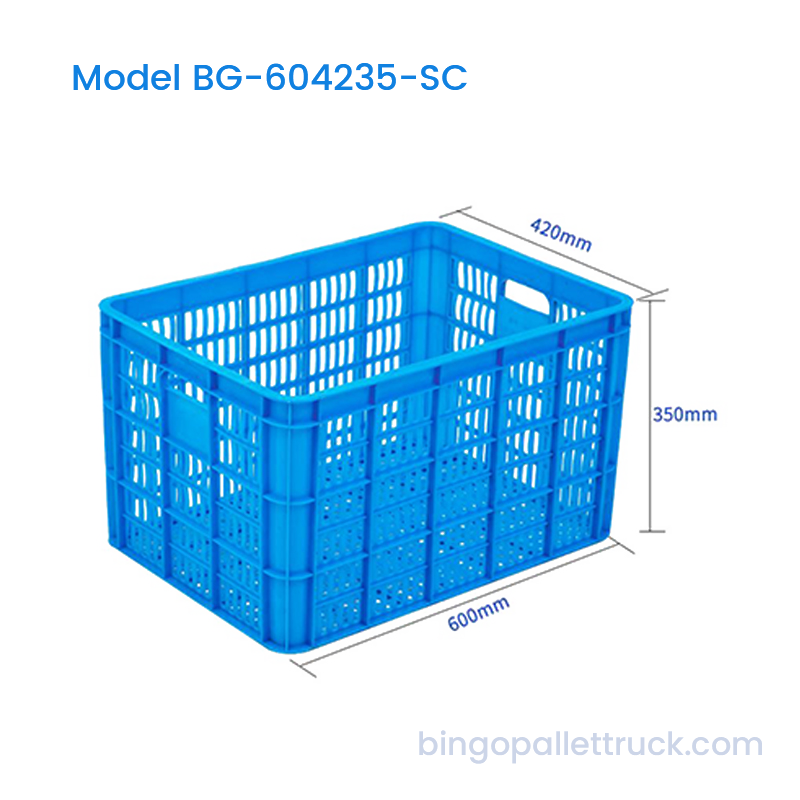
The BG-604235-SC 76L HDPE stackable industrial storage crate is designed to meet these requirements in one practical solution. With external dimensions of 600×420×350mm, internal dimensions of 570×400×335mm, a 76L capacity, and a lightweight net weight of 1.83kg, this crate provides a useful balance between storage volume, structural strength, portability, and space efficiency.
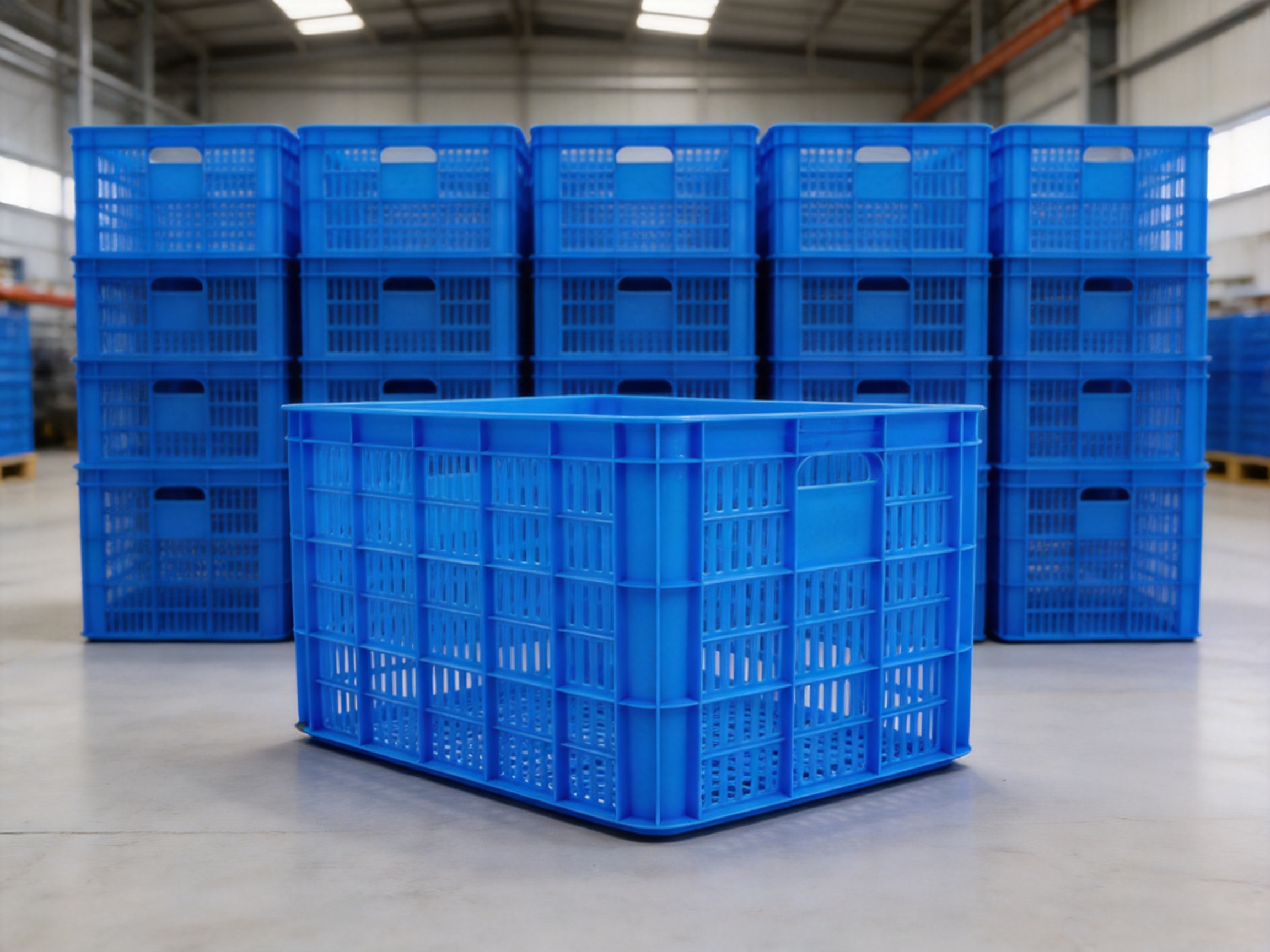
Manufactured from food-safe HDPE, the crate is suitable for a wide range of industrial and commercial applications. Its fully perforated mesh structure supports air circulation and product visibility, while its reinforced rib design helps improve load-bearing performance. The stackable construction allows operators to build stable vertical storage arrangements without using all available floor space.
For companies seeking a reusable alternative to disposable cartons, weak plastic bins, or poorly standardized storage containers, this model offers a durable and adaptable foundation for warehouse organization. It is particularly suitable for distribution centers, supermarkets, production facilities, agricultural supply chains, retail backrooms, and general logistics operations.
Content
- 1 Product Overview
- 2 Why HDPE Is a Suitable Material for Industrial Crates
- 3 Fully Perforated Mesh Design for Visibility and Ventilation
- 4 Reinforced Rib Construction and Load-Bearing Performance
- 5 Stackable Design for Better Warehouse Space Utilization
- 6 Advantages Compared with Conventional Cardboard Packaging
- 7 Advantages Compared with Low-Grade Plastic Bins
- 8 Applications Across Different Industries
- 9 Manufacturing Quality and Process Control
- 10 Strict Quality Control from Raw Material to Finished Product
- 11 Supplier Strengths and Integrated Logistics Expertise
- 12 Customization and Product Selection
- 13 Operational Benefits for Warehouse Managers
- 14 Safe and Effective Use
- 15 Maintenance and Service-Life Considerations
- 16 How the Crate Supports Sustainable Logistics
- 17 Purchasing Guidance for International Buyers
- 18 Frequently Asked Questions
- 18.1 What is the capacity of the BG-604235-SC crate?
- 18.2 What material is used to manufacture the crate?
- 18.3 Is the crate suitable for food-related applications?
- 18.4 Can the crates be stacked?
- 18.5 Does the mesh structure provide ventilation?
- 18.6 How much does an empty crate weigh?
- 18.7 What are the main advantages over cardboard cartons?
- 18.8 Can different colors be supplied?
- 18.9 Can the crate be customized?
- 18.10 Is the crate suitable for outdoor use?
- 18.11 Can the crate be used with pallets and warehouse equipment?
- 18.12 How should the crate be cleaned?
- 18.13 What industries can use this crate?
- 18.14 What makes the supplier suitable for complete logistics projects?
- 19 Conclusion
- 20 References
- 21 Product: 76L HDPE Stackable Industrial Storage Crate for Warehouse
Product Overview
The BG-604235-SC is a large-format stackable plastic crate developed for professional storage and transportation. Its dimensions are compatible with many common warehouse workflows, including pallet-based movement, manual picking, sorting, replenishment, and temporary staging.
The 600mm length and 420mm width provide a broad footprint, while the 350mm height creates sufficient volume for many categories of products. The usable internal dimensions of 570×400×335mm allow goods to be loaded efficiently while retaining wall thickness and structural reinforcement around the outside of the crate.
With a rated capacity of 76L, the crate can accommodate a considerable quantity of packaged, component, retail, or industrial goods. Its open mesh construction makes it easier for workers to identify contents without opening every container. This can help reduce picking time, improve inventory visibility, and simplify inspection processes.
The crate weighs only 1.83kg, making it practical for frequent manual handling. Its relatively low tare weight is especially valuable in operations where workers repeatedly lift, move, stack, and unstack containers throughout the day. At the same time, the use of HDPE and reinforced structural ribs provides a stronger alternative to lightweight containers that deform easily under normal warehouse use.
| Model | BG-604235-SC |
| Product Type | Stackable plastic crate |
| Material | HDPE |
| External Dimensions | 600×420×350mm |
| Internal Dimensions | 570×400×335mm |
| Capacity | 76L |
| Weight | 1.83kg |
| Structure | Fully perforated mesh body with reinforced ribs |
| Primary Function | Storage, picking, handling, and transportation |
| Design Feature | Stackable construction |
Why HDPE Is a Suitable Material for Industrial Crates
High-density polyethylene is widely used in professional storage and logistics applications because it offers a useful combination of strength, impact resistance, chemical stability, moisture resistance, and processing flexibility. These characteristics make HDPE well suited to products that must endure repeated handling in demanding environments.
Unlike many paper-based containers, an HDPE crate does not lose its basic structure when exposed to ordinary warehouse moisture, condensation, or occasional splashes. This makes it more reliable in areas where cardboard packaging may soften, tear, or collapse. The material is also easier to clean, helping businesses maintain a more orderly and hygienic working environment.
HDPE has a relatively high strength-to-weight ratio. This allows the manufacturer to produce a crate that remains light enough for manual handling while providing better rigidity than thin or poorly supported plastic containers. The 1.83kg weight of this model is therefore an important operational advantage rather than merely a specification detail.
For businesses with returnable transport systems, durability is directly connected to cost efficiency. A reusable crate can complete many storage and transportation cycles, reducing the need to repeatedly purchase disposable packaging. The actual service life will depend on load conditions, handling methods, temperature, cleaning practices, and storage environment, but a well-designed HDPE container is generally suited to repeated professional use.
The food-safe material specification also expands the possible application range. Depending on the specific goods, local regulations, cleaning procedures, and customer requirements, the crate may be considered for food-related logistics, grocery distribution, agricultural products, and other applications where material selection is important. Users should always confirm the suitability of the container for their exact product and regulatory environment.
Fully Perforated Mesh Design for Visibility and Ventilation
One of the most important features of the BG-604235-SC is its fully perforated mesh structure. Instead of using solid walls throughout the body, the crate incorporates openings that support ventilation and allow operators to see more of the stored contents.
Air circulation can be valuable when the crate is used for products that require ventilation during temporary storage or transportation. Improved airflow may help reduce the accumulation of heat and moisture inside the container, depending on the goods, surrounding conditions, and stacking arrangement. This makes the design particularly useful for certain agricultural, grocery, food distribution, and general merchandise applications.
Visibility is another significant advantage. Workers can often identify products, colors, labels, or general contents through the openings without removing the crate from a stack. This can support faster stock checks and help reduce unnecessary handling. In a busy distribution center, even small improvements in identification speed can contribute to higher productivity over a full working day.
Perforated walls can also reduce the amount of plastic material used in comparison with a fully solid equivalent of similar dimensions. This contributes to the product’s low tare weight while maintaining a practical structural form. The mesh pattern must be designed carefully, however, because the openings need to balance airflow and visibility with wall strength and product protection.
The openings are most suitable for goods that do not require complete enclosure against dust, liquid, or small external particles. Where maximum containment is necessary, businesses may prefer solid-wall storage containers or use suitable liners and inner packaging. The flexible nature of the crate design allows it to serve as one component within a broader packaging system.
76L HDPE Stackable Industrial Storage Crate for Warehouse
Reinforced Rib Construction and Load-Bearing Performance
A professional storage crate must remain stable not only when empty but also when loaded, moved, stacked, and subjected to repeated handling. The BG-604235-SC uses reinforced ribs to improve rigidity across key areas of the structure.
Ribs function as strengthening elements that help distribute loads and reduce unnecessary flexing of the walls and base. When a crate is stacked, the forces created by the containers above must be transferred through suitable structural zones rather than concentrated in thin unsupported sections. A reinforced design helps the crate maintain its shape more effectively during normal storage operations.
Structural reinforcement is also beneficial during manual movement. Crates may be lifted from different sides, placed on conveyors, moved across warehouse floors, or handled with pallet trucks and other equipment. Reinforced edges and walls help the container tolerate these routine activities more reliably than a lightweight box with minimal structural support.
The actual maximum safe load and stacking height depend on the goods, load distribution, operating temperature, stacking method, floor conditions, and other factors. Buyers should obtain application-specific load guidance before using the crate in a high-load or high-stack environment. Nevertheless, the combination of HDPE material, a stable footprint, and ribbed construction is designed to support demanding storage and logistics work.
Another advantage of rib reinforcement is improved dimensional stability. Containers that bend or twist can create problems during stacking, picking, and transportation. An unstable stack may occupy more space, become difficult to access, or increase the risk of product damage. A rigid crate helps operators create more consistent storage rows and more predictable handling processes.
Stackable Design for Better Warehouse Space Utilization
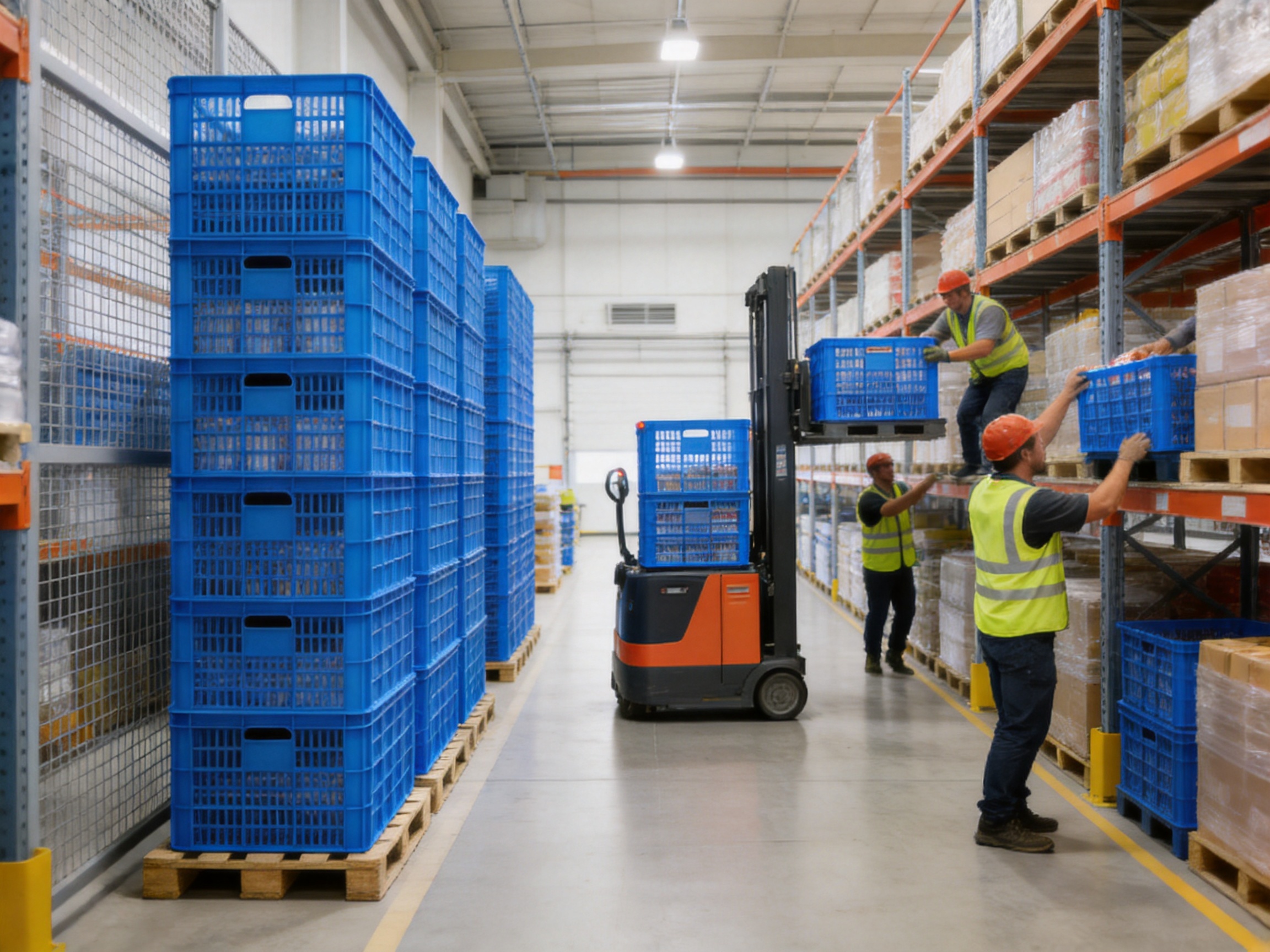
Floor space is one of the most valuable resources in a warehouse. Rent, energy, labor, and equipment costs are all influenced by how effectively the facility uses its available area. The stackable construction of the BG-604235-SC allows businesses to use vertical space and store more goods within the same floor footprint.
Vertical stacking can be useful in reserve storage, temporary staging areas, retail backrooms, production lines, and distribution centers. Instead of placing every container side by side, operators can create organized columns that increase storage density. This may help reduce clutter and leave more floor area available for aisles, workstations, conveyors, or additional inventory.
Stackable crates can also improve workplace organization. Standardized dimensions make it easier to establish repeatable storage layouts, assign locations, and separate product categories. When each crate has a consistent footprint, warehouse staff can plan shelving, pallet loading, and floor marking more effectively.
Stacking also supports return logistics. Empty crates can be gathered and stacked in a compact arrangement, reducing the space required for reusable packaging when it is not filled. This can be particularly useful for distribution routes where containers move between suppliers, warehouses, stores, and production sites.
Operators should ensure that stacks are placed on stable, level surfaces and that heavier goods are positioned appropriately. The container should not be overloaded, and workers should follow internal safety procedures when building or dismantling stacks. Proper use is essential to obtain the full benefit of the stackable design.
Advantages Compared with Conventional Cardboard Packaging
Cardboard cartons remain useful for many shipping applications, but they are not always ideal for repeated warehouse handling. Cardboard can be damaged by moisture, crushed by excessive stacking, torn during movement, or discarded after a single delivery cycle. In contrast, a reusable HDPE crate is designed for recurring storage and transport.
The plastic crate provides a more consistent shape during repeated use. Its dimensions remain standardized, allowing it to be integrated into organized storage systems. Cardboard cartons may vary in condition as they age, making it harder to maintain neat stacks or dependable handling routines.
The mesh design also creates an advantage over opaque cartons when visual identification is important. Staff can often inspect the general contents without opening a box, while the crate’s rigid structure remains suitable for repeated access. This can reduce the time spent opening, resealing, labeling, and replacing disposable packaging.
From a sustainability perspective, reuse can reduce the number of single-use cartons consumed over time. The environmental benefit depends on the crate’s actual service life, cleaning requirements, transportation distances, and eventual recycling route. However, a durable returnable container gives organizations the opportunity to establish a more circular packaging process than a system based entirely on disposable materials.
Advantages Compared with Low-Grade Plastic Bins
Not all plastic storage containers offer the same level of industrial performance. Low-grade bins may have thin walls, weak corners, inconsistent dimensions, or poor resistance to impact. They may appear inexpensive at the time of purchase but create higher replacement costs if they deform or crack under routine use.
The BG-604235-SC is designed as a professional logistics crate rather than a basic household storage box. Its reinforced rib structure, standardized dimensions, stackable form, and high-density material are intended to support warehouse workflows. These features can provide greater value for businesses that need containers to move continuously through storage and distribution processes.
A properly designed industrial crate can also improve staff confidence and handling consistency. When workers know that containers are stable and easy to stack, they can follow more predictable procedures. This contributes to better space planning and may reduce unnecessary manual adjustments.
The 76L capacity offers a practical middle ground. Smaller bins may require too many handling units, increasing picking and movement time. Extremely large containers may become heavy when full and difficult to handle manually. This model provides substantial volume while retaining a relatively low empty weight, allowing businesses to select a container size that fits their operational needs.
Applications Across Different Industries
Distribution Centers
Distribution centers require containers that can support receiving, sorting, storage, order assembly, and dispatch. The crate’s large capacity and stackable footprint make it suitable for consolidating products during these stages. The perforated walls allow workers to identify contents and support airflow while goods are temporarily staged.
Supermarket and Retail Logistics
Retail operations frequently move products between central warehouses, stores, stockrooms, and sales floors. A reusable crate can help standardize these movements and reduce dependence on disposable cartons. Its dimensions are suitable for handling a wide range of grocery, household, and general merchandise items, subject to product size and packaging requirements.
Manufacturing Facilities
Manufacturers often need to move components, work-in-process goods, tools, and finished products between production stations. A stackable crate can provide a clear separation between materials and help create orderly point-of-use storage. The mesh structure allows operators to recognize parts quickly, while the durable HDPE body is suitable for repeated internal movement.
E-Commerce Fulfillment
E-commerce warehouses depend on fast picking and replenishment. Visible containers can simplify product identification, and standardized crates can help define storage zones. The 76L volume is useful for larger stock units, order consolidation, return handling, or temporary staging between picking and dispatch.
Agricultural and Fresh-Product Supply Chains
Ventilation is an important consideration for certain agricultural and fresh-product applications. The perforated design allows air to circulate around stored items, although users must evaluate product sensitivity, hygiene procedures, temperature conditions, and local food-handling requirements before deployment.
Automotive and Engineering Components
Workshops and engineering facilities often need containers for parts, fasteners, tools, and maintenance materials. A rigid crate can help prevent scattered components and support visual control at workstations. Users should consider inner partitions or protective liners when storing small, delicate, or easily scratched items.
Manufacturing Quality and Process Control
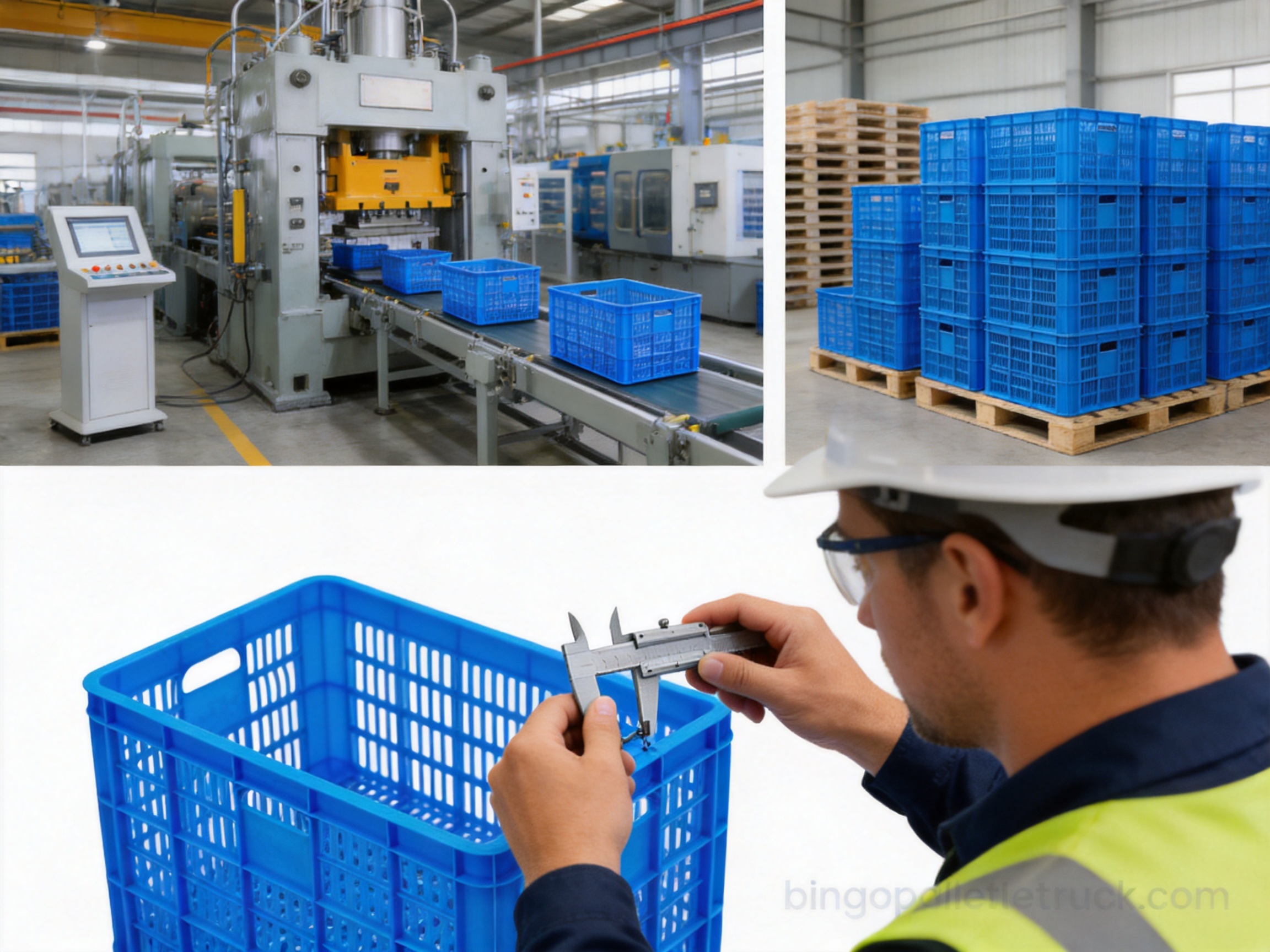
Product performance begins with manufacturing discipline. A high-quality industrial crate depends on more than the choice of polymer. Material preparation, mold design, injection conditions, cooling, dimensional control, trimming, inspection, and packaging all influence the final product.
The manufacturer applies standardized production processes intended to deliver consistent products across different production batches. Standardization is especially important for stackable crates because even small variations in dimensions or wall geometry can affect how securely containers fit together.
During raw material preparation, the selected polymer must be managed carefully to support consistent molding performance. For this product, the stated material is HDPE. The company’s broader production information also refers to the use of virgin high-density plastic materials in its manufacturing system. Material selection and batch control help support the desired strength, appearance, and dimensional stability of the finished crate.
Injection molding requires controlled temperature, pressure, filling speed, and cooling time. If these parameters are not managed properly, the product may experience warping, incomplete filling, sink marks, weak weld areas, or dimensional deviations. A structured process helps reduce these risks and improves consistency between individual crates.
Mold design is equally important. The mold must reproduce the mesh openings, reinforced ribs, corners, stacking interfaces, and base structure accurately. It must also allow the molded part to be released without excessive stress. Proper gate placement and cooling-channel design can contribute to a more balanced product with fewer deformation issues.
After molding, finished crates can be checked for surface quality, visible defects, dimensions, weight, structural integrity, and general appearance. Inspection at this stage helps identify problems before products are packed and shipped. A disciplined inspection system protects both the buyer’s investment and the manufacturer’s reputation.
Strict Quality Control from Raw Material to Finished Product
Quality control is most effective when it is performed throughout the production process rather than only at the end. The company describes a control approach that begins with raw material sourcing and continues through manufacturing and final inspection.
Incoming material checks help confirm that production inputs are suitable for the required application. Process checks can monitor molding conditions and identify deviations before a large quantity of products is affected. Final checks can then verify that the finished crates meet the required specifications and appearance standards.
For a logistics crate, useful quality-control points may include external dimensions, internal dimensions, net weight, wall formation, mesh opening consistency, rib definition, corner condition, base flatness, and stackability. These checks help ensure that the product performs as expected when integrated into warehouse operations.
Quality control also supports order consistency. Buyers often require multiple shipments over time, and variations between batches can create problems if containers no longer stack or fit in the same storage system. Standardized production and documented inspection procedures help reduce these risks.
The company’s emphasis on quality-first manufacturing and standardized processes reflects the needs of professional customers. Industrial buyers generally require more than a visually acceptable product. They need dependable dimensions, repeatable performance, responsive communication, and the ability to support ongoing supply programs.
Supplier Strengths and Integrated Logistics Expertise
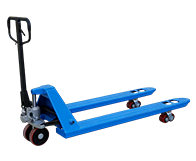
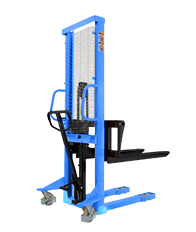
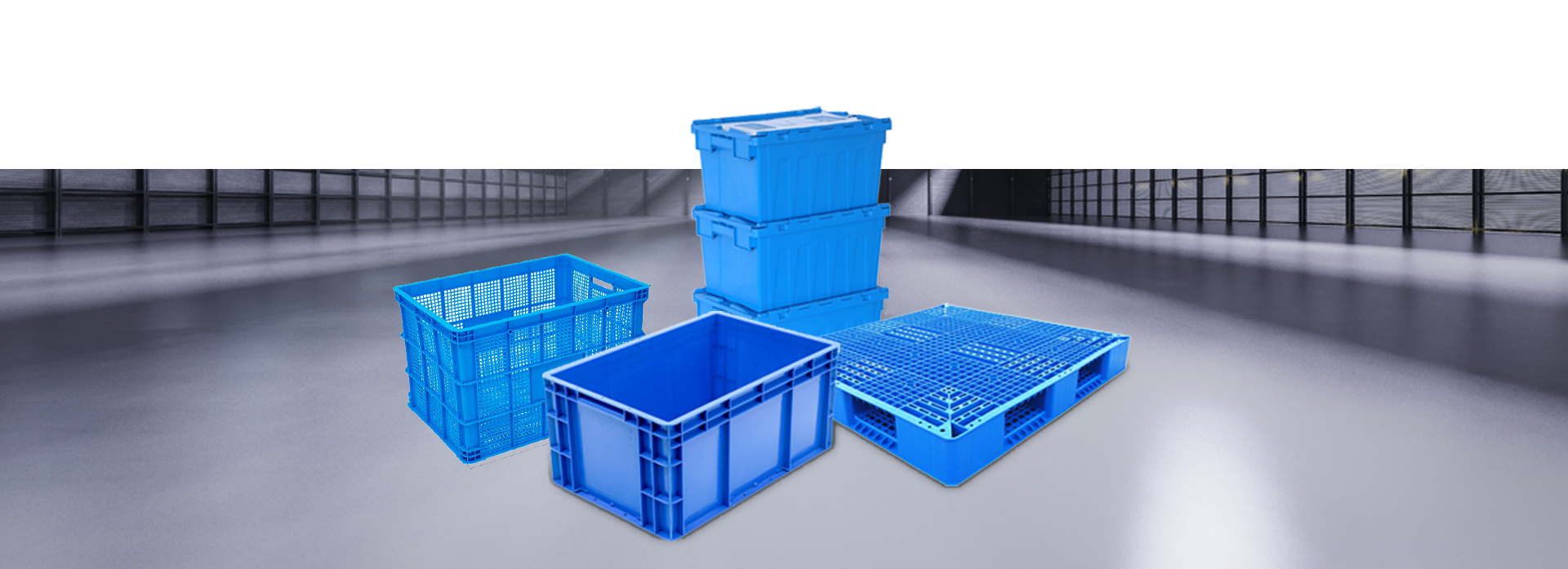
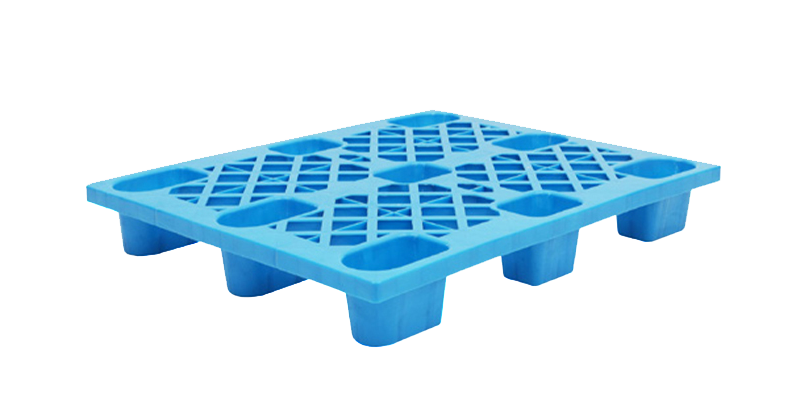
Yancheng Bingo Machinery Equipment Co., Ltd. operates as a supplier of warehousing, logistics, storage, packaging, and material-handling equipment. Its product scope includes manual and electric pallet trucks, stackers, plastic pallets, plastic totes, crates, bulk containers, stretch wrap, packing strapping, and warehouse racking.
This broad product range is valuable for customers developing complete logistics systems. Instead of purchasing storage crates from one source, handling equipment from another, and warehouse infrastructure from several additional suppliers, buyers can discuss multiple requirements with a supplier that understands the relationship between these product categories.
A crate is rarely used in isolation. It may be placed on a pallet, moved with a pallet truck, stored beside racking, loaded into a vehicle, or combined with packaging materials. A supplier with experience across these systems can provide more practical recommendations for container selection, warehouse organization, and material flow.
The company positions itself as a global partner for smart logistics and one-stop storage and material-handling solutions. Its focus on manufacturing, sales, and service allows it to support customers beyond the initial product quotation. This may include specification discussions, customization coordination, order planning, shipment preparation, and after-sales communication.
For international buyers, supplier reliability is particularly important. Clear specifications, stable production processes, stock availability, and efficient communication can help reduce purchasing uncertainty. The company indicates that selected products are available in stock and ready to ship, which may benefit customers working with urgent replenishment schedules. Availability should be confirmed for the required quantity, color, and delivery destination before ordering.
Customization and Product Selection
Different warehouses may require different colors, labeling systems, or product configurations. The supplied information indicates that multiple colors and full specifications are available, with customization possible for suitable orders.
Color coding can help separate product categories, identify warehouse zones, distinguish ownership, or support inventory control. For example, different colors may be assigned to incoming goods, quality inspection, returns, production components, or finished products. This visual system can complement barcode, RFID, labeling, and warehouse management procedures.
Customers considering customization should define their requirements clearly. Important factors may include color, quantity, logo marking, label area, packaging method, delivery schedule, and intended application. The feasibility of a custom feature depends on mold configuration, production volume, material compatibility, and technical requirements.
Even when a standard model is selected, buyers should confirm all dimensions and operating conditions before placing an order. Important questions include the maximum expected load, stacking height, lifting method, ambient temperature, cleaning process, product sensitivity, and whether the crate will be used indoors, outdoors, or in refrigerated conditions.
Operational Benefits for Warehouse Managers
Warehouse managers evaluate storage containers according to more than purchase price. They consider labor efficiency, floor-space utilization, product protection, maintenance, replacement frequency, and compatibility with existing systems. The BG-604235-SC addresses several of these factors through its combination of capacity, stackability, visibility, and low empty weight.
The crate can help simplify location planning because its dimensions are consistent and its structure supports stable stacking. Standardized containers are easier to count, arrange, and allocate across storage zones. They can also improve the appearance and orderliness of work areas, which is beneficial for both productivity and safety.
Its lightweight construction may reduce physical effort during frequent handling. Although the weight of loaded goods remains the main factor in lifting safety, reducing the tare weight prevents the container itself from adding unnecessary burden to workers or equipment.
Reusable crates can also support more predictable packaging costs. Disposable cartons must be continually purchased, stored, assembled, and discarded. A returnable crate system requires an initial investment and a method for retrieving and cleaning containers, but it can become more economical over repeated cycles.
Better visibility may reduce search time. When workers can see through the mesh walls, they may identify a product group without removing labels or opening a box. This is especially useful in fast-moving environments where many containers are accessed throughout the day.
Safe and Effective Use
To obtain the best performance from the crate, users should establish clear operating procedures. Crates should be loaded evenly, and goods should not protrude in a way that interferes with stacking or creates a hazard. Heavy items should be positioned carefully to maintain stability and protect the base.
Stacks should be placed on level, stable surfaces. Operators should avoid creating unstable columns or stacking containers beyond the recommended height. If the crate is used with shelving, conveyors, pallet trucks, or other equipment, the complete system should be checked for dimensional and load compatibility.
Before use, customers should inspect crates for damage caused during transportation or handling. Cracked walls, severely deformed bases, broken ribs, or damaged stacking points may affect safe performance. Damaged containers should be removed from service or evaluated according to the user’s internal safety policy.
Cleaning procedures should match the material and the stored goods. HDPE is generally compatible with routine cleaning methods, but users should confirm that detergents, disinfectants, water temperature, and drying procedures are suitable for their specific operation. Proper cleaning and storage can help extend the useful life of reusable containers.
Maintenance and Service-Life Considerations
Regular inspection is a simple way to protect a returnable crate program. Supervisors can check for cracks, excessive wear, deformation, damaged edges, and contamination during normal inventory cycles. Early identification of problems helps prevent damaged crates from entering high-volume workflows.
Crates should be stored in a way that prevents unnecessary exposure to extreme heat, sharp objects, and excessive impact. Although HDPE offers good practical durability, no plastic container is indestructible. Forklift contact, uncontrolled drops, severe overloading, and improper stacking can shorten service life.
Businesses may benefit from tracking the movement of reusable crates between locations. A basic count system can help identify losses and shortages, while barcode or RFID systems can provide more detailed information for larger operations. The crate’s consistent format makes it suitable for integration with such management methods when labels or identification devices are applied appropriately.
At the end of its useful life, the crate should be managed according to local waste and recycling requirements. Because it is made from a recyclable plastic material, organizations may be able to direct it into an appropriate recycling stream, subject to contamination, local facilities, and applicable regulations.
How the Crate Supports Sustainable Logistics
Sustainability in logistics involves the entire life cycle of a product, including material sourcing, manufacturing, transportation, use, cleaning, repair, reuse, and end-of-life management. A reusable industrial crate can contribute to more efficient resource use when it replaces a substantial number of disposable packaging units.
The crate’s lightweight structure may also help reduce empty-container transport weight compared with heavier alternatives. Its stackable form can improve vehicle and warehouse space utilization, particularly when empty crates are returned or stored. The actual transportation benefit depends on loading patterns and route planning.
Durability is central to the environmental value of a reusable product. A crate that completes many cycles spreads its manufacturing impact over a greater number of uses. Businesses should therefore select the correct size, train staff in proper handling, and maintain an effective return system.
Plastic products should not be considered automatically sustainable simply because they are reusable. Their benefits are realized when they are used repeatedly, managed responsibly, and handled through suitable recycling or disposal channels at the end of their service life. The BG-604235-SC provides the physical characteristics needed to support such a reusable logistics model.
Purchasing Guidance for International Buyers
Before ordering, buyers should prepare a clear technical requirement sheet. This should include the desired model, quantity, color, delivery location, packaging requirements, preferred shipping schedule, and intended application.
Load and stacking conditions should be discussed with the supplier. Buyers should explain whether the crates will be stacked on the warehouse floor, placed in racking, transported on pallets, used on conveyors, or handled manually. These details help the supplier confirm suitability and identify any additional requirements.
Customers should also clarify whether the crates will carry food products, wet goods, chemicals, sharp components, or fragile merchandise. The stated food-safe HDPE material is a useful starting point, but application-specific compliance may require additional confirmation.
Color and customization requirements should be addressed early because they may affect production scheduling and minimum order quantities. Buyers seeking logos, labels, or special packaging should request confirmation of the available methods and expected lead times.
For repeat purchasing programs, it is advisable to establish an agreed specification that includes dimensions, material, color reference, weight tolerance, packaging method, inspection requirements, and acceptance criteria. This helps maintain consistency across future orders.
Frequently Asked Questions
What is the capacity of the BG-604235-SC crate?
The crate has a nominal capacity of 76L. Its external dimensions are 600×420×350mm, while its internal dimensions are 570×400×335mm.
What material is used to manufacture the crate?
The product specification identifies HDPE, or high-density polyethylene, as the material. HDPE is commonly used for reusable industrial containers because of its strength, impact resistance, moisture resistance, and ease of cleaning.
The product is described as being made from food-safe HDPE. However, buyers should confirm suitability for their specific food products, cleaning procedures, temperature conditions, and local regulatory requirements before use.
Can the crates be stacked?
Yes. The BG-604235-SC features a stackable design intended to support vertical storage and more efficient use of warehouse floor space. Users should follow appropriate load and stacking guidelines.
Does the mesh structure provide ventilation?
Yes. The fully perforated mesh body allows air to circulate through the crate and provides visibility of the contents. The exact benefit will depend on the stored goods and surrounding environmental conditions.
How much does an empty crate weigh?
The stated product weight is 1.83kg. This low tare weight makes the crate easier to move manually than many heavier storage containers.
What are the main advantages over cardboard cartons?
The HDPE crate is reusable, moisture-resistant, dimensionally consistent, stackable, and easier to inspect through its mesh walls. It can reduce reliance on disposable cartons in repeated warehouse and distribution cycles.
Can different colors be supplied?
The product information indicates that multiple colors are available. Buyers should confirm available colors, minimum quantities, and production lead times with the supplier.
Can the crate be customized?
Customization may be available depending on the requested feature, order quantity, production process, and technical feasibility. Buyers should discuss color, labeling, logos, packaging, and other requirements before ordering.
Is the crate suitable for outdoor use?
The crate’s HDPE construction provides practical resistance to moisture, but suitability for outdoor use depends on exposure to sunlight, temperature changes, weather, contamination, and load conditions. Buyers should obtain application-specific guidance.
Can the crate be used with pallets and warehouse equipment?
Its standardized rectangular footprint makes it suitable for many pallet and warehouse workflows. Compatibility with a particular pallet, rack, conveyor, or material-handling device should be checked according to the dimensions and load requirements of the complete system.
How should the crate be cleaned?
Cleaning methods should be selected according to the stored products and the facility’s hygiene procedures. Users should confirm that detergents, disinfectants, water temperature, and drying conditions are appropriate for their operation.
What industries can use this crate?
Potential applications include distribution, supermarket logistics, manufacturing, e-commerce fulfillment, agricultural supply chains, retail storage, engineering, automotive parts handling, and general warehouse operations.
What makes the supplier suitable for complete logistics projects?
The supplier provides several product categories, including storage containers, plastic pallets, material-handling equipment, packaging materials, and warehouse racking. This broader portfolio allows customers to coordinate multiple logistics requirements through one experienced source.
Conclusion
The BG-604235-SC 76L HDPE stackable industrial storage crate is designed for businesses that need dependable, reusable, and space-efficient storage equipment. Its large usable capacity, relatively low weight, reinforced rib structure, fully perforated mesh body, and stackable design make it suitable for a wide range of warehouse and logistics applications.
Compared with disposable cartons and low-grade plastic bins, the crate offers stronger support for repeated handling, improved visibility, better ventilation, and more consistent stacking. These advantages can contribute to improved organization, reduced packaging waste, faster product identification, and more efficient use of warehouse space.
The company’s strengths extend beyond the product itself. Its standardized manufacturing procedures, material management, inspection controls, broad logistics product portfolio, customization capabilities, and focus on integrated storage and handling solutions provide valuable support for professional buyers.
For customers planning a new warehouse system, upgrading a returnable packaging program, or improving internal material flow, this crate represents a practical component of a more organized logistics operation. Correct load planning, safe stacking, regular inspection, proper cleaning, and responsible end-of-life management will help users obtain the greatest long-term value from the product.
References
1. Product specification sheet for model BG-604235-SC, including dimensions, capacity, material, and weight.
2. General technical information on high-density polyethylene used in reusable industrial containers.
3. Warehouse storage and material-handling principles concerning vertical space utilization and standardized container systems.
4. General guidance on reusable transport packaging, returnable logistics systems, and packaging life-cycle management.
5. Industrial injection-molding quality-control practices, including material inspection, process monitoring, dimensional verification, and finished-product assessment.
6. General workplace safety principles for manual handling, container stacking, warehouse organization, and material movement.
Product: 76L HDPE Stackable Industrial Storage Crate for Warehouse


Copyright @ Yancheng Bingo Machinery Equipment Co., Ltd. All rights reserved Warehouse Logistics Equipment Manufacturer Pallet Truck Supplier
