 en
 Español

56L HDPE Stackable Plastic Tote Box for Efficient Warehouse Logistics
Content
- 1 Product Overview
- 2 Durable HDPE Construction
- 3 Efficient Stackable Design
- 4 Advantages in Warehouse Operations
- 5 Benefits Compared with Conventional Alternatives
- 6 Material and Product Quality Control
- 7 Manufacturing and Supply-Chain Strengths
- 8 Applications in Food Logistics
- 9 Applications in Manufacturing and Parts Storage
- 10 Applications in Distribution and E-Commerce
- 11 Ergonomics and Daily Handling
- 12 Space Utilization and Warehouse Planning
- 13 Cleaning, Maintenance, and Service Life
- 14 Ordering and Customization Considerations
- 15 Why Choose an Integrated Logistics Equipment Supplier?
- 16 Recommended Operating Practices
- 17 Frequently Asked Questions
- 17.1 What is the capacity of the tote box?
- 17.2 What material is used to manufacture the product?
- 17.3 What are the external dimensions?
- 17.4 How much does one tote weigh?
- 17.5 Can the boxes be stacked?
- 17.6 Is the tote suitable for food logistics?
- 17.7 Can different colors be supplied?
- 17.8 Can the product be customized?
- 17.9 Is the product kept in stock?
- 17.10 What industries can use this tote?
- 17.11 Can the tote be used outdoors?
- 17.12 How should the tote be maintained?
- 18 Conclusion
- 19 References
- 20 Product: 56L HDPE Stackable Plastic Tote Box for Food Logistics
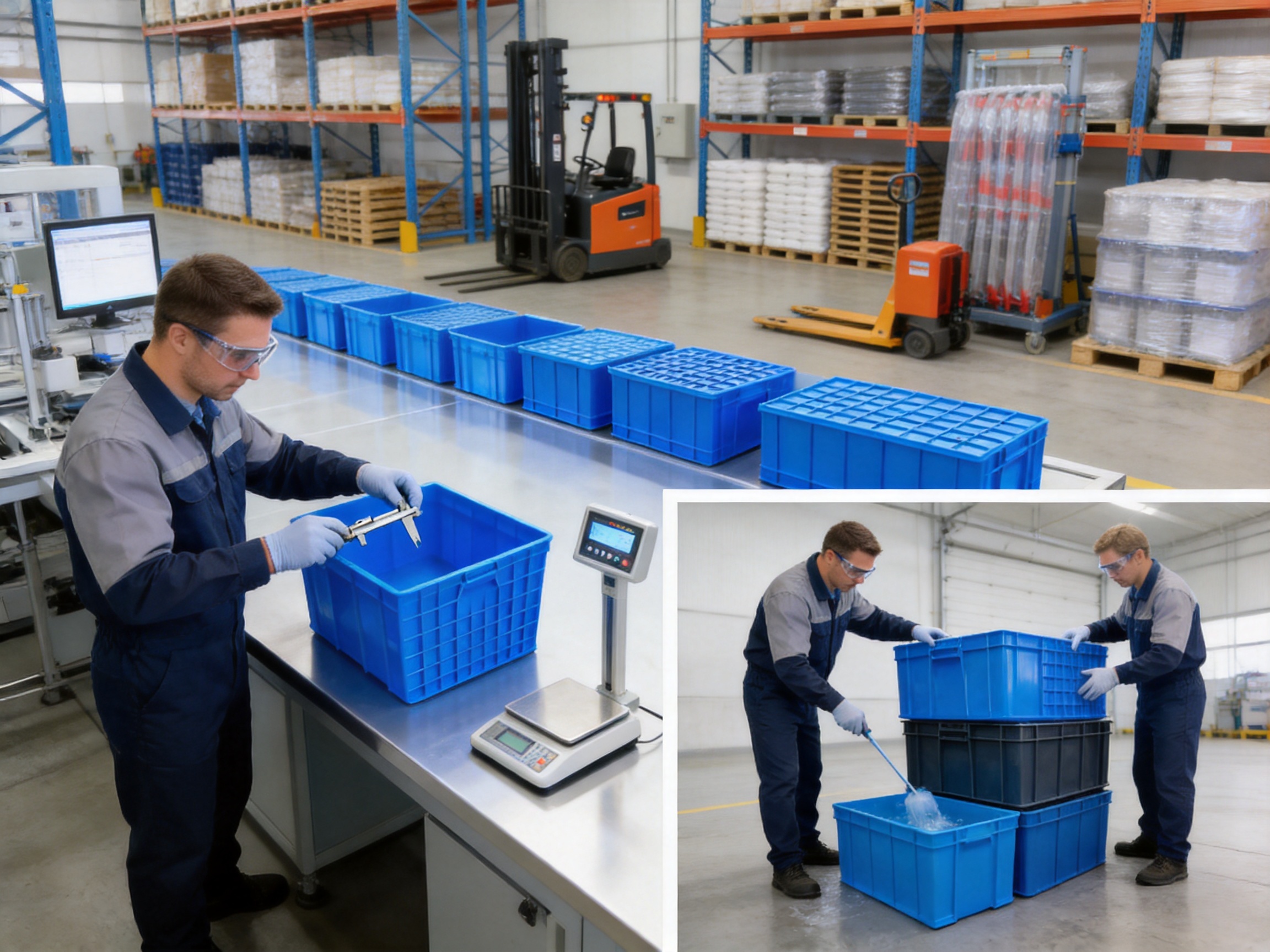
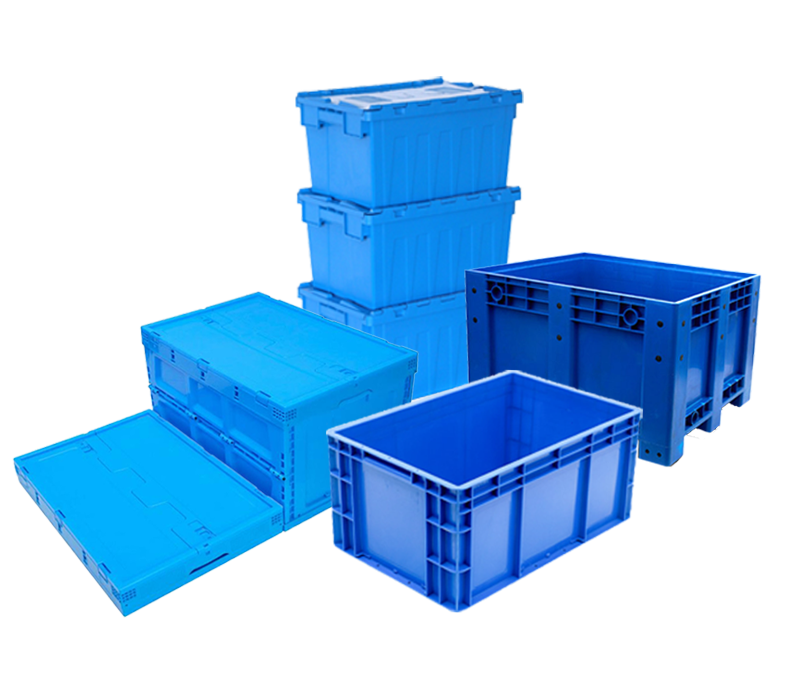
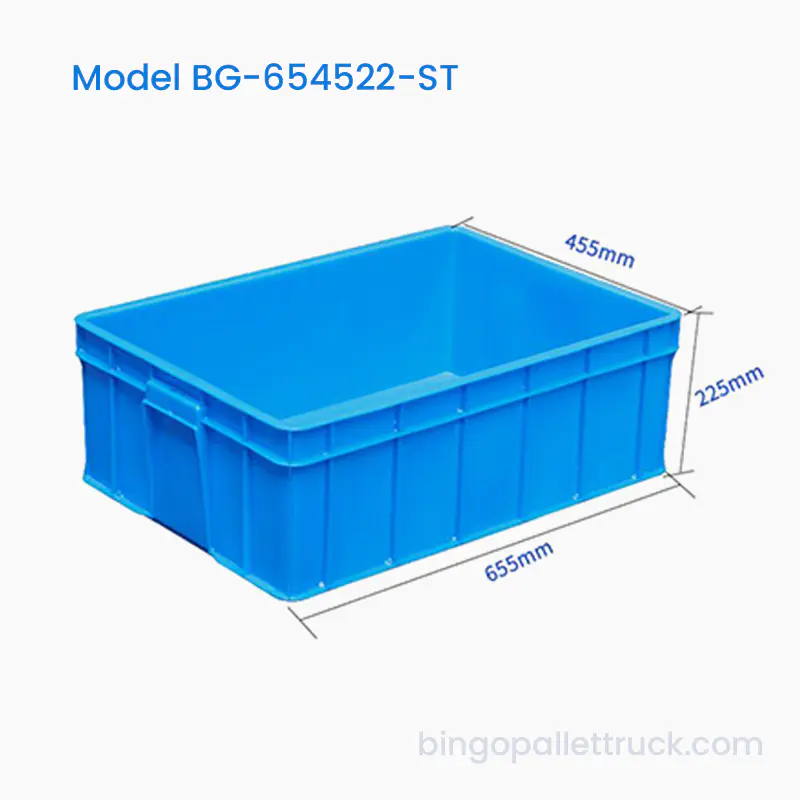
Modern warehousing and distribution operations depend on storage containers that can withstand repeated handling, support organized inventory management, and use available space efficiently. The 56L HDPE Stackable Plastic Tote Box, model BG-654522-ST, is designed to meet these requirements in industrial, commercial, and logistics environments. With external dimensions of 655×455×225mm, internal dimensions of 615×425×215mm, and a 56-liter capacity, it provides a practical balance between usable volume, structural strength, handling convenience, and storage efficiency.
Manufactured from durable high-density polyethylene, this stackable tote box is suitable for applications that require dependable performance over repeated storage and transportation cycles. Its reinforced design allows stable vertical stacking, helping warehouses make better use of floor and vertical space. The box is also compact enough for systematic placement on shelving, pallets, transport vehicles, picking stations, and production lines.
Unlike many lightweight containers intended only for occasional storage, this tote is developed for daily logistics activity. It is suitable for distribution centers, manufacturing facilities, e-commerce fulfillment operations, supermarket supply chains, parts storage, food logistics, and general warehouse organization. Its standardized dimensions and repeatable geometry make it easier to plan storage locations, arrange picking zones, and establish consistent material-flow processes.
The product is supplied by Yancheng Bingo Machinery Equipment Co., Ltd., a company focused on warehousing, material handling, storage containers, packaging materials, and warehouse racking solutions. Its broader product portfolio and integrated supply-chain capabilities support customers seeking coordinated equipment for storage and logistics operations rather than isolated products from multiple suppliers.
Product Overview
The BG-654522-ST is a stackable plastic tote box engineered for organized storage and transport. Its dimensions provide a relatively wide footprint and moderate height, making it suitable for products that need convenient access without excessive lifting depth. The box can be positioned on warehouse shelving, workbenches, pallets, picking carts, and other material-handling equipment.
The 56-liter capacity is large enough for many categories of inventory while remaining manageable for manual handling. The internal dimensions of 615×425×215mm offer useful space for packaged goods, components, tools, food-related logistics items, and other materials that benefit from protection against disorganized storage. The external dimensions of 655×455×225mm provide a consistent footprint for stacking and space planning.
| Item | Specification |
| Product type | Stackable plastic tote box |
| Model | BG-654522-ST |
| Material | HDPE |
| External dimensions | 655×455×225mm |
| Internal dimensions | 615×425×215mm |
| Capacity | 56L |
| Product weight | 2.2kg |
| Primary function | Storage, stacking, picking, and logistics transport |
The 2.2kg product weight reflects an important compromise between durability and handling efficiency. A container that is too light may deform under load or suffer premature damage, while an excessively heavy container increases labor requirements and transport costs. This tote is designed to provide a robust reusable solution without adding unnecessary empty weight to warehouse operations.
Durable HDPE Construction
High-density polyethylene is widely used in industrial storage products because it combines toughness, impact resistance, chemical resistance, and relatively low weight. For a reusable tote box, these properties are valuable because the container may be lifted, placed on shelves, stacked with other boxes, moved on carts, and loaded into transport vehicles many times during its working life.
The HDPE construction helps the tote maintain dependable performance under ordinary warehouse conditions. It is less vulnerable to the cracking and splintering associated with some rigid low-quality materials. Its molded structure also avoids many of the weak points found in assembled storage products, where screws, joints, or separate panels can loosen after repeated use.
In logistics environments, containers are often exposed to contact with pallets, shelving, conveyors, carts, vehicle floors, and other boxes. A durable plastic tote must tolerate this routine contact while retaining its shape. The BG-654522-ST is designed for this kind of repeated operational use, supporting a longer service life than disposable cardboard packaging or fragile household storage containers.
HDPE is also suitable for environments where moisture resistance is important. Unlike paper-based cartons, the plastic body does not absorb water in the same way and can be wiped or cleaned as part of routine handling procedures. This makes the tote useful in food logistics, production areas, warehouses, and distribution facilities where cleanliness and practical maintenance are operational priorities.
Efficient Stackable Design
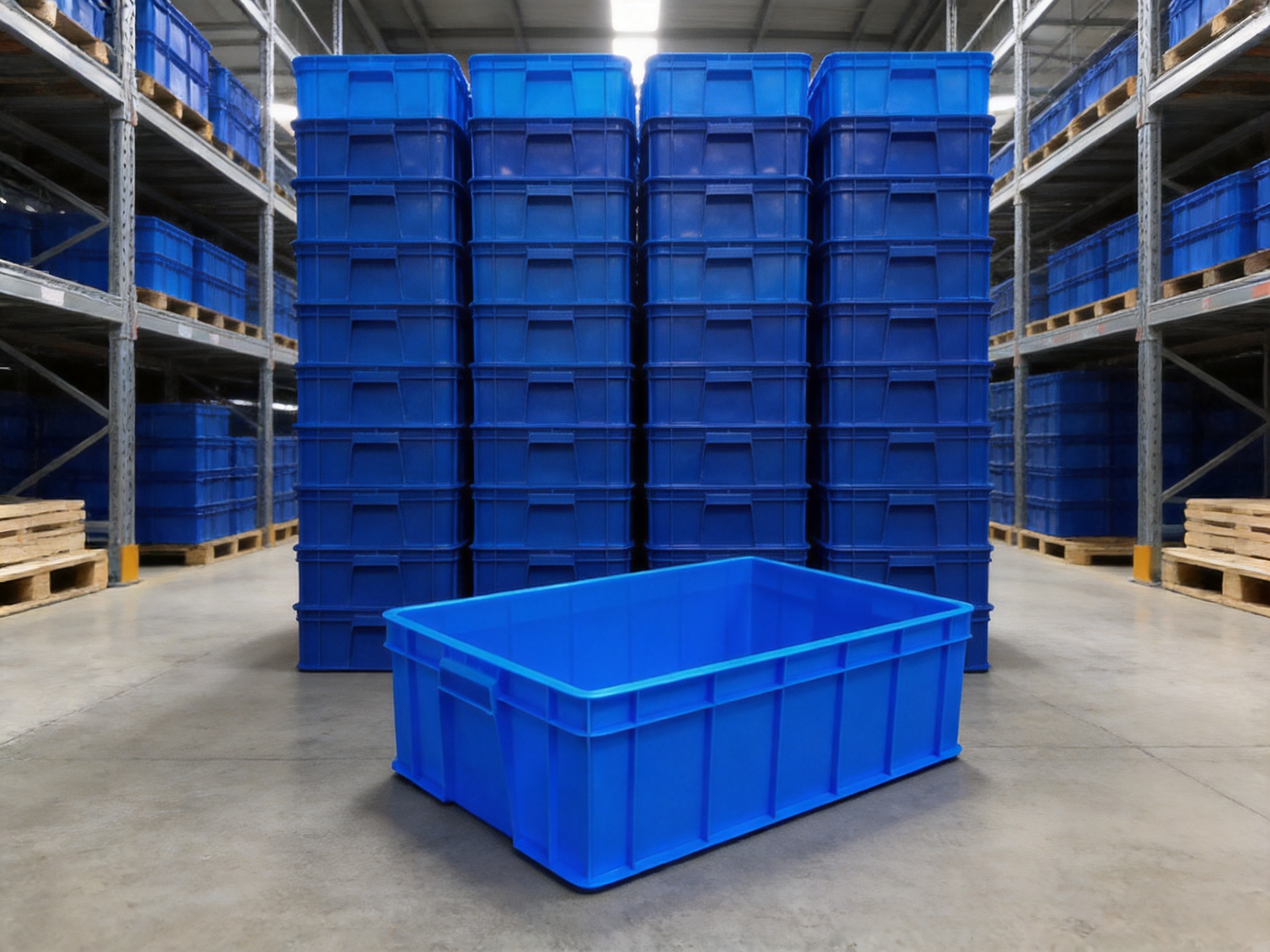
The central advantage of this product is its ability to support vertical stacking. Stackable containers allow businesses to increase storage density without requiring an immediate expansion of floor area. When the boxes are not in use, they can also be arranged efficiently to reduce the space required for empty-container storage.
The reinforced stackable structure is designed to keep boxes aligned during vertical placement. Properly aligned boxes are less likely to shift during storage and are easier for warehouse employees to inspect and access. A stable stack also reduces the need for additional external support, provided that the load, surface, and stacking height remain within appropriate operating conditions.
The supplied product information indicates that the totes can be stacked to more than ten layers under suitable conditions. Actual stacking performance depends on the weight and distribution of the contents, floor flatness, handling methods, environmental conditions, and the configuration of the warehouse. Nevertheless, the ability to create tall, organized stacks gives operators greater flexibility when designing storage areas.
Vertical storage is particularly valuable in distribution centers and facilities where every square meter has a cost. Instead of placing containers in a single layer across the floor, operators can create orderly columns that use available height. This can improve aisle planning, reduce unnecessary travel, and make it easier to separate inventory by product family, order status, production stage, or destination.
The tote’s moderate height is also useful for access. Employees can view and reach the contents more easily than they could with a much deeper container. The proportions are suitable for frequently picked items because workers can retrieve products without repeatedly reaching into an excessively tall box. This can support more efficient picking and reduce avoidable handling movements.
56L HDPE Stackable Plastic Tote Box for Food Logistics
Advantages in Warehouse Operations
A reusable tote box contributes to more than simple containment. It can become part of a standardized warehouse operating system. When identical containers are used throughout a facility, workers can learn consistent storage and handling procedures. This consistency can help reduce confusion, improve visual organization, and support more predictable inventory movement.
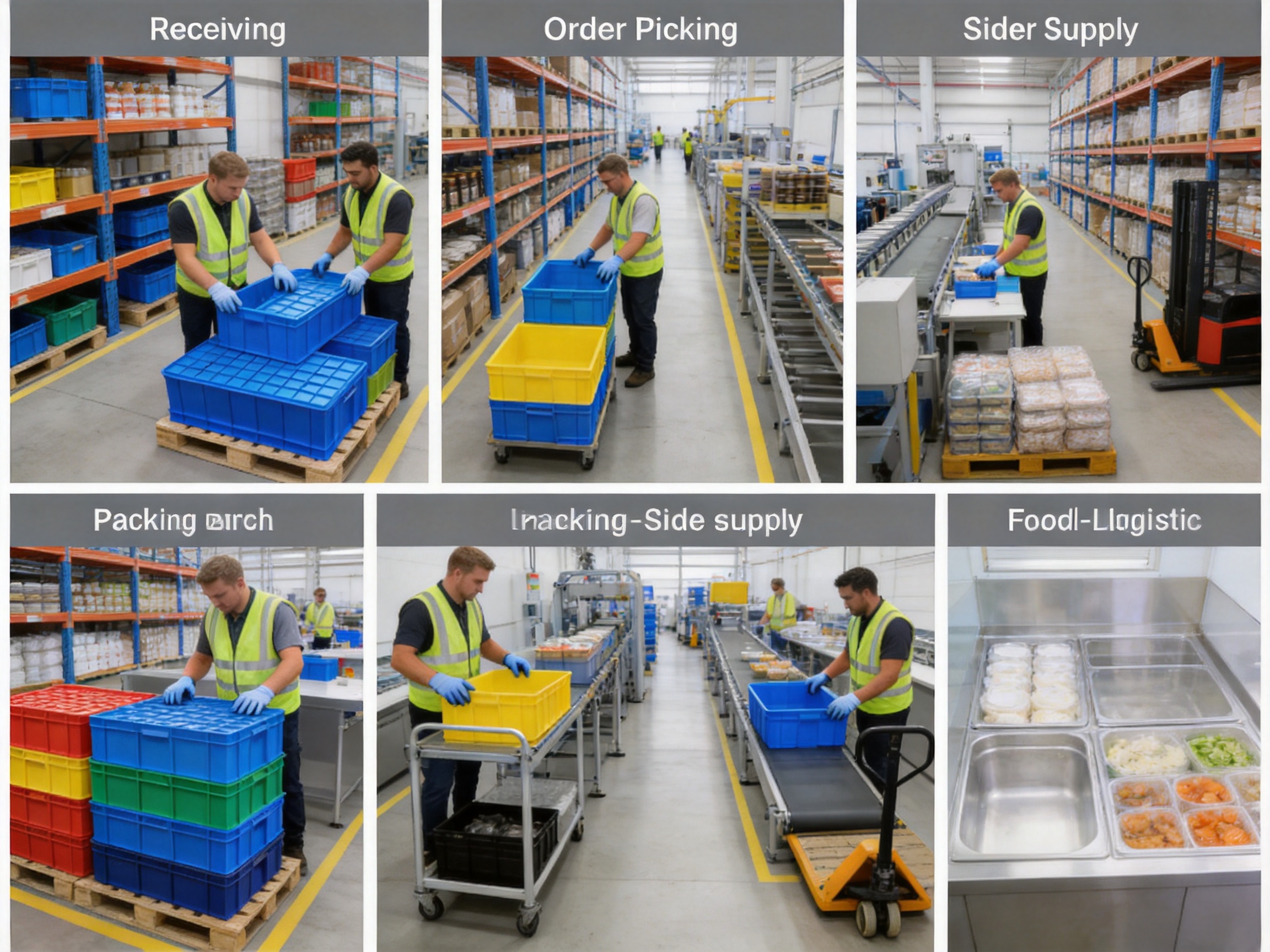
For receiving departments, the tote can be used to separate incoming items by supplier, purchase order, inspection status, or product category. The stackable structure allows received goods to be moved from unloading areas to temporary storage without occupying excessive floor space. The durable body also provides better protection than open piles of products or improvised cartons.
In inventory storage areas, the standardized footprint simplifies location planning. A warehouse manager can assign shelf positions or floor zones based on the tote’s external dimensions. Repeated container dimensions make it easier to estimate capacity, design storage rows, calculate aisle clearances, and plan future expansion.
In order-picking applications, the 56L volume provides enough room for grouped items while remaining practical for manual access. Totes can be labeled, coded, or assigned to specific orders and routes. They may be placed on picking carts or moved directly to packing and dispatch stations, reducing the number of transfers between different types of packaging.
For manufacturing operations, the box can support line-side material supply. Components can be delivered to workstations in consistent quantities, while empty totes can be returned for replenishment. This approach helps separate raw materials, work-in-progress items, finished goods, rejected parts, and maintenance supplies.
For e-commerce fulfillment, stackable totes can be integrated into picking, sorting, and temporary staging processes. Products can be grouped by customer order, carrier route, sales channel, or dispatch time. The robust reusable design is particularly useful in operations where containers circulate between storage zones, packing areas, and transport points every day.
Benefits Compared with Conventional Alternatives
Compared with Cardboard Boxes
Cardboard cartons are convenient and inexpensive for one-way shipping, but they are more susceptible to moisture, crushing, tearing, and deformation. They may also require frequent replacement, creating recurring packaging costs and additional waste. The HDPE tote is intended for repeated use and can maintain its shape through multiple handling cycles.
The rigid walls of the tote provide more consistent protection for stored goods. A stack of cardboard cartons can lose stability when the lower cartons become compressed or damp. By contrast, a molded plastic tote offers a more predictable support structure, which is valuable for organized warehouse storage.
Reusable plastic totes can also reduce the labor associated with assembling, taping, labeling, and disposing of cartons. While the initial purchase price of a durable tote may be higher than that of a single carton, the cost per use can become more favorable when the tote is circulated over a long service period.
Compared with Fabric Bags
Flexible fabric bags are suitable for certain lightweight products, but they generally provide less protection against compression and impact. They may also be difficult to stack in a stable manner. The rigid structure of this tote makes it better suited to vertical storage and operations that require reliable shape retention.
Compared with Low-Grade Plastic Containers
Some low-cost plastic containers are designed primarily for household or occasional use. Their walls, corners, and stacking features may not be suitable for continuous industrial handling. The BG-654522-ST is positioned as a heavy-duty logistics container, with a reinforced form intended for routine commercial use and repeated stacking.
Product quality depends not only on the material name but also on molding accuracy, wall consistency, structural design, dimensional control, and inspection procedures. A well-managed manufacturing process can produce a tote that performs more consistently than an inexpensive container made with uncontrolled materials or irregular production conditions.
Compared with Non-Standard Storage Bins
Mixed storage bins with different dimensions make warehouse planning more difficult. They create unused gaps, complicate stacking, and require employees to adapt their handling methods to each container type. A standardized tote with defined external and internal dimensions supports greater operational consistency.
Material and Product Quality Control
Reliable logistics equipment begins with controlled raw materials. The company describes a quality-management approach that includes inspection from material sourcing through production and final product evaluation. For a plastic tote, this type of process is important because the quality of the finished product depends on resin performance, molding conditions, cooling control, dimensional accuracy, and surface integrity.
Material verification helps ensure that the product is manufactured according to the specified material requirements. For this model, the stated construction is HDPE. Consistent material selection supports predictable stiffness, impact performance, weight, and durability. Where customers have specific requirements for color, material grade, or application environment, these details should be confirmed during the quotation and technical approval process.
Production inspections can include checks for dimensions, weight, shape, surface defects, deformation, stacking fit, and general appearance. Dimensional control is especially important for stackable containers because small variations may affect alignment when boxes are placed in multiple layers or arranged on standardized warehouse equipment.
Quality control at each stage also helps reduce the risk of inconsistent batches. A professional supplier should be able to maintain repeatable specifications across production runs, enabling customers to add containers to an existing warehouse system without introducing unexpected differences in footprint or stacking behavior.
Standardized processes contribute to reliable delivery as well. When production, inspection, packaging, and shipment preparation follow defined procedures, it becomes easier to manage larger orders, repeat purchases, and customized requirements. This is particularly valuable for customers operating multiple warehouses or implementing a new storage system across several locations.
Manufacturing and Supply-Chain Strengths
The supplier specializes in warehousing and logistics equipment and maintains a product range covering four related areas: handling equipment, storage containers, packaging materials, and warehouse racking. This broad scope allows customers to coordinate multiple parts of a logistics project through one experienced source.
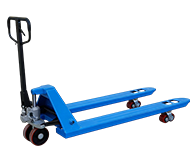
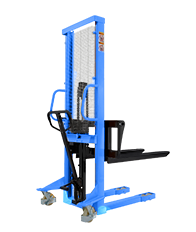
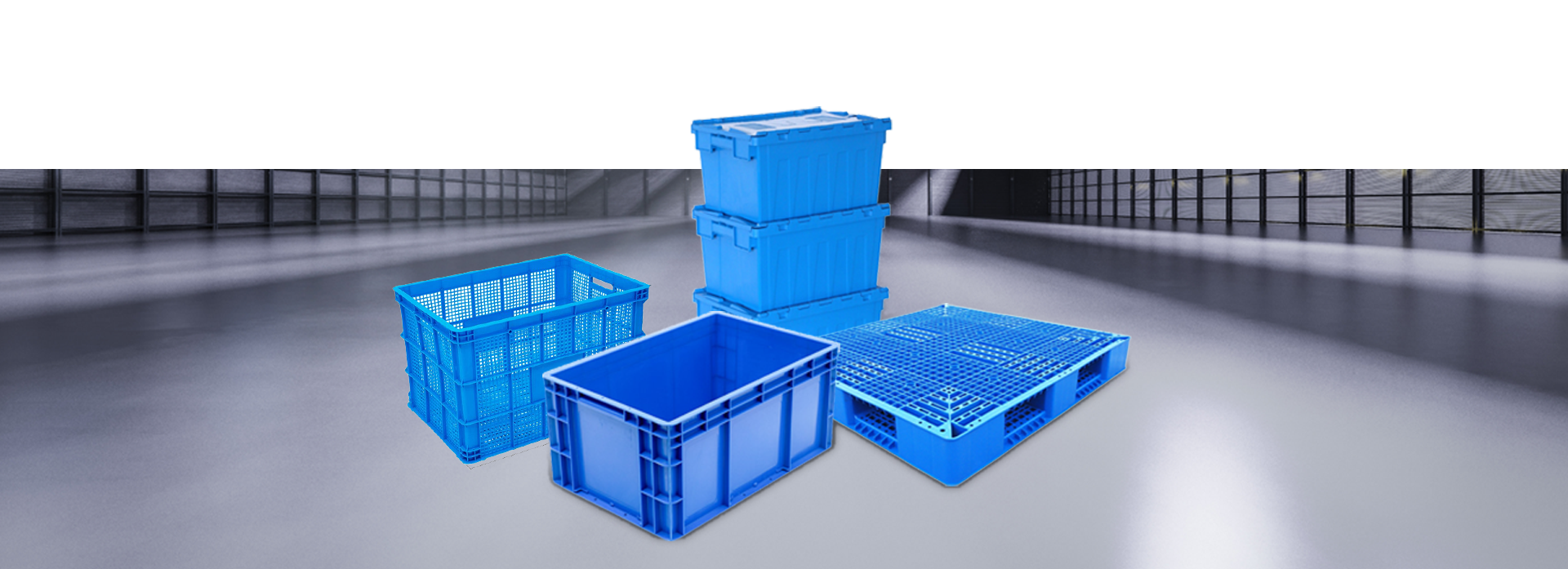
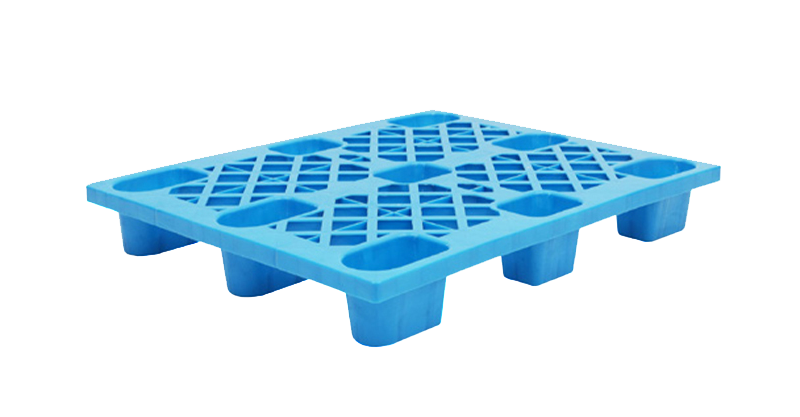
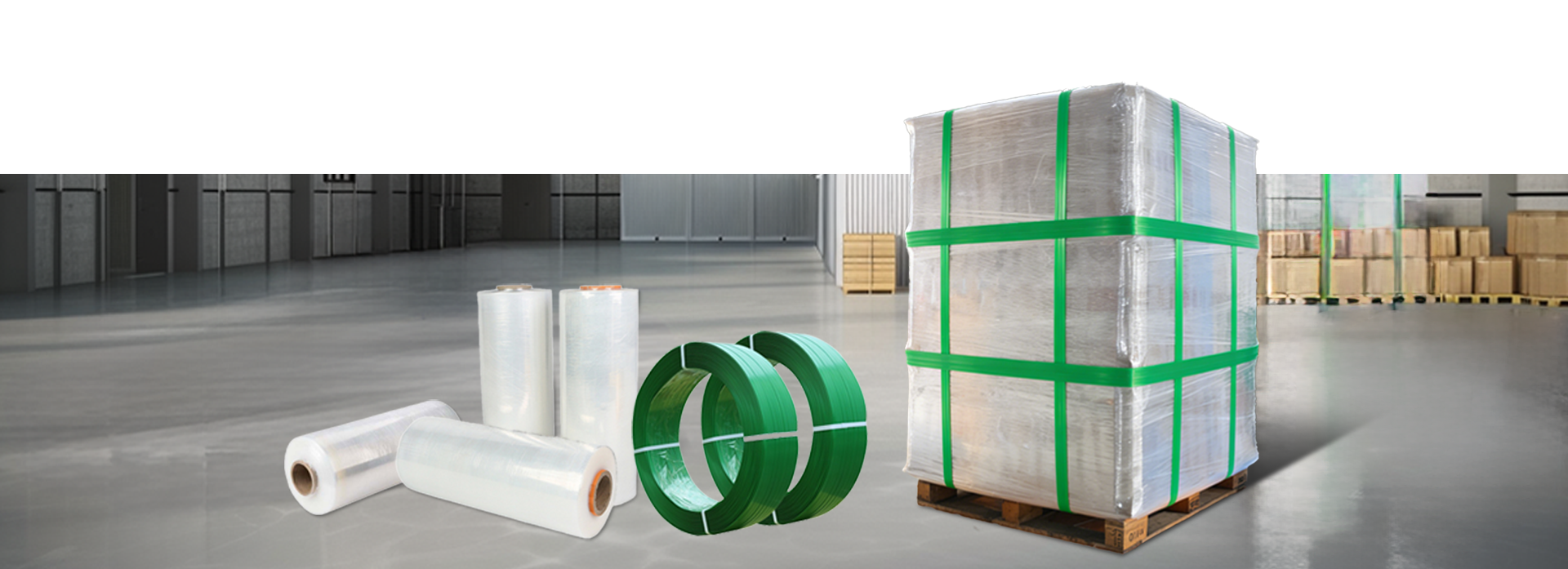
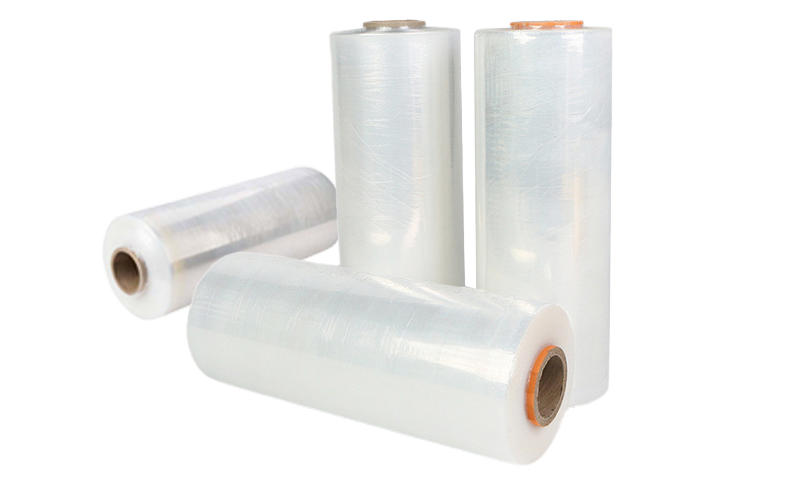
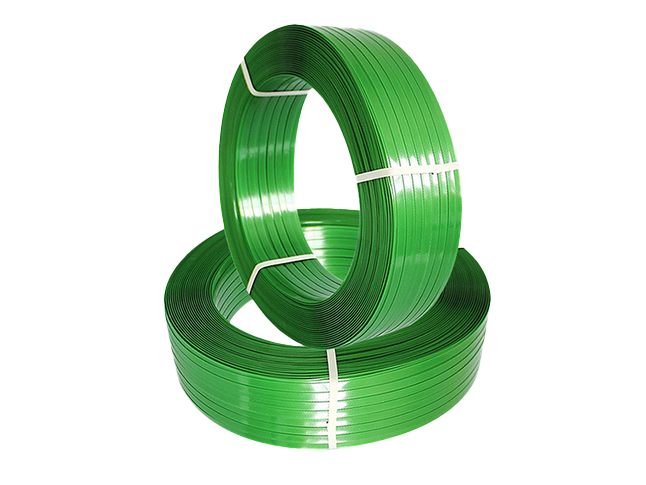
Within handling equipment, the company offers manual and electric pallet trucks and stackers. Its storage-container range includes plastic pallets, plastic totes, crates, and bulk containers. Packaging materials include products such as stretch wrap and packing strapping, while the warehouse-racking range includes light-duty, medium-duty, and heavy-duty solutions.
This integrated product structure can be advantageous when a customer is planning a complete warehouse layout. The tote can be evaluated together with pallets, pallet trucks, shelving, racks, stretch film, and other equipment. Compatibility between these product categories may improve purchasing efficiency and reduce the difficulty of coordinating specifications from unrelated suppliers.
The company’s stated manufacturing philosophy emphasizes standardized production and strict inspection. A mature supply-chain system can support material availability, production scheduling, stock management, and delivery planning. These capabilities are relevant to customers that require regular replenishment rather than a single one-time purchase.
Availability is another practical strength. The product information indicates that the tote is kept in stock for fast delivery, subject to current inventory and order quantity. Stock availability can help customers respond quickly to warehouse expansion, seasonal demand, replacement needs, or urgent logistics projects.
Customization is also supported. Depending on project requirements, customers may discuss colors, specifications, labeling, packaging, and other commercial details. Multiple colors can help create visual coding systems, such as assigning different colors to product categories, production lines, storage zones, order priorities, or cleanliness controls.
Applications in Food Logistics
The product title identifies food logistics as one of its intended application areas. In food-related warehousing, containers must support orderly movement, practical cleaning, and protection from common handling conditions. The HDPE structure is suitable for operations where moisture resistance and easy routine maintenance are important.
The tote can be used for packaged food products, ingredients in suitable secondary handling applications, food distribution, supermarket replenishment, and temporary staging. Application suitability depends on the specific food-contact requirements, cleaning procedures, temperature conditions, and applicable regulations. Customers should confirm food-contact compliance and any required certification before using the tote for direct contact with unpackaged food.
Color options can support food logistics management by helping distinguish product groups, work areas, or handling stages. A standardized container system may also make it easier to establish procedures for incoming inspection, order picking, route preparation, and return-container management.
The tote’s rigid walls provide more consistent support than flexible packaging when products need to be stacked or transported through a distribution center. Its capacity is appropriate for grouping moderate quantities without making the container unnecessarily large or difficult to handle.
Applications in Manufacturing and Parts Storage
Manufacturers often need to store components in a way that protects them from damage while keeping them accessible to production employees. The BG-654522-ST can be used for metal parts, plastic components, fasteners, tools, maintenance supplies, and work-in-progress materials, subject to the weight and dimensions of the specific contents.
On a production floor, standardized totes can support kanban-style replenishment and repeatable material routes. A full tote may be delivered to a workstation, while an empty tote is returned to a storage or replenishment area. This creates a simple circulation system that reduces the need for disposable packaging.
For quality-control departments, separate totes can be assigned to approved, pending-inspection, rejected, or rework materials. Clear labeling and color coding can reinforce these distinctions. The container itself does not replace a formal quality system, but it can support visual management and reduce the chance of materials being placed in unsuitable areas.
In maintenance departments, the tote can organize spare parts and frequently used tools. Its moderate height allows employees to see into the container more easily, while its rigid construction protects the contents from being crushed by nearby materials.
Applications in Distribution and E-Commerce
Distribution centers require containers that can move smoothly through receiving, storage, picking, sorting, packing, and dispatch. A reusable tote can remain within the facility’s material-flow system for many of these steps, reducing the need to transfer products into different packaging formats.
The 56-liter capacity is suitable for batch picking, in which a worker collects products for several orders and later sorts them into individual shipments. It can also be used for route-based staging, where orders are grouped by delivery region, carrier, store, or departure time.
For e-commerce operations, the tote can support temporary order storage between picking and packing. Its stackable design helps prevent staging areas from becoming disorganized. When orders are ready, employees can retrieve the relevant totes according to labels, barcodes, or warehouse management system instructions.
Reusable containers can also improve workplace cleanliness by reducing the accumulation of damaged cartons, loose packaging, and discarded tape. Better container organization may contribute to safer aisles and more efficient employee movement, although the final result depends on the warehouse’s operating procedures.
Ergonomics and Daily Handling
Container design affects the amount of effort required from warehouse employees. The BG-654522-ST weighs 2.2kg when empty, allowing it to be moved more easily than many heavier industrial bins. Its dimensions provide substantial capacity without creating an excessively tall or deep container for routine access.
Employees should still follow safe lifting procedures and consider the weight of the contents. A full 56-liter container may become heavy depending on the material stored inside. For dense products such as metal parts, the safe working load may be reached before the nominal volume is filled. Operators should evaluate the actual load, lifting frequency, and available handling equipment.
The tote can be moved manually over short distances or placed on carts, pallets, pallet trucks, and other suitable equipment for longer movements. Using mechanical assistance for heavy or repeated transfers can reduce physical strain and improve productivity.
Proper stacking practices are equally important. Boxes should be placed on a stable, level surface, with heavier loads positioned lower whenever possible. Damaged containers should be removed from service, and stacking height should be determined according to load conditions and operational risk.
Space Utilization and Warehouse Planning
Warehouse space is a strategic resource. Rent, energy, labor, and handling costs are all affected by how effectively inventory is arranged. The stackable tote supports space planning by offering a repeatable external footprint and the ability to use vertical capacity.
Managers can calculate how many totes fit across a floor zone or within a rack bay by using the external dimensions. The internal dimensions can then be used to estimate usable storage volume. This distinction is important because the outer size determines space consumption, while the inner size determines how much product can be stored.
Organized stacking can also improve stock visibility. When totes are arranged in defined rows and columns, employees can identify missing containers, empty locations, or overfilled areas more quickly. Labels can be placed on the front or side surfaces according to the warehouse’s identification system.
The tote’s dimensions should be checked against existing shelves, rack beams, pallet sizes, conveyor clearances, doorways, and vehicle compartments before a large purchase. Although the product is designed for general logistics applications, compatibility with specific equipment must always be confirmed at the project level.
Cleaning, Maintenance, and Service Life
Reusable HDPE totes are generally straightforward to maintain. Routine cleaning may involve removing loose debris, wiping surfaces, or using a cleaning method appropriate for the stored materials and operating environment. Customers should select detergents, temperatures, and sanitizing methods according to their own procedures and applicable regulations.
Regular inspection helps extend the useful life of the container system. Operators should check for cracks, severe deformation, damaged stacking areas, sharp edges, and contamination that cannot be removed through approved cleaning procedures. Totes that no longer provide safe support should be repaired where appropriate or removed from circulation.
Preventive maintenance is especially important in high-throughput operations. Containers that are dragged across rough floors, overloaded, dropped from excessive heights, or exposed to incompatible chemicals may experience shorter service lives. Training employees in correct handling methods protects both the product and the warehouse system.
Because the tote is reusable, its value should be measured over its full operating life rather than by its initial purchase price alone. A durable container that completes many storage and transport cycles may reduce the need for repeated disposable packaging purchases and help improve packaging consistency.
Ordering and Customization Considerations
Before ordering, customers should define the intended application, expected load, storage method, operating temperature, cleaning requirements, and required quantity. They should also determine whether the tote will be used indoors, outdoors, in refrigerated areas, on conveyors, in racks, or in direct food-contact operations.
Color selection can be based on visual management goals, branding policies, product categories, or handling zones. Multiple colors may make it easier to identify inventory status, but color coding should be supported by written procedures so that employees understand the meaning of each color.
Customers implementing barcode or RFID systems should confirm label placement, scanning distance, surface suitability, and compatibility with their warehouse management software. The tote can serve as a reusable physical carrier for digital inventory information, but the identification method should be planned before deployment.
For large projects, a sample evaluation is recommended. A trial can confirm whether the internal dimensions accommodate the intended products, whether the external footprint fits the existing storage equipment, and whether the loaded tote is manageable for employees. It can also help verify stacking behavior under real operating conditions.
Customers should request confirmation of production specifications, available colors, stock status, packaging method, delivery schedule, and any required documentation. For regulated industries, technical and compliance requirements should be reviewed before final approval.
Why Choose an Integrated Logistics Equipment Supplier?
Purchasing storage containers from a supplier that also understands pallet trucks, stackers, pallets, stretch wrap, strapping, and warehouse racking can simplify system design. The supplier is more likely to understand how individual products interact within a material-flow process.
An integrated supplier can help customers compare container dimensions with pallet footprints, rack levels, handling equipment, and packaging procedures. This broader perspective may reduce compatibility problems and support a more coordinated warehouse layout.
Yancheng Bingo Machinery Equipment Co., Ltd. presents itself as a global partner for smart logistics, serving manufacturing, e-commerce logistics, warehousing and distribution, and supermarket retail. Its product range and quality-control approach are intended to support one-stop storage and material-handling solutions.
The company’s emphasis on quality, standardized production, supply-chain coordination, and customer cooperation is relevant to businesses that need repeatable equipment rather than short-term, low-cost purchases. A stable supplier relationship can also support future expansion, replacement orders, and consistent specifications across multiple facilities.
Recommended Operating Practices
Use the tote on a stable and reasonably level surface. Avoid stacking on sloped, damaged, or unstable flooring. Keep the load distributed across the base instead of concentrating excessive weight in one small area.
Do not exceed the working load recommended for the intended application. Capacity in liters describes volume and does not automatically define the maximum safe weight. Dense products require special attention because a full container may become difficult or unsafe to lift.
Place heavier containers lower in a stack whenever possible. Keep frequently accessed goods at practical heights to reduce unnecessary lifting and reaching. Use suitable carts or pallet trucks when moving loaded totes over longer distances.
Inspect containers regularly and remove damaged units from active use. Do not use a tote with severe cracks, unsafe deformation, damaged stacking features, or contamination that cannot be removed through approved procedures.
Keep the container system organized through labels, location codes, color standards, and documented handling rules. A high-quality tote delivers the greatest value when it is incorporated into a consistent warehouse process.
Frequently Asked Questions
What is the capacity of the tote box?
The tote has a nominal capacity of 56 liters. The internal dimensions are 615×425×215mm, which define the practical available space inside the container.
What material is used to manufacture the product?
The stated material for model BG-654522-ST is high-density polyethylene, or HDPE. Customers with specific material-grade, food-contact, temperature, or regulatory requirements should confirm the details before ordering.
What are the external dimensions?
The external dimensions are 655×455×225mm. These measurements should be compared with the customer’s shelving, rack bays, pallets, carts, conveyors, and transport spaces before purchase.
How much does one tote weigh?
The listed empty weight is 2.2kg. The total handling weight will be higher after products are loaded, so the density and weight of the contents must be considered when establishing safe operating procedures.
Can the boxes be stacked?
Yes. The product is designed as a reinforced stackable tote box. The supplied information indicates that stacking above ten layers may be possible under suitable conditions, but the actual safe height depends on load weight, surface stability, operating environment, and warehouse procedures.
Is the tote suitable for food logistics?
The product is identified for food logistics and has an HDPE construction that is practical for moisture-resistant reusable handling. Direct contact with unpackaged food should only be approved after confirming the required food-contact compliance, cleaning procedures, and local regulations.
Can different colors be supplied?
Multiple colors are available according to the product information, subject to stock and order requirements. Color selection can support warehouse zoning, product identification, or visual management.
Can the product be customized?
Customization is supported. The specific options may include colors, specifications, labeling, packaging, or other requirements depending on production feasibility and order quantity. Customers should discuss technical details with the supplier before placing an order.
Is the product kept in stock?
The product information states that the tote is in stock and ready for fast delivery. Actual availability depends on current inventory, quantity, color, destination, and order timing, so stock should be confirmed before purchase.
What industries can use this tote?
Potential applications include manufacturing, e-commerce fulfillment, distribution centers, food logistics, supermarket supply chains, parts storage, inventory management, production-line replenishment, and general warehouse organization.
Can the tote be used outdoors?
The product is designed for logistics use, but outdoor suitability depends on exposure to sunlight, rain, temperature changes, and the duration of use. Customers planning outdoor storage should confirm environmental requirements with the supplier and establish suitable protection procedures.
How should the tote be maintained?
Maintenance generally includes routine cleaning, inspection for cracks or deformation, removal of damaged units, and correct stacking practices. Cleaning chemicals and temperatures should be selected according to the stored materials and the customer’s operating procedures.
Conclusion
The 56L HDPE Stackable Plastic Tote Box is a practical solution for businesses seeking durable, organized, and reusable storage equipment. Its 655×455×225mm external footprint, 615×425×215mm internal dimensions, and 56-liter capacity provide a useful balance between storage volume and daily handling convenience.
Its main advantages include durable HDPE construction, reinforced stackability, standardized dimensions, moderate empty weight, moisture-resistant plastic surfaces, and compatibility with a wide range of warehouse and logistics activities. Compared with cardboard cartons, fabric bags, low-grade plastic bins, and non-standard storage containers, it offers stronger support for repeated use, vertical storage, and systematic inventory handling.
The product also benefits from the supplier’s broader strengths in material-handling equipment, storage containers, packaging materials, and warehouse racking. Standardized manufacturing procedures, quality inspections at multiple stages, supply-chain coordination, stock availability, and customization support make the tote suitable for both individual applications and larger logistics projects.
For the best results, customers should evaluate the tote together with their actual load requirements, storage equipment, cleaning procedures, stacking conditions, and regulatory obligations. When integrated into a well-designed warehouse system, this reusable container can contribute to improved space utilization, more consistent handling, better inventory organization, and lower dependence on disposable packaging.
References
1. Product specification sheet for model BG-654522-ST, including dimensions, capacity, material, and product weight.
2. General technical literature on high-density polyethylene materials and reusable industrial storage containers.
3. Warehouse planning principles covering vertical storage, standardized container footprints, and inventory organization.
4. Material-handling safety guidance for lifting, stacking, transporting, and inspecting reusable logistics containers.
5. General food-logistics guidance concerning reusable containers, cleaning procedures, and food-contact suitability verification.
6. Industrial packaging and supply-chain management references concerning reusable transport packaging and warehouse efficiency.
Product: 56L HDPE Stackable Plastic Tote Box for Food Logistics


Copyright @ Yancheng Bingo Machinery Equipment Co., Ltd. All rights reserved Warehouse Logistics Equipment Manufacturer Pallet Truck Supplier
