 en
en  Español

37L High-Strength Stackable Plastic Crate for Efficient Warehouse and Logistics Operations
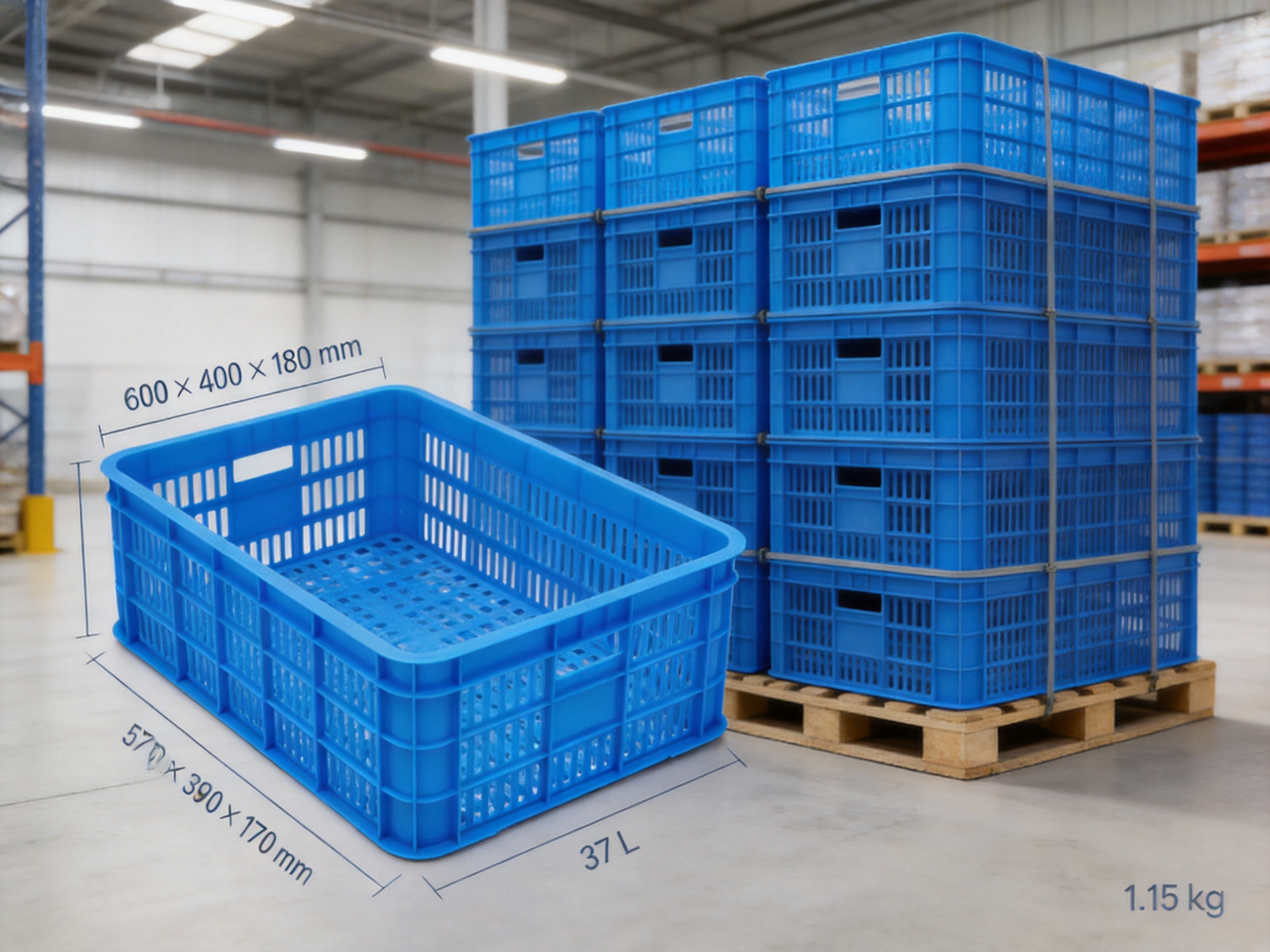
Modern supply chains depend on storage products that can withstand repeated handling, protect goods, improve space utilization, and support fast movement through warehouses and distribution centers. The 37L high-strength stackable plastic crate, model BG-604018-SC, is designed to meet these requirements in one practical, reusable container. With external dimensions of 600×400×180mm, a 37-liter capacity, and a lightweight construction of approximately 1.15kg, it provides a balanced combination of strength, handling convenience, airflow, and storage efficiency.
This crate is suitable for manufacturing facilities, food distribution operations, supermarkets, retail backrooms, agricultural supply chains, e-commerce fulfillment centers, and general logistics applications. Its standardized footprint allows users to organize products more consistently than with irregular cartons or mixed-size containers. The stackable form also helps businesses use vertical space more effectively, reducing unnecessary floor congestion and improving access to stored products.
Unlike single-use packaging, a reusable HDPE crate can support repeated circulation between suppliers, warehouses, retail locations, and customers. Its rigid structure provides better protection than soft bags and greater durability than many disposable corrugated cartons. The fully perforated design promotes air movement and makes contents easier to identify, while the reinforced construction is intended to withstand the demands of daily warehouse operations.
This article examines the product’s dimensions, construction, operational advantages, manufacturing strengths, quality-control approach, and suitability for different industries. It also explains how businesses can evaluate stackable crates against competing storage options and how the product can contribute to more organized, cost-efficient logistics processes.
Content
- 1 Product Overview
- 2 Why Standardized Crate Dimensions Matter
- 3 Durable HDPE Construction
- 4 Fully Perforated Design for Airflow and Visibility
- 5 Stackability and Vertical Space Utilization
- 6 Advantages Over Common Competing Storage Options
- 7 Applications Across Multiple Industries
- 8 Manufacturing Process and Quality-Control Strengths
- 9 Customization and Color Management
- 10 Ergonomic Handling and Workplace Efficiency
- 11 Cleaning, Maintenance, and Service Life
- 12 Contribution to Sustainable Logistics
- 13 How the Crate Supports One-Stop Logistics Solutions
- 14 Purchasing Considerations for International Buyers
- 15 Recommended Operating Practices
- 16 Business Value and Total Cost of Ownership
- 17 Company Manufacturing and Supply Strengths
- 18 Q&A
- 18.1 What is the capacity of the crate?
- 18.2 What are the crate dimensions?
- 18.3 What material is used?
- 18.4 Is the crate suitable for food and fresh produce?
- 18.5 Can the crates be stacked when full?
- 18.6 Can the crate be used outdoors?
- 18.7 Is the crate easy to handle manually?
- 18.8 Does the perforated design improve ventilation?
- 18.9 Can different colors be supplied?
- 18.10 Can the crates be customized?
- 18.11 How should the crates be cleaned?
- 18.12 What industries can use this product?
- 18.13 How does this crate compare with cardboard packaging?
- 18.14 Is the crate compatible with pallets and racking?
- 18.15 Where is the product manufactured?
- 18.16 Is the product available from stock?
- 19 Conclusion
- 20 References
- 21 Product: 37L High Strength HDPE Stackable Plastic Crate for Long Service Life
Product Overview
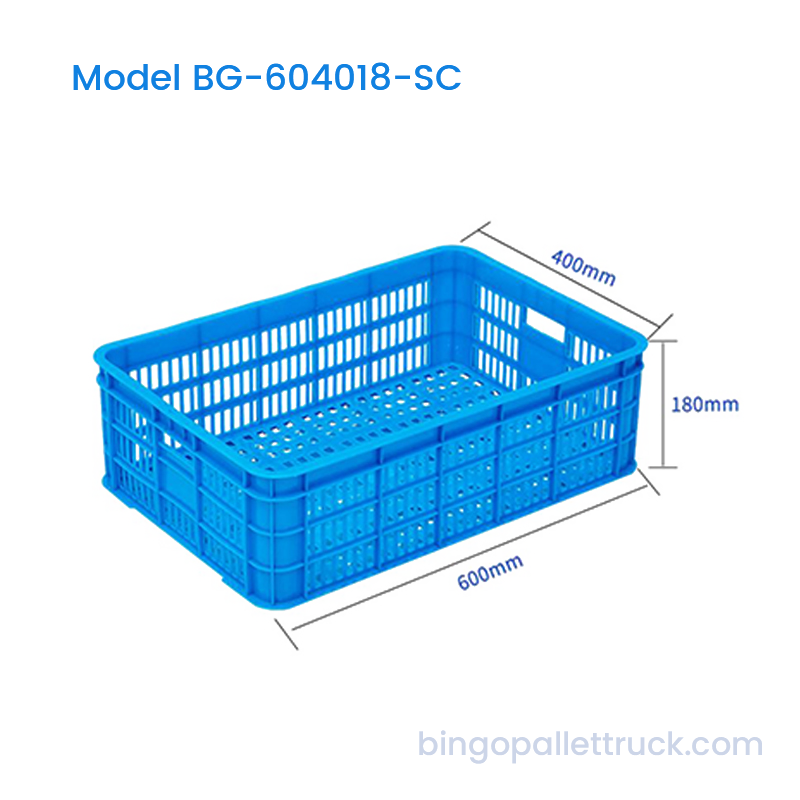
The BG-604018-SC is a stackable plastic crate developed for storage, transport, sorting, and distribution. It has a nominal external size of 600×400×180mm and an internal size of 570×390×170mm. The external dimensions provide a standardized base format, while the internal dimensions define the usable storage area for products placed inside the crate.
With a 37-liter capacity, the crate is large enough for many everyday logistics tasks without becoming excessively difficult to lift or move. Its 180mm external height creates a relatively shallow and accessible container profile. This makes it useful for products that need to be picked frequently, viewed from above, or separated into manageable quantities rather than stored in deep, inaccessible loads.
The crate is manufactured from HDPE, or high-density polyethylene, a widely used industrial polymer known for its balance of toughness, chemical resistance, moisture resistance, and impact performance. The supplied product specifications identify the material as HDPE and describe the crate as suitable for food-related storage and general logistics. The product information also emphasizes a controlled manufacturing process and the use of high-quality virgin material in production standards.
At approximately 1.15kg, the crate is light enough for regular manual handling while retaining a rigid structure. Weight is an important consideration in logistics because operators may lift, carry, load, unload, and reposition containers dozens or hundreds of times during a working day. A crate that is too heavy increases labor demands, while one that is too light may lack the durability required for repeated use. This model is designed to provide a practical middle ground.
| Product Attribute | Specification | Operational Significance |
| Model | BG-604018-SC | Identifies the specific crate configuration |
| Material | HDPE | Supports durability, moisture resistance, and repeated use |
| External Dimensions | 600×400×180mm | Provides a standardized footprint for storage and transport |
| Internal Dimensions | 570×390×170mm | Defines usable product space |
| Capacity | 37L | Suitable for organized storage of medium-volume loads |
| Weight | Approximately 1.15kg | Supports easier manual handling |
| Design | Fully perforated and stackable | Improves airflow, visibility, and vertical storage |
Why Standardized Crate Dimensions Matter
Standardization is one of the most important principles in warehouse design. When storage containers use compatible dimensions, businesses can create repeatable layouts, simplify pallet loading, improve vehicle utilization, and reduce wasted space. The 600×400mm footprint is particularly useful because it can be incorporated into organized shelving, pallet, trolley, and distribution systems.
Irregular packaging often creates empty gaps between containers. These gaps may appear small, but they become significant when multiplied across shelves, pallets, vehicles, and entire facilities. Standardized crates help reduce this inefficiency. Operators can plan storage positions more accurately and establish consistent stacking patterns for different departments or product categories.
The 600×400mm base also supports modular planning. Several crates can be arranged on compatible platforms or within designated warehouse zones according to a repeatable pattern. This makes stock locations easier to label and audit. It can also improve employee training because workers learn a consistent method for placing, retrieving, and returning containers.
Standard dimensions are valuable beyond the warehouse. During transportation, uniform crates can be arranged more securely inside delivery vehicles. In retail environments, they can be moved from receiving areas to storage rooms or sales-floor replenishment points without repacking products into different containers. In food distribution, standardized crates help establish predictable handling routines from collection through delivery.
The product’s relatively shallow height is another practical advantage. Deep containers can hold more volume, but they may make products at the bottom difficult to reach. A 180mm-high crate is better suited to sorting, picking, and separating items into smaller batches. This can reduce unnecessary searching and allow operators to see or access the contents without removing an entire upper layer.
Durable HDPE Construction
Material selection directly affects the service life of a reusable crate. HDPE is commonly selected for industrial containers because it offers a useful combination of rigidity and impact resistance. It is also resistant to moisture, which is important in cold rooms, produce handling, cleaning areas, and transport environments where containers may be exposed to condensation or wet surfaces.
The high-density structure of the polymer helps the crate retain its shape during normal handling. A well-designed HDPE crate can tolerate contact with warehouse floors, conveyor systems, shelving, pallets, and other containers. Its material characteristics also make it more suitable for repeated use than paper-based packaging that can soften, tear, or lose structural integrity after exposure to moisture.
The product is described as having a reinforced structure. Reinforcement is important because the greatest stresses in a stackable container are not distributed evenly. Load pressure can concentrate around the rim, corners, side walls, and base. A reinforced design helps these areas handle repeated stacking and movement more reliably than a thin-walled container with minimal structural support.
Durability should not be confused with unlimited load capacity. The actual safe working load and stacking limit should be confirmed with the supplier according to the application, temperature, handling method, and storage configuration. Nevertheless, the combination of HDPE material, reinforced construction, and a stackable profile gives this crate a strong foundation for demanding everyday logistics work.
Durable reusable containers can also reduce the hidden costs associated with disposable packaging. Businesses that depend heavily on cardboard boxes may face recurring expenses for replacement cartons, tape, labels, and waste disposal. A reusable plastic crate represents a more stable packaging asset. When properly managed, it can circulate through the operation for an extended period, lowering the frequency of packaging replacement.
Plastic crates are also easier to clean than many porous packaging alternatives. Smooth polymer surfaces do not absorb water in the same way as paper-based materials. For food-related or produce-handling applications, this can support more consistent hygiene routines, provided that the crate is cleaned and sanitized according to the applicable operating procedures and regulatory requirements.
37L High Strength HDPE Stackable Plastic Crate for Long Service Life
Fully Perforated Design for Airflow and Visibility
The crate features a fully perforated design. Openings in the side walls and base provide airflow around stored goods, which is especially useful for fresh produce and other products that benefit from ventilation. Air circulation can help reduce the accumulation of heat and moisture during temporary storage and transport, although the exact performance will depend on the product, temperature, packing density, and surrounding environment.
Ventilation is a key consideration in agricultural and food logistics. Fruits, vegetables, bakery ingredients, and other temperature-sensitive goods may require air movement to help maintain suitable handling conditions. A perforated crate allows air to move more freely than a completely enclosed box, making it a practical choice for operations where ventilation is part of the storage strategy.
The open design also improves visibility. Warehouse workers can often identify the general contents of a crate without opening it or lifting a lid. This saves time during picking, inspection, stock counting, and replenishment. Visual access is particularly valuable when containers hold multiple product varieties, colors, sizes, or batches.
Perforation can also reduce the weight of the container compared with an equivalent solid-wall design. Lower container weight supports easier manual handling and may reduce transport weight when large quantities of empty crates are returned. At the same time, the perforation pattern must be balanced with structural reinforcement so that airflow does not compromise the crate’s strength.
For small or delicate products, businesses should evaluate the opening size before placing goods inside. Some products may require an internal liner, bag, tray, or secondary packaging. The crate is a general-purpose logistics container, and the most appropriate configuration will depend on the product dimensions and protection requirements.
Stackability and Vertical Space Utilization
Warehouse floor area is expensive, and businesses increasingly need to store more products within the same building. A stackable crate helps convert unused vertical space into organized storage capacity. Instead of placing every container on the floor, operators can build stable vertical stacks according to the applicable load and safety limits.
Stacking can improve the use of receiving zones, production areas, cold rooms, retail backrooms, and distribution hubs. It can also make temporary storage more orderly. For example, crates waiting for quality inspection can be arranged in designated stacks, while completed orders can be grouped by route, customer, or delivery time.
A good stacking system depends on more than simply placing one container on top of another. Operators should use level floors, avoid unstable or tilted surfaces, distribute loads evenly, and keep stack heights within approved limits. Heavy goods should generally be placed at lower levels, while lighter or more fragile goods should be positioned higher when appropriate.
The stackable design provides a competitive advantage over containers that cannot be safely nested or stacked. Non-stackable bins often require more shelving, occupy more floor space, or must be stored empty in scattered locations. By contrast, stackable crates can support a more compact storage arrangement and simplify the creation of repeatable operating zones.
Stackability is also valuable during transport. When filled crates are properly arranged, the vertical structure can reduce shifting and improve the use of vehicle capacity. Empty crates can often be grouped efficiently for return movement, helping reduce the amount of space occupied by reusable packaging on backhauls.
Businesses should distinguish between stackable and nestable containers. A stackable crate is designed to sit securely on another crate, usually maintaining the same footprint and usable height. A nestable crate is designed to fit inside another when empty. The BG-604018-SC is identified as a stackable model, so users should not assume that it offers the same empty-return volume reduction as a nesting container unless confirmed by the supplier.
Advantages Over Common Competing Storage Options
Compared with Corrugated Cartons
Corrugated cartons are widely used because they are inexpensive, printable, and easy to obtain. However, they are vulnerable to moisture, crushing, tearing, and repeated handling. They also require tape, labels, and frequent replacement. A reusable HDPE crate offers a more durable alternative for products that move repeatedly through a closed or semi-closed logistics cycle.
The crate’s rigid walls provide more consistent protection during stacking. Its perforated design allows visibility and airflow that may be difficult to achieve with a sealed carton. Because the crate can be used repeatedly, it may reduce packaging waste and improve long-term cost control, especially in operations with regular return flows between facilities.
Cartons may still be better for one-way shipments, long-distance export packaging, or products requiring a fully enclosed printed package. The advantage of the plastic crate is strongest when the container can be recovered, cleaned, and circulated multiple times.
Compared with Woven Bags and Flexible Sacks
Woven bags and flexible sacks can be economical for bulk products, but they provide limited shape retention and may be difficult to stack consistently. They can collapse, shift, or obscure the identity of their contents. A rigid crate maintains a predictable footprint and creates more stable storage layers.
The 37L capacity is also suitable for dividing large quantities into manageable units. This can improve inventory control and reduce the need for workers to handle oversized bags. The crate’s open sides provide better access and inspection than many opaque flexible containers.
Compared with Thin-Walled Consumer Bins
Consumer-oriented storage bins may be suitable for homes or light-duty offices but are not always designed for repeated commercial handling. A logistics crate must cope with frequent movement, stacking, contact with pallets and equipment, and exposure to warehouse conditions. The reinforced HDPE construction of this model is intended for more demanding use.
Commercial crates also offer standardized dimensions that are more compatible with warehouse systems. Consumer containers often have unusual shapes, protruding handles, or non-modular sizes that create storage gaps and reduce transport efficiency.
Compared with Metal Containers
Metal containers can provide high strength and excellent resistance to some forms of impact, but they are often heavier and more expensive to move manually. Metal may also corrode if protective coatings are damaged or if the container is used in wet environments. The plastic crate offers a lower-weight solution for applications where extreme structural capacity is not required.
Its lighter weight can reduce handling fatigue and simplify movement between workstations. It is also less likely to damage floors or adjacent products during ordinary contact. Metal remains preferable for certain high-temperature, high-load, or specialized industrial applications, but HDPE provides a practical balance for general warehouse and distribution work.
Applications Across Multiple Industries
Fresh Produce Distribution
Fresh produce operations require containers that allow ventilation, protect products from excessive compression, and support quick sorting. The perforated sides and base of this crate make it suitable for fruits, vegetables, herbs, and other goods that may benefit from airflow. The shallow height can also help prevent excessive product depth, depending on the crop and packing method.
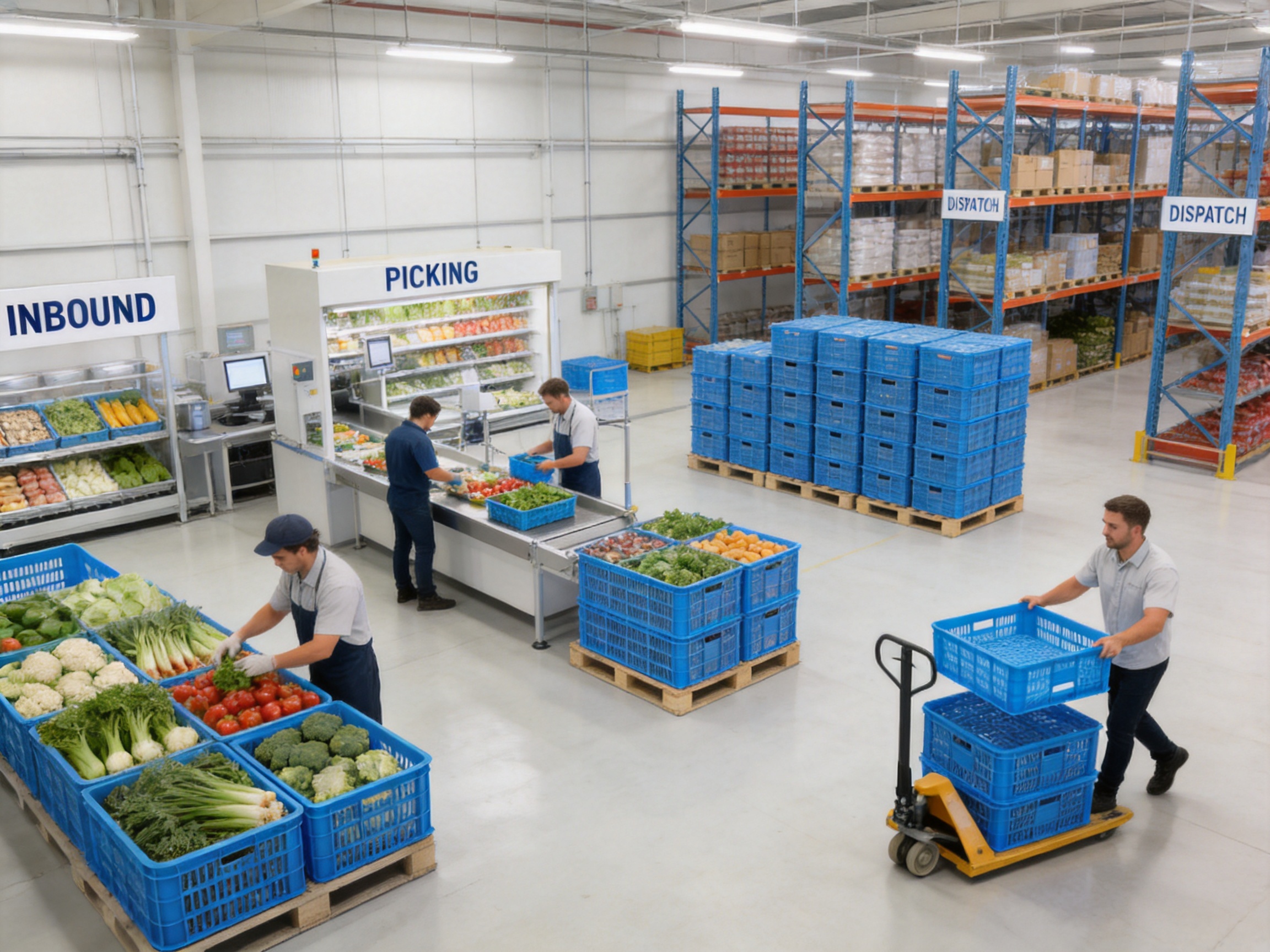
At collection points, workers can use the crates to gather produce into standardized units. At a distribution center, the same units can be inspected, sorted, labeled, and transferred to delivery vehicles. At retail stores, the crates can move products from receiving areas to backrooms or display preparation areas without unnecessary repacking.
Produce operators should select the appropriate cleaning method, manage temperature exposure, and avoid overfilling. Delicate goods may require protective liners or dividers. The crate is a platform for an organized handling system, and the final packaging configuration should be adapted to the specific product.
Food Storage and Processing
The HDPE construction and cleanable surface make the crate suitable for many food-storage environments. It can be used for ingredients, packaged goods, empty containers, or finished products when the application and sanitation procedures are appropriate. The open design can help workers identify the contents quickly and maintain orderly storage locations.
Food businesses should verify all applicable food-contact, temperature, cleaning, and sanitation requirements before use. Product suitability can depend on the exact production environment and the type of food being handled. The supplier’s material documentation should be reviewed where formal compliance certification is required.
Manufacturing Facilities
Manufacturers can use stackable crates to organize components, work-in-progress items, spare parts, tools, and finished goods. The 37L capacity is useful for creating manageable batch quantities between production stages. Standardized containers can also help connect workstations and reduce the use of mixed temporary packaging.
In lean manufacturing environments, visual organization is important. Perforated crates make it easier to see whether a container is full, partially filled, or awaiting processing. Clearly defined crate locations can reduce unnecessary movement and help employees identify shortages or production delays.
E-Commerce Fulfillment
E-commerce warehouses process a high volume of small and medium-sized orders. Stackable crates can be used for order picking, batch sorting, returns processing, and route staging. Their standard footprint supports shelving and workbench organization, while the relatively low height allows workers to reach contents quickly.
A fulfillment center can assign crates to order groups, delivery routes, product families, or processing stages. The same container type can be used across several departments, reducing confusion and simplifying replacement purchasing.
Supermarket and Retail Operations
Retail businesses need storage products that can move between receiving docks, backrooms, preparation areas, and sales floors. A durable crate can support stock replenishment and temporary product staging. Its manageable weight makes it practical for employees who handle products throughout the day.
For retail operations, the crate’s visibility can reduce the time required to locate stock. The standardized dimensions can also improve backroom layout and create more predictable storage capacity. When used for produce or packaged food, the perforated structure may support ventilation and inspection.
Warehousing and Third-Party Logistics
Third-party logistics providers handle goods belonging to multiple customers, often under strict service-level requirements. Stackable crates provide a consistent way to separate inventory, organize fulfillment batches, and move products through receiving, storage, picking, and dispatch.
Because the crate is reusable, a logistics provider can establish a circulation system rather than relying exclusively on disposable packaging. Color options and identification labels can be used to distinguish customers, product categories, temperature zones, or handling priorities, subject to the available customization program.
Manufacturing Process and Quality-Control Strengths
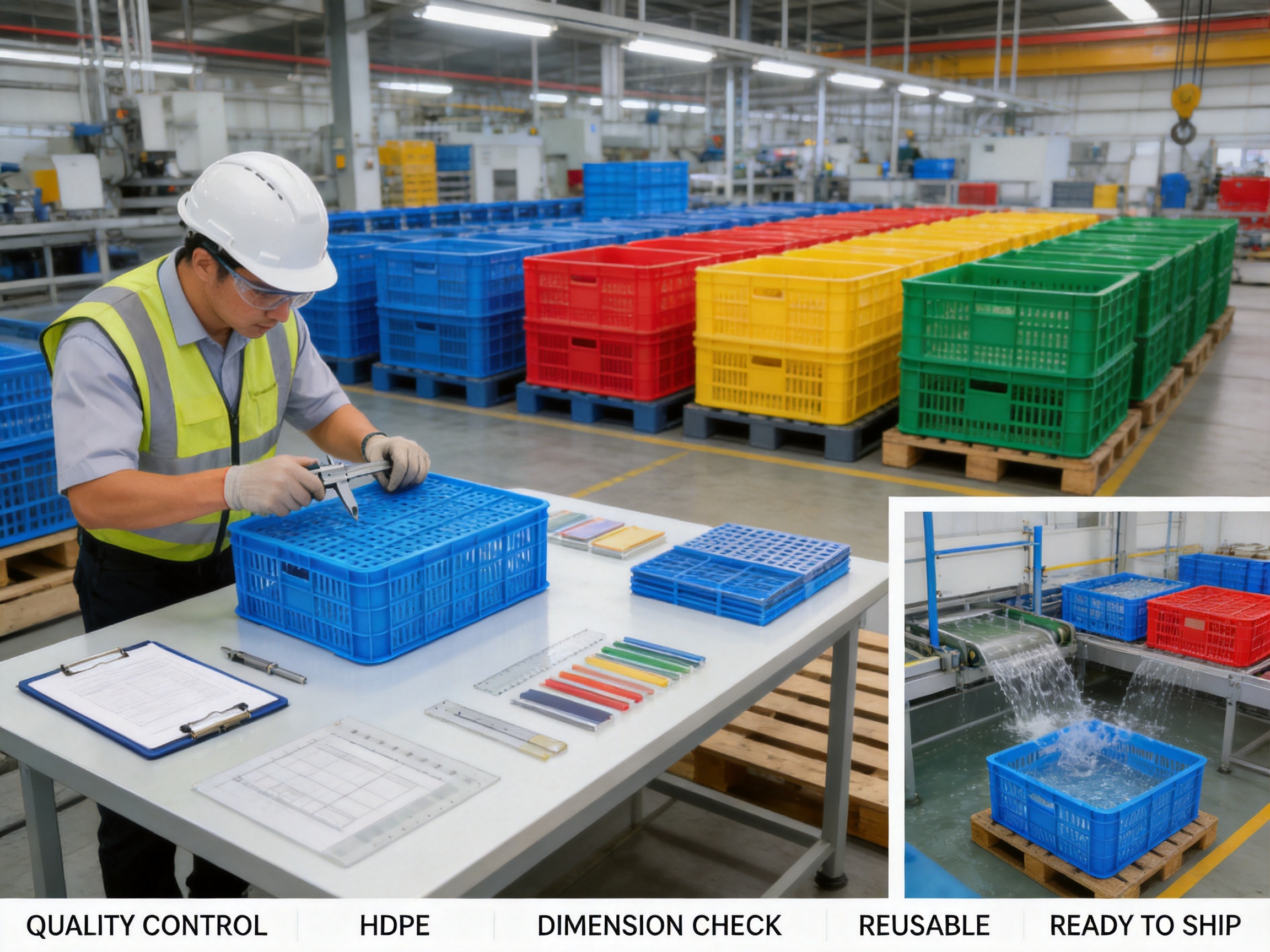
A durable crate is the result of more than material selection. Product consistency depends on tooling accuracy, polymer quality, molding conditions, cooling control, finishing, inspection, and packaging. The manufacturer’s supplied information emphasizes standardized processes and strict quality control from raw material sourcing through production.
Raw material control is the first stage of product reliability. Plastic pellets should be checked for consistency and suitability before entering production. Material identification, batch management, and supplier evaluation help reduce the risk of variation in color, strength, surface quality, or dimensional stability.
The product information refers to the use of virgin material under strict quality standards. Virgin polymer can provide more predictable physical properties than uncontrolled recycled feedstock. Recycled material may be appropriate for some products, but its performance depends heavily on source, composition, processing history, and quality management. For a reusable logistics crate, consistent material characteristics support more reliable production results.
Molding is the stage where the crate’s geometry is formed. The mold must reproduce the external dimensions, internal volume, perforation pattern, reinforcement features, rim, corners, and stacking interfaces accurately. Poor mold alignment or unstable processing conditions can lead to uneven walls, rough edges, distortion, or inconsistent stacking performance.
Process control should include monitoring of temperature, pressure, cycle time, cooling, and material flow. These factors influence the final strength and dimensions of the crate. A professional manufacturing system uses defined operating parameters and standardized work instructions so that production remains stable across batches.
After molding, visual and dimensional inspections help identify defects. Inspectors may check for cracks, warping, incomplete filling, sharp edges, excessive flash, uneven perforations, surface damage, and color variation. Dimensional checks confirm that the crate remains compatible with its intended storage and transport systems.
Quality control at every stage is especially important for stackable products. A small dimensional deviation around the rim or base can affect how crates align when placed in a stack. Inconsistent dimensions may create instability, reduce usable space, or make automated handling more difficult. Standardized inspection helps maintain compatibility between units.
Final inspection should also verify weight, labeling, packaging condition, and order quantity. For large commercial orders, batch records and traceability can help buyers identify the production lot associated with a shipment. This is useful when customers require repeat orders with consistent color, dimensions, or material documentation.
Standardized Production Procedures
The manufacturer describes a streamlined production approach based on standardized processes and strict standards. Standardization reduces dependence on individual operator judgment and helps ensure that the same procedures are followed from one production run to another.
Documented procedures may cover raw material handling, machine setup, mold changes, first-piece approval, in-process inspection, product release, and packing. Each step contributes to stable production. A clear process also makes it easier to investigate quality issues and implement corrective action when necessary.
Standardized manufacturing is particularly valuable for international buyers. Importers often need products to remain consistent across repeat shipments, multiple warehouses, or different customer locations. A controlled production system supports predictable purchasing and reduces the risk that a replacement order will differ significantly from the original batch.
Equipment and Production Capability
The company presents itself as an integrated supplier of warehousing and logistics equipment, including handling equipment, storage containers, packaging materials, and warehouse racking. This broad product range can be valuable to buyers seeking coordinated solutions rather than isolated products from multiple vendors.
A supplier with experience across several logistics categories can better understand how a crate interacts with pallets, pallet trucks, stackers, shelving, stretch wrap, strapping, and distribution workflows. This broader perspective can assist customers in selecting compatible products and planning complete material-flow systems.
Production capability is also supported by inventory availability. The product information indicates that selected items are in stock and ready to ship. Stock availability can shorten lead times for urgent warehouse projects, replacement requirements, seasonal demand, and trial orders. Buyers should still confirm actual inventory, production schedules, packaging quantities, and shipping terms before placing an order.
Customization and Color Management
The product information highlights multiple colors and full specifications. Color selection can be more than an aesthetic decision in warehouse operations. Businesses can use different colors to identify product categories, work areas, customers, process stages, or handling instructions.
For example, a distribution center might assign one color to inbound inspection, another to approved inventory, and another to returned products. A food processor might use color separation between raw materials, work-in-progress goods, and finished products. A retail group might use colors for different stores or delivery routes.
Color coding should be supported by written procedures and labels. Color alone should not be the only method used to identify critical product status, because lighting conditions, color perception, and contamination can affect recognition. However, when combined with barcodes, printed labels, RFID tags, or location management software, colored crates can improve visual organization.
Customization may also include branding, molded markings, labels, dimensions, or packaging configurations, depending on minimum order quantities and tooling requirements. Buyers should discuss the desired customization in advance and confirm whether modifications affect lead time, cost, stackability, cleaning, or material documentation.
Ergonomic Handling and Workplace Efficiency
Manual handling remains common even in highly automated warehouses. Employees may lift crates from pallets, move them between shelves, place them on workstations, or carry them short distances. The approximately 1.15kg empty weight helps keep the container manageable during these activities.
Ergonomics depends on the total lifted weight, not just the container weight. Operators should consider the combined weight of the crate and its contents, the lifting frequency, the distance carried, the height of the lift, and the available hand clearance. A 37-liter capacity allows companies to divide goods into smaller handling units rather than forcing employees to move oversized containers.
Good crate design can reduce unnecessary bending, twisting, and searching. A consistent container height makes it easier to arrange goods at suitable working levels. Visible contents can reduce the need to open and inspect every container. Stable stacking can also prevent operators from repeatedly rearranging unstable loads.
Businesses should provide training on safe lifting, stacking, cleaning, and movement. Where possible, pallet trucks, platform trolleys, conveyors, or lift equipment should be used to transport large quantities of filled crates. The crate is designed to support efficient handling, but safe operation still depends on the overall system.
Cleaning, Maintenance, and Service Life
Reusable plastic crates deliver the greatest value when they are maintained as returnable assets. A basic maintenance program should include routine inspection, cleaning, drying, and removal from service when a crate becomes damaged.
Cleaning procedures should be selected according to the products handled. Dust, soil, food residue, oils, and chemical contamination may require different cleaning methods. Operators should use cleaning agents and water temperatures that are compatible with HDPE and with the facility’s sanitation procedures.
Perforated crates can be easier to rinse because water can pass through the walls and base. However, openings and corners should be inspected carefully because residue may collect around reinforced areas or stacking interfaces. After washing, crates should be allowed to drain and dry before being placed into storage or returned to food-handling circulation.
Inspection personnel should look for cracks, serious deformation, broken rims, sharp edges, damaged stacking points, and contamination that cannot be removed. Damaged crates should be isolated rather than returned to service. A damaged container may create product loss, handling injuries, or stack instability.
Proper storage of empty crates can also extend service life. Containers should be protected from unnecessary impact, excessive heat, and prolonged exposure to conditions outside their intended operating range. They should not be dragged across rough surfaces when lifting or wheeling is practical.
Service life depends on many factors, including load weight, drop height, stacking height, temperature, ultraviolet exposure, cleaning chemicals, handling frequency, and transport conditions. The product’s high-strength construction supports long-term use, but no plastic container is immune to misuse. Clear operating limits are essential for achieving the expected performance.
Contribution to Sustainable Logistics
Reusable packaging can support sustainability goals when it replaces a significant quantity of disposable packaging and is circulated efficiently. A durable crate may be used repeatedly for years, reducing the number of cartons, bags, and temporary containers consumed by the same logistics process.
The crate’s lightweight design may also help reduce the mass of empty packaging during return transport. Its stackable form can improve the use of storage and vehicle space. Better space utilization may reduce the number of trips or the amount of warehouse area required, although the actual environmental benefit depends on transport distances, return rates, cleaning energy, and product service life.
At the end of its usable life, HDPE may be recoverable through appropriate recycling systems. Businesses should consult local waste-management providers and follow applicable regulations. Recycling is most effective when crates are kept separate from incompatible materials and when the polymer type is clearly identified.
Sustainability should be evaluated across the full life cycle. A reusable crate is not automatically more sustainable in every situation. Its benefits are strongest when it is used repeatedly, returned efficiently, maintained properly, and ultimately recovered or recycled. Companies should measure circulation frequency, loss rates, cleaning requirements, and replacement rates to understand the actual result.
How the Crate Supports One-Stop Logistics Solutions
Warehouse efficiency rarely depends on a single product. Crates must work together with pallets, shelving, handling equipment, packaging materials, labeling systems, and warehouse procedures. A supplier that provides several of these categories can help customers coordinate their purchasing and equipment planning.
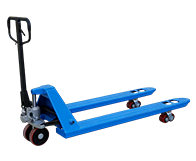
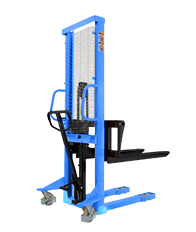
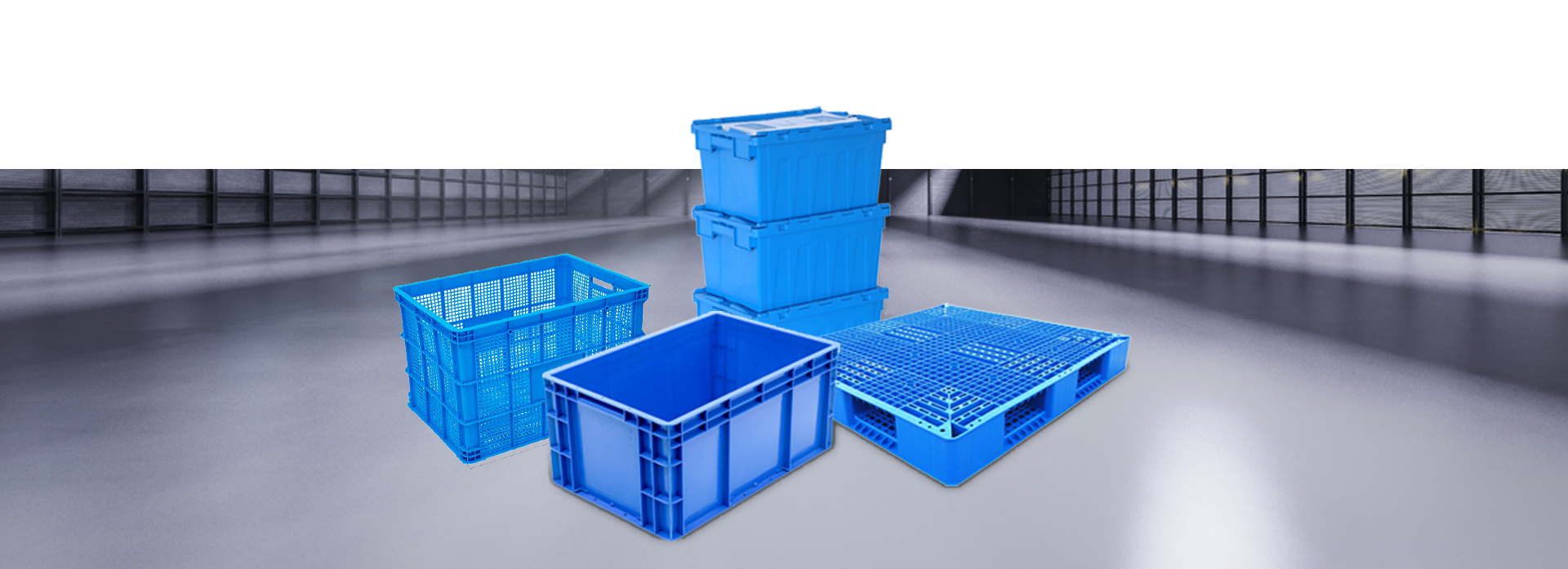
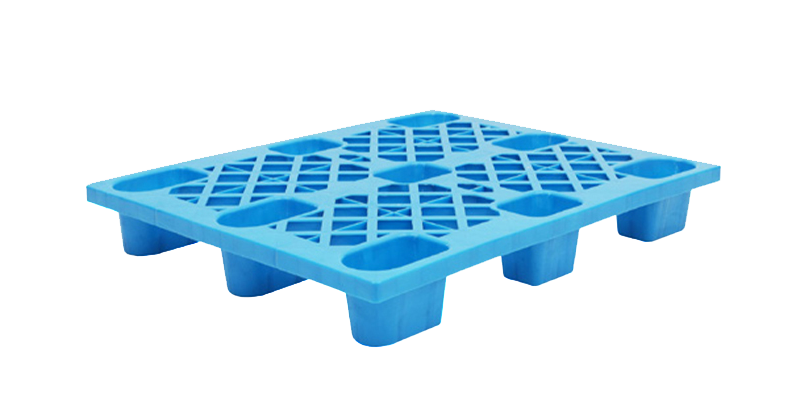
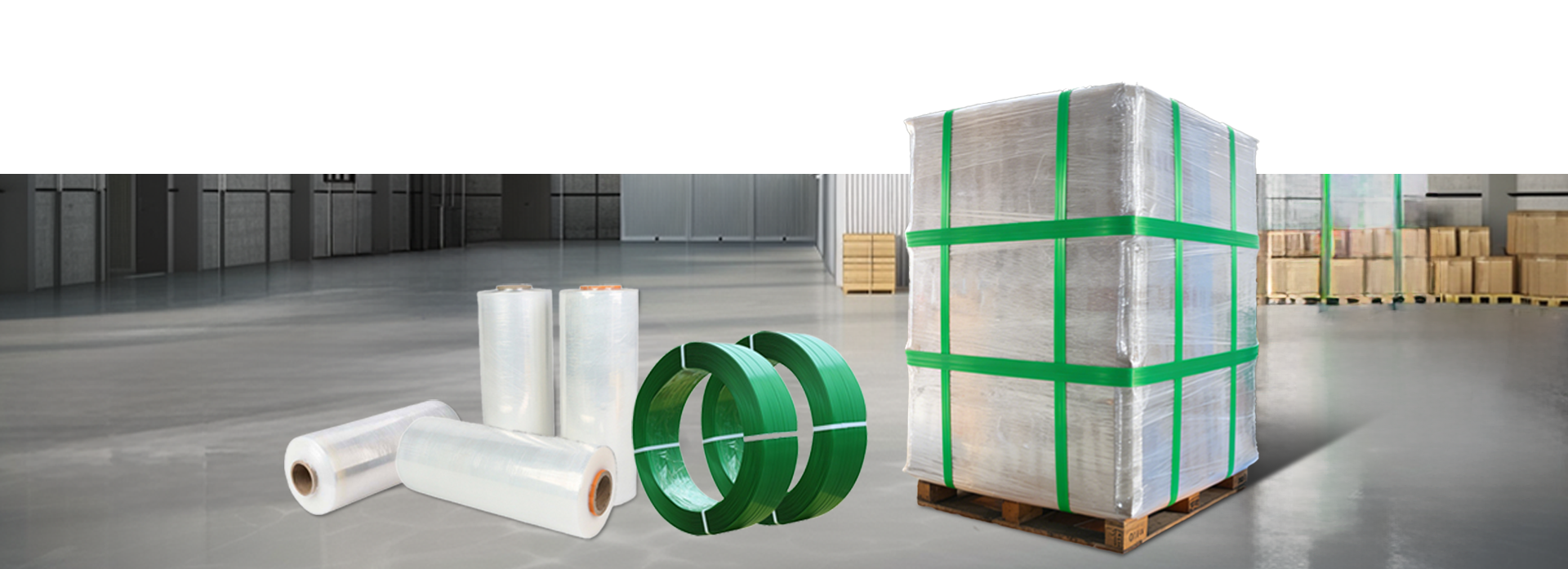
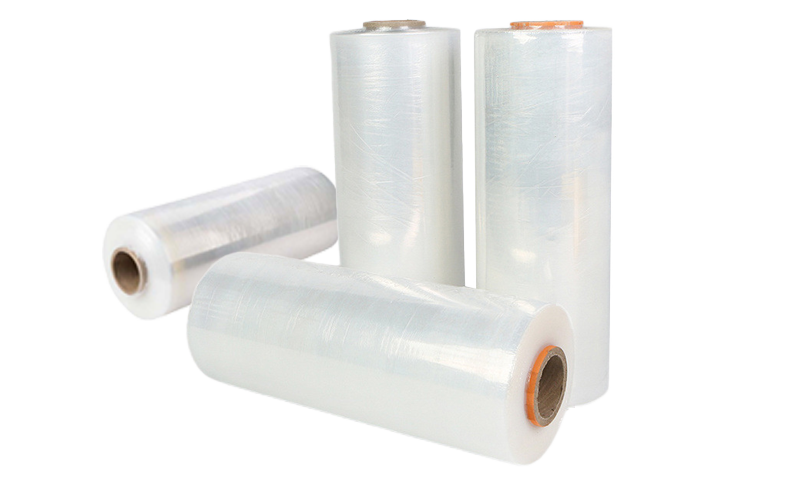
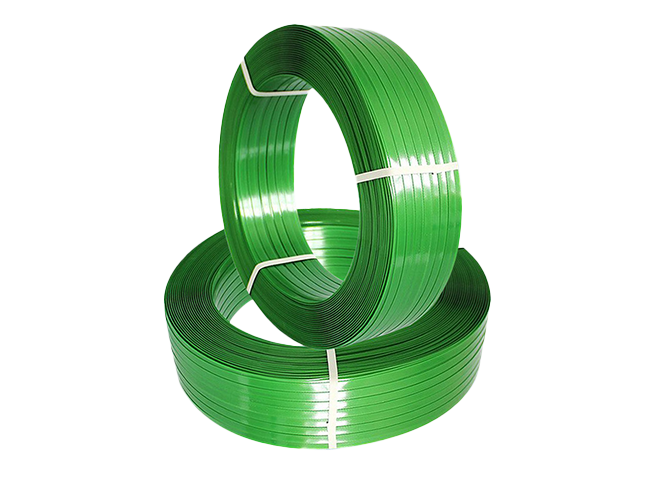
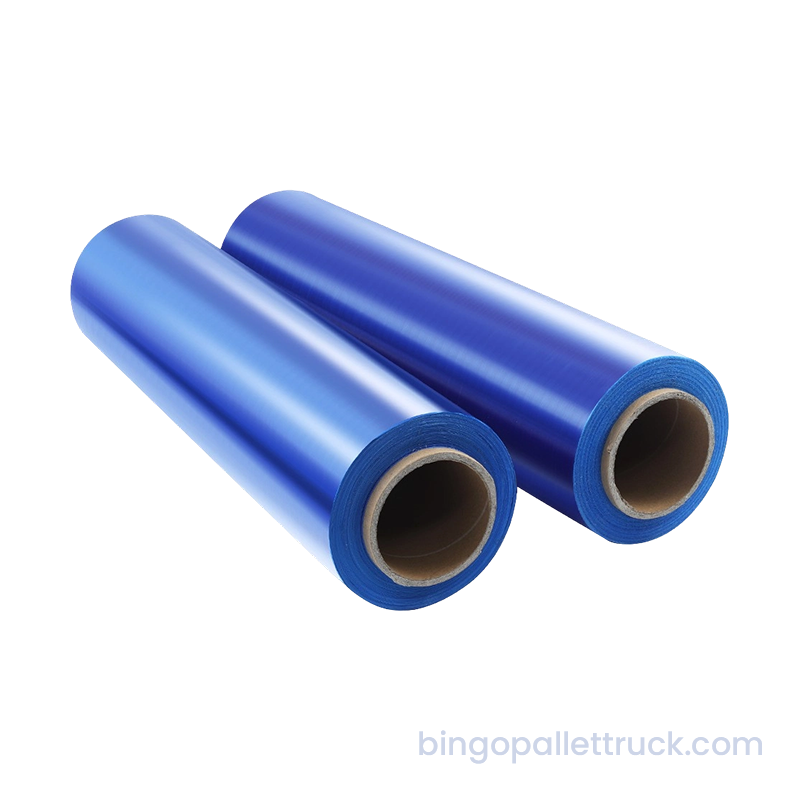
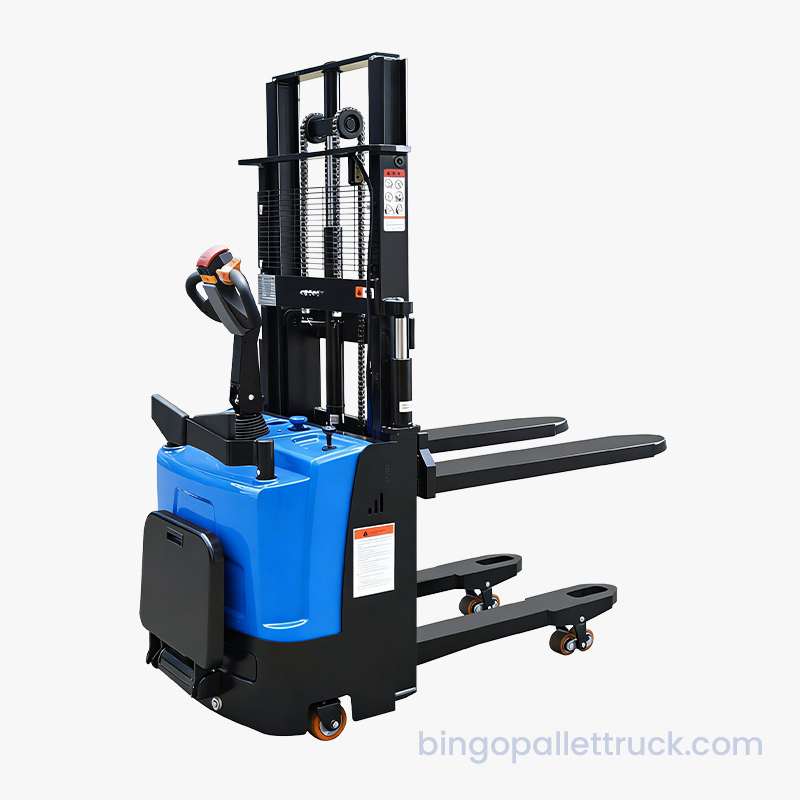
The company’s product portfolio covers handling equipment such as manual and electric pallet trucks and stackers. It also includes storage containers such as plastic pallets, totes, crates, and bulk containers. Packaging materials include stretch wrap and packing strapping, while warehouse racking is available in light-duty, medium-duty, and heavy-duty configurations.
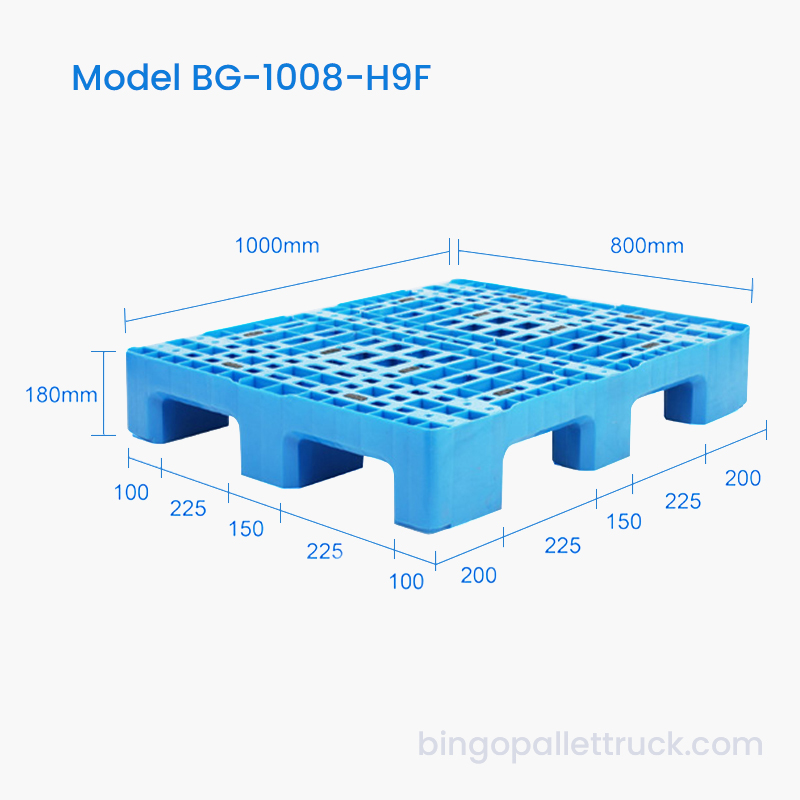
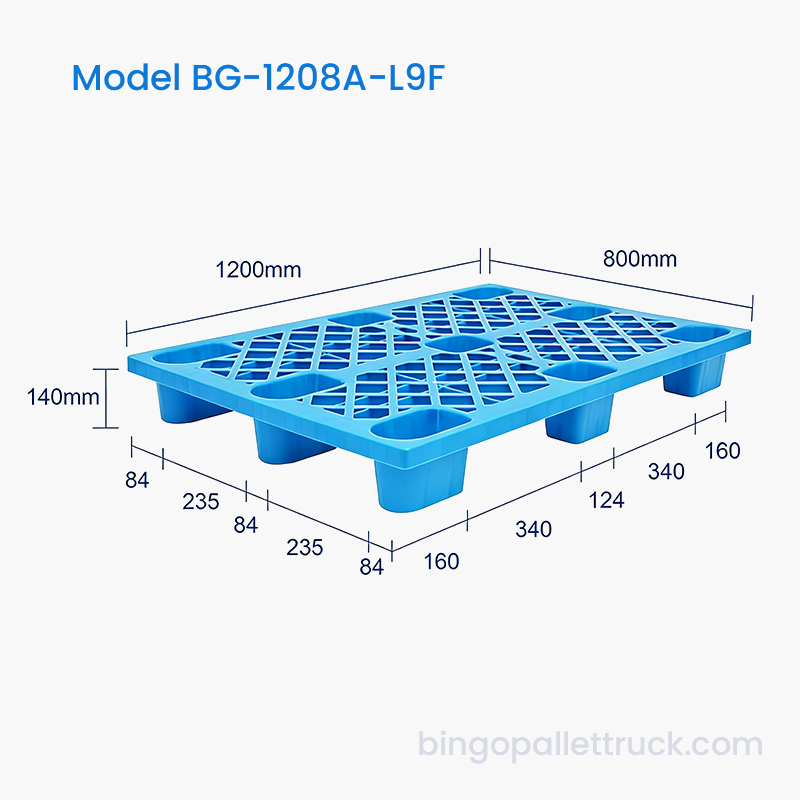
This combination allows a customer to plan a complete material-flow system. For example, stackable crates can be grouped on plastic pallets, moved with pallet trucks, held in racking, protected with stretch wrap, and processed through a distribution area using standardized procedures. Coordinated sourcing can simplify communication, documentation, spare parts planning, and after-sales support.
A one-stop approach may also reduce compatibility problems. Crate dimensions, pallet sizes, racking clearances, aisle widths, and handling equipment should be considered together. By discussing the entire operation with one experienced supplier, businesses may identify space or workflow issues before they become expensive installation problems.
Purchasing Considerations for International Buyers
Before ordering, buyers should define the intended application and confirm the product specifications. Important questions include the expected load weight, operating temperature, stacking height, cleaning process, contact with food, frequency of use, and required color or labeling.
Buyers should also confirm packaging quantities, minimum order requirements, production lead time, available stock, inspection documents, and shipping arrangements. For international shipments, the importer should verify carton or pallet packing details, gross and net weights, customs documentation, and applicable product standards.
If the crates will be used with automated equipment, buyers should confirm dimensional tolerances, base design, conveyor compatibility, barcode placement, and robotic handling requirements. A crate that works well for manual handling may require additional verification before integration into an automated system.
Sampling is recommended for large projects. A trial quantity allows the customer to test stacking, loading, cleaning, shelf compatibility, vehicle loading, and employee handling under real operating conditions. It can also reveal whether the internal dimensions are suitable for the intended products.
For food or regulated applications, customers should request the relevant material and compliance documentation. The product data identifies HDPE as the material, while the broader manufacturing information emphasizes strict quality control and virgin-material standards. Final documentation should be matched to the exact production batch and intended market.
Recommended Operating Practices
Loading
Distribute goods evenly across the crate base. Avoid placing a concentrated heavy load in one corner or overfilling the container above the rim. Products should remain stable when the crate is moved or stacked.
Stacking
Place crates on level surfaces and align them correctly. Do not exceed the supplier’s recommended stacking height or load limit. Inspect the lower crates regularly because they carry the greatest cumulative load.
Movement
Use appropriate carts, pallet trucks, conveyors, or lifting equipment when moving multiple filled crates. Avoid throwing or dropping crates, even when the polymer is impact resistant. Repeated severe impacts can shorten service life.
Identification
Use labels, barcodes, or other tracking methods to identify contents, batches, dates, and destinations. Color coding can provide an additional visual signal but should be supported by documented procedures.
Cleaning
Clean crates according to the goods handled and the facility’s sanitation requirements. Allow them to drain and dry before reuse. Remove containers from service if they show cracks, sharp damage, or serious deformation.
Business Value and Total Cost of Ownership
The purchase price is only one part of the cost of a logistics container. Businesses should also consider replacement frequency, labor time, product damage, cleaning, storage, return transport, and disposal. A crate with a higher initial price may provide better value if it lasts longer and reduces recurring packaging expenses.
Durable reusable crates can lower the number of packaging changes between supply-chain stages. When the same container moves from production to warehouse to retail, employees spend less time transferring goods from one package to another. Fewer transfers can reduce labor demand and the opportunity for product damage.
Visibility and standardization also have financial value. Workers can locate products faster, count inventory more efficiently, and stage orders with fewer errors. These improvements may be difficult to measure in isolation, but they can produce meaningful results across high-volume operations.
Space utilization is another important factor. Stackable crates can increase the amount of inventory stored within an existing footprint. This may postpone the need for additional warehouse space or reduce the amount of temporary floor storage. The actual result will depend on the facility layout and the way crates are integrated with shelving and pallets.
To evaluate total cost of ownership, a business can compare the expected number of uses with the purchase cost, cleaning cost, loss rate, and end-of-life value. It should also account for the cost of disposable packaging that the crates replace. A circulation study conducted over several months can provide a realistic basis for the decision.
Company Manufacturing and Supply Strengths
Yancheng Bingo Machinery Equipment Co., Ltd. operates as a supplier of warehousing and logistics equipment for global customers. Its stated business scope covers production, sales, and service, with a focus on integrated material storage and handling solutions.
The company’s product structure spans four main areas: handling equipment, storage containers, packaging materials, and warehouse racking. This broad capability supports customers in manufacturing, e-commerce logistics, warehousing and distribution, and supermarket retail.
Its stated quality philosophy emphasizes quality control from raw material sourcing through production. Inspections at different stages are intended to ensure that products meet defined standards before shipment. For a plastic crate, this approach is relevant to material consistency, molding quality, dimensional accuracy, stacking performance, and overall finish.
The company also emphasizes standardized production procedures. Streamlined processes can help maintain consistent output and support repeat orders. This is important for businesses that need large quantities of matching containers or plan to expand a logistics system across several sites.
Global buyers may also benefit from the company’s experience with export-oriented supply. Product selection, order communication, production coordination, packaging, and shipment preparation are all important when equipment is delivered across borders. Customers should communicate their technical and documentation requirements clearly at the quotation stage.
By combining storage containers with material-handling equipment and racking, the company is positioned to support projects that require more than a single crate purchase. Its one-stop approach can be useful for warehouse upgrades, new distribution centers, production-line organization, and replacement of inefficient packaging systems.
Q&A
What is the capacity of the crate?
The nominal capacity is 37 liters. The usable quantity may vary depending on the shape and packing method of the goods placed inside. Products should not be loaded above the rim or in a way that prevents stable stacking.
What are the crate dimensions?
The external dimensions are 600×400×180mm. The internal dimensions are 570×390×170mm. The difference between external and internal measurements accounts for the crate walls, rim, base, and structural features.
What material is used?
The product specification identifies HDPE, or high-density polyethylene, as the material. Buyers requiring formal food-contact or regulatory documentation should request the applicable certificates and batch information before ordering.
Is the crate suitable for food and fresh produce?
It is described as suitable for fresh produce, food storage, and general logistics. Its perforated design supports airflow and visibility. However, the final application should be reviewed according to the product being handled, cleaning procedure, temperature, and applicable food-safety requirements.
Can the crates be stacked when full?
The model is designed for stacking. The safe stacking height and maximum load should be confirmed with the supplier because performance depends on load distribution, temperature, floor conditions, and handling practices.
Can the crate be used outdoors?
It may be used in suitable outdoor logistics situations, but exposure to sunlight, extreme temperatures, rain, chemicals, and rough surfaces can affect service life. Buyers should confirm environmental suitability for long-term outdoor storage.
Is the crate easy to handle manually?
The empty crate weighs approximately 1.15kg, which supports relatively easy handling. The total handling weight includes the contents, so users should follow workplace lifting practices and use mechanical equipment for heavy or large quantities.
Does the perforated design improve ventilation?
Yes. The openings allow air to pass through the sides and base more freely than a solid-wall container. Actual ventilation performance depends on the product, packing density, temperature, and surrounding airflow.
Can different colors be supplied?
The product information indicates multiple color options. Available colors, minimum order quantities, and customization possibilities should be confirmed during the quotation process.
Can the crates be customized?
The information indicates that customization is available as part of the product offering. Possible options may include color, markings, labels, or other specifications, subject to tooling, order quantity, and technical feasibility.
How should the crates be cleaned?
Cleaning should match the material, products handled, and facility procedures. Use suitable cleaning agents, rinse thoroughly when required, and allow the crate to drain and dry before reuse. Food-handling operations should follow their documented sanitation program.
What industries can use this product?
Potential users include fresh produce distributors, food processors, manufacturers, e-commerce fulfillment centers, supermarkets, retail warehouses, third-party logistics providers, and general distribution facilities.
How does this crate compare with cardboard packaging?
The HDPE crate is reusable, moisture resistant, rigid, stackable, and perforated for visibility and airflow. Cardboard may be preferable for one-way shipments, printed retail packaging, or situations where the container cannot be returned.
Is the crate compatible with pallets and racking?
Its standardized 600×400mm footprint is suitable for organized logistics planning, but compatibility depends on the exact pallet, rack, shelf, conveyor, and handling-equipment dimensions. A site trial or technical review is recommended before large-scale deployment.
Where is the product manufactured?
The product is supplied by Yancheng Bingo Machinery Equipment Co., Ltd., located in Yancheng, Jiangsu, China. The company provides warehousing and logistics equipment for international customers.
Is the product available from stock?
The supplied product information states that selected products are in stock and ready to ship. Buyers should confirm current availability, order quantity, packaging configuration, and shipping schedule before purchase.
Conclusion
The 37L high-strength stackable plastic crate is a practical storage and transport solution for businesses seeking greater consistency, durability, and efficiency in daily logistics operations. Its 600×400×180mm standardized dimensions support modular warehouse planning, while the 37-liter capacity provides a manageable unit for sorting, picking, storage, and distribution.
The HDPE construction, reinforced structure, stackable form, fully perforated walls, and approximately 1.15kg empty weight create a balanced product profile. Compared with disposable cartons, flexible bags, non-standard consumer bins, and heavier metal containers, it offers a compelling combination of reusability, visibility, airflow, and handling convenience.
The product is particularly well suited to fresh produce, food storage, manufacturing, e-commerce fulfillment, retail replenishment, third-party logistics, and general warehouse applications. Its strongest value is achieved when it becomes part of a managed circulation system supported by cleaning, inspection, labeling, safe stacking, and efficient return procedures.
Manufacturing quality is equally important. The supplier’s emphasis on controlled raw materials, standardized production, inspection at every stage, and integrated logistics-equipment capability provides a strong foundation for consistent commercial supply. Buyers can further improve project results by confirming load limits, environmental requirements, compliance documents, customization details, and compatibility with existing warehouse systems.
For organizations working to improve space utilization, reduce disposable packaging, simplify material flow, and create more orderly storage operations, this stackable plastic crate offers a durable and scalable foundation. When correctly specified and properly maintained, it can support long service life and contribute to a more efficient supply chain.
References
1. Product specification sheet for model BG-604018-SC, including dimensions, material, weight, capacity, and design features.
2. Manufacturer-provided information concerning HDPE storage containers, quality control, standardized production procedures, available colors, and customization.
3. General principles of warehouse layout, modular storage, vertical space utilization, and material-flow planning.
4. General guidance on reusable transport packaging, container maintenance, cleaning procedures, and life-cycle evaluation.
5. General industrial practices for manual material handling, safe stacking, load distribution, and warehouse ergonomics.
6. General logistics packaging principles for fresh produce, food storage, manufacturing, retail distribution, and e-commerce fulfillment.
Product: 37L High Strength HDPE Stackable Plastic Crate for Long Service Life

Copyright @ Yancheng Bingo Machinery Equipment Co., Ltd. All rights reserved Warehouse Logistics Equipment Manufacturer Pallet Truck Supplier
