 en
 Español

3-Compartment Dividable Plastic Tote Box for Efficient Industrial Storage
Content
- 1 Introduction
- 2 Product Overview
- 3 Why Divided Storage Improves Warehouse Organization
- 4 Material Advantages of Polypropylene Construction
- 5 Structural Design and Practical Durability
- 6 Advantages Over Conventional Storage Alternatives
- 7 Applications Across Different Industries
- 8 Manufacturing Process and Quality-Control Strengths
- 9 Customization and Procurement Flexibility
- 10 How to Implement the Tote in a Warehouse
- 11 Maintenance, Inspection, and Safe Use
- 12 Environmental and Cost Considerations
- 13 Supplier Capabilities and One-Stop Logistics Support
- 14 Purchasing Checklist
- 15 Frequently Asked Questions
- 15.1 What is the main purpose of this tote?
- 15.2 What material is the product made from?
- 15.3 What are the dimensions of the tote?
- 15.4 How many compartments does it have?
- 15.5 Is the tote stackable?
- 15.6 Can the tote be cleaned?
- 15.7 Is customization available?
- 15.8 What industries can use this product?
- 15.9 Can the tote replace all metal or heavy-duty containers?
- 15.10 How should the compartments be organized?
- 15.11 What should buyers confirm before purchasing?
- 16 Conclusion
- 17 References
- 18 Product: 3-Compartment Dividable Plastic Tote Box for Industrial Component Storage
Introduction
Efficient storage is essential for every warehouse, workshop, distribution center, manufacturing plant, and retail operation. When small components, tools, fasteners, repair parts, or production supplies are stored without a clear organization system, businesses often experience wasted space, longer picking times, misplaced items, and unnecessary material handling costs. A well-designed storage container can address these issues by combining durability, organization, stackability, and easy maintenance in one reusable product.
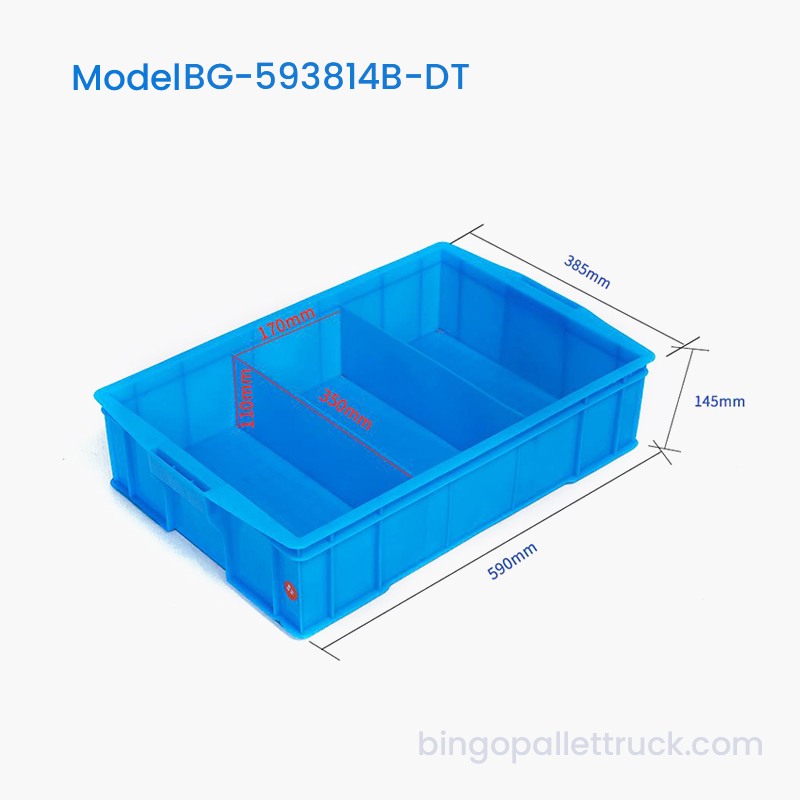
The 3-Compartment Dividable Plastic Tote Box, model BG-593814B-DT, is designed for industrial component storage and organized material handling. Manufactured from polypropylene, this plastic tote provides three-compartment storage in a large external format of 590 × 385 × 145 mm. Its divided interior helps users separate different items while keeping them within one compact container. This arrangement is especially practical when several related components must remain together but cannot be mixed.
The tote is suitable for warehouses, workshops, factories, service centers, e-commerce fulfillment areas, supermarket backrooms, and retail storage rooms. Its reusable construction supports repeated handling, while its smooth plastic body can be cleaned more easily than many traditional fiberboard or wooden storage alternatives. The reinforced structure is intended to support stacking, transportation, and long-term daily use.
Rather than functioning as a simple box, this product forms part of a broader storage and logistics system. It can be placed on shelving, used at workstations, integrated into picking operations, or transported between production and storage areas. Its divided design also helps create a consistent storage routine, allowing employees to identify, retrieve, and return parts more efficiently.
3-Compartment Dividable Plastic Tote Box for Industrial Component Storage
Product Overview
The BG-593814B-DT is a dividable plastic tote with three internal storage sections. The product combines the capacity of a large industrial tote with the organizational advantages of separated compartments. Users can assign each section to a different component, product variation, tool category, or work order.
The external dimensions are 590 × 385 × 145 mm, providing a broad footprint suitable for warehouse shelving and organized floor storage. The internal dimensions are 530 × 350 × 140 mm. These dimensions allow the tote to hold a practical quantity of small and medium-sized items without becoming unnecessarily deep or difficult to access.
The listed product weight is 1.5 kg. This relatively manageable weight makes the container easier to reposition than heavy metal bins or solid wooden boxes, while the polypropylene construction offers a balance between low weight and everyday durability. The internal compartment size is listed as 350 × 170 × 110 mm, providing a useful reference for planning the storage of parts and materials.
| Item | Specification |
| Product Type | 3-compartment dividable plastic tote |
| Model | BG-593814B-DT |
| Material | Polypropylene, or PP |
| External Dimensions | 590 × 385 × 145 mm |
| Internal Dimensions | 530 × 350 × 140 mm |
| Product Weight | 1.5 kg |
| Internal Compartment Reference | 350 × 170 × 110 mm |
| Primary Applications | Industrial components, tools, warehouse parts, supplies, and retail inventory |
| Storage Characteristics | Divided, reusable, stackable, washable, and space-efficient |
The product information also indicates support for multiple colors and customization. Color coding can help warehouse teams identify product families, production stages, departments, or handling priorities. Depending on the application, a business may use different colors for incoming materials, quality-approved components, returned products, maintenance parts, or finished goods.
Why Divided Storage Improves Warehouse Organization
Unorganized small-part storage creates hidden operating costs. Employees may spend time opening several boxes to locate one item, compare similar components, or identify whether an item belongs to a particular order. Mixed inventory may also increase the possibility of picking errors. A divided tote addresses these problems by establishing physical boundaries between related items.
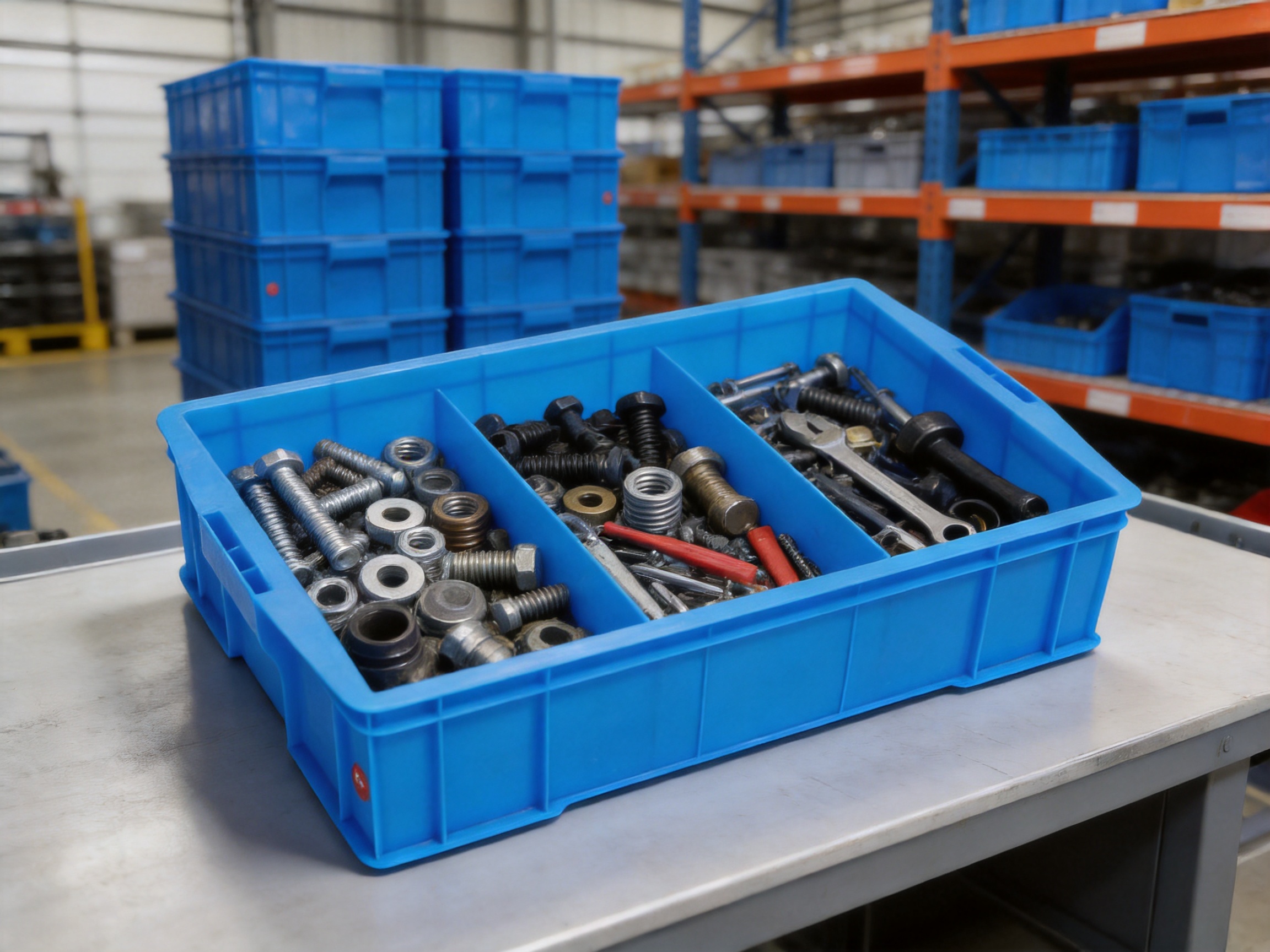
The three-compartment design is useful when components share a common purpose but differ in size, specification, or application. For example, a maintenance department may keep bolts, washers, and nuts in separate sections. An assembly line may use one compartment for fasteners, one for fittings, and one for inspection tools. An e-commerce operation may organize accessories belonging to the same product family in a single tote.
Keeping related items together can reduce unnecessary movement. Instead of carrying several small boxes to a workstation, an operator can move one tote containing the required group of materials. This can simplify replenishment and support more consistent workplace organization. It also makes visual inspection easier because the contents remain separated and can be checked at a glance.
Divided storage is particularly beneficial in environments where inventory changes frequently. A company can assign compartments according to the current production schedule, customer order, or maintenance task. Because the tote is reusable, the same container can be returned to service for a different task after cleaning and relabeling.
Improved Picking Accuracy
Picking accuracy depends partly on how clearly products are identified and separated. When similar items are stored in one open container, the risk of selecting the wrong component can increase. A three-compartment tote helps reduce this risk by creating visible physical separation.
Labels, color codes, barcode stickers, or location identifiers can be applied to the tote or the surrounding rack system. Each compartment can then be associated with a specific inventory item. This approach supports both manual picking and more structured warehouse workflows.
Better Use of Workstation Space
Workstations often have limited surface area. Several loose containers can occupy valuable space, obstruct tools, and make cleaning more difficult. A single divided tote consolidates multiple categories into one controlled footprint. Operators can keep the tote within reach without spreading parts across the entire bench.
Reduced Mixing of Components
Component mixing can lead to damaged parts, inaccurate counts, and rework. The internal sections of this tote provide a straightforward way to keep materials separated. Although users should select a suitable container size for every application, the three-compartment format is a practical option for grouping items that should remain close but not intermixed.
Material Advantages of Polypropylene Construction
The tote is specified as being manufactured from PP, or polypropylene. Polypropylene is widely used for reusable industrial containers because it offers a useful combination of low weight, rigidity, chemical resistance, and ease of cleaning. These characteristics make it suitable for repeated handling in warehouse and workshop environments.
Compared with paperboard containers, a polypropylene tote is less vulnerable to ordinary moisture exposure and can be wiped or washed when necessary. This is valuable in areas where dust, oil residue, packaging debris, or workshop contaminants may accumulate. A reusable plastic body can also maintain a more consistent shape than disposable packaging that becomes crushed or weakened after repeated use.
Compared with many metal containers, polypropylene can reduce handling weight and avoid rust-related concerns. A lighter container may be easier for employees to move, particularly when several totes are handled throughout a shift. The plastic construction also offers a practical surface for labels and color identification.
The material choice supports repeated use rather than one-time disposal. By returning the tote to the storage cycle after each task, businesses can reduce dependence on disposable cartons and temporary packaging. The actual service life will depend on load, handling conditions, temperature, stacking arrangement, and maintenance practices, but the reusable design is intended for long-term warehouse use.
The supplied product information refers to PP virgin material in its quality-control description. Elsewhere, general product information mentions HDPE for certain storage products and customization programs. Since the specific BG-593814B-DT specification identifies polypropylene, purchasers should confirm the exact material, additives, color, and any application-specific requirements before placing a specialized order.
Structural Design and Practical Durability
A storage tote must do more than hold products. It must remain stable during movement, resist everyday impacts, and maintain its shape when used on shelves or in stacks. The BG-593814B-DT is described as having a reinforced structure designed for safe stacking and long-term reuse.
The relatively broad base helps the tote occupy a stable footprint on a shelf, pallet, workbench, or warehouse floor. A low-profile height of 145 mm can make the contents easier to reach than items stored in a much deeper container. This is useful for high-frequency picking, where workers need to see and access components without excessive bending or searching.
Stackability is another important advantage. The supplied information states that the company produces stackable storage products and indicates stacking of more than ten layers for suitable products and conditions. The exact safe stacking height for this model should be confirmed according to load, floor condition, rack configuration, and manufacturer guidance. In general, stacking compatible totes vertically can increase storage density while reducing the floor area required.
Safe stacking depends on correct alignment and balanced loading. Users should avoid placing heavy, unstable, or protruding materials in a way that compromises the stack. Containers should be inspected regularly for cracks, distortion, or damage, especially in demanding environments where they are moved frequently by hand trucks, pallet trucks, or other material-handling equipment.
Advantages Over Conventional Storage Alternatives
Compared with Cardboard Boxes
Cardboard boxes are inexpensive and convenient for temporary shipping, but they may not be ideal for long-term industrial component storage. Repeated handling can cause crushing, tearing, or deformation. Cardboard can also absorb moisture and may become difficult to clean when exposed to dust, grease, or production residue.
The reusable polypropylene tote offers a more durable alternative for recurring storage cycles. Its rigid walls help maintain a consistent form, while its washable surface supports better housekeeping. The divided interior also provides organization that a standard open cardboard carton usually does not provide.
Compared with Unpartitioned Plastic Bins
A single large plastic bin can hold many items, but it may encourage mixing. Workers may need to search through the entire container to find one part. The three-compartment design improves visibility and order without requiring three separate containers.
This consolidation can reduce handling steps. One tote can carry a group of associated materials while preserving internal separation. It can also simplify labeling because a single outer container can be assigned to one workstation, order, or process.
Compared with Metal Bins
Metal bins can provide strong structural performance, but they may be heavier and less convenient for frequent manual repositioning. They can also be noisier during handling and may require attention to corrosion protection in certain environments. A polypropylene tote provides a lighter, quieter, and easier-to-clean option for applications that do not require the extreme load capacity of heavy steel storage.
Compared with Open Shelves
Open shelves provide visibility but do not necessarily prevent items from spreading, falling, or becoming mixed. A tote creates a defined storage unit that can be removed from the shelf, carried to a workstation, and returned after use. The container itself becomes part of the material-flow process.
Compared with Disposable Packaging
Disposable packaging may appear economical at the point of purchase, but its replacement cost can accumulate in high-volume operations. Reusable totes can support repeated storage and transport cycles. When combined with cleaning and inspection procedures, they may contribute to a more consistent and sustainable packaging strategy.
Applications Across Different Industries
Manufacturing and Assembly
Production lines often require a steady supply of components at each workstation. The three-compartment tote can organize fasteners, fittings, clips, electrical parts, or assembly accessories. Different compartments may represent different stages of assembly or different parts required for one product.
Supervisors can also use colors or labels to distinguish materials assigned to different lines. This visual organization can support faster replenishment and help operators identify whether a required component is available.
Maintenance and Repair
Maintenance teams frequently handle assortments of small parts. A divided tote can hold replacement hardware, seals, tools, and consumables for a specific repair task. Instead of collecting individual containers, a technician can prepare one tote before visiting a machine or work area.
After the repair is completed, unused parts can be returned to their designated sections. The tote can then be cleaned, checked, and prepared for the next job.
Warehousing and Distribution
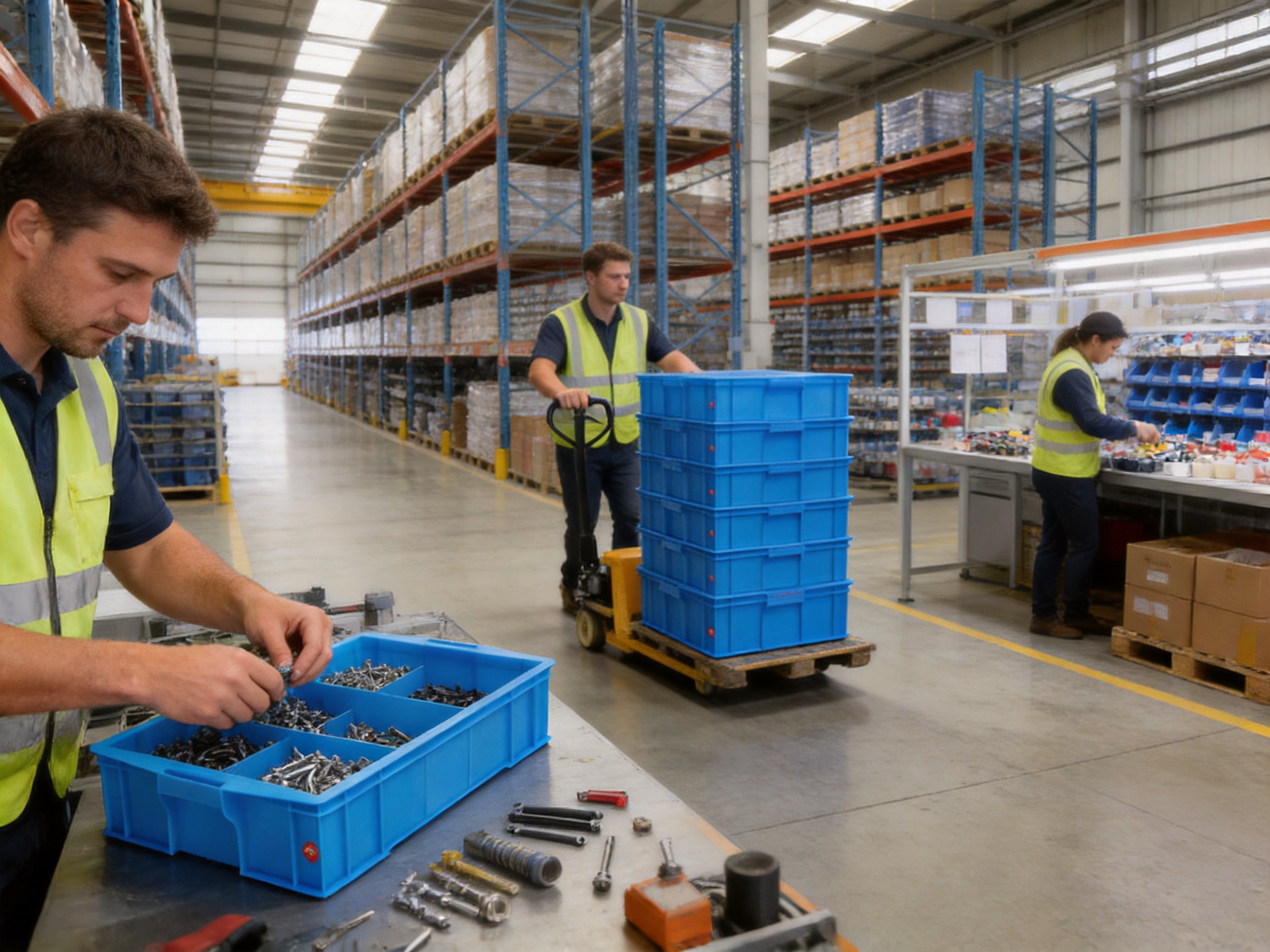
In a distribution center, the tote can function as a picking or replenishment container. Its internal compartments can separate product variants, order lines, or accessory sets. The external dimensions also make it suitable for organized shelf placement and standardized storage layouts.
Warehouse planners can assign fixed locations to the totes and use labels to identify product families. When several totes share consistent dimensions, shelf spacing and handling procedures can become easier to standardize.
E-Commerce Fulfillment
E-commerce operations often manage many small products and accessories. A divided tote can be used for order consolidation, returns processing, accessory storage, or packing preparation. It can help prevent small products from rolling across a workstation or becoming mixed with items from another order.
Retail and Supermarket Backrooms
Retail operations need to store stock efficiently behind the sales floor. The tote can hold replacement labels, small merchandise, display hardware, packaging supplies, or product accessories. Its low-profile shape supports quick access, while its reusable construction is suitable for regular restocking routines.
Tool Rooms and Service Centers
Service centers can assign a compartment to different categories of tools, spare parts, or customer equipment. The tote can be transported between the tool room and service bench while helping preserve organization during the job.
Manufacturing Process and Quality-Control Strengths
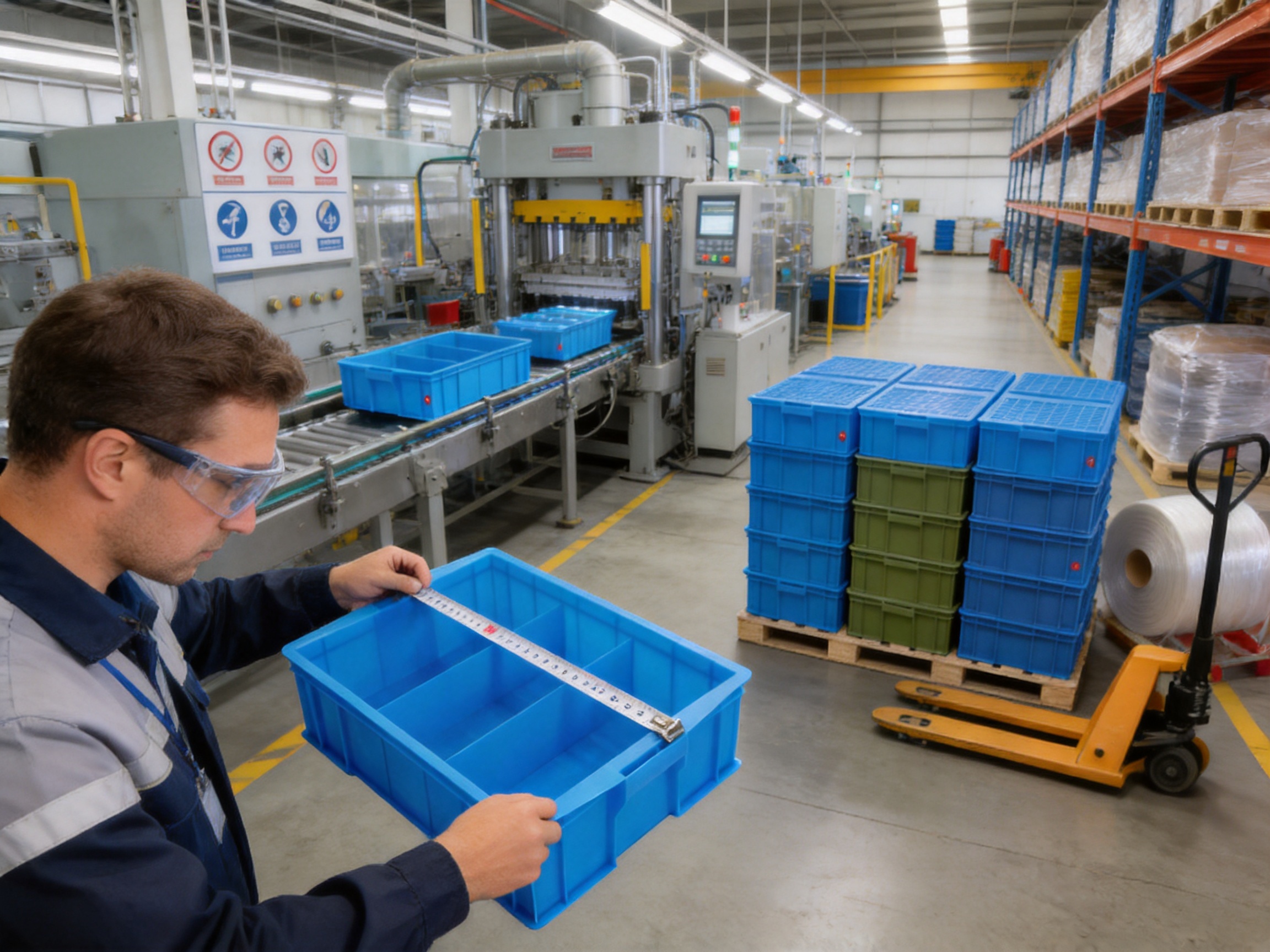
The value of an industrial tote depends not only on its design but also on the consistency of its manufacturing. Variations in wall thickness, dimensions, material quality, or molding accuracy can affect stacking performance and service life. The manufacturer describes a production system based on standardized processes, virgin material control, and inspections at multiple stages.
Material Selection and Raw-Material Control
The product specification identifies polypropylene as the primary material. The company’s quality information states that high-density PP virgin material is used in production for its storage products. Virgin resin can help provide a consistent material base, although the final properties depend on the specific grade, additives, processing parameters, and product design.
Raw-material control is an important first step because inconsistent resin or colorant quality may affect strength, appearance, and processing stability. A structured sourcing process allows the manufacturer to maintain more predictable production conditions and reduce variation between batches.
Standardized Production Procedures
The company emphasizes streamlined and standardized manufacturing processes. Standardization can cover mold preparation, material feeding, molding parameters, cooling, trimming, inspection, packaging, and storage before shipment. Consistent procedures help ensure that products made at different times remain compatible with the intended storage system.
For a stackable tote, dimensional consistency is particularly important. If the base, walls, or stacking interfaces vary significantly, containers may not align correctly. A disciplined process helps support repeatable dimensions and more reliable warehouse use.
Inspection at Multiple Stages
The supplied company information describes quality control from raw-material sourcing through production, with inspections at every stage. A multistage approach may include visual inspection, dimensional checks, weight verification, structural review, and packaging inspection. The precise inspection plan should be confirmed for each order, but the stated approach demonstrates an emphasis on process control rather than relying only on a final check.
Inspection can identify issues such as flash, deformation, cracks, uneven surfaces, incorrect color, or dimensional variation. Detecting these issues before shipment helps protect customers from receiving products that may be difficult to stack or organize.
Production Equipment and Supply-Chain Coordination
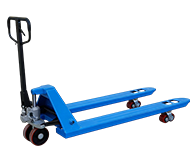
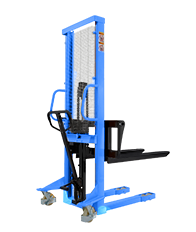
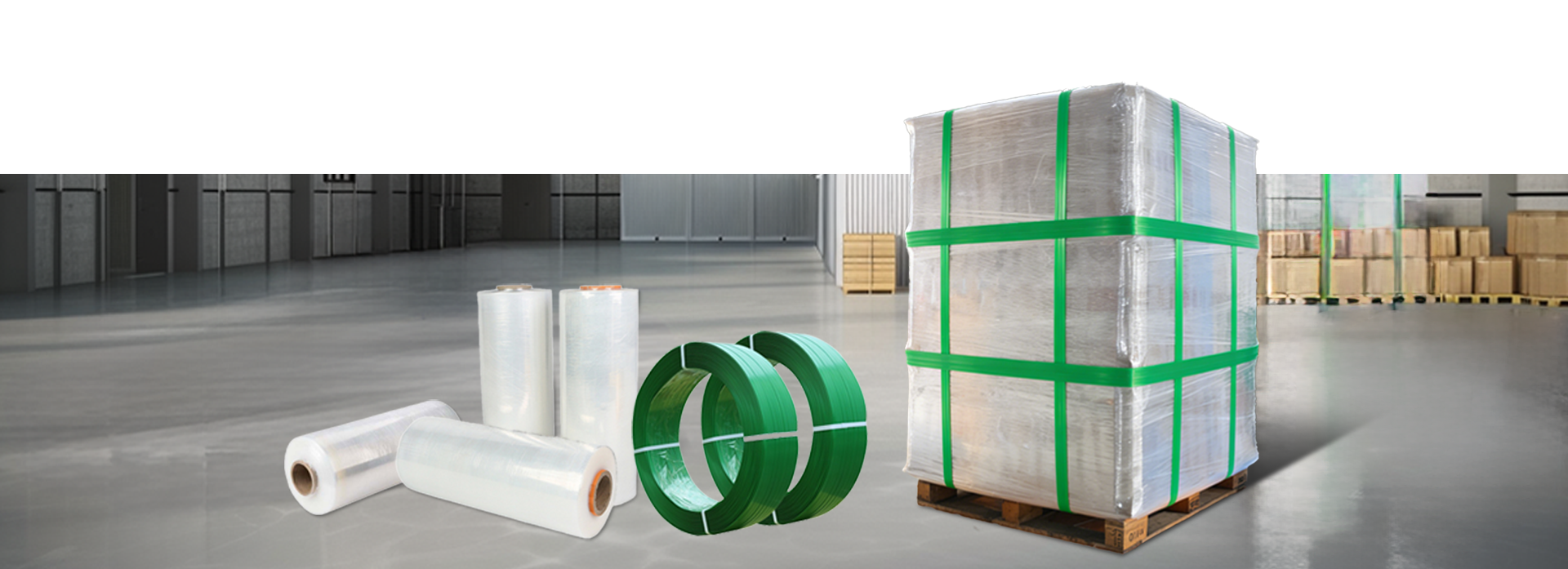
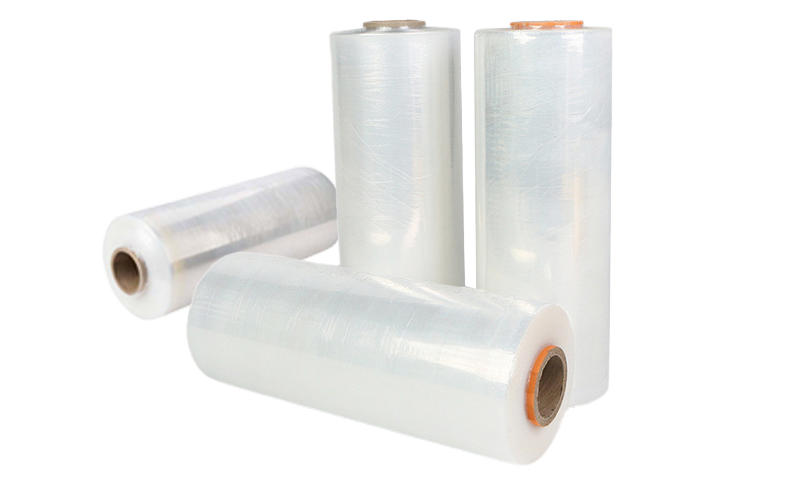
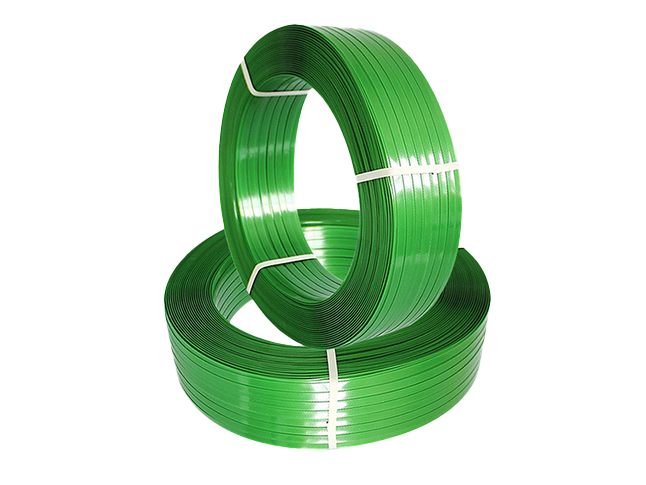
The company presents itself as having established production equipment and a mature supply-chain system for warehousing and logistics products. This broader industrial background is valuable because customers may require more than one type of storage or handling product. A supplier capable of supporting plastic totes, pallets, crates, bulk containers, pallet trucks, stackers, stretch wrap, strapping, and warehouse racks can help coordinate product requirements across a facility.
Single-source or coordinated sourcing may simplify communication, product matching, packaging arrangements, and future replenishment. It can also support the development of a consistent material-handling system instead of a collection of unrelated products.
Customization and Procurement Flexibility
The company information indicates that multiple colors and customization are supported. Customization may be useful for businesses that operate large facilities or require visual management. Color coding can separate departments, inventory conditions, product families, or workflow stages.
Purchasers may also discuss labels, logos, packaging methods, dimensions, and order quantities with the supplier. Any customization should be confirmed in writing because it may affect tooling, minimum order quantities, lead times, pricing, and inspection requirements.
For standard applications, in-stock availability can provide an advantage. The product information states that the company maintains stock and supports fast delivery for selected products. Availability can be especially valuable when a warehouse is expanding, a new production line is starting, or damaged storage units must be replaced quickly.
Before ordering, buyers should confirm the exact stock status, shipping terms, packaging quantity, destination requirements, and estimated delivery schedule. They should also verify whether the quoted product is the standard BG-593814B-DT model or a customized version.
How to Implement the Tote in a Warehouse
Step One: Classify the Inventory
Begin by grouping items according to use, size, turnover rate, or production relationship. The three compartments are most effective when each section has a clear purpose. Avoid placing unrelated inventory together simply because space is available.
Step Two: Confirm Dimensional Compatibility
Compare the internal dimensions of the tote with the actual dimensions of the stored parts. Consider not only length and width but also height, access clearance, packaging, and the space required for labels or dividers. Items should not be forced into the container or loaded so high that they interfere with stacking.
Step Three: Establish Location Codes
Assign each tote a location in the warehouse. A simple code may identify the aisle, rack, shelf, and container position. If compartments hold different parts, labels should identify each section clearly. Consistent codes help new employees learn the system and support accurate replenishment.
Step Four: Use Visual Management
Use color, large-print labels, barcode identification, or printed inventory cards where appropriate. The aim is to make the contents clear without requiring unnecessary searching. Color coding should remain consistent throughout the facility so that employees understand its meaning.
Step Five: Standardize Loading
Define reasonable loading practices for each product category. Heavy components should be placed in a way that keeps the tote stable. Fragile items may require internal packaging. Protruding materials should be avoided if they could interfere with stacking or create a handling hazard.
Step Six: Create a Return and Cleaning Procedure
Reusable containers work best when there is a clear return process. After use, employees should remove waste, check for misplaced parts, and return the tote to its assigned area. A periodic cleaning schedule can help maintain visibility and hygiene.
Maintenance, Inspection, and Safe Use
Although polypropylene totes are designed for repeated use, routine inspection remains important. Employees should check for cracks, sharp damage, severe distortion, broken stacking areas, or contamination. A damaged tote should be removed from service until it has been evaluated.
Cleaning methods should match the material and the stored products. In many warehouse applications, wiping with a suitable mild cleaning solution may be sufficient. Aggressive chemicals, excessive heat, or unsuitable solvents should be avoided unless compatibility has been confirmed.
Stacking should be performed on a level surface with containers aligned correctly. Users should not exceed the safe stacking limit established for the specific tote and load condition. A stack exposed to vibration, uneven flooring, or frequent movement may require a lower height than a stationary stack in a controlled storage area.
When totes are moved by pallet truck or other equipment, workers should ensure that the load is stable and that no container can fall during transport. The tote should not be used as a step, seat, or lifting device unless it has been specifically designed and rated for that purpose.
Environmental and Cost Considerations
Reusable storage products can support waste reduction by replacing a portion of disposable packaging. A tote that remains in service for many storage and handling cycles may reduce the number of cartons, bags, or temporary containers consumed by an operation. This benefit is strongest when the company manages returns, cleaning, inspection, and internal circulation effectively.
The cost of a storage container should be evaluated across its expected service period rather than only by its initial purchase price. Important factors include durability, replacement frequency, handling efficiency, storage density, cleaning requirements, and the value of reduced picking errors. A divided tote can create additional operational value because it combines several storage functions in one unit.
Businesses should also consider end-of-life handling. Plastic totes that are no longer suitable for service may be sorted according to local recycling requirements and material identification. Buyers should confirm the exact polymer composition and any additives when developing a formal recycling or sustainability program.
Supplier Capabilities and One-Stop Logistics Support
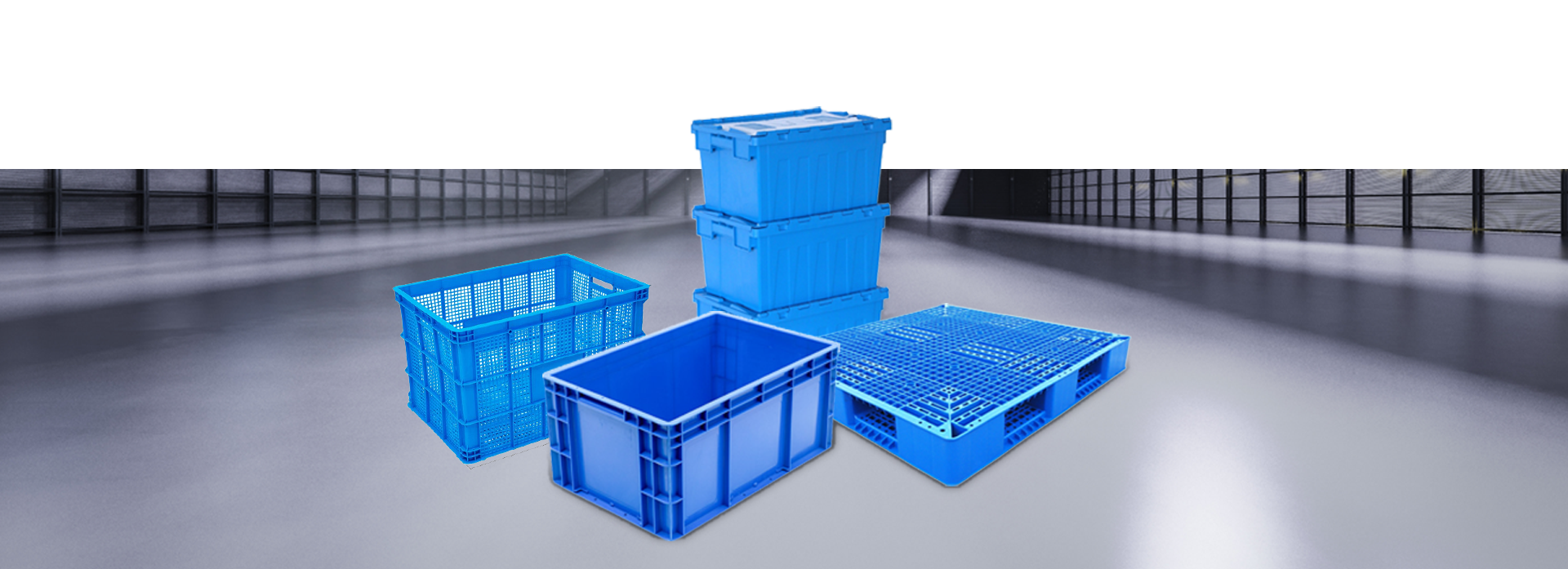
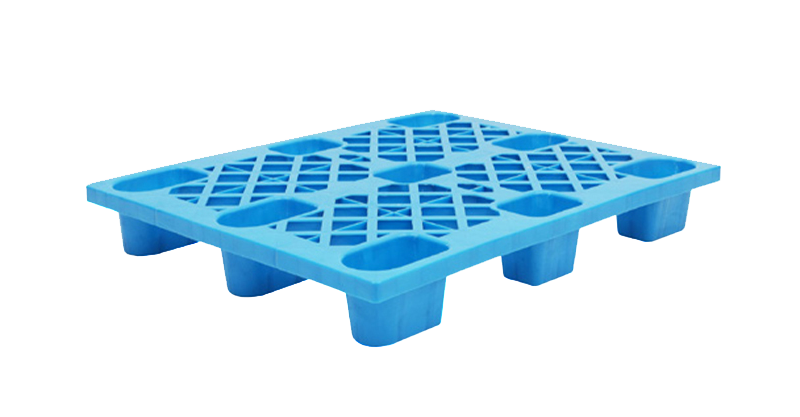
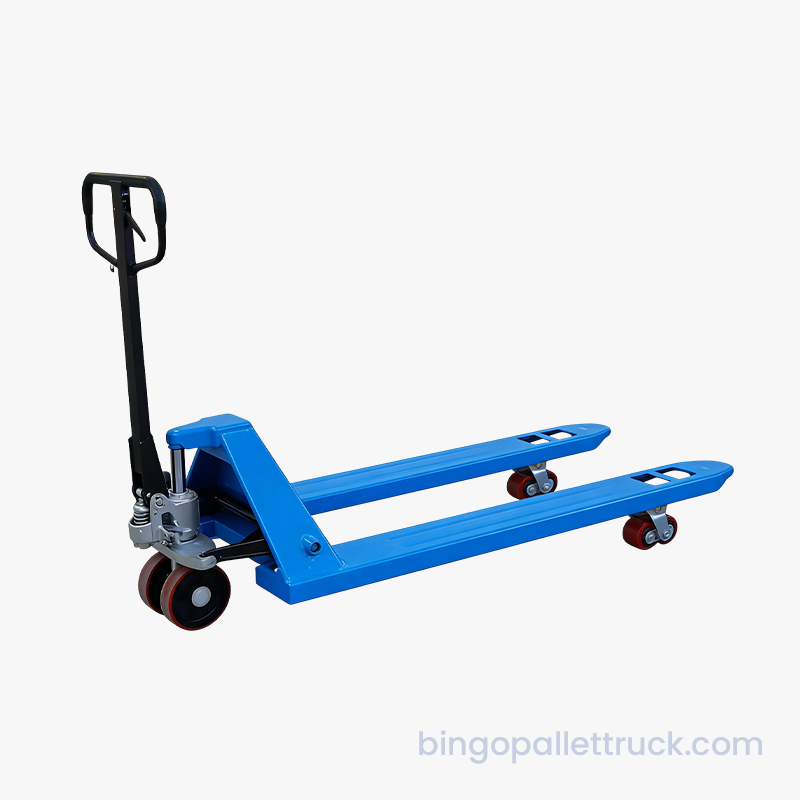
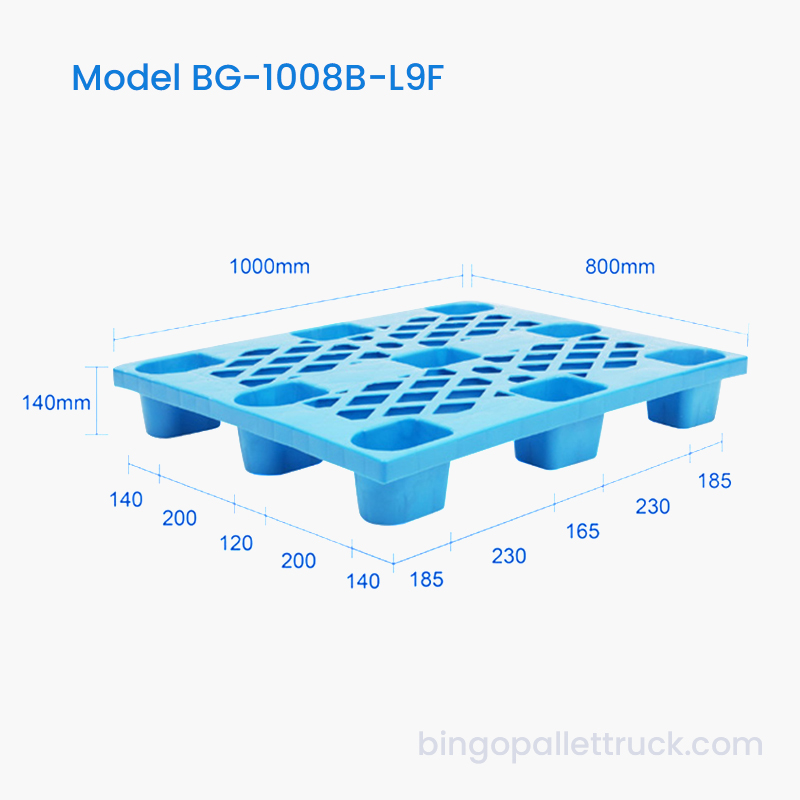
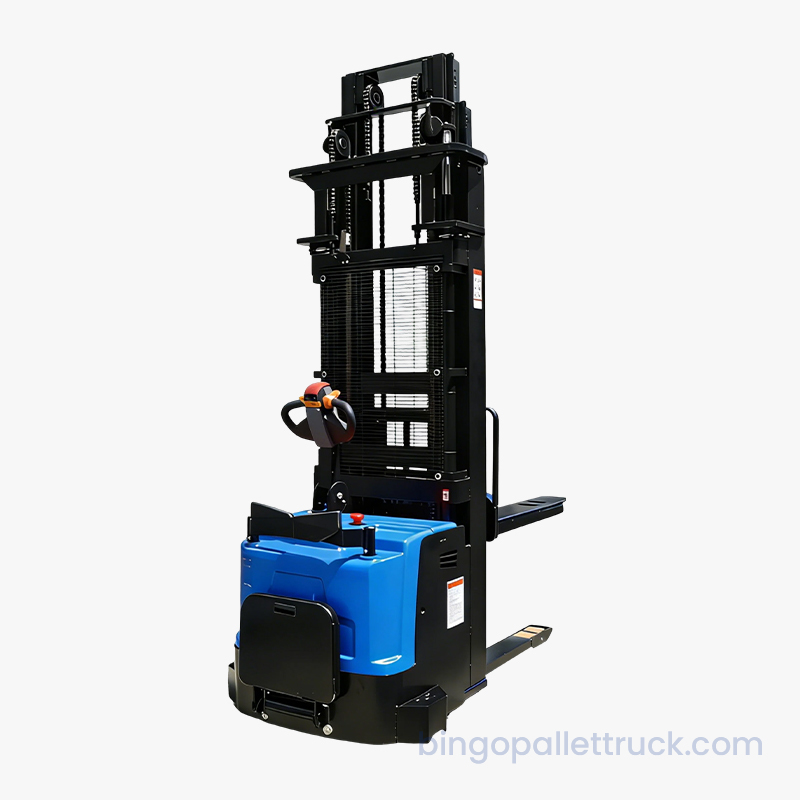
Yancheng Bingo Machinery Equipment Co., Ltd. presents itself as a supplier of warehousing and logistics equipment with four principal product systems: handling equipment, storage containers, packaging materials, and warehouse racking. This product range includes manual and electric pallet trucks, stackers, plastic pallets, plastic totes, crates, bulk containers, stretch wrap, packing strapping, and light-, medium-, and heavy-duty racks.
This broader portfolio can benefit customers that are developing or upgrading a complete warehouse. The three-compartment tote may be used together with racks for vertical storage, pallet trucks for internal movement, packaging materials for dispatch, and other containers for larger or bulkier products. Coordinating these elements can help businesses create a more consistent material-flow design.
The company states that it serves manufacturing, e-commerce logistics, warehousing and distribution, and supermarket retail applications. These industries require different combinations of storage density, accessibility, cleanliness, handling speed, and product protection. A supplier with experience across several scenarios may be better positioned to discuss how a tote should fit into the customer’s operating process.
The company also describes its business philosophy as quality-focused and oriented toward long-term cooperation. For international buyers, practical supplier evaluation should include communication quality, technical documentation, sample availability, production capacity, quality records, packaging standards, and after-sales responsiveness.
Purchasing Checklist
Before placing an order for the BG-593814B-DT, buyers should confirm the following points:
- Exact model number and product configuration.
- Material specification, including the PP grade and any additives.
- External and internal dimensions.
- Compartment arrangement and usable compartment dimensions.
- Product weight and expected load requirements.
- Stacking method and recommended maximum stacking height.
- Color availability and customization options.
- Labeling, logo, or barcode requirements.
- Packaging quantity and carton or pallet configuration.
- Stock status, production lead time, and delivery schedule.
- Inspection standards and acceptable tolerances.
- Shipping terms, destination requirements, and documentation.
Sample testing is recommended when the tote will be used in a demanding application. A sample can be checked for fit, compartment usability, stack alignment, label adhesion, cleaning performance, and compatibility with existing racks or handling equipment.
Frequently Asked Questions
What is the main purpose of this tote?
The main purpose is to store and organize industrial components, tools, supplies, and small or medium-sized inventory items in three separate compartments. It is designed for reusable warehouse, workshop, manufacturing, retail, and distribution applications.
What material is the product made from?
The product specification identifies polypropylene, or PP, as the material. The supplier’s general information also discusses HDPE for certain storage products, so buyers with precise material requirements should confirm the material grade for the specific BG-593814B-DT order.
What are the dimensions of the tote?
The external dimensions are 590 × 385 × 145 mm. The internal dimensions are 530 × 350 × 140 mm. The listed internal compartment reference is 350 × 170 × 110 mm.
How many compartments does it have?
This model has three compartments. The compartments are intended to keep related items separated while allowing them to be stored and transported in one container.
Is the tote stackable?
The product is designed for stackable storage. The company’s information states that its stackable products can be stacked beyond ten layers under suitable conditions. The exact safe stacking height for this model should be confirmed according to the load, surface, environment, and manufacturer guidance.
Can the tote be cleaned?
Yes. The polypropylene construction provides a smooth plastic surface that is generally easier to wipe or wash than cardboard or untreated wood. Cleaning agents and methods should be selected according to the stored materials and confirmed for compatibility.
Is customization available?
The supplied information indicates support for multiple colors and customization. Buyers should discuss colors, labels, branding, dimensions, packaging, minimum quantities, and lead times with the supplier before ordering.
What industries can use this product?
Potential applications include manufacturing, assembly, maintenance, warehousing, distribution, e-commerce fulfillment, supermarket backrooms, retail storage, service centers, and workshop organization.
Can the tote replace all metal or heavy-duty containers?
No. The tote is a practical solution for many component-storage applications, but the correct container depends on load, temperature, impact, chemical exposure, fire-safety requirements, and handling conditions. Heavy-duty metal or specialized containers may be more appropriate for extreme applications.
How should the compartments be organized?
Each compartment should be assigned a clear purpose, such as a component type, product variant, order group, or maintenance task. Labels and color coding can improve identification and reduce mixing.
What should buyers confirm before purchasing?
Buyers should confirm dimensions, material, compartment layout, weight, load expectations, stacking guidance, stock status, color, customization, packaging, inspection requirements, and delivery terms. Sample testing is recommended for specialized or high-volume applications.
Conclusion
The 3-Compartment Dividable Plastic Tote Box, model BG-593814B-DT, provides a practical combination of separated storage, reusable polypropylene construction, stackable design, and industrial-size capacity. Its three compartments help prevent component mixing, improve visual organization, and reduce the need for multiple small containers. With external dimensions of 590 × 385 × 145 mm and a listed weight of 1.5 kg, it offers a balance between storage capacity and manageable handling.
Its advantages become especially clear when compared with disposable cartons, unpartitioned bins, loose shelf storage, and heavier metal containers. The tote can support production lines, maintenance work, warehouse picking, e-commerce fulfillment, retail replenishment, and organized workshop operations.
The manufacturer’s stated strengths include standardized processes, virgin PP material control, inspections throughout production, customization support, in-stock availability for selected products, and a broader portfolio of warehouse and logistics equipment. These capabilities can help customers source storage containers as part of a more complete material-handling system.
For the best results, users should match the tote to the actual dimensions and weight of the stored goods, establish clear labeling procedures, follow appropriate stacking practices, and inspect containers regularly. When integrated into a disciplined warehouse process, this three-compartment tote can help improve storage density, handling efficiency, inventory visibility, and long-term reuse.
References
1. Product specification for the BG-593814B-DT 3-compartment dividable plastic tote.
2. Manufacturer-provided information regarding polypropylene storage containers, quality control, standardized production, customization, and stock availability.
3. Manufacturer-provided company profile covering handling equipment, storage containers, packaging materials, and warehouse racking systems.
4. General industrial practices for reusable plastic containers, warehouse organization, component picking, and material-handling safety.
Product: 3-Compartment Dividable Plastic Tote Box for Industrial Component Storage


Copyright @ Yancheng Bingo Machinery Equipment Co., Ltd. All rights reserved Warehouse Logistics Equipment Manufacturer Pallet Truck Supplier
