 en
 Español


20L Collapsible Plastic Tote with Side Open Door for Efficient Warehouse Storage
Content
- 1 Why Collapsible Totes Matter in Modern Logistics
- 2 Product Overview
- 3 Side-Open Access for Faster Picking
- 4 Collapsible Construction and Space Savings
- 5 Durable Polypropylene Material
- 6 Integrated Latch and Pin Shaft Design
- 7 Security Lock Hole for Controlled Transport
- 8 Applications Across Multiple Industries
- 9 Advantages Compared with Conventional Storage Boxes
- 10 Manufacturing Quality and Process Control
- 11 Quality Assurance for Business Buyers
- 12 Availability and Supply Support
- 13 Using the Tote in an Efficient Warehouse System
- 14 Sustainability and Total Cost Considerations
- 15 Maintenance and Safe Use Recommendations
- 16 Frequently Asked Questions
- 16.1 What is the capacity of the tote?
- 16.2 How small is the tote when folded?
- 16.3 What material is used to manufacture the tote?
- 16.4 What is the advantage of the side-open door?
- 16.5 Are multiple door configurations available?
- 16.6 Can the tote be secured during transportation?
- 16.7 Does folding require special tools?
- 16.8 What is the product weight?
- 16.9 Where can the tote be used?
- 16.10 How does it compare with a cardboard carton?
- 16.11 How should buyers choose the correct configuration?
- 16.12 What quality-control measures are emphasized?
- 17 Conclusion
- 18 References
- 19 Product: 20L Collapsible Plastic Tote with Side Open Door for Small Warehouse Storage
Modern warehouses require storage containers that do more than hold products. They must support fast picking, efficient transportation, space optimization, inventory protection, and reliable daily handling. The 20L Collapsible Plastic Tote with Side Open Door, model BG-362628-CTSO, is designed to meet these requirements in one practical storage solution. Combining a durable polypropylene structure, a 20-liter working capacity, a space-saving collapsible body, and convenient side access, this tote helps businesses improve the movement of goods from storage to distribution.
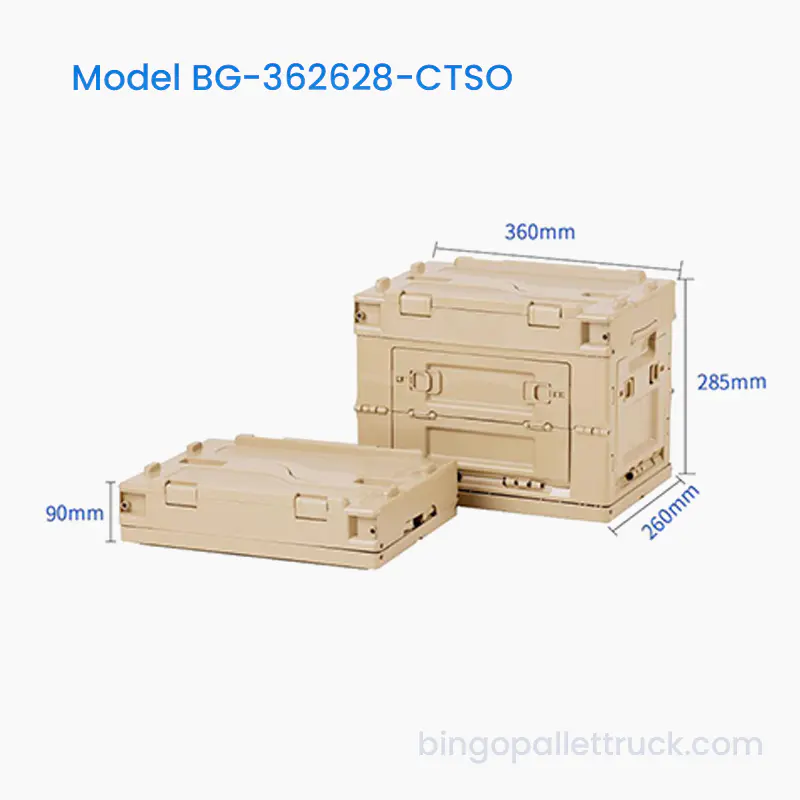
With external dimensions of 360 × 260 × 285 millimeters when expanded, the tote provides a useful footprint for warehouse shelving, picking stations, delivery operations, retail backrooms, and production environments. When it is empty, the container folds to a height of only 90 millimeters. This significant reduction in volume helps companies reduce the space required for empty-container storage and can also lower the cost of return transportation.
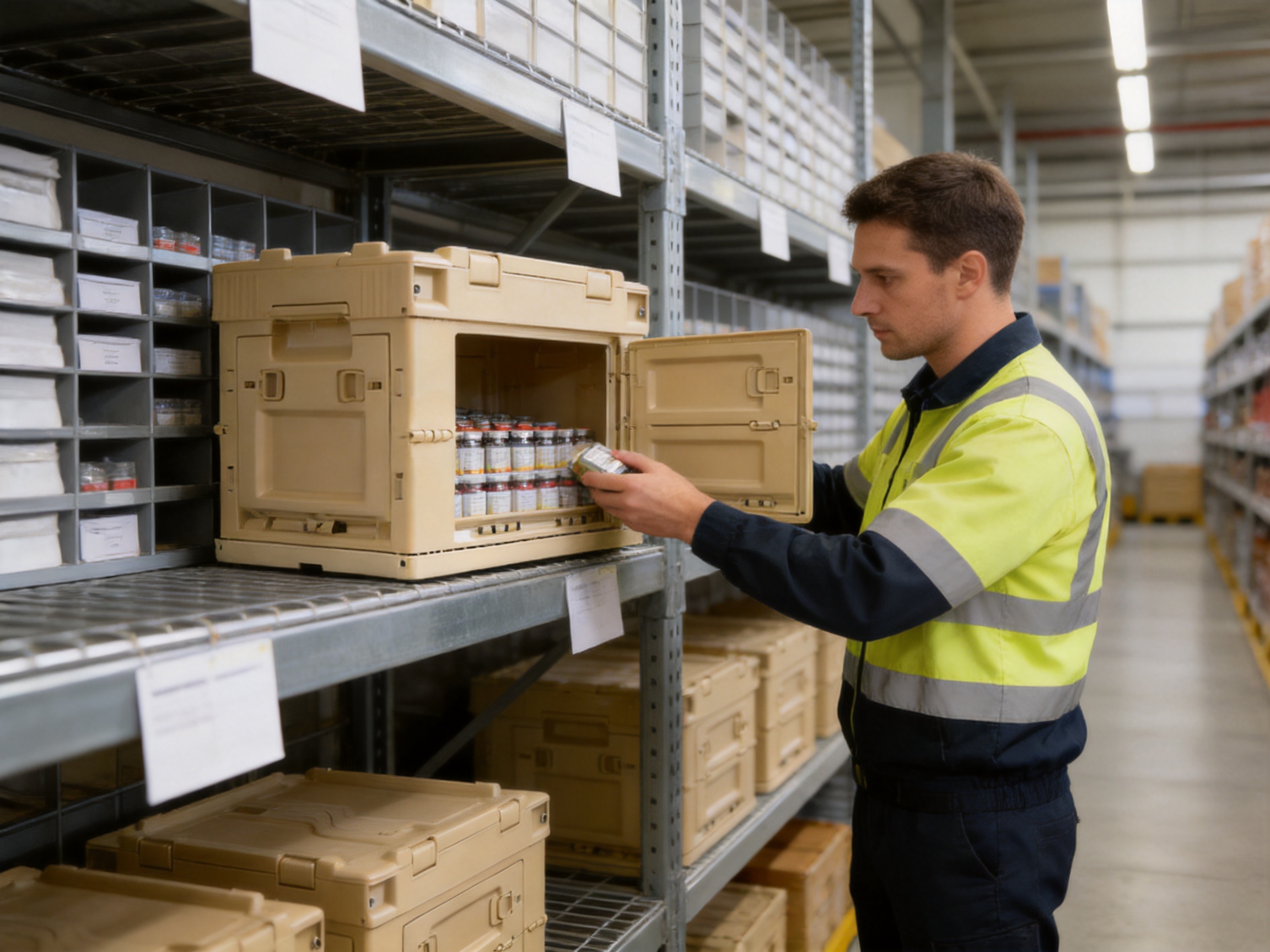
The side-open door is one of the product’s most important functional advantages. Instead of requiring workers to lift a full tote from a stack or remove the entire container from a rack, the operator can access products through the side opening. This design is especially useful for order picking, parts replenishment, assembly lines, supermarket storage, and other operations in which items must be retrieved frequently throughout the day.
Manufactured from high-density virgin PP material and produced under standardized quality-control procedures, the tote is built for repeated use. Its folding structure, integrated latches, pin shaft connection, security lock hole, and available multi-door configurations make it suitable for a wide range of logistics applications. The product is not simply a reusable box; it is a handling tool that supports a more organized, efficient, and economical supply chain.
Why Collapsible Totes Matter in Modern Logistics
Storage and transportation costs are influenced not only by the volume of products being shipped, but also by the amount of space occupied by empty packaging. Traditional rigid boxes remain at their full height even when they contain no goods. Over time, empty containers can occupy valuable warehouse floor space, block access routes, and increase the number of vehicles or trips needed to return them to a supplier or distribution center.
A collapsible tote addresses this problem by reducing its height after use. The BG-362628-CTSO has an expanded height of 285 millimeters and a folded height of 90 millimeters. This allows businesses to consolidate empty totes in a smaller area. The stated fold ratio of 68.40 percent demonstrates the product’s space-saving capability and makes it especially suitable for operations that regularly circulate reusable containers between factories, warehouses, stores, and customers.
Space efficiency also matters inside delivery vehicles. When a route includes return collection, empty totes can be folded and placed together more efficiently than rigid containers. More units can be transported in the same vehicle volume, helping reduce unnecessary return journeys and improving fleet utilization. For companies managing large container pools, these savings can accumulate across every distribution cycle.
Collapsible storage containers also contribute to workplace organization. Empty units can be stacked neatly in designated zones rather than left scattered around picking areas. A more organized storage area reduces trip hazards, simplifies counting, and allows employees to locate available containers quickly. These practical improvements support better warehouse discipline without requiring complicated technology or a major change to existing processes.
Product Overview
The BG-362628-CTSO is a reusable plastic tote intended for small warehouse storage, internal logistics, distribution, production support, and retail handling. Its design combines a compact footprint with sufficient internal volume for many commonly handled goods, components, packaged products, and inventory items.
| Product Item | Specification |
| Product Type | Collapsible plastic tote with side-open door |
| Model | BG-362628-CTSO |
| Material | Polypropylene, including high-density virgin PP material |
| Expanded External Dimensions | 360 × 260 × 285 millimeters |
| Internal Dimensions | 320 × 220 × 260 millimeters |
| Nominal Capacity | 20 liters |
| Product Weight | 1.6 kilograms |
| Folded Height | 90 millimeters |
| Fold Ratio | 68.40 percent |
| Door Configuration | Side-opening design, with configurations available from one to four doors |
| Closure and Security Features | Integrated latches and security lock hole |
| Primary Applications | Warehousing, picking, manufacturing, retail, distribution, and return logistics |
The external dimensions are suitable for shelving and workstations where a compact footprint is important. The internal dimensions of 320 × 220 × 260 millimeters provide practical usable space while maintaining a sturdy wall structure. With a 20-liter nominal capacity, the tote can hold a useful quantity of small and medium-sized products without becoming unnecessarily large or difficult to handle.
The 1.6-kilogram product weight represents a balance between durability and manual usability. A container designed for repeated warehouse handling must be strong enough for regular circulation, but it should also remain manageable for workers who repeatedly move, load, unload, and stack it. The product’s dimensions and weight make it appropriate for manual order-picking and replenishment tasks in which containers are handled many times during a shift.
20L Collapsible Plastic Tote with Side Open Door for Small Warehouse Storage
Side-Open Access for Faster Picking
Conventional storage boxes generally require workers to access goods from the top. When several boxes are stacked, the operator may need to move the upper containers before reaching the products below. This process takes time, increases handling effort, and can create unnecessary interruptions during order preparation or inventory replenishment.
The side-open door of the BG-362628-CTSO provides a different approach. When the tote is positioned on a rack, pallet, trolley, or picking shelf, the operator can retrieve goods from the front or side access point without removing the entire tote. This is valuable for small-item storage, component presentation, production-line replenishment, and fast-moving inventory.
Side access can improve visual identification as well. Products stored in a side-door container can remain visible and reachable while the tote stays in its assigned position. Employees can check stock levels, pick individual items, or replenish the container with less movement. In an organized picking system, this can support clearer product locations and reduce the time spent searching for inventory.
The design also allows warehouses to place totes at different ergonomic heights. A side-opening tote can be positioned on a shelf or workstation where the opening is aligned with the worker’s natural reach zone. This may reduce bending and lifting compared with repeatedly removing heavy or full containers from lower storage positions.
For retail backrooms, the side door makes it easier to maintain stock in a compact area. Staff can access items without opening a large package or disrupting other containers. In manufacturing, components can be presented at the point of use, helping operators obtain parts quickly while keeping the work area more orderly.
Single- and Multi-Door Flexibility
The container can be configured with one, two, three, or four side-opening doors according to the intended application. This flexibility allows buyers to select an access arrangement that matches their storage layout and workflow. A single-door version may be suitable for a standard rack position, while multiple doors can provide access from different sides or support more complex picking stations.
Multi-door configurations can be useful when the same tote is accessed by workers approaching from different directions. They may also support retail displays, assembly operations, or production cells where a container needs to be loaded from one side and emptied from another. The ability to select the door arrangement gives businesses more control over how the container is integrated into their material-flow system.
Collapsible Construction and Space Savings
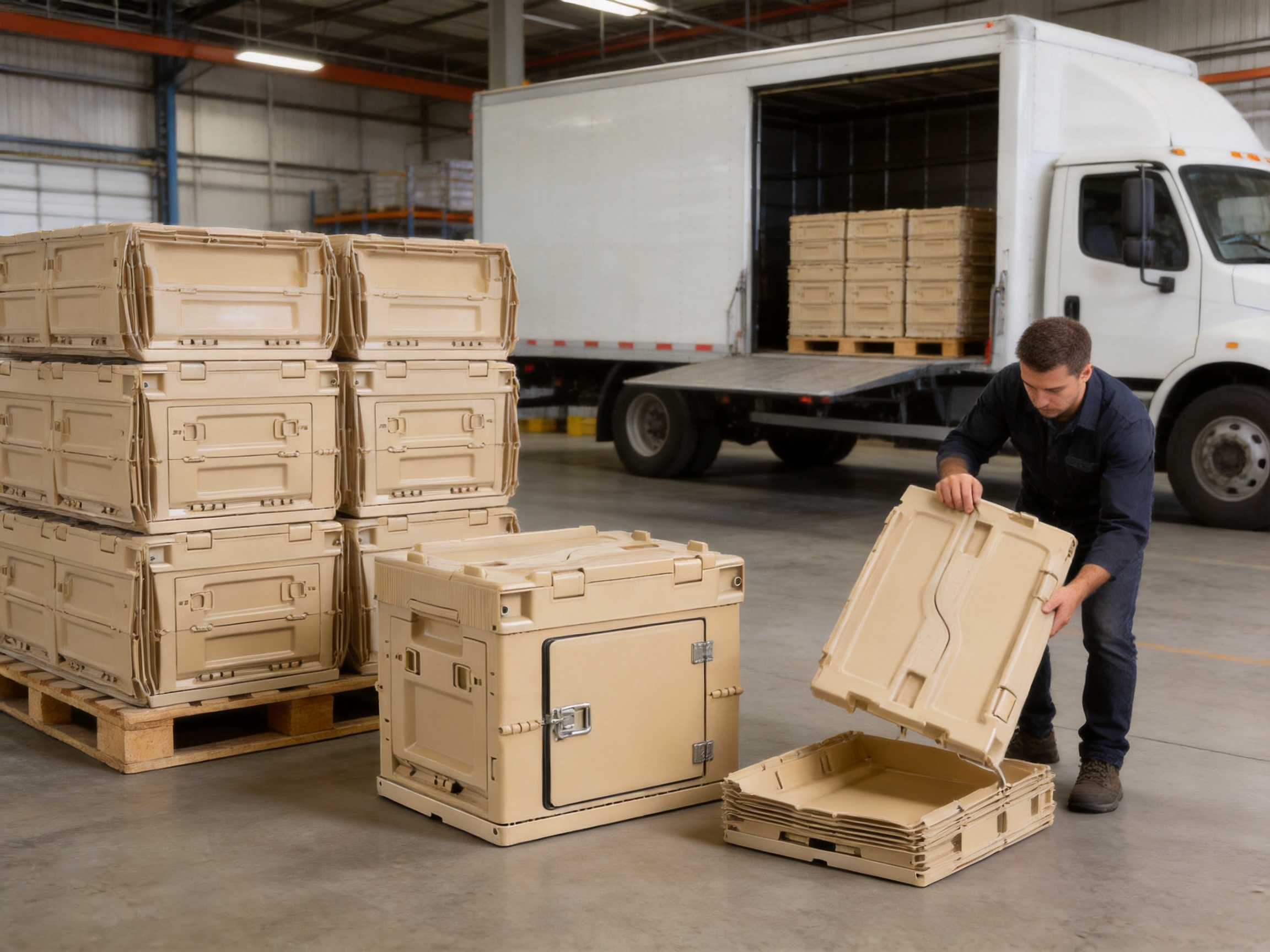
The collapsible construction is designed to reduce the tote’s height when it is not carrying products. The folding process can be completed without specialized tools, allowing employees to prepare empty containers for storage or return transport quickly. This reduces the labor associated with managing reusable packaging and supports smoother container circulation.
In a warehouse, a folded tote takes up much less vertical space than an expanded tote. Businesses can store more empty units within the same area, leaving more room for sellable inventory, production materials, or equipment. This is particularly important in smaller warehouses, urban distribution centers, retail backrooms, and facilities with high rental costs.
The folding function can also reduce packaging inefficiencies during reverse logistics. After delivery, a customer or store can fold empty totes before returning them to a central warehouse. The return load can therefore be consolidated more effectively. Fewer return trips may be required, and vehicle capacity can be used more productively.
A collapsible design offers advantages during seasonal demand changes. Companies may need many containers during peak sales periods but far fewer during slower months. Instead of dedicating a large permanent area to full-size empty totes, they can fold and organize the surplus units until demand increases again.
Tool-Free Operation
The product’s folding mechanism is designed for simple, tool-free operation. This is important because reusable packaging often moves through different departments and locations. A folding process that requires tools, technical training, or several workers can reduce the practical value of a collapsible container. By contrast, a straightforward mechanism enables warehouse personnel to fold and expand units as part of normal handling routines.
Simple operation can also reduce training requirements. New employees can learn how to open and fold the tote as part of standard warehouse orientation. Clear operating procedures can help ensure that the panels are fully locked when the container is expanded and properly folded when it is empty.
Although the operation is simple, users should still follow recommended handling practices. The tote should be placed on a stable surface during folding, the panels should be checked for correct engagement, and products should not exceed the intended capacity or weight limits established for the specific application.
Durable Polypropylene Material
The tote is made from polypropylene, a widely used material for reusable logistics containers. PP is valued for its balance of strength, low weight, impact resistance, and suitability for repeated handling. These properties make it practical for containers that move through warehouse, transportation, production, and retail environments.
For this product, high-density virgin PP material is used as part of the manufacturing approach. Virgin material can help support consistent physical properties and appearance across production batches. It also allows the manufacturer to control the material source and maintain standardized product quality more effectively.
A durable plastic tote can provide a longer service life than disposable cardboard packaging in applications involving repeated circulation. It is less vulnerable to ordinary moisture exposure and does not collapse simply because it is moved several times. Reusable plastic construction can therefore help reduce the frequency of packaging replacement and support a more predictable logistics process.
The PP structure is also easier to clean than many absorbent packaging materials. Depending on the application, users can establish cleaning and inspection procedures to remove dust, loose particles, or residue before the tote is returned to service. Businesses handling food-related packaging, pharmaceutical support materials, or sensitive components should determine their own hygiene and compliance requirements before use.
Strength for Daily Handling
Warehouse containers are exposed to repeated loading, unloading, movement, stacking, and contact with shelving or other containers. A suitable tote must retain its shape during ordinary use and remain functional after many handling cycles. The BG-362628-CTSO is designed for this type of repeated logistics activity.
The product’s side panels, base, latches, door components, and pin shaft connection work together as a reusable structural system. Properly engaged panels help the expanded tote maintain its shape, while the folding joints allow the container to be reduced when empty. This combination of rigidity during use and flexibility during storage is a central advantage over simple non-folding boxes.
Actual performance depends on factors such as load weight, product shape, stacking arrangement, temperature, handling methods, and the condition of warehouse floors and racks. Users should evaluate these conditions when selecting the appropriate container quantity and operating procedure. Even a durable tote performs best when it is loaded evenly and handled according to its intended application.
Integrated Latch and Pin Shaft Design
The tote body is connected with a pin shaft design that supports the folding structure. A dedicated connection system helps coordinate movement between the panels and contributes to a more controlled opening and folding process. It also makes the folding architecture more organized than a simple loose-panel box.
The short panels incorporate integrated latches. These latches help secure the container when it is expanded and ready for use. Integrating the latch into the panel reduces the need for separate loose components that could be misplaced during daily operations. It also presents a cleaner external structure for storage and handling.
For logistics managers, integrated structural components can simplify inspection. Employees can check whether the side panels are fully raised, whether the latches are engaged, and whether the doors operate correctly. Standard visual checks can be included in receiving, dispatch, and return procedures.
The latch and pin shaft arrangement also supports the product’s tool-free operation. Workers can open the tote, secure the panels, and fold it after use without carrying additional hardware. This helps maintain workflow continuity in busy facilities.
Security Lock Hole for Controlled Transport
Products transported between warehouses, stores, suppliers, and customers may require a basic level of tamper awareness. The tote includes a security lock hole that can be used with cable ties or combination locks. This feature gives users the option to seal the container during transportation or controlled storage.
A security seal does not replace a complete high-security packaging system, but it can provide a practical visual indication if a container has been opened. It may also discourage casual access during handling. For inventory-sensitive goods, businesses can record seal numbers or apply internal procedures for checking the condition of the seal at receiving.
The lock-hole design is useful for supply chains in which products pass through several handling points. A warehouse can seal a tote after picking, a carrier can transport it without opening the container, and the receiving location can inspect the seal before accepting the contents. This creates a simple chain-of-custody step without requiring complex equipment.
Users should select an appropriate cable tie or combination lock based on the operating environment. If the tote is used in an area with strict security, additional measures such as inventory scanning, controlled access, and documented receiving procedures may be necessary.
Applications Across Multiple Industries
Warehouse Storage and Order Picking
The primary application for the tote is organized warehouse storage. Its compact dimensions fit many shelving systems and picking areas, while the side door allows products to be accessed without removing the container from its position. The 20-liter capacity is suitable for small parts, packaged goods, accessories, tools, components, and other inventory categories.
In a manual picking operation, each tote can be assigned to a product family, order group, or storage location. Workers can identify the container, retrieve the required quantity, and return to the picking route without unnecessary lifting. When the tote is integrated with labels, barcodes, or warehouse management procedures, it can support more consistent inventory control.
Manufacturing and Line-Side Supply
Manufacturers often need a reliable method for moving components from a central warehouse to production lines. The side-opening tote can function as a line-side replenishment container, keeping parts close to the operator while using a limited amount of floor space.
Its collapsible feature is helpful when components have been consumed. Empty totes can be folded and returned to the supply area, reducing clutter beside the production line. This can contribute to more orderly work cells and clearer material-flow routes.
For production environments, companies should confirm that the selected tote meets their requirements for cleanliness, static control, temperature exposure, product protection, and load capacity. The tote can be incorporated into a broader standardized container program in which each size and configuration has a defined use.
E-Commerce Fulfillment
E-commerce fulfillment centers process a large number of small orders, making efficient product access particularly important. The side door can help workers pick from containers positioned in shelving or flow-rack areas. The reusable structure is suitable for internal movement between storage, picking, packing, and dispatch zones.
When order profiles change, empty totes can be folded and stored until needed. This flexibility helps fulfillment operations respond to changing demand without maintaining a large amount of permanent empty-container space. The security lock hole can also be used when selected orders require a sealed internal transfer.
Retail Backrooms and Supermarket Operations
Retail stores frequently face limited backroom space and high replenishment pressure. A side-open tote can keep stock organized while allowing staff to retrieve products quickly. Multiple door configurations may be considered for storage areas where access is needed from different directions.
The tote’s reusable format can replace some disposable cartons in internal store operations. Folded units can be held in a compact area after replenishment, and their consistent dimensions make it easier to create standardized storage zones.
Distribution and Cross-Border Logistics
In distribution networks, packaging may circulate between suppliers, consolidation centers, carriers, and customers. A durable collapsible tote can support repeated transfer and reduce the volume of empty packaging during return movement. This is especially useful when the logistics network covers long distances or includes cross-border routes.
For international operations, the product’s standardized dimensions, defined capacity, and reusable construction can support more consistent handling procedures. Buyers should independently confirm any destination-specific requirements relating to material declarations, labeling, sanitation, customs, or packaging regulations.
Advantages Compared with Conventional Storage Boxes
The most direct alternative to a collapsible side-door tote is a conventional rigid plastic box. A rigid box may provide useful strength, but it normally occupies nearly the same volume whether full or empty. The BG-362628-CTSO offers a more efficient empty-storage profile because its height can be reduced to 90 millimeters.
Another alternative is a cardboard carton. Cardboard can be economical for one-way shipping, but it is generally less suitable for repeated circulation, exposure to moisture, and frequent handling. A reusable PP tote can reduce the need to replace packaging after each delivery cycle, particularly in closed-loop or semi-closed-loop logistics systems.
Open bins and trays may provide quick access, but they often do not offer the same enclosed structure or security option. The side-opening tote combines accessible storage with a defined container body and a lock-hole feature. This makes it more adaptable for products that need to remain contained during movement.
Some collapsible boxes provide space savings but lack side access. In those products, users may still need to remove the container from a stack or shelf to reach the contents. The side-door configuration of this tote provides an operational advantage in picking and replenishment applications.
| Comparison Factor | Conventional Rigid Box | Cardboard Carton | 20L Side-Open Collapsible Tote |
| Empty Storage Efficiency | Limited because the full height remains | May be folded, but often loses shape after use | Folds to a 90mm height |
| Repeated Reuse | Generally suitable | Usually limited compared with plastic | Designed for repeated logistics circulation |
| Side Access | Usually unavailable | Usually unavailable | Available through side-opening doors |
| Moisture Resistance | Generally strong | More sensitive to moisture | Polypropylene structure supports routine logistics use |
| Security Option | Depends on box design | Usually requires additional sealing methods | Integrated security lock hole |
| Operational Flexibility | Suitable for fixed storage | Suitable for disposable or short-term packaging | Suitable for storage, picking, transport, and return logistics |
These comparisons should be considered in relation to the total logistics process rather than the purchase price alone. A container that reduces empty storage, improves picking speed, and remains in service for many cycles may provide stronger long-term value than a lower-cost disposable package.
Manufacturing Quality and Process Control
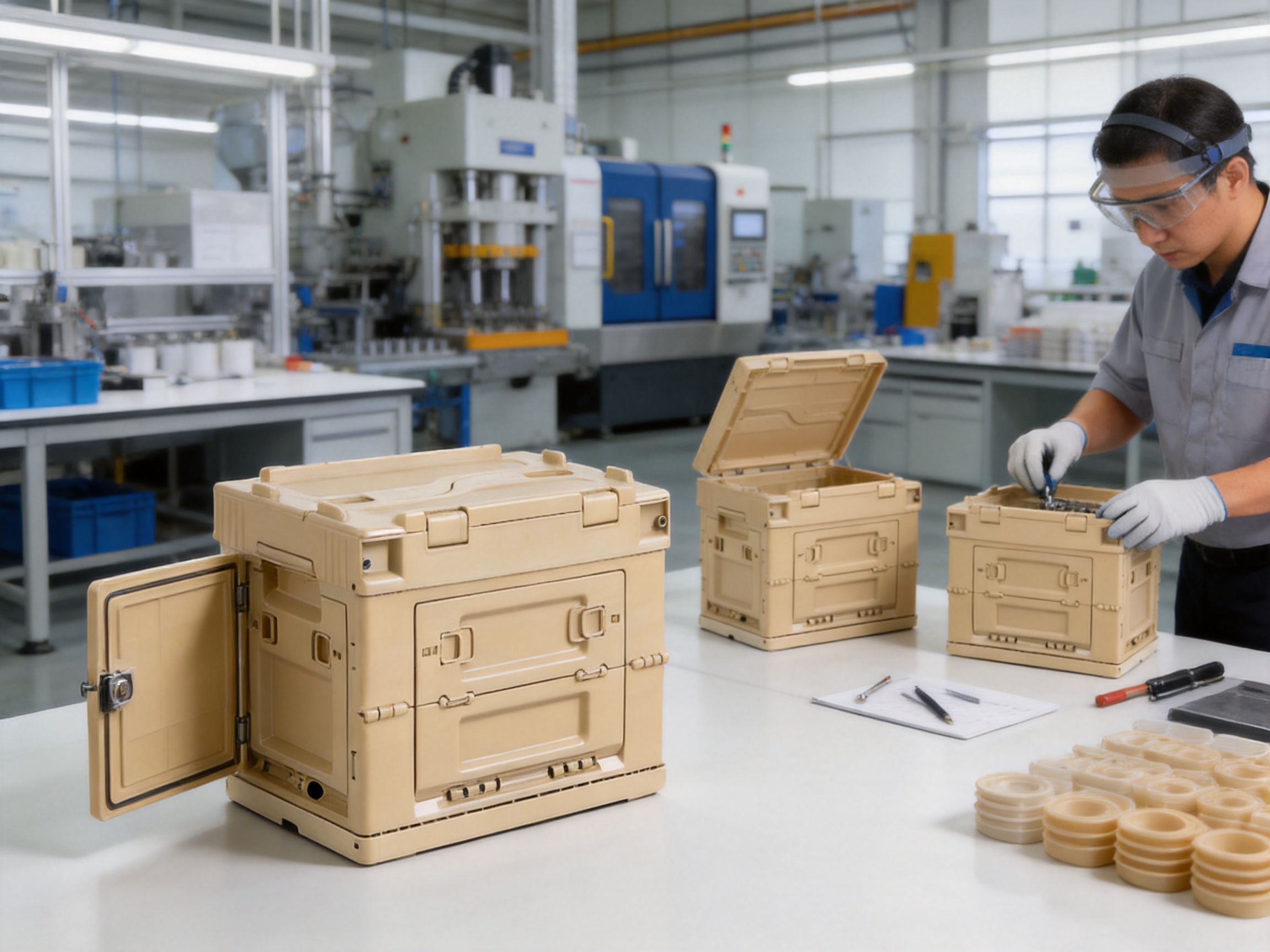
The performance of a reusable logistics tote depends heavily on manufacturing consistency. Folding walls must align correctly, latches must engage properly, doors must operate smoothly, and the base must maintain its intended form. Small variations can affect the product’s performance when containers are stacked, folded, or placed into standardized storage systems.
The manufacturing approach for this product emphasizes high-density virgin PP material, standardized processes, and inspections at every stage. Quality control begins with raw material sourcing. Consistent material selection helps the manufacturer manage color, strength, dimensional stability, and general appearance across production batches.
Production then follows a streamlined and standardized process. Standardization helps reduce variation between units and supports repeatable results for customers purchasing multiple batches. It is particularly important for warehouse users who expect containers to work together in a common rack, shelving, transport, or circulation system.
Raw Material Control
Raw material control is the foundation of product quality. The use of high-density virgin PP allows the manufacturing team to begin with a controlled material source rather than relying on inconsistent input. Material inspection and sourcing procedures can help ensure that the production process receives suitable resin for the intended product.
Material selection affects more than strength. It can influence molding behavior, surface finish, dimensional accuracy, hinge performance, and the ability of the finished tote to withstand repeated handling. Maintaining consistent material standards supports more predictable product performance.
Forming and Component Production
Plastic tote components must be formed with accurate dimensions and reliable wall thickness. The base, side panels, short panels, doors, latch areas, and connection points all contribute to the final product. Controlled production conditions help ensure that these components fit together correctly during assembly.
The folding design requires particular attention to alignment. The panels must move through their intended range without unnecessary interference, and the pin shaft connections must be positioned accurately. The integrated latch areas also require dimensional consistency so that the expanded tote can be secured correctly.
Assembly and Functional Inspection
After the individual components are produced, the tote is assembled and checked for functional operation. Inspection may include verification of external dimensions, internal dimensions, folding height, door movement, latch engagement, pin shaft connection, and overall appearance.
Functional checks are especially important for a collapsible product. A tote can have an acceptable appearance but still fail to provide a good user experience if it does not fold smoothly or if the panels do not lock securely. A structured inspection process helps identify such issues before products are released.
Quality checks at multiple stages provide an additional level of control. Instead of relying only on a final visual inspection, the manufacturing system can review material, components, assembly, and finished-product performance. This approach supports consistent output and helps reduce the risk of defects reaching customers.
Standardized Production and Scalability
Standardized manufacturing processes are important for buyers who need a stable supply of containers. A logistics program may require hundreds or thousands of units over time. Consistent specifications allow new batches to integrate more easily with existing inventory, shelving, labels, and operating procedures.
Standardization also supports product customization within defined limits. The side-door design can be configured with different numbers of openings, and the product is available in multiple colors and a full range of specifications. This gives businesses opportunities to use color coding, application-specific configurations, or size-based organization while maintaining a structured product system.
Quality Assurance for Business Buyers
Business buyers typically evaluate reusable containers according to more than appearance. They may consider dimensional consistency, material quality, handling safety, stacking behavior, door operation, folding performance, availability, and after-sales support. The manufacturer’s emphasis on inspection at every stage is therefore relevant to procurement decisions.
A structured quality-control system helps customers reduce the risk of receiving mixed-quality units. It also supports more reliable warehouse planning because containers with consistent dimensions are easier to arrange in standardized storage positions.
Before placing a large order, buyers should define their application requirements clearly. Important information may include the intended product weight, storage temperature, stacking method, rack dimensions, door orientation, expected circulation frequency, and any cleaning or compliance requirements. Providing this information allows the supplier to recommend the most appropriate configuration.
Incoming inspection should remain part of the buyer’s own quality process. Businesses can sample dimensions, inspect folding and latching functions, check surface condition, and verify that the delivered specification matches the purchase order. Clear acceptance criteria help both parties maintain consistent expectations.
Availability and Supply Support
Availability is an important consideration in warehouse equipment procurement. A storage-container program can be disrupted if replacement units are difficult to obtain or if delivery times are unpredictable. The product is promoted as in stock and ready to ship, which can support buyers who need to expand their container pool or replace units quickly.
For larger projects, procurement teams should confirm current stock levels, production schedules, color availability, packaging details, order quantities, and shipping arrangements. They should also consider whether additional units will be needed later. Purchasing a consistent batch and documenting the product model can make future replenishment easier.
The manufacturer’s broader product range includes handling equipment, storage containers, packaging materials, and warehouse racks. This wider portfolio can be useful for customers seeking coordinated logistics solutions. A business may be able to source totes together with pallets, pallet trucks, stackers, stretch wrap, packing strapping, or rack systems, simplifying communication across a warehouse project.
Using the Tote in an Efficient Warehouse System
The tote creates the greatest benefit when it is incorporated into a complete operating method. Simply purchasing collapsible containers will not automatically improve productivity. Businesses should define where the totes are stored, how they are labeled, when they are folded, and how empty units are returned to the correct location.
Storage Location Planning
Each tote should have a designated location based on product type, movement frequency, and access requirements. Fast-moving items can be positioned in easily reachable areas, while slower-moving products may be stored higher or farther from the main picking route. The side-door orientation should be considered during rack and shelf planning.
Storage locations should leave sufficient clearance for the door to open fully. If a door is blocked by a shelf beam, another container, or a structural post, the main benefit of side access will be reduced. A layout review before installation can prevent these problems.
Loading and Weight Distribution
Products should be distributed evenly inside the tote rather than concentrated at one side. Balanced loading helps maintain stability during movement and reduces unnecessary stress on the base and side panels. Small items can be grouped in inner bags, dividers, or secondary packaging when separation is required.
Users should avoid placing sharp edges or excessively heavy point loads directly against the plastic panels. If the contents have unusual shapes or high density, the business should conduct a practical load test before implementing the container throughout the operation.
Folding and Return Procedures
A simple return procedure can ensure that empty totes are not left expanded unnecessarily. After a picking or delivery cycle, workers can remove remaining materials, inspect the tote, fold it, and place it in an assigned empty-container zone. The process should include checks for damage, contamination, missing components, or latch problems.
Separating usable, damaged, and unclean containers helps prevent defective units from re-entering circulation. It also provides useful information for maintenance and replacement planning.
Identification and Inventory Control
Color options can help businesses distinguish departments, product families, destinations, or handling statuses. Labels, barcodes, or other identification methods may be added according to the customer’s warehouse-management procedures. Identification should remain visible after the tote is placed on a shelf or inside a transport vehicle.
Companies operating a large reusable-container pool may assign an asset number to each unit or batch. Tracking can help measure circulation frequency, identify loss points, and calculate the financial value of the reusable packaging program.
Sustainability and Total Cost Considerations
Reusable packaging can contribute to more efficient resource use when it remains in service for multiple cycles. A durable plastic tote may replace a sequence of single-use cartons, reducing the amount of packaging discarded after each delivery. The collapsible structure also helps reduce the space and transport resources associated with empty returns.
The environmental effect of a reusable container depends on how often it is reused, how far it travels, how it is cleaned, how it is eventually recycled or disposed of, and what packaging it replaces. Businesses should evaluate the entire circulation system rather than assume that reuse automatically produces the same benefit in every application.
From a financial perspective, buyers should consider total cost of ownership. Relevant factors include purchase price, expected service life, cleaning, handling labor, storage space, return transportation, product protection, loss rate, and replacement frequency. A side-door collapsible tote may generate value by improving several of these factors simultaneously.
Space savings can be particularly meaningful in facilities where floor area is expensive or constrained. Reducing the volume of empty containers may enable a business to use existing warehouse capacity more effectively instead of renting additional space or expanding prematurely.
Maintenance and Safe Use Recommendations
Routine inspection can help extend the useful life of the tote. Users should check the base for deformation, inspect the side panels for cracks, confirm that pin shaft connections remain secure, and test the latches and side doors. Any unit that cannot lock or fold correctly should be removed from active use until it has been evaluated.
Cleaning procedures should match the products being stored. For ordinary warehouse use, dry cleaning or mild cleaning methods may be adequate. If detergents, disinfectants, or other chemicals are used, the business should verify their compatibility with polypropylene and establish a controlled procedure.
Containers should not be dragged across rough surfaces if doing so may damage the base. They should also be protected from excessive heat, open flame, and conditions outside the intended operating environment. When stacked, the arrangement should remain stable and should not obstruct emergency routes, sprinkler systems, or required workplace clearances.
Employees should be trained to expand the tote fully before loading products. The latches should be properly engaged, and the side door should be closed or secured when the tote is being moved. Folding should be performed only after the contents have been removed.
Frequently Asked Questions
What is the capacity of the tote?
The nominal capacity is 20 liters. The external expanded dimensions are 360 × 260 × 285 millimeters, while the internal dimensions are 320 × 220 × 260 millimeters.
How small is the tote when folded?
The folded height is 90 millimeters. Compared with the expanded height of 285 millimeters, this significantly reduces the vertical space needed for empty-container storage and return transport.
What material is used to manufacture the tote?
The tote is made from polypropylene, with high-density virgin PP material used as part of the manufacturing approach. Polypropylene provides a practical balance of durability, weight, and suitability for reusable logistics applications.
What is the advantage of the side-open door?
The side-open door allows workers to retrieve or replenish products without removing the entire tote from a rack, shelf, workstation, or stack. This can improve picking access and reduce unnecessary handling.
Are multiple door configurations available?
Yes. The design can be configured with one, two, three, or four side-opening doors, depending on the intended application and access requirements.
Can the tote be secured during transportation?
Yes. The tote includes a security lock hole that can be used with cable ties or combination locks. This can provide a basic seal or tamper-indication measure during transportation and controlled storage.
Does folding require special tools?
No. The product is designed for tool-free folding and opening. Employees can operate it as part of normal warehouse procedures, subject to proper training and safe handling practices.
What is the product weight?
The listed product weight is 1.6 kilograms. The suitable payload should be determined according to the product being stored, loading method, stacking conditions, and the requirements of the specific application.
Where can the tote be used?
Typical applications include small warehouse storage, order picking, manufacturing, line-side supply, e-commerce fulfillment, distribution, retail backrooms, supermarket operations, and return logistics.
How does it compare with a cardboard carton?
The reusable PP tote is designed for repeated handling and circulation, while cardboard cartons are often used for one-way or limited-cycle packaging. The tote also provides side access, a security lock hole, and a collapsible structure for empty storage.
How should buyers choose the correct configuration?
Buyers should consider the required capacity, rack dimensions, door orientation, access direction, product weight, circulation frequency, color-coding needs, and any environmental or compliance conditions. Confirming these details with the supplier before ordering can help ensure a suitable configuration.
What quality-control measures are emphasized?
The manufacturing approach emphasizes controlled raw material sourcing, high-density virgin PP, standardized production processes, and inspections at different stages from material sourcing through production and finished-product evaluation.
Conclusion
The 20L Collapsible Plastic Tote with Side Open Door is designed for businesses that need efficient storage, accessible picking, and reliable reusable packaging in one product. Its 360 × 260 × 285-millimeter expanded dimensions provide practical working space, while the 90-millimeter folded height helps reduce the burden of empty-container storage and return transportation.
The side-door design distinguishes the tote from conventional top-access boxes by allowing products to be retrieved while the container remains in position. The tool-free folding mechanism, integrated latches, pin shaft structure, and optional multi-door configurations add further flexibility for warehouses, production lines, distribution centers, retail backrooms, and e-commerce facilities.
Its polypropylene construction and use of high-density virgin material support repeated logistics handling, while standardized manufacturing and stage-by-stage quality control help provide consistent product performance. The security lock hole offers an additional option for controlled transport, and the availability of multiple colors and specifications supports organized warehouse systems.
For companies seeking to optimize space, labor, and material flow, this tote can serve as a practical foundation for a reusable container program. The greatest results will come when it is combined with appropriate rack planning, product identification, loading standards, inspection routines, and return procedures. Used in this way, the tote can help create a cleaner, faster, and more economical logistics operation.
References
Polypropylene Material Properties and Reusable Packaging Applications, general industrial packaging guidance.
Warehouse Storage and Order-Picking Principles, general material-handling and inventory-management references.
Reusable Transport Packaging and Reverse Logistics Practices, general supply-chain management references.
Plastic Container Inspection, Cleaning, and Safe-Handling Procedures, general warehouse-operation guidance.
Product specification sheet for BG-362628-CTSO, 20L collapsible plastic tote with side-open door.
Product: 20L Collapsible Plastic Tote with Side Open Door for Small Warehouse Storage


Copyright @ Yancheng Bingo Machinery Equipment Co., Ltd. All rights reserved Warehouse Logistics Equipment Manufacturer Pallet Truck Supplier
