 en
en  Español


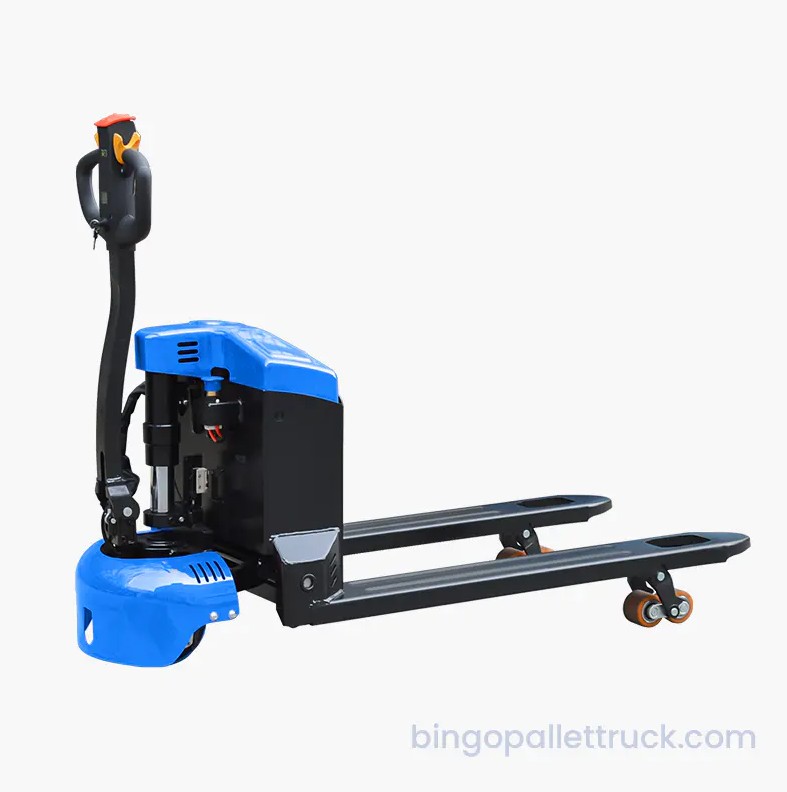
2000kg EPS Electric Stand-On Pallet Truck for Smarter Warehouse Logistics
Content
- 1 Introduction
- 2 Product Overview
- 3 Performance Designed for Daily Warehouse Work
- 4 Advantages of the Stand-On Configuration
- 5 Stability, Load Control, and Structural Strength
- 6 Wheel Design and Floor Protection
- 7 Compact Dimensions for Efficient Aisle Operation
- 8 Battery and Electric Power System
- 9 Electronic Steering and Operator Ergonomics
- 10 Safety Features and Responsible Operation
- 11 Manufacturing Strengths and Quality Approach
- 12 Competitive Advantages Over Conventional Alternatives
- 13 Applications Across Multiple Industries
- 14 Maintenance and Service Planning
- 15 How to Select the Correct Configuration
- 16 Implementation Recommendations for Warehouse Managers
- 17 Frequently Asked Questions
- 17.1 What is the rated capacity of the CBD20E?
- 17.2 Is the CBD20E suitable for long travel distances?
- 17.3 What type of battery is standard?
- 17.4 What steering system does the truck use?
- 17.5 What type of tires are fitted?
- 17.6 What is the maximum travel speed?
- 17.7 Does the pallet truck have a mechanical brake?
- 17.8 What are the main ergonomic features?
- 17.9 Can the CBD20E be used outdoors?
- 17.10 How should customers confirm the correct configuration?
- 17.11 Who manufactures the CBD20E?
- 18 Conclusion
- 19 References
- 20 Product: 2000kg EPS Electric Stand Type Pallet Truck for Logistics
Introduction
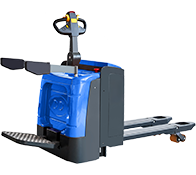
Modern warehouses require equipment that can move heavy loads quickly, safely, and consistently while making efficient use of every aisle and operating hour. The 2000kg EPS Electric Stand-On Pallet Truck, model CBD20E, is designed for demanding logistics environments where powered horizontal transportation, compact maneuverability, and operator productivity are essential. With a rated load capacity of 2000kg, electric steering, a stand-on operator platform, electromagnetic braking, and a robust industrial frame, this pallet truck provides a practical solution for manufacturing plants, distribution centers, e-commerce warehouses, supermarket logistics, and third-party logistics operations.
The CBD20E is more than a basic powered pallet mover. It combines a heavy-duty chassis with an ergonomic operator compartment and an electric drive system intended for repeated material-handling cycles. Its low center of gravity supports stable operation, while the shock-absorbing foot pedal and crash-resistant arms help create a more comfortable working environment. These features are especially valuable when operators travel between receiving docks, storage locations, picking stations, staging zones, and outbound loading areas throughout a full shift.
Manufactured and supplied by Yancheng Bingo Machinery Equipment Co., Ltd., the CBD20E forms part of a broader warehouse logistics equipment portfolio. The company focuses on handling equipment, storage containers, packaging materials, and warehouse racking, allowing customers to source complementary products for complete material-flow projects. This integrated product background gives the manufacturer a wider understanding of warehouse operations than a supplier focused on one isolated machine category.
This article examines the product’s engineering characteristics, operating advantages, manufacturing strengths, application value, maintenance considerations, and competitive position. It also explains how a 2000kg stand-on electric pallet truck can support safer and more productive warehouse workflows.
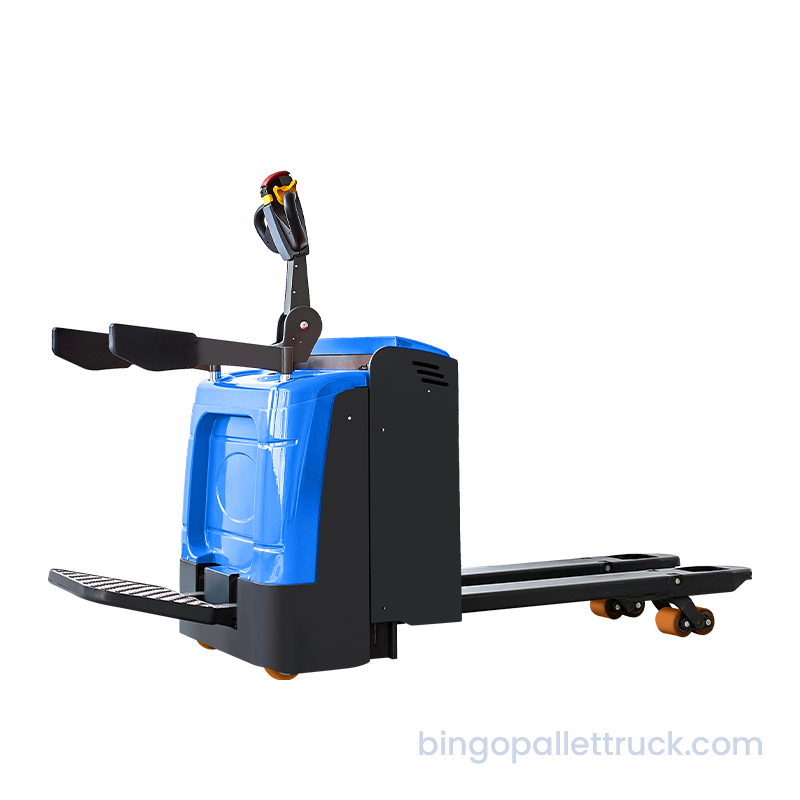
2000kg EPS Electric Stand Type Pallet Truck for Logistics
Product Overview
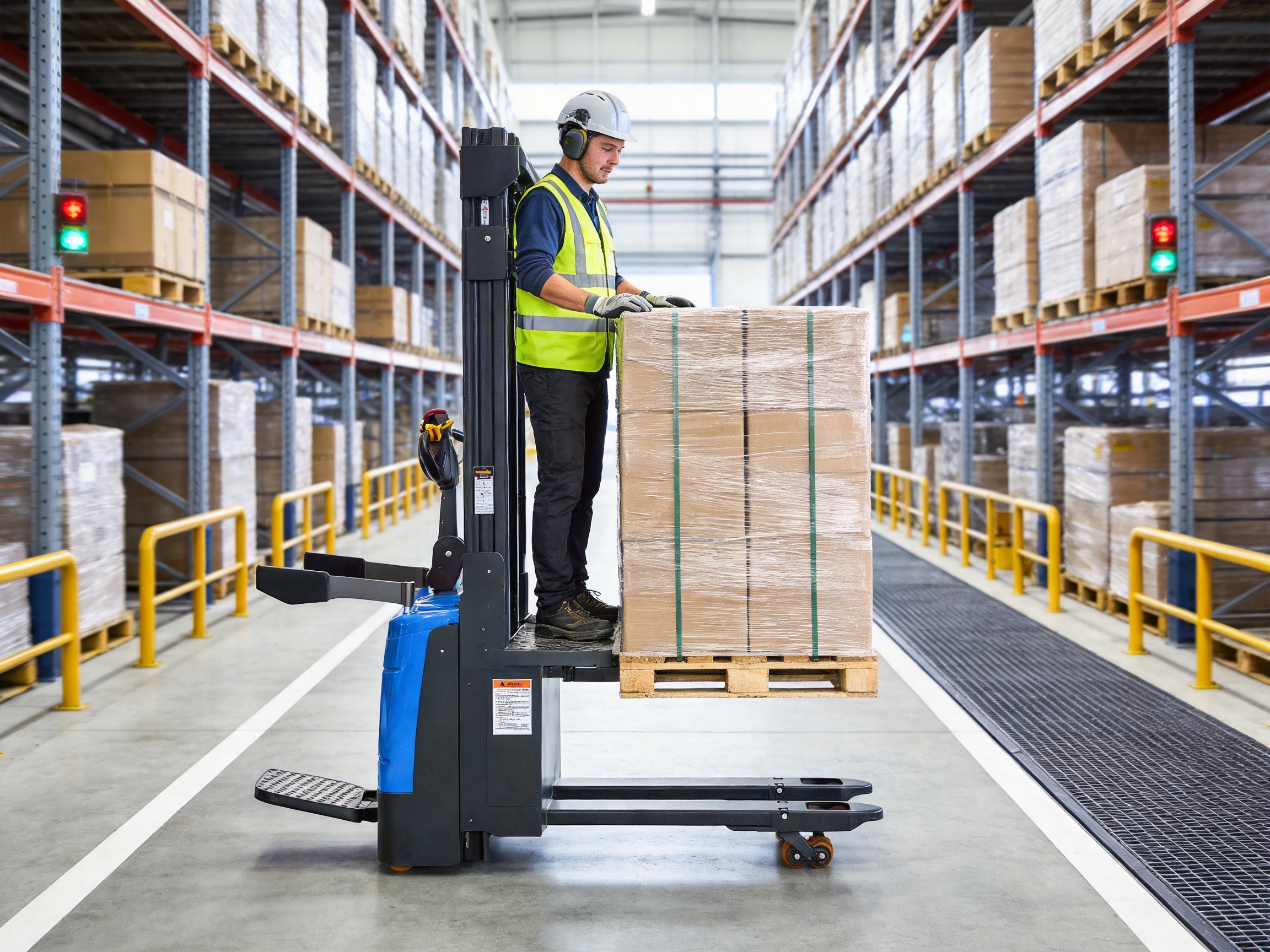
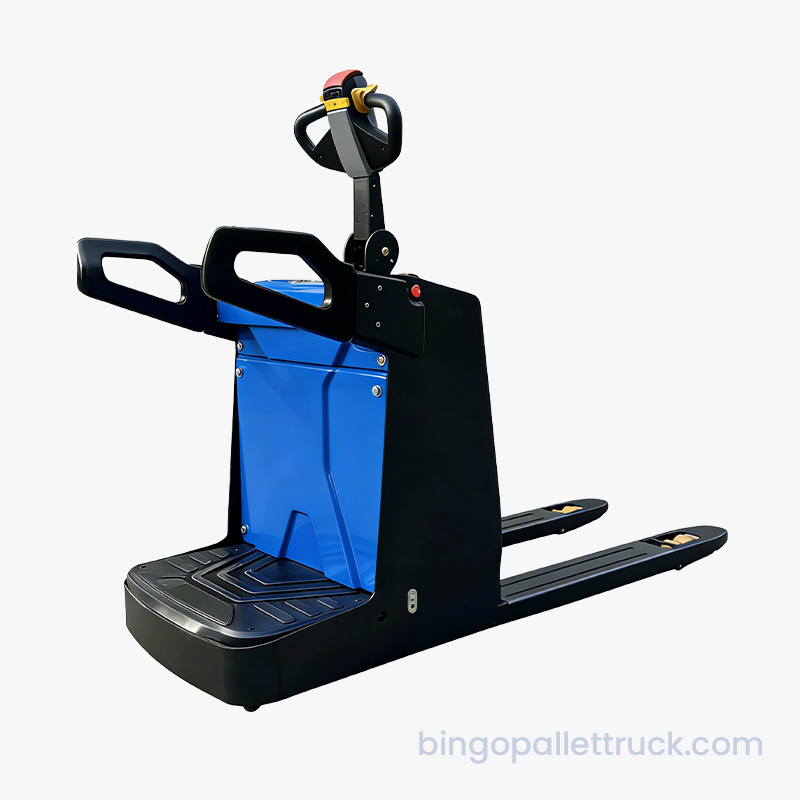
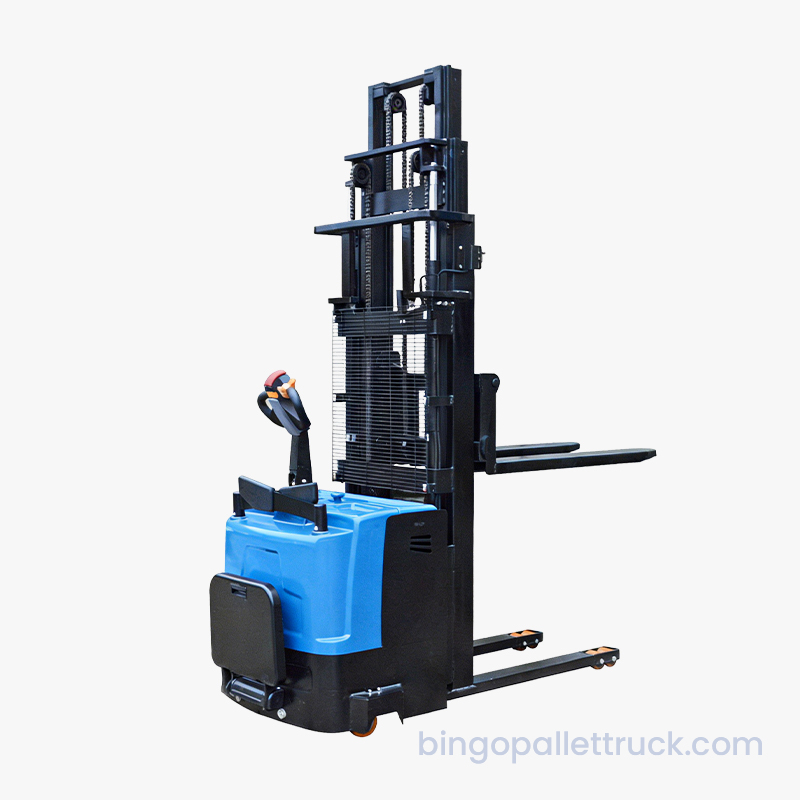
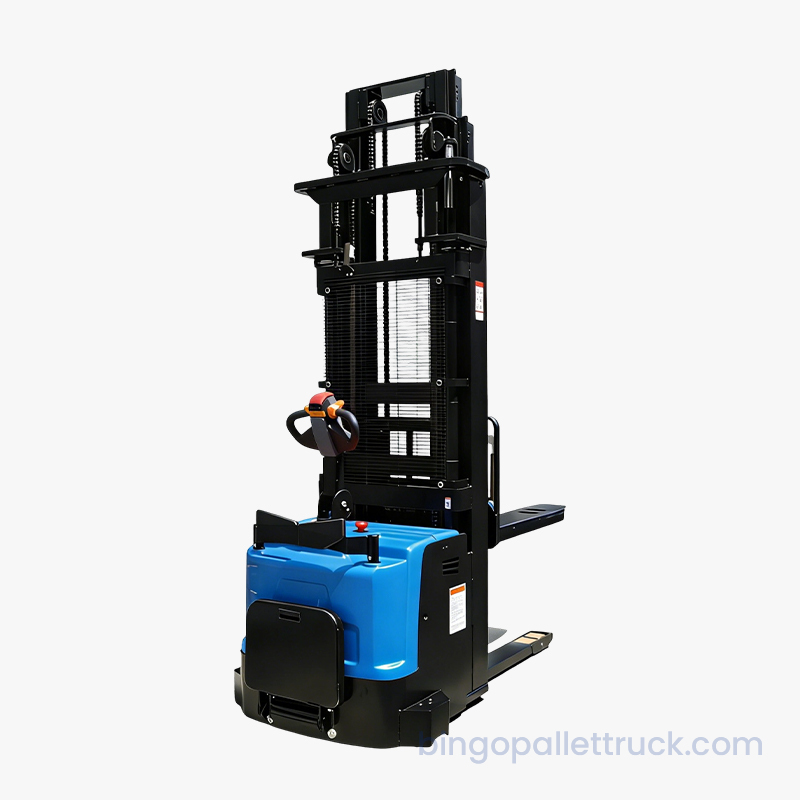
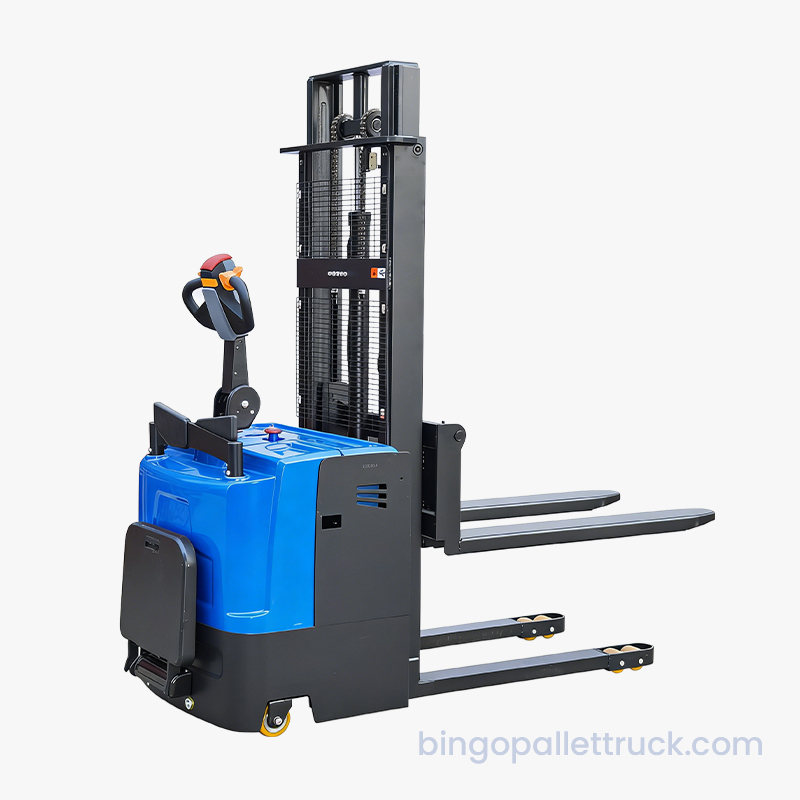
The CBD20E is a stand-on electric pallet truck developed for horizontal pallet transportation and short-distance load movement. The operator rides on the truck rather than walking behind it, which is beneficial for applications involving longer travel distances or frequent movement between warehouse zones. The stand-on format can reduce unnecessary walking, improve travel efficiency, and provide the operator with a clear working position during repeated loading and unloading tasks.
With a rated capacity of 2000kg and a 600mm load center distance, the truck is suitable for many standard industrial pallets and unit loads. Its 205mm lift height allows the forks to enter and lift pallets from the floor while providing enough clearance for transportation over ordinary warehouse surfaces. The 1220mm fork length and selectable fork spread of 550mm or 685mm support common pallet-handling requirements, although customers should confirm pallet dimensions and load distribution before purchase.
The vehicle uses a 24V, 210Ah lead-acid battery as its standard power source. A 2.2kW drive motor supports travel, while a 1kW lift motor controls fork raising and lowering. The standard controller is specified as LVM24S20, with a Curtis controller available as an option. Customers may also select a 150Ah or 200Ah lithium-ion battery option where reduced maintenance, opportunity charging, or a different energy-management strategy is preferred.
Electric steering is another important feature. Steering assistance reduces the physical effort required to change direction, especially when the truck is used repeatedly in congested warehouse areas. The humanized handle design is intended to support one-hand operation, allowing operators to control travel, steering, lifting, and lowering functions with less unnecessary movement.
| Specification | Value |
|---|---|
| Model | CBD20E |
| Operator type | Stand-on |
| Rated load capacity | 2000kg |
| Lift height | 205mm |
| Service weight | 670kg |
| Load center distance | 600mm |
| Front overhang | 1025mm |
| Wheelbase | 1416mm |
| Drive motor | 2.2kW |
| Lift motor | 1kW |
| Battery | 24V/210Ah lead-acid |
| Steering design | Electronic |
| Service brake | Electromagnetic |
Performance Designed for Daily Warehouse Work
A pallet truck’s value depends not only on its maximum capacity, but also on how effectively it performs during hundreds of daily operating cycles. The CBD20E is designed around this practical requirement. Its travel speed is listed as 5.5km/h when laden and 6.0km/h when unladen. These speeds balance productivity with the control needed in warehouse environments, loading areas, and pedestrian-sensitive zones.
The truck’s maximum gradeability is rated at 5 percent when laden and 8 percent when unladen. This makes it suitable for moderate ramps and sloped transitions commonly found around loading docks and warehouse entrances. Operators should always assess the actual ramp surface, load weight, floor condition, and local safety requirements before traveling on inclines.
The electromagnetic service brake is an important safety and control feature. Electromagnetic braking can help bring the vehicle to a controlled stop and supports secure parking when the machine is not in motion. It also reduces reliance on purely mechanical braking actions during routine operation. As with every industrial vehicle, operators should receive appropriate training and use the brake according to the operating instructions.
The listed lifting speed is up to 100mm per second with a load and 155mm per second without a load in one performance configuration. Lowering speed is listed at 100mm per second with a load and 110mm per second without a load in the same configuration. Additional performance values are also provided for another configuration, including lifting speeds of 75mm per second loaded and 125mm per second unloaded, together with lowering speeds of 95mm per second loaded and 100mm per second unloaded. These variations may reflect different equipment configurations or specification versions, so the final technical configuration should be confirmed in the quotation and product documentation.
Consistent acceleration, predictable braking, smooth lifting, and controllable lowering are often more valuable in a warehouse than the highest possible speed. The CBD20E is positioned as a balanced machine that can move loads efficiently without sacrificing handling control.
Advantages of the Stand-On Configuration
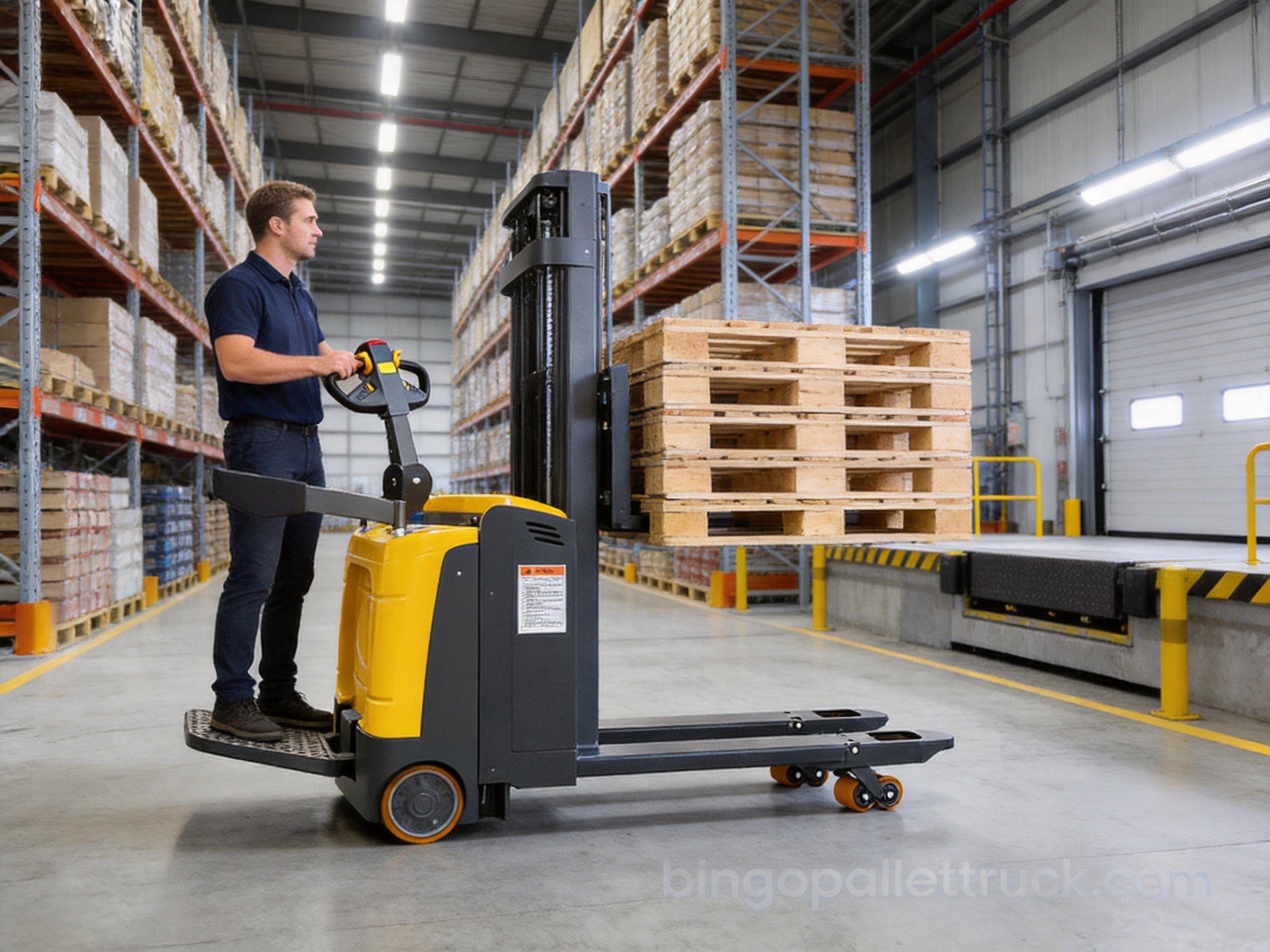
Walk-behind pallet trucks are effective for short movements, but operators may become tired when a facility requires long travel distances or frequent back-and-forth movement. A stand-on pallet truck addresses this challenge by giving the operator a supported riding position. The CBD20E allows the operator to remain on the machine during transport, reducing walking time and helping maintain a steady work rhythm.
The stand-on arrangement is particularly useful in cross-docking operations, where goods move rapidly from receiving to shipping. It can also benefit production lines that require repeated replenishment, fulfillment centers where pallets are transported between storage and picking areas, and large distribution warehouses where travel distances are significant.
The operator platform includes shock-absorbing foot pedals. Warehouse floors may contain joints, small irregularities, or transitions between different surfaces. Shock absorption can reduce vibration transmitted to the operator during travel and may help limit fatigue over an extended shift. Crash-proof arms provide an additional protective structure around the standing area and can help shield the operator from minor contact with racks, pallets, or other equipment when used correctly.
The ergonomic handle is designed to support intuitive control. A well-arranged handle reduces the need for awkward hand positions and allows the operator to keep attention focused on the load, travel path, and surrounding personnel. Electronic steering further reduces steering effort compared with a fully manual system.
Compared with ride-on pallet trucks that are larger and may require more operating space, a stand-on pallet truck can offer a useful middle ground. It provides more operator support than a walk-behind machine while remaining compact enough for many indoor warehouse environments. This balance is one of the CBD20E’s key competitive strengths.
Stability, Load Control, and Structural Strength
Safe pallet transportation depends on stable load support and predictable vehicle behavior. The CBD20E uses a low center of gravity layout to support stability during travel. A low center of gravity can help reduce unnecessary body movement when the machine starts, stops, or turns, particularly when carrying loads within the rated capacity.
The truck has a service weight of 670kg, including the specified battery configuration. Its 1416mm wheelbase and 1025mm front overhang are designed to create a practical balance between load support and maneuverability. The 600mm load center distance is a standard reference point for capacity evaluation, but the actual safe capacity depends on load shape, load height, pallet condition, load center, floor condition, and operating environment.
The heavy-duty frame uses a tie-rod and pin-shaft structure. This type of construction is intended to provide strong load-bearing capability and durable connection points under repeated working cycles. In a warehouse, the chassis experiences more than vertical load. It also encounters starting forces, braking forces, steering loads, pallet entry impacts, and uneven floor conditions. A reinforced frame is therefore essential for long-term reliability.
The fork dimensions are specified as 55mm thickness, 170mm width, and 1220mm length. The fork design must be matched to the pallets being handled. Proper fork insertion is important because partial insertion or uneven load placement can create instability and increase stress on the forks and frame. Operators should position both forks evenly under the pallet and avoid exceeding the rated capacity.
The truck’s ground clearance at the center of the wheelbase is 31mm. This specification suits relatively smooth indoor industrial floors and typical warehouse surfaces. Facilities with damaged floors, steep thresholds, debris, or outdoor terrain should assess suitability carefully before deployment.
Wheel Design and Floor Protection
The CBD20E uses polyurethane tires. Polyurethane wheels are widely used in indoor material-handling equipment because they can provide a combination of wear resistance, smooth rolling, and reduced floor marking. They are suitable for concrete, coated warehouse floors, loading areas, and many other industrial surfaces when the floor is properly maintained.
The primary wheel specification identifies a front tire measuring 230mm in diameter by 75mm in width. The rear tire is specified as 80mm in diameter by 98mm in width, with a balance wheel measuring 115mm by 55mm. The wheel arrangement is listed as one drive wheel with two or four rear wheels, depending on the configuration.
An additional wheel specification is also provided for another configuration. It identifies a front tire of 230mm by 75mm, rear tires of 210mm by 85mm, and a balance wheel of 124mm by 60mm, with one drive wheel and two rear wheels. These differences demonstrate that the product may be supplied in more than one wheel configuration. Buyers should confirm the final wheel arrangement, wheel dimensions, and load-bearing configuration before placing an order.
Wheel selection influences turning behavior, vibration, traction, floor protection, and maintenance intervals. Polyurethane wheels may be especially advantageous in facilities where noise, floor marking, or surface protection is important. However, wheels should be inspected regularly for cuts, flat spots, embedded debris, uneven wear, and damage caused by excessive loads or unsuitable operating surfaces.
Compact Dimensions for Efficient Aisle Operation
Warehouse space is expensive, and equipment must work within carefully planned aisle layouts. The CBD20E has an overall width of 775mm, an overall length of 1825mm, and a turning radius of 1670mm. These dimensions support maneuverability in many conventional pallet-handling environments.
The specified aisle width for 1000mm by 1200mm pallets placed crossways is 2400mm. For 800mm by 1200mm pallets placed lengthways, the listed aisle width is 2307mm. These values provide useful planning references, but actual aisle requirements may vary depending on pallet condition, operator skill, rack design, safety clearance, floor markings, and local regulations.
A compact pallet truck can help warehouses improve usable storage density because less space may be required for vehicle movement. It can also simplify traffic planning in staging areas and reduce interference between handling equipment. Nevertheless, narrow aisles must not compromise safe clearance. Facilities should verify the complete turning envelope and allow enough room for operators to control loads without striking racks, structures, or personnel.
The lowered fork height is 85mm, while the nominal lift height is 205mm. The relatively low fork profile helps the truck approach many standard pallets and supports smooth fork entry when pallet openings are clear. Before operation, pallets should be checked for broken boards, blocked openings, unstable loads, and other conditions that could prevent safe engagement.
Battery and Electric Power System
The standard CBD20E uses a 24V, 210Ah lead-acid battery weighing approximately 180kg. Lead-acid batteries remain widely used in industrial vehicles because they are familiar to maintenance teams, available in many markets, and capable of supporting regular warehouse duty when correctly charged and serviced.
The battery’s weight contributes to the overall stability of the truck. Its capacity is intended to support routine travel and lifting cycles, although actual operating time depends on load weight, travel distance, operating frequency, temperature, floor conditions, battery age, and charging practices. A battery that is consistently undercharged, over-discharged, or poorly maintained may deliver reduced performance.
Lead-acid battery maintenance normally includes correct charging, electrolyte inspection where applicable, cleaning of terminals, checking cables and connectors, and ensuring adequate ventilation in the charging area. Operators and maintenance personnel should follow the battery manufacturer’s instructions and applicable workplace safety requirements.
Lithium-ion battery options of 150Ah or 200Ah are available. Lithium-ion technology may be attractive for operations that value reduced routine maintenance, flexible charging schedules, and high equipment availability. It can also support applications where opportunity charging is integrated into work breaks or shift changes. The correct battery choice depends on duty cycle, charger infrastructure, working hours, budget, ambient conditions, and customer preferences.
The 2.2kW drive motor and 1kW lift motor provide a practical power combination for horizontal transport and pallet lifting. Separating drive and lift functions allows each system to be designed around its specific operating requirement. The motor and controller system should be inspected and serviced according to recommended procedures to maintain reliable starting, travel, braking, and lifting performance.
Electronic Steering and Operator Ergonomics
Manual steering can become tiring when operators perform frequent turns or work continuously for long periods. The CBD20E uses electronic steering to reduce steering effort and provide responsive directional control. This feature is especially useful in picking areas, loading zones, and congested warehouse aisles where many small steering corrections may be required.
The handle is designed for human-centered operation. Controls that are easy to reach and understand can reduce operator learning time and support consistent work practices. One-hand operation may also allow the operator to maintain better control of the truck while monitoring the load and travel path.
Operator comfort is not simply a convenience issue. Fatigue can affect concentration, reaction time, and handling precision. Shock-absorbing foot pedals, crash-proof arms, controlled steering, and a stable standing platform collectively contribute to a more manageable working environment. These features can help businesses support productivity while reducing the physical burden associated with repeated pallet movement.
The sound pressure level at the driver’s ear is specified as 69dB(A). A relatively controlled noise level can improve workplace comfort and support communication in indoor warehouse environments. Noise exposure can vary depending on floor condition, load, nearby machinery, building acoustics, and operating speed, so the complete workplace environment should be evaluated.
Safety Features and Responsible Operation
Safety performance begins with correct equipment selection and continues through training, maintenance, site design, and disciplined operating procedures. The CBD20E’s low center of gravity, electromagnetic braking, crash-proof arms, electronic steering, and controlled lifting functions provide a foundation for safe operation, but these features do not replace operator training or workplace risk assessment.
Operators should inspect the machine before each shift. The inspection should include the forks, wheels, battery, charging connectors, emergency controls, steering response, braking function, warning devices, frame, handle, and visible hydraulic or electrical components. Any abnormal noise, fluid leakage, damaged wheel, loose connection, or malfunctioning control should be reported before the truck is used.
Loads should be centered across the forks and kept within the rated capacity. Operators should avoid carrying unstable, damaged, excessively tall, or poorly secured loads. The forks should be fully inserted where appropriate, and loads should remain as low as practical during travel. Sudden acceleration, sharp turning, over-speeding, and traveling on unsuitable slopes should be avoided.
Pedestrian separation is important in every warehouse. Marked walkways, warning signs, controlled intersections, adequate lighting, and clear communication can reduce the risk of collision. The stand-on platform gives the operator a stable position, but visibility may still be restricted by large or tall loads. Operators should travel at a controlled speed and use appropriate assistance when visibility is limited.
Battery charging areas should be organized to reduce the risks associated with electrical connections, heat, spills, and unauthorized access. Whether the customer selects lead-acid or lithium-ion power, the charging system must be compatible with the battery and operated according to the applicable instructions.
Manufacturing Strengths and Quality Approach
The performance of a pallet truck depends on the quality of its design, components, assembly, testing, and after-sales support. Yancheng Bingo Machinery Equipment Co., Ltd. positions itself as a specialist in warehousing and logistics equipment, with product lines covering manual and electric pallet trucks, stackers, storage containers, packaging materials, and warehouse racking.
This product range creates a broad manufacturing and supply-chain foundation. A company that works across handling equipment, storage systems, packaging, and racking develops a more complete understanding of how products interact inside a warehouse. That understanding can help the supplier recommend equipment based on actual material flow instead of treating the pallet truck as an isolated purchase.
The company describes a mature supply chain and strict quality inspection processes as important parts of its operating model. For a product such as the CBD20E, quality management should cover incoming components, structural parts, wheel assemblies, electrical systems, battery connections, motor performance, braking, steering, lifting, and final appearance inspection.
A disciplined manufacturing process normally begins with engineering review and specification confirmation. Before production, the intended capacity, wheel configuration, battery type, controller, fork dimensions, and optional equipment should be clearly defined. This is particularly important for the CBD20E because the published material includes more than one wheel and performance configuration. Confirming the exact configuration helps ensure that the product, quotation, operating manual, and customer expectations remain aligned.
Frame fabrication is another important stage. The heavy-duty frame and tie-rod and pin-shaft structure must be assembled accurately so that the load path remains stable during repeated operation. Dimensional checks can help verify alignment of the frame, drive assembly, forks, wheels, and protective components. Proper welding, machining, fastening, and surface treatment contribute to structural durability and long-term serviceability.
Electrical assembly requires careful control of wiring, connectors, controller installation, motor integration, battery connections, and protection against accidental short circuits. The steering system, travel controls, braking system, lifting controls, and safety devices should be checked during final assembly. Functional testing helps identify abnormalities before shipment.
Final inspection should include travel, braking, steering, lifting, lowering, noise, wheel rotation, load handling, and general safety checks. A well-organized inspection process reduces the chance that assembly errors or component defects reach the customer. It also provides traceability and a basis for continuous improvement.
The company’s focus on global customers and one-stop logistics solutions is another strength. International buyers often require more than a machine. They may need configuration guidance, spare parts, packaging coordination, technical documents, shipping support, and communication across different time zones. A supplier with a wider warehouse-equipment portfolio can support larger projects and future expansion.
Competitive Advantages Over Conventional Alternatives
The CBD20E competes with several categories of material-handling equipment, including manual pallet trucks, walk-behind electric pallet trucks, compact ride-on pallet trucks, and larger forklifts. Its strongest advantage is the combination of capacity, operator support, compact dimensions, and electric control.
Compared with a manual pallet truck, the CBD20E substantially reduces the physical effort required to move a 2000kg load. Electric travel and lifting can improve consistency and reduce operator strain, particularly when pallets must be moved across long distances or over a full shift. The stand-on platform also reduces walking time.
Compared with a walk-behind electric pallet truck, the stand-on configuration can improve productivity when travel distances are longer. The operator does not need to walk behind the machine for every movement, which may help reduce fatigue and increase the number of completed transport cycles.
Compared with a larger forklift, the CBD20E is more specialized and potentially more economical for horizontal pallet movement. It does not replace a forklift for high-level stacking or handling loads that require mast lifting, but it can be a more efficient choice for floor-level transportation, dock work, production replenishment, and staging operations.
Compared with some basic ride-on pallet trucks, the CBD20E offers a strong feature combination that includes electronic steering, shock-absorbing foot pedals, crash-proof arms, a low center of gravity layout, electromagnetic braking, and a heavy-duty frame. These features support a more comfortable and controlled operating experience.
| Comparison Area | CBD20E Benefit | Operational Value |
|---|---|---|
| Load capacity | Rated capacity of 2000kg | Suitable for heavy pallets and industrial unit loads |
| Operator position | Stand-on platform | Less walking and improved long-distance productivity |
| Steering | Electronic steering | Reduced steering effort and easier maneuvering |
| Braking | Electromagnetic service brake | Controlled stopping and secure operating behavior |
| Frame | Heavy-duty tie-rod and pin-shaft structure | Support for repeated industrial duty |
| Comfort | Shock-absorbing foot pedals | Reduced vibration and operator fatigue |
| Power choice | Lead-acid standard with lithium-ion option | Flexibility for different duty cycles |
| Wheel material | Polyurethane tires | Indoor rolling performance and reduced floor marking |
Applications Across Multiple Industries
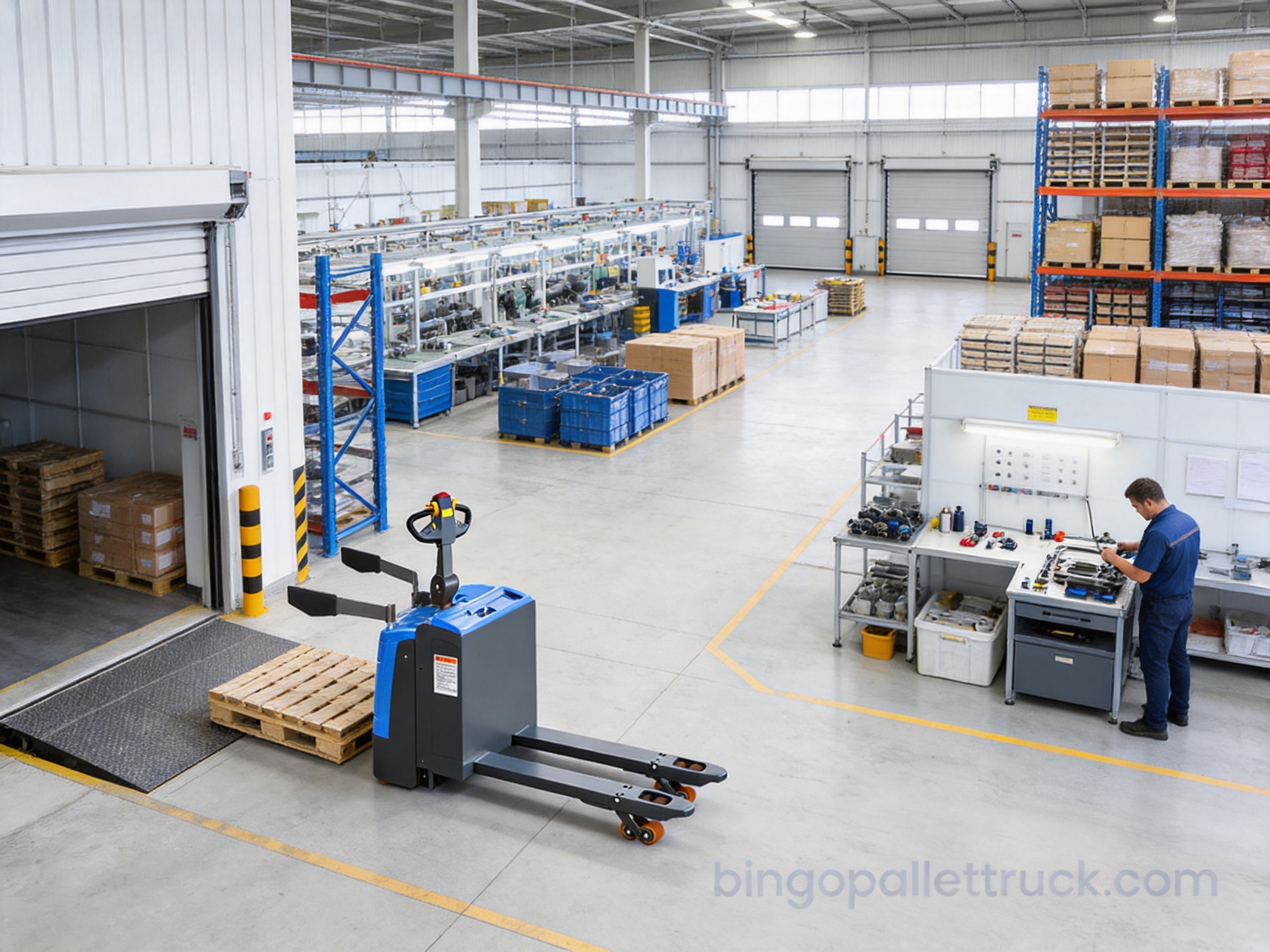
The CBD20E is suitable for many environments where pallets must be moved efficiently at floor level. In manufacturing, it can transport raw materials from receiving areas to production lines and move finished goods to staging locations. Its stand-on design is helpful when the same route is repeated many times during a shift.
In e-commerce fulfillment, the truck can support inbound pallet movement, replenishment of picking zones, consolidation of outbound orders, and transfer between storage and packing areas. The electric system can help maintain a consistent operating rhythm during periods of high order volume.
In third-party logistics warehouses, the machine can serve multiple customers and product categories. Its 2000kg capacity and flexible fork spread make it useful for standard pallet operations, while the compact dimensions support movement through planned aisles and staging lanes.
Supermarket distribution centers can use the pallet truck for dock-to-storage movement, store-order consolidation, and trailer loading support. The polyurethane wheels are suitable for many indoor surfaces, and the operator platform can reduce travel fatigue during repetitive shifts.
In cold-chain or temperature-controlled facilities, battery behavior, tire performance, lubrication, condensation, and charging practices require additional evaluation. The basic truck configuration may be suitable for certain controlled environments, but customers should confirm temperature ratings and component compatibility before deployment.
Packaging and storage operations can also benefit from the truck. Because Bingo supplies storage containers, packaging materials, and warehouse racking in addition to handling equipment, customers may be able to coordinate pallet movement with broader storage and packing requirements.
Maintenance and Service Planning
Preventive maintenance is essential to preserving the performance of any electric pallet truck. A maintenance schedule should be based on operating hours, duty intensity, environment, battery type, and manufacturer recommendations. High-use warehouses may require more frequent inspections than low-volume facilities.
Daily checks should focus on visible safety and operating functions. Operators should check the condition of the forks, wheels, frame, handle, protective arms, pedals, battery cables, and controls. Travel and braking should be tested in a clear area. Any unusual sound, vibration, odor, or control response should be reported.
Periodic maintenance should include inspection of wheel bearings, steering components, drive assembly, motor connections, electrical connectors, braking components, structural fasteners, and battery condition. Dirt and debris should be removed from moving and electrical areas. Damaged or excessively worn parts should be replaced with compatible components.
Lead-acid batteries require disciplined charging and care. The battery should be charged using the correct charger, and charging connectors should be kept clean and secure. Where applicable, electrolyte levels should be checked according to the battery manufacturer’s procedure. Lithium-ion batteries have different charging, storage, and service requirements and should not be treated like lead-acid batteries.
Good maintenance also protects productivity. Unexpected equipment failure can interrupt receiving, picking, production supply, and shipping schedules. A planned inspection program helps identify small issues before they develop into major repairs.
How to Select the Correct Configuration
Before purchasing the CBD20E, buyers should review the intended load profile. The rated 2000kg capacity is based on specified operating conditions, including the load center. Heavy loads with a center of gravity farther forward may reduce the permissible capacity. Customers should provide information about pallet dimensions, load weight, load shape, and frequency of movement.
The aisle layout should be reviewed using the truck’s overall dimensions, turning radius, fork length, and required clearance. A drawing or site survey can help verify that the truck can enter, turn, position, and exit safely in all relevant locations.
Battery selection should reflect the daily duty cycle. A lead-acid battery may be suitable for conventional scheduled charging, while lithium-ion may be preferred for operations requiring flexible charging and reduced routine maintenance. Charger location, electrical supply, working temperature, and shift pattern should all be considered.
Wheel configuration should be confirmed because the provided specifications include more than one wheel arrangement. Different wheel sets may influence traction, stability, turning behavior, and floor interaction. The buyer should request the final technical data sheet corresponding to the selected configuration.
Controller selection is another consideration. The standard LVM24S20 controller is listed for the product, while a Curtis controller is available as an option. Customers may choose based on service preferences, regional support, fleet standardization, and existing maintenance capability.
Customers should also discuss spare parts, warranty terms, operator manuals, maintenance documents, delivery packaging, and commissioning support. Clear communication before production helps avoid delays and ensures that the delivered truck matches the site’s operational requirements.
Implementation Recommendations for Warehouse Managers
Introducing a stand-on electric pallet truck should be part of a broader material-flow plan. Warehouse managers should identify the routes where the CBD20E will create the greatest benefit. These may include long transport lanes, receiving-to-storage paths, production replenishment routes, or outbound staging areas.
Traffic rules should be established before the truck enters service. The rules may define travel directions, speed limits, pedestrian crossings, parking locations, charging procedures, and right-of-way at intersections. Clear floor markings and signs can help operators and pedestrians understand the intended flow.
Operator training should cover controls, load capacity, load placement, steering, braking, ramp operation, battery charging, inspection, emergency procedures, and pedestrian awareness. New operators should practice in an open area before entering active warehouse traffic.
Performance should be monitored after deployment. Useful indicators may include completed pallet moves, battery usage, charging time, equipment downtime, maintenance frequency, operator feedback, and safety incidents. These measurements can help the company optimize routes and determine whether additional trucks or different battery configurations are needed.
Because the CBD20E is part of a wider equipment portfolio, future projects may also include racking, storage containers, packaging supplies, or other handling machines. A coordinated approach can help businesses create a more efficient warehouse system rather than purchasing disconnected equipment from multiple sources.
Frequently Asked Questions
What is the rated capacity of the CBD20E?
The rated load capacity is 2000kg under the specified rated conditions. The actual safe capacity can be affected by load center distance, load shape, pallet condition, travel surface, and operating environment.
Is the CBD20E suitable for long travel distances?
Yes. The stand-on operator platform is designed to support applications where the truck travels repeatedly between warehouse zones. It can reduce walking compared with a walk-behind pallet truck and may improve productivity on longer routes.
What type of battery is standard?
The standard battery is a 24V, 210Ah lead-acid battery with an approximate weight of 180kg. Optional 150Ah and 200Ah lithium-ion batteries are also available for customers with different charging and maintenance requirements.
What steering system does the truck use?
The CBD20E uses electronic steering. The system is designed to reduce steering effort and support more convenient operation in warehouse aisles and loading areas.
What type of tires are fitted?
The truck uses polyurethane tires. The primary listed configuration includes a 230mm by 75mm front tire, an 80mm by 98mm rear tire, and a 115mm by 55mm balance wheel. Another configuration is also listed, so the final wheel specification should be confirmed before ordering.
What is the maximum travel speed?
The listed travel speed is 5.5km/h when laden and 6.0km/h when unladen. Actual operating speed should be adjusted to suit the load, floor, traffic, visibility, and site safety rules.
Does the pallet truck have a mechanical brake?
The listed service brake is electromagnetic. Operators should follow the manufacturer’s operating instructions and verify braking performance during pre-shift inspection.
What are the main ergonomic features?
The main ergonomic features include a stand-on platform, shock-absorbing foot pedals, a humanized handle, electronic steering, and crash-proof arms. Together, these features are intended to reduce physical effort and fatigue during repeated operation.
Can the CBD20E be used outdoors?
The truck is primarily suited to indoor warehouse and industrial applications with appropriate floors. Outdoor use depends on surface quality, weather exposure, ramps, debris, temperature, and other site conditions. Suitability should be confirmed for each specific application.
How should customers confirm the correct configuration?
Customers should provide pallet dimensions, load weights, load center information, aisle measurements, shift patterns, desired battery type, wheel requirements, and controller preferences. The final quotation and technical document should identify the exact configuration.
Who manufactures the CBD20E?
The CBD20E is manufactured and supplied by Yancheng Bingo Machinery Equipment Co., Ltd., a company specializing in warehousing and logistics equipment, including electric pallet trucks, stackers, storage containers, packaging materials, and warehouse racking.
Conclusion
The 2000kg EPS Electric Stand-On Pallet Truck is designed for warehouses that require a strong balance of capacity, maneuverability, comfort, and operating efficiency. Its 2000kg rated load capacity, 2.2kW drive motor, 1kW lift motor, electronic steering, electromagnetic braking, polyurethane tires, and stand-on platform make it a versatile solution for floor-level pallet transportation.
Its competitive value comes from the way these features work together. The low center of gravity supports stability, the heavy-duty tie-rod and pin-shaft frame supports repeated industrial use, and the shock-absorbing platform helps reduce operator fatigue. The compact dimensions and controlled performance make it suitable for many receiving, storage, production, fulfillment, and shipping environments.
The product also benefits from the manufacturer’s broader supply-chain and logistics-equipment capabilities. Yancheng Bingo Machinery Equipment Co., Ltd. provides handling equipment alongside storage containers, packaging materials, and warehouse racking, enabling customers to discuss wider material-flow requirements with one supplier. Its stated focus on quality inspection, supply-chain coordination, and global service supports the needs of international warehouse projects.
For the best result, buyers should confirm the exact wheel configuration, performance version, controller, battery, fork dimensions, aisle requirements, and service arrangements before ordering. When correctly specified, operated, and maintained, the CBD20E can help businesses move heavy pallets more efficiently, reduce manual effort, and build a safer and more productive warehouse workflow.
References
1. Product technical information for the CBD20E 2000kg electric stand-on pallet truck, including capacity, dimensions, wheel data, motor ratings, battery information, and performance specifications.
2. Yancheng Bingo Machinery Equipment Co., Ltd. company information concerning warehouse logistics equipment, material handling solutions, storage containers, packaging materials, and warehouse racking.
3. General principles of industrial truck operation, workplace traffic management, load handling, operator training, and preventive maintenance.
4. General technical guidance for lead-acid and lithium-ion battery use in electric material-handling equipment.
5. General warehouse planning principles concerning pallet dimensions, aisle width, turning radius, pedestrian separation, and equipment selection.
Product: 2000kg EPS Electric Stand Type Pallet Truck for Logistics


Copyright @ Yancheng Bingo Machinery Equipment Co., Ltd. All rights reserved Warehouse Logistics Equipment Manufacturer Pallet Truck Supplier
