 en
en  Español

8-Compartment Dividable Plastic Tote for Small Food Storage
Efficient storage begins with giving every item a defined place. In food handling, light manufacturing, warehouse fulfillment, retail replenishment, and small-parts distribution, a container must do more than hold products. It must protect contents, support organized picking, remain stable during movement, simplify cleaning, and use warehouse space efficiently. The BG-453411-DT 8-compartment dividable plastic tote is designed around these practical requirements.
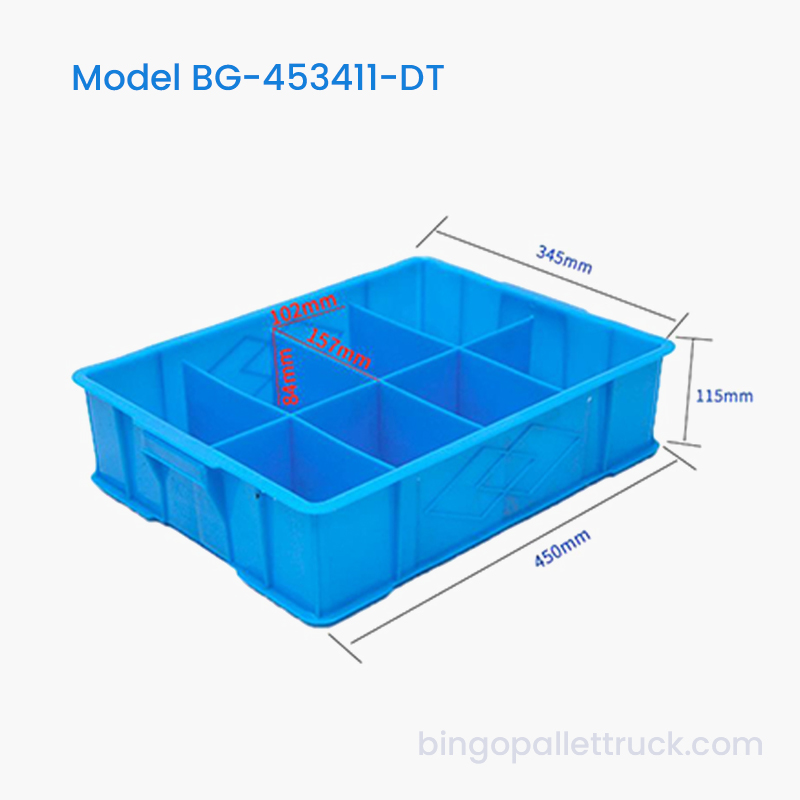
Measuring 450 × 345 × 115 mm externally and 420 × 320 × 105 mm internally, this precision-molded polypropylene tote provides eight clearly separated compartments within a compact footprint. Each compartment measures approximately 157 × 102 × 84 mm, making the tote suitable for small food ingredients, packaged food components, hardware, electronic parts, fasteners, medical supplies, retail accessories, and other items that benefit from separation.
The tote combines an integrated partition structure with a reinforced ribbed base and strengthened side walls. This design helps preserve load stability while the container is stacked, transported, placed on shelving, or used in a picking station. Its smooth, non-porous surface supports straightforward cleaning and sanitization, while its stackable and space-conscious construction can reduce wasted storage volume compared with multiple loose containers or oversized single-compartment bins.
Behind the product is a manufacturing approach centered on precision molding, standardized production, material control, and inspection at every stage. Yancheng Bingo Machinery Equipment Co., Ltd. supplies this tote as part of a broader warehousing and logistics equipment portfolio that includes handling equipment, storage containers, packaging materials, and warehouse racks. This integrated product background gives the tote a practical context: it is not an isolated container, but a component within a wider material-flow system.
8-Compartment Dividable Plastic Tote for Small Food Storage
Content
- 1 Why Compartmentalized Storage Matters
- 2 Product Overview
- 3 Material Selection and Surface Performance
- 4 Structural Design for Stability
- 5 Advantages Compared with Conventional Storage Options
- 6 Space Efficiency and Warehouse Optimization
- 7 Applications in Food Storage and Handling
- 8 Applications in Manufacturing and Distribution
- 9 Manufacturing Process and Quality Strengths
- 10 Operational Benefits for Businesses
- 11 Choosing the Right Contents and Loading Method
- 12 Cleaning, Maintenance, and Service Life
- 13 Integration with Material Handling Systems
- 14 Customization, Color, and Supply Considerations
- 15 How the Tote Supports a One-Stop Logistics Strategy
- 16 Recommended Implementation Approach
- 17 Frequently Asked Questions
- 17.1 What is the BG-453411-DT used for?
- 17.2 What material is the tote made from?
- 17.3 What are the tote’s dimensions?
- 17.4 How many sections does the tote have?
- 17.5 Can the compartments be reconfigured?
- 17.6 Is the tote suitable for direct food contact?
- 17.7 Can the tote be stacked?
- 17.8 What makes the tote more useful than a standard open bin?
- 17.9 Is the tote suitable for automated systems?
- 17.10 Can different colors be supplied?
- 17.11 How should the tote be cleaned?
- 17.12 What industries can use this product?
- 17.13 What information should be confirmed before ordering?
- 18 Conclusion
- 19 References
- 20 Product: 8-Compartment Dividable Plastic Tote for Small Food Storage
Why Compartmentalized Storage Matters
Small products are often difficult to manage because their physical size does not reflect their operational importance. A single missing component can interrupt an assembly line, delay a customer order, or create unnecessary picking and counting work. When similar items are stored together in one open bin, operators may need to sort through mixed contents repeatedly. That adds time, increases the possibility of selection errors, and makes inventory visibility more difficult.
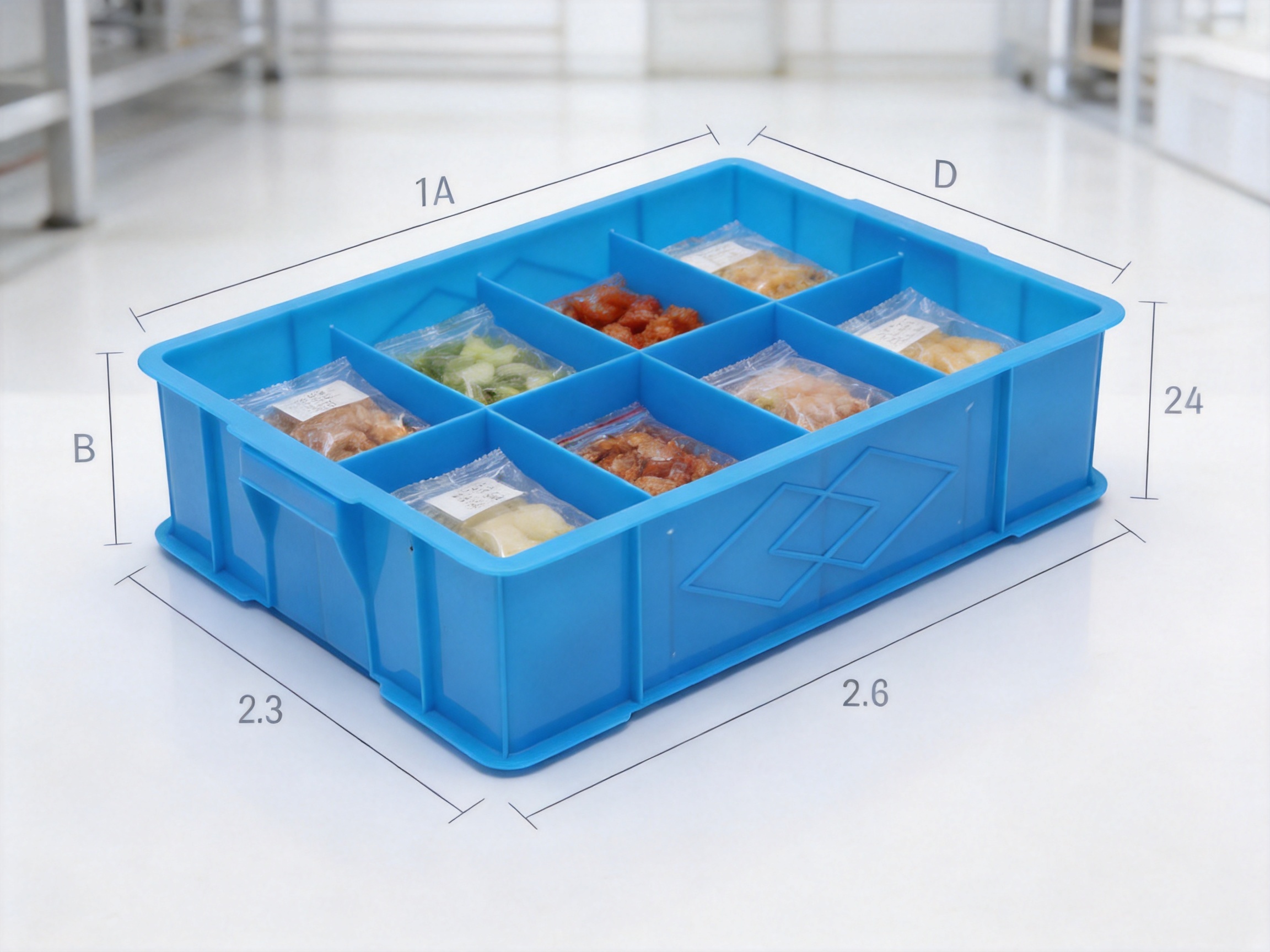
An eight-compartment tote addresses this challenge by creating a defined location for each product group. The integrated dividers prevent items from sliding freely across the container during normal handling. Products can be arranged according to size, model, batch, order, production stage, or destination. This organization is especially useful where many small items must be accessed quickly and returned to the same location after use.
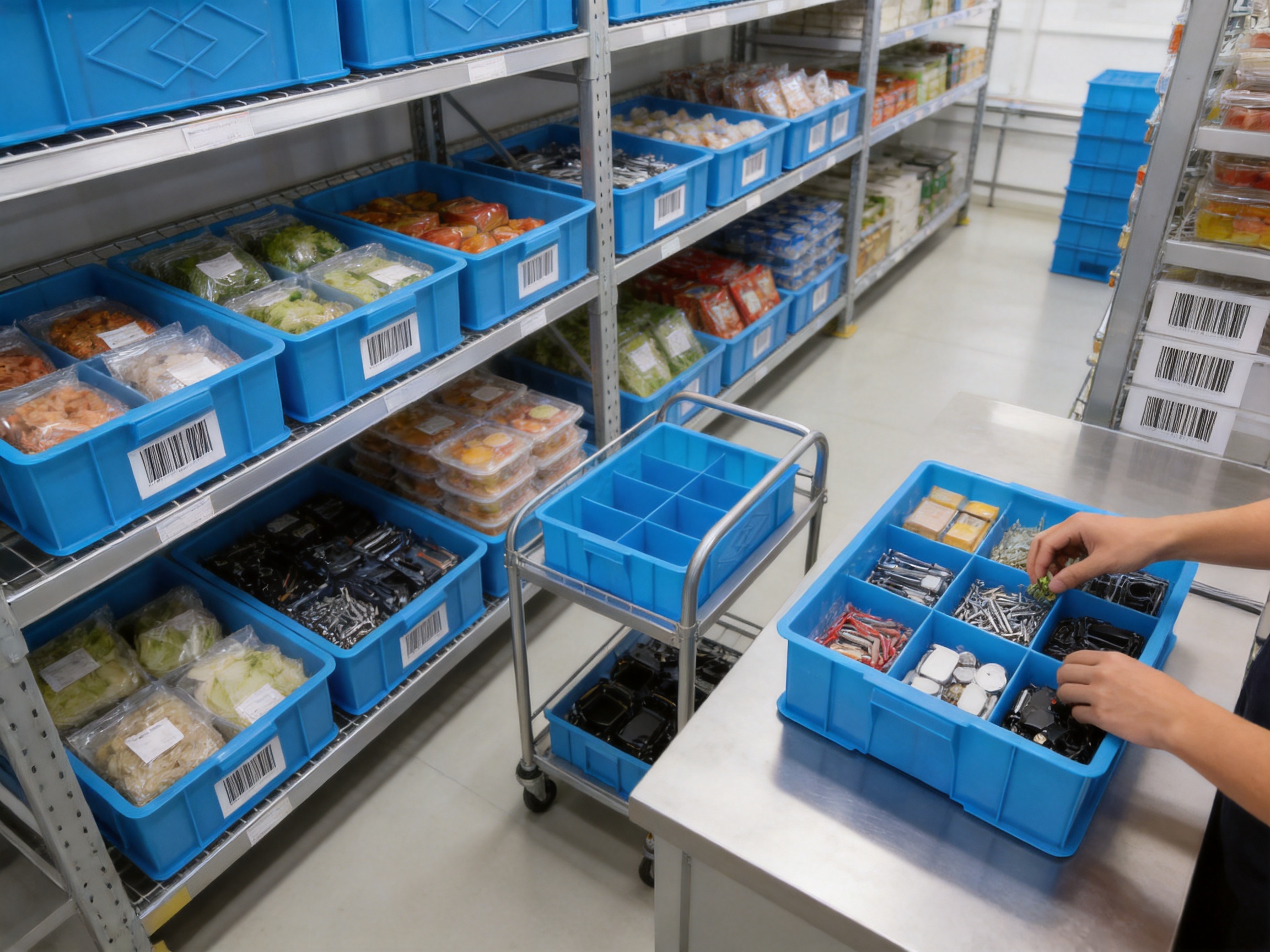
Compartmentalization also supports visual management. When each section has a specific function, an operator can identify an empty or incorrectly filled compartment at a glance. Labels, color coding, barcodes, or handwritten location references can be added according to the user’s operational system. The tote therefore functions not only as a storage vessel but also as a simple organizational platform.
For small food storage applications, separation can help keep different ingredients, portions, samples, toppings, packaged items, or production accessories from becoming mixed. The non-porous polypropylene surface is easier to wipe than porous materials, and the absence of fabric or untreated wood reduces the number of surface irregularities where dirt can accumulate. Users should still select cleaning procedures and material approvals appropriate to their specific food-contact requirements.
In industrial environments, the same principle applies to screws, nuts, washers, clips, connectors, labels, fittings, and maintenance parts. Rather than using several unstructured cartons, a single divided tote can place multiple related items within one portable unit. This can simplify kitting, line-side replenishment, quality inspection, and order preparation.
Product Overview
The BG-453411-DT is a rigid, reusable plastic tote with eight internal compartments. It is designed for repeat handling rather than one-time transport. Its external dimensions provide a compact base area suitable for shelving, workstations, carts, and storage systems, while the internal dimensions make efficient use of the available space.
| Item | Specification |
| Product type | 8-compartment dividable plastic tote |
| Model | BG-453411-DT |
| Material | Polypropylene, specified as PP |
| External dimensions | 450 × 345 × 115 mm |
| Internal dimensions | 420 × 320 × 105 mm |
| Net weight | 0.95 kg |
| Number of compartments | 8 |
| Internal compartment size | 157 × 102 × 84 mm |
| Primary design features | Integrated partitions, reinforced ribbed base, strengthened side walls, smooth non-porous surface |
The stated external and internal dimensions indicate a practical wall and structural allowance around the usable storage area. This allowance supports rigidity and helps the tote maintain its shape during normal loading and movement. The 115 mm external height and 105 mm internal height provide a relatively low profile, making the container convenient for hand access and suitable for operations where employees need to see and retrieve contents without reaching deeply into a tall bin.
The 0.95 kg net weight represents a balance between durability and portability. A tote that is too light may flex or become unstable when loaded, while a container that is unnecessarily heavy reduces handling efficiency. The product’s construction is intended to provide a stable reusable platform without making routine movement excessively burdensome.
Material Selection and Surface Performance
The tote is precision-molded from polypropylene. PP is widely used in reusable industrial containers because it offers a useful combination of low density, rigidity, impact resistance, chemical tolerance, and cleanability. These characteristics make it suitable for environments in which containers are repeatedly filled, emptied, washed, stacked, and transported.
A smooth, non-porous surface is one of the product’s most important hygiene and maintenance advantages. Food particles, dust, oil, and other residues are generally easier to remove from a smooth molded plastic surface than from unfinished wood, corrugated fiberboard, or rough composite materials. The surface also does not absorb moisture in the same manner as porous packaging. This can help support repeat-use cleaning routines when the tote is handled according to appropriate procedures.
Surface cleanliness is valuable beyond the food sector. In electronics assembly, a cleanable tote can help reduce loose dust and debris around sensitive components. In pharmaceutical or laboratory support areas, smooth containers are easier to inspect and wipe. In warehouse environments, they can be cleaned after exposure to dirt, lubricants, or packaging debris.
Material selection must always be matched with the application. Although the product is promoted for small food storage, food-contact suitability depends on the exact formulation, regulatory requirements, temperature conditions, cleaning chemicals, and intended use. Buyers should confirm the relevant compliance documentation before using the tote for direct food contact. The practical advantage of PP remains its cleanable, reusable, and durable construction, but responsible application requires verification of the specific operating conditions.
The supplied manufacturing information emphasizes virgin polymer material and strict control from raw-material sourcing through production. This approach can improve consistency between production batches. Consistent resin quality supports more predictable molding behavior, color uniformity, surface finish, dimensional stability, and mechanical performance. It also reduces the variation that can occur when uncontrolled recycled feedstock is used.
Structural Design for Stability
The tote’s reinforced ribbed base is designed to increase stiffness without requiring a solid, excessively thick mass of plastic throughout the entire bottom. Ribs can distribute loads across the base and help resist bending when the tote contains multiple items. This is especially relevant when the tote is placed on shelving, a trolley, a pallet, or another container.
A rigid base also improves usability during picking. If the bottom flexes significantly, contents may shift toward the center or become difficult to remove. A reinforced base helps create a more dependable surface for arranging small products inside each section. The result is a more consistent relationship between the container, its partitions, and its stored contents.
The side walls contribute to the tote’s overall strength and shape retention. During stacking and transport, side walls may experience pressure from adjacent containers, contact with equipment, or impacts during manual handling. Strengthened walls can help the tote remain square and stable, which is important for predictable stacking and efficient use of shelf space.
Integrated partitions provide another structural benefit. Unlike loose cardboard dividers or removable inserts that can shift, collapse, or become separated from the container, molded partitions are part of the tote’s internal structure. They remain in position during normal handling and create a more permanent eight-section layout. This is an advantage for operations that require reliable separation from one work cycle to the next.
The compartment dimensions of 157 × 102 × 84 mm provide a defined working volume for small items. These dimensions should be compared with the actual size of the products to be stored, including packaging, handles, protrusions, and required clearance. Proper sizing helps prevent overfilling, makes retrieval easier, and preserves the intended stability of the partition system.
Advantages Compared with Conventional Storage Options
Compared with Undivided Plastic Bins
An undivided bin may provide a larger continuous volume, but it does not prevent different products from mixing. Operators must often add bags, cartons, trays, or improvised dividers to create order. Those additions can reduce usable space and may move during handling. The eight-compartment tote provides separation as part of the original molded design, avoiding the need for temporary internal arrangements.
The divided format is particularly valuable when products are similar in appearance. Screws with different lengths, food portions with different ingredients, or electronic connectors with different specifications can be stored in separate sections. This reduces the chance that one item type will be buried beneath another or accidentally transferred to the wrong location.
Compared with Cardboard Cartons
Cardboard cartons are economical for one-way distribution, but they can lose strength when exposed to moisture, repeated handling, or repeated opening and closing. They may also generate fibers and are more difficult to sanitize. A reusable PP tote offers a stronger long-term solution where the same container is used repeatedly within a plant, warehouse, store, or distribution loop.
The initial purchase price of a reusable tote may be higher than that of a single carton, but the relevant comparison should include service life, replacement frequency, labor, protection, and waste disposal. When a container completes many storage and transport cycles, its cost per use may become more favorable.
Compared with Fabric or Soft Organizers
Soft organizers can be convenient for lightweight household items, but they generally provide less structural protection and less predictable stacking behavior. Their surfaces may be harder to clean thoroughly, and their compartments can collapse when empty or partially loaded. The molded PP construction of the BG-453411-DT gives it a stable form for warehouse and industrial use.
Compared with Loose Removable Dividers
Removable dividers offer flexibility, but they can be misplaced, incorrectly installed, or displaced when the container is tilted. Integrated partitions eliminate those particular problems and maintain a consistent layout. For standardized picking or production routines, fixed compartments can be more dependable than adjustable inserts.
Compared with Multiple Small Containers
Using eight separate small containers can provide separation, but it also creates more individual units to label, move, count, clean, and store. One divided tote consolidates related items into a single handling unit. This can simplify internal logistics and reduce the number of containers required at a workstation.
Space Efficiency and Warehouse Optimization
Warehouse space is expensive because every square meter must support inventory, movement, labor, and equipment. Containers that waste headroom or leave large gaps can reduce the efficiency of shelving and transport. The low-profile design of this tote allows small products to be organized without surrounding them with unnecessary empty volume.
Stackability is another important consideration. The supplied product information states that the totes can be stacked up to more than ten layers under suitable conditions. Actual stack height depends on load weight, shelf design, floor condition, temperature, container orientation, and the stability of the stored products. Users should validate stack limits in their own operating environment and avoid exceeding safe working conditions.
When empty, space-saving reusable containers can reduce the volume required for return transport and storage. This is useful in closed-loop operations in which totes move between a warehouse, production area, supplier, store, or customer. Reducing empty volume can help lower handling requirements and improve vehicle utilization.
At the workstation level, eight compartments can eliminate the need for several scattered boxes. A compact footprint keeps materials within reach while preserving aisle and working space. Operators can place the tote on a shelf, cart, packing bench, or production-side rack and access each section without moving multiple containers.
Container standardization can also support automation. Automated systems generally perform more reliably when tote dimensions, surfaces, and load locations are consistent. The BG-453411-DT’s defined external size and rigid construction may make it suitable for evaluation in conveyor, shelving, scanning, or robotic workflows. However, compatibility must be confirmed against the specific equipment, including conveyor width, sensor requirements, gripping method, weight limits, and clearance.
Applications in Food Storage and Handling
The tote’s eight-compartment layout makes it appropriate for organizing small food-related items. Potential applications include ingredient preparation, portion control, bakery accessories, condiment packets, packaged snacks, sample organization, food-service replenishment, and storage of small sealed products. Each section can be assigned to one ingredient, product variation, order, or production task.
In a preparation environment, employees can position frequently used small items in a repeatable sequence. The first compartment may hold one item, the second another, and so on. This arrangement can reduce searching and support standardized work instructions. In a retail or food-service back room, the tote can group small stock-keeping units so that replenishment is faster and less error-prone.
The low height is helpful when the operator needs to see the contents from above. A deep container can hide smaller products beneath the top layer, while a low-profile divided tote offers better visibility and easier access. The separate sections also discourage overfilling one area while leaving another unused.
Cleaning procedures should be established according to the nature of the stored products. A suitable routine may include emptying the tote, removing visible residue, washing with an approved cleaning solution, rinsing where necessary, drying completely, and inspecting the corners and partition junctions. Users should confirm chemical compatibility and temperature limits before applying hot water, steam, or aggressive sanitizers.
For direct food contact, organizations should request the appropriate material and compliance information from the supplier. The product’s cleanable PP construction is a practical foundation, but legal and quality requirements differ by market and application. Sealed or packaged food storage may involve different controls from direct-contact ingredient handling.
Applications in Manufacturing and Distribution
Manufacturing environments often require parts to be delivered to a workstation in small quantities. The divided tote can support line-side supply by placing several components in one organized unit. Its partitions can separate parts by work order, assembly sequence, size, or production stage.
For kitting operations, one compartment may represent one component of a kit. This allows an assembler or picker to verify whether all required items are present. The tote can travel from inventory storage to a staging area and then to the assembly line without requiring the components to be repacked into a different container.
In maintenance departments, the tote can organize frequently used fasteners, fittings, washers, electrical accessories, and replacement parts. A labeled section system can reduce time spent searching through drawers or mixed bins. Because the tote is portable, it can be carried to a maintenance location and returned to storage after the task is complete.
E-commerce fulfillment operations can use the tote for order consolidation. Eight orders, product families, or picking zones can be assigned to the eight sections. The tote’s structure helps keep small items separated while they move through picking, checking, packing, and dispatch stages.
In quality-control environments, sections can be allocated to samples, test stages, defect categories, or inspection lots. The smooth surface supports routine cleaning, while the rigid structure protects small items from being crushed by flexible packaging. Labels and tracking systems can be added according to the facility’s quality procedures.
Manufacturing Process and Quality Strengths
The product is precision-molded, which means the mold defines the overall shape, compartment geometry, rib pattern, wall profile, and external dimensions. Precision molding is important for a divided tote because even modest dimensional variation can affect stackability, compartment capacity, lid or equipment compatibility, and handling consistency.
A controlled molding process begins with raw-material management. The supplied company information describes the use of virgin polymer material and quality control from raw-material sourcing through production. Material identification, storage, batching, and preparation are important steps because contamination or inconsistent feedstock can influence the finished product’s strength, appearance, and dimensional stability.
During molding, process parameters such as temperature, pressure, cooling, cycle time, and material flow must be controlled. The integrated partitions make mold design and filling behavior especially important. Uneven cooling or material distribution could lead to warping, thin sections, weak junctions, or inconsistent compartment dimensions. Standardized production procedures help reduce these risks.
After molding, inspection can address appearance, dimensions, structural integrity, surface quality, weight, and partition condition. A well-controlled inspection routine may identify flash, deformation, cracks, incomplete filling, damaged ribs, or unacceptable color variation before products are packed for delivery.
Quality control is most effective when it is applied throughout the process rather than only at the final stage. The company describes inspections at every stage, supported by standardized processes and strict production standards. This approach allows issues to be detected earlier, reducing the likelihood that nonconforming products will proceed to later operations.
Standardized manufacturing also supports repeat orders. Warehouses and factories often purchase containers in batches, and inconsistent dimensions can create operational problems when products from different shipments are stacked or used together. A repeatable process helps customers build a more uniform container fleet.
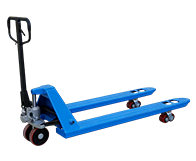
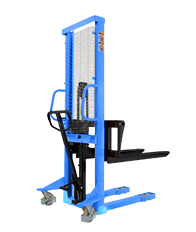
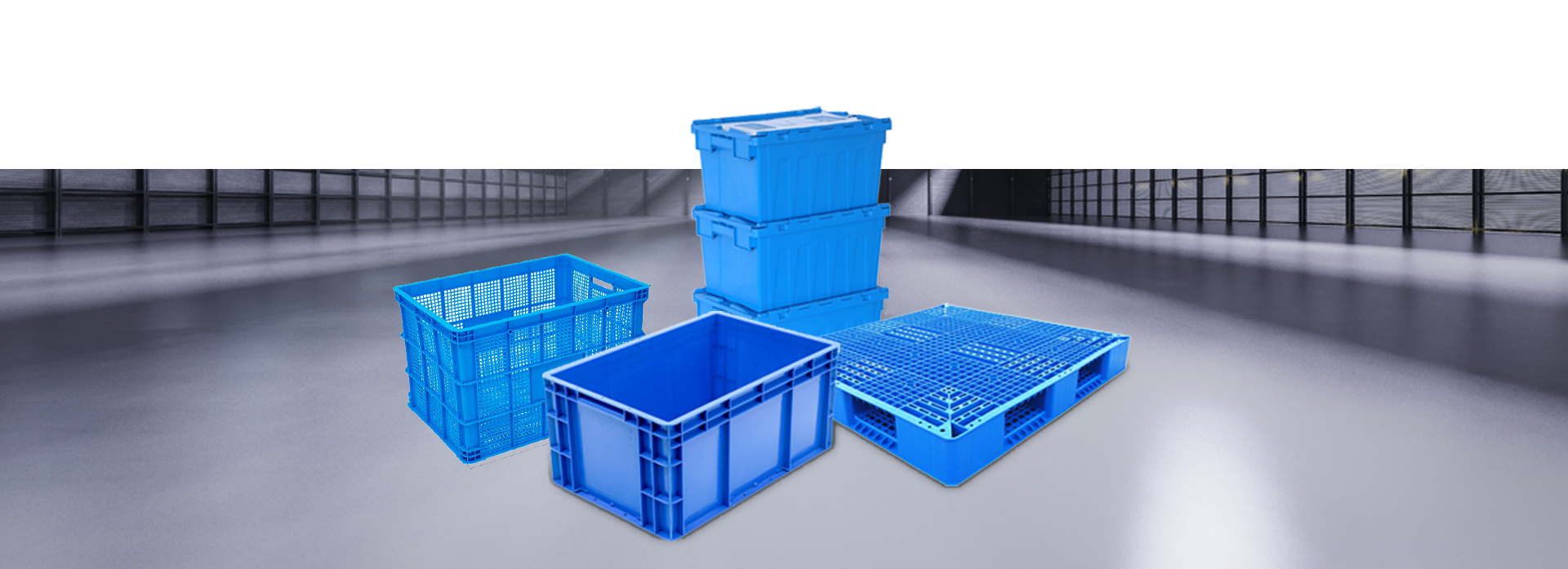
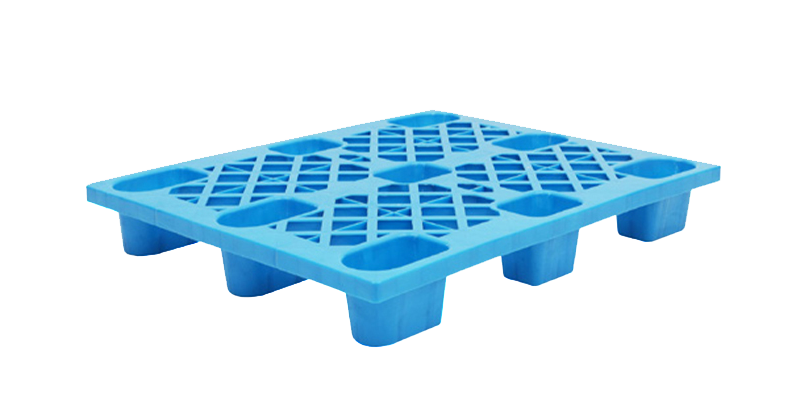
The company’s broader supply-chain position is another strength. Its product portfolio spans manual and electric pallet trucks, stackers, plastic pallets, totes, crates, bulk containers, stretch wrap, packing strapping, and warehouse racks. This breadth enables customers to consider storage, handling, packaging, and racking as connected requirements rather than separate purchases.
Operational Benefits for Businesses
Reduced Picking Time
Defined compartments reduce the need to search through mixed stock. When locations remain consistent, new and experienced operators can follow the same visual arrangement. Faster picking is especially valuable in high-frequency operations involving many low-value items, because small delays repeated hundreds of times can create a significant labor burden.
Improved Inventory Discipline
A divided tote makes it easier to assign an identity to each location. Labels can correspond to product codes, batch numbers, order numbers, or replenishment levels. The fixed layout supports cycle counting because staff can inspect each compartment in sequence rather than sorting an unstructured pile.
Lower Product Mixing Risk
Integrated dividers create a physical boundary between products. Although they do not replace labeling, employee training, or inventory controls, they provide a first level of separation that can reduce accidental mixing during transport and handling.
Reusable Transport
The durable molded construction is intended for repeated use. In internal logistics, a reusable tote can circulate between storage and production without the recurring disposal associated with single-use cartons. It can also protect small items better during movement between departments.
Cleaner Work Areas
When small products have assigned locations, fewer loose packages need to remain on benches, shelves, and floors. Consolidation can contribute to a more orderly work area and make cleaning and inspection easier. The tote itself can be removed, cleaned, and returned to service as part of the facility’s housekeeping routine.
Choosing the Right Contents and Loading Method
Although the product is designed for small-item storage, careful loading is still necessary. Contents should fit comfortably within the 157 × 102 × 84 mm compartment dimensions. Items should not be forced into a section in a way that places excessive pressure on the divider walls or prevents easy retrieval.
Heavy items should be distributed rather than concentrated in one compartment unless the container’s load rating has been confirmed for that use. Dense metal components can produce more stress than lightweight plastic or packaged food items. The total load should remain within the supplier’s stated capacity and the safe working limit of the shelf, cart, pallet, or rack supporting the tote.
Operators should avoid placing sharp edges against thin partition areas or dragging abrasive materials across the surface. While PP is durable, no plastic container is immune to damage from severe impact, cutting tools, excessive heat, or unsuitable chemicals. Routine inspection can identify cracks, deformation, or damaged ribs before the tote is returned to service.
For stacking, the base of each tote should be properly aligned with the tote below it. Uneven loads, protruding products, and unstable surfaces can reduce stack security. If totes are used in moving vehicles or on carts, additional restraint may be appropriate depending on the route and handling conditions.
Cleaning, Maintenance, and Service Life
A reusable container delivers the greatest value when it remains clean, structurally sound, and clearly assigned to its intended use. Cleaning frequency should reflect the stored products and the operating environment. Food-related applications may require cleaning after each cycle, while sealed industrial components may follow a different schedule.
The smooth non-porous surface simplifies visual inspection. Staff can examine the bottom, side walls, and partition junctions for residue or damage. A consistent inspection checklist may include cleanliness, cracks, warping, excessive abrasion, sharp edges, missing labels, and evidence of chemical attack.
When washing the tote, users should select detergents and sanitizers compatible with polypropylene and follow the chemical manufacturer’s instructions. Excessive heat or prolonged exposure to unsuitable substances may shorten service life. After washing, the tote should be dried appropriately before storing moisture-sensitive items.
Labels should be applied in a way that does not create hard-to-clean residue or obscure important surfaces. If adhesive labels are used, the adhesive should be tested for compatibility with the cleaning routine. Removable identification cards, barcode labels, or molded location systems may be preferable in applications where product assignments change frequently.
Proper maintenance also includes organized storage when the totes are empty. Containers should be protected from unnecessary impacts, sharp objects, and prolonged exposure to extreme environmental conditions. A controlled storage area helps preserve both appearance and performance.
Integration with Material Handling Systems
The tote’s compact dimensions make it a candidate for use with a variety of warehouse and production equipment. It may be placed on warehouse racks, work tables, picking carts, pallet trucks, or staging platforms, provided the equipment dimensions and load ratings are suitable.
In a manual workflow, an employee can carry or move the tote between locations. In a larger warehouse, multiple totes can be arranged on shelving according to product family or picking sequence. When combined with labels and location codes, the tote can support a structured inventory system.
For automated operations, consistency becomes especially important. Conveyors and robots rely on predictable dimensions and stable loads. The reinforced base and rigid side walls can help maintain a consistent shape, but the user must verify the tote’s compatibility with guide rails, rollers, sensors, grippers, barcode readers, and automated storage equipment.
The tote can also complement warehouse racks. Shelving provides the vertical storage structure, while the divided tote provides internal product organization. This combination allows a rack level to hold several product categories without requiring a separate large bin for every item type.
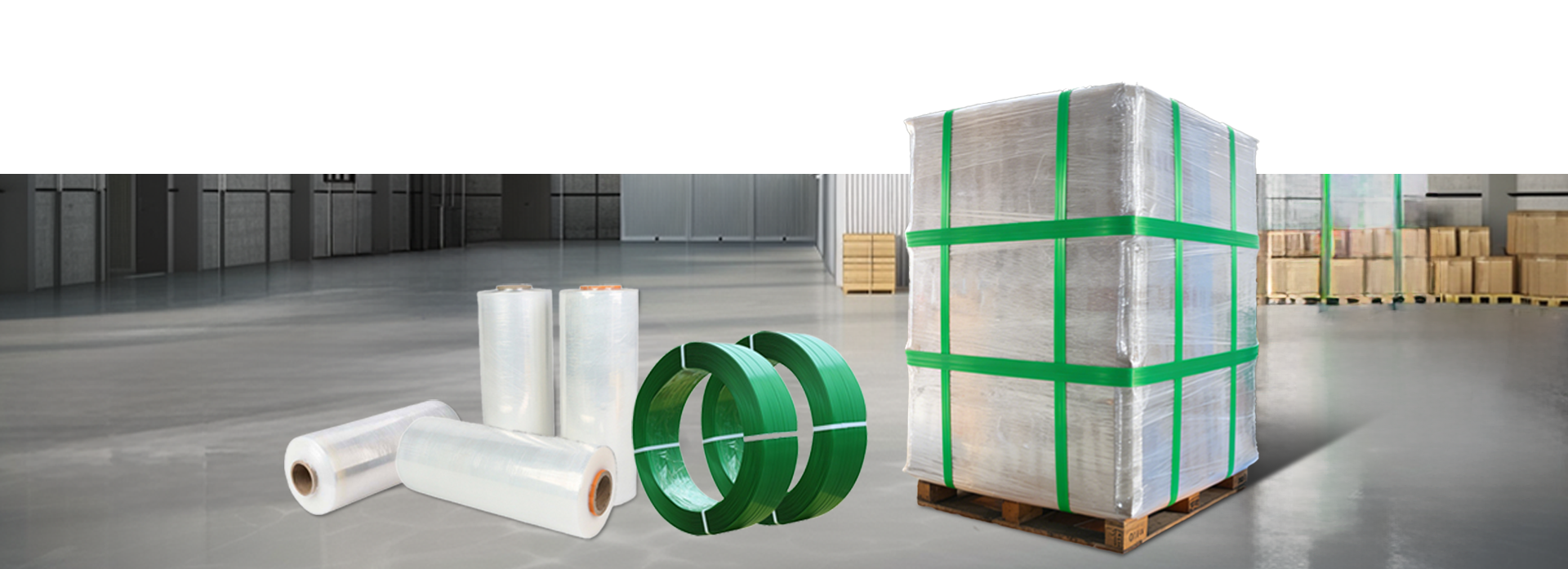
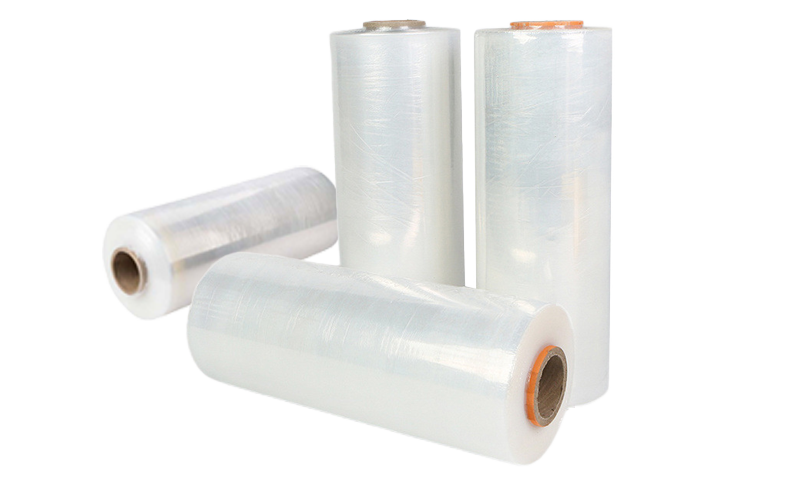
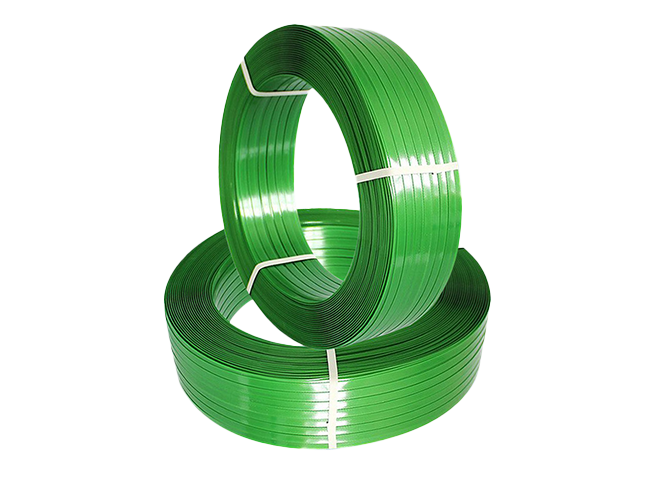
In packaging operations, the tote may serve as an intermediate container between picking and final packing. The eight sections can hold products for several orders or stages, helping prevent commingling before the final package is prepared. Packaging materials such as stretch wrap or strapping can then be used at the outer transport level when required.
Customization, Color, and Supply Considerations
The supplied information indicates that multiple colors and full specifications are available and that customization is supported. Color differentiation can be useful for production zones, product categories, hygiene classifications, work shifts, or stock status. For example, one color may be assigned to food-related operations and another to maintenance components, subject to the customer’s internal controls.
Custom identification may include labels, printed markings, barcode systems, or color schemes. Any customization should be reviewed for durability, readability, cleaning resistance, and compatibility with the intended environment. A clear identification system can increase the value of the tote by making the physical container part of the site’s visual management program.
Availability from stock can be important when a warehouse needs to standardize quickly or replace damaged containers without waiting for a long production cycle. The supplied company information states that products are in stock and ready to ship for fast delivery. Buyers should confirm current inventory, minimum order quantities, lead times, shipping terms, and customization schedules before placing an order.
For large deployments, it is advisable to test a representative sample. A trial can confirm compartment fit, stacking behavior, cleaning performance, equipment compatibility, label adhesion, and operator acceptance. This is particularly important when the tote will be used in food, automated, or regulated environments.
How the Tote Supports a One-Stop Logistics Strategy
A storage container is most useful when it fits the complete material-flow process. The company behind the BG-453411-DT focuses on warehousing and logistics equipment across handling, storage, packaging, and racking categories. This enables customers to coordinate container dimensions with pallet trucks, stackers, racks, pallets, wrapping materials, and other warehouse assets.
Such coordination can reduce the complexity of sourcing from multiple unrelated suppliers. A customer planning a new warehouse zone may need storage containers, racking, handling equipment, and packaging supplies at the same time. A supplier with experience across these categories can help evaluate how the products interact within the workflow.
The company describes itself as serving manufacturing, e-commerce logistics, warehousing and distribution, and supermarket retail. These sectors share several requirements: efficient storage, predictable movement, durable equipment, clear organization, and cost control. The divided tote addresses the small-item organization part of this broader logistics system.
The stated quality philosophy emphasizes quality first and win-win cooperation. In practical terms, this means product selection should be supported by clear specifications, consistent communication, inspection, and after-sales coordination. Customers can use the model number and dimensional data to align purchasing, layout planning, and replenishment programs.
Recommended Implementation Approach
Businesses introducing the tote should begin by identifying the products that create the greatest sorting, picking, or replenishment difficulties. These may include small parts with similar appearances, frequently used food-service items, order components, or products that are currently stored in disposable packaging.
Next, measure the actual products and compare them with the internal compartment dimensions. Consider not only length and width but also height, packaging, access clearance, and the quantity required per work cycle. The objective is to create a practical fill level that supports quick retrieval rather than simply maximizing volume.
Assign each compartment a clear purpose. The assignment may follow product code, work sequence, order number, shift, or replenishment priority. Use labels that remain readable under the site’s cleaning and handling conditions.
Place the tote at the point where it creates the greatest labor benefit. A container located too far from the operator may reduce the advantage of compartmentalized storage. In a warehouse, this could be a fast-moving picking shelf. In manufacturing, it could be a line-side station. In food service, it could be a preparation or replenishment area.
Measure results after implementation. Useful indicators may include picking time, replenishment frequency, misplacement incidents, damaged-item reports, cleaning time, and the number of disposable cartons consumed. These measurements help determine whether the tote is producing the expected operational improvement.
Frequently Asked Questions
What is the BG-453411-DT used for?
The BG-453411-DT is an eight-compartment reusable plastic tote for organizing small products. It can be used for small food-storage tasks, manufacturing components, maintenance parts, e-commerce order picking, retail replenishment, and other applications that require item separation.
What material is the tote made from?
The product specification identifies polypropylene, or PP, as the material. The supplied manufacturing information also emphasizes the use of virgin polymer material and quality control during raw-material sourcing and production. Customers with specific regulatory or food-contact requirements should request the applicable material documentation.
What are the tote’s dimensions?
The external dimensions are 450 × 345 × 115 mm. The internal dimensions are 420 × 320 × 105 mm. Each internal compartment is specified at approximately 157 × 102 × 84 mm.
How many sections does the tote have?
The tote has eight integrated compartments. The fixed partitions maintain separation during normal handling and eliminate the need for loose internal dividers.
Can the compartments be reconfigured?
The supplied product description presents the tote as an eight-compartment model with integrated partitions. It should therefore be treated as a fixed-layout container unless the supplier confirms an alternative configuration or customization.
Is the tote suitable for direct food contact?
The tote is promoted for small food storage and has a smooth, non-porous PP surface that supports cleaning. However, direct food-contact suitability depends on the specific material formulation, regulations, temperature, cleaning agents, and intended use. Buyers should confirm the required certifications and operating conditions before using it for direct contact with food.
Can the tote be stacked?
Yes. The product information describes it as stackable, with stacking of more than ten layers possible under suitable conditions. The safe stack height depends on load weight, surface condition, temperature, support equipment, and facility procedures. Users should validate the arrangement before full deployment.
What makes the tote more useful than a standard open bin?
The main difference is the integrated eight-section layout. A standard open bin allows contents to mix, while this tote creates defined locations for different products. It also combines a reinforced ribbed base, strengthened side walls, a low profile, and a cleanable molded surface.
Is the tote suitable for automated systems?
Its standardized dimensions and rigid construction may make it suitable for evaluation in automated workflows. Compatibility depends on the specific conveyor, rack, robot, sensor, and gripping equipment. Technical testing should be completed before integrating the tote into an automated system.
Can different colors be supplied?
The supplied information indicates that multiple colors and full specifications are available. Color selection and customization should be confirmed with the supplier, including minimum quantities, production lead times, marking options, and resistance to the intended cleaning process.
How should the tote be cleaned?
Cleaning should follow the requirements of the stored products and the facility. A general process may include emptying the tote, removing visible residue, washing with a compatible solution, rinsing when required, drying fully, and inspecting the partitions and base. Chemical and temperature compatibility should be confirmed before using specialized cleaners or sanitizers.
What industries can use this product?
Potential users include food preparation and service, manufacturing, maintenance, electronics assembly, e-commerce fulfillment, warehousing, retail distribution, supermarket operations, and general inventory management.
What information should be confirmed before ordering?
Customers should confirm current stock, quantity requirements, color, customization, load capacity, stacking conditions, food-contact documentation where relevant, cleaning compatibility, shipping terms, and any equipment integration requirements.
Conclusion
The BG-453411-DT 8-compartment dividable plastic tote offers a practical solution for organizations that need small products to remain separated, visible, accessible, and protected. Its PP construction, smooth non-porous surface, reinforced ribbed base, strengthened side walls, and integrated partitions address the everyday demands of reusable storage and internal transport.
Its advantages are most apparent when compared with mixed open bins, disposable cartons, soft organizers, loose dividers, or numerous individual small containers. The fixed eight-compartment format improves organization, while the compact dimensions support efficient use of shelves, workstations, carts, and transport space. Stackability and reusable construction can further support warehouse optimization and waste reduction.
Product performance is supported by the manufacturer’s emphasis on precision molding, virgin polymer material, standardized production, and quality inspections throughout the manufacturing process. Combined with the company’s broader expertise in handling equipment, storage containers, packaging materials, and warehouse racks, this tote can form part of a coordinated logistics solution rather than a standalone storage purchase.
For best results, users should match compartment dimensions to actual products, establish clear location rules, verify stacking and load conditions, and confirm any food-contact or automation requirements. When implemented with suitable procedures, the tote can help create a cleaner, more organized, and more efficient material-flow environment.
References
1. Product specification sheet for model BG-453411-DT, including dimensions, material, weight, and compartment size.
2. Manufacturer-provided product information concerning stackability, customization, inventory availability, and quality-control procedures.
3. General principles of reusable plastic container design for warehousing, manufacturing, food handling, and distribution environments.
4. General warehouse practices for inventory organization, visual management, picking efficiency, container sanitation, and safe stacking.
5. General material-handling guidance concerning polypropylene containers, load distribution, equipment compatibility, and reusable packaging systems.
Product: 8-Compartment Dividable Plastic Tote for Small Food Storage


Copyright @ Yancheng Bingo Machinery Equipment Co., Ltd. All rights reserved Warehouse Logistics Equipment Manufacturer Pallet Truck Supplier
