 en
 Español

77L HDPE Stackable Plastic Tote Box for Efficient Warehouse Storage and Logistics
Content
- 1 Product Overview
- 2 Why HDPE Is Suitable for Heavy-Duty Totes
- 3 Structural Design for Stable Stacking
- 4 Advantages Over Conventional Storage Alternatives
- 5 Warehouse Racking and Material-Handling Integration
- 6 Manufacturing Process and Production Strengths
- 7 Operational Benefits for Supply Chain Optimization
- 8 Applications Across Different Industries
- 9 Customization and Fleet Management
- 10 Safe and Effective Use
- 11 How the Tote Supports Lean Warehousing
- 12 Purchasing Considerations for Professional Buyers
- 13 Why Choose a Specialized Logistics Equipment Supplier
- 14 Implementation Guide for a New Tote Program
- 15 Frequently Asked Questions
- 15.1 What is the capacity of the tote?
- 15.2 What material is the tote made from?
- 15.3 Can the tote be used in warehouse racking?
- 15.4 How many totes can be stacked?
- 15.5 Is the tote suitable for reverse logistics?
- 15.6 Can different colors be supplied?
- 15.7 What industries can use this tote?
- 15.8 Is the tote suitable for outdoor use?
- 15.9 Can the tote be cleaned?
- 15.10 What should buyers confirm before ordering?
- 16 Conclusion
- 17 References
- 18 Product: 77L HDPE Stackable Plastic Tote Box for Workshop Parts
Efficient storage and dependable material handling are essential to modern supply chains. Manufacturers, distributors, fulfillment centers, workshops, and retailers all need containers that protect products, use warehouse space effectively, and move smoothly through repeated transport cycles. The 77L HDPE Stackable Plastic Tote Box, model BG-745623-ST, is designed to meet these requirements with a durable structure, standardized dimensions, and a practical stackable format.
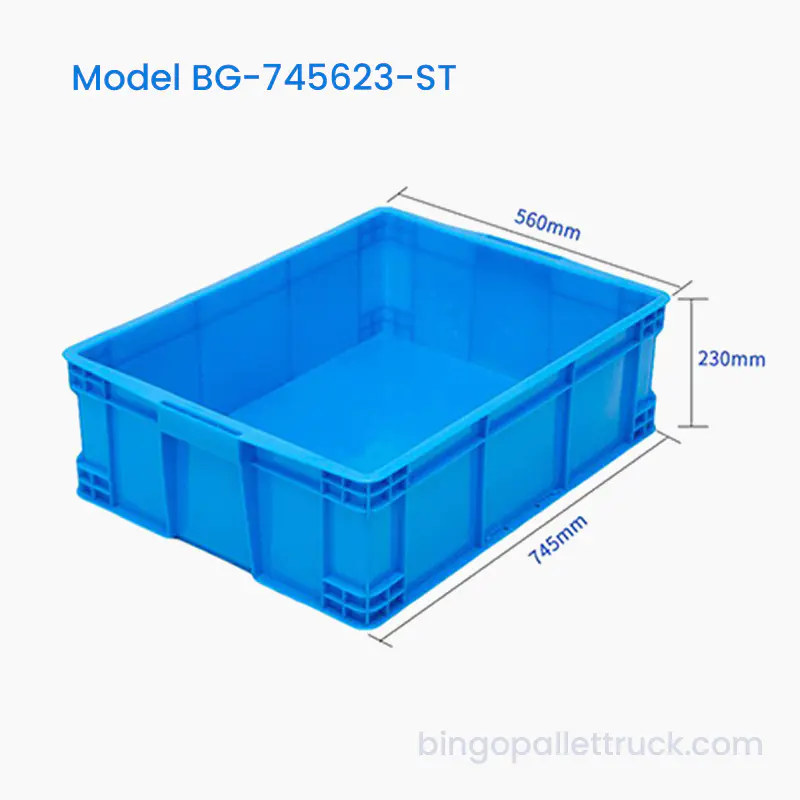
With external dimensions of 745×560×230mm and internal dimensions of 680×520×220mm, this tote provides a useful balance between storage capacity and footprint efficiency. Its 77-liter capacity is suitable for parts, components, packaged goods, tools, maintenance supplies, and many other industrial or commercial items. The box is manufactured from rugged high-density polyethylene, commonly known as HDPE, a material valued for its strength, impact resistance, moisture resistance, and long service life.
Unlike many lightweight storage bins intended only for occasional indoor use, this heavy-duty tote is engineered for demanding warehouse and logistics environments. It can be stacked for compact storage, integrated into standardized racking arrangements, and used in reverse logistics programs where empty containers must be returned efficiently. Reinforced ribbed side walls help maintain stability under load, during handling, and throughout long-distance transportation.
This article examines the product’s construction, performance, applications, manufacturing advantages, quality-control practices, and suitability for professional storage operations. It also explains how the tote can help companies reduce space consumption, improve workflow consistency, lower packaging waste, and create a more organized material-handling system.
77L HDPE Stackable Plastic Tote Box for Workshop Parts
Product Overview
The BG-745623-ST is a 77-liter stackable plastic tote box developed for industrial storage and warehouse logistics. Its shape is optimized for organized placement on warehouse shelving, pallet positions, workstations, transport platforms, and other storage surfaces. The rectangular design makes it easier to arrange multiple containers side by side while reducing wasted space between units.
The tote’s external dimensions are 745mm in length, 560mm in width, and 230mm in height. Its internal dimensions are 680mm in length, 520mm in width, and 220mm in height. This dimensional configuration provides a practical usable volume while maintaining sufficient wall thickness and structural reinforcement for demanding applications.
At a weight of approximately 3.2kg, the container is substantial enough to offer rigidity and durability without becoming unnecessarily difficult to handle when empty. The 77-liter capacity allows users to consolidate smaller packages, components, or parts into a manageable storage unit. Consolidation can reduce picking time, simplify inventory organization, and improve visibility within a warehouse or workshop.
| Item | Specification |
| Product Type | Stackable plastic tote box |
| Model | BG-745623-ST |
| Material | HDPE |
| External Dimensions | 745×560×230mm |
| Internal Dimensions | 680×520×220mm |
| Nominal Capacity | 77L |
| Product Weight | Approximately 3.2kg |
| Primary Function | Storage, handling, transport, and reverse logistics |
| Stacking Capability | Designed for multi-layer stacking, subject to load and operating conditions |
The product can be supplied in multiple colors and may support customization according to project requirements. Color coding is useful in environments where different colors represent departments, production stages, product families, quality statuses, or destination zones. This can improve visual management and reduce sorting errors.
Why HDPE Is Suitable for Heavy-Duty Totes
Material selection has a direct influence on the service life and reliability of a storage container. HDPE is widely used in industrial packaging because it combines high strength with relatively low weight. It is capable of withstanding regular handling, contact with warehouse equipment, and repeated stacking without quickly losing its shape.
HDPE also has good resistance to moisture. This is important in warehouses where containers may be exposed to condensation, damp floors, humid conditions, or occasional cleaning. Unlike corrugated cardboard, HDPE does not become soft or lose its structural integrity simply because it encounters water. This makes the tote suitable for environments where reusable and washable packaging is preferred.
The polymer’s toughness provides resistance against common impacts that occur during warehouse operations. Containers may be moved by hand, placed on pallets, transferred by forklifts, or handled on conveyor systems. A rigid HDPE tote is better positioned to absorb routine operational stress than a thin disposable carton or a lightweight consumer storage bin.
HDPE is also appropriate for reusable logistics programs. When a container is used for multiple delivery cycles, durability becomes more important than the lowest initial purchase price. A robust tote can remain in service for a long period, helping spread its cost over many uses. This can improve total cost of ownership while reducing the amount of single-use packaging sent to recycling or disposal facilities.
For applications with unusual chemical exposure, high temperatures, food-contact requirements, or regulated materials, buyers should confirm the exact material grade and compliance documentation with the manufacturer before ordering. The general advantages described here apply to the specified HDPE tote, while detailed suitability depends on the operating environment and the contents being stored.
Structural Design for Stable Stacking
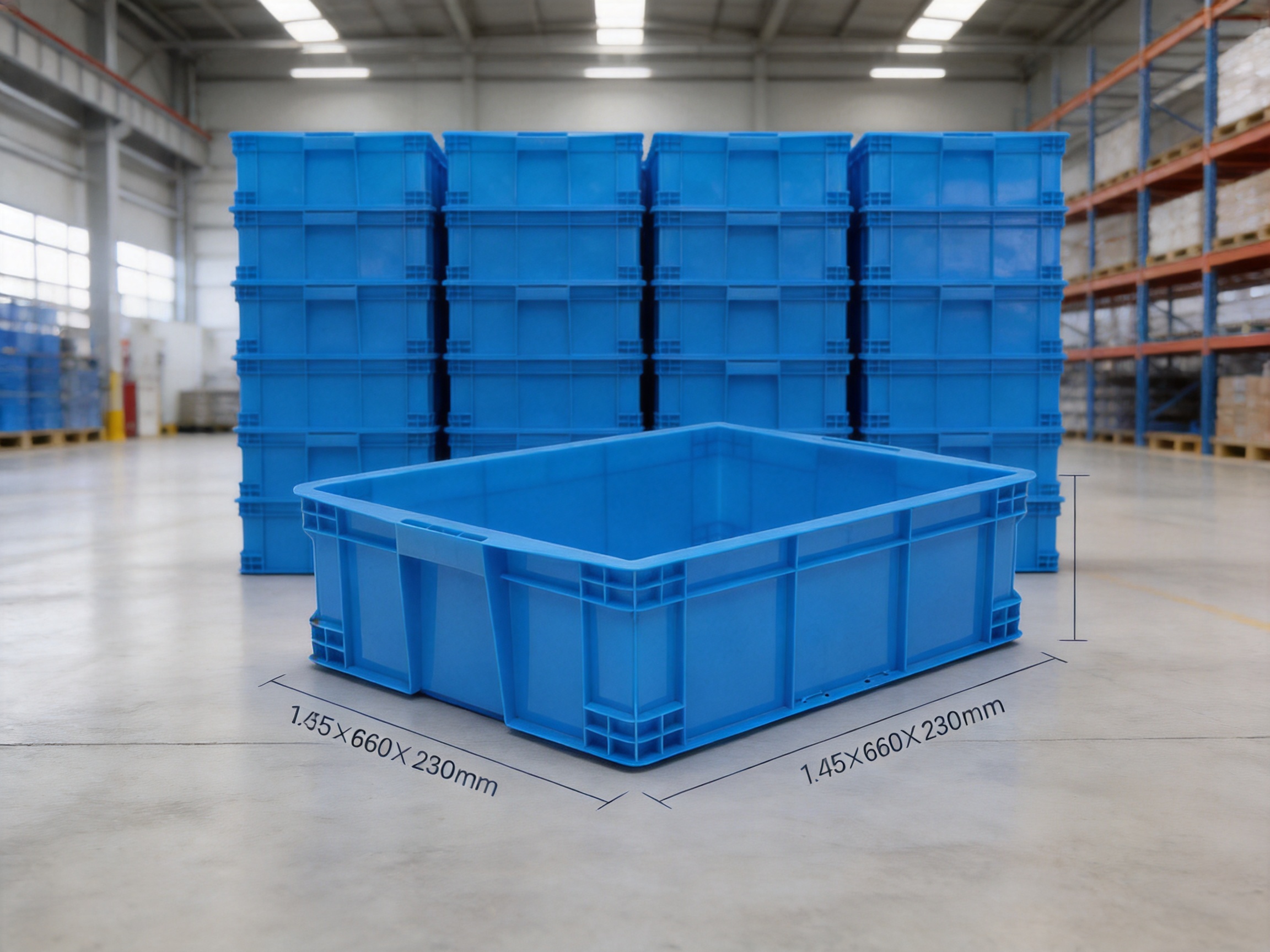
The principal advantage of a stackable tote is its ability to use vertical space. In a conventional storage arrangement, containers may occupy only the floor area available to them. By stacking compatible totes, a warehouse can increase storage density without requiring additional floor space. This is especially valuable where rent, construction, or expansion costs are high.
The BG-745623-ST is designed with a stable rectangular form that supports orderly stacking. Consistent dimensions help prevent irregular gaps between containers and make it easier for workers to estimate available capacity. Standardized footprints also support better planning for pallets, racking bays, shelving levels, and delivery vehicles.
Reinforced ribbed side walls contribute to the tote’s rigidity. Ribs distribute pressure across the side panels and help limit flexing when several containers are stacked above one another. They also provide additional structural support when the tote is transported over uneven surfaces or subjected to repeated movement.
Stacking performance depends on several factors, including the weight of the contents, the evenness of the load, the condition of the floor or rack, temperature, handling method, and the total number of layers. The product information indicates that the tote can be stacked up to 10 or more layers under suitable conditions. Operators should establish site-specific stacking rules and avoid exceeding safe load limits.
A well-designed stacking system offers benefits beyond space savings. It can reduce clutter, improve aisle access, shorten travel distances, and make inventory easier to count. When each container occupies a predictable position, employees can locate parts faster and return them to the correct place after use.
Advantages Over Conventional Storage Alternatives
Compared with Corrugated Cardboard Boxes
Cardboard boxes remain useful for one-way shipping, but they have limitations in long-term warehouse storage. Repeated handling can crush corners, weaken side panels, and reduce stacking strength. Moisture, dust, and abrasion can further shorten their useful life. Cardboard dimensions may also vary slightly between batches, making precise stacking more difficult.
The HDPE tote offers a reusable alternative with a more consistent shape. Its rigid walls maintain the container profile during repeated use, and its moisture resistance makes it suitable for environments where cardboard may deteriorate. The tote can also be cleaned more easily, which is valuable in workshops, production areas, and distribution operations that require orderly and hygienic storage.
Compared with Thin Plastic Bins
Low-cost plastic bins may be adequate for light domestic or office storage, but they are not always designed for warehouse loads or repeated industrial handling. Thin walls can deform when loaded, and handles or rims may fail under rough use. Some consumer bins also have non-standard dimensions that result in inefficient use of rack or pallet space.
The BG-745623-ST is purpose-built for professional storage and logistics applications. Its heavy-duty construction, reinforced sides, and standardized footprint provide greater confidence in repetitive use. It is intended to function as part of a coordinated material-handling system rather than as an isolated household container.
Compared with Wooden or Metal Containers
Wooden containers can offer strength, but they may be heavy, susceptible to moisture, and difficult to clean. Splinters, nails, and rough surfaces can also create safety or product-damage concerns. Metal containers are durable and suitable for certain high-load applications, but they are often heavier and more expensive to move manually.
HDPE provides a practical middle ground. It offers useful durability while keeping the empty container relatively manageable at approximately 3.2kg. The smooth plastic construction reduces the risk of splinters and allows more convenient cleaning than many wooden alternatives.
Compared with Non-Stackable Packaging
Non-stackable packaging often forces operators to leave unused air above each unit or place containers on separate shelving levels. This increases the amount of warehouse space required for the same inventory. A stackable tote allows vertical utilization and makes it easier to create compact storage blocks.
Stackable containers are also valuable during return transport. Empty totes can be arranged in nested or stacked groups, depending on their design and operating procedure, reducing the volume occupied by empty packaging. Lower return volume can translate into better vehicle utilization and lower reverse-logistics costs.
Warehouse Racking and Material-Handling Integration
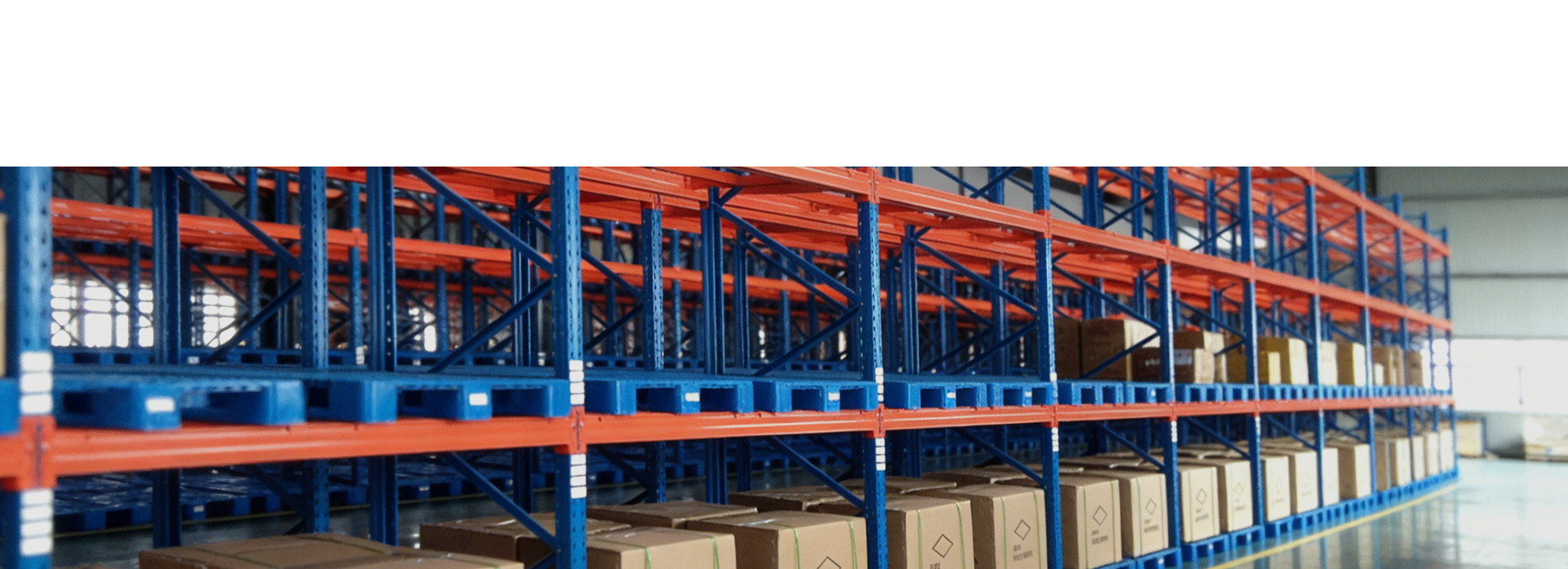
The product is described as being precision-engineered to fit standard warehouse racking systems. Correct dimensions are important because a tote that is too large may obstruct adjacent positions, while a tote that is too small may waste valuable shelf space. A standardized container footprint supports predictable bay planning and more efficient use of warehouse infrastructure.
Before deploying the tote in a racking system, users should confirm the rack beam spacing, shelf depth, allowable load, clearance requirements, and access method. The container should sit securely on the shelf or support surface without excessive overhang. Rack compatibility must be assessed together with the weight of the contents and the number of containers stored at each level.
The tote can also support workstation organization. In manufacturing areas, containers can hold components before assembly, work-in-progress materials, maintenance parts, or finished products awaiting inspection. Positioning the tote close to the point of use reduces unnecessary movement and can support lean manufacturing principles.
For e-commerce and distribution centers, standardized totes help organize picking zones. Products can be grouped according to order frequency, SKU, destination, or handling priority. The large internal footprint allows users to combine multiple small items without relying on many smaller boxes.
In retail distribution, the tote can help move products from receiving areas to storage, replenishment zones, and store-delivery staging areas. Its reusable format may reduce the dependence on single-use cartons for internal transfers.
Manufacturing Process and Production Strengths
The performance of a professional plastic tote depends not only on its design but also on the consistency of its manufacturing process. Yancheng Bingo Machinery Equipment Co., Ltd. specializes in warehousing and logistics equipment and maintains a product range that includes handling equipment, storage containers, packaging materials, and warehouse racking systems.
A reliable tote manufacturing process begins with material selection. The specified product uses HDPE, and material control is essential to achieving consistent strength, dimensional stability, and surface quality. Raw materials should be checked before entering production to help prevent variations that could affect the finished container.
Modern plastic manufacturing generally involves controlled heating, forming, cooling, trimming, and inspection. The precise process may vary according to the product design and production equipment, but each stage influences the final result. Temperature control affects material flow and bonding, mold or tooling accuracy affects dimensions, and cooling control affects deformation and stability.
For a stackable tote, dimensional accuracy is particularly important. The upper and lower contact areas must work together consistently across multiple units. If dimensions vary excessively, containers may lean, bind, or create uneven pressure when stacked. Standardized production helps ensure that totes can be used as a coordinated fleet rather than as unrelated individual units.
Ribbed side walls and reinforced structural features require tooling that can reproduce details consistently. Poorly formed ribs may provide limited reinforcement, while excessive variation may affect stacking alignment. Controlled production parameters help maintain the intended balance between strength, weight, and material efficiency.
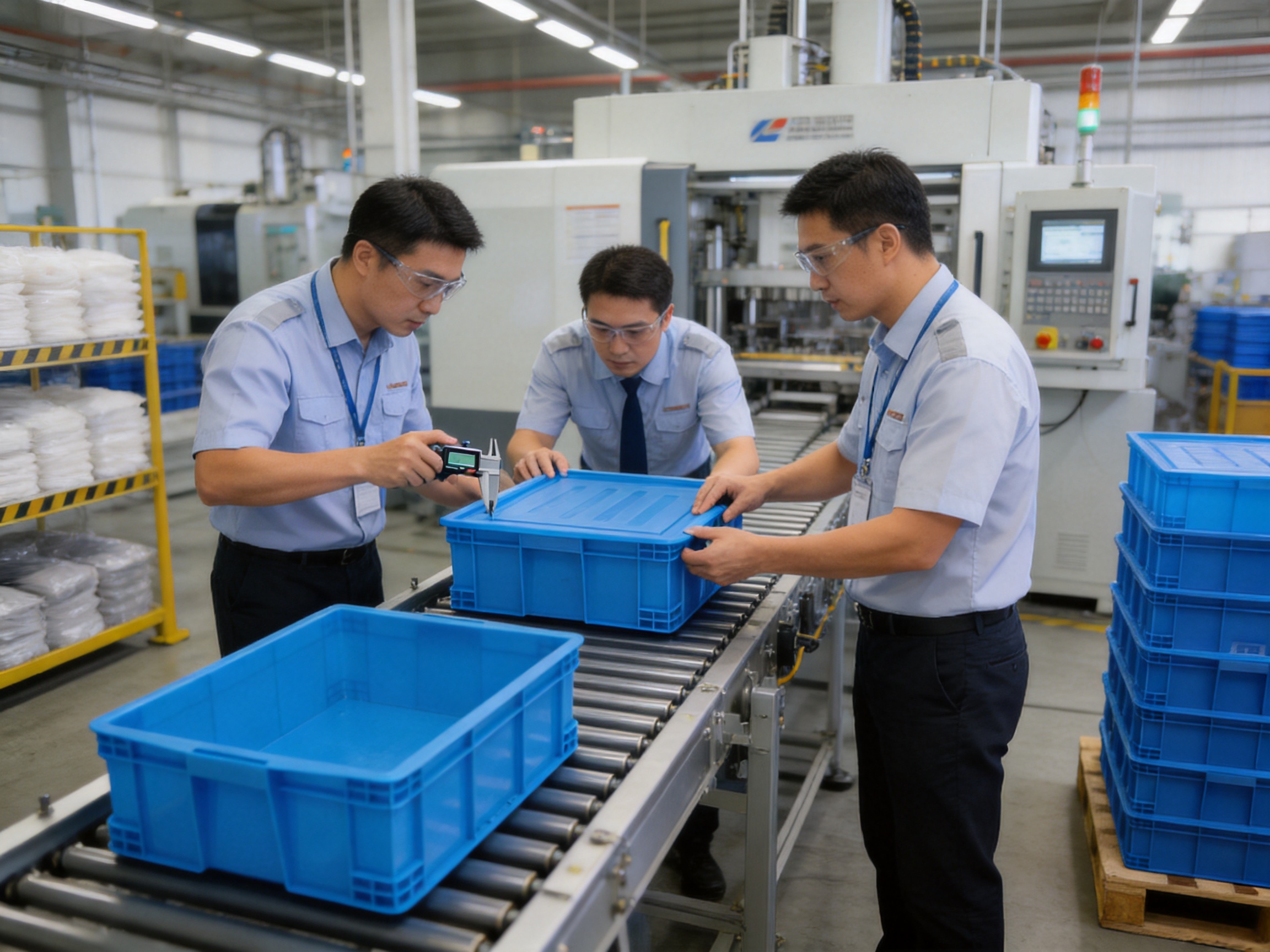
The company emphasizes standardized production procedures and inspections throughout the manufacturing cycle. This approach can include incoming material checks, process monitoring, dimensional inspection, visual inspection, and final product verification. A structured quality system reduces the likelihood that defects will pass unnoticed from one stage to the next.
The supplied product information also refers to the use of virgin polymer material in quality-controlled production. Because the product specification identifies HDPE while one general information statement refers to virgin PP, purchasers should confirm the exact resin specification for this model on the purchase order and technical documentation. Clear material identification helps ensure that the tote is matched to the intended application and any relevant compliance requirements.
Tooling and Dimensional Consistency
Accurate tooling is fundamental to repeatable tote production. The mold or forming equipment must produce uniform walls, stable corners, consistent rims, and reliable stacking interfaces. Dimensional control helps maintain compatibility with warehouse racks and reduces operational problems caused by inconsistent container sizes.
For large-volume customers, consistent dimensions also simplify automation. Conveyor guides, barcode stations, robotic grippers, pallet patterns, and picking software are often designed around fixed container sizes. A stable tote geometry makes it easier to integrate containers into semi-automated or automated material-handling processes.
Quality Control at Every Stage
Quality control should not be limited to a final visual check. Effective manufacturing control begins with raw-material verification and continues through forming, cooling, trimming, assembly if applicable, and final packing. Defects such as warping, cracks, sharp edges, incomplete features, and inconsistent wall formation should be identified before shipment.
Finished totes may be evaluated for external dimensions, internal dimensions, weight, appearance, stacking alignment, and general structural condition. Depending on the customer’s requirements, additional testing may include load testing, impact testing, compression evaluation, temperature exposure, or repeated handling trials.
A documented inspection process is particularly valuable for export customers and large warehouse projects. Buyers often need to deploy hundreds or thousands of containers, so small variations can become significant at fleet scale. Reliable production standards support more predictable implementation and replacement planning.
Operational Benefits for Supply Chain Optimization
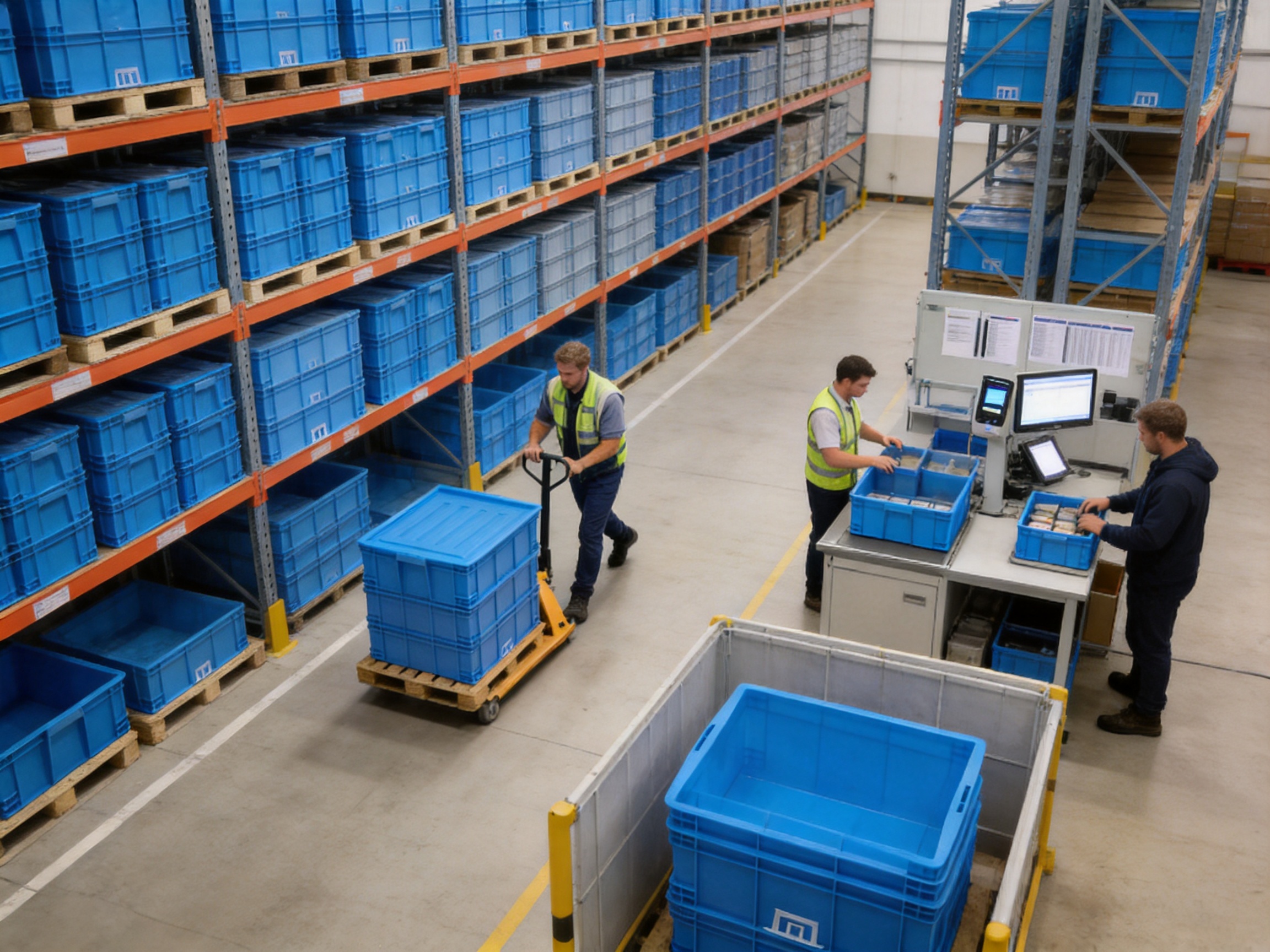
Reusable stackable totes can improve supply chain performance by standardizing the way goods are stored and moved. Instead of using a mixture of cartons, bags, and irregular bins, a company can establish a consistent container system for selected product categories or processes.
Standardization reduces decision-making at the operational level. Employees know which tote to use, where it belongs, how it should be stacked, and how it should be moved. This can reduce training time and make warehouse procedures easier to document.
The 77-liter capacity is suitable for consolidating medium-sized quantities of materials. When components are placed in an appropriately sized container, workers may spend less time opening multiple small packages. A larger tote can also reduce the number of individual handling events required during internal transfers.
At the same time, the tote is not so large that it must always be moved by mechanical equipment. Empty units can be handled manually, and loaded units may be moved with suitable pallet trucks, carts, forklifts, or other material-handling equipment depending on the load weight and workplace rules.
Reverse logistics is another important advantage. Reusable containers must eventually return to a distribution center, supplier, or production site. Stackable designs reduce the volume occupied by empty packaging, allowing more units to fit within a vehicle or return shipment. Better cube utilization can help reduce transportation frequency and associated costs.
In addition, a reusable tote system can support sustainability objectives. The environmental benefit depends on the number of reuse cycles, cleaning practices, transportation distance, resin composition, and end-of-life recycling route. Nevertheless, replacing repeated single-use packaging with a durable reusable container can help reduce packaging consumption over the life of the system.
Applications Across Different Industries
Manufacturing and Assembly
Factories can use the tote to store raw materials, production components, fasteners, electronic parts, castings, molded components, and work-in-progress items. Its capacity is suitable for organizing materials between production stages while keeping items protected from floor contact and unnecessary exposure.
Color-coded totes can support line-side organization. For example, one color may identify incoming materials, another may identify inspected components, and a third may identify products ready for dispatch. Visual differentiation can help reduce picking mistakes and make workflow status more apparent.
Automotive and Machinery Parts
Automotive and machinery supply chains handle many small and medium-sized parts that require organized storage. The tote can be used for brackets, fittings, replacement parts, fasteners, tools, and service components. Its rigid walls help protect parts from crushing during stacking, while its open top allows convenient access for picking and replenishment.
E-Commerce Fulfillment
Fulfillment centers need containers that support high picking frequency and rapid internal movement. A stackable tote can be positioned in picking racks, replenishment areas, packing zones, and returns departments. Its standardized dimensions can also help create repeatable workstation layouts.
For returns processing, separate totes may be assigned to inspection, repair, restocking, recycling, or disposal categories. This helps keep returned products organized as they move through the reverse supply chain.
Warehousing and Distribution
Third-party logistics providers can use standardized totes for customer-specific inventory, cross-docking, order consolidation, and temporary staging. The robust construction is suitable for frequent handling between receiving docks, storage locations, picking areas, and outbound loading zones.
Workshop and Maintenance Operations
Workshops often need to store tools, spare parts, consumables, and equipment components in a clean and accessible way. The 77-liter tote provides enough space for larger maintenance inventories while remaining compatible with organized shelving. It can also help separate service jobs or maintenance projects so that parts do not become mixed.
Retail and Supermarket Distribution
Retail distribution centers can use reusable totes to move products between central warehouses and stores. A durable container can support repeated internal transfers and help staff organize replenishment stock. The stackable format may also simplify temporary storage in back-of-store areas.
Customization and Fleet Management
Different organizations may require different colors, labeling systems, or identification methods. Multiple color options allow companies to create a visual management program without relying exclusively on printed labels. Color coding can identify site locations, product groups, customer accounts, or workflow stages.
For larger fleets, customers may also consider molded identification areas, printed markings, barcode labels, QR-code labels, or inventory numbers. The appropriate method depends on the cleaning process, label durability requirements, and whether the tote will circulate between different facilities.
A fleet-management plan should define how totes are issued, tracked, inspected, cleaned, repaired, and retired. Containers that are cracked, badly deformed, or no longer stack securely should be removed from service. Regular inspection helps protect employees, products, and racking systems.
Companies should also establish rules for maximum load, acceptable contents, stacking height, cleaning materials, and storage conditions. These rules can be included in standard operating procedures and communicated to warehouse personnel during training.
Safe and Effective Use
Although the tote is designed for heavy-duty use, safe operation requires proper loading and handling. Contents should be distributed evenly rather than concentrated in one corner. Extremely heavy items should be assessed carefully to ensure that the combined load remains appropriate for the container and the storage system.
Containers should be placed on stable, level surfaces. When totes are stacked, each unit should be aligned correctly with the one below it. Leaning stacks, damaged rims, or uneven floors can increase the risk of shifting or collapse.
Operators should avoid throwing or dropping loaded totes. Repeated severe impacts may damage the container even when normal handling would not. Forklift operators should ensure that forks, pallets, and rack supports do not strike the side walls or bottom of the tote.
When totes are used in high-temperature, low-temperature, outdoor, or chemically exposed environments, buyers should confirm material suitability. HDPE performs well in many industrial settings, but application conditions vary. Technical consultation is recommended where the container will hold aggressive chemicals, hot materials, sharp metal parts, or regulated products.
Cleaning procedures should be compatible with the material and the stored goods. Mild detergents and appropriate rinsing methods are commonly used for reusable plastic containers, but users should validate their chosen cleaning process before large-scale deployment.
How the Tote Supports Lean Warehousing
Lean warehousing focuses on reducing unnecessary movement, waiting, excess inventory, defects, and inefficient use of space. A standardized tote can contribute to these objectives by making storage locations more predictable and material flows easier to control.
When items are placed in consistent containers, operators can establish fixed locations and visual replenishment signals. This reduces the time spent searching for parts and makes shortages more visible. The tote can also support first-in, first-out workflows when containers are arranged in an appropriate sequence.
Its stackable form helps reduce floor congestion. Clearer aisles improve access for workers and equipment while reducing the chance of accidental contact with stored materials. Better organization can also improve workplace safety and housekeeping performance.
For production environments, totes can be assigned to standard batch quantities. A full tote may represent one production order, kit, or replenishment quantity. This simplifies counting and reduces the risk of mixing materials from different orders.
These benefits are most effective when the tote is introduced as part of a broader system that includes location coding, inventory rules, handling procedures, and employee training. The container is an enabling tool; process design determines how much value the organization ultimately receives.
Purchasing Considerations for Professional Buyers
Buyers should evaluate more than the purchase price when selecting storage totes. Important factors include capacity, external and internal dimensions, material, product weight, expected service life, stacking requirements, cleaning needs, customization options, and compatibility with existing warehouse equipment.
The 77-liter size should be compared with the dimensions of the products to be stored. Internal dimensions of 680×520×220mm provide the usable space, but product shape and packing method will determine the actual quantity that fits. Buyers should allow sufficient clearance to avoid forcing items into the container or overloading it.
Warehouse compatibility should be checked before ordering. The external dimensions need to work with rack depth, shelf width, pallet layouts, conveyor clearances, and vehicle loading patterns. If the containers will be used with automated equipment, buyers should also verify that the tote geometry is suitable for the relevant sensors, guides, and handling mechanisms.
For multinational or regulated operations, purchasers may require material declarations, inspection records, packaging specifications, or compliance documents. These should be requested in advance. The exact resin grade and any available test reports should be confirmed, particularly because general marketing information and individual product specifications should be aligned before a large purchase.
Lead time and inventory availability are also important. The product information indicates that stock may be available for fast delivery. However, availability can vary according to color, quantity, customization, and destination. Buyers should confirm production schedules, shipping terms, packaging configuration, and replacement-part or replenishment arrangements.
Why Choose a Specialized Logistics Equipment Supplier
A supplier focused on warehousing and logistics equipment can provide broader value than a general plastic-product distributor. Yancheng Bingo Machinery Equipment Co., Ltd. offers products across four related categories: material-handling equipment, storage containers, packaging materials, and warehouse racking.
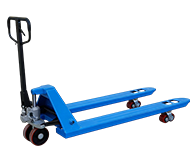
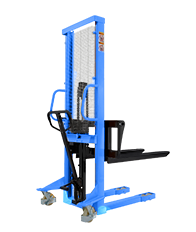
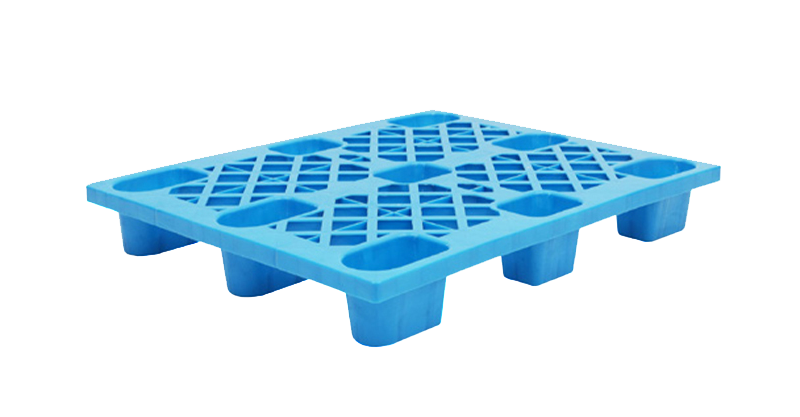
This integrated product range allows customers to consider storage and handling as one coordinated system. A warehouse project may require pallet trucks, stackers, plastic pallets, totes, stretch wrap, strapping, and racking. Working with a supplier that understands these connected requirements can simplify sourcing and improve equipment compatibility.
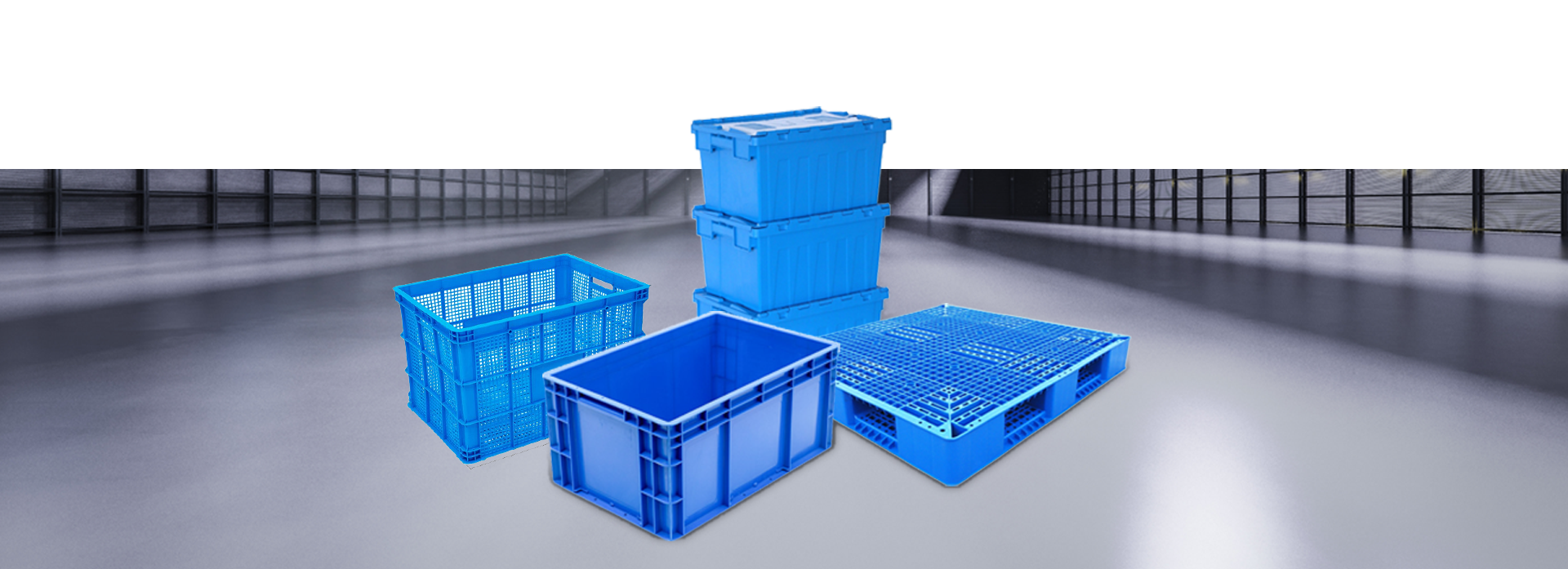
The company describes itself as a provider of one-stop storage and material-handling solutions for manufacturing, e-commerce logistics, warehousing and distribution, supermarket retail, and other industries. Its product portfolio includes manual and electric pallet trucks, stackers, plastic pallets, crates, bulk containers, packaging materials, and different grades of warehouse racks.
Its stated manufacturing approach emphasizes quality control, standardized processes, supply-chain coordination, and inspection at different production stages. These strengths are important for customers that need repeatable products across multiple facilities or recurring procurement cycles.
Customization support is another potential advantage. Color selection, specifications, and project quantities may be discussed according to customer requirements. Customization should be defined clearly in technical documents so that all parties agree on dimensions, material, markings, packaging, inspection criteria, and delivery expectations.
Implementation Guide for a New Tote Program
Step One: Analyze the Current Workflow
Identify where cardboard boxes, disposable packaging, or unsuitable containers are currently used. Record the products stored, average loads, handling frequency, rack dimensions, and return-transport requirements.
Step Two: Select the Appropriate Container Quantity
Estimate the number of totes needed for receiving, storage, production, picking, dispatch, cleaning, and reverse logistics. Include a reasonable reserve for peak demand, maintenance, and containers that are temporarily in transit.
Step Three: Test the Tote in Real Conditions
A pilot program can reveal practical issues that are difficult to identify from specifications alone. Test the tote on racks, carts, conveyors, pallets, and workstations. Check how products fit, how workers handle loaded units, and whether the stacking arrangement remains stable.
Step Four: Establish Operating Standards
Define maximum load, stacking height, permitted contents, cleaning method, inspection frequency, and procedures for damaged containers. Assign responsibility for tote control and replacement.
Step Five: Measure Results
Track storage density, picking time, packaging consumption, damage rates, return-transport volume, and employee feedback. These measurements can show whether the reusable tote system is delivering the expected operational improvements.
Frequently Asked Questions
What is the capacity of the tote?
The nominal capacity is 77 liters. The usable capacity depends on the shape and packing method of the stored items. Users should work from the internal dimensions of 680×520×220mm when determining whether a particular product or component will fit.
What material is the tote made from?
The product specification identifies HDPE, or high-density polyethylene. HDPE is commonly selected for reusable industrial containers because of its strength, impact resistance, moisture resistance, and durability. Buyers requiring a specific resin grade should confirm the technical documentation before purchase.
Can the tote be used in warehouse racking?
It is designed to fit standard warehouse racking systems, but compatibility must be confirmed against the specific rack dimensions, shelf supports, load limits, and clearance requirements at the installation site.
How many totes can be stacked?
The product information indicates stacking up to 10 or more layers under suitable conditions. Actual safe stacking height depends on the load, floor or rack condition, temperature, container condition, and site safety rules. Operators should establish a documented maximum for their application.
Is the tote suitable for reverse logistics?
Yes. Its reusable and stackable design is intended to support return transport and empty-container storage. Efficient stacking can reduce the space occupied by empty units and help improve vehicle utilization.
Can different colors be supplied?
Multiple colors are available according to the product information, and customization may be supported. Color availability, minimum order quantities, and production times should be confirmed for each project.
What industries can use this tote?
Typical applications include manufacturing, automotive and machinery parts, e-commerce fulfillment, third-party logistics, workshops, maintenance departments, warehousing, distribution, and retail supply chains.
Is the tote suitable for outdoor use?
HDPE offers useful moisture resistance, but outdoor suitability depends on exposure to sunlight, temperature changes, weather, and the stored contents. Customers should confirm long-term outdoor requirements with the supplier before deployment.
Can the tote be cleaned?
The plastic construction is generally easier to clean than cardboard or unfinished wood. Users should choose cleaning agents and methods that are compatible with HDPE and validate the process for their application.
What should buyers confirm before ordering?
Buyers should confirm the material grade, dimensions, capacity, color, quantity, stacking requirements, allowable load, rack compatibility, inspection documentation, packaging method, lead time, and any customization details.
Conclusion
The 77L HDPE Stackable Plastic Tote Box is designed to provide a durable, standardized, and space-efficient solution for industrial storage and logistics. Its 745×560×230mm external dimensions, 680×520×220mm internal dimensions, and 77-liter capacity make it suitable for a broad range of parts, components, tools, supplies, and packaged goods.
Its principal advantages include a robust HDPE construction, reinforced ribbed side walls, repeatable dimensions, stackable geometry, and suitability for warehouse racking and reverse logistics. Compared with disposable cardboard or light-duty storage bins, it offers stronger long-term potential for repeated handling and organized warehouse use.
The tote can support supply chain optimization by improving vertical storage, reducing empty-return volume, simplifying material identification, and creating more consistent internal workflows. Its value is further enhanced when it is integrated with pallet trucks, stackers, racking, packaging materials, and documented warehouse procedures.
Manufacturing consistency is essential to the product’s performance. Controlled material selection, standardized processes, accurate tooling, and inspections at multiple production stages help ensure that containers meet the dimensional and structural requirements of professional users. Yancheng Bingo Machinery Equipment Co., Ltd. combines this product with a broader portfolio of warehousing and logistics equipment, giving customers access to coordinated storage and material-handling solutions.
For companies seeking a reusable container that balances capacity, durability, stackability, and operational flexibility, the BG-745623-ST offers a practical foundation for a more organized and efficient warehouse system. Final selection should always be based on the actual load, storage environment, racking configuration, handling method, and applicable safety requirements.
References
1. Product specification sheet for the BG-745623-ST 77L HDPE Stackable Plastic Tote Box.
2. General principles of reusable transport packaging and reverse logistics management.
3. Industrial warehouse storage and material-handling planning practices.
4. Polymer engineering references concerning the properties and applications of high-density polyethylene.
5. Warehouse racking safety, load distribution, and storage-container compatibility guidelines.
6. Lean warehousing and standardized material-flow management principles.
Product: 77L HDPE Stackable Plastic Tote Box for Workshop Parts


Copyright @ Yancheng Bingo Machinery Equipment Co., Ltd. All rights reserved Warehouse Logistics Equipment Manufacturer Pallet Truck Supplier
