 en
en  Español

58L Stackable Plastic Tote Box for Efficient Food Storage and Transport
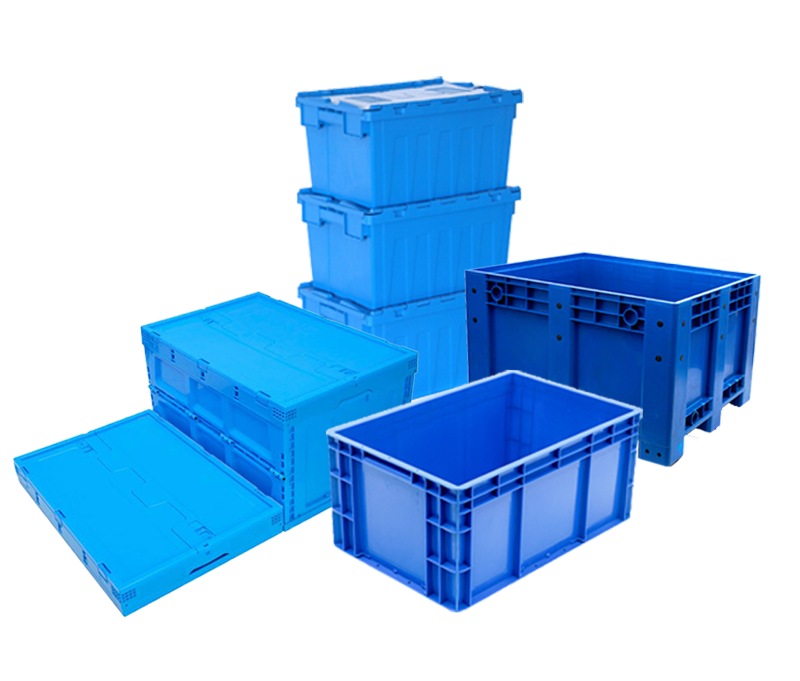
Modern supply chains depend on storage containers that can protect products, use warehouse space efficiently, and withstand repeated handling. A plastic tote that performs well in only one of these areas may still create operational problems. Containers that are strong but difficult to stack can waste floor space. Containers that are easy to handle but poorly designed may deform under load. Lightweight boxes may reduce transport weight but fail to provide the durability required for continuous warehouse use. The 58L Stackable Plastic Tote Box, model BG-674523-ST, is designed to provide a balanced solution for storage, transport, inventory organization, and material handling.
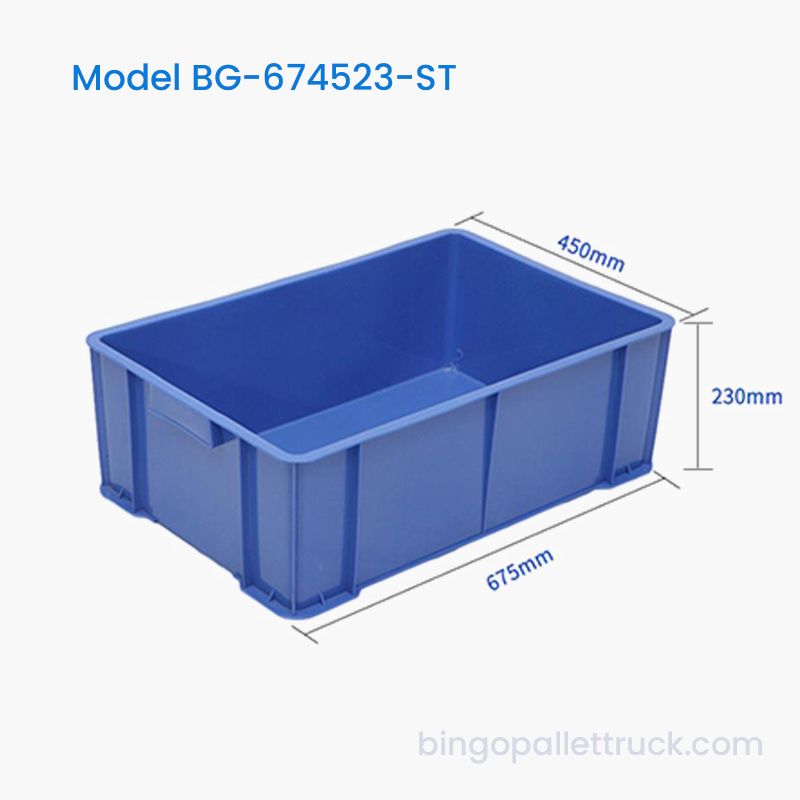
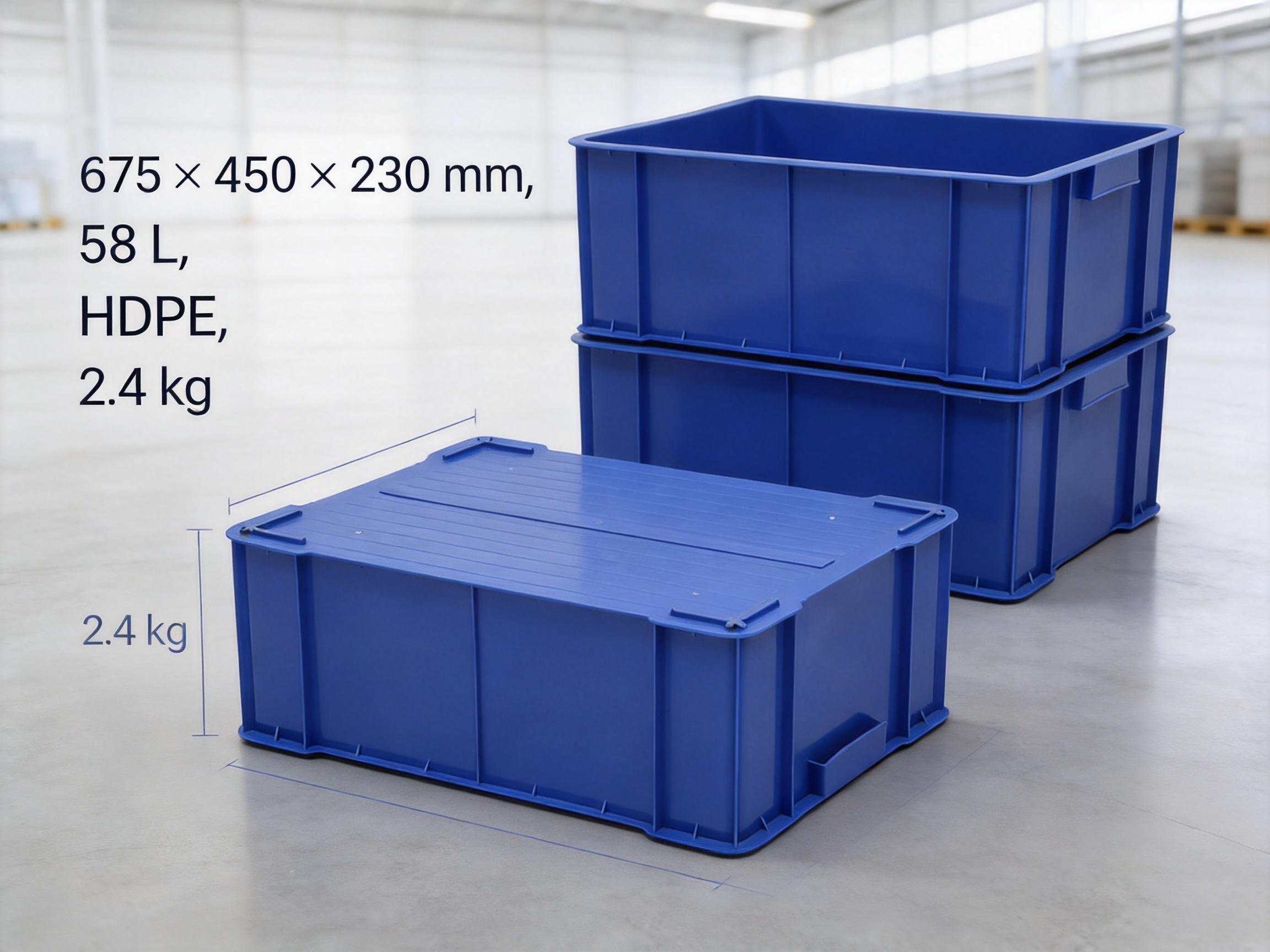
With external dimensions of 675×450×230mm, internal dimensions of 640×415×220mm, and a nominal capacity of 58 liters, this tote provides useful storage volume within a footprint suited to organized warehouse operations. Its reinforced structure supports stable stacking, while its HDPE construction is intended to provide strength and long service life. The box is suitable for distribution centers, manufacturing facilities, food-related logistics, e-commerce fulfillment, retail backrooms, and other commercial environments where goods must be moved and stored repeatedly.
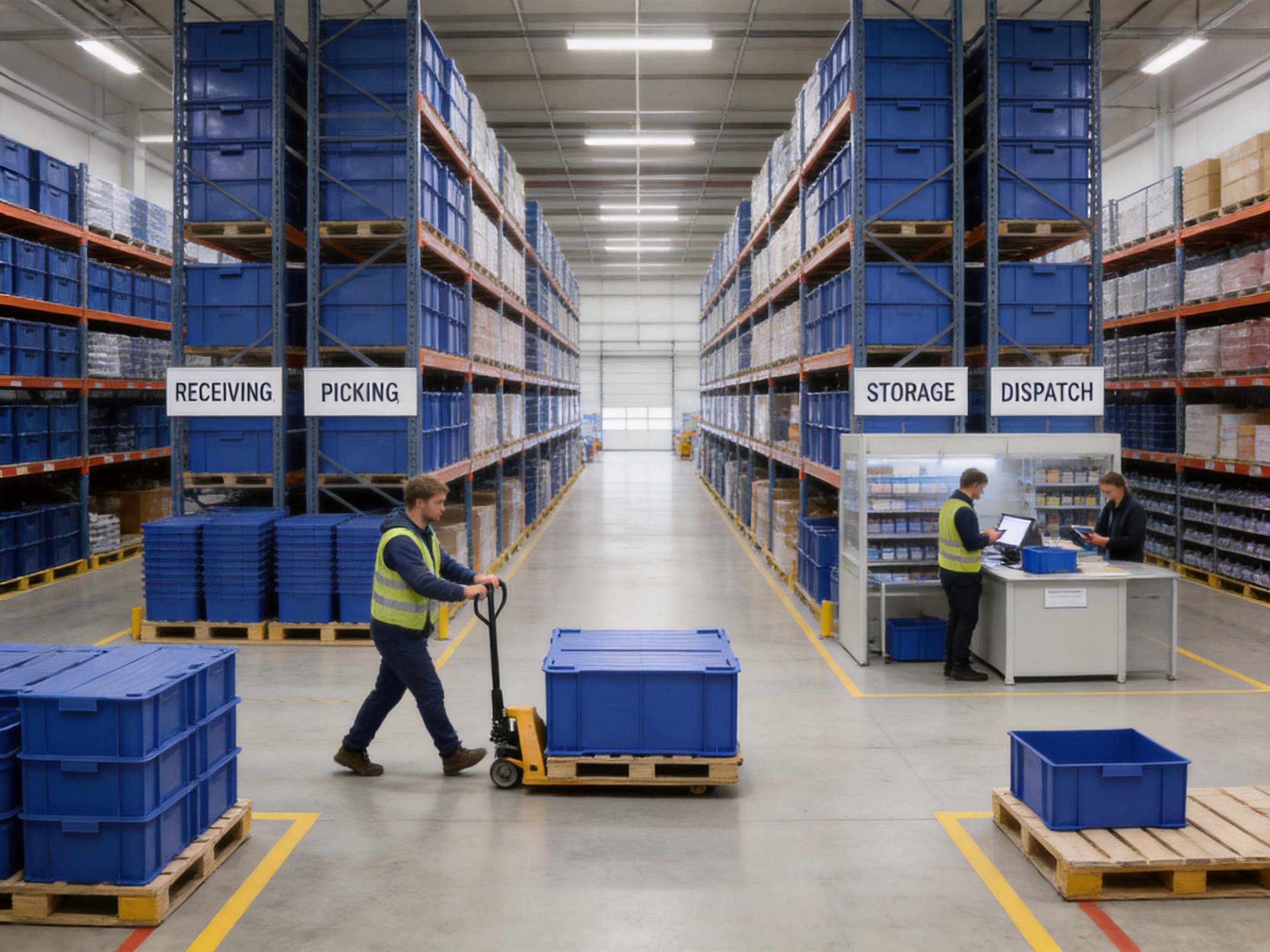
Unlike disposable cartons or lightweight household containers, this industrial tote is designed as a reusable logistics asset. It can be integrated into receiving, picking, replenishment, sorting, order preparation, and internal transportation processes. Its standardized dimensions also make it easier to organize on shelving, pallets, workstations, and warehouse floors.
Content
- 1 Product Overview
- 2 Why Stackable Design Matters in Warehousing
- 3 HDPE Construction for Repeated Use
- 4 Dimensions and Usable Capacity
- 5 Advantages Compared with Conventional Packaging
- 6 Applications Across the Supply Chain
- 7 Manufacturing and Quality Control Strengths
- 8 Operational Benefits of a Reusable Tote System
- 9 Storage and Handling Recommendations
- 10 Cleaning, Hygiene, and Maintenance
- 11 Customization and Supply Flexibility
- 12 How the Tote Supports Lean Warehouse Practices
- 13 Environmental and Lifecycle Considerations
- 14 Supplier Capability and One-Stop Logistics Support
- 15 Purchasing Checklist
- 16 Frequently Asked Questions
- 16.1 What is the capacity of the tote?
- 16.2 What are the dimensions of the product?
- 16.3 What material is used?
- 16.4 Is the tote suitable for food storage?
- 16.5 Can the totes be stacked?
- 16.6 Can the tote be customized?
- 16.7 Is the tote suitable for warehouse racks?
- 16.8 Can the box be used with pallet trucks or forklifts?
- 16.9 How should the tote be cleaned?
- 16.10 What industries can use this product?
- 16.11 What is the product weight?
- 16.12 Why choose a reusable plastic tote instead of a carton?
- 17 Conclusion
- 18 References
- 19 Product: 58L Stackable Plastic Tote Box for Food Storage and Transport
Product Overview
The BG-674523-ST is a stackable plastic tote box developed for professional storage and transportation applications. The box has a practical rectangular format that allows users to make efficient use of warehouse space while maintaining sufficient internal volume for a wide range of goods. The 58L capacity is large enough for many bulk handling tasks but remains manageable for routine manual movement.
The product is manufactured from HDPE, or high-density polyethylene. This material is widely used in industrial containers because it combines impact resistance, rigidity, relatively low weight, and resistance to moisture. Compared with many conventional packaging materials, HDPE can be reused repeatedly and is less vulnerable to tearing, denting, or water damage during normal logistics operations.
The tote’s external dimensions are 675mm in length, 450mm in width, and 230mm in height. The internal dimensions are 640mm in length, 415mm in width, and 220mm in height. The difference between the external and internal measurements accounts for the walls, base, rim, and structural reinforcement required to maintain the box’s strength and stacking stability.
| Specification | Details |
| Model | BG-674523-ST |
| Product type | Stackable plastic tote box |
| Material | HDPE |
| External dimensions | 675×450×230mm |
| Internal dimensions | 640×415×220mm |
| Capacity | 58L |
| Product weight | 2.4kg |
| Primary applications | Storage, transport, warehouse handling, distribution, and inventory organization |
| Stacking function | Designed for secure vertical stacking |
At 2.4kg, the tote is substantial enough to provide a stable base and durable structure without becoming unnecessarily difficult to handle. The combination of weight, dimensions, and volume is important in operations where employees repeatedly move empty and loaded containers throughout a working day.
Why Stackable Design Matters in Warehousing
Warehouse space is one of the most expensive resources in a logistics operation. Every square meter used for storage, staging, or picking must support productive activity. Containers that cannot be stacked effectively force businesses to spread goods across a larger floor area or invest in additional racking and storage infrastructure.
The stackable design of the BG-674523-ST allows users to build vertical storage units. When totes are filled with compatible goods and positioned correctly, multiple layers can be placed one above another. The supplied product information indicates that the containers can be stacked to more than ten layers under suitable operating conditions. The actual safe stacking height should always be confirmed according to load weight, product condition, floor levelness, environmental factors, and the user’s internal safety procedures.
Vertical stacking provides several operational advantages. It can increase the storage density of a warehouse, reduce the amount of unused space above floor-level goods, and create more orderly inventory zones. A stable stack is also easier to inspect than a loose collection of cartons or irregular containers. Employees can identify product groups more quickly, and supervisors can maintain clearer separation between incoming, stored, picked, and dispatched inventory.
Stackability is particularly valuable in temporary staging areas. During receiving, goods may need to wait for inspection or put-away. During order preparation, picked products may be grouped by route, customer, or dispatch time. A tote that can be safely stacked helps prevent these temporary areas from expanding into travel paths or workstations.
The design is also useful for returnable transport systems. Empty totes can be nested or arranged in designated return areas when the specific design permits such handling. When loaded, they can be organized into stable vertical groups for movement between production areas, warehouses, and delivery points. This supports a more consistent material flow than single-use packaging.
58L Stackable Plastic Tote Box for Food Storage and Transport
HDPE Construction for Repeated Use
Material selection has a direct effect on the service life of a logistics container. HDPE is valued for its combination of strength and practicality. It offers a strong structure while remaining considerably lighter than many metal alternatives. This makes it suitable for environments where containers are lifted, carried, placed on conveyors, transferred by pallet trucks, or handled at packing stations.
HDPE also provides useful resistance to moisture. In food storage and transport applications, this characteristic can help protect the contents from ordinary damp conditions and accidental exposure to water. The tote is not automatically a substitute for a specialized food-contact container, sterilization vessel, or temperature-controlled package. However, its plastic construction makes it more suitable for hygienic and washable logistics environments than porous packaging materials such as untreated wood or paperboard.
In normal use, HDPE containers are less susceptible to the crushing and tearing associated with corrugated cartons. A cardboard box may lose strength after exposure to humidity, repeated movement, or compression from a heavy stack. A reusable plastic tote maintains a more consistent shape across multiple handling cycles, provided that it is not overloaded, exposed to unsuitable chemicals, or used outside its temperature range.
The material also supports a long-term return-on-investment approach. A reusable tote may have a higher initial purchase cost than a disposable carton, but its service life can extend across many handling cycles. When the tote is properly cleaned, inspected, and returned to service, the cost per use can become attractive for businesses with regular internal transport or closed-loop distribution requirements.
The product information identifies HDPE as the specified material. One supplied quality statement also refers to high-density PP virgin material. Because HDPE and PP are different polymers, purchasers should confirm the exact resin specification, grade, and any application-specific compliance documentation with the manufacturer before ordering. This clarification is especially important for food-contact use, high-temperature applications, chemical exposure, and regulated industries.
Dimensions and Usable Capacity
The 675×450mm external footprint is suitable for organized warehouse layouts because it provides a broad, stable base without creating an excessively large individual handling unit. The 230mm external height keeps the tote relatively low and accessible. Employees can see and reach contents more easily than they can with very deep containers, which may support faster picking and replenishment.
The 640×415×220mm internal dimensions provide approximately 58 liters of nominal capacity. Actual usable capacity depends on the size and shape of the stored items. Irregular goods, protective inserts, dividers, liners, or required air space may reduce the volume available for products. In food logistics, additional space may be needed to prevent crushing, allow ventilation, or maintain separation between items.
The moderate height is useful for sorting and presentation. Products can be distributed across the base rather than buried under a deep layer of goods. This can reduce unnecessary searching and make visual stock checks easier. In production environments, the tote can also serve as a parts bin for components, subassemblies, packaging supplies, or work-in-process materials.
Standardized external dimensions support predictable planning. Warehouse managers can allocate floor positions, shelf spaces, staging lanes, and transport areas based on a consistent container size. Standardization can also simplify the design of labels, barcode locations, dividers, and identification systems.
| Measurement | Value | Operational significance |
| External length | 675mm | Defines the floor and rack footprint |
| External width | 450mm | Supports organized positioning and stacking |
| External height | 230mm | Provides a relatively accessible storage depth |
| Internal length | 640mm | Provides the primary usable loading area |
| Internal width | 415mm | Accommodates products across the container base |
| Internal height | 220mm | Supports sorting while limiting excessive product depth |
| Nominal capacity | 58L | Suitable for medium-volume storage and transport tasks |
| Product weight | 2.4kg | Balances structural stability with manual handling needs |
Advantages Compared with Conventional Packaging
Compared with Corrugated Cartons
Corrugated cartons are useful for shipping and temporary packaging, but they are vulnerable to moisture, abrasion, corner damage, and compression. Their performance may deteriorate after one or several transport cycles. Once damaged, cartons can become unstable when stacked and may expose the contents to dust or impact.
The plastic tote offers a more durable alternative for repeated-use operations. Its rigid walls help preserve the container shape, and its stackable construction provides better stability than randomly arranged cartons. The tote can also be cleaned and returned to service, which is difficult to achieve with ordinary cardboard packaging.
Cartons may still be appropriate when goods are shipped directly to an end customer or when the packaging is not expected to return. The plastic tote is especially advantageous for closed-loop logistics, internal warehouse transport, contract distribution, and repeated movement between facilities.
Compared with Lightweight Household Storage Boxes
Household storage boxes are often designed for occasional use and moderate loads. They may lack reinforced stacking features, standardized external dimensions, and the structural consistency needed for industrial logistics. Their lids, handles, and walls may not be suitable for continuous warehouse handling.
The BG-674523-ST is intended for commercial and industrial applications. Its 2.4kg structure, HDPE material, and reinforced stackable format are better aligned with daily handling. The box can be incorporated into warehouse procedures rather than treated as a general-purpose domestic organizer.
Compared with Metal Containers
Metal containers can provide excellent strength, but they are often heavier and may be more expensive to move manually. Metal surfaces can also dent, corrode, or damage other products if edges become distorted. For many medium-duty storage and transport tasks, a plastic tote offers a more practical balance between strength, weight, cost, and handling comfort.
HDPE is not intended to replace heavy steel bins in every application. Extremely high loads, high temperatures, aggressive chemicals, or demanding outdoor environments may require specialized materials. Nevertheless, for general warehouse logistics and product movement, the plastic tote can provide sufficient performance without the handling burden of a metal alternative.
Compared with Non-Stackable Bins
Non-stackable bins waste vertical space and make it difficult to create consistent storage zones. They may slide, lean, or collapse when placed on top of one another. A dedicated stackable tote is designed around the interaction between the base and upper rim, creating a more reliable vertical arrangement when used within its intended load limits.
Applications Across the Supply Chain
Distribution Centers
Distribution centers require containers that can support rapid movement and repeated sorting. The 58L tote can be used for receiving goods, allocating inventory, preparing store shipments, and grouping items by route. Its capacity is large enough for many product categories while remaining manageable for manual picking.
In a distribution center, totes may move through several stages in a single day. They can be placed on receiving docks, transferred to inspection areas, assigned to storage locations, used for order picking, and moved to dispatch lanes. A durable reusable container reduces the need to repackage products at each stage.
Food Storage and Food-Related Logistics
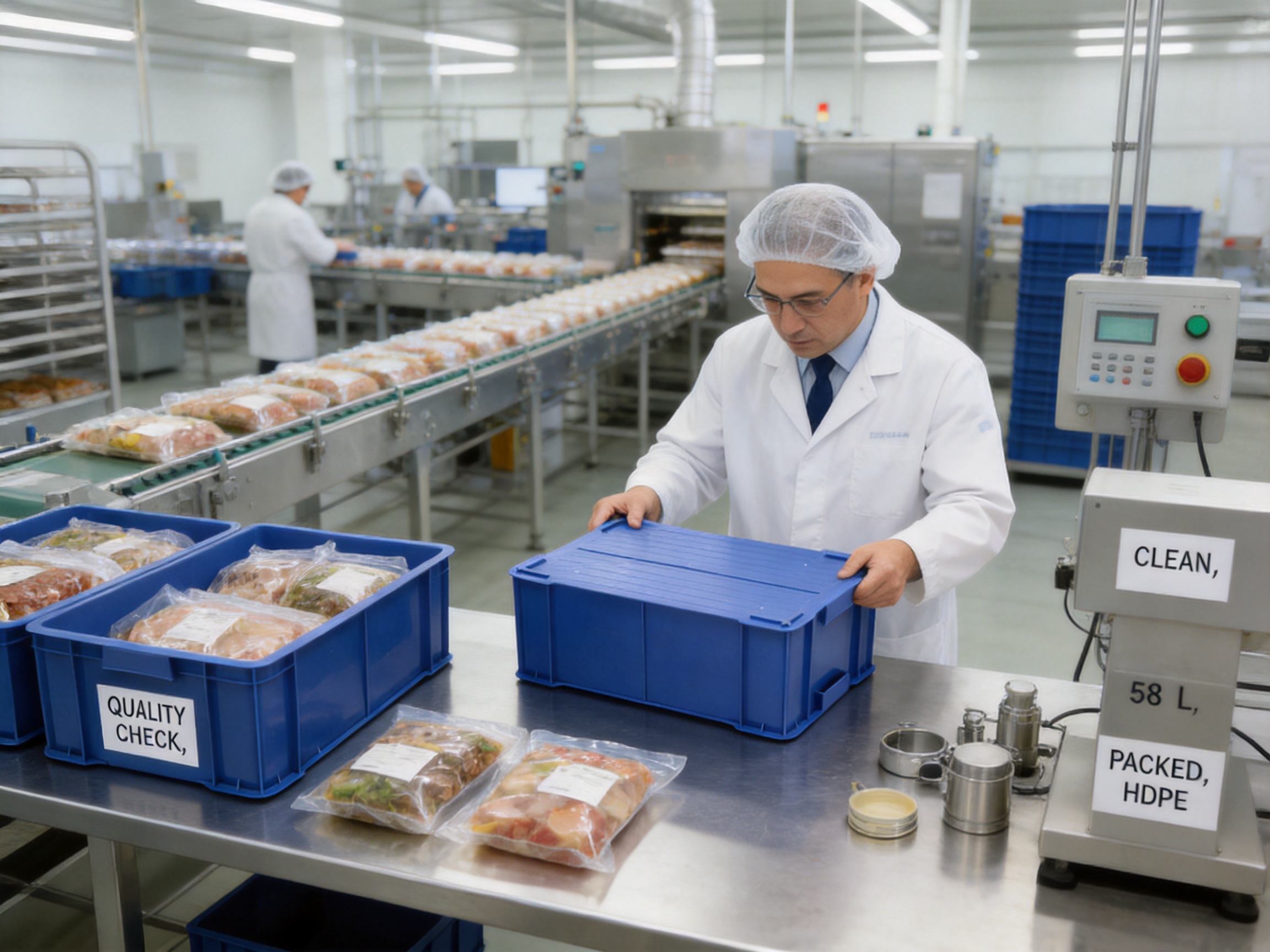
The product title identifies food storage and transport as a target use. The plastic format is suitable for organizations that require reusable containers in food-related warehousing, ingredient handling, packaged food distribution, or supermarket replenishment. Its smooth industrial plastic construction can be easier to maintain than porous materials.
Food-related users must verify the container’s exact food-contact status, resin grade, cleaning requirements, temperature limits, and regulatory documentation before use. The presence of a plastic material alone does not establish compliance with every food safety standard. Where direct contact with unpackaged food is required, purchasers should request the relevant declarations and test records.
For packaged food products, the tote can provide secondary containment and organized transport. It can help separate product groups, reduce carton damage, and support stable movement from storage to picking and dispatch areas. The tote may also be used for empty packaging, ingredients in sealed inner bags, or other materials where the application requirements have been verified.
Manufacturing Plants
Manufacturing facilities can use the tote for raw materials, components, work-in-process parts, finished goods, and maintenance supplies. Its moderate height supports visual identification and quick access at workstations. A production line can assign specific totes to different processes, helping maintain separation and traceability.
When combined with labels, barcodes, dividers, or color coding, the tote can become part of a standardized line-side storage system. Consistent container dimensions reduce clutter and support repeatable replenishment routes. Empty totes can be collected and returned to a central point for inspection or cleaning.
E-Commerce Fulfillment
E-commerce operations handle large numbers of small and medium-sized orders. The tote can serve as a picking container, batch-order carrier, returns container, or temporary staging unit. The 58L capacity allows multiple items to be grouped without requiring a very large, heavy container.
In a batch-picking process, each tote can be assigned to a customer, delivery route, or order group. After picking, the tote can move to checking and packing stations. Its rigid walls help protect products from compression during internal transfers, although fragile goods may still require protective inserts.
Retail and Supermarket Replenishment
Retail distribution often depends on regular movement between back rooms, distribution centers, and sales floors. A stackable tote can help organize shelf-ready products, promotional materials, replacement stock, and returns. The standardized shape supports efficient storage in back rooms where floor space is limited.
Reusable containers can also reduce dependence on disposable cartons in internal store operations. This may improve workplace organization and support waste reduction programs, especially when containers are tracked and returned through an established circulation system.
Manufacturing and Quality Control Strengths
A logistics container’s performance depends not only on its design but also on how consistently it is produced. Small variations in wall thickness, dimensions, rim geometry, or base flatness can affect stacking stability and compatibility with warehouse systems. For that reason, controlled manufacturing processes are essential.
The supplied company information describes a production system based on standardized processes and strict quality control. Raw material sourcing, production, and inspection are presented as connected stages rather than isolated activities. This approach helps reduce variation and supports more predictable product quality across repeated orders.
Material Control
Material control begins with selecting the correct polymer and monitoring incoming raw materials. For this product, the stated material is HDPE. A disciplined production system should verify resin identity, grade, color, contamination levels, and relevant processing characteristics before the material enters production.
Material consistency is important because it affects impact resistance, rigidity, surface quality, and dimensional stability. If recycled content, color masterbatch, additives, or application-specific compounds are used, the buyer should receive clear information about the formulation and its suitability for the intended environment.
The supplied information also highlights the use of virgin material in its quality description, although it names PP in that particular statement. Since the product specification identifies HDPE, exact material documentation should be confirmed for each purchase order. This is a practical quality-control step and helps users select the correct product for food, chemical, temperature, or hygiene-sensitive applications.
Process Standardization
Standardized production processes help ensure that each stage is performed according to defined operating requirements. In plastic tote manufacturing, relevant controls may include mold preparation, material drying or conditioning where applicable, processing temperature, injection parameters, cooling time, ejection procedures, trimming, and final inspection.
Repeatability is especially important for stackable boxes. The base must remain sufficiently flat, the upper rim must maintain its intended profile, and the corners must be formed consistently. If these areas vary too much, the boxes may rock, lean, or fail to align properly when stacked.
Inspection at Multiple Stages
Inspection at every stage can identify problems before they become customer complaints. Incoming material checks help prevent unsuitable resin from entering production. In-process inspections can identify short shots, warping, sink marks, flash, cracks, color variation, or dimensional drift. Final inspection can confirm appearance, weight, dimensions, capacity, and stacking performance.
A mature quality system may also include sampling plans, inspection records, production traceability, equipment maintenance logs, and corrective-action procedures. These practices help manufacturers identify recurring issues and improve process stability over time.
Equipment and Production Capability
The company presents itself as a supplier with an integrated warehousing and logistics equipment portfolio. Its product range includes handling equipment, storage containers, packaging materials, and warehouse racks. This broader capability can be valuable to customers seeking coordinated solutions rather than a single isolated container.
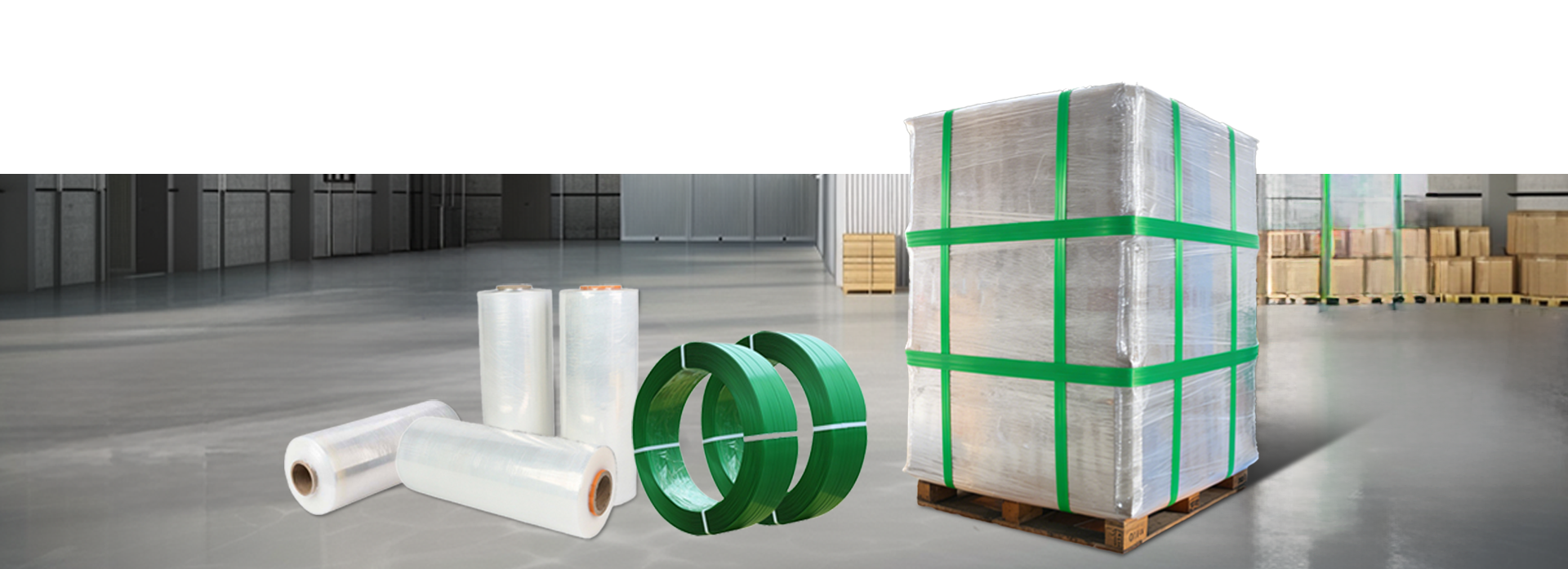
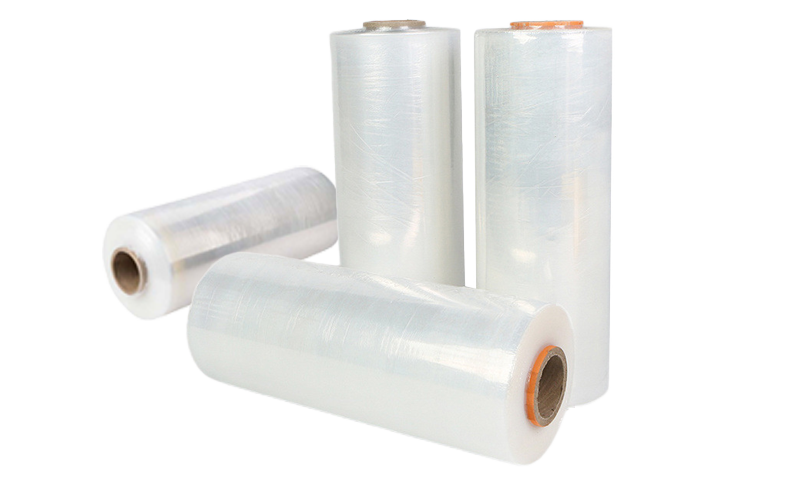
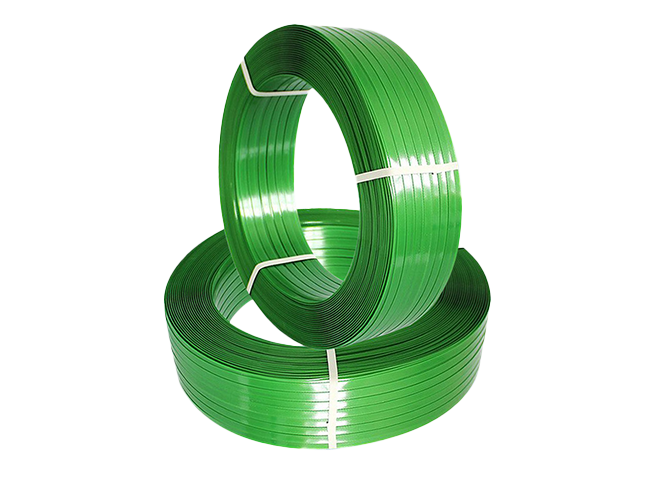
For a buyer, working with a supplier that understands pallet trucks, stackers, racks, pallets, totes, stretch wrap, and strapping can simplify equipment planning. The supplier may be better positioned to discuss how the tote will interact with pallets, racks, handling equipment, and packaging workflows. Compatibility should still be verified using actual dimensions, load ratings, and operating conditions.
Operational Benefits of a Reusable Tote System
The value of a reusable tote is greater when it is managed as part of a complete system. A business can assign identification numbers, track circulation, establish cleaning procedures, and create inspection points. This turns a plastic box into a controlled logistics asset rather than an unmonitored item.
Reusable totes can reduce the repeated purchase of disposable packaging in internal transport. They may also reduce the amount of damaged packaging that must be removed before products reach the next stage. Where reverse logistics are practical, the same containers can circulate between facilities and return to the point of origin.
Durability can contribute to more predictable operations. Employees do not need to adapt constantly to cartons with different sizes, damaged corners, or weakened bases. Standard containers support repeatable work methods and may simplify training for new staff.
The tote can also support visual management. Different colors may be used to represent departments, product categories, handling status, quality status, or destination zones. The product information indicates that multiple colors and customization are supported. Any color-coding system should be documented clearly so that employees do not confuse product identification with safety or quality status.
Storage and Handling Recommendations
To obtain the best performance, users should operate the tote within its intended load and environmental limits. The 58L capacity identifies the approximate volume, but it does not define the maximum permissible weight. The safe load depends on the product design, load distribution, stacking height, temperature, handling method, and duration of storage.
Heavy products should be distributed evenly across the base rather than concentrated at one corner. Uneven loading can increase stress on the walls and may make a stack unstable. Contents should not project above the rim if they could interfere with stacking or create a falling-object hazard.
Stacks should be placed on level, stable surfaces. Damaged or deformed totes should be removed from the stack until they have been inspected. Users should avoid placing loaded containers on unstable pallets, sloped floors, wet surfaces, or areas exposed to moving vehicles unless suitable controls are in place.
When pallet trucks, forklifts, conveyors, or other handling equipment are used, operators should confirm that the tote is compatible with the equipment and that loads are secured. The tote is a container, not a replacement for proper load restraint. Where goods may shift, liners, dividers, lids, stretch wrap, or other protective methods may be required.
For high stacks, users should establish maximum levels based on a documented risk assessment. The indication that stacking beyond ten layers is possible should not be treated as a universal guarantee for every load or environment. The safe stacking height may be lower when the contents are heavy, unstable, hot, wet, fragile, or unevenly distributed.
Cleaning, Hygiene, and Maintenance
Reusable plastic totes should be included in a maintenance schedule. Routine cleaning removes dust, product residue, oil, and other contaminants that can affect hygiene and handling. The appropriate cleaning method depends on the material, the type of contamination, and the application.
Users should select detergents and disinfectants that are compatible with HDPE and should avoid chemicals known to damage the polymer or any labels, liners, or accessories. Extreme heat, prolonged ultraviolet exposure, and aggressive solvents may affect service life. When hot washing or automated cleaning is required, the temperature limits should be confirmed before deployment.
After washing, totes should be allowed to drain and dry sufficiently before being stacked or filled. Moisture trapped between containers can create hygiene problems, especially in warm environments. Food-related operations should maintain documented cleaning frequencies and separation procedures for clean and unclean containers.
Inspection should focus on cracks, sharp edges, severe abrasion, distortion, damaged rims, and excessively worn bases. A tote that no longer stacks correctly should not remain in a high stack. Damaged containers can be marked, quarantined, repaired where appropriate, or recycled according to the user’s waste-management policy.
Customization and Supply Flexibility
The supplied product information indicates that multiple colors, full specifications, and customization are supported. Customization can help businesses align the tote with their warehouse procedures. Possible requirements may include color selection, printed identification, labels, molded markings, barcode areas, dividers, or special packaging arrangements.
Customization should be evaluated against the expected order quantity, tooling requirements, lead time, and future replacement needs. A unique color or marking system is most useful when the same specification can be replenished consistently. Businesses should document the model number, dimensions, material, color code, and any approved artwork so that future orders remain compatible.
Stock availability is another practical advantage for customers who need rapid deployment. The product information states that the tote is in stock and ready to ship. Availability should be reconfirmed before ordering because inventory levels, customized requirements, and shipping conditions can affect delivery schedules.
A supplier offering both standard stock and customization gives buyers more flexibility. Standard totes can be used for immediate operational needs, while customized versions can be introduced gradually as part of a longer-term container management program.
How the Tote Supports Lean Warehouse Practices
Lean warehouse management seeks to reduce unnecessary movement, waiting, overprocessing, excess inventory, and workplace clutter. A standardized tote can support these goals by creating a consistent unit for internal material flow.
For example, a warehouse may define a fixed quantity of goods per tote. Pickers then know how many units to collect, replenishment teams can identify empty or partially filled containers quickly, and supervisors can estimate work-in-process volume from the number of occupied totes. This creates a simple visual control system.
The tote can also reduce the number of times goods are repacked. Products may be received into a tote, inspected, transferred to storage, picked into the same or another tote, and dispatched without unnecessary intermediate packaging. Fewer repacking steps can reduce labor, handling damage, and processing time.
When totes are assigned to specific routes or workstations, they can support a pull-based replenishment system. Empty totes signal demand, while full totes represent available material. The actual system should be designed according to the business process, but the standardized container provides a practical physical foundation.
Environmental and Lifecycle Considerations
Reusable plastic packaging can support waste reduction when it replaces repeated use of disposable cartons or single-use plastic bags. Its environmental value depends on how many cycles it completes, how efficiently it is transported, how it is cleaned, and whether it is recycled at the end of its service life.
A durable tote should therefore be managed for longevity. Correct loading, safe stacking, suitable cleaning, and timely removal of damaged units can extend useful life. Businesses should also plan reverse logistics so that empty containers do not accumulate at one location while another site purchases replacements.
At the end of service, users should consult local recycling and waste regulations. HDPE is widely recognized as a recyclable plastic category, but actual recycling depends on local collection systems, contamination, additives, labels, and processing capacity. Separating damaged totes from general waste may improve the possibility of material recovery.
Lifecycle evaluation should compare the reusable tote with the packaging method it replaces. A reusable box is most effective when it circulates frequently and is not lost after one shipment. Tracking, return incentives, and clear ownership rules can improve circulation rates.
Supplier Capability and One-Stop Logistics Support
Yancheng Bingo Machinery Equipment Co., Ltd. operates in the warehouse and logistics equipment sector and provides products across handling, storage, packaging, and racking categories. This portfolio includes manual and electric pallet trucks, stackers, plastic pallets, plastic totes, crates, bulk containers, stretch wrap, packing strapping, and warehouse racks.
For customers developing or upgrading a warehouse, this range can simplify sourcing. A storage tote does not operate independently. It must fit within the available rack dimensions, work alongside pallets and handling equipment, and support the packaging and dispatch process. A supplier familiar with these connected systems can help customers consider the complete material flow.
The company describes its approach as a one-stop, integrated solution for material storage and handling. Its stated customer industries include manufacturing, e-commerce logistics, warehousing and distribution, and supermarket retail. These sectors require different container strategies, but all depend on reliable movement, storage discipline, and equipment compatibility.
The company also emphasizes quality-first manufacturing, standardized processes, inspection at different production stages, and cooperation with international customers. Buyers should request technical documents, material confirmation, sample approval, load information, and application guidance when the tote will be used in demanding or regulated conditions.
Purchasing Checklist
Before purchasing the BG-674523-ST, buyers should confirm the exact product specification. The model number, dimensions, material, capacity, weight, color, and customization requirements should appear clearly on the quotation or purchase order.
Buyers should also confirm whether the 58L capacity is nominal or usable capacity, whether lids are included, whether labels or dividers are available, and whether the product is compatible with the intended rack or pallet system. If the tote will be used on conveyors, the base design and dimensional tolerances should be reviewed.
For food storage, purchasers should ask for food-contact declarations, migration test information where applicable, cleaning guidance, and temperature limitations. For chemical or industrial use, compatibility with oils, solvents, acids, alkalis, and other substances should be verified separately.
Load and stacking requirements should be discussed before large-scale deployment. Buyers should provide information about the average and maximum load, the distribution of weight, stacking height, storage duration, handling equipment, and operating temperature. This allows the supplier to confirm whether the standard model is appropriate or whether a different container is required.
| Purchasing consideration | Information to confirm |
| Material | Confirm HDPE grade and clarify any reference to PP in supporting descriptions |
| Dimensions | Verify external and internal measurements against racks, pallets, and workstations |
| Capacity | Confirm nominal volume and expected product loading pattern |
| Load rating | Request suitable load and stacking guidance for the intended application |
| Food use | Request applicable food-contact and hygiene documentation |
| Customization | Confirm colors, markings, labels, dividers, and minimum order quantities |
| Delivery | Check stock status, production lead time, packaging, and shipping terms |
| Quality assurance | Ask about inspection procedures, samples, and production consistency |
Frequently Asked Questions
What is the capacity of the tote?
The nominal capacity is 58 liters. The actual amount of product that can be loaded depends on the shape of the goods, required protective space, liners, dividers, and safe loading practices.
What are the dimensions of the product?
The external dimensions are 675×450×230mm. The internal dimensions are 640×415×220mm. These measurements should be compared with the clear dimensions of storage racks, pallets, conveyors, and workstations before purchase.
What material is used?
The product specification identifies HDPE as the material. Because one supplied quality statement refers to virgin PP, buyers should request confirmation of the exact polymer and grade for their order. This is particularly important for food-contact, high-temperature, and chemical-handling applications.
Is the tote suitable for food storage?
The tote is presented for food storage and transport, but suitability depends on the exact application. For direct food contact, users should confirm food-contact compliance, resin documentation, cleaning procedures, and temperature limits with the manufacturer before use.
Can the totes be stacked?
Yes. The tote is designed for secure vertical stacking. The supplied information indicates stacking of more than ten layers may be possible under suitable conditions. The safe height depends on load weight, distribution, floor condition, temperature, and handling procedures.
Can the tote be customized?
Multiple colors, full specifications, and customization are indicated as available. Buyers should confirm the options, minimum quantities, artwork requirements, tooling, and delivery schedule before placing a customized order.
Is the tote suitable for warehouse racks?
It may be suitable for rack storage, but compatibility must be checked using the rack’s clear width, depth, beam spacing, shelf capacity, and access method. The tote’s 675×450mm external footprint should be compared with the actual usable rack dimensions.
Can the box be used with pallet trucks or forklifts?
The tote can be part of a material-handling system, but it is not a substitute for a pallet or load restraint. Users should confirm how the loaded totes will be placed, secured, and moved with pallet trucks or forklifts. Operators must follow site-specific safety procedures.
How should the tote be cleaned?
Cleaning should be based on the type of contamination and the intended application. Users should select compatible detergents, avoid unsuitable chemicals, allow the tote to dry properly, and follow documented hygiene procedures for food-related operations.
What industries can use this product?
Potential applications include distribution centers, manufacturing, e-commerce fulfillment, warehousing, supermarket retail, inventory management, internal transport, and food-related logistics. The final suitability depends on the load, environment, regulatory requirements, and handling process.
What is the product weight?
The listed product weight is 2.4kg. The total handling weight will be higher after goods, liners, dividers, or accessories are added.
Why choose a reusable plastic tote instead of a carton?
A reusable plastic tote provides a more durable and moisture-resistant structure for repeated handling. It can be stacked more consistently, cleaned, and returned to service. Cartons may remain preferable for one-way shipments or applications where return logistics are impractical.
Conclusion
The 58L Stackable Plastic Tote Box is designed to solve several common warehouse and transport challenges at the same time. Its 675×450×230mm external dimensions provide a standardized footprint, while the 640×415×220mm internal dimensions offer useful loading space. The 2.4kg HDPE construction balances durability with manageable handling, and the stackable format allows businesses to use vertical space more effectively.
Compared with disposable cartons, non-stackable bins, lightweight household boxes, and heavier metal containers, this tote offers a practical combination of reusability, structural stability, moisture resistance, and operational consistency. It can support distribution, manufacturing, e-commerce, food-related logistics, retail replenishment, and general inventory management.
Its greatest value appears when it is integrated into a complete container-management system. Standardized loading, barcode identification, color coding, cleaning, inspection, reverse logistics, and safe stacking can turn the tote into a dependable part of daily warehouse operations. Businesses should confirm material details, food-contact requirements, load ratings, and equipment compatibility before deployment.
The manufacturer’s broader experience in handling equipment, storage containers, packaging materials, and warehouse racks also supports a coordinated approach to logistics planning. With controlled material sourcing, standardized production, inspection at multiple stages, customization options, and stock availability, the product is positioned as a practical reusable solution for customers seeking more efficient and organized material flow.
References
1. Product specification sheet for stackable plastic tote box model BG-674523-ST, including dimensions, material, weight, and capacity.
2. General technical references on high-density polyethylene properties and reusable industrial container design.
3. Warehouse planning principles concerning vertical storage, standardized containers, inventory organization, and material flow.
4. General guidance on reusable transport packaging, lifecycle management, cleaning, inspection, and recycling practices.
5. Manufacturer-provided information concerning production standardization, quality inspection, customization, stock availability, and logistics equipment capabilities.
Product: 58L Stackable Plastic Tote Box for Food Storage and Transport

Copyright @ Yancheng Bingo Machinery Equipment Co., Ltd. All rights reserved Warehouse Logistics Equipment Manufacturer Pallet Truck Supplier
