 en
 Español

31L Food Grade Stackable Plastic Crate for Produce and Seafood
Content
- 1 Product Overview
- 2 Food-Safe HDPE Construction
- 3 Reinforced Structure for Heavy-Duty Handling
- 4 Ventilation and Visibility for Produce and Seafood
- 5 Stackable Design and Space Optimization
- 6 Advantages Compared with Common Alternatives
- 7 Applications Across the Supply Chain
- 8 Manufacturing Process and Quality Management
- 9 Company Manufacturing and Supply Strengths
- 10 Customization and Procurement Considerations
- 11 Operating Recommendations
- 12 Sustainability and Total Cost of Ownership
- 13 Why This Crate Is a Practical Professional Choice
- 14 Frequently Asked Questions
- 14.1 What is the capacity of the crate?
- 14.2 What material is used to manufacture the crate?
- 14.3 Is the crate suitable for seafood?
- 14.4 Can the crate be used for fresh produce?
- 14.5 Can the crates be stacked?
- 14.6 How much does one empty crate weigh?
- 14.7 What makes the crate different from a basic plastic box?
- 14.8 Can the crate be used in warehouses outside the food industry?
- 14.9 Are multiple colors available?
- 14.10 How should the crates be cleaned?
- 14.11 What should be checked before placing a bulk order?
- 14.12 How can the crates improve warehouse efficiency?
- 15 Conclusion
- 16 References
- 17 Product: 31L Food Grade Stackable Plastic Crate for Produce and Seafood
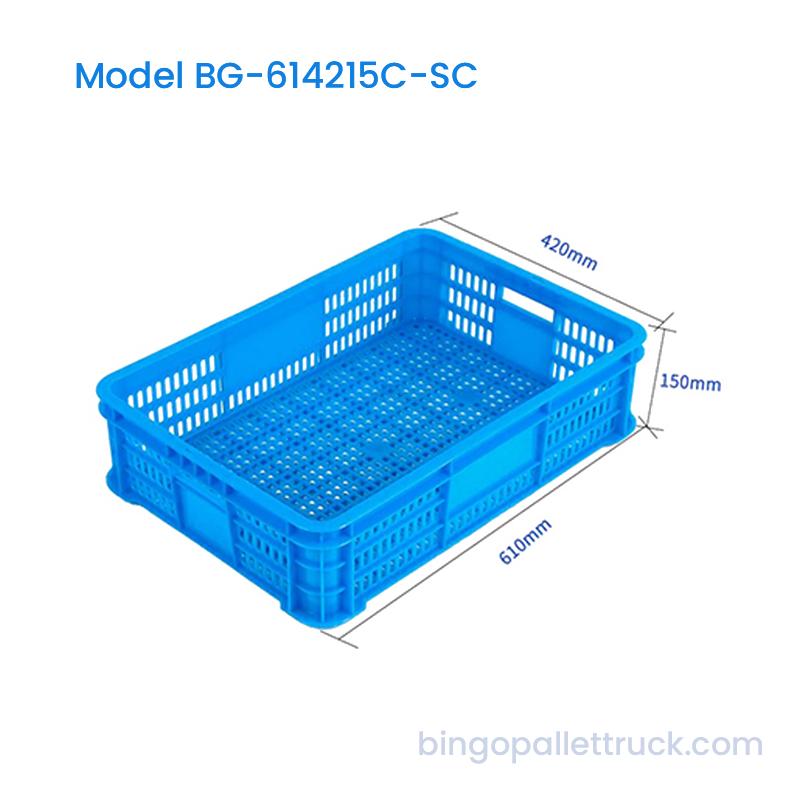
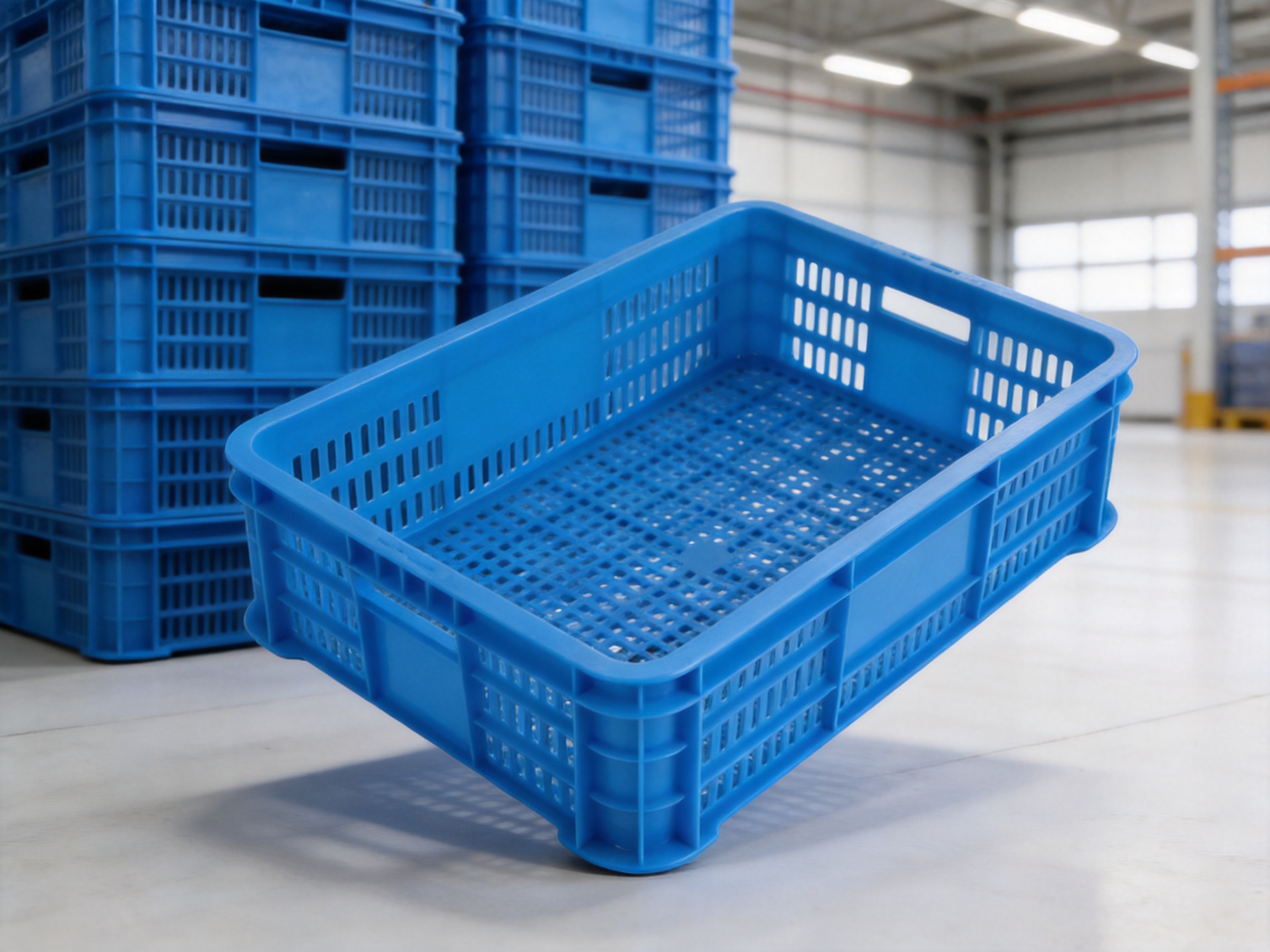
Efficient storage and transportation depend on containers that can withstand repeated handling, protect goods from damage, support hygienic operations, and use warehouse space intelligently. The 31L Food Grade Stackable Plastic Crate for Produce and Seafood, model BG-614215C-SC, is designed to meet these requirements in demanding logistics environments. With external dimensions of 610×420×150mm, internal dimensions of 575×390×140mm, and a working capacity of 31L, it offers a practical balance between usable volume, low tare weight, ventilation, strength, and stackability.
Manufactured from food-safe HDPE, this reinforced plastic crate is suitable for produce distribution, seafood handling, food processing, cold-chain operations, warehouse storage, manufacturing supply chains, supermarket backrooms, and general industrial logistics. Its open perforated structure allows air to circulate around stored goods, while the reinforced ribs help the crate resist impacts, deformation, and repeated loading. The design is especially valuable for products that require airflow, quick visual inspection, drainage, and easy handling throughout the supply chain.
Unlike disposable cardboard cartons or lightweight consumer storage boxes, this reusable crate is engineered for repeated professional use. It can be collected, washed, stacked, transported, and returned to service many times. Its standardized footprint also makes it easier to organize inventory, optimize vehicle loading, and establish consistent warehouse workflows. For businesses seeking a durable alternative to single-use packaging, the crate provides a long-term logistics asset rather than a temporary container.
Product Overview
The BG-614215C-SC is a low-profile, heavy-duty stackable crate designed for applications where access, ventilation, and stable stacking are essential. Its 150mm external height makes it convenient for shallow product layers, sorting operations, and rapid access to contents. The internal height of 140mm provides usable space while leaving enough structural material for reinforced walls, ribs, and a stable rim.
The crate has been developed around the practical needs of logistics operators. Produce and seafood must often be moved several times between harvesting, processing, distribution, retail, and final delivery. During these stages, containers may be lifted manually, placed on pallets, stacked in storage rooms, loaded into delivery vehicles, exposed to moisture, and cleaned between uses. A suitable crate must therefore perform consistently in a changing environment.
The combination of HDPE material, thickened rib construction, perforated walls, and a stackable profile allows this crate to support multiple logistics functions. It can be used as a picking container, a transport crate, a temporary storage bin, a sorting container, or a returnable packaging unit. Because the design is reusable, businesses can standardize their handling systems around a durable container format instead of constantly replacing damaged or discarded packaging.
| Product Attribute | Specification | Operational Benefit |
| Model | BG-614215C-SC | Clear identification for purchasing and inventory control |
| Material | Food-safe HDPE | Durability, cleanability, and suitability for food-related logistics |
| External dimensions | 610×420×150mm | Efficient use of warehouse and vehicle space |
| Internal dimensions | 575×390×140mm | 31L usable working capacity |
| Capacity | 31L | Suitable for produce, seafood, components, and packaged goods |
| Weight | 1.35kg | Easy handling while maintaining a reinforced structure |
| Structure | Perforated, rib-reinforced, stackable | Ventilation, visibility, strength, and vertical storage efficiency |
Food-Safe HDPE Construction
Material selection is one of the most important factors in the performance of a reusable crate. HDPE is widely used in industrial and food-related applications because it combines toughness, relatively low weight, moisture resistance, and ease of cleaning. For a crate exposed to water, ice, condensation, fresh produce, seafood residue, or frequent washing, these characteristics are particularly useful.
The food-safe HDPE construction gives the crate a smooth, durable polymer surface that does not absorb moisture in the same way as paper-based packaging. This helps make the container more suitable for wet handling environments. The material also supports repeated reuse, allowing operators to establish cleaning and sanitation routines rather than disposing of the container after one trip.
Food-related applications demand careful attention to cleanliness. A crate used for vegetables, fruit, seafood, or packaged food must be easy to inspect and maintain. The perforated walls allow operators to see whether residue, foreign material, or damaged goods remain inside. The open structure also helps water drain away after washing, reducing the likelihood of trapped moisture in the container.
Although food-safe construction is important, it should be considered part of a complete handling system. Users should select suitable cleaning agents, water temperatures, and sanitation procedures according to the type of goods and applicable local requirements. The crate provides a practical cleanable platform, while the operating company remains responsible for implementing appropriate hygiene controls.
HDPE also offers useful impact performance in busy logistics environments. Crates may contact pallets, racks, conveyor equipment, vehicle floors, or other containers during normal operations. The reinforced structure helps reduce the risk of cracking or permanent deformation caused by ordinary handling. This durability can lower replacement frequency and help maintain consistent container availability.
Reinforced Structure for Heavy-Duty Handling
The crate is designed with an extra-thick reinforced structure and thickened ribs. These features are not merely decorative; they distribute loads across the walls and base, improve rigidity, and help the container retain its shape during stacking and transport. In a busy warehouse, a crate may support the weight of another crate, experience side pressure while being moved, or be subjected to sudden impacts. Reinforcement provides an additional margin of protection in these situations.
A lightweight container can be convenient to lift, but low weight alone does not guarantee professional performance. Some competing containers achieve a low tare weight by using thin walls or minimal structural support. Such products may be satisfactory for occasional household storage, but they can become less suitable when used continuously in commercial logistics. A reinforced design seeks to balance easy handling with the strength required for repeated service.
The 1.35kg net weight is a notable feature of the BG-614215C-SC. It allows workers to move the crate without adding unnecessary handling weight, while the structural ribs provide support where it is most needed. Lower tare weight can also contribute to more efficient transport, especially when a large number of empty crates must be returned or relocated between facilities.
Strength is influenced by several factors, including material quality, wall thickness, rib geometry, base design, molding accuracy, and load distribution. For this reason, a crate should not be evaluated only by its external appearance. The manufacturing process must ensure that the finished product has consistent dimensions, uniform walls, well-formed ribs, and reliable stacking contact points. Quality control at each stage is therefore essential to achieving repeatable performance.
In practice, users should distribute contents evenly and avoid placing loads that exceed the intended operating conditions. Heavy or irregularly shaped items should be arranged so that they do not create concentrated pressure on one section of the base or wall. Correct loading practices complement the crate’s reinforced construction and help extend service life.
Ventilation and Visibility for Produce and Seafood
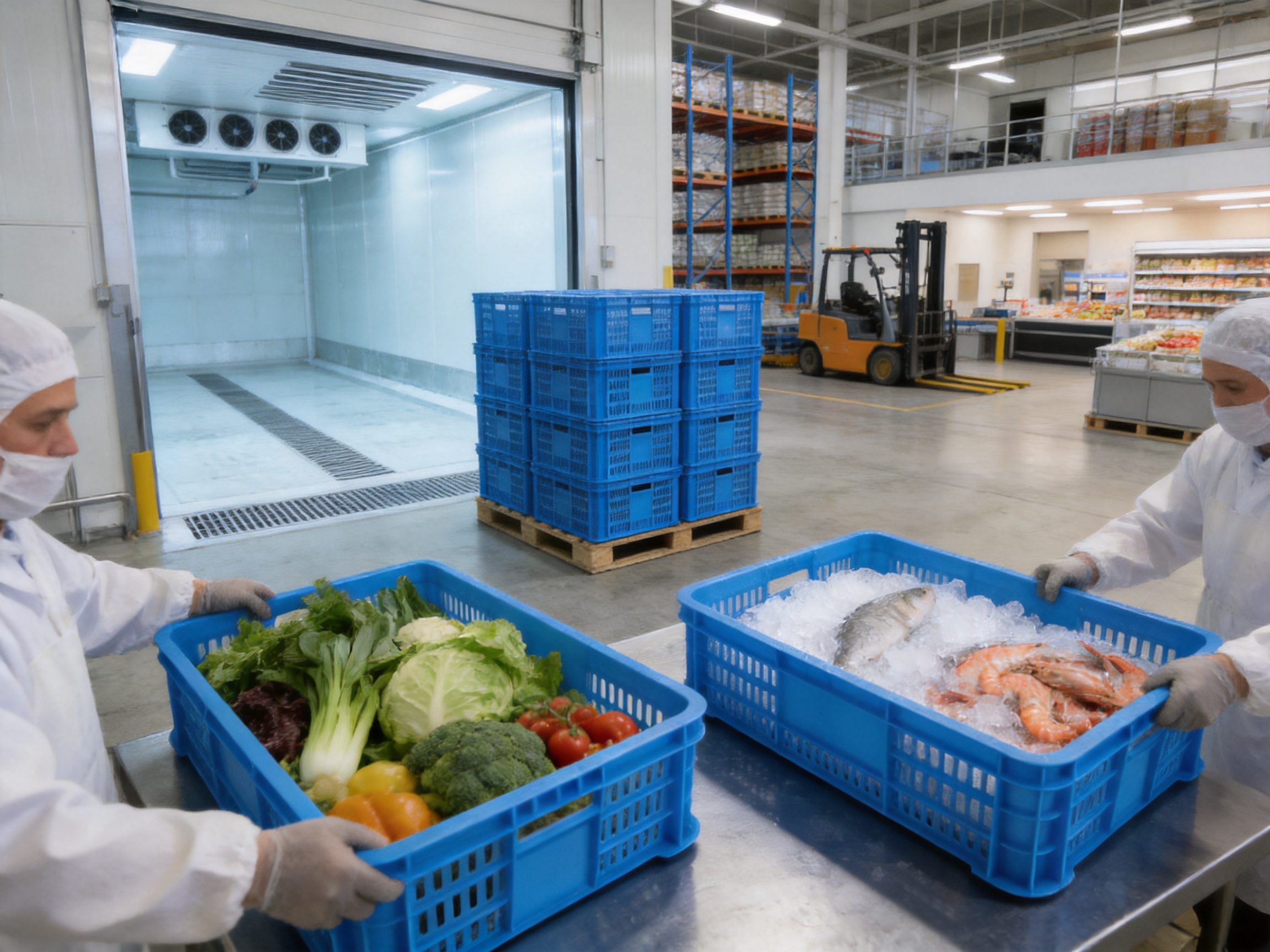
Fresh produce and seafood often require airflow during storage and transportation. The fully perforated mesh structure of this crate is designed to support ventilation around the contents. Air movement can help reduce the accumulation of heat and condensation, particularly when crates are placed in chilled rooms, refrigerated vehicles, processing areas, or temporary holding zones.
Ventilation is especially useful when goods are harvested or packed at different temperatures. A solid-wall container can restrict airflow and make it more difficult to manage moisture. By contrast, an open perforated design permits air to circulate through the sides and base. This does not replace appropriate refrigeration or temperature management, but it can support a more suitable physical environment for many perishable products.
The openings also improve visibility. Staff can identify the contents of a crate without completely removing or opening a cover. This is helpful during order picking, quality inspection, stock counting, sorting, and dispatch. A worker can quickly determine whether the crate contains a specific product, whether it is full or partially loaded, and whether any goods appear damaged.
For seafood operations, drainage and airflow are important practical considerations. Meltwater, wash water, or condensation can accumulate during handling. The perforated structure helps water pass through instead of remaining in the container. Operators must still follow appropriate sanitation practices and avoid cross-contamination, but a drainable crate can make routine cleaning and handling more manageable.
For produce, the crate’s open structure can help reduce unnecessary pressure caused by poor air circulation. It is suitable for applications such as vegetables, fruit, mushrooms, flowers, and other goods that benefit from breathable packaging. The correct product arrangement remains important: goods should not be forced into the crate, and fragile items may require liners or additional protective measures.
31L Food Grade Stackable Plastic Crate for Produce and Seafood
Stackable Design and Space Optimization
Warehouse space is expensive, and vertical capacity is often underused when containers cannot be safely stacked. The stackable design of the BG-614215C-SC allows operators to build stable vertical units when the crates are correctly aligned and loaded. This can help organize inventory, reduce floor congestion, and improve the use of storage rooms, staging areas, cold rooms, and delivery vehicles.
Stacking also supports more orderly material flow. Crates can be grouped by product type, batch, destination, shift, or processing stage. When containers share consistent dimensions, workers can establish repeatable layouts instead of arranging every load individually. Standardization makes it easier to plan rack positions, pallet patterns, picking routes, and return logistics.
The 610×420mm external footprint offers a useful format for many warehouse and distribution environments. It is large enough to provide meaningful capacity but compact enough for manual movement and flexible placement. The shallow 150mm height is particularly practical when products need to be accessed frequently or when multiple product layers must be kept separate for quality control.
Stacking performance depends on using level surfaces, keeping the crate orientation consistent, and ensuring that the contents do not protrude into the stacking interface. Operators should inspect crates before use and remove any container that has significant damage, deformation, or contamination. Proper procedures help protect workers and goods while preserving the advantages of vertical storage.
When empty, reusable crates can also be nested or consolidated according to the operating design, if the specific arrangement permits it. Even when nesting is not used, the standardized external dimensions make empty-crate collection and transport easier to plan. Returnable packaging systems become more efficient when all participants follow an agreed process for counting, cleaning, inspecting, and redistributing containers.
Advantages Compared with Common Alternatives
Compared with Cardboard Cartons
Cardboard cartons are widely available and can be economical for one-way shipping, but they are less suitable for wet environments and repeated handling. Moisture can reduce their rigidity, while repeated loading and unloading can cause crushing, tearing, or loss of shape. Cardboard also creates recurring purchasing and disposal costs when it is discarded after one trip.
The reusable HDPE crate offers a stronger alternative for operations involving washing, condensation, ice, or frequent transfers. Its perforated structure supports drainage and airflow, and its reinforced walls are designed for repeated use. Over time, a reusable crate can reduce the dependence on disposable packaging and improve handling consistency.
Cardboard can still be useful for products that require printed branding, lightweight one-way shipment, or individual retail packaging. However, where the same container must circulate between suppliers, warehouses, processing facilities, and stores, a durable plastic crate is often more appropriate.
Compared with Thin-Wall Plastic Bins
Thin-wall plastic bins may be inexpensive and lightweight, but they can be more vulnerable to impact, distortion, and fatigue under intensive use. Their stacking interfaces may also be less stable when the container is heavily loaded. A reinforced crate provides a stronger structural framework, especially in environments where containers are handled by multiple workers or move through semi-automated processes.
The BG-614215C-SC is designed as a professional logistics container rather than a general household box. Its ribbed structure, food-safe HDPE material, and standardized dimensions are intended to support industrial use. The product therefore emphasizes service life, load-bearing performance, and repeatability instead of only minimizing initial purchase price.
Compared with Solid-Wall Containers
Solid-wall containers can protect small items from side contact and may be suitable for dust-sensitive applications. However, they limit airflow and make it more difficult to inspect contents from the outside. In fresh-food logistics, the absence of ventilation can be a disadvantage, particularly when goods are wet, warm, or sensitive to condensation.
The fully perforated design of this crate prioritizes air permeability, visibility, and drainage. This makes it a practical choice for produce, seafood, washed goods, and other materials that benefit from an open container structure. Users can select solid-wall or perforated containers according to their specific application, but the open design provides clear advantages in breathable logistics.
Compared with Metal Containers
Metal containers can provide substantial strength, but they are usually heavier and may be more difficult to move manually. Metal surfaces can also dent, corrode, or create sharp edges if damaged. For operations where frequent hand movement and low tare weight are important, a reinforced HDPE crate can provide a more practical balance.
The 1.35kg weight of this crate supports manual handling and reduces the weight added to return shipments. Its polymer construction is also suitable for wet environments and routine cleaning. Metal remains valuable for specialized high-temperature or extremely high-load applications, but it may be unnecessary for produce, seafood, and many warehouse distribution tasks.
Applications Across the Supply Chain
Produce Collection and Distribution
Fresh produce often moves through several stages in a short time. The crate can be used for collection, sorting, temporary storage, order assembly, and delivery. Its open structure allows workers to inspect product condition and helps provide airflow during transportation. The 31L capacity can be suitable for organizing product by variety, grade, batch, customer, or destination.
For delicate items, operators may use liners, dividers, or suitable packing materials inside the crate. The crate provides the external structure and handling strength, while internal protection should be selected according to the fragility and shape of the goods. Its shallow profile can help limit excessive product depth, reducing the risk of lower layers being compressed by a tall load.
Seafood Handling
Seafood operations frequently involve water, ice, chilled storage, and strict cleaning routines. A perforated HDPE crate supports drainage and makes the container easier to rinse and inspect. It can be used for sorting, temporary holding, processing transfers, and distribution, provided that the operating process meets the required food safety standards.
In seafood applications, the crate should be cleaned promptly after use. Operators should establish procedures for removing organic residue, checking the corners and ribs, and separating clean containers from those awaiting sanitation. Color coding can also help identify product categories, processing areas, or sanitation status.
Cold-Chain Logistics
Cold-chain operations require reliable organization as products move between chilled rooms, loading docks, trucks, and retail facilities. The crate’s low profile and open structure can support efficient airflow and rapid visual checks. Its reusable format also helps companies maintain a stable container pool for repeated distribution cycles.
Although the crate is suitable for chilled environments, users should confirm that the complete handling system is appropriate for their temperature range, cleaning chemicals, and loading conditions. Temperature control depends on the entire logistics process, including refrigeration, dwell time, vehicle loading, product packaging, and monitoring.
Warehousing and Distribution Centers
Distribution centers can use the crate for order picking, returns handling, consolidation, cross-docking, and temporary staging. The stackable profile allows operators to create organized units without relying entirely on racking. The visible perforations support faster identification of contents, especially where many product categories are handled in the same area.
In manual picking areas, the crate can be placed on workstations or pallets. In larger facilities, it can be integrated into standardized flows involving conveyors, pallet trucks, shelves, and staging lanes. Consistent dimensions make it easier to develop work instructions and calculate the number of crates required for each shift or route.
Manufacturing and Industrial Components
The crate is not limited to food logistics. It can also hold small parts, components, tools, packaging materials, and production supplies. The open sides allow operators to see contents quickly, while the reinforced walls provide protection during internal transport. Businesses can use it to move work-in-progress materials from one production area to another.
For industrial use, the selection of material and cleaning procedure should match the substances being handled. The food-safe HDPE construction is advantageous where cleanliness is important, but companies should evaluate chemical compatibility before using the crate with aggressive solvents, high-temperature materials, or substances that may damage the polymer.
Supermarket and Retail Backrooms
Retail businesses can use stackable crates for receiving, backroom organization, replenishment, and returns. The 31L capacity is convenient for separating stock into manageable units. Staff can move a crate from the receiving area to the sales floor or cold-storage section without repacking the goods into another container.
Color options and product identification systems can help retailers organize departments or product categories. Where multiple colors are available, businesses may assign colors to produce, seafood, bakery items, cleaning supplies, or other operational groups. This can simplify sorting and reduce the risk of containers being misplaced.
Manufacturing Process and Quality Management
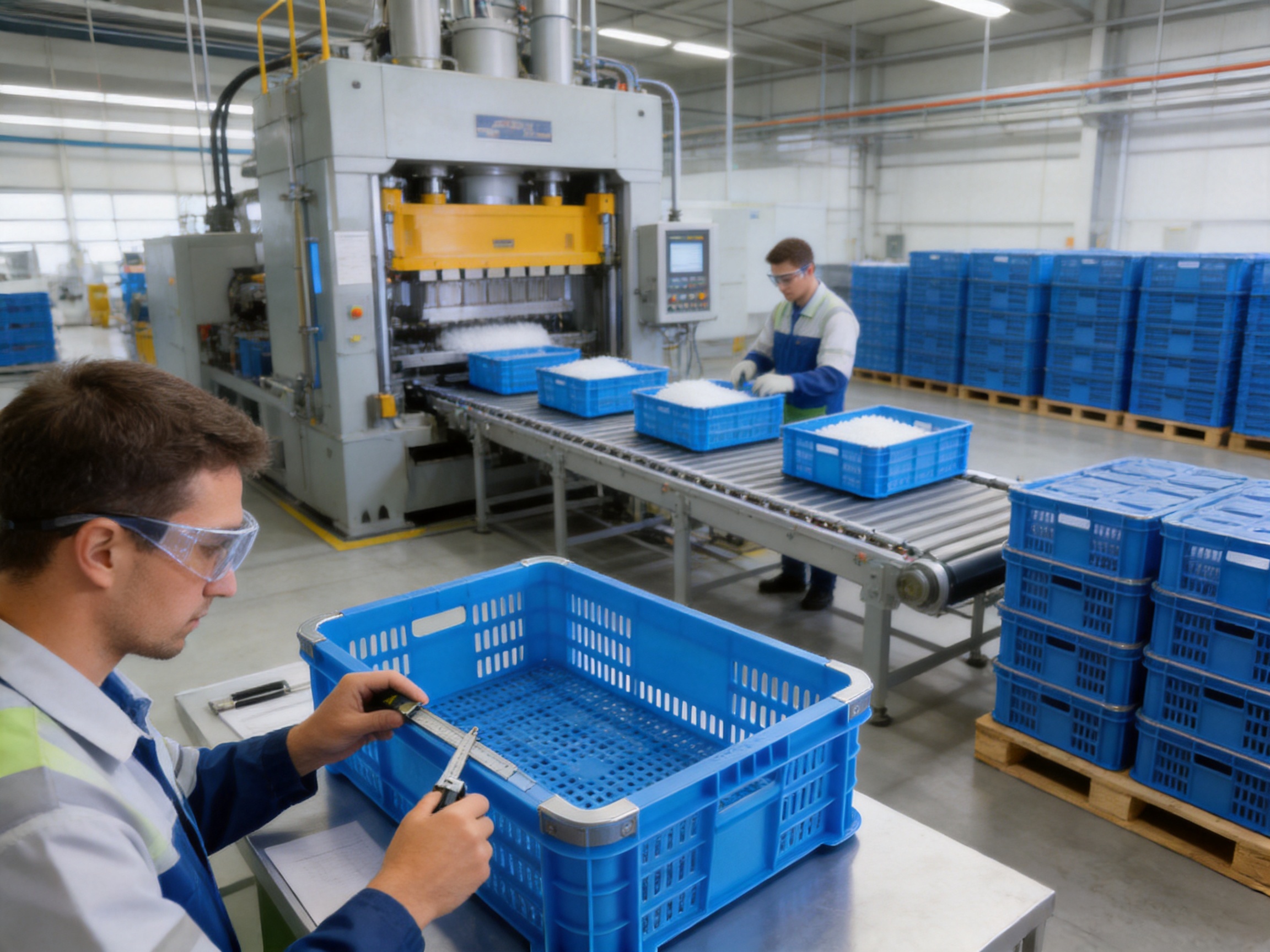
A professional reusable crate depends on more than a strong material specification. Manufacturing consistency determines whether individual units stack correctly, carry loads evenly, and remain compatible with the rest of the container fleet. The production approach described for this product emphasizes standardized processes, strict standards, and inspection from raw material sourcing through final production.
Material Selection and Preparation
The first stage is the selection and preparation of suitable polymer material. For this product, food-safe HDPE is specified as the primary construction material. Consistent raw material quality helps control color, density, strength, surface finish, and molding behavior. Material preparation must be managed carefully so that production conditions remain stable from batch to batch.
The manufacturing information also emphasizes the use of virgin polymer material and strict quality control. Because the product specification identifies HDPE, purchasing teams should confirm the exact material grade, food-contact status, and compliance documentation required for their target market. Clear documentation helps ensure that the material used in production matches the application requirements.
Injection Molding and Form Formation
Reusable plastic crates are commonly produced through industrial molding processes that form the walls, base, ribs, rim, and perforations as an integrated structure. During molding, the polymer must flow into thin and thick sections consistently. Accurate tooling and controlled processing help avoid incomplete filling, excessive flash, weak weld lines, uneven wall thickness, or distortion.
The tooling must also preserve the crate’s dimensional accuracy. The external footprint, internal cavity, stacking rim, and support ribs all need to remain within suitable tolerances. If these features vary excessively, crates may not stack evenly or may create instability in warehouse columns. Consistent molding therefore contributes directly to safe storage and efficient logistics.
Rib and Base Reinforcement
Reinforcement is engineered into the structure through the arrangement of ribs, corners, sidewalls, and base supports. These elements help distribute forces throughout the crate. During production, the ribs must be formed cleanly and joined correctly to the surrounding walls. Weak or incomplete rib formation could reduce the expected strength of the finished product.
The base is particularly important because it supports the contents and transfers loads to the crate below or to the floor. A well-formed base helps limit deflection and supports more stable stacking. The bottom perforation pattern must balance drainage and ventilation with the need for sufficient support under load.
Dimensional Inspection
Quality inspections can include checks of length, width, height, internal dimensions, weight, rim geometry, opening size, and overall shape. Dimensional inspection helps confirm that the crate matches the stated 610×420×150mm external dimensions and 575×390×140mm internal dimensions. Weight checks can also help identify unusual material variation or molding problems.
Inspection is especially important for stackable products. A small error in the rim or corner geometry can become more noticeable when multiple crates are stacked. Standardized quality checks help ensure that products from different production batches remain compatible within the same warehouse system.
Visual and Structural Inspection
Visual inspection can identify flash, cracks, sink marks, discoloration, contamination, sharp edges, incomplete perforations, or other visible defects. Operators should also review the base, corners, handles, ribs, and stacking interfaces. Structural checks can be performed according to the manufacturer’s testing procedures and the customer’s required operating conditions.
Quality control at every stage is valuable because it prevents defective products from moving further through the supply chain. Inspection during raw material sourcing, molding, trimming, assembly where applicable, packing, and dispatch creates several opportunities to identify problems. This staged approach is more reliable than relying only on a final appearance check.
Standardized Production Procedures
Standardized work instructions help ensure that production personnel follow the same procedures for machine setup, material handling, mold operation, inspection, labeling, and packing. Consistency is essential for a product intended to be purchased in quantity and used as a fleet. A warehouse operator expects every crate in an order to fit the same storage arrangement and perform in a similar way.
Standardization also supports process improvement. When production steps, inspection results, and customer feedback are recorded consistently, recurring defects can be analyzed and corrected. This allows manufacturing teams to improve efficiency while maintaining product quality. For international supply, such control is particularly important because customers may operate thousands of kilometers away from the production site.
Company Manufacturing and Supply Strengths
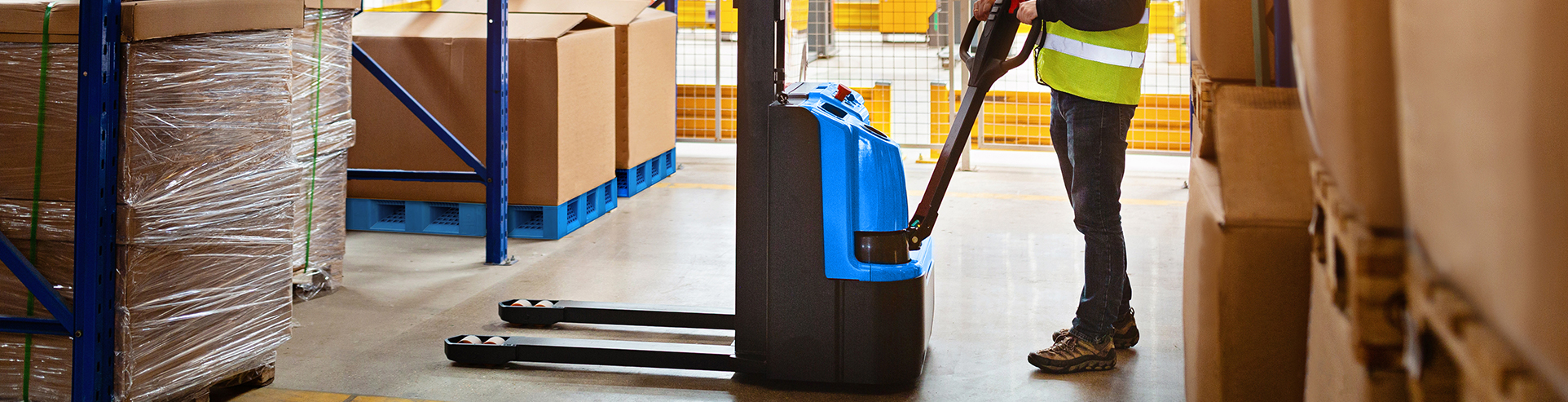
The manufacturer behind this product specializes in warehousing and logistics equipment, including handling equipment, storage containers, packaging materials, and warehouse racks. This product range gives the company a broad understanding of how reusable crates fit into larger material-handling systems. A crate is rarely used alone; it may be placed on a pallet, moved with a pallet truck, stored on a rack, or combined with packaging and warehouse workflows.
A supplier with experience across these categories can help customers consider the complete operating environment. For example, a buyer may require crates that fit a particular pallet footprint, work with a specific rack depth, or support a defined picking process. Knowledge of handling equipment and storage systems can make it easier to coordinate these requirements.
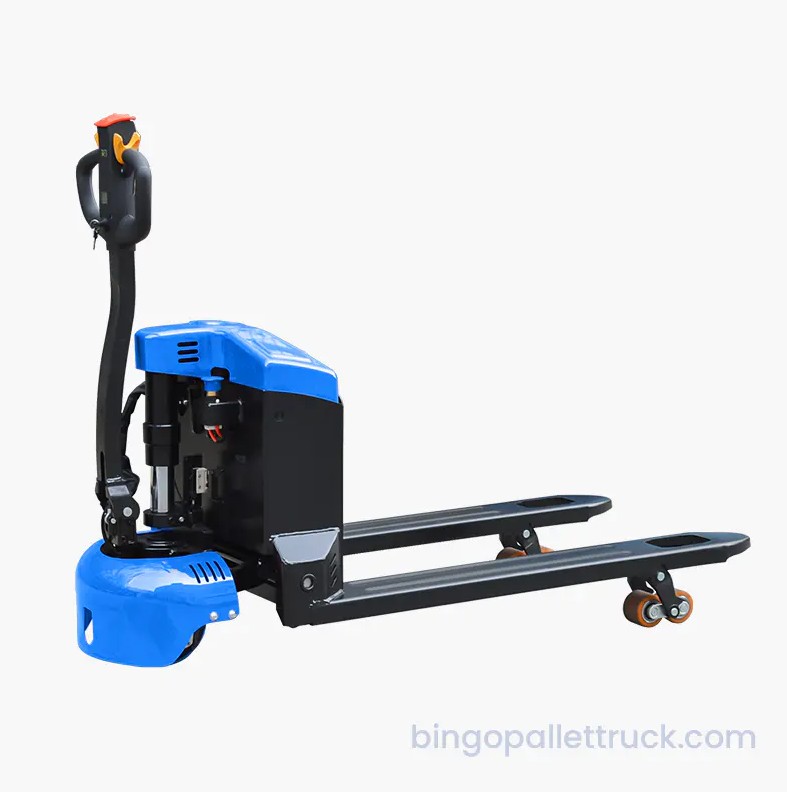
The company describes a complete warehousing and logistics equipment supply chain covering four main areas: manual and electric handling equipment, plastic storage containers, packaging materials, and warehouse racking. This breadth supports one-stop procurement for customers developing or upgrading distribution facilities. It can also reduce the complexity of coordinating different suppliers for related products.
Quality is presented as a core operating value, supported by mature supply-chain coordination and strict inspection processes. For an international customer, supplier reliability includes more than product design. It also includes communication, production scheduling, packaging, documentation, shipment coordination, and after-sales support. These factors influence whether the product can be introduced smoothly into daily operations.
The manufacturer serves industries such as manufacturing, e-commerce logistics, warehousing and distribution, and supermarket retail. These sectors have different operating requirements, but they share a need for efficient storage and material movement. Experience across multiple sectors can help a supplier understand the difference between occasional use and intensive circulation.
Customization and Procurement Considerations
Multiple colors and full specifications are available for this product line. Color selection can support visual management, product segregation, department identification, or customer-specific branding programs. Before ordering, buyers should determine whether color affects minimum order quantities, lead time, mold scheduling, or pricing.
Customers should also confirm whether the stated dimensions are compatible with existing pallets, racks, shelves, conveyors, vehicles, and workstations. The crate’s external dimensions are 610×420×150mm, while the internal dimensions are 575×390×140mm. The difference between external and internal measurements must be considered when calculating product fit, protective liners, dividers, or ice capacity.
Other useful procurement questions include the expected load type, operating temperature, cleaning method, stacking height, daily handling frequency, and return logistics. If the crates will be used in food applications, buyers should request relevant material and food-contact documentation. If they will be used in export distribution, packaging and shipment requirements should be reviewed before production.
For large projects, customers may benefit from testing a sample quantity in the actual working environment. A trial can evaluate manual handling, stacking stability, rack compatibility, cleaning time, product fit, and employee acceptance. Feedback from warehouse staff is especially valuable because they interact with the crates throughout the day and can identify practical issues that may not appear in a specification sheet.
Operating Recommendations
Before first use, inspect each crate for visible damage, sharp edges, contamination, or deformation. Confirm that the crate is the correct model and that the stacking surfaces are clean. Remove any unit that does not meet the company’s internal acceptance standard.
Load goods evenly and avoid concentrating excessive weight in one area. Keep products within the internal dimensions so that they do not interfere with stacking. If the contents are fragile, wet, sharp, or likely to shift, use suitable liners, separators, or protective packaging.
Stack crates on level surfaces and align them correctly. Do not create unstable columns by placing a damaged crate beneath a heavy load. The maximum safe stack height should be established according to the product, load, environmental conditions, and the company’s risk assessment.
Clean crates promptly after use when handling fresh food, seafood, or other materials that may leave residue. Use cleaning methods compatible with HDPE and the intended hygiene standard. After washing, allow the crates to drain and dry as appropriate before returning them to clean storage.
Separate clean and used containers. A returnable packaging system works best when there is a clear process for collection, inspection, sanitation, storage, and redistribution. Color coding, labels, barcodes, or other identification methods may help track crate ownership and circulation.
Store empty crates in a way that protects them from unnecessary impact, extreme heat, contamination, and unauthorized use. Regularly review the condition of the crate fleet and replace units that have cracks, severe deformation, damaged stacking interfaces, or contamination that cannot be removed through approved cleaning procedures.
Sustainability and Total Cost of Ownership
Reusable packaging can support sustainability goals by reducing dependence on single-use cartons, sacks, and disposable containers. The environmental benefit depends on how often the crate is reused, how far it travels, how it is cleaned, and what packaging it replaces. A durable crate that circulates through many logistics cycles can spread its manufacturing impact across a larger number of shipments.
The 1.35kg weight is also relevant to return logistics. Empty containers inevitably move between facilities, and lighter crates require less energy to transport than heavier alternatives, all other factors being equal. However, total transport efficiency depends on the number of crates per vehicle, stacking configuration, route distance, and whether empty backhauls are effectively managed.
Durability contributes to cost control. The purchase price is only one part of container economics. Businesses should also consider replacement frequency, labor time, product damage, washing, storage, return transport, and disposal. A reinforced reusable crate may provide a better total cost of ownership when it reduces breakage, supports faster handling, and remains in service for many cycles.
At the end of its useful life, plastic handling products should be managed according to local recycling and waste regulations. The responsible approach is to keep crates in circulation as long as they remain safe and suitable, repair or reassign them where practical, and recycle them through an appropriate channel when they can no longer be used.
Why This Crate Is a Practical Professional Choice
The BG-614215C-SC combines several features that are important in modern logistics: food-safe HDPE construction, a 31L capacity, a reinforced frame, perforated walls, drainage, visibility, stackability, and a manageable 1.35kg weight. Each feature addresses a specific operational need, but the greatest value comes from how they work together.
The open structure supports produce and seafood handling, while the reinforced ribs provide confidence during repeated movement. The stackable footprint supports space efficiency, while the low profile allows fast access and product separation. The reusable material supports long-term circulation, while the consistent dimensions support standardized warehouse procedures.
Compared with disposable packaging, the crate is designed for repeat use. Compared with thin-wall plastic bins, it offers a more industrial structure. Compared with solid containers, it provides better ventilation and visibility. Compared with heavy metal alternatives, it offers easier manual handling and better resistance to wet operating conditions.
These advantages make it suitable for companies that want to improve the reliability of their storage and transport system rather than simply purchase a temporary container. It can serve as one component in a coordinated logistics program that includes pallets, racks, handling equipment, packaging materials, inspection procedures, and inventory controls.
Frequently Asked Questions
What is the capacity of the crate?
The crate has a stated capacity of 31L. Its external dimensions are 610×420×150mm, and its internal dimensions are 575×390×140mm. The actual quantity of goods that can be placed inside depends on product shape, packing method, protective materials, and the need to avoid overloading.
What material is used to manufacture the crate?
The product specification identifies food-safe HDPE as the material. HDPE provides a useful combination of durability, low weight, moisture resistance, cleanability, and impact performance for reusable logistics containers.
Is the crate suitable for seafood?
Yes. The perforated design supports airflow and drainage, and the HDPE structure is suitable for wet handling environments when the crate is cleaned and maintained according to an appropriate sanitation program. Users should confirm that their cleaning process and food-safety procedures meet local requirements.
Can the crate be used for fresh produce?
Yes. The open mesh structure is suitable for many types of fruits, vegetables, flowers, and other goods that benefit from ventilation and visual inspection. Fragile produce may require liners, dividers, or additional protective packing.
Can the crates be stacked?
Yes. The product is designed for stacking. Crates should be evenly loaded, correctly aligned, and placed on stable surfaces. Operators should establish a safe maximum stack height based on the load, facility conditions, and internal safety procedures.
How much does one empty crate weigh?
The stated weight is 1.35kg. This relatively low tare weight supports manual handling and can reduce the burden of returning empty crates between locations.
What makes the crate different from a basic plastic box?
This crate is designed for professional logistics use. It combines a reinforced rib structure, perforated walls, food-safe HDPE, standardized dimensions, stackability, and a 31L working capacity. These features support repeated handling, airflow, drainage, visibility, and organized storage.
Can the crate be used in warehouses outside the food industry?
Yes. It can be used for components, work-in-progress materials, packaging supplies, order picking, retail stock, returns, and other warehouse applications. The suitability of the crate should be evaluated against the weight, shape, temperature, chemical exposure, and cleanliness requirements of the specific goods.
Are multiple colors available?
The product information indicates that multiple colors and full specifications are available. Buyers should confirm color options, minimum order quantities, production schedules, and customization conditions with the supplier.
How should the crates be cleaned?
Cleaning procedures should be selected according to the material being handled and the required hygiene standard. Crates should be emptied, rinsed or washed using a compatible process, inspected, allowed to drain or dry as necessary, and stored in a clean area. Food and seafood operators should maintain documented sanitation procedures.
What should be checked before placing a bulk order?
Buyers should confirm dimensions, capacity, material documentation, color, load requirements, stacking conditions, temperature range, cleaning method, pallet and rack compatibility, packaging, delivery schedule, and after-sales support. A sample trial can help verify compatibility with the intended workflow.
How can the crates improve warehouse efficiency?
The standardized footprint supports orderly stacking, while the open design improves visibility and access. The reusable format reduces repacking and disposable packaging waste. Consistent containers also help companies establish repeatable picking, sorting, storage, cleaning, and return procedures.
Conclusion
The 31L Food Grade Stackable Plastic Crate for Produce and Seafood is a practical solution for businesses that need durable, ventilated, reusable, and space-efficient handling containers. Its food-safe HDPE construction supports wet and food-related environments, while the reinforced ribs provide strength for repeated industrial use. The 610×420×150mm external dimensions and 575×390×140mm internal dimensions provide useful capacity without making the crate unnecessarily difficult to handle.
Its fully perforated design is well suited to products that require airflow, drainage, and fast visual inspection. Its stackable structure helps businesses use vertical space more efficiently and organize goods into standardized units. The 1.35kg weight supports manual handling and improves the practicality of returnable packaging programs.
The product is also supported by a manufacturing approach centered on material control, standardized production, dimensional accuracy, and inspection at each stage. Combined with a broader supply capability in handling equipment, storage containers, packaging materials, and warehouse racks, this provides customers with more than an individual crate. It provides a foundation for building a coordinated storage and material-handling system.
For produce distributors, seafood processors, cold-chain operators, warehouses, manufacturers, supermarkets, and logistics providers, the crate offers a balanced alternative to disposable cartons, thin-wall bins, solid containers, and heavier metal boxes. When correctly loaded, cleaned, stacked, and maintained, it can support reliable daily operations while improving space utilization, handling consistency, and long-term packaging efficiency.
References
1. Product specification sheet for model BG-614215C-SC, including material, dimensions, capacity, weight, and structural features.
2. Manufacturer-provided information concerning HDPE storage containers, stackable crate design, quality control, standardized production, and logistics equipment supply.
3. General principles of reusable transport packaging, warehouse organization, and returnable container management.
4. General food-handling guidance concerning cleanable containers, ventilation, drainage, product segregation, and sanitation procedures.
5. General industrial packaging practices for material handling, stacking, visual inspection, and total cost of ownership assessment.
Product: 31L Food Grade Stackable Plastic Crate for Produce and Seafood


Copyright @ Yancheng Bingo Machinery Equipment Co., Ltd. All rights reserved Warehouse Logistics Equipment Manufacturer Pallet Truck Supplier
