 en
 Español
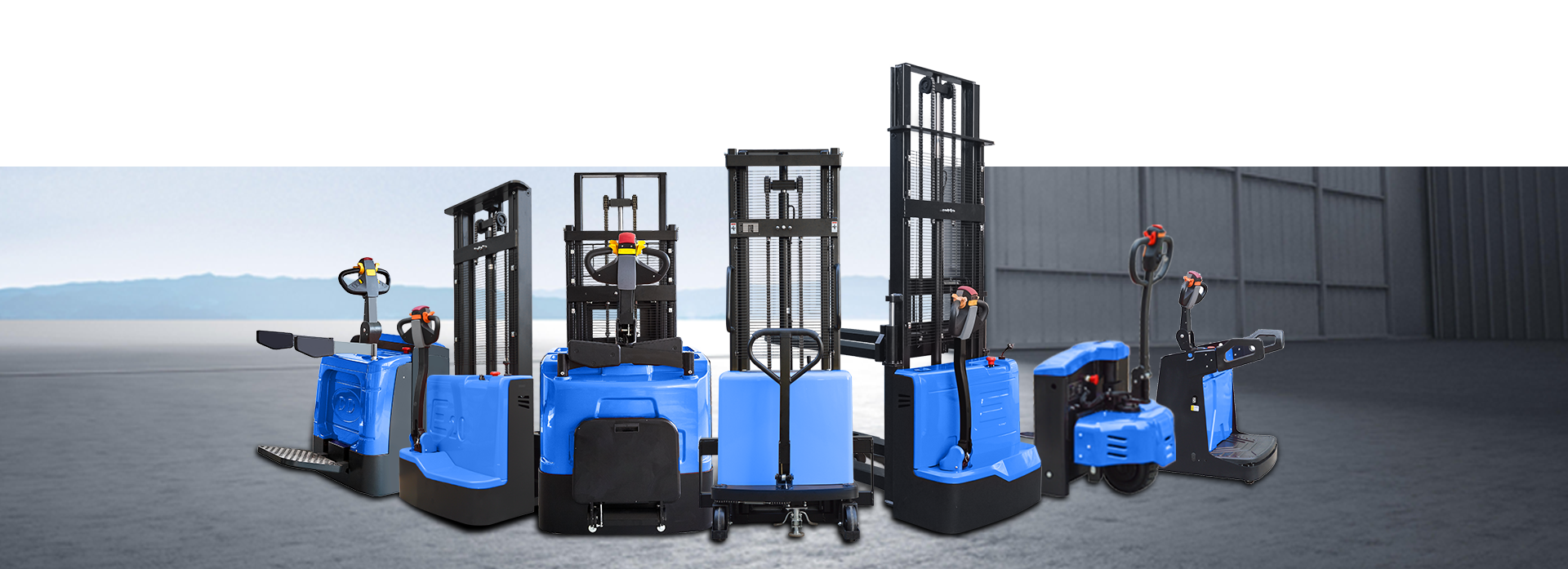
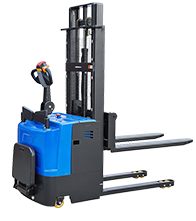

1000kg Counterbalanced Electric Stand-on Stacker for Modern Warehouse Logistics
Content
- 1 Product Overview
- 2 Counterbalanced Design for Flexible Handling
- 3 Compact Dimensions and Maneuverability
- 4 Performance for Daily Warehouse Cycles
- 5 Operator Safety and Ergonomic Features
- 6 Hydraulic and Mast Safety
- 7 Motor and Battery System
- 8 Fork Configuration and Optional Attachments
- 9 Advantages Over Conventional Alternatives
- 10 Manufacturing and Quality Strengths
- 11 Production Process Considerations
- 12 Applications Across Multiple Industries
- 13 How to Select the Correct Configuration
- 14 Maintenance and Ownership Value
- 15 Purchasing from an Integrated Supplier
- 16 Frequently Asked Questions
- 16.1 What is the rated capacity of the CPDB10?
- 16.2 Is the CPDB10 a walk-behind stacker?
- 16.3 What lift heights are available?
- 16.4 Why choose a counterbalanced stacker?
- 16.5 What battery is supplied as standard?
- 16.6 Can the stacker be equipped with a lithium-ion battery?
- 16.7 What optional attachments are available?
- 16.8 Is the machine suitable for indoor use?
- 16.9 What is the turning radius?
- 16.10 What are the main safety features?
- 16.11 How should the correct mast be selected?
- 16.12 Can the CPDB10 replace a large forklift?
- 16.13 What industries can use this stacker?
- 16.14 What should be checked before ordering?
- 17 Conclusion
- 18 References
- 19 Product: 1000kg Counterbalanced Electric Stand-on Stacker for Logistics
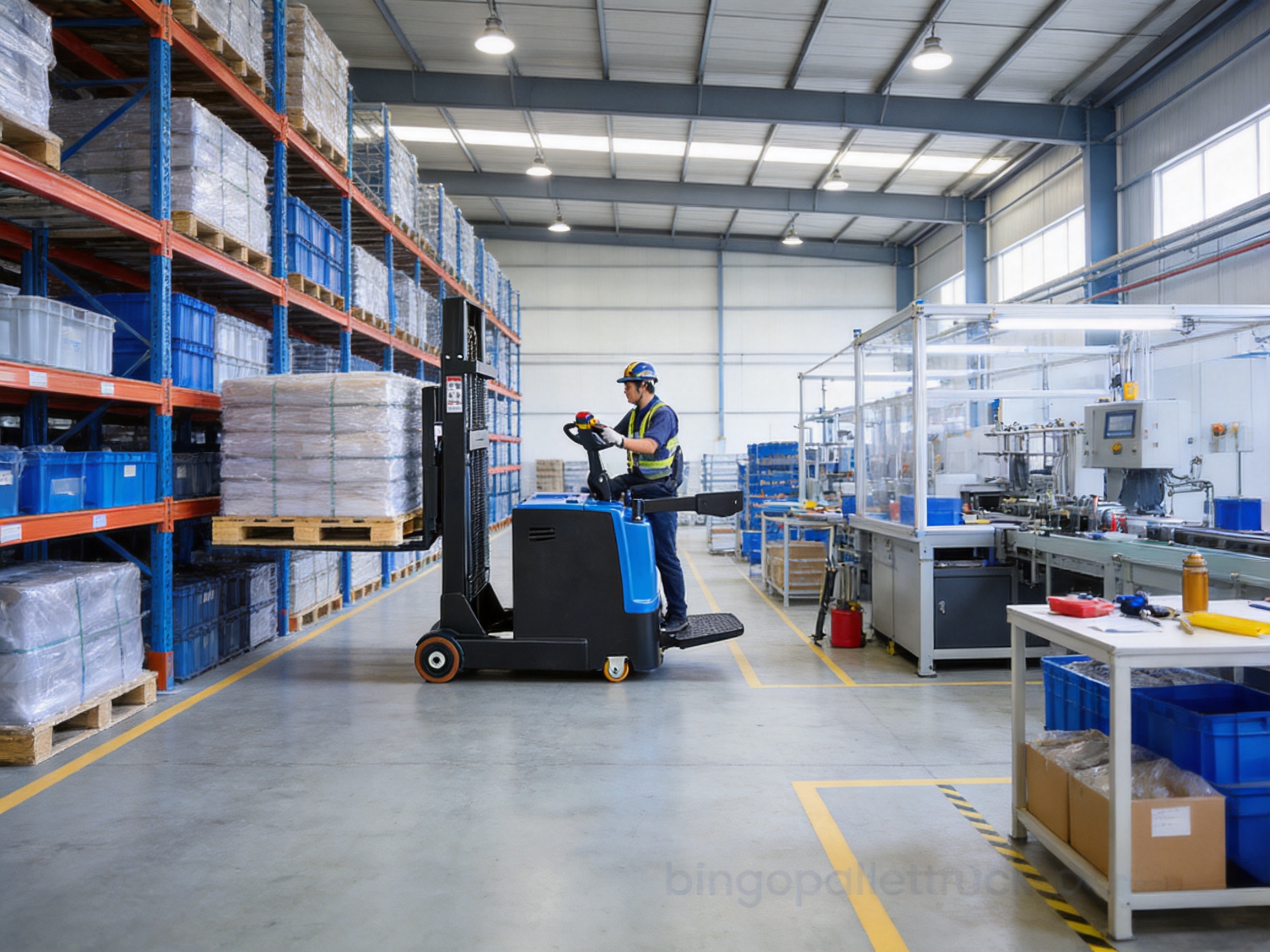
Efficient material handling is central to warehouse productivity, manufacturing continuity, and safe internal transportation. As businesses manage heavier loads, tighter storage layouts, faster order cycles, and increasingly demanding safety expectations, the choice of lifting equipment has a direct effect on operating cost and workplace performance. The 1000kg Counterbalanced Electric Stand-on Stacker, model CPDB10, is designed to address these requirements with a compact structure, electric drive, practical lifting performance, and a counterbalanced configuration suitable for a wide range of logistics environments.
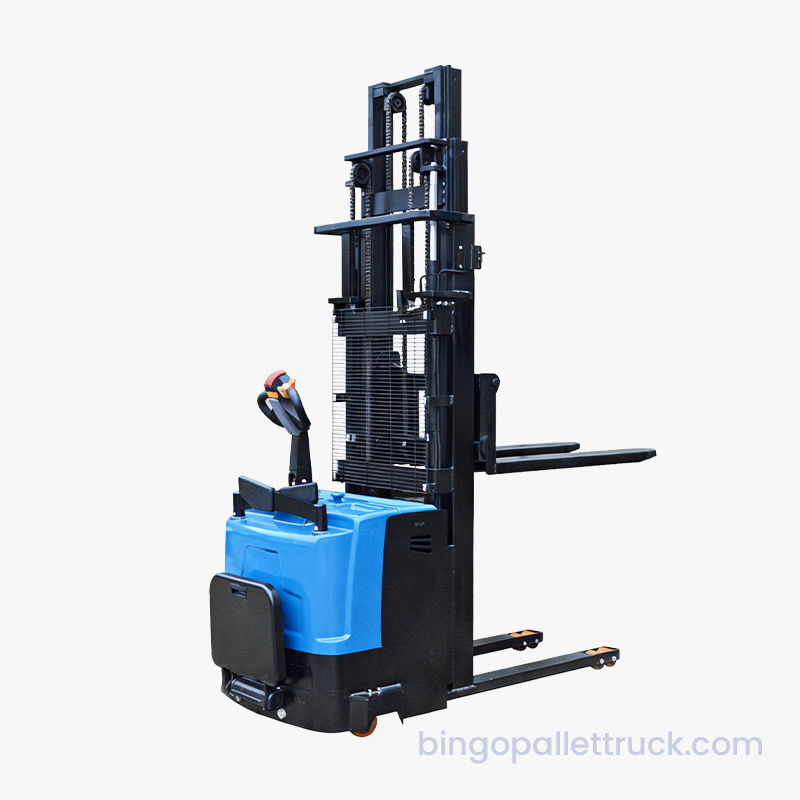
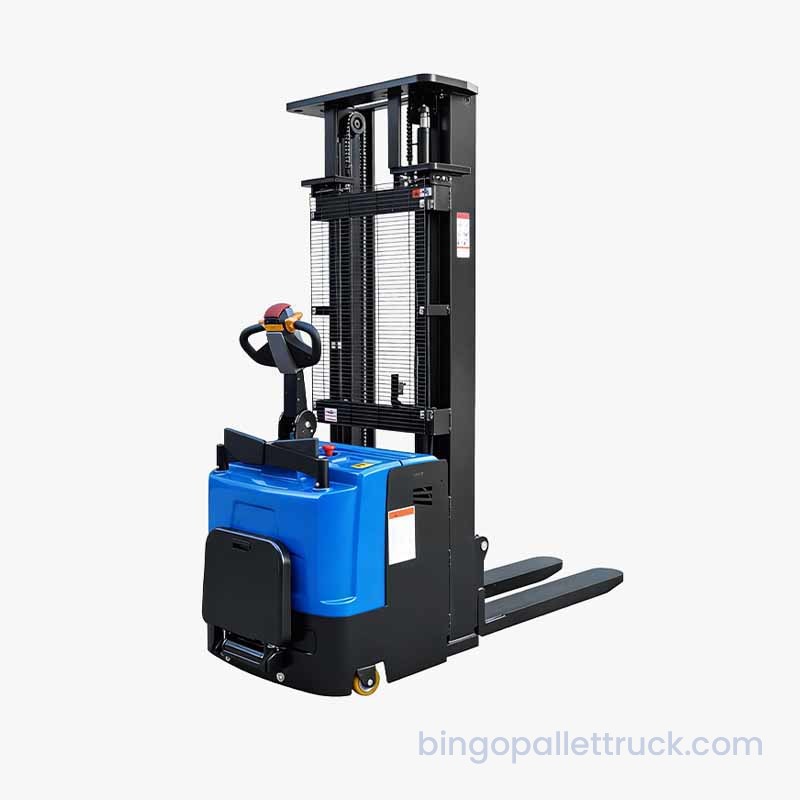
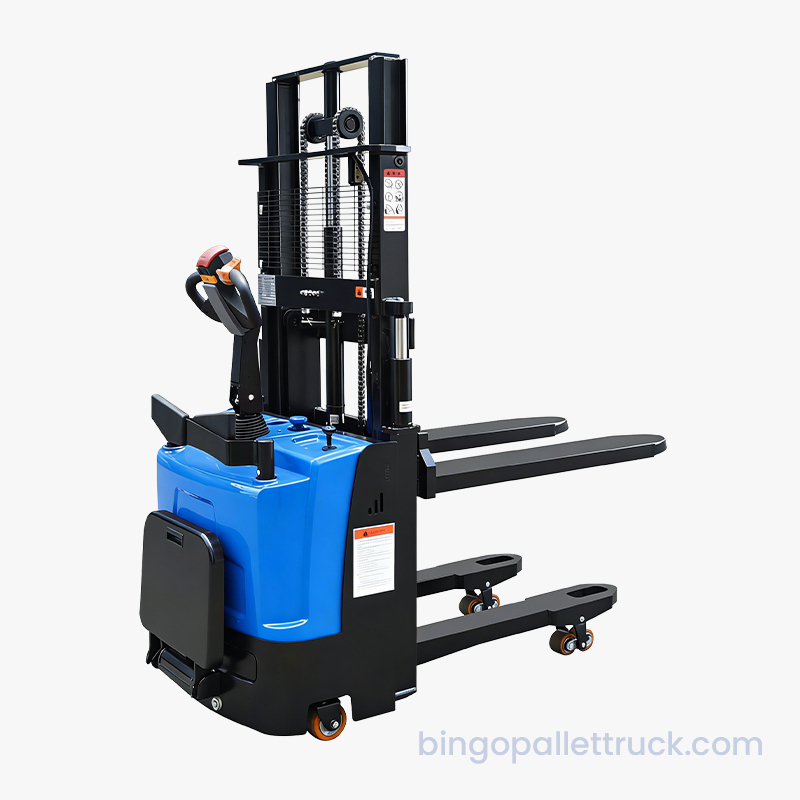
Unlike a conventional pedestrian stacker that may require support legs or a more restricted operating arrangement, a counterbalanced stand-on stacker places the machine’s weight behind the load. This configuration provides greater flexibility when handling pallets near racks, walls, production lines, loading points, and other locations where clearance can be limited. The operator stands on the machine, allowing the equipment to travel efficiently while maintaining direct control over steering, lifting, braking, and load positioning.
The CPDB10 provides a rated load capacity of 1000kg and is available with a one-stage mast for a 1600mm lift height or a two-stage mast with lift heights from 2000mm to 3500mm. This range allows users to select a configuration according to their rack height, pallet arrangement, ceiling clearance, and operational workflow. With a 24V lead-acid battery system, a 1.5kW drive motor, and a 2.2kW lift motor, the stacker is built for practical warehouse transportation and vertical storage operations.
For businesses seeking a dependable alternative to larger forklifts or basic walk-behind stackers, the CPDB10 offers a balanced combination of maneuverability, safety, productivity, and operating economy.
Product Overview
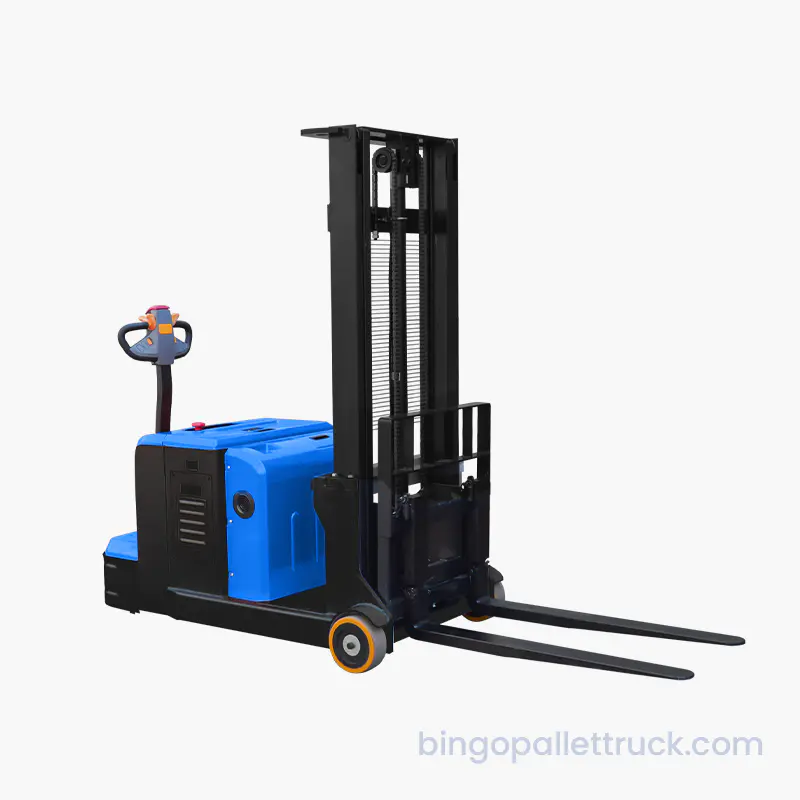
The CPDB10 is a stand-on electric stacker engineered for applications requiring both horizontal travel and pallet lifting. Its counterbalanced design reduces dependence on extended support legs and enables the machine to approach loads in a more direct manner. This is particularly useful in facilities where pallets must be collected from different sides, where floor space is restricted, or where the machine must work around production equipment and storage infrastructure.
The operator type is stand-on, which creates a practical compromise between the compactness of a pedestrian stacker and the traveling efficiency of a rider-operated truck. The operator does not need to walk behind the machine during every movement. Instead, the standing platform supports faster repeated travel across a warehouse, helping reduce physical strain and improving productivity during intensive handling cycles.
The rated capacity is 1000kg at a 500mm load center distance. This capacity is suitable for common palletized goods, packaged products, raw materials, components, cartons, and warehouse containers. As with all industrial lifting equipment, the actual capacity depends on the load center, lift height, attachment selection, load stability, floor conditions, and operating environment. Users should always follow the capacity plate, operating instructions, and applicable safety requirements.
| Specification | Value |
|---|---|
| Model | CPDB10 |
| Operator type | Stand-on |
| Rated load capacity | 1000kg |
| Load center distance | 500mm |
| Mast configurations | One-stage and two-stage |
| Lift height range | 1600mm to 3500mm |
| Battery type | Lead-acid |
| Battery voltage and capacity | 24V/120Ah |
| Drive motor | 1.5kW |
| Lift motor | 2.2kW |
| Service brake | Electromagnetic |
| Steering design | Mechanical |
Counterbalanced Design for Flexible Handling
The main structural advantage of the CPDB10 is its counterbalanced configuration. Traditional stackers often use long support legs that extend beneath or around the pallet. While this arrangement can be effective in specific applications, it may limit access to closed pallets, enclosed base pallets, certain rack designs, or loads positioned close to obstacles. A counterbalanced stacker carries its stabilizing mass behind the load, allowing the forks to approach pallets more freely.
This design gives warehouse operators more choices when handling different pallet types. The CPDB10 can be used in storage areas, dispatch zones, manufacturing lines, packaging stations, and receiving departments where pallet access may not always be perfectly aligned. It is also suitable for locations where users need a single machine to perform several material handling tasks rather than relying on separate equipment for every aisle or workstation.
The counterbalanced arrangement also contributes to a more familiar operating experience for users accustomed to forklifts. The operator can travel with the load positioned ahead of the machine while the rear section provides balancing support. This makes the equipment suitable for short-distance pallet movement, stacking, replenishment, line feeding, and loading-area organization.
Compared with a larger internal-combustion forklift, the CPDB10 has a smaller overall format and an electric power system that is better suited to indoor operations. Compared with a basic walk-behind stacker, its stand-on design can reduce unnecessary walking and improve cycle efficiency. This middle position is one of its strongest competitive advantages: it delivers useful forklift-like flexibility without requiring the space, fuel system, or operating expense associated with a larger truck.
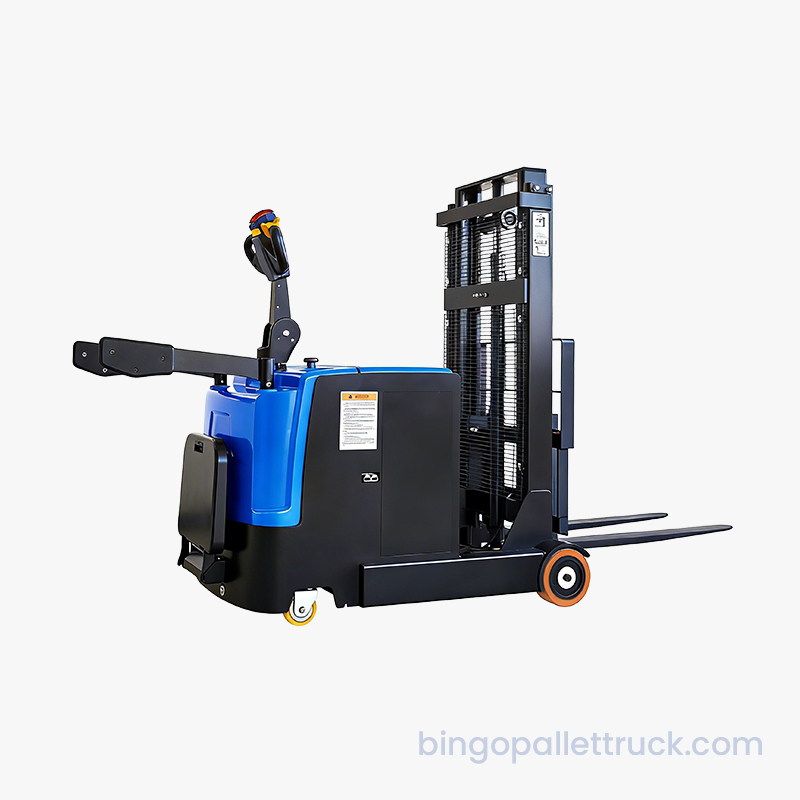
1000kg Counterbalanced Electric Stand-on Stacker for Logistics
Compact Dimensions and Maneuverability
Warehouse space is increasingly expensive, and many facilities must achieve higher storage density without expanding their buildings. A machine with a small turning radius and controlled overall dimensions can make a significant difference in daily operations. The CPDB10 has an overall width of 960mm and a turning radius of 1318mm. These dimensions support maneuvering in compact work areas while preserving the machine’s ability to handle a 1000kg load.
The overall length is 2503mm, while the length to the face of the forks is 1423mm. The lowered fork height is no more than 65mm, allowing the forks to enter compatible pallets with a low approach profile. The 60mm ground clearance at the center of the wheelbase is designed for stable movement over suitable industrial floors while keeping the load-handling structure close to the ground.
Specified aisle widths are 2934mm for 1000mm by 1200mm pallets positioned crossways and 2902mm for 800mm by 1200mm pallets positioned lengthways. These values provide useful planning information for warehouse designers and equipment purchasers. Actual aisle requirements may vary according to the pallet condition, load dimensions, turning technique, rack arrangement, operator practice, and local regulations.
The compact body is especially valuable in e-commerce warehouses, small distribution centers, production workshops, retail backrooms, and packaging areas. In these environments, the stacker may need to travel between storage racks, workstations, conveyors, wrapping equipment, and loading doors. A smaller machine can reduce interference with other traffic and make it easier to adapt existing floor layouts.
The equipment is fitted with polyurethane wheels. PU wheels are commonly selected for indoor warehouse floors because they offer a firm rolling surface, good wear resistance, and relatively low rolling noise compared with some other wheel types. The front wheel size is 250 by 80mm, the rear wheel size is 160 by 72mm, and the balance wheel is 124 by 60mm. The wheel arrangement consists of one drive wheel and two front and two rear wheels, supporting the machine’s stable travel profile.
Performance for Daily Warehouse Cycles
The CPDB10 has a travel speed of 5.0km/h when laden and 5.8km/h when unladen. These speeds are appropriate for controlled indoor warehouse movement, where visibility, pedestrian interaction, rack protection, and load stability are more important than high road speed. The difference between laden and unladen speed supports a controlled approach when carrying goods while allowing efficient return travel when the forks are empty.
The lifting speed is 100mm/s with a load and 155mm/s without a load. Lowering speed is 100mm/s with a load and 110mm/s without a load. These figures provide a balanced operating cycle for stacking and retrieving pallets. Controlled hydraulic movement is particularly important when placing goods at elevated positions, since abrupt movement can affect load stability, rack safety, and product condition.
The maximum gradeability is specified as 5 percent when laden and 8 percent when unladen. Operators should use the equipment only on suitable surfaces and within the limits stated by the manufacturer. Ramps, slopes, wet floors, damaged surfaces, and uneven ground can significantly affect stability and braking performance. On any incline, the load should be positioned and transported according to the operating manual and applicable safety procedures.
The electromagnetic service brake contributes to responsive stopping and secure parking. Electric braking systems are well suited to indoor equipment because they can provide controlled deceleration without the need for a conventional fuel-powered braking arrangement. Proper braking performance still depends on wheel condition, floor cleanliness, battery condition, load weight, travel speed, and scheduled maintenance.
Operator Safety and Ergonomic Features
Safety is not a single component; it is the result of structure, controls, visibility, braking, operator behavior, maintenance, and workplace management working together. The CPDB10 incorporates several features intended to create a more secure and less fatiguing operating environment.
The protective guard is designed to isolate the operator from the load during lifting operations. When pallets are raised, the guard helps create a physical separation between the standing operator and the handled goods. This is important in applications where cartons, containers, or packaged materials could shift during acceleration, lifting, or positioning.
Anti-collision protective arms provide an additional barrier around the operating position. These arms help protect the operator from contact with nearby structures and may also encourage a more controlled relationship between the machine and surrounding objects. They should not be considered a replacement for safe clearance, pedestrian management, or operator training, but they add a useful layer of protection during routine movement.
Shock-absorbing pedals are intended to reduce vibration and impact transmitted to the operator during travel. Warehouse floors are not always perfectly smooth, and repeated movement over joints, transitions, or minor surface irregularities can contribute to fatigue. A more supportive standing position may help operators remain comfortable during extended shifts and maintain better control throughout repeated handling cycles.
The low-center-of-gravity body structure supports stable operation under heavy-load conditions. Stability is influenced by the load center, lift height, mast position, floor conditions, speed, turning behavior, and pallet quality. A low center of gravity cannot eliminate all risks, but it can contribute to predictable handling when the machine is used within its rated parameters.
The sound pressure level at the driver’s ear is listed as 69dB(A). This relatively controlled noise level is suitable for indoor warehouse environments where communication, warning signals, and general workplace awareness are important. Operators should still use any required personal protective equipment and follow the noise assessment procedures established for their facility.
Hydraulic and Mast Safety
The lifting system is designed to support controlled vertical movement while addressing the consequences of hydraulic pipe failure. The hydraulic system is described as eliminating the risk of uncontrolled mast drop caused by pipe failure and as meeting strict industrial safety requirements. This feature is particularly relevant when handling goods at elevated positions, where sudden mast movement could damage products, rack components, or nearby equipment.
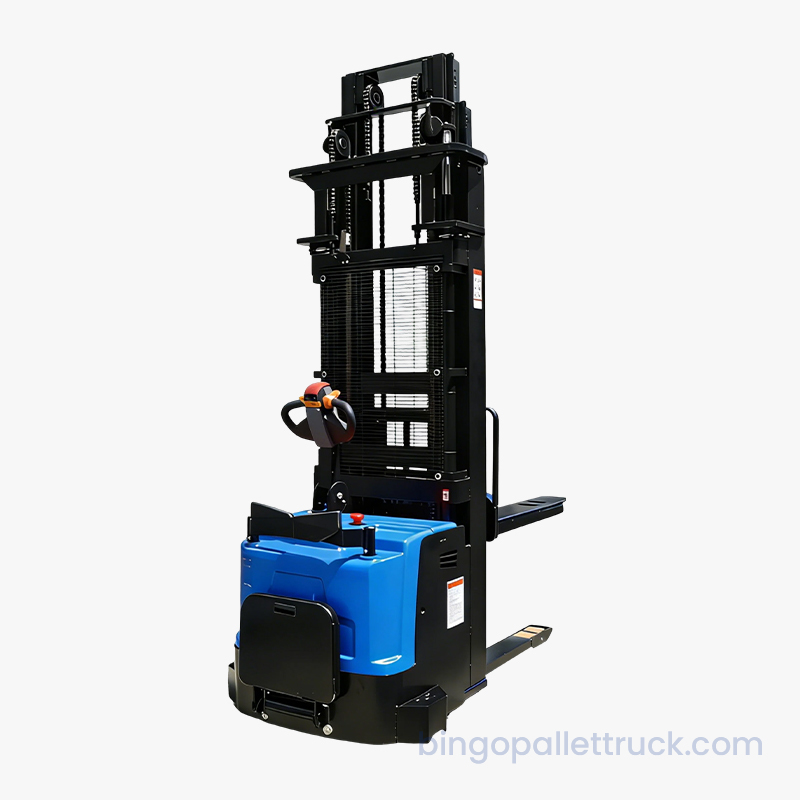
The mast is available in one-stage and two-stage configurations. The one-stage version offers a 1600mm lift height and is suitable for lower stacking, workstation replenishment, pallet transfer, and applications with limited overhead clearance. The two-stage versions offer lift heights of 2000mm, 2500mm, 3000mm, and 3500mm, enabling the machine to serve a broader range of storage and distribution applications.
Selection of the correct mast should consider more than the desired maximum lifting height. Buyers should check the lowered mast height, extended mast height, building clearance, door height, sprinkler systems, lighting, rack beam levels, load dimensions, and required residual capacity. For the available two-stage versions, the lowered mast heights are listed as 1610mm, 1860mm, 2110mm, and 2360mm, while extended mast heights are listed as 2815mm, 3312mm, 3815mm, and 4315mm.
The lift height and load capacity must always be considered together. As the load is raised, the center of gravity changes and the available capacity may be affected. Operators should avoid exceeding the rated capacity and should never use the forks to lift unstable, damaged, or improperly secured loads.
Motor and Battery System
The electric drive system uses a 1.5kW drive motor rated under S2 60-minute operating conditions. The lifting system uses a 2.2kW motor rated under S3 15-percent conditions. These motor ratings are configured for the intended duty cycle of a compact warehouse stacker: repeated short-distance travel combined with intermittent lifting and lowering operations.
The standard battery is a 24V/120Ah lead-acid unit with a listed battery weight of 35kg by two. Lead-acid batteries remain widely used in material handling because they are familiar, serviceable, and available through established industrial supply channels. They can be suitable for single-shift or moderate-duty operations when users follow correct charging, watering, inspection, and ventilation procedures.
Battery performance depends on operating temperature, load frequency, travel distance, charging practice, floor resistance, wheel condition, and maintenance. A well-managed charging routine can help preserve usable capacity and extend battery service life. Operators should avoid deep discharge beyond the manufacturer’s recommended limit and should use the correct charger and charging location.
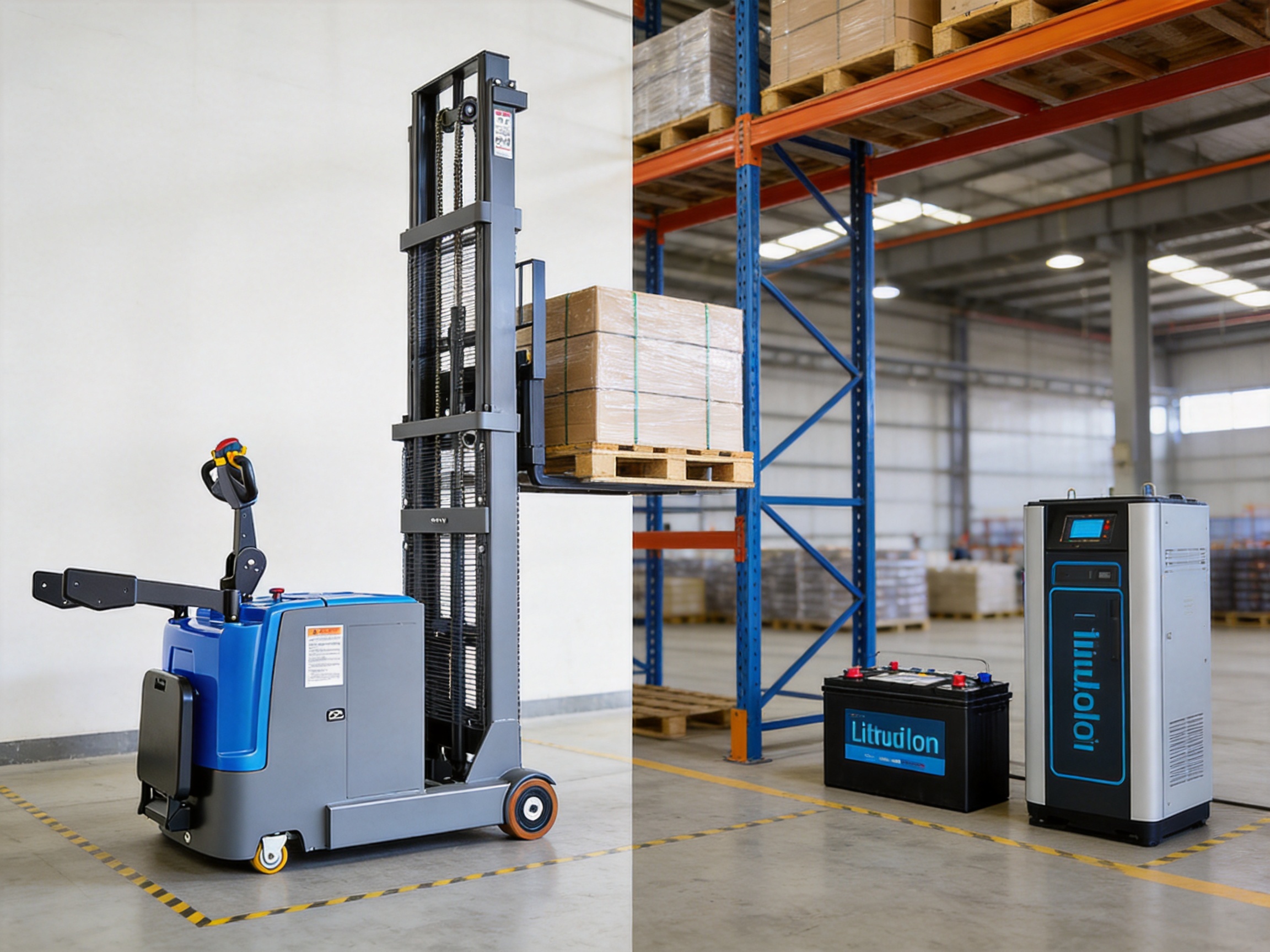
For customers requiring longer operating time, reduced routine battery maintenance, or faster opportunity charging, a lithium-ion battery option from 100Ah to 330Ah is available. Lithium-ion technology may be beneficial for multi-shift operations, high-utilization warehouses, and facilities that need more flexible charging schedules. The correct battery choice depends on duty cycle, shift pattern, charging infrastructure, budget, ambient conditions, and service preferences.
A Curtis controller is also available as an option. Controller selection can influence acceleration behavior, energy management, diagnostic capability, and service support. Customers should specify their preferred controller during the purchasing process so that the complete electrical system can be configured correctly.
Fork Configuration and Optional Attachments
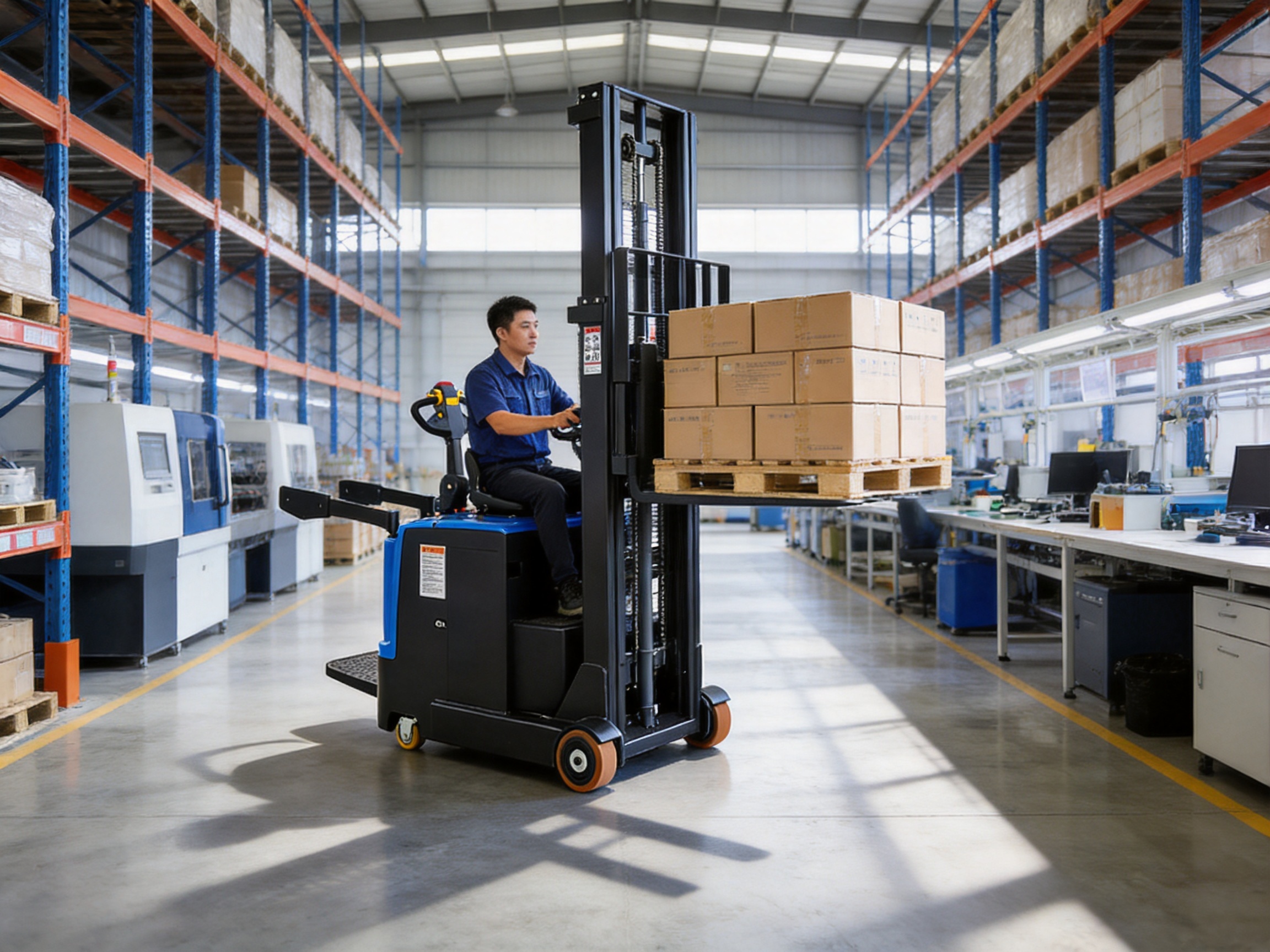
The standard fork dimensions are 35mm thickness, 100mm width, and 1070mm length. Fork spread is adjustable from 220mm to 680mm. This range provides flexibility for different pallet openings and load widths, provided that the pallets and loads are compatible with the equipment’s rated capacity and fork dimensions.
Adjustable fork positioning can improve load engagement and help operators center the forks beneath a pallet. Correct fork placement is essential for balance. Forks should enter the pallet evenly and as far as appropriate, while the load should be stable, centered, and properly distributed. Uneven fork insertion or off-center loading can increase the risk of pallet damage and instability.
Fork tilt is available as an option. Tilting can help operators position the forks more effectively during load pickup and placement. It may also assist with keeping a load secure during certain handling movements. However, tilt should be used according to the operating instructions and should not be treated as a substitute for properly wrapped, strapped, or otherwise secured goods.
Fork side shift is another available option. Side shift allows lateral adjustment of the forks without requiring the entire machine to be repositioned. This can be particularly useful when aligning pallets with rack locations, truck beds, conveyors, or production stations. By reducing repeated repositioning, side shift may help improve accuracy and shorten handling cycles.
Optional equipment should be selected according to the application rather than added indiscriminately. Attachments can influence residual capacity, visibility, overall dimensions, and maintenance requirements. Before using any attachment, the user should confirm that it is approved for the stacker and that the revised capacity information is clearly displayed.
Advantages Over Conventional Alternatives
Compared with Walk-Behind Stackers
A walk-behind stacker can be economical and highly maneuverable, but the operator must generally walk with the machine. In facilities with frequent travel between distant storage locations, this can increase physical effort and reduce the number of completed cycles per shift. The stand-on platform of the CPDB10 gives the operator a more efficient travel position and can reduce unnecessary walking.
The counterbalanced layout also provides broader pallet access than some support-leg designs. This can be important when handling closed pallets, unusual pallet bases, or loads near obstructions. The CPDB10 therefore offers a useful upgrade path for businesses that have outgrown basic pedestrian equipment but do not require a full-size forklift.
Compared with Larger Forklifts
A larger forklift may provide greater capacity and outdoor versatility, but it also requires more space, wider aisles, larger turning areas, and potentially higher energy or fuel costs. The CPDB10 is designed for a 1000kg capacity class, making it more appropriate for lighter palletized goods and indoor handling where a larger machine would be excessive.
Its electric power system avoids exhaust emissions during operation and is well suited to warehouses, workshops, food-related storage areas, packaging facilities, and other indoor environments where air quality is important. The compact width and small turning radius can help organizations make better use of existing layouts without undertaking extensive structural changes.
Compared with Basic Electric Pallet Trucks
An electric pallet truck is efficient for horizontal transport but cannot replace a stacker when vertical storage is required. The CPDB10 combines travel and lifting functions, enabling users to move pallets from receiving areas to rack positions, retrieve goods from elevated storage, and replenish production or picking zones with one machine.
This multifunction capability can reduce the number of equipment types required in a small or medium-sized facility. It may also simplify operator training, maintenance planning, spare-parts management, and fleet coordination.
Manufacturing and Quality Strengths
Yancheng Bingo Machinery Equipment Co., Ltd. specializes in warehousing and logistics equipment, including manual and electric pallet trucks, stackers, storage containers, packaging materials, and warehouse racking. This broad product scope gives the company an integrated understanding of the material flow systems in which the CPDB10 operates.
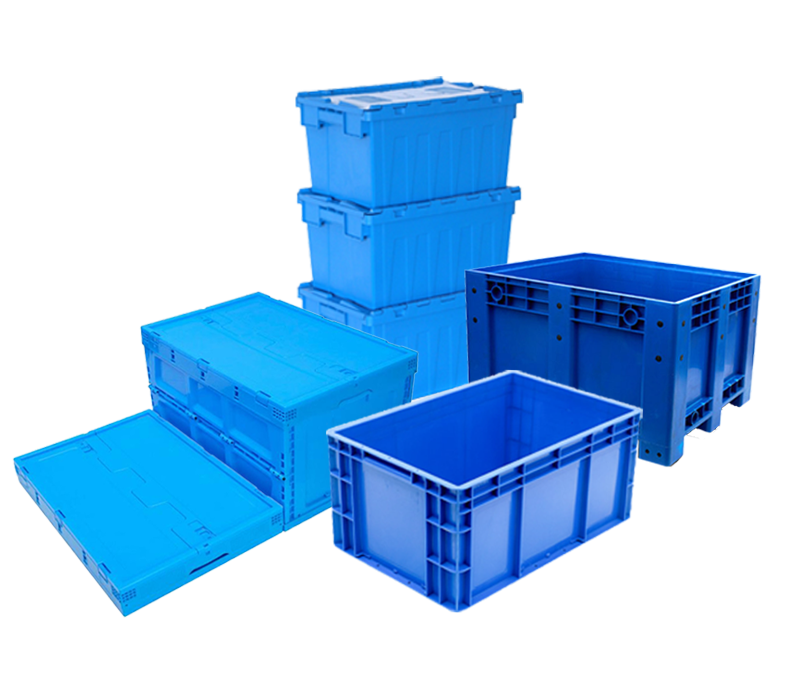
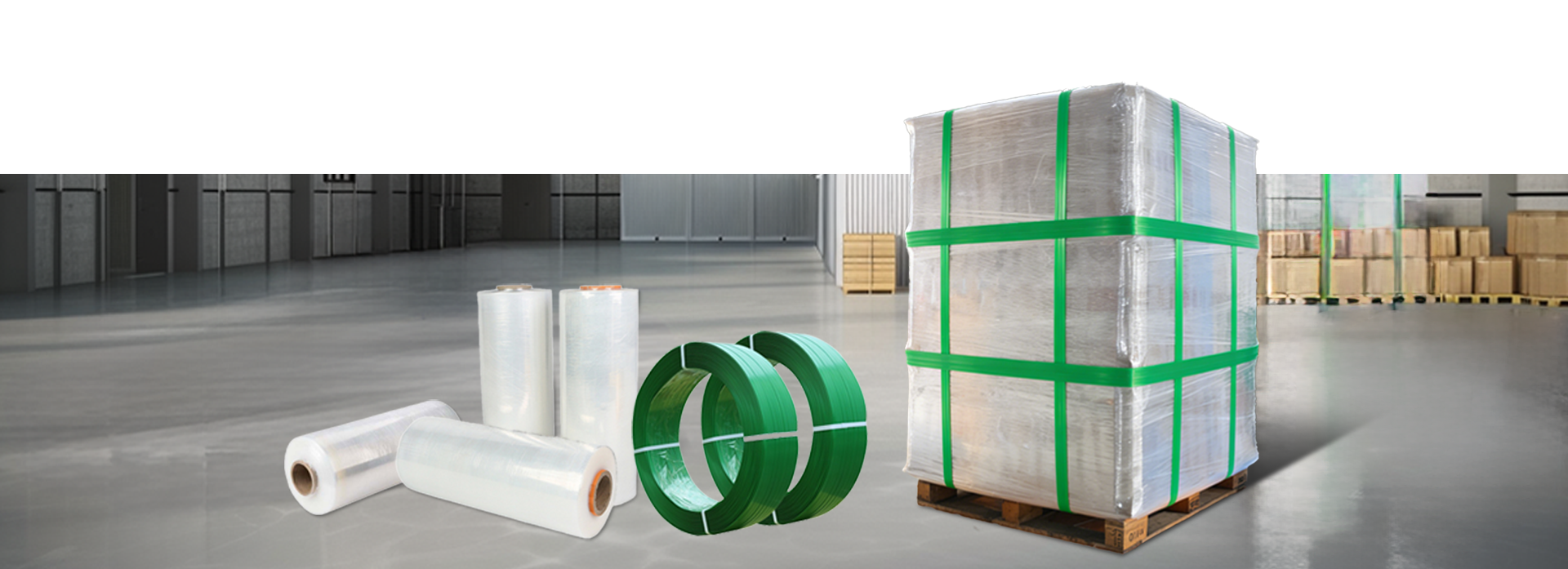
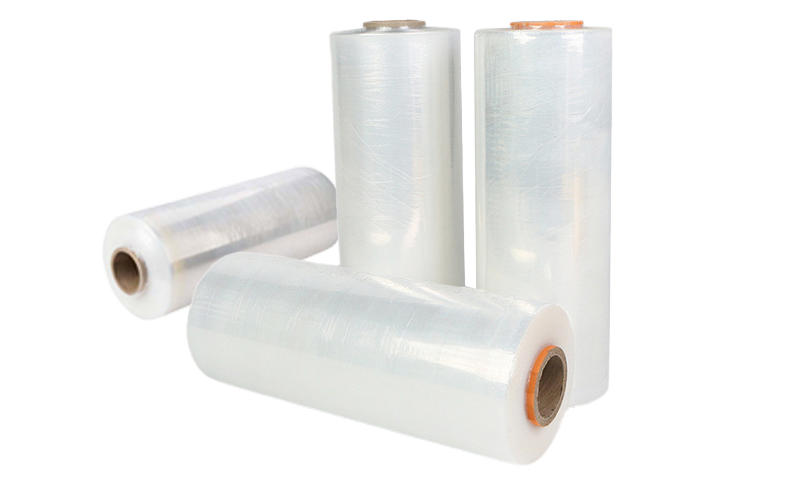
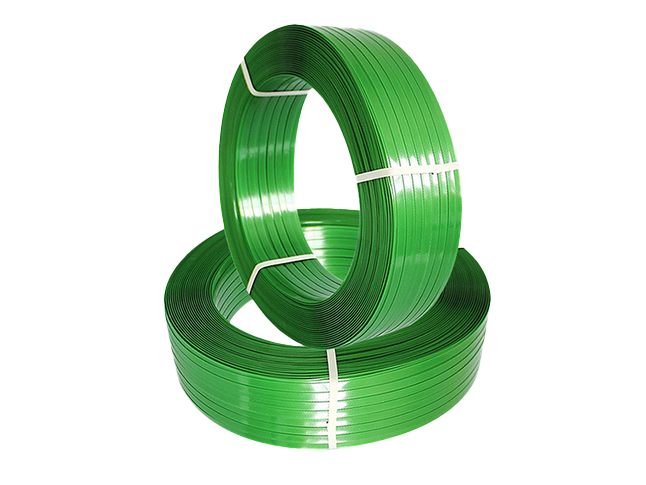
The company has developed a mature warehousing and logistics equipment supply chain covering four core product systems: handling equipment, storage containers, packaging materials, and warehouse racks. This integrated structure can support customers that need more than one product category. For example, a warehouse project may require stackers, plastic pallets, containers, stretch wrap, strapping, and rack systems. Coordinating these requirements through a knowledgeable supplier can simplify procurement and improve compatibility planning.
Manufacturing quality begins with suitable component selection and continues through fabrication, assembly, electrical integration, functional testing, and final inspection. For an electric stacker, important quality points include mast alignment, weld integrity, fork strength, hydraulic sealing, wheel installation, controller integration, battery connection, braking response, steering function, and load-handling performance.
The company emphasizes strict quality inspection processes and aims to ensure that products comply with international standards. While the specific inspection records and certifications should be confirmed for each order, a disciplined quality system should include incoming component checks, assembly-stage inspection, operational testing, safety-function verification, and final product review before shipment.
Supply-chain maturity is also important. A stacker is not made from a single component; it depends on coordinated systems including steel structures, hydraulic elements, motors, batteries, wheels, controllers, electrical components, and protective equipment. A mature supply chain can improve component consistency, production continuity, replacement-part availability, and response speed when customers require technical support.
The company’s focus on quality-first cooperation and cost-effective solutions is relevant to international buyers that must balance purchase price with lifecycle value. A lower initial price does not necessarily represent a better investment if the machine experiences frequent downtime, difficult maintenance, unstable component supply, or poor technical support. A properly manufactured stacker should be evaluated through capacity, reliability, safety, serviceability, energy use, and expected operating life.
Production Process Considerations
Although the CPDB10 is compact, its performance depends on the precision of each manufacturing stage. The frame and mast must maintain appropriate geometry so that the forks rise smoothly and the load remains properly aligned. Welded structures should be inspected for consistency, while critical joints require attention to strength, deformation, and surface condition.
Hydraulic assembly requires clean working practices and careful sealing. Contaminants in hydraulic circuits can damage valves, pumps, and cylinders. Proper hose routing and protection are also important because hydraulic lines must withstand repeated movement, pressure, and vibration. Functional tests should verify lifting, lowering, holding, and emergency response behavior.
Electrical integration is equally significant. The motor, controller, battery, charger, braking system, and operating controls must work together in a predictable way. Wiring should be routed to reduce abrasion and protected from accidental damage. Battery connectors and terminals must be secure, and control functions should be verified before the equipment leaves the production facility.
Wheel installation and steering adjustment influence maneuverability, stability, and floor contact. Incorrect wheel alignment or improper fastening can accelerate wear and affect turning behavior. Final inspection should include travel testing, braking tests, lifting and lowering tests, steering checks, noise assessment, and visual confirmation of safety guards and warning labels.
These manufacturing disciplines are particularly important for export equipment. International customers may operate the stacker in different climates, floor conditions, shift patterns, and regulatory environments. Consistent production and documented inspection help provide a more reliable foundation for overseas deployment.
Applications Across Multiple Industries
The CPDB10 can support a broad range of warehouse and industrial activities. In manufacturing, it can transfer raw materials to production lines, move finished goods to temporary storage, and position pallets near packaging stations. Its compact format is useful where production equipment leaves limited circulation space.
In e-commerce logistics, the stacker can assist with inbound pallet unloading, reserve storage, replenishment, order consolidation, and dispatch preparation. Its stand-on configuration is valuable when operators repeat short travel cycles throughout a shift.
In warehousing and distribution, the CPDB10 can manage pallet movement between receiving docks, rack aisles, staging zones, and loading areas. The two-stage mast options allow users to select higher lifting capability for rack storage while maintaining a compact equipment footprint.
In supermarket and retail distribution, the equipment may be used in backroom storage, goods receiving, pallet replenishment, and stockroom organization. Electric operation is particularly suitable for indoor spaces where exhaust emissions and excessive noise would be undesirable.
Packaging operations can use the machine to handle raw packaging materials, finished cartons, palletized supplies, and wrapped products. When combined with appropriate stretch wrap, strapping, containers, and racking, the stacker can become part of a complete internal logistics system rather than an isolated handling tool.
How to Select the Correct Configuration
The first selection factor is the maximum load. Customers should identify the heaviest routine load, not merely the average load. The load center must also be considered because a load positioned farther from the fork face can reduce stability and available capacity.
The second factor is lift height. A 1600mm one-stage mast may be appropriate for low-level stacking and workstation work. A two-stage mast from 2000mm to 3500mm may be more suitable for rack storage. Buyers should measure the required beam height and confirm that the selected mast can operate safely beneath ceilings, doors, lighting, and sprinklers.
The third factor is aisle and turning space. The CPDB10 has a listed turning radius of 1318mm, but the complete maneuvering area must include load overhang, rack protection, pedestrian clearance, and operator visibility. A warehouse layout should be assessed using the actual pallet size and load dimensions.
The fourth factor is duty cycle. Users should estimate the number of travel cycles, average travel distance, lifting frequency, operating hours, and number of shifts. A standard lead-acid battery may be appropriate for moderate operation, while a higher-capacity lithium-ion option may be better for demanding multi-shift work.
The fifth factor is the operating environment. Buyers should evaluate floor quality, temperature, moisture, dust, ramp conditions, pedestrian traffic, and whether the equipment will work inside, outside, or in a mixed environment. The CPDB10 is primarily suited to controlled industrial and warehouse applications.
The final factor is optional equipment. Fork tilt, fork side shift, and a Curtis controller can increase suitability for specific tasks. These options should be discussed before production or shipment so that the machine, capacity plate, documentation, and service parts are correctly matched.
Maintenance and Ownership Value
Regular maintenance is essential for preserving the safety and productivity of any lifting machine. Operators should inspect the forks, mast, chains or lifting elements, hydraulic components, wheels, protective guard, anti-collision arms, controls, battery, electrical connectors, and braking system according to the recommended schedule.
Before each shift, the operator should look for visible hydraulic leaks, damaged forks, loose components, unusual wheel wear, battery damage, abnormal noises, and malfunctioning controls. The lifting and lowering functions should be checked in a safe area without placing people beneath elevated forks or loads.
Battery maintenance should follow the selected battery type. Lead-acid batteries require appropriate charging procedures, terminal inspection, and, where applicable, electrolyte maintenance. Charging areas should be properly managed and ventilated. Lithium-ion batteries require compliance with the battery supplier’s charging and storage instructions.
Keeping the mast and hydraulic system clean can help reveal leaks and reduce contamination. Wheels should be checked for embedded debris, flat spots, excessive wear, or damage. Because polyurethane wheels are intended for suitable industrial floors, operating over sharp debris or unsuitable surfaces can shorten their service life.
A preventive maintenance program can reduce unexpected downtime and help identify small problems before they become major repairs. The cost of regular inspection is generally lower than the cost of emergency failure, damaged goods, disrupted production, or unsafe operation.
Purchasing from an Integrated Supplier
For many international buyers, equipment selection is only one part of the procurement process. They also need export coordination, product documentation, spare parts, technical communication, packaging, delivery planning, and after-sales support. A supplier focused on warehousing and logistics equipment can provide a more coherent purchasing experience.
Yancheng Bingo Machinery Equipment Co., Ltd. positions itself as a global partner for smart logistics and provides products across handling, storage, packaging, and racking categories. This enables customers to consider a complete warehouse solution rather than purchasing unrelated components from multiple sources.
An integrated supplier can help customers compare manual and electric equipment, choose suitable pallet and container formats, plan racking compatibility, and identify packaging materials required for stable storage and transport. This broader perspective is useful when a new warehouse is being established or when an existing facility is being upgraded.
International customers should request detailed technical specifications, available options, capacity information, maintenance requirements, packing details, warranty terms, spare-parts arrangements, and training materials before confirming an order. They should also clarify local electrical requirements, shipping conditions, regulatory expectations, and the intended operating environment.
Frequently Asked Questions
What is the rated capacity of the CPDB10?
The rated load capacity is 1000kg at a stated load center distance of 500mm. Actual safe capacity depends on the load center, lift height, attachment, pallet condition, and the capacity information supplied with the machine.
Is the CPDB10 a walk-behind stacker?
No. It is a stand-on electric stacker. The operator rides on the machine’s standing platform instead of walking behind it during normal travel, which can improve efficiency over repeated distances.
What lift heights are available?
The CPDB10 is available with a one-stage mast offering a 1600mm lift height and two-stage mast versions offering 2000mm, 2500mm, 3000mm, or 3500mm lift heights.
Why choose a counterbalanced stacker?
A counterbalanced design provides more flexible pallet access than some support-leg stackers. It can be useful around racks, walls, production lines, and other areas where long support legs may restrict approach or maneuvering.
What battery is supplied as standard?
The standard battery is a 24V/120Ah lead-acid battery system. The listed battery weight is 35kg by two. A 100Ah to 330Ah lithium-ion battery option is also available for customers with different operating requirements.
Can the stacker be equipped with a lithium-ion battery?
Yes. A lithium-ion battery option from 100Ah to 330Ah is listed. The correct capacity should be selected according to operating hours, shift pattern, charging strategy, available space, and budget.
What optional attachments are available?
Available options include a Curtis controller, lithium-ion battery, fork tilt, and fork side shift. Attachments may affect residual capacity and should be selected according to the specific application.
Is the machine suitable for indoor use?
Yes. Its electric drive system, polyurethane wheels, compact dimensions, and controlled noise level make it suitable for many indoor warehouse, manufacturing, packaging, retail, and distribution applications. The floor, traffic pattern, temperature, and operating conditions must still be suitable.
What is the turning radius?
The listed turning radius is 1318mm. The actual space required for safe turning also depends on pallet dimensions, load overhang, aisle layout, rack protection, and operator practice.
What are the main safety features?
The product information identifies a protective operator guard, anti-collision protective arms, shock-absorbing pedals, a low-center-of-gravity structure, electromagnetic braking, and a hydraulic system designed to address mast-drop risk caused by pipe failure.
How should the correct mast be selected?
Choose the mast according to required rack height, maximum load height, lowered and extended mast dimensions, ceiling clearance, door height, sprinkler locations, and the expected operating environment. The maximum lift height alone is not sufficient for correct selection.
Can the CPDB10 replace a large forklift?
It can replace a larger forklift in suitable indoor applications involving loads up to its rated capacity and operating conditions within its specifications. It is not intended to replace every forklift, especially in heavy-duty outdoor, rough-terrain, or higher-capacity applications.
What industries can use this stacker?
Potential applications include manufacturing, e-commerce fulfillment, warehousing, distribution, packaging, supermarket retail, spare-parts storage, and production-line material supply.
What should be checked before ordering?
Buyers should confirm load weight, load center, pallet dimensions, lift height, aisle width, floor conditions, operating hours, battery type, mast height, attachments, local regulations, maintenance support, and spare-parts availability.
Conclusion
The 1000kg Counterbalanced Electric Stand-on Stacker is designed for businesses that need more flexibility than a basic pallet truck and more compactness than a large forklift. Its counterbalanced layout supports varied pallet access, while the stand-on operating position improves travel efficiency during repeated warehouse cycles.
With one-stage and two-stage mast options, lift heights from 1600mm to 3500mm, a compact 960mm width, a 1318mm turning radius, polyurethane wheels, electromagnetic braking, and a 24V electric power system, the CPDB10 is configured for practical indoor material handling. Its guard, protective arms, shock-absorbing pedals, low-center-of-gravity structure, and hydraulic safety design further support controlled operation.
The product’s value is strengthened by the manufacturing and supply-chain capabilities of Yancheng Bingo Machinery Equipment Co., Ltd. The company’s focus on handling equipment, storage containers, packaging materials, and warehouse racks allows it to support broader logistics projects. Its mature supply-chain structure and stated quality inspection processes provide a foundation for consistent production and international supply.
For warehouses, factories, distribution centers, packaging operations, and retail logistics facilities, the CPDB10 can provide a practical balance of capacity, maneuverability, operator comfort, safety, and configuration flexibility. The best results will come from selecting the correct mast, battery, attachments, and operating procedures for the intended application.
References
1. Product specification data for the CPDB10 1000kg Counterbalanced Electric Stand-on Stacker.
2. Manufacturer-provided technical information covering wheels, performance, dimensions, motors, batteries, safety features, and optional equipment.
3. General principles of industrial truck capacity assessment, load-center management, and warehouse traffic safety.
4. General guidance on electric material-handling equipment maintenance, battery charging, hydraulic inspection, and preventive service.
5. General warehouse design considerations for aisle width, pallet handling, rack access, and pedestrian separation.
Product: 1000kg Counterbalanced Electric Stand-on Stacker for Logistics


Copyright @ Yancheng Bingo Machinery Equipment Co., Ltd. All rights reserved Warehouse Logistics Equipment Manufacturer Pallet Truck Supplier
